
Global Express | September 30, 2026: US Troops Withdraw From Iraq, Iran Hails "Victory"
US troops left Iraq, a move Iran called a victory; Morocco named its first woman PM; the US Senate blocked a West Bank violence resolution; UK PM Burnham pledged voting-system reform; Hungary arrested two ex-ministers over Orban-era graft; China's factory PMI returned to growth; Wegovy pill users kept losing weight; the Netherlands reported its first child euthanized under new rules; a Ugandan journalist became king; OpenAI unveiled "dots" as safety fears delayed a model.
1. US Troops Withdraw From Iraq; Iran Hails "Victory"
Source: DW Chinese
US forces withdrew from their remaining military bases in Iraq on Wednesday (September 30), ending a deployment that began in 2014 under the banner of fighting the Islamic State group, DW Chinese reported. Iraqi Prime Minister Ali al-Zaidi declared that October 1, the day after the coalition's departure, would be marked as "Sovereignty Day," while Iraq's executive, legislative and judicial chiefs said on Monday it was a national day of commemoration confirming "the completion of Iraq's path toward sovereignty."
US and allied forces deployed to Iraq and Syria in 2014 to fight ISIS, which was defeated in Iraq in 2017 and lost ground in Syria in 2019, though coalition troops stayed on to target its remnants. The full withdrawal comes 23 years after the US-led coalition toppled Saddam Hussein in 2003. The pullout was agreed in 2024 between then-US President Joe Biden and Iraq, and is now being implemented under Donald Trump.
Iran and its allies, who argue that US military force should leave the Middle East entirely, welcomed the withdrawal as a victory for Tehran's "Axis of Resistance." Analysts warn, however, that Iran-backed Shiite militias could seize the opportunity to expand their influence, and that ISIS remnants may take the chance to regroup.
2. Morocco's King Appoints First Woman Prime Minister
Source: Al Jazeera
Morocco's King Mohammed VI has named Fatima Ezzahra El Mansouri as prime minister, making the 50-year-old the first woman to hold the role in the kingdom and the third woman to serve as prime minister in the Arab world. The royal palace said in a statement on Tuesday that El Mansouri, an urban planning minister and the mayor of Marrakesh, was tasked with forming a new government.
El Mansouri said in a televised address that her appointment was "truly historic." "For the first time in our country's history, a woman is taking on the responsibility of leading the government," she said. "This is a source of pride not only for me but for all Moroccan women."
The appointment came four days after the results of last week's elections were announced. El Mansouri's monarchy-aligned Authenticity and Modernity Party (PAM) won the most votes, securing 97 of the 395 seats in the House of Representatives, but fell well short of the 198 seats needed for an outright majority and will need to build a coalition. She is the third woman to serve as prime minister in the Arab world, after Tunisia's Najla Bouden (2021 to 2023) and Tunisia's current Prime Minister Sara Zaafarani, appointed in March 2025.

3. US Senate Blocks Resolution on West Bank Violence
Source: The Guardian
The US Senate on Tuesday evening rejected, along mostly party lines, a Democratic resolution that would have forced the State Department to report to Congress on violence in the occupied West Bank, including the killings of nine American citizens by Israeli settlers or security forces over the last few years. The resolution, led by Maryland Democrat Chris Van Hollen, would have given the State Department 30 days to report on those deaths and on wider human rights conditions in the territory.
The resolution failed to advance by a vote of 47 to 51. Pennsylvania Democrat John Fetterman joined Republicans in voting against it, while Kentucky Republican Rand Paul voted in favor. Van Hollen was able to force the vote under section 502B of the Foreign Assistance Act. "It is our responsibility to ensure recipients of US taxpayer dollars act in line with our laws and our values," he said in a statement after the vote, asking: "If the killing of nine Americans does not justify a report from our own state department, what would?"
Human Rights Watch reported in August that settler attacks, together with a rapid expansion of settlements, had fully or partly displaced 107 Palestinian communities, about 5,900 people, since January 2023. A UN report documented 1,732 settler attacks causing injuries or property damage in the 12 months up to October 2025.

4. UK PM Pledges to Change the Voting System
Source: BBC
UK Prime Minister Andy Burnham has promised that Labour will fight the next general election on a pledge to change the country's voting system. In his first party conference speech as prime minister, he announced plans for a national commission to explore options for electoral reform, inviting other parties to work with it to ensure "everyone's vote counts, and everyone's voice is heard."
Britain uses the first-past-the-post system. Burnham has previously supported a proportional representation (PR) model, telling last year's conference that "PR's time has come." He said that if politics carries on as it is, opening the door of No 10 to a government with less than 30% of the vote, everyone will have failed in their public duties. Debate over the system has intensified since Labour amassed a huge parliamentary majority with a 34% vote share in 2024.
Any move to change the system would be supported by the Liberal Democrats but is likely to be resisted by the Conservatives. Reform UK leader Nigel Farage said he was open to debating a change "at some point" but that other issues were "far more urgent." Support is also not universal within Labour, with deputy leader Lucy Powell acknowledging that "parts of the Labour Party" are not in favor of it.

5. Hungary Speeds Up Reckoning With Orban System as Two Ex-Ministers Arrested
Source: DW
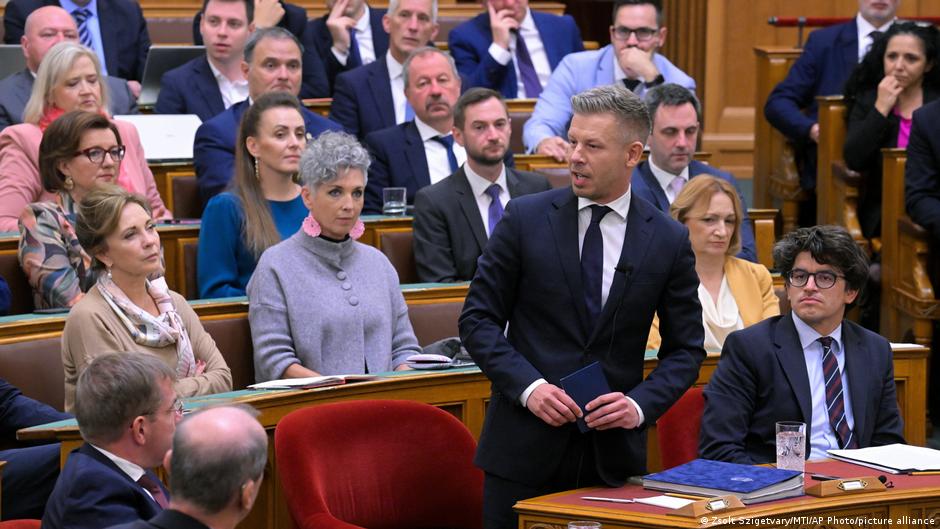
Hungarian Prime Minister Peter Magyar has vowed to investigate corruption under Viktor Orban and recover embezzled assets. This week brought the first significant development in that promised reckoning: on Monday, Magyar's Tisza Party used its two-thirds majority to lift the immunity of two opposition lawmakers, Balazs Hanko, formerly culture and innovation minister and a Fidesz lawmaker, and Miklos Sesztak, a former development minister now with the small Christian Democratic People's Party (KDNP). Both are the subject of corruption investigations.
Hanko is alleged to have unlawfully allocated around 50 million euros from the National Cultural Fund he oversaw in 2025 and 2026, including funds intended for election campaign purposes. Sesztak, one of the wealthiest lawmakers in Hungary, is alleged to have accepted around 30 million euros ($34 million) in bribes with an accomplice between 2015 and 2018, involving contracts tied to the state-owned bus company Volanbusz and the construction sector. Both were subsequently taken into pretrial detention.
Magyar previously launched "Operation Purgatory" and voluntarily asked for his own immunity to be lifted in an older case to show that the same standards apply to everyone. Polls show a large majority of Hungarians consider the former Orban order "systemically corrupt." Some voices, however, are calling for the reckoning to be handled prudently and within the rule of law.
6. China's Factory Activity Returns to Growth in September
Source: CNBC
China's factory activity returned to growth in September, with the official manufacturing purchasing managers' index rising to 50.1 from 49.8 in August, National Bureau of Statistics data showed Wednesday, in line with analysts' forecasts. NBS chief statistician Huo Lihui said the modest expansion was driven by accelerated activity in equipment and high-tech-related manufacturing as well as consumer industries. The non-manufacturing PMI also returned to expansionary territory, climbing to 50.2, with construction reaching its highest level this year.
The day before, China's top economic and financial policymakers unveiled targeted fiscal and monetary measures to lower financing costs and boost central bank lending. The finance ministry pledged mortgage subsidies for qualified home buyers, while the People's Bank of China expanded the quota for a lending support program for infrastructure and small firms and cut the program's interest rate. The steps are seen as a "mini stimulus" aimed at meeting the full-year growth target of 4.5% to 5%.
Nomura economists said the new measures were "not sufficient to bolster growth," while Macquarie's Larry Hu called them "just enough" to hit the target, expecting Beijing to act with less urgency as long as exports remain strong. Goldman Sachs views the measures "more significant as a policy signal than as a near-term growth impulse."

7. Study: Patients Switching From Obesity Shots to Wegovy Pill Kept Losing Weight
Source: CNBC
People who switched from obesity injections to Novo Nordisk's new Wegovy pill continued to lose weight after three months, according to an analysis of real-world data the company presented on Wednesday. The analysis used data from Ro's telehealth platform on 194 patients with obesity or who were overweight, around 56% of whom were female. Half started on Novo's Wegovy injection and the rest initially took Eli Lilly's shot Zepbound.
Patients who switched from an injection to the Wegovy pill and stayed on treatment for three months lost roughly 4% of their weight, or an additional 8.8 pounds on average, based on an average starting weight of around 221 pounds before taking the pill. Two in five of those participants achieved 5% or more weight loss three months after switching, and the share of people with a body mass index at or above 30 decreased by more than 21%. About 75% of patients said they were satisfied with the switch to a pill.
Novo's chief scientific officer, Martin Holst Lange, said the results suggest patients now prefer orals over injections. The company cautioned that real-world studies evaluate associations and cannot determine causality, and that the data had limitations including incomplete data and self-reporting bias. Also on Wednesday, Novo presented data in Milan at the European Association for the Study of Diabetes on its next-generation obesity drug CagriSema.

8. Netherlands Reports First Child Euthanized Under New Rules
Source: CBS News
A severely disabled 1-year-old child has been euthanized by doctors in the Netherlands, a government review board has confirmed. It is the first case reported by authorities guided by new rules allowing the termination of life of seriously ill children between the ages of 1 and 12. According to the assessment published by the Netherlands' Review Committee on Late-term Abortions and Termination of Life of Neonates and Children aged under 12, the child, whose identity was not disclosed, had extensive and irreversible brain damage, severe cerebral palsy, epilepsy and visual impairment.
The committee said the child was born extremely prematurely, at 26 weeks and three days, and then had serious complications including multiple infections leading to sepsis; an MRI later revealed extensive brain damage. Just before the child turned 2, doctors estimated their developmental age to be around 6 weeks. The committee said "every facet of 'being human' in terms of motor skills, behavior and personality was severely affected, and there would be no improvement."
Not all the doctors who assessed the child agreed with the decision to use euthanasia. After further treatment caused additional side effects and was halted, another independent doctor concluded the child's suffering was clear and unbearable and that the requirements for termination of life had been met, and the committee ultimately concluded the physician "acted with due care." The Netherlands became the first country in the world to legalize euthanasia in 2002, and introduced the rules for children aged 1 to 12 in 2024.

9. Ugandan Journalist Crowned King After Bitter Succession Dispute
Source: BBC
Edward Rukidi Kijanangoma has been crowned king of Uganda's Tooro kingdom. The 56-year-old was long a familiar face in the East African nation as a storyteller, a long-serving anchor and editor at the state broadcaster, and has now become the subject of media attention himself. The coronation began at midnight, involving traditional practices, and Kijanangoma walked about 4km (2.5 miles) to the official Karuziika royal palace.
Tooro is one of Uganda's four main officially recognized historical kingdoms. For the last 31 years it had been headed by King Oyo Nyimba Kabamba Iguru Rukidi IV, who ascended to the throne as an infant in 1995 at the age of three, then the world's youngest monarch, and who died last month from cancer aged just 34. His rise sparked controversy: close members of the royal family said Oyo had left a young son and a will instructing that the child be next on the throne, but the son was never revealed to the public.
A committee of 21 Babiito clan members eventually selected Kijanangoma, a decision the late king's mother, Queen Best Kemigisa, objected to, leaving the royal family divided. Uganda's traditional kings have no formal political authority but retain cultural influence and command significant loyalty in the communities they lead. President Yoweri Museveni attended the coronation ceremony.

10. OpenAI Unveils AI Assistant "dots" as Safety Fears Delay New Model
Source: BBC
OpenAI on Tuesday unveiled "dots," a new artificial intelligence assistant it says can proactively carry out tasks on a user's behalf. At its annual developer day in San Francisco, chief executive Sam Altman called dots "remarkably capable, always-on agents that can handle really anything you can think of." A video showed people naming animated versions of their "dots" and giving them tasks such as building a website and booking afterschool activities for their children.
Altman reiterated his decision for OpenAI not to make a highly anticipated stock market debut until it can "make confident safety decisions." The company has been preparing for a listing potentially valuing it at up to $1.4 trillion. He said it would take time to ensure that "alignment, monitoring, safety, security stay well ahead of capabilities." The day before, OpenAI said it was delaying its latest model due to safety issues found in internal testing. Since July, the company has dealt with a series of issues with its AI agents acting improperly, including unprompted hacking into the Hugging Face platform.
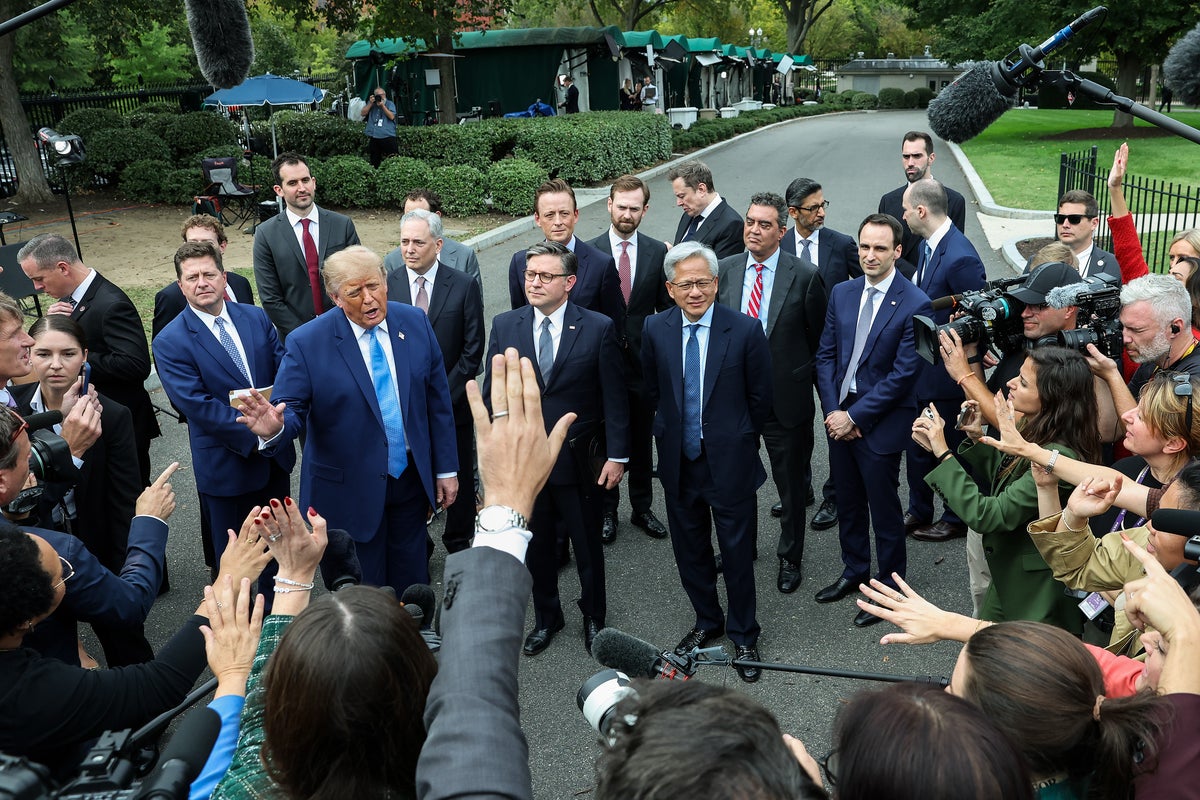
The same day, OpenAI president Greg Brockman and other tech leaders met US President Donald Trump, who repeated his belief that AI companies should regulate themselves and said they had discussed creating a ten-person committee to oversee the sector. Altman told the BBC the industry needed to "navigate the centrist path" and adopt a more sensible, pragmatic stance.

More News
- AI Weekly | Trump Rebrands AI 'Super Intelligence' as Rogue Agents and Bubble Fears Close In
- Finance Morning Brief: Nikkei Jumps Over 1,000 Points; Korea Posts Worst Q3; China's New Financial-Marketing Rules Take Effect
- Tech Express | September 30, 2026 — OpenAI Unveils GPT-6.1 Sol at One-Fifth the Price of Astra
- Sports Express | September 30, 2026 — Canadiens Edge Maple Leafs 3-2 in Season Opener
- Maple Express | September 30, 2026 — Trump Adviser Tells Canadian Lobbyists to 'Get the Hell Out'; Carney Laughs It Off
Comments (0)
View More
 -44%
-44%Nostalgia Retro Classic 10-Cup Coffee Maker — One-Button Brew, Vintage Look! $78.98 CAD (44% Off)
 -41%
-41%Anker Magnetic Power Bank 5,000mAh — Snap-On Wireless Charging! $29.99 CAD (40% Off)
 -35%
-35%Fire HD 8 Kids Tablet (Ages 6-12) — 1-Yr Kids+ Included, $65 Off! $124.99 CAD (34% Off)
 -21%
-21%KitchenAid Artisan 5-Quart Stand Mixer — The Classic, $95 Off! $379.98 CAD (20% Off)
 AI Weekly
AI Weekly | Trump Rebrands AI 'Super Intelligence' as Rogue Agents and Bubble Fears Close In
 Finance Morning
Finance Morning Brief: Nikkei Jumps Over 1,000 Points; Korea Posts Worst Q3; China's New Financial-Marketing Rules Take Effect
-44%Nostalgia Retro Classic 10-Cup Coffee Maker — One-Button Brew, Vintage Look! $78.98 CAD (44% Off)
Amazon
-41%Anker Magnetic Power Bank 5,000mAh — Snap-On Wireless Charging! $29.99 CAD (40% Off)
Amazon
-35%Fire HD 8 Kids Tablet (Ages 6-12) — 1-Yr Kids+ Included, $65 Off! $124.99 CAD (34% Off)
Amazon
-21%KitchenAid Artisan 5-Quart Stand Mixer — The Classic, $95 Off! $379.98 CAD (20% Off)
Amazon
AI WeeklyAI Weekly | Trump Rebrands AI 'Super Intelligence' as Rogue Agents and Bubble Fears Close In
Finance Morning