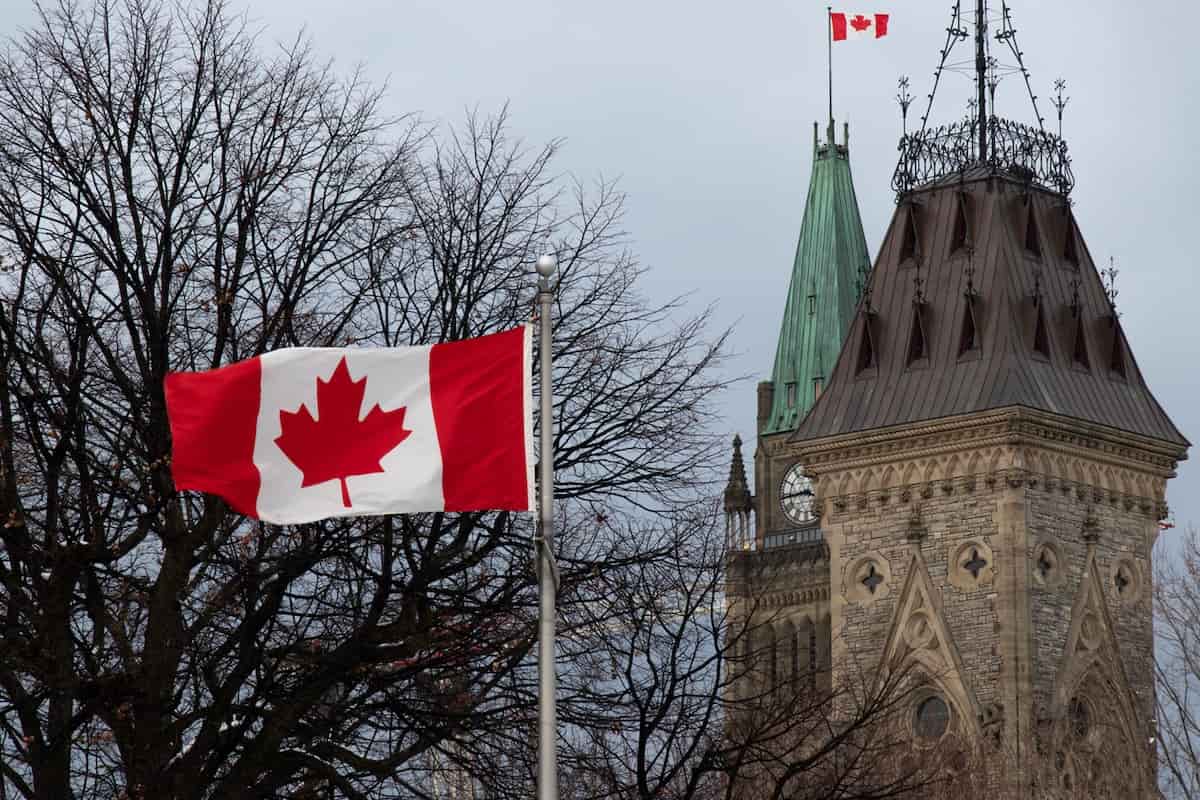
Immigration | November 16, 2026 Canada reveals how it will allocate 100,000 additional PR spaces for 2027
Canada this week detailed its plan for up to 100,000 additional permanent residence spaces in 2027: 32,000 for Hongkonger pathways, 18,800 for Ukraine family reunification, 45,000 for spouses and children, 12,600 humanitarian. Provinces must issue extra nominations by March 31, 2027. The student target stays at 150,000 a year through 2029, rural immigration is now permanent, low-wage permits can run two years, and applicants with Canadian ancestry may see PR files paused.
1. Canada reveals how it will allocate 100,000 additional permanent residence spaces for 2027
Source: CIC News
Canada's immigration department this week published the breakdown of how it plans to distribute up to 100,000 additional permanent residence admissions for 2027. In a news release posted on the federal government's website on November 10, Immigration, Refugees and Citizenship Canada (IRCC) said the spaces go to four groups of people who are already in Canada and have already applied for permanent residence.
The Hongkonger pathways are expected to account for 32,000 admissions, the Ukraine family reunification pathway 18,800, Canadians' spouses and dependent children 45,000, and the humanitarian and compassionate category 12,600. According to the release, IRCC aims to process all remaining applications under the Hongkonger pathways and the Ukraine Family Reunification Pathway in 2027, and to allocate the remainder of the additional spaces in the directions listed above.
The spaces form part of the 2027 temporary resident-to-permanent resident measures (2027 TPTMs) announced in Budget 2026. Those measures add 200,000 permanent residence spaces on top of the 380,000 annual target set in the 2027–2029 Immigration Levels Plan. The other 100,000 spaces are reserved for in-Canada workers and their family members and will be allocated in collaboration with the provinces and territories through the Provincial Nominee Program (PNP). The release stressed that applicants do not need to take any action for their applications to be processed faster under the initiative.
2. Canada holds its international student target at 150,000 a year through 2029
Source: ICEF Monitor
For international students planning to study in Canada, the 2027–2029 Immigration Levels Plan released this week provides one clear number: Canada intends to welcome 150,000 new international students in each of 2027, 2028 and 2029. The plan, released alongside the federal budget on November 5, sets aside 370,000 new temporary resident permits a year over the three years — 150,000 for international students and 220,000 for foreign workers arriving through the Temporary Foreign Worker Program (TFWP) or the International Mobility Program (IMP).
The gap between the target and actual arrivals is the other side of the story. Canada's target for new study permits (excluding extensions) in 2026 was 155,000, yet arrivals as of July were tracking well below that, with some in the industry expecting fewer than 90,000 new permits to be issued for the full year. The Canadian Bureau for International Education (CBIE) reports that Canada welcomed just over 65,000 new international student arrivals between January and August 2026 — a pace that puts the country on track to reach only about half of its annual target.
The policy clearly favours postgraduate students. In January 2026, the federal government removed master's and PhD students from the cap that had applied since 2024. The effect was immediate: 6,455 study permits were granted to master's and doctoral students in the second quarter of 2026, double the 3,085 in the same quarter of 2025. Canada reserved 49,000 study permits for postgraduate students in 2026, and master's and doctoral students accounted for 20 per cent of new permits between January and August 2026, compared with 12 per cent in 2025. Universities Canada welcomed the stable three-year target, saying predictable policy helps rebuild confidence in Canada's international education system.

3. Ottawa gives provinces 139 days to nominate tens of thousands more workers
Source: CIC News
Canada's provinces and territories received a hard deadline from the federal immigration department this week: they must issue tens of thousands of additional permanent residence nominations by March 31, 2027. IRCC set out the date in a news release published on the government website on November 12. It applies to workers outside Quebec who are in Canada and eligible to apply for permanent residence through the Provincial Nominee Program (PNP), along with their accompanying family members.
The additional nominations come from a pool of up to 100,000 economic permanent residence spaces under the 2027 temporary resident-to-permanent resident measures (2027 TPTMs). They sit on top of the 95,000 PNP spaces allocated for 2027 in the Immigration Levels Plan, which covers admissions that may come from outside Canada. With the March 31 deadline, IRCC has roughly nine months to process the resulting permanent residence applications so the time-limited measure can be completed by the end of 2027.
The additional allocations are optional, and each province or territory can decide how many to use to nominate workers already established in their communities who meet local labour market needs. Both base PNP streams and Express Entry-aligned enhanced streams can be used. Beyond nominees, provinces can also identify workers in their jurisdictions who have already applied for permanent residence and are awaiting a decision, including applications filed through the Atlantic Immigration Program and several federal programs and pilots that are now closed to new applications. CIC News noted that no details have yet been provided on which jurisdictions will use the spaces or how they will be distributed.

4. Canada turns its rural community immigration pilot into a permanent program
Source: Immigration.ca
Skilled workers and international graduates hoping to settle in smaller cities and towns got a long-term answer this week. Immigration Minister Lena Metlege Diab confirmed on November 9, 2026, that Canada has made the Rural Community Immigration Pilot permanent. The new regulations came into force on October 22, were published in the Canada Gazette on November 4, and establish the Rural Community Immigration Class.
The permanent program initially builds on the existing pilot, with 14 communities across six provinces expected to keep participating. Ontario has the most participating communities with five, British Columbia and Manitoba have three each, and Nova Scotia, Saskatchewan and Alberta have one each. On admissions, rural immigration has been allocated 5,500 permanent residence spaces in 2027, rising to 6,500 by 2029. Communities are expected to begin issuing recommendations under the permanent program from January 1, 2027.
Unlike the temporary pilots, the new regulations create a permanent economic immigration class under the Immigration and Refugee Protection Regulations, making rural immigration an ongoing part of the federal economic immigration system. Candidates must secure a qualifying job offer from a designated employer and obtain a recommendation from the economic development organization responsible for the community, while also meeting requirements on work experience, education, language proficiency, settlement funds and intent to settle; a job offer alone is not enough. International graduates of public post-secondary institutions located in the participating community can be exempt from the standard one year of work experience, but generally must have obtained their credential within 18 months before applying and lived in the community for at least 16 of the final 24 months of study. The government says more than 1,950 employers were designated between January 2025 and August 2026, issuing more than 4,700 job offers and community recommendations.

5. Canada doubles the maximum duration of low-wage temporary foreign worker permits
Source: CIC News
Foreign workers employed by Canadian employers in the low-wage stream can now receive work permits valid for up to two years. In a November 6 news release, Employment and Social Development Canada (ESDC) announced it was raising the maximum duration of low-wage Labour Market Impact Assessments (LMIAs) from one year to two, for LMIAs submitted on or after November 6. Because the LMIA's duration sets the maximum length of a TFWP work permit, permit durations rise with it.
"Low-wage" means a wage below 120 per cent of the hourly median wage in the province or territory where the job is located. At present, that threshold is $36.92 in Ontario and $38.40 in British Columbia. The change does not open up low-wage hiring across the board: the federal government still maintains a moratorium under which ESDC will not process low-wage LMIAs for non-exempt positions in Census Metropolitan Areas (CMAs) with unemployment of 6 per cent or higher. Thirty CMAs are currently on the list, including Toronto, Vancouver, Montreal, Calgary, Edmonton and Halifax.
The list is updated quarterly, with the next update scheduled for January 8, 2027. In the same release, ESDC added early childhood educators to the list of exempt occupations, which already included construction, agriculture and healthcare. For workers whose permits are expiring, another change also matters: IRCC eliminated the time limit on concurrent processing on October 28, 2026, after having raised it from 60 to 90 days on August 21, 2026. If a permit expires within two weeks and the employer has not yet received an LMIA decision, the worker may apply for an extension while the LMIA is pending — provided the employer applied with enough lead time — and can keep working under maintained status while awaiting the decision.

6. A Canadian grandparent or great-grandparent could put your PR application on hold
Source: CIC News
People in the United States and elsewhere who are applying for Canadian permanent residence but have Canadian ancestry need to answer one question first: are they already Canadian citizens? The reason is Bill C-3, which came into force on December 15, 2025 and removed the first-generation limit in the Citizenship Act. Anyone born before December 15, 2025 who can trace an unbroken line of descent to a Canadian ancestor may already be a citizen by descent — whether or not they know it.
Briannah Dale, senior communications adviser at IRCC, told CBC News that if an officer has "compelling reasons to believe an applicant may already be a citizen under Canadian law," the officer can put a permanent residence application on hold even if the applicant has not applied for a citizenship certificate. She acknowledged that the department cannot say how many PR applications have been put on hold for this reason. IRCC is clear that a person cannot be a Canadian citizen and a permanent resident at the same time. If a citizenship application is filed, the PR application is paused while it is assessed; if citizenship is confirmed, the PR application is considered withdrawn, and if it is not confirmed, the file returns to its original place in the queue.
The time involved is the crux of the choice. As of October 2026, IRCC's published processing time for a proof of citizenship application was 34 months, compared with about 18 months for spousal sponsorship from outside Canada and outside Quebec, and closer to seven months for Express Entry skilled worker processing. Dale also said people who already hold permanent resident status will not lose it while waiting for a citizenship certificate. Note that having a Canadian grandparent is not enough on its own: the ancestor must have been a citizen when the next generation was born, with no breaks in the line of descent. Children born on or after December 15, 2025 face an additional requirement — the Canadian parent must show at least 1,095 days of cumulative physical presence in Canada before the birth or adoption.

7. Study permit wait times fall while work permit times climb
Source: CIC News
Applicants waiting on Canadian temporary resident documents saw two opposing sets of numbers this week. On November 13, IRCC released updated processing time estimates as of November 12 for work permits, study permits, visitor visas and super visas. CIC News compared the figures with those published on November 4; the next update is expected around November 18.
Study permits were the bright spot. Processing fell from eight weeks to six for applications filed from inside Canada, and from five weeks to four for applicants from Pakistan, both the fastest in more than four months. India remained at eight weeks, Nigeria at 11, the United States at four and the Philippines at six. Work permits moved the other way: Pakistan rose from nine weeks to 10, the slowest since late August, and the Philippines also went from nine to 10 weeks, the highest in more than five months. Canada (16 weeks), India (10), Nigeria (10) and the United States (three) were unchanged.
For visitor visas, India edged up from 32 days to 34, Nigeria fell from 103 to 100 and Pakistan from 58 to 57, its lowest level since early August; in-Canada applications stayed at 12 days, the United States at 18 and the Philippines at 24. Among super visas, Pakistan dropped from 101 days to 91, Nigeria from 33 to 28 and the Philippines from 109 to 104, while India rose from 85 to 87 and the United States from 75 to 78. Visitor visa extensions from inside Canada shortened from 310 days to 304. IRCC finalized 2,076,745 temporary residence applications between January and August 2026, with 365,425 still in its processing inventory as of August 31.

8. Atlantic universities have lost nearly half their international students in three years
Source: The Conversation
Among Canada's universities, institutions in Atlantic Canada have been hit hardest by the international student cap. An analysis published in The Conversation on November 11 found that the region's universities have lost nearly half their international students in three years: preliminary figures released in October show international enrolment fell by 3,020 students, or 18 per cent, over the past year, bringing the decline since federal restrictions began in January 2024 to almost 48 per cent.
The author, Dale Kirby, a professor in the faculty of education at Memorial University of Newfoundland, cites the Auditor General's March report showing that the restrictions cut new study permit approvals far more sharply than Ottawa expected. The federal government anticipated declines of no more than 10 per cent in several smaller provinces, including all four Atlantic provinces, and even expected an increase in Newfoundland and Labrador; instead, approvals fell by at least 59 per cent in those provinces, and IRCC could not explain the gap. At Memorial, where Kirby works, international enrolment dropped from 4,889 students in 2023 to 2,682 in fall 2026, a decline of more than 45 per cent; new international enrolment rose 14 per cent this fall, but total enrolment was still down two per cent year over year.
The decline feeds straight into university finances. Statistics Canada reports that international undergraduates paid an average of $41,746 in tuition in 2025–26, against $7,734 for Canadian undergraduates. The article cites an estimate that Canadian universities lost about $1 billion in annual international tuition revenue between 2023–24 and 2025–26, with further losses projected through 2030–31. Kirby argues this does not mean universities should rely on international tuition indefinitely, but that the federal government should examine why approval rates differ so sharply between provinces and weigh regional needs when setting policy.

More News
- Finance Evening: Dow Sinks 561 Points as Nvidia Erases Gains and Anthropic Prices IPO at $83
- Maple Express | November 18, 2026 — Toronto police foil murder plot in towing probe; Chow begins second term
- Maple Express | November 18, 2026: Toronto police disrupt murder plot tied to tow-truck industry
- AI Weekly | Compute Moves Behind Licenses, and AI Starts Paying Interest on Its Capex
- Global Express | November 18, 2026: Xi Greets Trump at Shenzhen Airport Ahead of Trilateral Talks
Comments (0)
View More
 -34%
SHOWKOO 3-Piece PC Hardshell Luggage Set 20/24/28 in — Double Spinner Wheels & TSA Lock! $199.99 CAD (33% Off)
 -28%
Govee RGBIC Floor Lamp — 1,000 Lumens, 16 Million Colours! $79.99 CAD (27% Off)
 -18%
Aranet4 Home CO₂ Monitor — NDIR Accuracy to ±30 ppm, E-Ink Screen, Batteries Last a Year! $239 CAD (18% Off, Plus a $15 Coupon)
 -27%
LG 36" 26.6 Cu. Ft. Side-by-Side Refrigerator — Door Dispenser and Dual Ice Makers with Craft Ice! $1,899.99 CAD (27% Off)
 AI Weekly
 | Compute Moves Behind Licenses, and AI Starts Paying Interest on Its Capex
 Maple Express
 | November 18, 2026 - Alert Ready test today; Joly to meet Stellantis Friday
-34%SHOWKOO 3-Piece PC Hardshell Luggage Set 20/24/28 in — Double Spinner Wheels & TSA Lock! $199.99 CAD (33% Off)
Amazon
-28%Govee RGBIC Floor Lamp — 1,000 Lumens, 16 Million Colours! $79.99 CAD (27% Off)
Amazon
-18%Aranet4 Home CO₂ Monitor — NDIR Accuracy to ±30 ppm, E-Ink Screen, Batteries Last a Year! $239 CAD (18% Off, Plus a $15 Coupon)
Amazon
-27%LG 36" 26.6 Cu. Ft. Side-by-Side Refrigerator — Door Dispenser and Dual Ice Makers with Craft Ice! $1,899.99 CAD (27% Off)
Best Buy
AI WeeklyAI Weekly | Compute Moves Behind Licenses, and AI Starts Paying Interest on Its Capex
Maple Express