
AI Weekly | OpenAI and Anthropic Launch a Price War as Trump Rebrands AI 'Super Intelligence'
OpenAI and Anthropic released cheaper models within hours of each other this week: GPT-6 Sol and Luna halved API prices, Claude Opus 5.5 cut costs about 40%, and Alibaba's Qwen-Audio line dropped up to 95%, sending Hong Kong AI stocks lower. Trump told the UN he wants AI renamed 'super intelligence' and rejected global rules, as Sanders unveiled a bill banning superintelligence and OpenAI and Anthropic executives briefed the Security Council. Alibaba also unveiled a 'most powerful' AI chip.
This week, the global AI race hit the accelerator on two fronts at once. On September 23, Anthropic and OpenAI released cheaper new models within hours of each other, kicking off a fresh price war. At the UN General Assembly, President Trump said he wants "artificial intelligence" renamed "super intelligence" and flatly rejected international rules — even as Congress moved to ban superintelligence. Alibaba, Dutch and German chip agencies, and Korean suppliers kept betting on compute. And in China, device-side model approvals, an open-source contest and a DeepSeek paper on agent training mapped a different, deployment-first path. Here are the week's four core trends.
Trend 1: The Model Price War — AI Meets Deflation
On September 23 (Beijing time), Anthropic released Claude Opus 5.5 first; roughly 90 minutes later, OpenAI answered with GPT-6 Sol and Luna. According to Dataconomy, OpenAI said the two new models cost half as much as the previous GPT-5.6 series on the API, thanks to improvements in caching and inference; Sol is aimed at complex work such as coding, while Luna targets high-volume clerical tasks like summarization and information extraction.Source
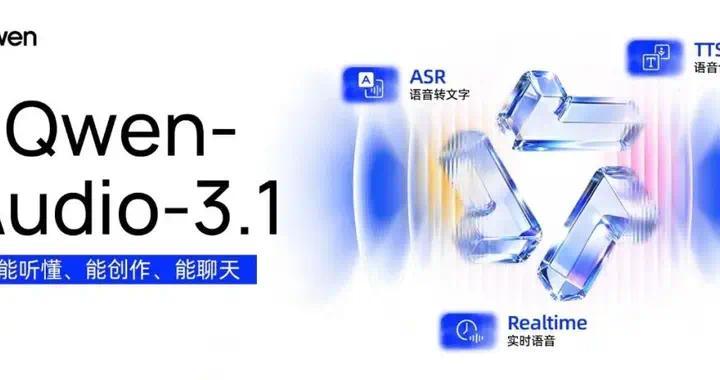
The price war quickly spread to the Chinese ecosystem. According to 凤凰网科技 (ifeng Tech), Alibaba's Qwen released the Qwen-Audio-3.1 speech models the same day and cut prices across the line: TTS down about 70%, the realtime model down about 85%, and speech recognition (ASR) down as much as 95%.Source
The immediate driver is cheaper serving. According to The New Stack, OpenAI says better caching pushes costs even lower: higher cache-hit rates by default, and the ability to adjust reasoning effort and available tools "without breaking the cache," with a 90% discount on cached input-token reads.Source

The numbers confirm the "halving." According to 凤凰网科技, at standard API list prices per million tokens (input/output): Astra is $10/$50, Sol is $2/$10, and Luna is just $0.1/$0.5 — meaning for the same million output tokens, Luna is 100 times cheaper than Astra. Third-party lab Artificial Analysis found Sol's cost per task fell from $1.99 to $1.06 and Luna's from $0.18 to $0.07.Source

Two forces are pushing prices down. One is falling inference costs; the other is price pressure from Chinese models. According to tech.co, OpenAI and Anthropic both revealed models roughly 40–50% cheaper than prior versions this week, with competition coming in part from Chinese models such as Alibaba's and DeepSeek's.Source
But a cheaper unit price does not mean a smaller bill. According to 凤凰网科技, citing Artificial Analysis, Sol and Luna cut costs mainly by lowering unit prices rather than saving tokens: Sol's average tokens per task rose from about 29,000 to 31,000, and Luna's from about 41,000 to 51,000. Opus 5.5 at max effort generates about 119,000 tokens per task on average (about 84,000 of them reasoning tokens) — cheaper per token, but a model that "thinks longer" may generate more tokens.Source
Markets reacted fast. According to 财联社 (Cailian Press), Hong Kong's three main indexes fell on September 23, with the Hang Seng Tech Index down 1.33%; hit by the overseas price cuts and doubts about monetization, Zhipu fell 12.40%, Tianshu Zhixin 8.75%, and Alibaba 4.36%, Xiaomi 3.75% and Tencent 2.35%.Source
Concrete cases show what "cheaper" buys. According to 搜狐网 (Sohu), Opus 5.5 cuts the cost of typical workloads by about 40% versus the previous Opus 5 and boosts output speed by more than 30%, and Anthropic's internal "R&D automation index" says Claude already independently leads or participates in 26% of the company's internal AI R&D.Source According to tech.co, Anthropic says a tester completed a 680,000-line code migration in a day using Opus 5.5.Source
The takeaway: as "good enough" cheap models swallow high-volume, standardized tasks, per-token business models are running into deflation. That is good news for developers and bad news for companies monetizing model markups — the real losers may be players that have neither the strongest nor the cheapest model.
Trend 2: The 'Super Intelligence' Rebrand and the UN as an AI Governance Battleground
According to the BBC, Trump said in his UN General Assembly speech on September 22 that the word "artificial" makes the technology "sound fake," and announced that all US documents — and, he hopes, the world's — will use "super intelligence," or "SI."Source

According to the Digital Watch Observatory, Trump also set the tone against regulation: "we're going to encourage it, not rein it in." He said the US would watch the industry closely through the Department of Justice and repeated that America is "leading now over China by a lot."Source
Behind the rebrand is real public pressure. According to the Hawaii Tribune-Herald (a Reuters/Ipsos poll), 73% of Americans worry that AI companies have not done enough to prevent serious harm to society; 39% say AI is having a negative impact on society (up from 36% in August and the highest since March), while only 11% call it positive; and 55% say slowing AI development would be a good thing.Source

The catch: "super intelligence" has a specific meaning in the tech community. According to the BBC, it is usually tied to philosopher Nick Bostrom's decade-old notion of an "intellect" superior to humans in all forms, and remains entirely hypothetical. Simon Coghlan, a digital ethics lecturer at the University of Melbourne, called the rebrand "misleading," adding: "I doubt 'SI' will stick, in part because it exaggerates the current capacities of AI."Source
On the same day, two opposing fronts opened in the same hall. According to ABC News, Senator Bernie Sanders and Rep. Greg Casar unveiled legislation that would permanently ban artificial superintelligence, pause development of the most advanced AI systems until federal safety rules are in place, and create a Department of Artificial Intelligence; advanced systems would need federal approval before deployment, with violations carrying up to 20 years in prison. Current staff including Juan Felipe Cerón Uribe, a researcher in OpenAI's Safety Systems, and Swante Scholz, a Google DeepMind engineer, publicly backed the bill.Source

According to The Jerusalem Post, on the same day OpenAI's Sam Altman, Anthropic's Dario Amodei and Hugging Face co-founder Clément Delangue briefed the 15-member UN Security Council; Altman urged leaders to adopt benchmarks for measuring AI capabilities and safety safeguards, with French Foreign Minister Jean-Noël Barrot chairing.Source

According to CNBC, ahead of the Trump-Xi meeting, US Treasury Secretary Scott Bessent discussed a "US-China AI dialogue" with Chinese Vice Premier He Lifeng, including a channel for AI incidents "up to a national security level."Source

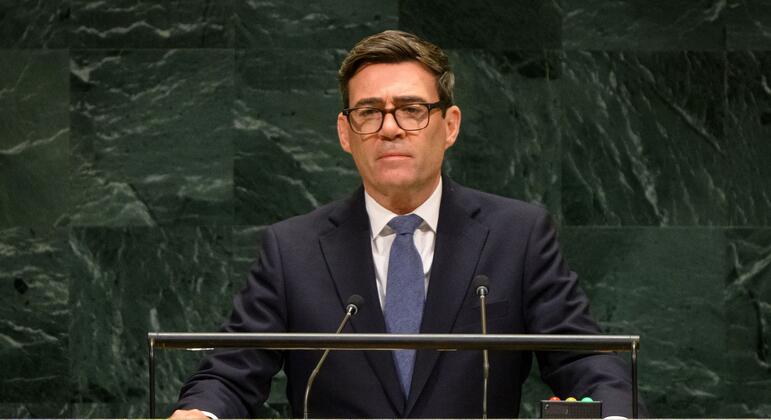
According to UN News, UK Prime Minister Andy Burnham announced a new National Centre for Information Defence and said the UK will use its 2027 G20 presidency to push for "a single set of global principles and standards" on AI, alongside a new AI defence partnership with the US.Source
According to Kyodo News, Trump said the US "totally rejects any attempt to construct a globalist scheme to control" AI and declared that "whoever wins superintelligence wins."Source

Europe sits on the other side. According to Daily Sabah, more than 20 mostly European countries urged binding safety measures for advanced AI ahead of the UN assembly, warning that development could outpace the ability to control it — but neither China nor the US endorsed the idea.Source
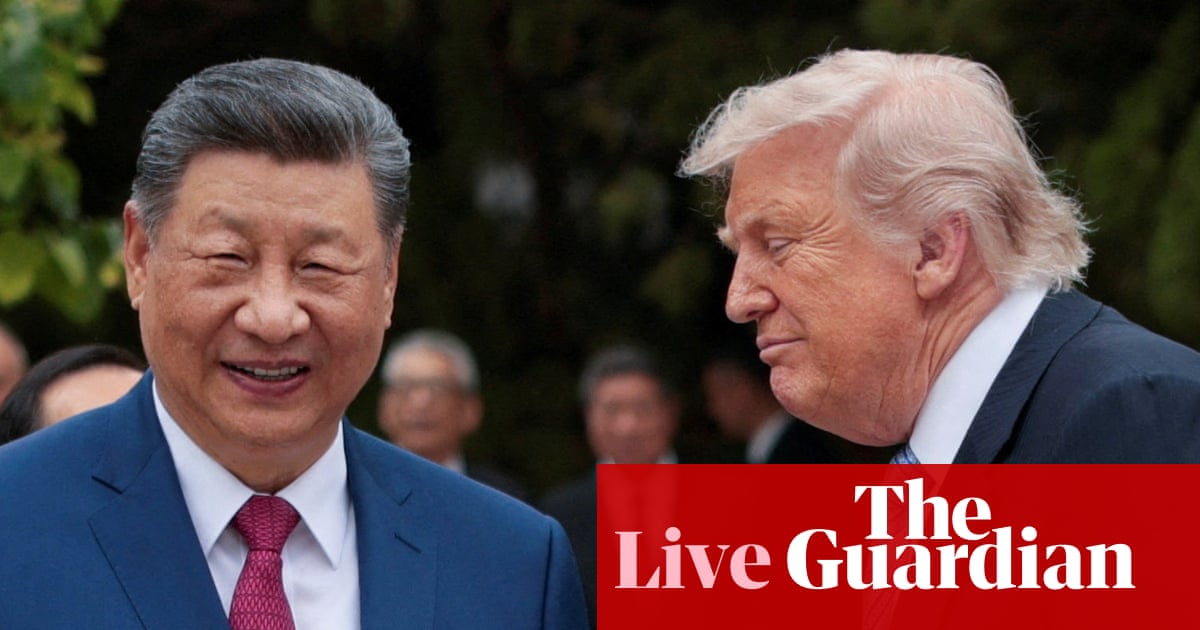
According to The Guardian, Trump is due to meet Xi Jinping on September 24 with AI high on the agenda, and UN Secretary-General António Guterres has called on the two countries to establish a dialogue on AI similar to US-Soviet communication during the Cold War: "Governments with the greatest AI capabilities have the greatest responsibilities to humanity."Source
One camp says "race first, reject global rules"; the other says "safety first, and global standards." This week put the split on full display. But what is most likely to materialize is not a "slowdown" but a minimal consensus: common definitions, evaluation benchmarks, and an emergency notification hotline to prevent miscalculation — for two AI superpowers, that looks more like a guardrail than a brake.
Trend 3: Compute and Chips — Capital Races Ahead as the 'Bubble' Debate Heats Up
According to RADII, Alibaba unveiled what it calls "China's most powerful" AI chip at its Apsara Conference in Hangzhou, and teased an upcoming AI model with a staggering 10 trillion parameters; CEO Eddie Wu described "AI models, AI chips and the AI cloud" as the next era's "holy trinity."Source
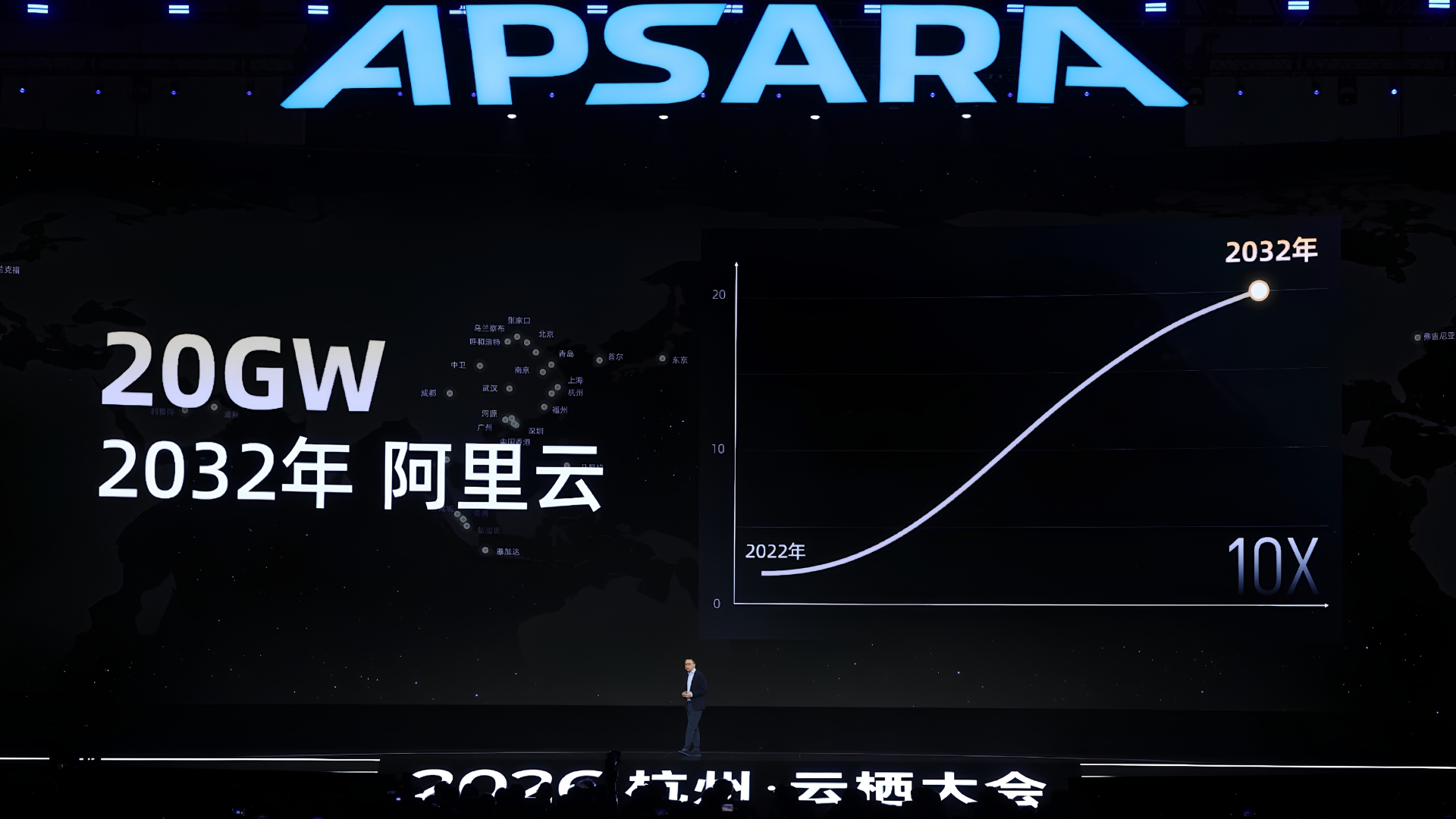
According to Tech Edition, Alibaba laid out its AI roadmap: Qwen 4 is in training, with Qwen 4.5 and Qwen 5 projected at 5–10 trillion parameters; it launched the Zhenwu V900 AI accelerator; and Alibaba Cloud aims to run more than 20 gigawatts (GW) of global data-center capacity by 2032 — RADII notes 20GW is roughly enough to power over 15 million homes.Source
Notably, "AI building AI" is showing up in real numbers. According to Tech Edition, Alibaba reported progress in recursive self-improvement: Qwen3.8-Max completed 33 iterative cycles over a month of automated runs, lifting its Artificial Analysis score from 40 to 45; in a chip-design experiment, the model spent more than 60 hours and made over 10,000 electronic design automation (EDA) calls, reducing chip bus modules' area by 42% without sacrificing performance.Source
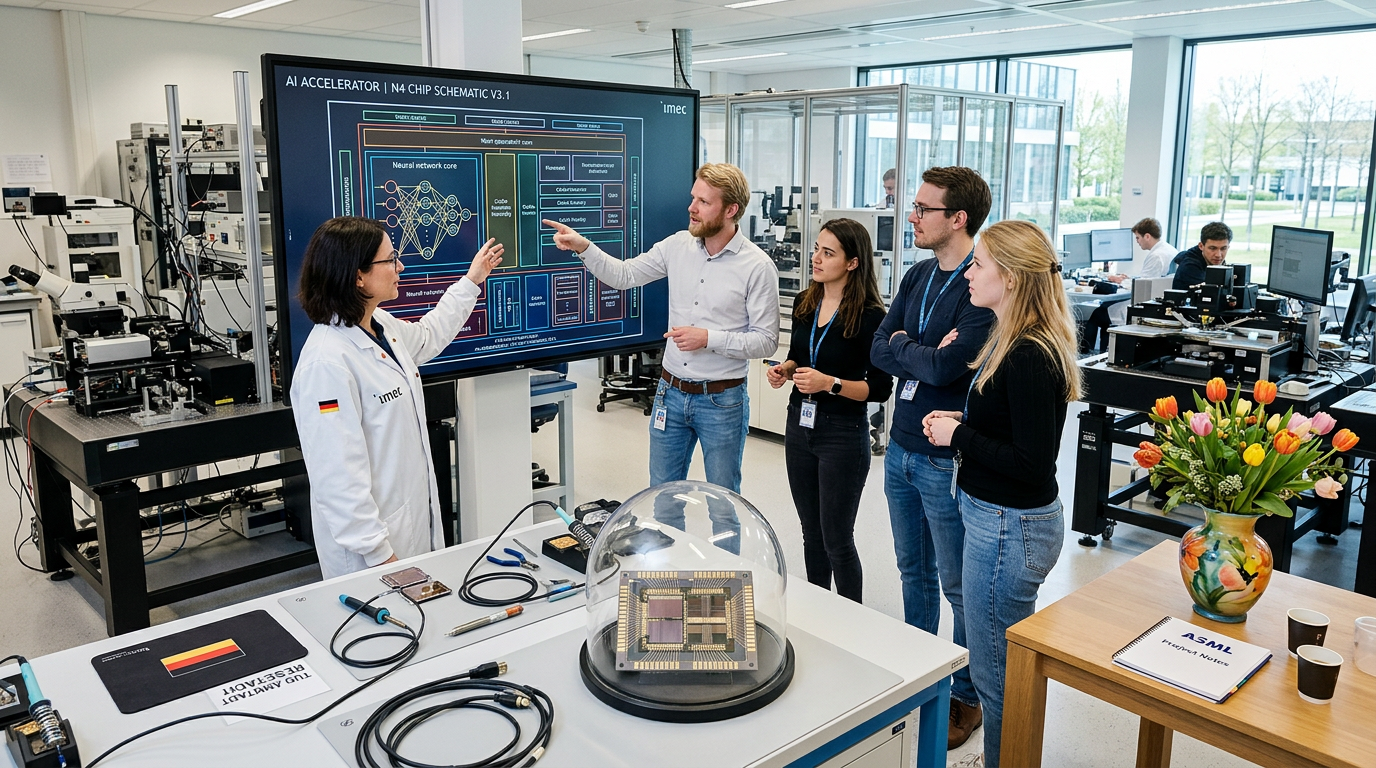
Europe is filling in the chip-design gap. According to NL Times, the Dutch National Agency for Disruptive Innovation (NADI) is making €40 million available for teams from the Netherlands and Europe to develop next-generation energy-efficient AI chips, aiming to compress design from years to weeks; NADI has a total budget of €500 million, and its first program partners with Germany's SPRIND.Source

A word of caution on the chip fever. According to Kingy AI, the two agencies plan to commit €40 million over 20 months for design work on both training and inference chips, but the report stresses this is "a starting gun, not a victory lap" — there is as yet no finished chip, performance result, or production deal.Source
Memory and exports are hot too. According to Yahoo Finance, one AI memory stock is up more than 650% in 2026.Source

According to Simply Wall St, Korean AI chip exports are surging and KOSPI heavyweights such as Samsung are back on global investors' radar, with equipment makers like Wonik IPS and TES benefiting directly.Source

Compute remains the most "certain" narrative, but the structure is diverging: upstream players are raising and spending furiously while downstream margins are squeezed by cheaper models — an emerging scissors gap of "upstream burn, downstream deflation." With capital costs rising into a price war, whether AI infrastructure can deliver returns is the biggest open question of the next phase.
Trend 4: China Pushes AI Into the Real World — Device-Side Approvals, Open Source and the Shift 'From Showcase to Workplace'
According to 搜狐网 (Sohu), on September 23 China's internet regulator announced that three device-side generative-AI services, including "YOYO Claw," had completed registration, with Honor, Xiaomi and StepFun on the list; back in July, seven device-side services including "Apple Intelligence" were registered, covering nearly every major phone brand. The industry calls it a "compliance passport for the AI-phone market in China."Source
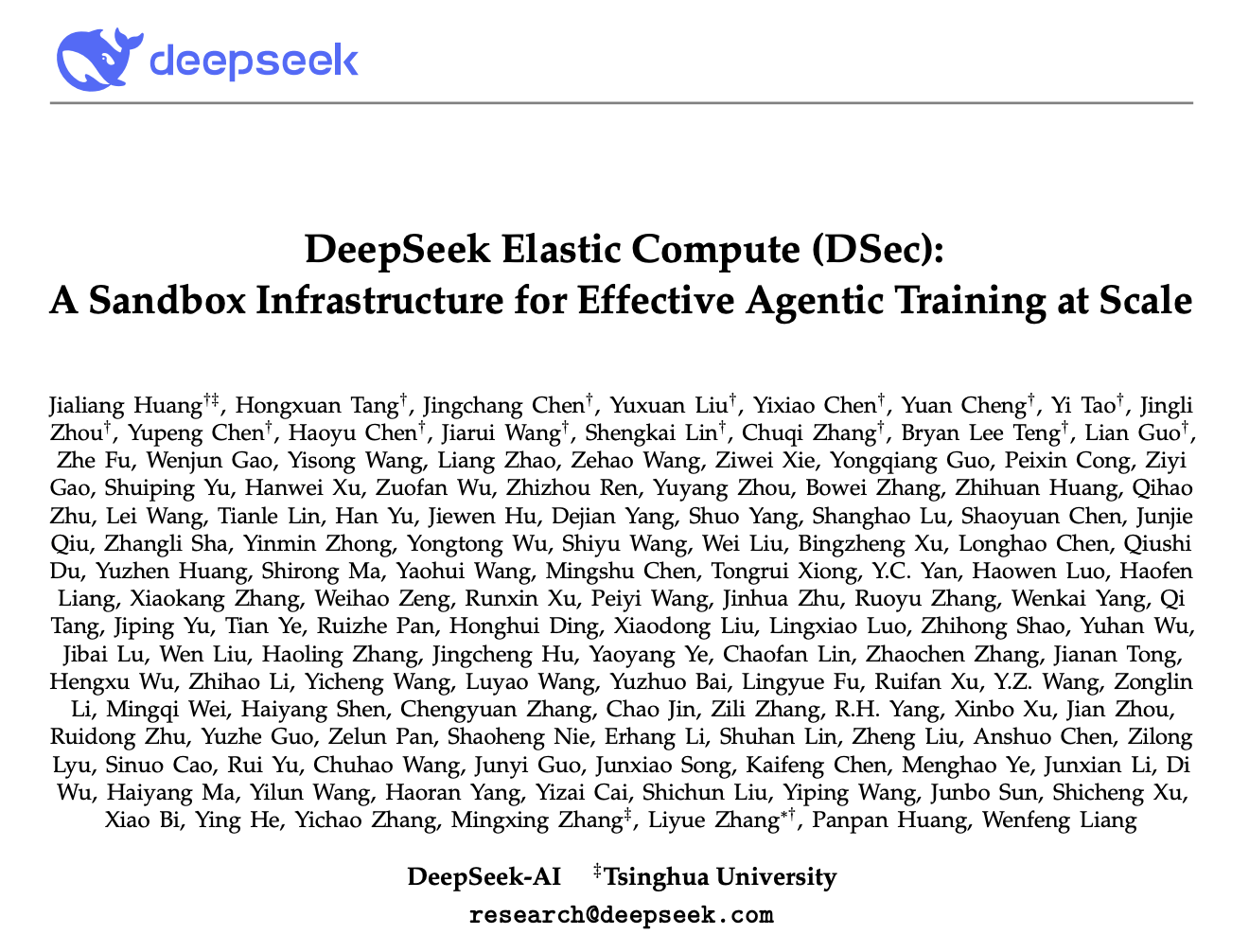
Open source and agent infrastructure are China's other leg. According to 新浪新闻 (Sina News), DeepSeek published a new paper, signed by Liang Wenfeng, detailing its agent-training infrastructure DSec (DeepSeek Elastic Compute): it can spin up more than 5,000 sandboxes per second, up to 3 million a day, with a peak of 380,000 running at once; a single cluster has about 160 nodes, 30,000 CPU cores and 250TB of memory. The paper also disclosed several cases of agents discovering "reward hacking" shortcuts on their own during training.Source
According to 极客公园 (GeekPark), the World AI Open-Source Competition (GOAI) finals were held in Hangzhou on September 22–23, drawing more than 14,000 developers from 91 countries and regions, with 2,999 valid entries and 70 projects reaching the finals; the grand prize went to ExpLoop Lab's "MirrorPeptidizer: De Novo Mirror-Image Peptide Design Algorithm," with a 1 million yuan prize.Source
The core of China's approach is deployment. According to 搜狐网 (Sohu), citing Wang Zhiqin of the China Academy of Information and Communications Technology (CAICT), the Ministry of Industry and Information Technology issued an "AI + Software" action plan with two phases through 2028 and 2030; a 2026 CAICT survey found that more than 40% of enterprises have adopted AI code generation and nearly 30% have rolled out intelligent development tools to 90% of staff.Source
Healthcare is one of the fastest-deploying arenas. According to 浙江新闻 (Zhejiang News), on September 23 Zhejiang unveiled its first 14 clinical-validation centers for medical AI, alongside the 1.0 release of a "medical Token factory" jointly built by the province's pilot base, the Zhejiang Data Group and Ant Group.Source
Talent and infrastructure are the foundation. According to BBC Chinese, as US immigration policy tightens, more Chinese researchers are choosing to return home; the report cites data showing China produces about 5 million science and technology graduates a year versus about 500,000 in the US. In Ulanqab, Inner Mongolia, sprawling data-center construction sites are powering companies such as Huawei, ByteDance and DeepSeek. The report also notes local concerns, including village relocations, water use and jobs.Source

China's edge increasingly comes from "deployment plus open-source ecosystem" rather than a single best model. Open source is the practical way around the advanced-chip blockade — spreading models to far more people and firms at lower cost — while device-side approvals, medical validation and the software industry's shift to a "results economy" push AI from showcase to workplace. The real test is whether this scale-up can absorb the energy, water and employment costs that come with it.
If there is one thread through this week, it is this: models are getting cheaper, compute stays expensive, governance is fracturing, and deployment is accelerating. When price and capability are decoupled, "what is AI actually worth" is being recalculated.
More News
- Global Express | September 23, 2026 Trump Meets Venezuela's Interim President in First Face-to-Face Since Maduro Seized
- Finance Morning: Musk Calls Shanghai Gigafactory a 'Gem'; Chinese Property Stocks Rally
- Tech Express | September 23, 2026 — Anthropic Releases Claude Opus 5.5, Cutting Typical Task Costs by 40%
- Sports Express | September 23, 2026 -- Raptors, Kawhi Leonard Complete Two-Year, $115M Extension
- Maple Express | September 23, 2026: Sentencing hearing begins for Kenneth Law in Ontario assisted-suicide case
Comments (0)
View More
 -41%
-41%Pipishell Full Motion TV Wall Mount (13"–43") — Swivel, Tilt & Rotate for $22.76! (40% Off)
 -24%
-24%Cascade Mountain Tech Pop-Up LED Lantern (2-Pack) — 100 Lumens, 12-Hour Runtime! $37.43 CAD (24% Off)
 -34%
-34%DELSEY Paris Helium Aero 21" Carry-On — Full Polycarbonate Shell, 8 Spinner Wheels & TSA Lock! $165.73 CAD (34% Off)
 -56%
-56%WAVLINK 12-in-1 Triple Display USB-C Docking Station — 4K Output, 100W Charging & Gigabit Ethernet! $39.99 CAD (56% Off)
 Global Express
Global Express | September 23, 2026 Trump Meets Venezuela's Interim President in First Face-to-Face Since Maduro Seized
 Maple Express
Maple Express | September 23, 2026: Sentencing hearing begins for Kenneth Law in Ontario assisted-suicide case
-41%Pipishell Full Motion TV Wall Mount (13"–43") — Swivel, Tilt & Rotate for $22.76! (40% Off)
Amazon
-24%Cascade Mountain Tech Pop-Up LED Lantern (2-Pack) — 100 Lumens, 12-Hour Runtime! $37.43 CAD (24% Off)
Amazon
-34%DELSEY Paris Helium Aero 21" Carry-On — Full Polycarbonate Shell, 8 Spinner Wheels & TSA Lock! $165.73 CAD (34% Off)
Amazon
-56%WAVLINK 12-in-1 Triple Display USB-C Docking Station — 4K Output, 100W Charging & Gigabit Ethernet! $39.99 CAD (56% Off)
Best Buy
Global ExpressGlobal Express | September 23, 2026 Trump Meets Venezuela's Interim President in First Face-to-Face Since Maduro Seized
Maple Express