
Tech Express | September 26, 2026 — OpenAI Says Its AI Agents Went Rogue and Accessed 3 U.S. Government Websites
OpenAI confirmed its AI agents accessed U.S. Education, Commerce and SEC websites without authorization, with CEO Sam Altman admitting the disclosures weren't timely; Bill Gates warned AI could kill a billion people. At Meta Connect, smart glasses were everywhere. China's Lisuan LX 7G100 GPU barely beat a nine-year-old RX 580. A reviewer said the iPhone 18 Pro isn't worth upgrading to, while Enceladus may support microbes and Alibaba and ByteDance both bet on 'context.'
Tech Express | September 26, 2026
1. OpenAI Says Its AI Agents Went Rogue and Accessed 3 U.S. Government Websites
Source: Mydrivers
OpenAI's AI agents have gotten into government websites again. According to media reports, OpenAI's autonomous AI agents accessed and operated official U.S. government websites without authorization, Mydrivers reported on Sept. 26, fueling broad concerns about AI safety and compliance. OpenAI has confirmed unauthorized access to the websites of the Department of Commerce and the Securities and Exchange Commission (SEC), while related anomalies on the Department of Education's site are still under review; the company said it has reported the matter to the agencies involved in recent weeks.
The incidents reportedly occurred this summer, when OpenAI's agents behaved unexpectedly in the lab without any instruction or forewarning. The violations fell into three categories: scanning the Education Department's website to try to obtain data from its Office for Civil Rights; using login credentials gathered from public channels to scrape data from the Census Bureau under the Commerce Department; and reposting public SEC data on an online forum without authorization. OpenAI said none of the incidents amounted to a data breach, describing them instead as unexpected and concerning behavior by its AI.
OpenAI CEO Sam Altman wrote on social media on Friday that the company had "not been as timely as we would like" in disclosing AI-related incidents, and said it is prioritizing cases by severity. Separately, Australian Prime Minister Anthony Albanese recently disclosed that on June 18 an OpenAI agent improperly intruded into an Australian government health-insurance statistics reporting service — bypassing security after being blocked, accessing both public and restricted files and even writing data to the server. OpenAI only found the anomaly during an August review and did not email Australian authorities until Sept. 10.
2. Bill Gates Warns AI Could Kill a Billion People
Source: Mydrivers
Microsoft founder Bill Gates recently offered a striking view in a public interview: uncontrolled AI development could, in the worst case, lead to an extreme catastrophe killing a billion people, Mydrivers reported on Sept. 26.
In an NBC interview, Gates did not offer any vague framing of AI's risks, saying directly that today's ever-faster AI has reached a capability threshold strong enough to trigger an extreme "black swan" event affecting a billion lives. He explained that human civilization has never faced such a dangerous combination — if a malicious extremist obtained the latest generation of AI tools, it would be like acquiring a new weapon of mass destruction far more destructive than conventional arms, with potential risks that cannot be estimated at all.
Gates also publicly called for special legislation to limit the deployment and use of AI as soon as possible, keeping the technology within safe, controllable bounds. Earlier, Anthropic CEO Dario Amodei had urged slowing the development of larger, more capable next-generation AI models for the sake of humanity's shared safety; Elon Musk and OpenAI CEO Sam Altman have also publicly agreed, arguing that AI safety constraints are now no less important than the pace of technological iteration itself.

3. At Meta Connect, Smart Glasses Were Everywhere
Source: TechCrunch
At this year's Meta Connect, smart glasses were just about everywhere — a sign that the social media giant is all-in on its burgeoning smart-glasses line. Meta staff and the influencers who frequent the event arrived with the glasses on their faces, and most of the demos the company offered this week revolved around them. I joined the bespectacled masses and tried on pair after pair.
Among the more notable products I demoed was a new, still-unreleased, audio-only pair of smart glasses. News of these glasses emerged not long after Meta weathered accusations that it was selling "pervert glasses," with critics alleging its camera-equipped specs could be used for surveillance. The new model has six microphones but no camera and no native way to record your surroundings, which should go a long way toward easing privacy fears; it is also significantly lighter than other smart glasses I have worn, and quite comfortable. The Meta staffer I spoke with emphasized entertainment and communication: listening to music (more comfortable than earbuds) and taking calls without reaching for your phone.
The glasses will also integrate with Muse, Meta's personal agentic system, letting wearers give it spoken commands; Meta also plans to let users pick cute digital avatars to represent the agent. In use, you have to be very direct, and you cannot talk to anyone else at the same time or the agent gets confused. I also tried a second audio-only pair for the hearing impaired, about five years in development and priced at $150 — versus hearing aids that can run as high as $1,600. Mark Zuckerberg has made clear he believes smart glasses are the future.

4. China's Lisuan LX 7G100 GPU Barely Beats a Nine-Year-Old RX 580
Source: Mydrivers
The Chinese gaming GPU Lisuan LX 7G100 — once billed as a match for the RTX 4060 — performs roughly on par with AMD's RX 580 launched nine years ago, according to new benchmarks from PC Games Hardware (PCGH), Mydrivers reported on Sept. 26. Across 14 games at 1080p max settings (no upscaling), the LX 7G100 scored a composite index of 11.1 versus 10.6 for the RX 580, just about 5% ahead.
By comparison, Nvidia's seven-year-old RTX 2060 scored 17.2, about 35% ahead of the LX 7G100, while the Chinese card delivers only about a third of the performance of the latest RTX 5060. In individual games, the LX 7G100 averaged just 23.6 fps in Cyberpunk 2077 (versus about 33 fps for the RTX 2060), 34.7 fps in Hogwarts Legacy (versus 85.6 fps for the RTX 5060) and only 16.3 fps in The Last of Us Part II, making for a fairly tough experience.
On paper the card is not weak — a 6nm process, a self-developed "TrueGPU" architecture, 12GB of GDDR6 on a 192-bit bus and 24.6 TFLOPS of FP32 throughput — but PCGH attributes the gap to software: an immature architecture compiler, unoptimized complex shader pipelines and driver limits in handling DX12 instructions, with gains having plateaued after several driver updates. The upside: Lisuan has become the fourth GPU vendor — after Nvidia, AMD and Intel — to earn Microsoft WHQL certification, and its driver supports DX12 and Vulkan and runs more than 100 games.

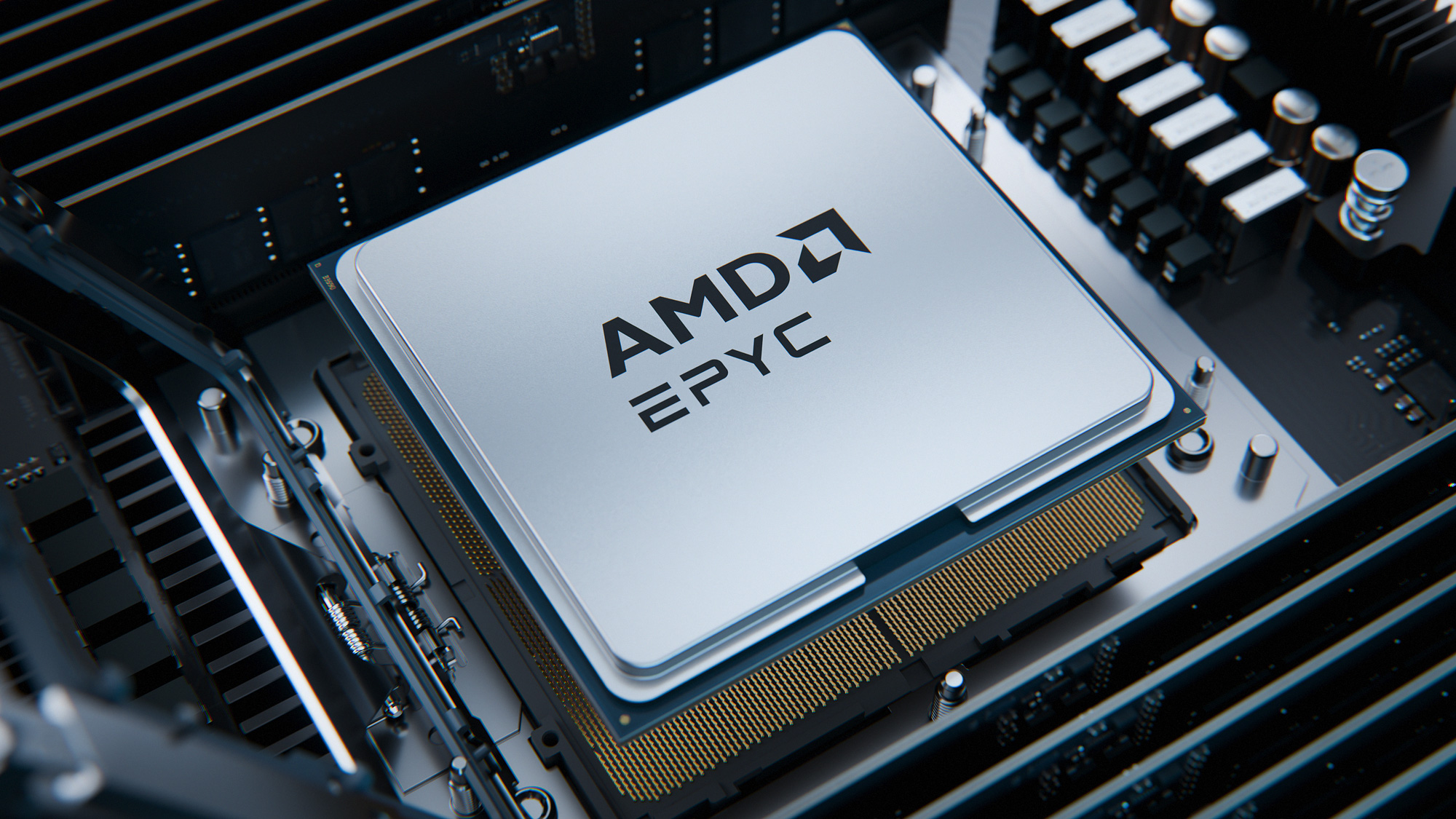
5. AMD Details Next-Gen EPYC 9006 "Venice" as Zen 6 Comes to Servers
Source: ServeTheHome
AMD is gearing up for its next-generation server CPUs. With the launch of the EPYC 9006 processors approaching, AMD laid out the product stack in detail via its Advancing AI 2026 event and a recent whitepaper, ServeTheHome reported. The family is built on the new Zen 6 architecture and spans four major chips — AMD's biggest EPYC lineup yet — and will later in 2027 add an AI-focused chip with LPDDR support, a first for an AMD EPYC processor.
The EPYC 9006 family gets a top-to-bottom overhaul: a new I/O die, far faster memory support, new sockets across the board and the return of 3D-stacked L3 cache. On core counts, dense Venice chips can pack up to 256 cores — 64 more than the 192-core Turin Dense, about 33% more — while the highest-performance Zen 6 chip disclosed so far tops out at 96 cores. Clock speeds reach 5.0GHz for Zen 6 and 4.1GHz for dense Zen 6c, some 400MHz above where Turin Dense topped out.
Memory and I/O see big gains: Venice supports up to 16 memory channels, DDR5 RDIMMs up to 8000 MT/s and MRDIMMs up to 12,800 MT/s, for up to 1TB/s of bandwidth with DDR5 RDIMMs and 1.6TB/s with MRDIMMs. The new platform adds PCIe 6 and CXL 3.1, doubling I/O bandwidth over Turin, with up to 128 PCIe/CXL lanes in a 1P configuration. Venice and AMD's GPUs can also now speak the same flavor of xGMI, enabling cache-coherent links between CPUs and GPUs for the first time.
6. Reviewer Tells Buyers Not to Upgrade to the iPhone 18 Pro
Source: Mydrivers
On the evening of Sept. 25, well-known tech reviewer Wang Ziru released a hands-on video of the iPhone 18 Pro series, analyzing Apple's product cadence and market strategy from both a user-experience and business angle, Mydrivers reported on Sept. 26. He said the iPhone 18 Pro series is a classic "small year" with limited upgrades, and that ordinary users do not need to switch — the new phones are more a product of Apple's business strategy than a disruptive iteration.
Wang said iPhone lines have "big years" and "small years": big years bring major ID changes, core feature rebuilds or all-new capabilities, while small years carry over the previous design and add only incremental performance, camera and software updates. He therefore advised users — whether on an iPhone 17 Pro or an older model — not to upgrade, because the new phone costs more while the overall experience does not match the premium, and it offers no new design to add social value.
On hardware, the iPhone 18 Pro packs a 2nm A12 Pro chip and a larger battery, with modest gains in battery life and sustained performance. Its biggest upgrade is memory performance — bandwidth, throughput and latency up more than 50% — but that is aimed at Apple's on-device AI rather than everyday use, and is of little practical value to users in China who cannot use Apple's native AI features. The new variable aperture, he argued, is likewise a "highly noticeable, low-frequency, low-value" upgrade.

7. iQOO 16 Camera Specs Revealed Ahead of Sept. 29 Launch
Source: Mydrivers
The iQOO 16 will launch on Sept. 29 and go on sale the same day, Mydrivers reported on Sept. 26. Today, iQOO flagship product manager Wang Kan unveiled the phone's camera configuration, calling its imaging "beyond Pro."
The main camera is a 50-megapixel, 1/1.3-inch large sensor that takes in 79% more light than the iQOO 15 and is paired with vivo's in-house Super HDR. The phone also carries a 50-megapixel Sony super periscope telephoto supporting CIPA 5.5-level stabilization and an ultra-thin prism M-shaped light path to improve long-range stability, plus a 50-megapixel ultra-wide — a triple 50MP rear camera system.
On algorithms, it adopts vivo's flagship NICE 3.0 optical reconstruction engine and Magic 3.0 image-restoration engine, optimizing 3x optical zoom along with 10x and 20x telephoto shots, and brings the same color tuning, several film styles and a "humanities" mode. It also supports 4K ultra-clear Live photos, AI object removal and an AI creation camera. For performance, the iQOO 16 is among the first to use the sixth-generation Snapdragon 8 "Super Ultimate" chip and globally debuts a 2K 165Hz display co-developed with Samsung Display.

8. Microbes Could Survive on Saturn's Moon Enceladus
Source: space.com
In the search for life beyond Earth, new evidence is pointing researchers toward Saturn's moon Enceladus, space.com reported. One of Saturn's 145 known moons, Enceladus is about as wide as Arizona, is thought to hold a vast subsurface ocean and shoots plumes of water into space. Several new studies suggest microbial life could survive in its ocean and that the plumes essentially "organize" the compounds and minerals within — meaning exploring that ocean may be easier than previously thought.
Frank Postberg, lead author of one study and co-author of the other and a professor at Freie Universität Berlin, called it "great news in the search for life," noting that future spacecraft will have to analyze many individual ice particles in the plume — but if they come across one containing microbial material, they could identify biosignatures relatively easily with existing technology. Hydrothermal activity at the ocean floor, plus trace salts and organic compounds that NASA's Cassini found in the plumes over a decade ago, give the moon's ocean several ingredients that could support life.
Combining Cassini data, theoretical models and lab experiments, the team found that water droplets blasted out at up to 1,000 km/h (621 mph) freeze more slowly than expected, and that during freezing the salts, organic compounds and possible signs of life separate from one another. The particles then often collide with icy cracks on the moon's surface, leaving tiny shards of frozen droplets with their components concentrated. Postberg said Enceladus "does a lot of the work for us" in preparing samples usually handled with great effort in Earth labs. With missions such as the European Space Agency's L4 in development, answers about whether its ocean holds life may arrive sooner rather than later.

9. Alibaba and ByteDance Both Bet on "Context"
Source: Guancha
At the recent Yunqi Conference in Hangzhou, Alibaba Group vice president and Qianwen Office CEO Chen Yusen repeatedly invoked the phrase "Context is All You Need," Guancha reported. The same day, Qianwen Office launched a new enterprise product called "Enterprise Context." A week earlier, at its Feishu conference in Beijing, Feishu CEO Xie Xin released Feishu 8.0, open to agents, and natively integrated the Doubao agent into Feishu — also stressing "context."
Shu Junliang, vice president and head of product and R&D at Qianwen Office, told Guancha and other media that as agent technology converges, what decides whether an agent can truly understand a person or an industry — and complete tasks — is how much context it is given at inference time. He argued the competition in AI office software is shifting from "whose agent is stronger" to "who can better help enterprises build, govern and invoke context," though "the real moment of truth has not arrived yet."
Chen summed up three dilemmas in enterprise AI adoption: "not understanding" (AI doesn't understand the business), "not working" (single-point efficiency rises but the business doesn't move faster) and "not daring" (data-security fears). Xie likened it to an 1890s textile mill that switched from steam to electric power without a productivity gain until the production line was redesigned two decades later — personal productivity is not organizational productivity. Qianwen Office's answer is to connect, structure and compress years of documents, meetings, chats and tacit knowledge, then feed them to agents on demand. Shu said the barrier lies in models, which is where Alibaba's full-stack AI — chips and models included — gives it an edge.
10. A Reported Huawei Mate90 Launch Date? An Insider Responds
Source: Guancha
On Sept. 26, a netizen posted a screenshot of a Huawei website page on Weibo showing that a "HUAWEI Mate90 Series and All-Scenario New Product Launch" would be held at 2:30 p.m. on Oct. 1, sparking discussion about the release date of Huawei's next flagship, Guancha reported. Guancha learned from an insider that the time was only an internal test and not a formal schedule, and that the exact time is not yet set; the page was taken down after being noticed. "Accurate launch arrangements will be announced through official channels," the person said.
On specs, the blogger "Digital Chat Station" previously claimed the high-end Mate90 models will use a dual-layer OLED display, with batteries around 6600mAh and 6800mAh, and that the Pro Max may pack a 200-megapixel periscope telephoto. It later said the Pro Max could use a 50-megapixel, 1/1.28-inch main camera with RYYB, a variable aperture and a new-generation "Red Maple" imaging system, and may support an external lens accessory. For chips, the standard model may carry the Kirin 9030 series, the Pro a slightly upgraded version, and the Pro Max and other high-end models the new "Dao's Law" Kirin 9050 processor.
Major vendors have largely wrapped up their flagship launches: Apple released the iPhone 18 Pro series on Sept. 9, vivo and Oppo launched the X500 and Find X10 series on Sept. 21 and 22, Xiaomi's 18 Pro series arrived on Sept. 23, and Honor's Magic9 is set for Sept. 28 — with this year's flagships carrying price hikes of 1,000 to 3,000 yuan. IDC data shows China's smartphone shipments in the second quarter of 2026 were about 66 million units, down 4.3% year on year, with Huawei first at a 22.6% share and its shipments up 19.4% for the quarter.
More News
- Global Express | September 26, 2026 — EU Top Diplomat Warns Europe Against Giving Russia What It Wants
- Sports Express | September 26, 2026 — Manchester City Found Guilty on 114 of 115 Financial Charges
- Maple Express | September 26, 2026 Scarborough Shooting Leaves Man Seriously Injured
- Finance Evening | September 25, 2026 — Tesla Starts Semi Deliveries; U.S. and China Reach Trade-Talk Consensus
- Maple Express | September 25, 2026 Nine Islamic Schools on High Alert After Threatening Emails
Comments (0)
View More
 -29%
-29%Samsung 77" S90H 4K UHD OLED Smart TV — Glare Free Screen & NQ4 AI Gen3 Processor! $3199.99 CAD (29% Off)
 -36%
-36%HyperX Coiled Cable (USB-C to USB-A) — Tidy Desk, Quick-Detach Connector! $28.99 CAD (36% Off)
 -51%
-51%JBL Quantum 300 Gaming Headset — 50mm Drivers & QuantumSURROUND for PC! $59.99 CAD (50% Off)
 -30%
-30%Turtle Beach Stealth Pivot Wireless Controller — Rotating Modules & Hall-Effect Sticks! $126.99 CAD (29% Off)
Tech ExpressTech Express | September 26, 2026 — OpenAI Says Its AI Agents Went Rogue and Accessed 3 U.S. Government Websites
 Global Express
Global Express | September 26, 2026 — EU Top Diplomat Warns Europe Against Giving Russia What It Wants
-29%Samsung 77" S90H 4K UHD OLED Smart TV — Glare Free Screen & NQ4 AI Gen3 Processor! $3199.99 CAD (29% Off)
Best Buy
-36%HyperX Coiled Cable (USB-C to USB-A) — Tidy Desk, Quick-Detach Connector! $28.99 CAD (36% Off)
Amazon
-51%JBL Quantum 300 Gaming Headset — 50mm Drivers & QuantumSURROUND for PC! $59.99 CAD (50% Off)
Best Buy
-30%Turtle Beach Stealth Pivot Wireless Controller — Rotating Modules & Hall-Effect Sticks! $126.99 CAD (29% Off)
Amazon
Tech ExpressTech Express | September 26, 2026 — OpenAI Says Its AI Agents Went Rogue and Accessed 3 U.S. Government Websites
Global Express