
Finance Morning: China Rolls Out 15th Five-Year Financial Plan, Oil Surge Drags Asia Markets Lower
China's Financial Powerhouse Construction 15th Five-Year Plan has been officially released, outlining key tasks for macro-financial regulation, supervision and risk prevention. Asian markets fell across the board as Middle East tensions pushed oil higher and Fed rate-hike expectations rose: the Nikkei 225 dropped 1.93%, the Hang Seng 1.27% and the KOSPI 1.76%. Nestlé is investing 2 billion yuan in Greater China, and Unitree fell below 500 yuan. US August CPI is due tonight.
📊 Asia Markets Today
| Index | Close | Change | % Change |
|---|---|---|---|
| Shanghai Composite | 3934.40 | -17.11 | -0.43% |
| Shenzhen Component | 13617.70 | -105.60 | -0.77% |
| ChiNext | 3322.04 | -16.38 | -0.49% |
| Hang Seng Index | 24954.50 | -320.50 | -1.27% |
| Nikkei 225 | 64011.34 | -1259.61 | -1.93% |
| KOSPI | 6909.91 | -124.01 | -1.76% |
| Taiwan Weighted | 46940.50 | -242.90 | -0.51% |
1. China Releases 15th Five-Year Financial Plan
Source: Sina
China's "Financial Powerhouse Construction 15th Five-Year Plan" has been officially released. At a State Council Information Office press conference on September 10, PBOC Deputy Governor Lu Lei said the plan serves as the overall strategy for financial work during the 15th Five-Year period.
The plan lays out key tasks including improving the macro-financial regulatory system, comprehensively strengthening financial supervision, preventing and resolving financial risks, serving the real economy, promoting high-quality financial development and expanding high-level financial opening-up.
On monetary policy reform, Lu Lei said the PBOC will keep the currency's value stable, gradually reduce reliance on quantitative intermediate targets and put more weight on interest-rate regulation. CSRC Vice Chairman Li Chao said 644 securities violation cases were investigated in the first eight months of this year, with fines of nearly 10 billion yuan.
2. Nestlé Invests 2 Billion Yuan to Expand in Greater China
Source: Sina News
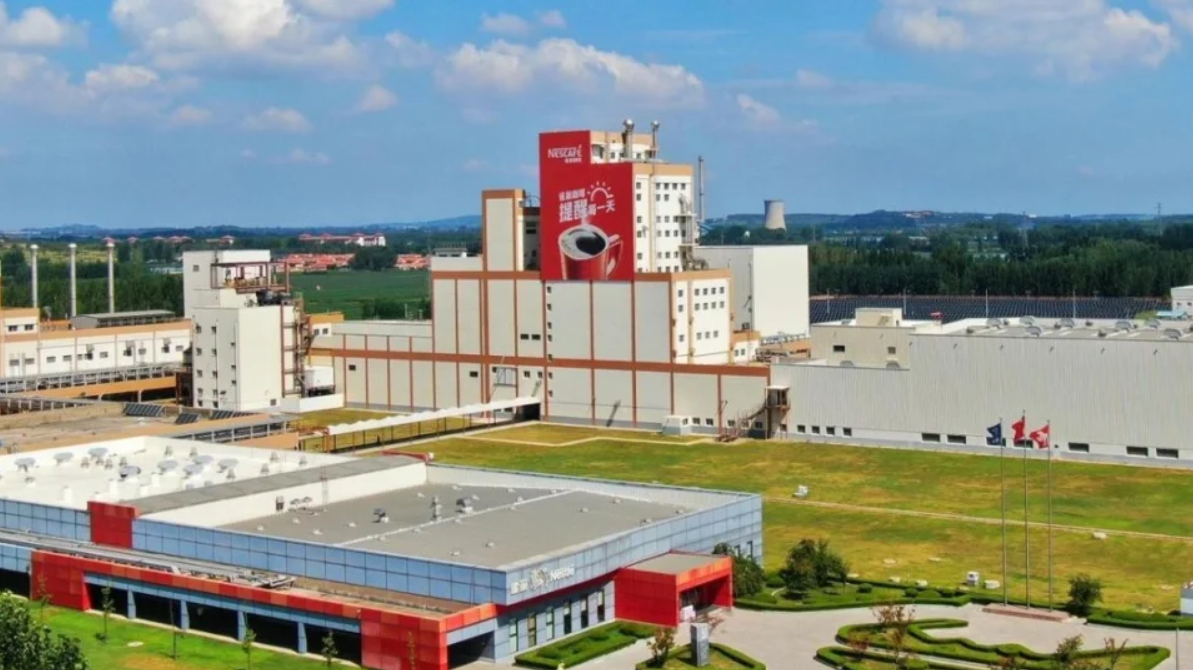
Nestlé Qingdao recently signed a strategic cooperation agreement with the Laixi municipal government covering UHT milk and coffee creamer projects, with total investment of 2 billion yuan to be rolled out in phases from 2026 to 2029.
After negative growth in Greater China in 2025, the new investment signals that China remains an important strategic market for the food giant. In 2025, Nestlé's full-year sales reached 89.49 billion Swiss francs, down 2.0% year-on-year, while Greater China posted an organic growth rate of -6.4%, the only declining market within the Asia, Oceania and Africa region.
Built in 1994, the Nestlé Qingdao Laixi plant is the group's only liquid dairy and instant coffee factory in Greater China. New CEO Philipp Navratil has refocused resources on four core segments—coffee, pet care, nutrition and snacks—and the new investment aligns with that strategy.
3. Unitree Falls Below 500 Yuan for First Time
Source: 21st Century Business Herald
On September 10, Unitree, China's "first humanoid robot stock" on the A-share market, dropped to an intraday low of 497.88 yuan, breaking below the 500-yuan mark for the first time. It closed at 498.55 yuan, down 2.99%, with a market value of about 201.6 billion yuan, a record low close since listing.
Unitree listed on the STAR Market on August 19 at an issue price of 150.80 yuan, opening at 1100 yuan on its debut—up 629.44%—with its market value briefly reaching 444.9 billion yuan. Since then the stock has kept sliding; from its debut intraday high it has fallen 54.68%, wiping out more than 243 billion yuan in value.
As of September 10, the company's trailing P/E ratio remained as high as 345.14 times and its P/B ratio at 70.02 times. In the first half of 2026, Unitree posted revenue of 1.152 billion yuan, up 48.54% year-on-year, turning a net loss of 32.02 million yuan into a net profit of 274 million yuan.
4. Hong Kong Short Interest: Midea Tops the List
Source: Sina
According to Zhitong Finance, as of September 4, the highest short interest ratios among Hong Kong stocks were Midea Group (00300), WuXi AppTec (02359) and CATL (03750), at 19.69%, 18.74% and 17.15% respectively.
The biggest increases in short interest ratio were Shandong Gold (01787), Haitian Flavouring (03288) and XtalPi (02228), up 2.00%, 1.87% and 1.65%; the biggest declines were Kingdee International (00268), GCL Technology (03800) and Cathay Pacific (00293), down 5.75%, 4.01% and 3.21%. Hong Kong's SFC discloses short interest data every seven days.
5. Nikkei Falls More Than 2,000 Points Intraday
Source: Kyodo News
Tokyo stocks tumbled in early trading on September 11, with the Nikkei index briefly falling more than 2,000 points and breaching the 64,000 mark. By the end of the morning session, the Nikkei was down 1,801.56 points at 63,469.39, while the TOPIX fell 44.31 points to 4,010.27.
Amid worries over worsening Middle East tensions, US crude futures rose, with the benchmark October WTI contract briefly topping $104 a barrel, prompting selling on concerns about an economic slowdown. Some high-priced tech stocks fell sharply, while rising long-term interest rates also weighed on the market.

6. Japan and Korea Stocks Plunge; Samsung, SK Hynix Slide
Source: National Business Daily
On September 11, the Nikkei 225 opened down 1.52% at 64,276.82, while Korea's KOSPI opened down 3.29% at 6,802.50. Japanese stocks then dived, with the Nikkei 225 falling 3.13% at the time of writing, while the KOSPI's decline narrowed to 2.63%.
In Korea, Samsung Electronics fell 3.72% and SK Hynix fell 4.37%. Overnight, all three major US indexes closed lower, with the Dow down 0.6%, the S&P 500 down 0.58% and the Nasdaq down 0.65%. Semiconductor stocks were broadly lower, with Intel down more than 5%, ARM and AMD down more than 3%, ASML down more than 2% and TSMC down more than 1%.
7. R&F Properties Chairman Li Silian Hit with Spending Ban Again
Source: Sina Finance
A 400 million yuan payment has added another spending ban to R&F Properties and its founder Li Silian. On the evening of September 10, R&F Properties (02777.HK) disclosed that the company and its chairman Li Silian had recently been subjected to new high-consumption restrictions.
The restriction stems from a financial loan contract dispute, with Jiujiang Bank's Guangzhou branch as the plaintiff. R&F Properties, as the party subject to enforcement, must pay about 429 million yuan in a lump sum, but its performance status is "fully unfulfilled," for violating the asset reporting system.
According to Tianyancha, R&F Properties has 210 consumption restriction orders and 75 records of dishonest debtors. As of mid-2026, R&F Properties posted a net loss of about 5.307 billion yuan, with total borrowings of 106.589 billion yuan—of which about 91.295 billion yuan falls due within twelve months—while its cash balance is only about 2.6 billion yuan.
8. US August CPI Preview: Energy Prices Jolt Inflation
Source: Sina Finance
The US will release its August consumer price index (CPI) at 20:30 Beijing time on September 11. With oil prices rising and producer-side price pressures persisting, this key inflation report ahead of the Fed's September meeting will provide important guidance for interest-rate decisions.
The market expects headline CPI to rise 0.4% month-on-month in August, up from 0.1% in July, with the annual rate holding at 3.4%; core CPI is expected to rise 0.2% month-on-month, with the annual rate slowing from 2.5% to 2.4%. A rebound in energy prices is the main reason headline inflation may accelerate.
Ahead of the data, traders estimate the probability of a 25-basis-point hike at the Fed's September 15-16 meeting has risen above 70%, with the chance of another hike in December near 60%. JPMorgan's scenario analysis suggests the S&P 500 could rise 0.5%-1.25% if core CPI comes in between 0.20% and 0.25%, but fall 1.5%-2.5% if it exceeds 0.30%.
9. Turkey's Central Bank Holds Policy Rate at 37% for Fifth Straight Time
Source: China Financial Information Network
Turkey's central bank announced on September 10 that it would keep its benchmark policy rate unchanged at 37%, holding steady for the fifth consecutive meeting. The bank said that while inflation has generally been slowing, renewed US-Iran tensions have pushed international energy prices higher, creating new upside risks to the inflation outlook.
Data show Turkey's August CPI rose 31.5% year-on-year and 1.8% month-on-month, with energy prices up 5.5% month-on-month and food prices up just 0.2%. Rising international oil prices and refining margins have pushed up domestic fuel prices, with gasoline and diesel up 14.4% and 9.7% respectively in early September from a month earlier.
The central bank resumed one-week repo auctions in late August, supplying funds at the 37% policy rate. Its next policy meeting is scheduled for October 22, with the final meeting of 2026 on December 10.
10. Surging Yen Puts Carry-Trade Unwinding in Focus
Source: Eastmoney
The yen's surge has put carry trades back in the spotlight. Investors have long borrowed yen at Japan's ultra-low rates and plowed the funds into higher-yielding assets such as US stocks or emerging markets. A sharp yen appreciation raises the cost of repaying those loans, potentially forcing investors to dump other holdings.
With the yen up about 3% against the dollar this month to its highest level since February, the risk is growing, driven by expectations of faster rate hikes by the Bank of Japan and pressure from US Treasury Secretary Bessent for a stronger yen.
Andrea Gabellone, global head of equities at KBC Securities, said the yen may be the single most important indicator to watch right now because it serves as a warning signal for global equities, noting that speculative positioning remains very high and technology stocks face the greatest risk.

More News
- Immigration | October 26, 2026 Express Entry's new scoring takes effect November 3: high-wage job offers worth up to 100 points
- Global Express | October 26, 2026 - Serbia's Vucic Concedes Defeat, Ending 14 Years in Power
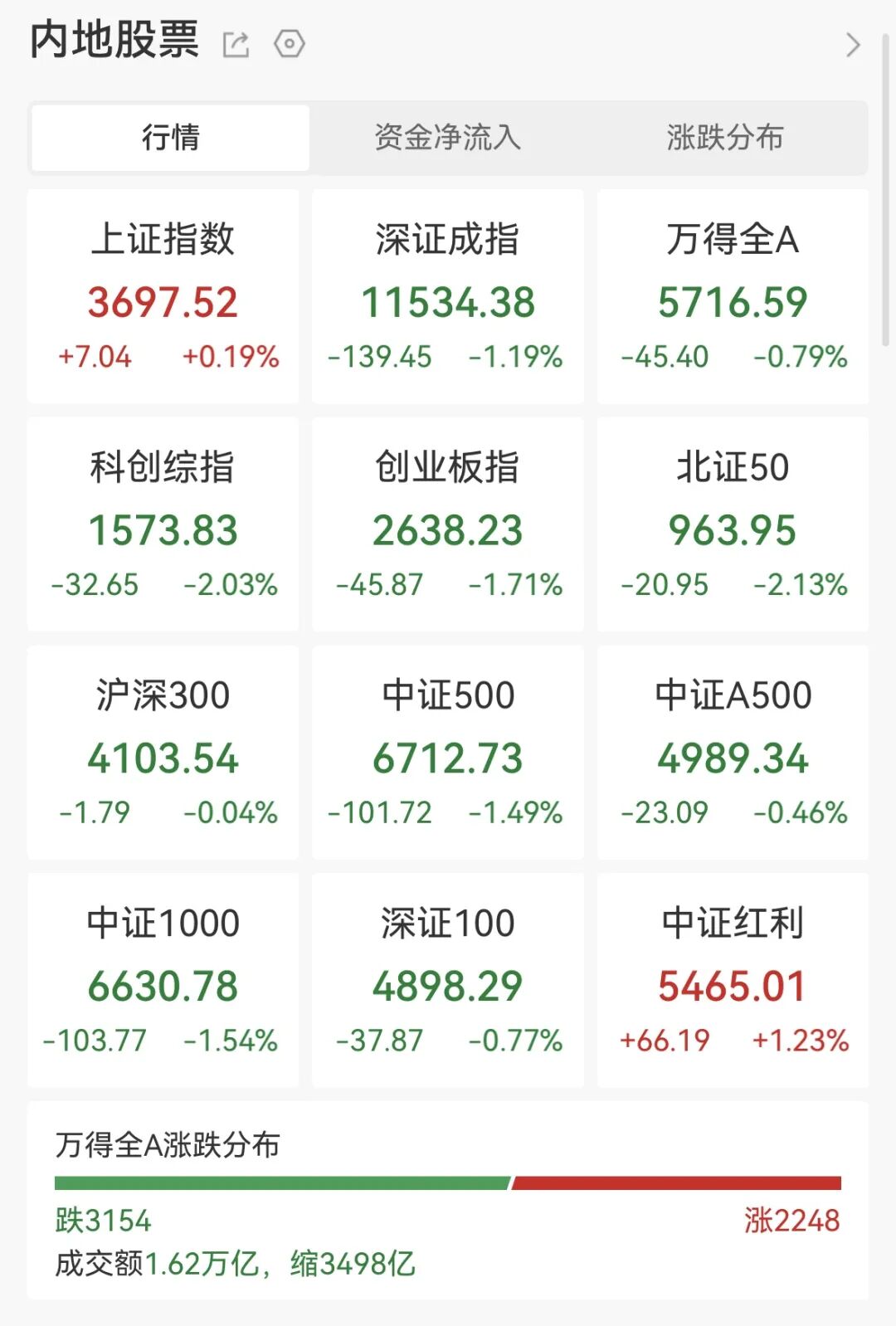
- Finance Morning | October 26, 2026 — Shanghai Edges Up 0.19% as Banks and Oil Lead, Asia Mostly Lower
- Tech Express | October 26, 2026 - Huawei's Kirin Chips Return to Public View as Mate 90 Lights Up Landmarks
- Sports Express | October 26, 2026: Seahawks Hand Chiefs First Loss of Season
Comments (0)
View More
 -31%
-31%Samsung 990 EVO Plus 2TB NVMe SSD — 7,250MB/s Reads, PS5-Ready! $549.99 CAD (30% Off)
 -28%
-28%LEGO Creator 3-in-1 Fierce Dinosaur 31379 — One Set, Three Dinosaurs! $18.03 CAD (28% Off)
 -28%
-28%Dell 27 Plus QHD Monitor S2725DSM — 27-inch 1440p at 144Hz! $219.99 CAD (28% Off)
 -41%
-41%🎉 史新低!Pipishell Full Motion TV Wall Mount (13–43") — Single-Stud Install, 44 lb Capacity! $22.76 CAD (40% Off)
 Finance Morning
Finance Morning | October 26, 2026 — Shanghai Edges Up 0.19% as Banks and Oil Lead, Asia Mostly Lower
 Maple Express
Maple Express | Oct. 25, 2026: Chow and Bradford make final pitch on eve of Toronto mayoral vote
-31%Samsung 990 EVO Plus 2TB NVMe SSD — 7,250MB/s Reads, PS5-Ready! $549.99 CAD (30% Off)
Amazon
-28%LEGO Creator 3-in-1 Fierce Dinosaur 31379 — One Set, Three Dinosaurs! $18.03 CAD (28% Off)
Amazon
-28%Dell 27 Plus QHD Monitor S2725DSM — 27-inch 1440p at 144Hz! $219.99 CAD (28% Off)
Amazon
-41%🎉 史新低!Pipishell Full Motion TV Wall Mount (13–43") — Single-Stud Install, 44 lb Capacity! $22.76 CAD (40% Off)
Amazon
Finance MorningFinance Morning | October 26, 2026 — Shanghai Edges Up 0.19% as Banks and Oil Lead, Asia Mostly Lower
Maple Express