
Finance Morning, Oct 21: A-shares Retreat, Hang Seng Tech Below 4,000, Korean Stocks Hit Sidecar
A-shares closed lower on Oct 21 with turnover of 1.44 trillion yuan, down 29.5 billion yuan, as battery and liquor names led losses; equity ETFs drew 151.89 billion yuan of post-holiday inflows. CATL grew revenue but not profit, Hang Seng Tech fell below 4,000 and Tencent lost HK$400. The Nikkei rose 0.85%, the KOSPI closed up 3.29% after a sidecar halt and Taiwan's TAIEX gained 595 points. Zhou Xiaochuan warned of AI investment risk; Indonesia held rates at 5.75%.
📊 Asia Market Close
| Index | Close | Change | % Change |
|---|---|---|---|
| Shanghai Composite | 3713.03 | -17.89 | -0.48% |
| Shenzhen Component | 11704.35 | -113.05 | -0.96% |
| ChiNext | 2694.71 | -44.49 | -1.62% |
| Hang Seng Index | 23651.87 | -534.93 | -2.21% |
| Nikkei 225 | 64621.24 | +545.82 | +0.85% |
| KOSPI | 5735.66 | +182.92 | +3.29% |
| TAIEX | 46887.77 | +595 | +1.28% |
1. A-shares retreat on thinner volume as battery and liquor names slide
Source: Sina Finance
On October 21, the three major A-share benchmarks closed lower. The Shanghai Composite ended at 3,713.03, the Shenzhen Component at 11,704.35 and the ChiNext at 2,694.71. Total turnover came to 1.44 trillion yuan, 29.5 billion yuan less than the previous session, with more than 3,300 stocks declining. The BSE 50 fell 0.72%, while the STAR 50 edged up 0.06% against the trend.
Sector performance was sharply divided. Data-rights stocks opened higher and extended gains, with Sanwei Tiandi and Nanwei Software hitting the daily limit; pork names stayed hot, led by Dongrui shares; culture and media stocks rose across the board, with Duzhe Publishing, Chuban Media, Yue Media and Topway Video all limit-up. Data rights, pork, culture and media, farming and IT services were the standout gainers.
Batteries, energy metals, baijiu and education led the decline. The battery chain was under pressure all session — Shidai Wanheng and Shangtai Technology touched the limit-down, CATL plunged more than 12% intraday, and Blue Lithium and Lead Intelligent weakened. Baijiu kept adjusting, with Shanxi Fenjiu, Gujing Gongjiu and Luzhou Laojiao leading losses. Risk aversion rose, and heavyweight new-energy and liquor names dragged the market.
2. Equity ETFs drew 151.89 billion yuan of net inflows after the holiday
Source: 21st Century Business Herald
Since the National Day holiday, A-share performance and equity ETF flows have moved in opposite directions. Public data show that equity ETFs have seen sustained net inflows since the holiday, with cumulative net subscriptions reaching 151.894 billion yuan, as large investors grew more willing to buy with the market near 3,700 points.
On October 20, for example, the ChinaAMC SSE 50 ETF, ChinaAMC CSI 300 ETF, ChinaAMC STAR 50 ETF and E Fund ChiNext ETF all showed marked increases in volume. Trading in the final 20 minutes of the session was close to the total turnover of most other trading hours. The article argues that the surge in broad-based ETFs and more than 150 billion yuan of post-holiday net inflows are evidence that large funds are stepping in.
The sharp decline also worked off valuation pressure. The Shanghai Composite has fallen nearly 14%, or almost 600 points in five months, since peaking at 4,258 in mid-May. The Shenzhen Component is down as much as 28% from its late-June high, and the ChiNext has dropped about 38% over the past four months. Meanwhile, average daily turnover has shrunk from more than 3 trillion yuan at the start of the year to about 1.5 trillion yuan, and margin financing balances have fallen from close to 3 trillion yuan to roughly 2.5 trillion yuan.
3. CATL posts revenue growth without profit growth as quarterly net income rises 14.54%
Source: Sina Finance
CATL released its 2026 third-quarter report on the evening of October 20. Revenue for the first nine months reached 442.137 billion yuan, up 56.19% year on year, while net profit attributable to shareholders was 64.53 billion yuan, up 31.6%. Based on those nine-month figures, the company earned an average of more than 230 million yuan a day.
The third quarter alone was visibly weaker: revenue rose 58.58% to 165.221 billion yuan, but net profit grew only 14.54% to 21.246 billion yuan and fell from the prior quarter. That was below consensus — Bernstein expected 22.9 billion yuan, Goldman Sachs 24 billion yuan and CLSA 25-26 billion yuan.
Falling gross margin is the core reason for the gap. Third-quarter gross margin was 20.69%, down 5.1 percentage points from 25.80% a year earlier and 2.46 points from 23.15% in the second quarter, the lowest since the fourth quarter of 2022. In addition, a consumption tax on five categories of batteries including lithium-ion batteries was reinstated from September 1, 2026, with a transitional rate of 2%; taxes and surcharges in the quarter were 2.214 billion yuan versus 597 million yuan a year earlier. CATL's A-shares closed at 259.08 yuan on October 20, down 2.97%, while its H-shares closed at HK$411.8, down 6.58%. Intraday on October 21 the stock fell more than 12%.
4. Starbucks China confirms dine-in seating rule for all stores from October 22
Source: 21st Century Business Herald
On October 21, Starbucks China confirmed that from October 22 all stores nationwide will require customers to make a purchase to use seating, with notice boards placed in every store. The company also published a Third Place initiative and said it will invest more than 300 million yuan in service upgrades in the new fiscal year, covering renovations at about 1,000 stores.
The episode began on the evening of October 19, when store signage reading "Starbucks seating area: please make a purchase to be seated", along with posters for the Third Place initiative, circulated on social media. Store staff said the rule would take effect nationwide on October 20 and the topic trended on several platforms. On October 20, Starbucks China said reports of a mandatory nationwide rollout were untrue and that only some stores were running a pilot.
A day later the company confirmed the nationwide rollout, moving the date from October 20 to October 22. Chief executive Liu Wenjuan said the company will keep directing resources to store fronts in the new fiscal year. Staff have been given unified service guidelines and are asked to communicate in a friendly way, with priority help for customers such as pregnant women and people with limited mobility. Beyond seating rules, all stores will also offer more coffee bean options — classic espresso, blonde espresso and decaf.
5. Hang Seng Tech slips below 4,000 as Tencent loses HK$400
Source: Sina Finance
On October 21, dragged down by Tencent Holdings falling more than 4% and losing the HK$400 mark, the Hang Seng Tech Index dropped 1.26% to close at 3,995 points, having touched 3,985 intraday — a new low for this correction. Tencent fell 4.04% to HK$393.8, its session low.
Li Zeming, chief investment officer at Blue Water Capital, said valuations of traditional internet companies such as Tencent and Alibaba are already historically low, but a short-term rebound is unlikely because Hong Kong market liquidity is weak. Heavy recent placements plus a dense pipeline of IPOs have kept draining liquidity, weighing on valuations of large traditional internet names.
Liu Gang, an analyst at CICC, said Hong Kong liquidity has tightened markedly this year: southbound net inflows over the first nine months were only HK$440 billion, well below the HK$1.4 trillion for all of 2025, while mainland mutual funds and overseas active funds have cut Hong Kong allocations back to around or below the "924" trough. Li Qian, an adviser at Guangzhou Yuesheng Wealth Management, said the Federal Reserve meeting on October 27-28 matters more than the 4,000-point level.
6. Tokyo stocks rebound as the Nikkei 225 gains 0.85%
Source: China Financial Information Network
Tokyo's two main benchmarks rebounded on October 21. The Nikkei 225 average closed up 545.82 points, or 0.85%, at 64,621.24, while the TOPIX gained 34.52 points, or 0.86%, to 4,043.73.
SpaceX reported better-than-expected quarterly results on October 20 US Eastern time, lifting technology shares on Wall Street overnight. Tokyo stocks opened higher as a result, and gains in artificial intelligence and semiconductor names pushed the Nikkei up more than 1,300 points at one stage.
The index ran into clear resistance after breaching 65,000 intraday, with some investors selling into strength, suggesting concerns that overinvestment in AI could bring financial risks have not faded. Across the Tokyo Stock Exchange's 33 industry groups, most advanced, led by nonferrous metals, banking and insurance, while retail, pulp and paper and mining declined.
7. Korean stocks trigger sidecar mechanism; KOSPI closes up 3.29%
Source: 21st Century Business Herald
On the morning of October 21, Korean stocks jumped hard enough to trigger a circuit-breaker-style halt. The Korea Exchange activated the sidecar mechanism after KOSPI 200 index futures rose 5%, pausing program trading buys on the KOSPI for five minutes.
The KOSPI's gain widened to 4% at one point to 5,810.82, with SK Hynix and Samsung Electronics both up more than 7%. The index closed at 5,735.66, up 182.92 points or 3.29%.
8. TAIEX jumps 595 points as TSMC supports the close
Source: ETtoday Finance
Taiwan stocks opened higher and climbed on October 21. Gains narrowed at one point on psychological pressure from futures settlement, but with TSMC holding the index up, the TAIEX closed up 595 points at 46,888, a gain of 1.28%, on turnover of 833.191 billion Taiwan dollars. TSMC rose 15 dollars to 2,420, up 0.62%.
The index opened up 161 points and ranged between a high of 47,255 and a low of 46,454. Among heavyweights, Hon Hai rose 8.5 dollars to 250, MediaTek fell 10 dollars to 4,140, Quanta gained 8 dollars to 328.5 and Evergreen fell 2 dollars to 257.5.
The top five gainers were Shang Pin, up 28.5 dollars or 10.0%; Tenghui Electronics-KY, up 57 dollars or 10.0%; Sheng Tai, up 4.8 dollars or 9.98%; Huisheng-Innovation, up 20 dollars or 9.98%; and Tung Tai, up 3.45 dollars or 9.97%.

9. Zhou Xiaochuan: failed AI investment could trigger financial turmoil, contingency plans needed
Source: 21st Century Business Herald
Speaking on October 20 at a roundtable on the macro impact of AI and the productivity revolution at the 2026 Bund Summit, former People's Bank of China governor Zhou Xiaochuan discussed AI productivity gains, international governance and financial risk. He said that with so much money flowing into artificial intelligence and related infrastructure, failures in part of that investment could trigger financial turmoil and a crisis.
Zhou said that in extreme cases large-scale action would be needed to support the economy and to rescue some financial institutions, so research should be done and contingency plans drawn up, with the relevant tools stocked in the policy toolkit. On the industry's layers, he judged that productivity gains will come mainly from applications such as lightweight models and model distillation.
On governance, Zhou said China and the United States have reached a consensus on building AI management mechanisms, and that three areas of cooperation could be advanced now: controlling military uses of AI, tackling hackers and fraudsters, and protecting personal privacy. He also stressed that the financial system should let price mechanisms play their adjusting role, rather than relying too heavily on administrative measures.
10. Indonesia's central bank holds at 5.75%, raises deposit facility rate
Source: Sina Finance
Indonesia's central bank said on October 21 that it would keep its benchmark BI-Rate unchanged at 5.75%, raise the deposit facility rate by 25 basis points to 5% and leave the lending facility rate at 6.5%. It also announced a phased cut in banks' average reserve requirement ratio to boost rupiah liquidity in the banking system.
In a statement, the central bank said the decision was aimed at responding to external pressure, stabilising the rupiah and keeping inflation on track for 2026 and 2027. The average reserve requirement ratio for conventional commercial banks will fall from 9% to 7%, and for Islamic commercial banks and Islamic business units from 7.5% to 5.5%, in two stages starting November 1 and December 1.
Central bank data showed the rupiah at 17,985 per dollar on October 20, down 0.61% from the end of September. Foreign portfolio investment saw a net outflow of US$80 million in the third quarter of 2026. September consumer prices rose 3.28% year on year, up from 3.19% in August, with core inflation at 2.84% and volatile food inflation at 5.03%. The central bank said it will keep working with the government to hold inflation within its 2.5% plus or minus 1 percentage point target range for 2026 and 2027.
More News
- AI Weekly | Agents Get Badges Before Jobs, as AI Giants Lose Billions and Write Their Own Rules
- Global Express | October 21, 2026: UK Deploys Typhoon Jets to Defend Saudi Arabia as Houthi Attacks Escalate
- Tech Express | October 21, 2026: Arm Asks for Up to 34.5x Its Old Rate, Pushing Qualcomm's Per-Chip Royalty Toward $64.86
- Sports Express | October 21, 2026 — Eagles QB Jalen Hurts Out for the Season With Blood Clots in His Lungs
- Maple Express | October 21, 2026 | Man pulled from Richmond Hill house fire without vital signs
Comments (0)
View More
 -47%
roborock Qrevo 2 Pro Robot Vacuum & Mop — 20,000Pa Suction + 65°C Mop Wash, Half Price! $699.99 CAD (46% Off)
 -26%
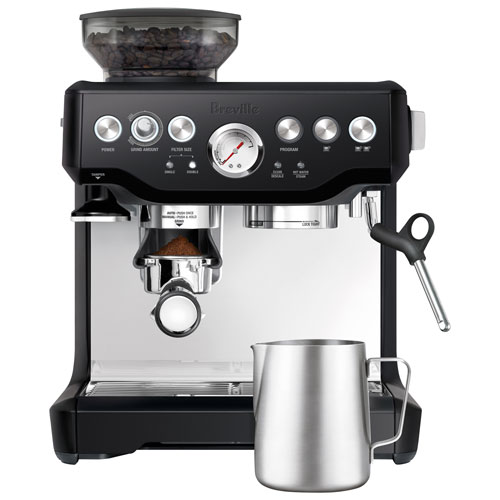
Breville Barista Express Espresso Machine — Built-In Grinder, 15-Bar Extraction, Black Truffle Exclusive! $749.99 CAD (25% Off)
 -39%
BAGSMART 15L Yoga Mat Crossbody Bag — Mat, Clothes and Bottle in One, with Wet Pocket! $15.99 CAD (38% Off)
 0
Worth Buying: Samsung 24" FHD IPS Monitor — 120Hz for a Small Desk, $169.99 CAD
 Global Express
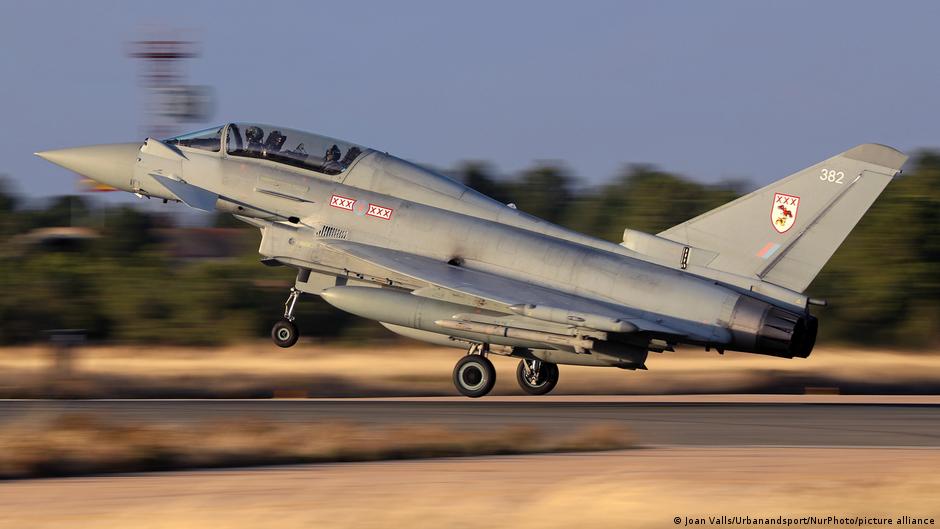
 | October 21, 2026: UK Deploys Typhoon Jets to Defend Saudi Arabia as Houthi Attacks Escalate
 AI Weekly
 | Agents Get Badges Before Jobs, as AI Giants Lose Billions and Write Their Own Rules
-47%roborock Qrevo 2 Pro Robot Vacuum & Mop — 20,000Pa Suction + 65°C Mop Wash, Half Price! $699.99 CAD (46% Off)
Amazon
-26%Breville Barista Express Espresso Machine — Built-In Grinder, 15-Bar Extraction, Black Truffle Exclusive! $749.99 CAD (25% Off)
Best Buy
-39%BAGSMART 15L Yoga Mat Crossbody Bag — Mat, Clothes and Bottle in One, with Wet Pocket! $15.99 CAD (38% Off)
Amazon
0Worth Buying: Samsung 24" FHD IPS Monitor — 120Hz for a Small Desk, $169.99 CAD
Amazon
Global ExpressGlobal Express | October 21, 2026: UK Deploys Typhoon Jets to Defend Saudi Arabia as Houthi Attacks Escalate
AI Weekly