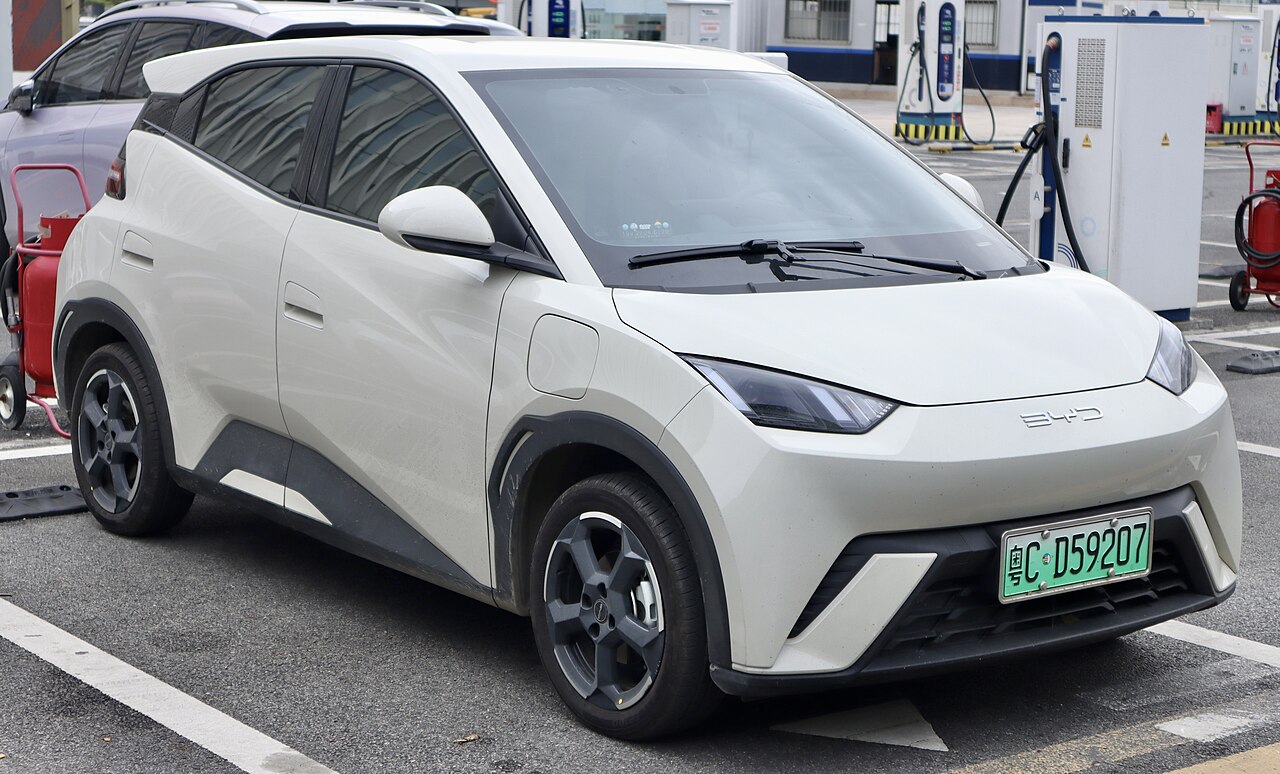
Chinese EVs Have Arrived in Canada. Here's Who's Here, Who's Coming, and Why Trump Matters More Than Carney.
In 2026, the Canadian auto market is experiencing its biggest disruption in two decades. Chinese electric vehicles have arrived—and they're not just c...
June 14, 2026. There are 18 Lotus Eletre electric SUVs sitting at the Port of Vancouver, having spent over a month at sea from Wuhan. They're not worth much in the grand scheme—a few million dollars at most—but they are the first Chinese-made EVs to land in Canada under the new rules.
The boat is here. What happens next is anybody's guess.
Here's the situation, honestly: Canada right now feels a bit like it did in 2005 looking at Chinese smartphones. You know the good stuff is coming. You know it's inevitable. But between the tariffs and the standards and the political calculations, nobody can tell you exactly how this lands. The only certainty is that it has landed.
Let's start with the policy. In October 2024, Canada followed the U.S. and slapped a 100 percent surtax on Chinese EVs—basically a "keep out" sign at the border. But Canada isn't America. When canola farmers started hurting, the Prairie provinces made noise. So in January 2026, Mark Carney and Xi Jinping cut a classic Canadian deal: Chinese EV tariffs dropped from 100 percent to 6.1 percent with an annual quota of 49,000 vehicles. In exchange, China cut canola tariffs from 85 percent to about 15 percent and lifted restrictions on lobster, crab, and peas. Agriculture for automobiles. Straightforward enough.
Forty-nine thousand vehicles sounds like a lot. It isn't. Canada sold roughly 1.9 million new vehicles last year. This quota is less than 3 percent of the market. It's split into two tranches of 24,500 permits each, first-come-first-served. Applications opened March 1st. By early May, guess how many permits had been issued?
Zero.
The government got cold feet, and the reason is Tesla. Under a pure first-come-first-served system, Tesla alone could vacuum up the entire first tranche. It has already confirmed it will sell the Shanghai-built Model 3 in Canada starting at C$39,490. Add Volvo and Polestar—both Geely-owned, both already in-market with dealer networks and supply chains—and all 24,500 permits could be gone inside a week. BYD and Chery, the actual new entrants everyone is excited about, wouldn't get a single one. So the government is stalling. After the first period closes on August 31st, expect a shift to brand-specific allocations, possibly with preferences for companies that set up local assembly.
Enough about the policy mess. Who's actually moving?
Geely got there first. Specifically, Lotus, which Geely controls. On May 7th, 18 Lotus Eletre SUVs were loaded onto a ship in Wuhan and arrived at Vancouver in early June. What makes this interesting is that Lotus already has six dealers in Canada—two in Ontario, two in Quebec, one in Calgary, one in Vancouver—selling British-built gasoline Lotuses. Now the same stores can sell Chinese-built electric Lotuses, and thanks to the tariff dropping from 100 to 6.1 percent, the Eletre's Canadian price got cut roughly in half. Lotus CEO Feng Qingfeng told reporters something refreshingly candid: "The Canadian market opportunity is too precious to miss." With Middle East shipments paused due to regional conflict, Canada can offset some of those losses. Lotus plans to expand from six to twelve dealers this year.
Meanwhile, Geely has already dropped two test vehicles at Toronto Pearson—the EX2 and EX5—going through Motor Vehicle Safety Standards certification. These are volume models. If certification goes smoothly, they could roll out in 2027. Zeekr, Geely's premium EV brand, trademarked its name in Canada last year. The Geely strategy is clear: Lotus for the high end, Zeekr for the middle, Geely main brand for affordable—cover the entire board.
BYD is the one everyone's watching, and the one causing the most anxiety.
It's the world's largest NEV maker—over 4 million units sold in 2025. It already has an electric bus factory in Newmarket, Ontario. BYD vehicles are already running as taxis in Montreal. The passenger vehicle plan, according to industry talk, is 20-plus dealers in four cities by late 2026. But BYD's official statement to Canadian media is that it has "not yet formally approved passenger vehicle plans." That phrasing matters. It's not "we're not coming." It's "we haven't signed off yet." My read: they're waiting for the government to sort out the permit allocation mechanism. You don't commit capital until you know how many cars you're actually allowed to import.
The pricing estimates floating around industry circles: the Seagull could land at C$20,000 to $25,000, the Dolphin around $35,000, the Atto 3 around $39,000, the Seal around $45,000, and the Shark PHEV pickup around $55,000. These aren't official—they're back-calculated from Chinese ex-factory prices plus the 6.1 percent tariff and shipping. The Seagull's ex-factory price in China converts to about C$12,000. Landed cost roughly C$14,000. Retail at C$20,000 to $25,000 is a reasonable projection.
If the Seagull actually sells for C$25,000, and you stack the federal C$5,000 EV rebate on top, you're getting a brand-new EV for twenty grand. That price point literally does not exist in Canada right now. I mean literally—the cheapest Nissan Leaf starts above forty thousand.
Chery is the third player, quieter than the first two but methodical. It has already shipped vehicles under the Jaecoo, Omoda, and Exelantis sub-brands and is securing Canadian trademark protection for iCar and iCaur, its affordable nameplates. The strategy is the same one Chery uses in the Middle East and Latin America: multiple brands, multiple price points, let the market sort out which ones stick.
One more thing worth noting: dealers are losing their minds. DSMA, a Toronto-based dealership brokerage, says it has fielded nearly 400 inquiries from dealers across Canada fighting to represent BYD, Geely, and Chery. The CEO of Century Auto Group—a ten-store dealer network in Nova Scotia and New Brunswick—flew to the 2026 Beijing Auto Show personally to shake hands with manufacturers. He told CNBC afterward: "Their materials are second to none. Their styling is impressive. The ride is very impressive." That's not PR fluff. A guy running ten dealerships doesn't fly fourteen hours to Beijing for politeness.
The American reaction has been somewhere between panic and fury. Trump called it "a disaster." The Transportation Secretary said "Canada will live to regret this." Over 120 House lawmakers signed a letter demanding a total ban. On May 12th, bipartisan legislation was introduced to block all connected vehicles and components linked to China. Ontario Premier Doug Ford called them "spy vehicles." The Canadian Vehicle Manufacturers' Association—which speaks for GM, Ford, and Stellantis—called it "deeply concerning."
What they're actually concerned about, though they won't say it plainly, is two things: first, Chinese state subsidies make for an uneven playing field; second, connected vehicle hardware poses data security questions. Both concerns have merit. Neither gets to the real issue. The real issue is this: if Chinese cars come in at barely twenty grand, Canada has no domestic answer, and the Detroit Three have almost nothing in the affordable small-EV segment. A 100 percent tariff can block them, sure, but it can't block the Prairie caucus. Carney's deal wasn't generosity. It was reality.
Where does this go? Here's my take.
Second half of 2026: Lotus Eletre deliveries begin. Geely EX2 and EX5 grind through certification. BYD likely announces formally before year-end. The government almost certainly overhauls the first-come-first-served permit system for the September-to-February tranche.
2027 to 2028: The 49,000-unit quota gets fully utilized. If the Seagull lands below twenty-five grand, Canada's entry-level EV segment gets rewritten—not "impacted," rewritten. The demand at that price point is obvious to anyone who's shopped for a used Leaf lately: four- and five-year-old Nissan Leafs still command over twenty thousand dollars in Canada, because there is simply no new alternative.
By 2030: The quota rises to 70,000, with half required to be priced under C$35,000. Somewhere along the way, one of these Chinese brands is going to set up CKD assembly in Canada—my bet is it happens—and that changes the logic for the entire North American market.
One last thing. The decision-maker on Chinese EVs in Canada isn't in Ottawa. It's in Washington. A single sentence from Donald Trump carries more weight than a hundred-page Carney white paper. That's not an opinion. That's just how it works.
Comments (0)
View More
 -11%
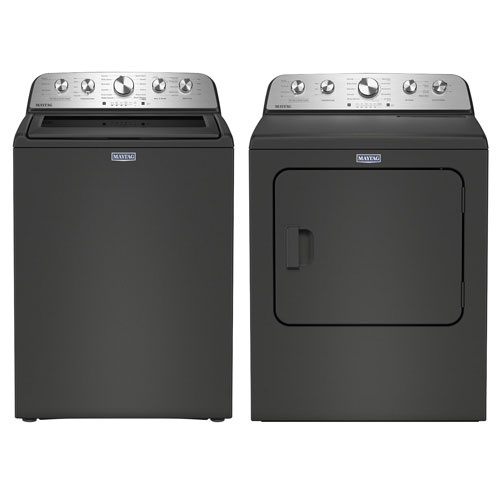
-11%Maytag High-Efficiency Top Load Washer & Pet Pro Steam Dryer Set — $1799.98 CAD (10% Off)
 -27%
-27%Dell S3225QS 32" 4K Monitor — 120Hz + FreeSync Premium! $379.99 CAD (27% Off)
 -45%
-45%LEGO Classic Creative Suitcase 10713 — 213 Bricks with Storage Case! $24.86 CAD (45% Off)
 -31%
-31%Anker soundcore Q20i Hybrid ANC Headphones — 40H Playtime! $69.99 CAD (30% Off)
Finance Weekly | Central Banks Turn Hawkish as Oil Tops $100
 Maple Express
Maple Express | September 13, 2026 Canadian boxing legend George Chuvalo dead at 89
-11%Maytag High-Efficiency Top Load Washer & Pet Pro Steam Dryer Set — $1799.98 CAD (10% Off)
Best Buy
-27%Dell S3225QS 32" 4K Monitor — 120Hz + FreeSync Premium! $379.99 CAD (27% Off)
Amazon
-45%LEGO Classic Creative Suitcase 10713 — 213 Bricks with Storage Case! $24.86 CAD (45% Off)
Amazon
-31%Anker soundcore Q20i Hybrid ANC Headphones — 40H Playtime! $69.99 CAD (30% Off)
Amazon
Finance Weekly | Central Banks Turn Hawkish as Oil Tops $100
Maple Express