
Asia Stocks Post Worst Week Since 2020 as AI Selloff Deepens; Nikkei Falls 5%
Asia-Pacific markets had a "Black Friday": the Nikkei 225 plunged 5.06%, its fifth-largest point drop ever; Taiwan's TAIEX fell nearly 18% on the week, worst since 1991; the KOSPI slid over 5% and triggered a KOSDAQ circuit breaker; Hang Seng Tech dropped as much as 4% and over 5,000 A-shares fell. AI-trade jitters and rate-hike fears drove the selloff. China's LPR stayed unchanged for an 18th month and regulators named four fabricated-news cases; spot gold fell below $3,600.
📊 Asia Market Close
| Index | Close | Change | Change % |
|---|---|---|---|
| Shanghai Composite | 3533.79 | -43.82 | -1.22% |
| Shenzhen Component | 10256.39 | -326.81 | -3.09% |
| ChiNext | 2212.13 | -81.21 | -3.54% |
| Hang Seng | 22410.80 | -430.82 | -1.89% |
| Nikkei 225 | 56436.65 | -3007.56 | -5.06% |
| KOSPI | 4869.96 | -267.93 | -5.21% |
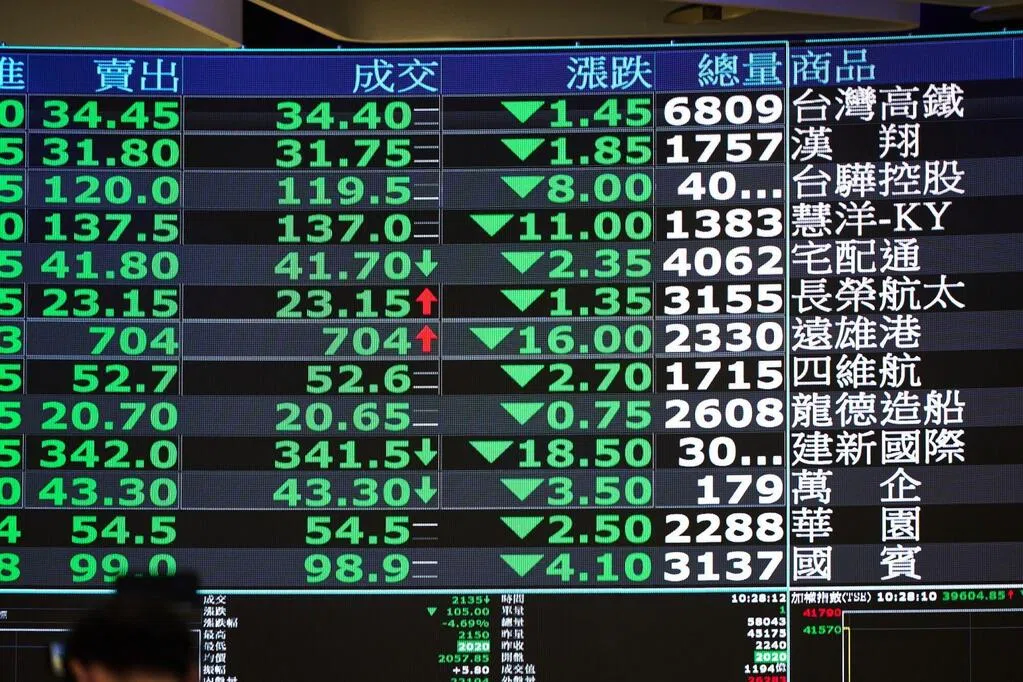
| Taiwan Weighted | 36033.29 | -2393.60 | -6.23% |
1. Asia-Pacific markets slump; A-share turnover rises as over 5,000 stocks fall
Source: Phoenix News
All three major A-share indices closed lower on Friday, with the Shanghai Composite down more than 1% and the Shenzhen Component and ChiNext each falling over 3%. Total turnover reached 1.4222 trillion yuan, up 117.1 billion yuan from the previous session, while more than 5,000 stocks declined. The PCB sector bucked the trend: Mankun Technology hit its 20% daily limit, while Junya Technology, Zhongjing Electronics and several others also closed limit-up, with Sihui Fuji and Ke Xiang Shares gaining. The Global Electronics Association said in a report dated November 18 that PCB shortages have spread from individual components to finished-board deliveries, with order growth of 56.1% far outpacing shipment growth of 13.3%, and delivery bottlenecks expected to last at least until the first half of 2027.
Bank stocks were steady, with ICBC, China Construction Bank and China CITIC Bank hitting intraday record highs. ICBC touched 9.49 yuan a share, with a market value above 3.3 trillion yuan. In the first three quarters, the 42 listed banks reported combined operating revenue of 4.66 trillion yuan, up nearly 8% year on year, and net profit attributable to shareholders of 1.75 trillion yuan, up nearly 4%.
Overseas, Japanese and Korean markets tumbled: the KOSPI fell more than 5%, Samsung Electronics and SK Hynix dropped over 5%, and the Korea Exchange triggered a circuit breaker on the KOSDAQ index. The Nikkei 225 fell more than 4%, SoftBank Group lost 14.48% and Kioxia dropped 11.66%. Anthropic's IPO drew competing interpretations. Steve Sosnick, chief market strategist at Interactive Brokers, said the S&P 500 had been consolidating around the 7,300 support level before a new wave of selling followed Anthropic's trading debut, pushing the index through a key level. Nomura strategist Charlie McElligott noted that allocation to the deal fell well short of expectations, prompting institutions to sell existing AI holdings to free up capital, which amplified the selling. JJ Kinahan, senior vice president at Cboe Global Markets, said the entire AI sector is undergoing a valuation reset, with investors no longer blindly betting on broad gains. Huatai Securities said the IPO itself is not the core variable, and earnings growth is what will determine the sector's direction.
2. Commodities and stocks fall together as markets price a late-cycle signal
Source: Cailianshe
Official data show the US labour market remains resilient and real GDP growth stays strong, but financial markets are sending the opposite signal: the recent joint move in bonds, commodities and equities suggests the US economy is entering a classic late-cycle phase, Cailianshe reported. Historically, that phase has come with significantly weaker returns for stocks and other risk assets. Major US benchmarks have fallen well below last month's record highs, credit spreads keep widening — even high-grade investment-grade borrowers face higher risk premiums — and commodities have corrected sharply, with copper and crude falling in both spot and futures markets, despite the ongoing Iran conflict.
David Rosenberg, founder and president of Rosenberg Research, said in a Thursday interview that "everything we are seeing is a classic late-cycle signal." He pointed to Walmart's forward price-to-earnings ratio of 45 times, an extreme high, saying that when the most defensive blue chip in the index trades at such a large premium to the broader market, "it exposes investors' risk-aversion."
The article flagged two further risks. First, after Democrats' sweeping midterm election victory, any policy obstacle or delay to AI computing infrastructure buildout would hit both equities and bond portfolios. Second, the yield curve: the gap between 2-year and 10-year Treasury yields has narrowed to 27 basis points from 74 basis points in early February. The Fed assessed about a month ago that economic activity was "expanding at a strong pace," but markets are now pricing the possibility that the Fed may have to raise rates more times to cool the economy, and higher funding costs would further weigh on equities.
3. China's LPR unchanged for an 18th straight month
Source: 21st Century Business Herald
China's loan prime rate (LPR), announced on November 20 by the National Interbank Funding Center under the People's Bank of China, was left unchanged: the 1-year LPR stands at 3.0% and the 5-year and above LPR at 3.5%, both matching the previous readings. The two tenors have now been unchanged for 18 consecutive months since June 2025.
Wang Qing, chief macro analyst at Golden Credit Rating, said the stability of the LPR is rooted in third-quarter GDP growth rebounding to 4.5%, continued strong export growth and rapid development of new productive forces led by high-tech manufacturing. He said October macro data weakened somewhat but was largely normal monthly fluctuation, growth momentum should still trend upward in the fourth quarter, and completing the full-year growth target of 4.5% to 5.0% should not be difficult. Against that backdrop, aggregate monetary policy, including a broad rate cut, has stayed on hold.
4. Regulators and police publish four cases of fabricated market news
Source: Stockstar
China's securities regulator and public security authorities have penalised people for fabricating and spreading false information about the capital market, publishing four typical cases on Friday. The notice said the two departments have handled multiple such cases this year and punished those responsible.
The cases involved several methods. In February 2026, a person surnamed Zong fabricated a claim that "the internet sector will be taxed at 25%" and posted it online; a person surnamed Lu uploaded unverified AI-generated content saying value-added tax on internet value-added services such as gaming would rise from 6% to 32%, and a person surnamed Chen forwarded it to their own social media account, widening its spread. In March 2026, a person surnamed Xiang and others used AI software to generate false information that the CSRC had suspended IPOs, and published it through more than 20 online accounts. In June 2026, a person surnamed Han altered a screenshot of a media news alert to claim that regulators had issued a warning letter to a company executive over illegal stock recommendations. In March 2026, a person surnamed Sha invented claims that a listed company had "filed with the government to cut 30% of staff."
All those involved were given administrative penalties by police or securities regulators. The notice stressed that the internet is not outside the law and that authorities will keep cracking down on capital-market rumours.
5. Huatai Securities denies circulated "Zhang Jiqiang market views"
Source: Stockstar
A chat screenshot circulating on November 20 attributed market-trading advice to Zhang Jiqiang, described as director of the Huatai Securities research institute and its chief fixed-income analyst. Zhang denied it. In a statement posted on WeChat Moments, he said the content circulating on some platforms "is not my view and is untrue information," that his research coverage is fixed income, asset allocation and convertible bonds, and that stock market views should be taken from Huatai's strategy reports. He said he reserves the right to pursue legal liability.
In the afternoon, Huatai Securities' official WeChat account issued a statement: "We have noted market commentary recently spread on some online and overseas platforms. After verification, the content was not published by anyone at our research institute and is untrue information."
Citing a report by Brokerage China, the article said Zhang's actual view published on November 20 was positive on Chinese equities over the medium and long term for four reasons: the economy is in a critical transition with a rising share of new economy; dollar liquidity is tightening but China's monetary policy remains accommodative, with money market rates such as Yu'ebao at very low levels, supporting valuations; stock-bond comparisons show Chinese equities are clearly attractive; and dividend and other institutional improvements are raising shareholder returns. He also said Chinese tech companies have low correlation with Nvidia, so the impact on them should be smaller, and A-shares should show more resilience than other markets in the near term.
6. Spot gold falls below $3,600 as Chinese jewellery prices drop under 1,100 yuan a gram
Source: 21st Century Business Herald
Spot gold broke below $3,600 an ounce during trading on November 20, extending losses to 2.64% by 10:33 Beijing time, down more than $95 on the day at $3,529.15 an ounce, according to 21st Century Business Herald's market data. Gold has now broken through four round levels — $3,900, $3,800, $3,700 and $3,600 — in a single week. It is more than $2,000 below its record high of $5,596 earlier this year, with losses for the year widening to more than 36%.
Chinese jewellery prices followed. Several brands have cut gold jewellery prices below 1,100 yuan a gram, the report said. In January, mainstream brands' pure gold jewellery was priced as high as 1,700 yuan a gram, meaning prices are now more than 600 yuan a gram below this year's peak.
7. Hong Kong follows Asia lower; Hang Seng Tech down as much as 4%, SoftBank plunges 16%
Source: Hstong
The AI selloff in US stocks is spreading globally. Japanese and Korean markets fell sharply early Friday, emerging-market equities headed toward a bear market, and Chinese assets also slipped: the Hang Seng Index fell nearly 2% and the Hang Seng Tech Index dropped more than 4% at one point. The report attributed the pressure to falling AI shares, worries about rising global interest rates and trade tensions, adding that markets have been strained by doubts over the durability of the AI trade, Jensen Huang's dramatic departure from Nvidia and fears of further Fed rate hikes.
After Anthropic's Wall Street debut, the tech-heavy Nasdaq fell more than 2% overnight. The selling spread to Japan and Korea: the Nikkei 225 dropped as much as 4%, or 2,400 points, breaking below 57,000 to a two-week low, while the KOSPI fell more than 4% at the open. SoftBank Group plunged as much as 16.16%, leading Asian tech declines; Tokyo Electron fell 7.19%, Lasertec 6.75% and Renesas 6.71%. SoftBank is one of OpenAI's largest backers, having invested $64.6 billion in the company, the report said. In Korea, SK Hynix fell 6% and Samsung Electronics 4.7%.
Seo Sang-young, an analyst at Mirae Asset Securities, said: "The decline in US chip stocks is mainly due to capital flows into Anthropic rather than a fall in actual AI demand. Therefore, the selloff is unlikely to become a sustained trend." The MSCI index tracking developing-economy stocks fell 1.8% to 1,439.35 on Friday, taking its decline from a June peak past 20% after seven straight sessions of losses. Over the past month, major benchmarks in Taiwan, Brazil and Korea have each fallen more than 10%.
8. Nikkei plunges 5.06%, fifth-largest point drop on record
Source: Kyodo News
Tokyo stocks fell sharply on November 20, with the Nikkei index tumbling 3,007.56 points to close at 56,436.65, a roughly seven-month low and a 5.06% decline, Kyodo News reported. A slump in US tech shares dragged on Tokyo, and Anthropic's listing was seen as the news having been fully priced in, unleashing selling in semiconductors and other sectors in an almost across-the-board decline.
The drop was the fifth-largest single-day point fall in the Nikkei's history. The broader TOPIX index fell 148.25 points to 3,674.22, down 3.88%, with 3.08563 billion shares traded.
Overnight in the US, Anthropic closed its first trading day on Nasdaq 17% above its offering price, a sign of investor enthusiasm for AI companies, and pre-IPO optimism had lifted related shares. But the completion of the listing was also seen as the peak of good news, and concerns about heavy AI spending by IT giants weighed on tech stocks including chipmakers. Advantest, SoftBank Group and other heavily weighted semiconductor names fell, dragging down the index.

9. Korea's record profits meet a foreign exodus
Source: Jin10 Data
South Korean stocks face an unusual situation: Samsung Electronics and SK Hynix are posting record profits on AI chip demand, yet foreign investors keep leaving. As of Thursday, the KOSPI had fallen 44% from its record high set in June, wiping out about 3,300 trillion won ($2.4 trillion) in market value. Despite the slide from the peak, the index is still up 20% this year in won terms. Foreign investors have been net sellers for a seventh straight month, with cumulative outflows of $115.2 billion — the largest withdrawal since LSEG began compiling the data in 2008.
Han Jiyoung, an analyst at Kiwoom Securities in Seoul, said the market is seeing a broad "sell Korea" trend and that the key question is how to attract foreign investors back. On earnings, Samsung's third-quarter operating profit rose nearly ninefold year on year to 107.4 trillion won, while SK Hynix's jumped more than sevenfold to 83.3 trillion won. The two companies account for nearly half of KOSPI market capitalisation, making the index highly sensitive to the global AI investment cycle.
Isaac Thong, an investment manager at abrdn's Asian Income Fund in Singapore, said there is a clear repositioning underway, with investors moving from AI-related assets into defensive, higher-quality and more stable holdings. Unlike previous industry downturns, AI companies' fundamentals remain strong, he said, meaning the pressure on Korean stocks stems not only from earnings expectations but also from risk appetite and allocation shifts. Samsung told Reuters on Thursday that it still plans to return up to 110 trillion won to shareholders in 2026, with the board to decide the size and execution of the remaining measures in late January. SK Hynix reiterated plans to return about 100 trillion won through buybacks and share cancellations. The two companies' 2026 shareholder return plans total up to 210 trillion won.
10. Taiwan stocks post worst week since 1991, down nearly 18%
Source: Lianhe Zaobao
Global AI trading came under renewed pressure and the tech-heavy Taiwan stock market suffered another wave of selling on Friday, with the TAIEX plunging 6.2% and extending its weekly loss to nearly 18% — the worst weekly performance since 1991. Two rounds of tighter short-selling restrictions by Taiwan's financial regulator this month failed to stop the decline.
With Anthropic's blockbuster listing failing to dispel broad doubts about the AI industry's outlook, investors remain cautious about whether massive capital spending on underlying technology infrastructure and debt financing can translate into adequate returns. Anthropic shares fell 4.7% in after-hours US trading. Technology stocks account for more than 70% of the TAIEX's weighting, making the market highly sensitive to swings in global semiconductor and AI supply chains.
Taiwan's Financial Supervisory Commission said on November 19 that it would tighten short-selling rules further: from Friday, the daily cap on securities lending for short selling in intraday trading would be cut from 3% — set earlier this month — to 1% of a stock's average daily volume over the previous 30 trading sessions, with exemptions for certain hedging and market-making activity. The TAIEX fell as much as 3,737.67 points to 37,837 on November 6 before paring losses, and the FSC announced that day that from November 9 it would raise short-selling margin requirements and lower the daily securities lending cap.
More News
- Maple Express | November 22, 2026: Two 16-year-olds killed in Scarborough triple shooting
- Maple Express | November 22, 2026 — Two dead, one seriously injured in Scarborough triple shooting
- Global Express | November 22, 2026 — Israel’s Eisenkot Invites Likud for Talks as Government Deadline Nears
- Finance Weekly | AI Faith Cracks as Rate Hikes Return, and Everything Reprices
- Tech Express | November 22, 2026 — Intel's 18A Yield Reaches 70% as the Chipmaking Comeback Takes Shape
Comments (0)
View More
 -51%
Ring Indoor Cam 2K — Retinal 2K Video and 6x Zoom, Half Price! $39.99 CAD (50% Off)
 -26%
Samsung The Frame 32" QLED — Turns Into a Painting When It's Off, Mount Included! $598 CAD (25% Off)
 -51%
Travelpro Crew Executive Choice 3 Backpack — Fits Under the Seat, With USB-A/C Ports! $134.99 CAD (50% Off)
 -42%
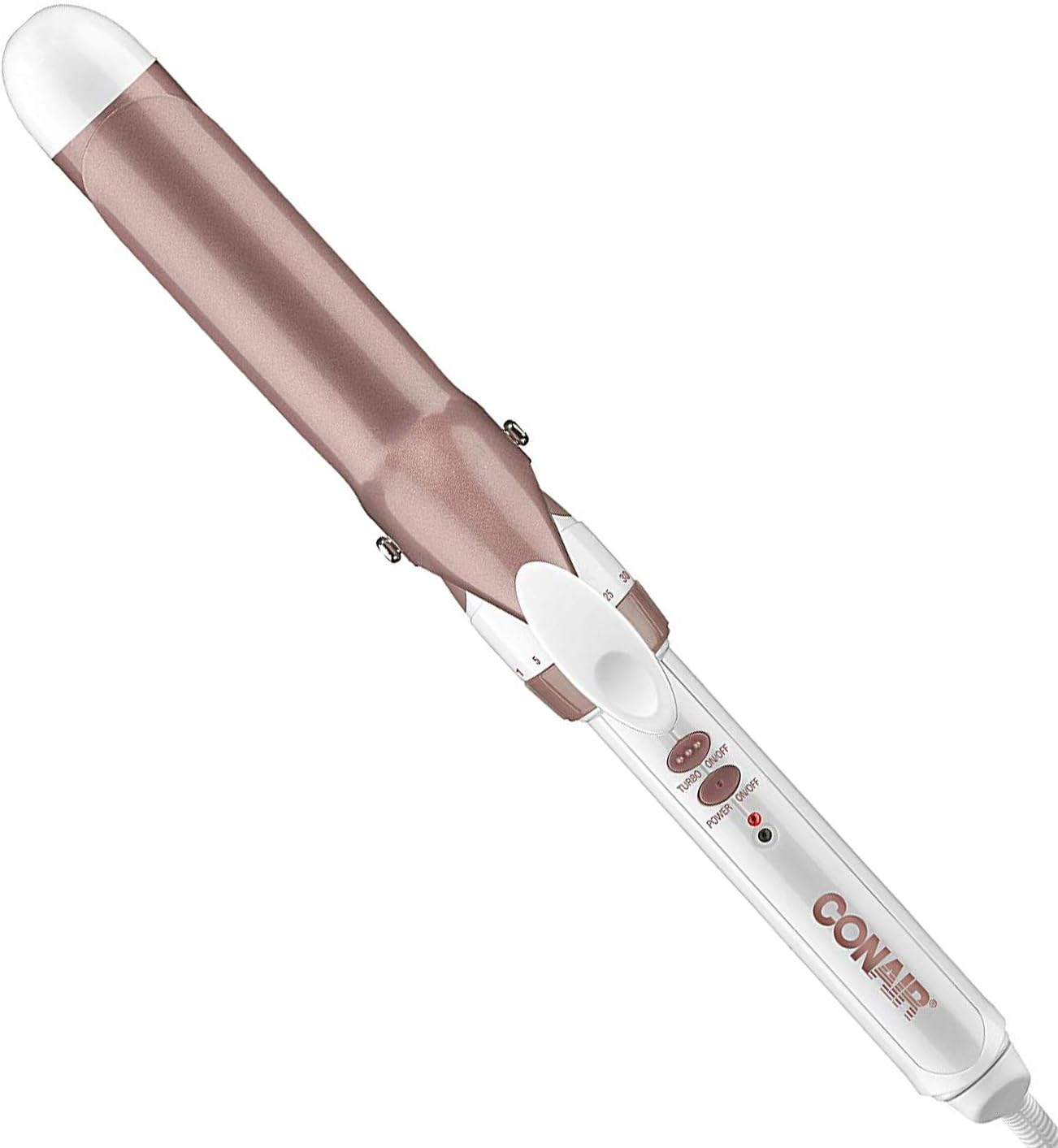
Conair Double Ceramic 1¼" Curling Iron — 30 Heat Settings! $17.49 CAD (42% Off)
 Finance Weekly
 | AI Faith Cracks as Rate Hikes Return, and Everything Reprices
 Maple Express
 | November 22, 2026 — Two dead, one seriously injured in Scarborough triple shooting
-51%Ring Indoor Cam 2K — Retinal 2K Video and 6x Zoom, Half Price! $39.99 CAD (50% Off)
Amazon
-26%Samsung The Frame 32" QLED — Turns Into a Painting When It's Off, Mount Included! $598 CAD (25% Off)
Amazon
-51%Travelpro Crew Executive Choice 3 Backpack — Fits Under the Seat, With USB-A/C Ports! $134.99 CAD (50% Off)
Amazon
-42%Conair Double Ceramic 1¼" Curling Iron — 30 Heat Settings! $17.49 CAD (42% Off)
Amazon
Finance WeeklyFinance Weekly | AI Faith Cracks as Rate Hikes Return, and Everything Reprices
Maple Express