Tech Express | August 25, 2026 Nvidia Plans Open-Weight AI Model; Chinese State Media Welcomes 'Copying China's Homework'
Today's Tech Express: Nvidia plans an open-weight AI model, and Chinese state media welcomes "copying China's homework"; AI assistant Instinct draws privacy concerns; a study says Chinese hackers use DeepSeek and other AI to scale up attacks; Apple seeks CXMT memory but capacity is already booked; Nvidia's Rubin runs DeepSeek V4 Pro 450x faster than the H200; a new OLED iPad mini may arrive by late October; Sony launches the Xperia 10 VIII; California sees a near-total lunar eclipse Thursday.
1. Nvidia Plans Open-Weight AI Model; Chinese State Media Welcomes "Copying China's Homework"
Source: Lianhe Zaobao
Responding to Nvidia's plan to develop an open-weight AI model, Chinese state media outlet Global Times published a commentary late Monday (Aug 24), saying it welcomes Nvidia "copying China's homework" — while warning that if Nvidia only uses open source as a marketing tactic to win chip orders, the "American DeepSeek" may turn out to be just an expensive empty shell.
The Wall Street Journal reported last Saturday (Aug 22) that Nvidia plans to use a $6 billion deal reached this week to build one of the world's most powerful open-weight AI models, competing with Chinese models such as DeepSeek and Moonshot's Kimi K3. People familiar with the matter said this would also push Nvidia to further challenge U.S. frontier AI companies like OpenAI and Anthropic.
The Global Times commentary argued that most U.S. AI giants have long adopted a closed-source approach, while the success of Chinese open-source models has stirred anxiety in the U.S. industry. It noted that the long-term prosperity of the open-source community depends on broad participation, transparent collaboration and low barriers to entry, rather than any single giant's monopolistic investment.
2. AI Assistant Instinct Draws Privacy and Security Concerns
Source: TechCrunch
Instinct, an AI personal assistant still in private testing, has been praised as feeling "like magic," but it has also raised concerns about its privacy and security model. Several testers have questioned its broad terms of service and its security practices.
Built by a small team led by former Sierra research scientist Noah Shinn and based in San Francisco, Instinct connects to users' email, messaging apps, calendar, and device audio, location and screen, letting them book appointments, clean up their inbox and shop via text message or WhatsApp. Its terms grant the company a "perpetual and irrevocable" license to access, use, store, reproduce and modify users' materials — including for training its AI models — and to collect screen captures, cursor movements and keyboard inputs.
Early adopter Peter Yang said Instinct would not delete his Gmail records when asked, while user Claire Vo found it was still summarizing her inbox after she disconnected access, with emails stored in plain text. The assistant has also been found sending emails without prior confirmation and could be exploited by phishing attacks. The team has yet to respond publicly.

3. Study: Chinese Hackers Use DeepSeek and Other AI to Scale Up Cyberattacks
Source: Lianhe Zaobao
Bloomberg reported Tuesday (Aug 25) that Taiwanese research firm TeamT5 said Chinese hackers have integrated DeepSeek and other open-source AI models into their attacks. Since state-linked Chinese hacking groups began offloading tedious tasks to AI and using it to develop more advanced malware, their attack volume has more than doubled.
Researchers said they cannot always identify the specific AI model used, but DeepSeek is popular among Chinese hackers for its strong performance and high customizability. Although China has more powerful models such as Moonshot's Kimi K3, hackers prefer DeepSeek largely because its security protections are relatively loose and its running costs are lower. A TeamT5 chief analyst said Western models are also in demand but have far stricter safeguards that require more effort to bypass.
TeamT5 said DeepSeek and other open-source models have been used across multiple stages of attacks, including reconnaissance and generating exploit code. Cybersecurity firm CyCraft also found that a hacker used ChatGPT to help decrypt a stolen Signal database during an attack on a Western think tank.
4. Apple Seeks CXMT Memory, But Capacity Is Already Booked by Huawei and Xiaomi
Source: MyDrivers
MyDrivers reported on Aug 25 that Apple is eager to bring Chinese memory maker CXMT into its supply chain, at least to meet its memory procurement needs in China. By one estimate, Apple's annual iPhone demand in China is about 50 million units, which at 12GB per unit translates to 600 million GB of memory per year.
If such an order landed, it would consume about 6.6% of CXMT's capacity by the end of 2026 — but CXMT's capacity is already full. Supply chain sources say demand for CXMT's DRAM is extremely strong, with capacity booked through the end of 2027, and Chinese firms like Huawei and Xiaomi have locked in most of it through long-term contracts.
Bank of America analysts noted that Apple's real goal is not large-scale procurement, but to use CXMT as a bargaining chip to pressure Samsung, SK Hynix and Micron when renewing long-term supply agreements. Goldman Sachs forecasts CXMT's total capacity will reach about 100 billion GB by 2028, still only half of China's estimated 200 billion GB of demand.

5. Nvidia's Rubin Runs DeepSeek V4 Pro 450x Faster Than H200
Source: MyDrivers
MyDrivers reported on Aug 25 that Nvidia has published real-world performance tests for the Vera Rubin NVL72. Although Nvidia announced a 15% price increase for its Rubin AI platform, the performance gains are substantial — running a model like DeepSeek V4 Pro is 450 times faster than on the H200.
The test used DeepSeek V4 Pro, a 1.6-trillion-parameter model, as the workload, comparing it against H200 and GB300. Using H200 NVL8 as the baseline, the GB300 NVL72 is 15 times faster, and Vera Rubin is another 30 times faster than GB300 — a total 450x improvement over H200. Measured per 1 million tokens, Vera Rubin's cost is 35 times lower than the GB300.
The report cautioned, however, that the comparison uses the 8-GPU H200 as the baseline and Nvidia did not disclose power consumption or pricing. There is no official price for the Vera Rubin NVL72, with rumored BOM costs between $8.8 million and $9.1 million, plus the recently reported 15% increase.

6. New iPad Mini With OLED Expected by End of October
Source: MacRumors
According to Bloomberg's Mark Gurman, Apple plans to release a new iPad mini with an OLED display "by the end of October" this year. Apple already switched the iPad Pro to OLED in May 2024, but the iPad mini, iPad Air and entry-level iPad still use LCD screens.
Moving to OLED should give the next iPad mini improved image quality, with richer colors, higher contrast and true blacks. Since OLED is generally more expensive than LCD, the next iPad mini could carry a higher starting price. Gurman previously reported the device would get a new type of speaker system and increased water resistance, and could be powered by an A19 Pro or A20 chip, up from the A17 Pro.
The current model launched in October 2024 with the A17 Pro chip enabling Apple Intelligence.

7. Sony Launches Xperia 10 VIII Priced at £549
Source: MyDrivers
MyDrivers reported on Aug 25 that Sony officially launched the new mid-range Xperia 10 VIII on Tuesday morning, priced at £549 (about 5,028 yuan). The phone has a 6.1-inch LTPS OLED display with a 120Hz refresh rate, keeping Sony's signature notch-free, punch-hole-free design.
It runs on the Snapdragon 6 Gen 3 chip with 8GB of RAM and 128GB of storage, and supports microSD expansion while retaining a 3.5mm headphone jack — a rarity in its class. Sony said that, based on market research, users rate these two legacy features highly, and they have become an essential part of the Xperia brand identity.
For cameras, it keeps a dual setup with a 50MP main sensor and a 13MP ultrawide; the battery is 5,000mAh with 30W fast charging.

8. California to See Near-Total Lunar Eclipse Thursday Night
Source: San Francisco Chronicle
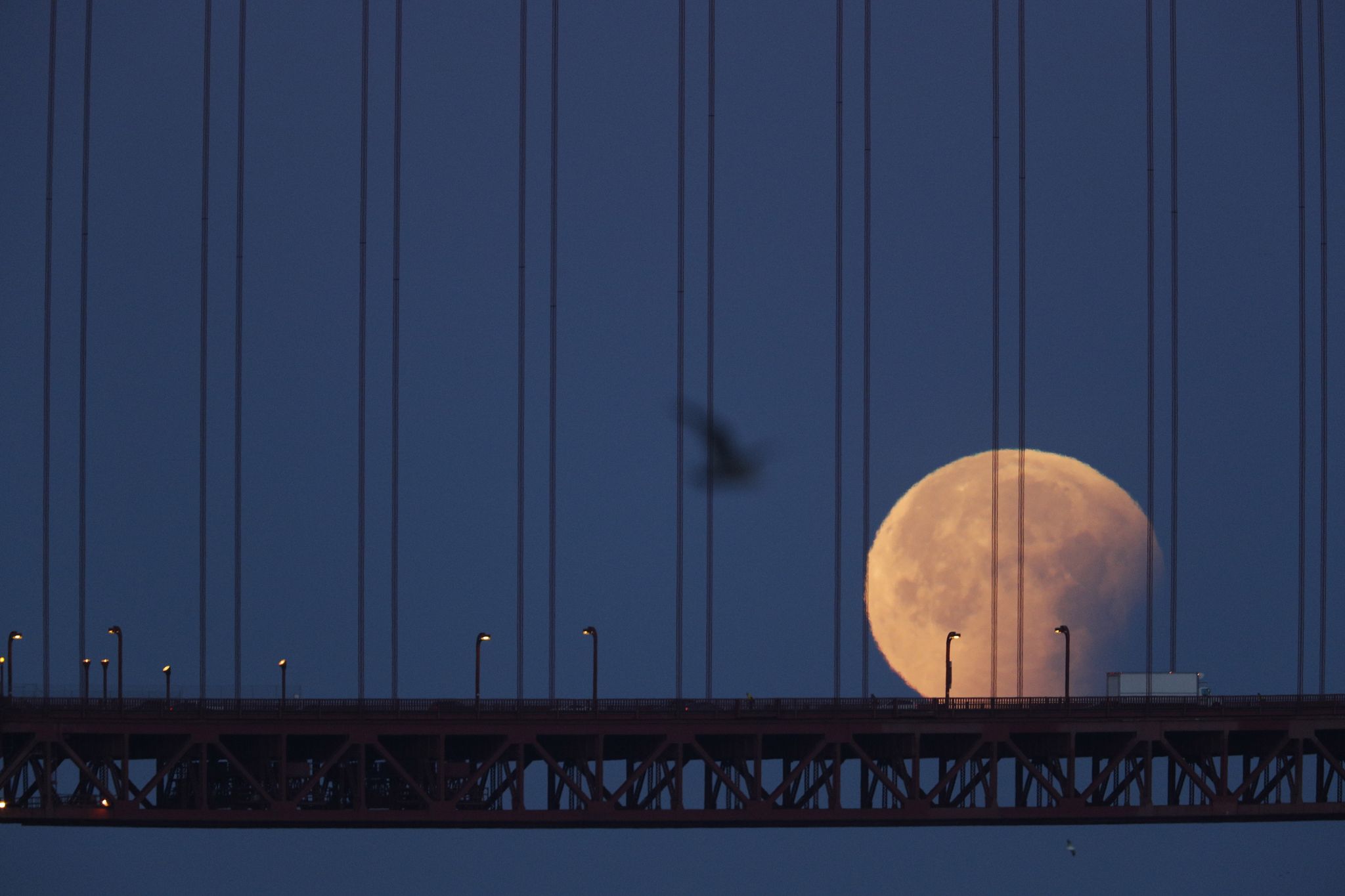
California will see a near-total lunar eclipse Thursday night, with Earth's shadow covering about 96% of the moon's disk and turning it a coppery red. According to NASA, the eclipse will reach its maximum — with the moon at its reddest — around 9:13 p.m. Pacific Time.
Viewing conditions in the Bay Area may not be ideal, however. Meteorologist Anthony Edwards said moisture from Tropical Storm Iselle is moving over California, and skies are unlikely to be completely clear Thursday evening, with the most cloud cover over the South Bay and Central Coast.
Thursday's partial eclipse begins at 7:34 p.m., peaks at 9:13 p.m., and ends at 10:52 p.m. Astronomy professor Andrew Fraknoi said the consensus is the moon will be "plenty red." Unlike solar eclipses, which require special glasses, lunar eclipses are perfectly safe to view.
9. World Humanoid Robot Games Enter Medal Rush
Source: Sina News
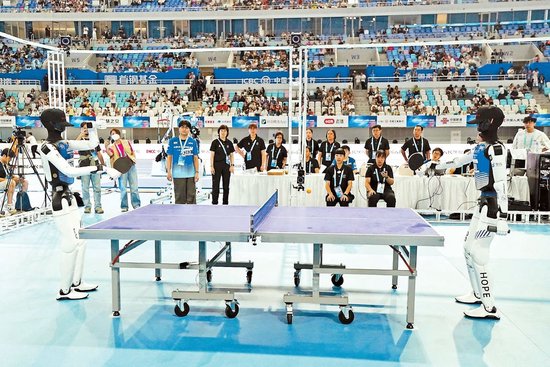
Aug 25 marks the second-to-last competition day of the second World Humanoid Robot Games, with track and field, soccer, free fighting and table tennis all reaching the semifinal or final stage. Finals in the 4×100m relay, standing high jump, tug-of-war and street dance took place, while berths in the 100m small and large categories were set to be decided that evening.
Held at the National Speed Skating Oval ("Ice Ribbon"), the event features 51 disciplines, with 21 scenario events making up more than 40% — covering medicine sorting, household cleaning and dexterous-hand assembly, closely replicating real-world applications. Liu Weiliang, deputy director of the Beijing Municipal Bureau of Economy and Information Technology, said the city is building a model where "winning a medal leads to winning an order."
Compared with the first edition, the event's scale has doubled, with team numbers up 138% and robot counts quadrupled; 25 international teams from 16 countries participated, up 56%. Beijing now has more than 40 humanoid robot manufacturers, and industry revenue grew from 15 billion yuan in 2023 to 51.8 billion yuan in 2025, an average annual growth rate exceeding 85%.
10. China Proposes Law on Road Safety Rules for Autonomous Vehicles
Source: Lianhe Zaobao
A draft revision of the Road Traffic Safety Law was submitted Tuesday (Aug 25) to the Standing Committee of the National People's Congress for review. To establish a road safety system for autonomous vehicles, the draft stipulates that self-driving cars may only operate on roads after passing compliance tests and being registered.
The draft makes clear that when a violation occurs while autonomous driving is activated, the vehicle manufacturer or importer will be held responsible; vehicles with autonomous driving deactivated or only assisted driving will be managed under rules for non-autonomous vehicles. Cui Dongshu of the China Automobile Dealers Association said the draft clarifies liability at the legal level, avoiding disputes between drivers and automakers.
The draft also introduces mandatory traffic accident liability insurance for autonomous vehicles and requires manufacturers and importers to ensure driving safety, cybersecurity and data security, and to refrain from false or exaggerated advertising of autonomous driving functions.
More News
- Global Express | October 9, 2026 — Former ICC Judge Navi Pillay Wins 2026 Nobel Peace Prize
- Finance Morning | October 9, 2026: PBOC Sets Out RMB Exchange-Rate Stance; A-shares Reverse Higher, Hang Seng Jumps 1.79%
- Tech Express | October 9, 2026 — Apple Announces October 13 'Welcome Home' Event Focused on the Smart Home
- Sports Express | October 9, 2026 — MLB Proposes 154-Game Season, Best-of-Seven Division Series
- Maple Express | October 9, 2026 — Food Experts Warn of a Tough Winter at the Grocery Store
Comments (0)
View More
 -51%
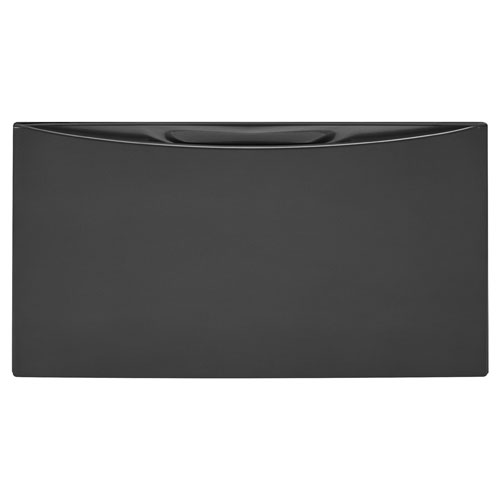
-51%Electrolux 27" Laundry Pedestal (EPWD257UTT, Titanium) — Raise Your Washer & Dryer for Easier Loading! $149.99 CAD (50% Off)
 -34%
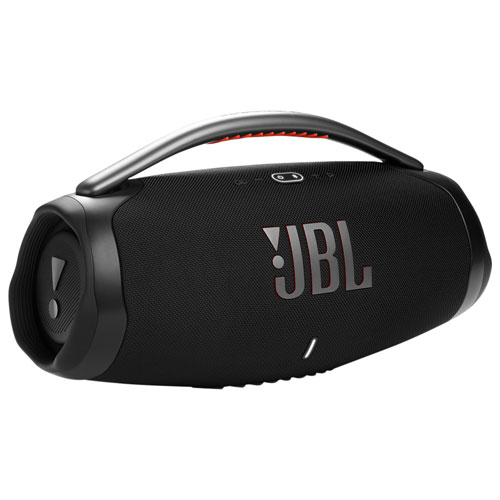
-34%JBL Boombox 3 Waterproof Bluetooth Speaker — IP67 Rugged Build & 24-Hour Battery! $399.99 CAD (33% Off)
 -23%
-23%GOLOZA Projection Alarm Clock — See the Time on Your Ceiling Without Rolling Over! $26.99 CAD (23% Off)
 -39%
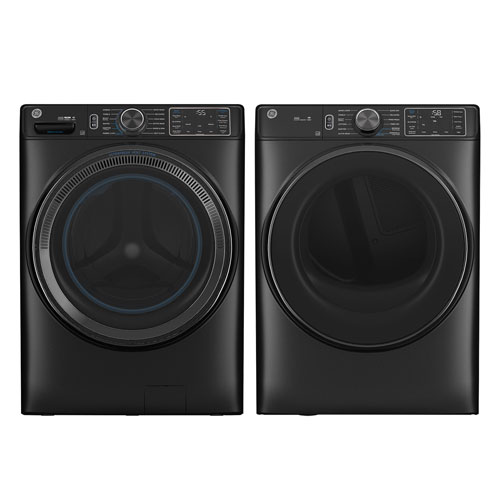
-39%GE 5.8 Cu. Ft. Front Load Steam Washer & 7.8 Cu. Ft. Electric Steam Dryer (Carbon Graphite) — Steam Laundry Pair! $2649.98 CAD (38% Off)
 Maple Express
Maple Express | October 9, 2026 — Food Experts Warn of a Tough Winter at the Grocery Store
 Tech Express
Tech Express | October 9, 2026 — Apple Announces October 13 'Welcome Home' Event Focused on the Smart Home
-51%Electrolux 27" Laundry Pedestal (EPWD257UTT, Titanium) — Raise Your Washer & Dryer for Easier Loading! $149.99 CAD (50% Off)
Best Buy
-34%JBL Boombox 3 Waterproof Bluetooth Speaker — IP67 Rugged Build & 24-Hour Battery! $399.99 CAD (33% Off)
Best Buy
-23%GOLOZA Projection Alarm Clock — See the Time on Your Ceiling Without Rolling Over! $26.99 CAD (23% Off)
Amazon
-39%GE 5.8 Cu. Ft. Front Load Steam Washer & 7.8 Cu. Ft. Electric Steam Dryer (Carbon Graphite) — Steam Laundry Pair! $2649.98 CAD (38% Off)
Best Buy
Maple ExpressMaple Express | October 9, 2026 — Food Experts Warn of a Tough Winter at the Grocery Store
Tech Express