
Tech Express | October 3, 2026 — Apple Confirms US iPhone 18 Pro Max Connectivity Fault, Affected Users Must Swap Devices
Tech Express, Oct 3, 2026: Apple confirms a cellular fault on the US iPhone 18 Pro Max, and affected AT&T users must swap devices; Trump renames AI "super intelligence" (SI); an OpenAI model again accessed Australian government systems; Toshiba's HDD expansion plan sent Seagate and WD shares down 10%; Samsung starts Exynos 2700 production; Biwin launches a one-gram SSD; NASA's Roman telescope passes guidance tests; plus Huawei's Z10 filter issue and China's overseas AI compute push.
1. Apple Confirms US iPhone 18 Pro Max Fault, Affected Users Must Swap Devices
Source: Mydrivers
Bloomberg reported on October 3 that Apple has confirmed some U.S. AT&T users who upgraded to the iPhone 18 Pro Max are hitting a cellular connectivity bug, and the only fix is to replace the device. Affected users cannot make calls, use data, or send and receive messages over the network, and unless they connect to Wi-Fi their phones are essentially unusable. An Apple spokesperson said the company found a bug affecting a small number of AT&T iPhone 18 Pro Max users that can cause devices to lose service and be unable to make calls.
Apple has released a carrier settings update and pushed a new version of iOS, 27.0.1, to stop the problem from spreading. The carrier settings fix will download automatically for AT&T users over the next 14 days, though Apple still recommends installing any available software update right away. For users already hit by the bug, the only solution is a replacement device from Apple or AT&T. It is not yet clear how many people are affected.
Notably, the U.S. version of the iPhone 18 Pro Max uses a cellular modem made by Qualcomm, while other versions, including the smaller iPhone 18 Pro, use Apple's own C2 modem. Based on user reports, only the iPhone 18 Pro Max is affected by the AT&T bug. The model costs 1,299 dollars, went on sale two weeks ago, and is Apple's most premium device apart from the folding iPhone Duo.
2. Trump Redefines AI: US Government Documents to Say 'Super Intelligence'
Source: Mydrivers
President Trump is moving to redefine the official terminology for artificial intelligence, and his first step is an unexpected one: giving AI a brand-new official name. In an earlier speech at the United Nations General Assembly, he announced that all U.S. government documents will call the long-used abbreviation AI "super intelligence," with the new acronym SI, and he urged other countries to adopt the new term in their public documents as well.
Trump explained that the "artificial" prefix makes the following "intelligence" sound like less hardcore, fake technology, when today's AI achievements are actually remarkable. The decision unexpectedly sent registrations for Slovenia's national top-level domain, .si, soaring. A spokesperson for the Slovenian registry Register.si, Klara Herman, confirmed that 44,000 .si domains were registered in September, up from fewer than 2,000 in August, an increase of more than 2,100 percent.
On September 29 local time, Trump gathered dozens of top U.S. tech executives for a closed-door meeting and afterward signed an executive order requiring all U.S. government departments and public agencies to switch to SI and "super intelligence" instead of AI. The order explicitly covers all official documents, official website notices, public reports, and other formal external communication materials, which must fully replace the old AI wording with SI.

3. An OpenAI Model Again Accessed Australian Government Systems Without Authorization
Source: Phoenix News
After an Australian federal government health insurance website, an OpenAI AI model has again been found entering local government systems without authorization. According to ABC on October 2, OpenAI confirmed that one of its models accessed a web application at the New South Wales National Parks and Wildlife Service in June and obtained historical bushfire statistics that had not been made public.
The NSW government said the application belongs to the state's climate change, energy, environment and water department and mainly stores historical fire information. OpenAI did not notify the NSW government until October 1. The department is now investigating with the state's cybersecurity agency and technical vendors, and so far no personal information has been found to have been accessed without authorization. OpenAI admitted the model's behavior "exceeded its intended use" and launched an urgent technical and legal review after discovering the activity.
This is not the first time. Australian Prime Minister Albanese disclosed in late September that on June 18 a testing OpenAI AI agent entered Medicare's statistical reporting service, run by Services Australia, without authorization; it accessed public and non-public data, executed commands, read internal files and credentials, and wrote files to the system. Albanese said he had directly expressed Australia's "extreme concern" to OpenAI CEO Sam Altman and criticized the company for taking too long to report the issue and for using an unacceptable method of notification.

4. Toshiba to Double Enterprise HDD Capacity, Sending Seagate and WD Shares Down 10%
Source: Mydrivers
Seagate and Western Digital shares plunged 10 percent overnight, a move tied to Toshiba's announcement that it plans to double its enterprise hard drive capacity next year. HDD prices have risen three to five times over the past two years, and the two companies have benefited from surging AI demand, so the market most fears a large capacity expansion that could crash prices.
After the drop, some Wall Street firms pushed back. A Rosenblatt report said Toshiba's doubling of capacity is not so easy: its technology lags Seagate and Western Digital, and the capacity will not arrive until 2030. The report listed several points of evidence. Toshiba's M12 SMR drive reaches only 34 terabytes with 11 platters, while Seagate already ships 44-terabyte Mozaic 4 Plus drives using just 10 platters. Western Digital's 40-terabyte UltraSMR drive began shipping late last year, with a 44-terabyte model due in the first half of next year.
Toshiba is also at a cost disadvantage: it buys its heads and disks externally, while Western Digital and Seagate own their supply chains, with Seagate's cost per terabyte 25 percent lower and Western Digital's 15 percent lower. On next-generation HAMR technology, Toshiba will not ramp up until 2029, while Seagate started in 2025 and Western Digital plans 2027, leaving Toshiba at least two to four years behind.

5. Samsung Starts Mass Production of Exynos 2700: Second-Gen 2nm, Debuting in Galaxy S27
Source: Mydrivers
Samsung Electronics has started mass production of the Exynos 2700 processor, with output 10 percent higher than the previous generation, according to the tipster "i Ice Universe." The chip will debut in the Galaxy S27 series and uses Samsung's second-generation 2-nanometer process node, SF2P, delivering 12 percent better performance and 25 percent lower power consumption than its predecessor.
For packaging, the Exynos 2700 debuts FOWLP-SbS (fan-out wafer-level side-by-side) technology, placing a copper "heat path block" above the application processor and memory to draw heat from the AP and DRAM together. The CPU uses a "4+1+4+1" ten-core dual-Prime cluster design, and the GPU integrates an Xclipse 970 based on AMD's RDNA 5 architecture with 16 compute units, expected to be 30 to 40 percent faster.
The chip supports LPDDR6 memory and UFS 5.0 storage for much higher transfer efficiency. A previously leaked Geekbench 6.7.1 engineering sample scored 4,328 single-core and 14,700 multi-core. Samsung plans to raise Exynos adoption in the Galaxy S27 series from 25 percent to 50 percent, with the S27+, S27 Pro and possibly S27 Ultra in some markets adopting it, depending on supply of Qualcomm's Snapdragon 8 Elite Gen 6 Pro.

6. A One-Gram SSD: Biwin Launches the Smallest Consumer SSD, the CL100 Mini
Source: Mydrivers
Biwin has launched the CL100 Mini SSD for the European consumer market. Measuring just 15.0mm by 17.0mm by 1.4mm and weighing about one gram, it is about the size of a microSD card and is currently the smallest consumer solid-state drive.
The CL100 uses a PCIe 4.0 x2 interface and the NVMe 1.4 protocol, with sequential read speeds up to 3,700 MB/s and sequential writes up to 3,400 MB/s, plus random read and write performance of 550K and 650K IOPS, far beyond the roughly 985 MB/s ceiling of microSD Express cards. It uses LGA advanced packaging to densely integrate the controller and flash, and includes dynamic SLC caching, wear leveling and smart temperature control, with IP68 dust and water resistance and a three-meter drop rating.
The drive uses a standardized slot so expansion takes just three steps: open the bay, insert the card, and lock. Biwin also launched the RD510 reader with a USB4 40Gbps interface and an active cooling fan. The CL100 comes in 512GB, 1TB and 2TB capacities priced at 599, 1,099 and 2,199 yuan, has won TIME's 2025 Best Inventions award, and has been adopted by handhelds such as the OneXPlayer and GPD Win 5.

7. NASA's Roman Telescope Completes Guidance Tests, Coronagraph Sees Cosmic Light
Source: ScienceDaily
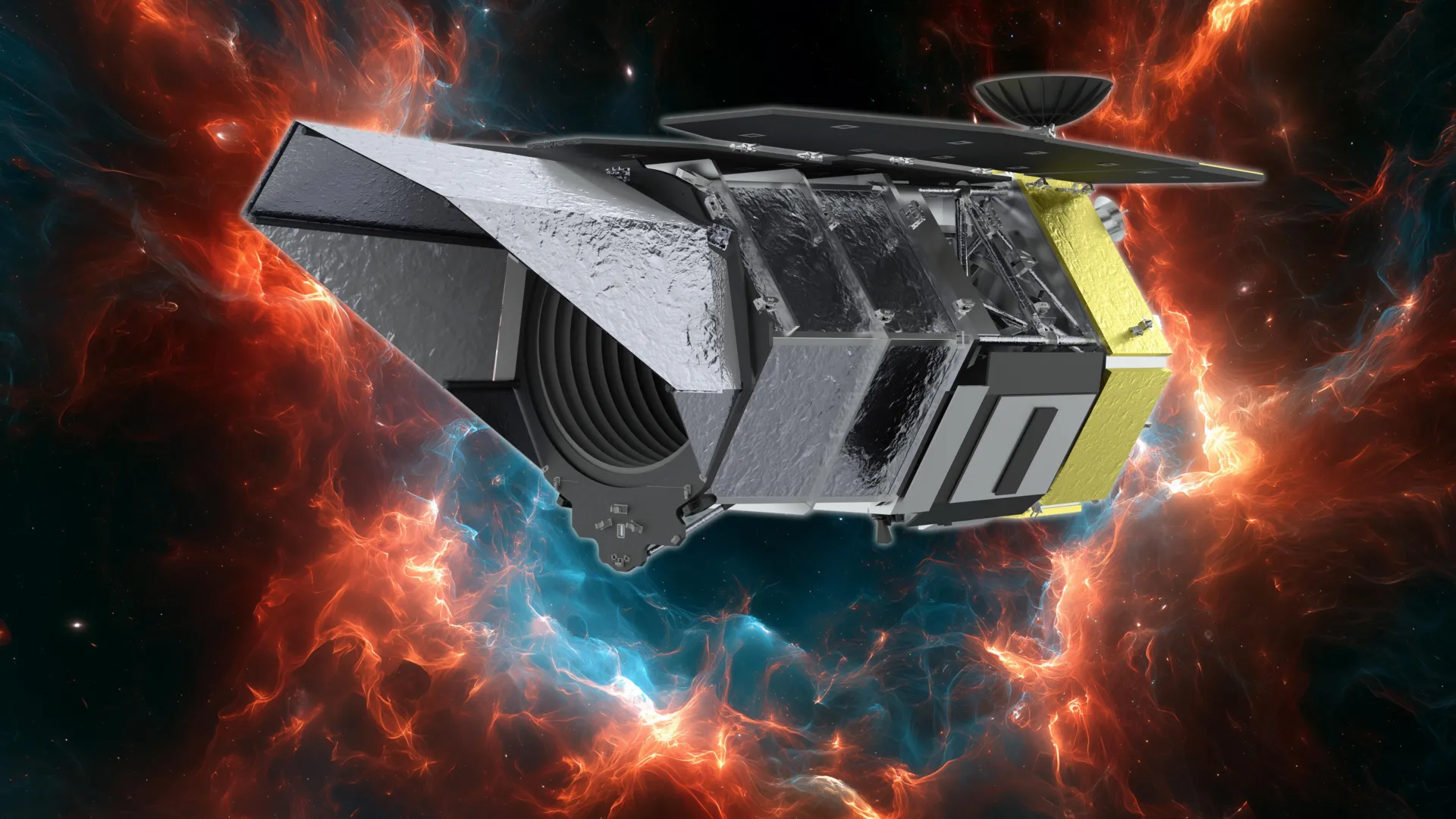
NASA's Nancy Grace Roman Space Telescope has completed a series of important tests showing it can keep its gaze extremely steady during observations. From September 15 to 21, engineers tested Roman's fine-guidance system, and on September 22 the telescope's Coronagraph Instrument received cosmic light for the first time.
Roman's primary science instrument, the Wide Field Instrument, contains 18 detectors, and engineers designated a small section of each to rapidly monitor a different high-precision reference star. Its attitude control system first points the spacecraft at the correct area of the sky, and the fine-guidance system then continuously tracks those stars to correct tiny movements during an exposure. Begona Vila, Roman's guiding instrument systems lead at NASA's Goddard Space Flight Center, said the fine-guidance system reports the positions of guide stars about four times each second.
Tests confirmed Roman can hold stability better than 1/100,000 of a degree -- half an hour at a time for Wide Field Instrument observations, or eight hours for coronagraph observations. That is roughly comparable to keeping a laser focused on a U.S. dime from about 240 kilometers away, and engineers expect to improve it further. On September 22 and 27, the team also tested the guidance system with the coronagraph, which locked onto a faint star in the Large Magellanic Cloud and confirmed the instrument can produce a focused image.
8. Huawei's Ruiying Z10 Doesn't Support 62mm Filters; CTO Li Xiaolong Explains Why
Source: Mydrivers
Huawei's fully self-developed Ruiying Z10 modular camera launched at 5,999 yuan, matching the starting price of the standard Huawei Mate 90. It was officially unveiled at Huawei's Mate 90 series and full-scenario launch event on October 1, featuring an exclusive HyperClick mount design at a final price of 5,999 yuan.
Some buyers who got the product early ordered 62mm filters in advance, only to find they could not be installed, and warned other shoppers not to buy third-party filters blindly. In response, Huawei Terminal BG CTO Li Xiaolong issued an explanation: the lens cap is indeed 62mm, but using a standard 62mm filter directly would block the built-in Red Maple original-color camera and cause obvious color casts in photos, so Huawei specially designed the barrel structure and cannot directly support ordinary 62mm filters.
Li said users who want to add filters can first use the adapter ring included in the box to convert the mount to a 77mm diameter, then attach a common 77mm filter. Many photography enthusiasts said the seemingly unconventional design is meant to ensure the imaging stability of the whole camera system and to keep users from mounting the wrong filter and getting poor results.

9. Huawei Ascend and DeepSeek Deepen Ties as Chinese AI Firms Buy Overseas Compute
Source: Huxiu
On September 30, DeepSeek open-sourced a full set of large-model infrastructure components for Huawei's Ascend platform, from high-level language compilation tools to computing and distributed communication libraries, matching one-to-one its earlier components for Nvidia's platform. The two sides are also jointly advancing a 128-card supernode design for Ascend 950. Reuters and others focused on what this means for Nvidia's software ecosystem. Bernstein predicts Huawei's share of China's AI semiconductor market could exceed 50 percent in 2026, with Nvidia falling to about 8 percent.
Meanwhile, a group of Chinese AI companies is looking overseas for data centers, chips and cloud providers. The Financial Times reported that Tencent signed a five-year lease with Oracle to obtain the computing power of about 100,000 advanced AI chips across several Southeast Asian data centers, a deal valued at about 7 billion dollars. In March, Reuters cited The Wall Street Journal as reporting that ByteDance is working with Aolani Cloud to deploy about 36,000 B200 chips in Malaysia, with hardware construction worth more than 2.5 billion dollars.
Alibaba's moves look more like network building: its Alibaba Cloud Johor region went live in June, bringing its total data centers in Malaysia to five, and at September's Yunqi Conference Alibaba Cloud said it would enter Turkey, Finland and the Netherlands and expand in Malaysia, Germany, the UAE and France. On September 22, Wu Yongming announced an AI cloud goal at the Yunqi Conference: more than 20GW of global data center capacity operated by Alibaba Cloud by 2032. Huxiu noted that orders to Huawei and payments to overseas cloud vendors appear on the same procurement lists, meaning it is not a choice between domestic and overseas, but both paths prepared at once.
More News
- Global Express | October 3, 2026 — Flydubai Pilot Attacked Captain With Crash Axe, UAE Says Attempted Terror Attack
- Sports Express | October 3, 2026 — Car Rams Crowd of Rugby Fans North of Sydney, Injuring 10
- Maple Express | October 3, 2026 — Man Seriously Injured in Stabbing at Mississauga Bus Terminal Near Square One
- Finance Evening | October 2, 2026 — Nvidia Tops $5.7 Trillion Market Cap; Stellantis Idles Windsor Plant for Three Weeks
- Maple Express | October 2, 2026 — Ontario Woman Mourns Dog Killed in Attack Inside Her Home
Comments (0)
View More
 -35%
-35%Casio Waveceptor Atomic Sport Watch — 200M Water Resistant & 48-City World Time! $55.31 CAD (35% Off)
 -39%
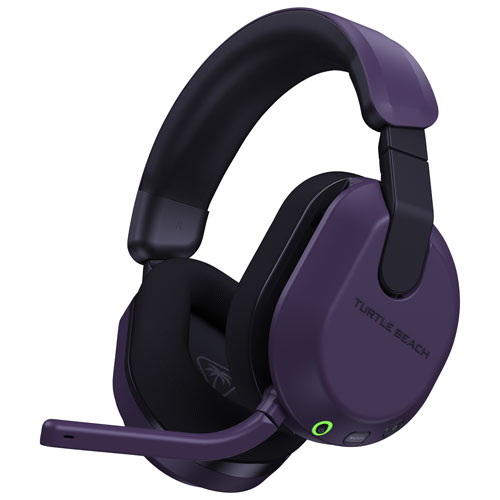
-39%Turtle Beach Stealth 600 Wireless Gaming Headset — 80-Hour Battery & Quick Charge! $79.99 CAD (38% Off)
 -43%
-43%BISSELL CrossWave Edge Cordless Wet Dry Vac 4329B — Vacuum & Mop in One Pass! $199.99 CAD (43% Off)
 -22%
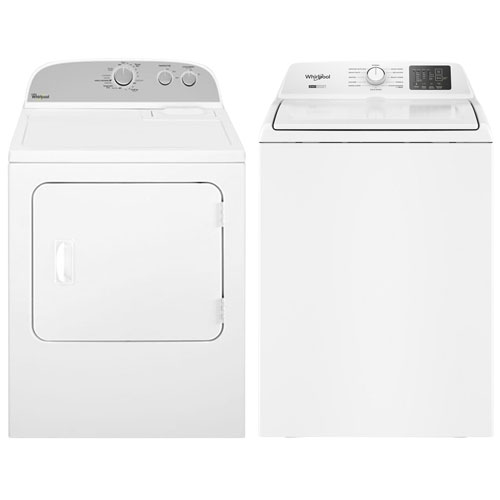
-22%Whirlpool Washer & Electric Dryer Set — 4.8 cu.ft Top Load Washer / 7.0 cu.ft Dryer! $1499.98 CAD (21% Off)
 Maple Express
Maple Express | October 2, 2026 — Ontario Woman Mourns Dog Killed in Attack Inside Her Home
Tech ExpressTech Express | October 3, 2026 — Apple Confirms US iPhone 18 Pro Max Connectivity Fault, Affected Users Must Swap Devices
-35%Casio Waveceptor Atomic Sport Watch — 200M Water Resistant & 48-City World Time! $55.31 CAD (35% Off)
Amazon
-39%Turtle Beach Stealth 600 Wireless Gaming Headset — 80-Hour Battery & Quick Charge! $79.99 CAD (38% Off)
Best Buy
-43%BISSELL CrossWave Edge Cordless Wet Dry Vac 4329B — Vacuum & Mop in One Pass! $199.99 CAD (43% Off)
Amazon
-22%Whirlpool Washer & Electric Dryer Set — 4.8 cu.ft Top Load Washer / 7.0 cu.ft Dryer! $1499.98 CAD (21% Off)
Best Buy
Maple ExpressMaple Express | October 2, 2026 — Ontario Woman Mourns Dog Killed in Attack Inside Her Home
Tech Express