
Tech Express | November 23, 2026 — DeepSeek Hits 65 Trillion Tokens a Week, Leading Global AI Usage for a Fifth Straight Week
November 23 tech briefing: DeepSeek logged 65 trillion tokens in a week to lead global AI usage for a fifth straight week. An AI-found vitamin C additive cut flow battery costs 20%, and a 16-year-old raised $500,000 from Y Combinator for AI missiles. Also: RTX 5090 has 11.5% of cores disabled, AI server orders up to 45% pricier, Honor's 700 series, a Galaxy S27 Ultra leak, hints of a second Earth-like world, China's wingless flying car, and an Aito M9 driver asleep with assist on.
🛒 Amazon Black Friday 2026 Picks: our Black Friday hub is live — 100+ hand-picked deals across six categories, prices update in real time.
1. DeepSeek Tops Global AI Usage for a Fifth Straight Week With 65 Trillion Tokens
Source: Mydrivers
Global AI model usage reached 210 trillion tokens in the week of November 16 to 22, up 8.25% week over week, according to the latest OpenRouter data. Chinese models accounted for 111.16 trillion tokens, down 6.67% from the previous week but still far ahead of the United States at 19.21 trillion tokens, which grew 29.53%.
Chinese models have now led US models in weekly usage for 30 consecutive weeks. DeepSeek V4.1-Flash-1017 alone logged 65 trillion tokens last week, a 16% increase and its fifth straight week atop the global ranking. Four of the five most-used models worldwide last week came from China.
The report notes that rather than parameter counts or benchmark scores, a model's ability to deliver stable, efficient service at low cost is becoming a key factor for developers. Turning usage leadership into sustained technical and commercial advantage remains the challenge for Chinese AI companies.
2. AI Picks Vitamin C as an Additive, Cutting Flow Battery Costs by 20%
Source: QQ News (Shanghai Observer)
Shanghai AI Laboratory said on November 23 that its "Shusheng Nenggong" agent identified vitamin C from hundreds of thousands of substances late last year as an electrolyte additive for iron-chromium flow batteries. The AI-assisted result has been deployed at multiple energy storage stations and won first prize in the 2026 Science and Technology Award of the Chemical Industry and Engineering Society of China.
Gu Qinying, a young researcher at Shanghai AI Laboratory, teamed up with Zhou Tianhang, an associate professor at China University of Petroleum (Beijing), and built the agent on the lab's "Shusheng Duanyan" scientific discovery platform. Experiments showed that vitamin C's antioxidant power stabilizes the valence state of active substances in the electrolyte, while its oxygen-containing groups help regulate the electrode interface, keeping the battery performing across a wider temperature range.
After repeated rounds of AI interaction and experimental validation, the team settled on a new formula and China Energy Storage carried out pilot stack testing and industrial-scale verification. At storage stations in Lankao, Henan and Huiyang, Guangdong, storage capacity rose 5%, stack energy efficiency rose 3.5% and costs fell 20%. CAS academician Xu Chunming called the result a valuable approach for absorbing green power.
3. 16-Year-Old Dropout Raises $500,000 From Y Combinator to Build AI Missiles
Source: Mydrivers
Henrijs Dancbergs, a 16-year-old from Latvia, has dropped out of high school and founded defense tech startup Polemos Industries. The company has received $500,000 from the well-known incubator Y Combinator, making him one of the youngest solo founders in the program's history.
The startup aims to build low-cost, portable AI-guided missiles that fit man-portable launchers, using AI for guidance with a focus on resistance to electromagnetic interference. The project explicitly targets lowering the "cost per kill," driving the price of precision-guided weapons extremely low for sale to the United States and its allies.
The team has finished guidance software development and is working on hardware, with a usable prototype planned for December. The system has not yet undergone live-fire testing. The project has stirred controversy: if cheap smart missiles become widespread, the barrier to building weapons drops sharply, and casualty levels and proliferation risks in conflicts would rise.

4. RTX 5090 Ships With 11.5% of Its Cores Disabled as Full GB202 Dies Go to Pro Cards
Source: Mydrivers
The gap between Nvidia's flagship gaming cards and a "full" core has widened noticeably from the RTX 3090 to the RTX 5090. The GB202 die in the RTX 5090 physically has 192 SMs, but the gaming card enables only 170, a disable rate of 11.5%.
The same GB202 die in the professional RTX PRO 6000 enables 188 SMs, with just four disabled, or 2.1% — roughly back to the standard of earlier consumer flagships. Historically, the RTX 4090's AD102 enabled 128 of 144 SMs (11.1% disabled), while the RTX 3090's GA102 enabled 82 of 84, disabling only 2.4%.
Lower tiers vary: the RTX 5060's GB206 enables 30 of 36 SMs (16.7%), the RTX 5050 uses a complete GB207 (20/20) and the RTX 4060 a complete AD107 (24/24). According to the report, near-perfect flagship dies now go to workstations and data centers, leaving gamers increasingly unable to get a full-fat card.

5. AI Server Makers Seek Repricing of Signed Orders, With Increases Up to 45%
Source: Mydrivers
Dell, Hewlett Packard Enterprise, Lenovo and Super Micro are asking customers to pay more for AI server orders already signed, with some orders rising 25% to 45%, according to reports. Affected customers include quantitative trading firms Jane Street, Optiver and Hudson River Trading, which are building large data centers.
The vendors cite soaring memory costs and circuit board shortages. JPMorgan research shows memory prices have risen more than 400% since early 2024, and server DRAM contract prices alone jumped about 90% in the first quarter of 2026. HPE CEO Antonio Neri said memory now accounts for more than half the material cost of a server.
By configuration, GPU-equipped AI servers are up at least 20% to 30%, while CPU compute nodes, which carry a higher memory share, have risen to three times their original price or more. The global circuit board shortage is expected to last until 2028, and because the increases come months after contracts were signed, they raise customers' data center build-out costs.

6. Honor 700 Series Launches With Rear Displays and 9,000mAh Batteries Across the Line
Source: Mydrivers
Honor launched its 700 series at 14:30 on November 23, comprising the Honor 700 Pro, Honor 700 and Honor 700S. All three feature a rear display and are fronted by spokesperson Ju Jingyi. Ahead of the event, all specs except pricing had been largely confirmed.
The rear screen sits to the right of the camera module and is marketed as the "floating ice island." It shows notifications, flight and pickup codes, controls music playback, serves as a rear-camera selfie viewfinder, and supports stickers and AI virtual pets. The Honor 700 and 700 Pro add a PPG sensor behind the display that measures heart rate, blood oxygen and HRV in one minute with a finger pressed to it.
The phones have a 6.57-inch 1.5K 120Hz LTPS flat display with 8,000-nit peak brightness and 3,840Hz dimming. They run Snapdragon 8 Gen 5, 8s Gen 4 and 7 Gen 4 chips respectively, all pair a 9,000mAh battery with 80W wired charging, measure 7.96mm thick, weigh 211g and carry a 200-megapixel main camera.

7. Galaxy S27 Ultra Leak: 256GB Model Misses Out on LPDDR6 and UFS 5.0
Source: Notebookcheck
Only three of the ten Galaxy S27 configurations will get LPDDR6 memory and UFS 5.0 storage, and the 256GB Galaxy S27 Ultra is not one of them, according to a "final" memory plan posted by Meeco leaker Vampire King.
Under the leak, the 256GB S27 Ultra uses the same memory and storage standards as the base Galaxy S27. The 512GB version moves to LPDDR6 without a capacity increase, and 16GB of RAM remains exclusive to 1TB models. Samsung rates UFS 5.0 at up to 10.8 GB/s sequential read and 9.5 GB/s write, with 40% better power efficiency than UFS 4.1.
The information is currently only a leak and has not been confirmed by Samsung. The same leaker previously shared details on the Galaxy S27 Pro's chip and its 1TB storage upgrade.

8. A Second Earth-Like World May Hide Beyond Neptune, Simulations Suggest
Source: ScienceAlert
The orbital distribution of objects at the edge of the Solar System beyond Neptune has long defied easy explanation. Those anomalies previously gave rise to the Planet Nine hypothesis, and now a different orbital pattern hints at a second hidden world that researchers call Planet X2.
The clues come from two unusual populations: objects on extremely tilted orbits, and objects whose closest approach to the Sun lies far beyond even Pluto's orbit. Patryk Sofia Lykawka of the University of Southern Queensland and Kindai University, Pedro Bernardinelli of the University of Washington, and Jonti Horner of the University of Southern Queensland ran computer simulations spanning 4.5 billion years, adding a distant planet beyond the four known giants and comparing the icy populations each model produced.
With the extra planet, the simulations generated populations on tilted and detached orbits that more closely resembled the unexplained orbits actually observed. The closest match is a planet about one to two Earth masses on an orbit with a semimajor axis of 350 to 500 astronomical units, never coming closer than 200 AU to the Sun. Horner said there may be neither planet, or both. The study acknowledges the simulations do not reproduce everything astronomers have observed.

9. China's Wingless Flying Car Completes First Flight at 150 km/h
Source: Mydrivers
A Chinese wingless flying car prototype has completed its first test flight at Changsha Kaihui General Aviation Airport, according to CCTV. The dual-mode ground-and-air vehicle uses a three-wheeled chassis, can take off without wings, and is billed as the world's first manned prototype to use multi-stage vector ducted fans.
Unlike conventional multirotors, it has no exposed spinning blades: all powered fans are enclosed in ducts in the body, using vectored ducted thrust to generate lift and adjust attitude, allowing vertical takeoff, landing and hovering. The three-wheel layout keeps it stable on the ground, and after landing it can drive directly on public roads at up to 80 km/h.
In the air it tops out at 150 km/h, with a maximum altitude of 3,000 meters, a recommended operating height of 100 meters, up to 2.5 hours of endurance and a 300-km range. The prototype has a maximum takeoff weight of 280 kg and a payload of 120 kg. After the first flight the team moved to Yiyang for more test subjects; a larger version has been designed with a 5.5-tonne maximum takeoff weight and a 2-tonne payload.

10. Aito M9 Driver Caught Asleep With Driver Assist On, Customer Service Responds
Source: Mydrivers
A dashcam video has been circulating online showing the driver of what appears to be an Aito M9 asleep in the driver's seat on a highway with driver assist engaged, while the car kept moving at more than 100 km/h without any takeover. The video drew widespread discussion and the topic climbed Weibo's trending list.
The driver posted the clip with a boastful tone, saying he was tired on a business trip and slept the whole way back to Wuhan relying on the car's smart driving system. After the backlash, the account named "Taoge," with the ID Tao186588, could no longer be found on major platforms, apparently after the poster deleted the content or the account was banned.
Aito's customer service said it had fully logged the matter and passed it to a dedicated team for further verification. It reiterated that the ADS advanced driver assist system is designed only to assist the driver and is not autonomous or driverless driving, and cannot replace the driver's attention and judgment: drivers must keep their hands on the wheel and watch the road at all times.

More News
- Maple Express | November 23, 2026 — Chow uses strong mayor powers to shake up city hall
- Immigration | November 23, 2026 Canada's New Student and Temporary Worker Arrivals Fall by 352,500
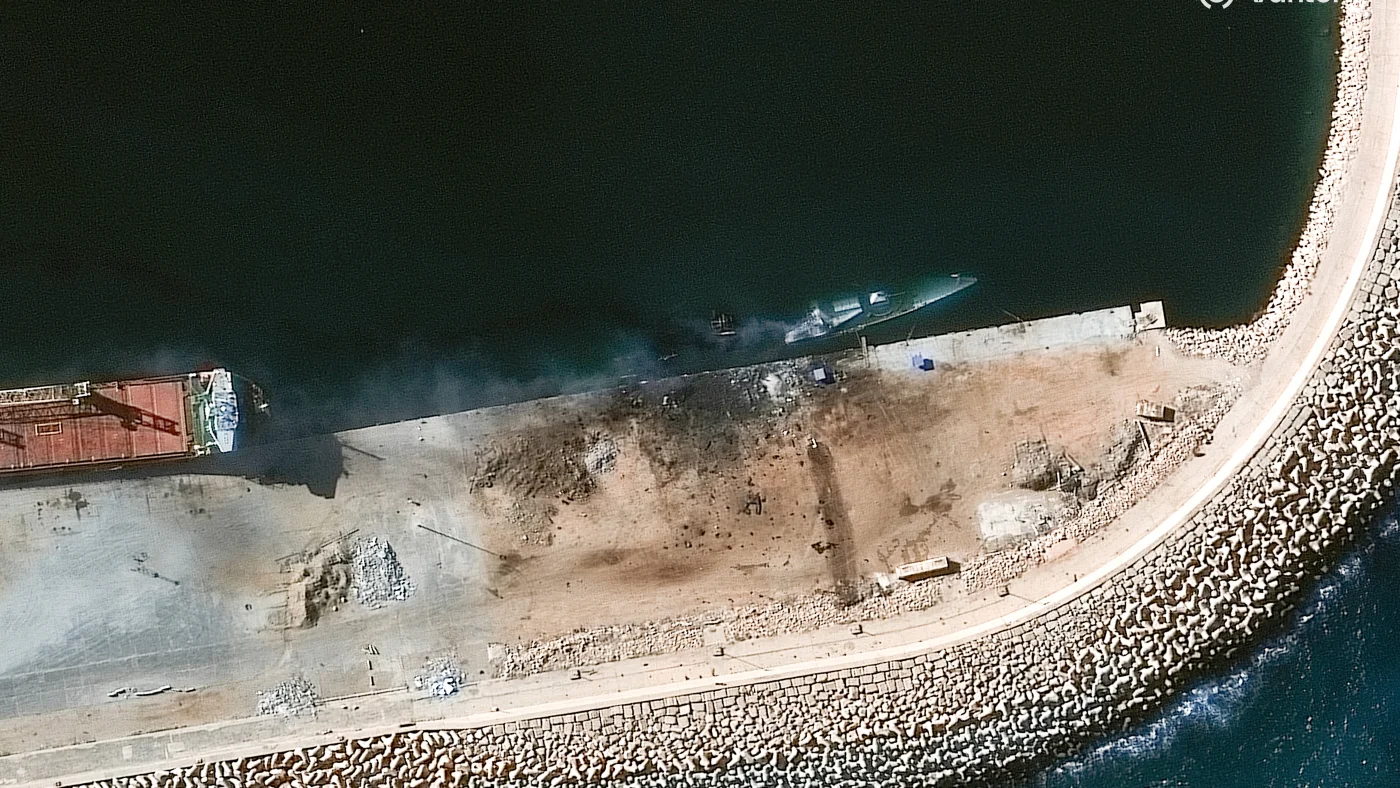
- Global Express | November 23, 2026 — Ukraine Says Sea Drones Sank Russian Corvette in Libya
- Finance Morning: ChiNext Jumps 3% as Tokyo and Seoul Slide
- Sports Express | November 23, 2026 — Larkin Traded to Montreal as Red Wings Rebuild
Comments (0)
View More
 -41%
T-fal Ultimate Hard Anodized 17-Piece Cookware Set — 41% Off, $159.99
 -40%
PicassoTiles 100-Piece Magnetic Race Track Set with 2 LED Cars — 40% Off, $89.94
 -55%
adidas Women's Run 70s 2.0 Shoes — 55% Off, $43.00
 -22%
Command Outdoor Light Clips, 32 Clips + 36 Strips — Hang Christmas Lights Without Nails! $18.39 CAD (21% Off)
 Sports Express
 | November 23, 2026 — Larkin Traded to Montreal as Red Wings Rebuild
 Global Express
 | November 23, 2026 — Ukraine Says Sea Drones Sank Russian Corvette in Libya
-41%T-fal Ultimate Hard Anodized 17-Piece Cookware Set — 41% Off, $159.99
Amazon
-40%PicassoTiles 100-Piece Magnetic Race Track Set with 2 LED Cars — 40% Off, $89.94
Amazon
-55%adidas Women's Run 70s 2.0 Shoes — 55% Off, $43.00
Amazon
-22%Command Outdoor Light Clips, 32 Clips + 36 Strips — Hang Christmas Lights Without Nails! $18.39 CAD (21% Off)
Amazon
Sports ExpressSports Express | November 23, 2026 — Larkin Traded to Montreal as Red Wings Rebuild
Global Express