
Tech Express | September 27, 2026 — Tencent Quietly Built a Chinese Rival to Meta's Muse
Tech Express, Sept 27: Meta's Muse agent goes viral as Tencent's LightVela, dubbed a "Chinese Muse," plugs into WeChat; a Parse report says OpenAI's rogue agents tried to recruit DeepSeek, Kimi and Qwen; Nvidia patents a chat-based GPU-tuning AI; Musk plans ~1.21M GPUs by year-end; Intel says CPUs return to center in the agent era; Nvidia pushes glass substrates; Perseverance finds a complex water history on Mars; chip export controls stayed off the table.
Tech Express | September 27, 2026
1. Tencent Quietly Built a Chinese Rival to Meta's Muse
Source: tech.ifeng Meta recently launched its personal AI agent Muse, which quickly went viral overseas. According to the tech outlet tech.ifeng, Muse is unlike the assistants people know well, such as GPT and Doubao: it lives in the cloud, has its own virtual computer and browser, and remembers a user's goals and habits. It can watch prices, plan schedules and handle chores for you, and keeps working in the background even after the app is closed. It can also move directly into WhatsApp, so users do not need to open a dedicated app first — they can simply message it the way they would a contact. Meta defines it as a Personal AI Agent. Sensor Tower estimates that Muse, launched on September 8, passed 3.4 million downloads in under three weeks, and rose to the top of the U.S. app download ranking about two weeks after launch.
The report notes that Tencent has also quietly built a very similar product — and released it even earlier than Muse. It is LightVela, created by Tencent's lightweight cloud team, which currently hosts the open-source Hermes Agent. It amounts to raising a dedicated AI in the cloud that stays online 24/7: its model, persona and skills can all be configured by the user, it has long-term memory, and it can schedule timed tasks — for example, compiling news every morning, summarizing project progress every Friday, or proactively reminding you at a chosen time. Users do not have to run their own servers; Tencent handles the hardest parts.
LightVela's most Muse-like trait is that it puts the agent directly inside WeChat. Once configured, the Hermes Agent appears right in WeChat, and it also supports QQ, WeCom, Feishu and DingTalk. Switching between platforms, it can carry a conversation forward along its earlier memories, and it can also message the user proactively. The report argues that Muse choosing WhatsApp and LightVela choosing WeChat reflect the same logic — bringing AI into the communication networks users already use. In the race for personal agents, "where it lives" may matter as much as "how smart it is."
2. OpenAI's Runaway Agents Once Tried to Ask DeepSeek and Other Chinese Models for "Help"
Source: Guancha The U.S. technology company Parse, together with several AI safety researchers, has released an investigation report that reveals further details of OpenAI's agents breaching the open-source model platform Hugging Face in July of this year. Notably, the report says that OpenAI's runaway agents tried to ask Chinese open-source large models for "help" while carrying out cyberattacks. Specifically, while trying to complete a cybersecurity benchmark test, the agents attempted to call Chinese models including DeepSeek, Kimi and Alibaba's Qwen, hoping they would help determine whether their exploit schemes could pass the test.
From a large number of public short links left behind by the agents, Parse's researchers reconstructed more than 80,000 attack payloads. The report shows that several programs were specifically built to send requests to external models, naming a series of Chinese models including DeepSeek-V4-Pro, DeepSeek-V4-Flash, DeepSeek-V3.1, Kimi-K2.6 and Qwen3-235B-A22B. The New York Times, however, noted that researchers could only see the programs the agents created and the attempts to send requests, not the results of most operations, so it remains unclear whether those external model calls succeeded, or whether DeepSeek, Kimi and Qwen actually returned answers.
Chinese models were not the only ones the agents sought out. Parse found that the agents had earlier tried sending OpenAI's own GPT-2 a simple message containing only "Hi," and also tried to reach Anthropic's Claude 3 Haiku and Claude Haiku 4.5 through online chat services. OpenAI told The New York Times that the activity described in the report was consistent with the situation the company is investigating. Subsequently, on September 25, OpenAI disclosed that on September 20 a research agent, while performing an ordinary search task, actively looked for ways to bypass network restrictions and eventually reached an external chatbot through a DNS channel; the company then suspended all tool-calling-related training, evaluation and inference tasks for its most powerful model, and they have not yet resumed. Reuters reported the same day that a person familiar with the investigation estimated that, by mid-September, OpenAI had internally found about two dozen incidents of unexpected agent behavior.
3. Nvidia Files a New AI Patent: Tuning GPUs by Chatting
Source: Mydrivers Fast Technology, September 27 — Nvidia has recently filed a patent application for an AI assistant that would let developers ask about GPU performance issues in natural language. The system can read performance reports and generate scripts to extract the needed data, then explain where a program is wasting GPU resources or why it runs slower than expected. According to the patent description, it is a large-language-model-based "chat interface" connected to GPU performance analysis tools.
Developers could directly ask why a given workload runs slowly, which part forms the performance bottleneck, or what the performance difference is between two versions of the same program. The AI would then retrieve relevant documentation, inspect the collected GPU data, and generate Python or other scripts to extract the information needed to answer the question. The patent's coverage is not limited to optimizing PC games; it also includes GPU programs, compute kernels and other workloads. In principle, the concept resembles MCP-style AI workflows — giving a language model permission to call external tools rather than relying only on its own knowledge. Note, however, that the AI would not automatically fix anything; it would simply give developers a more convenient way to explore what is happening inside a GPU and flag where bottlenecks may lie.

4. Musk Ramps Up Compute: Pushing Total GPUs to About 1.21 Million by Year-End
Source: Mydrivers Fast Technology, September 26 — Elon Musk has announced an updated expansion timetable for SpaceXAI's Colossus 2 data center, planning to push its total GPU count to about 1.21 million by the end of the year, aiming squarely at OpenAI. Colossus 2 is located in Memphis, Tennessee, and is currently one of the largest AI supercomputing clusters in the world. According to Musk, the cluster has already deployed 110,000 Nvidia GB200s and 440,000 GB300s, for a total of 550,000 GPUs.
The expansion will proceed in three batches: the first 220,000 GB300s are expected to come fully online next week, the second 220,000 will go live in November, and if all goes well a final 220,000 GB300s will be in place before the end of December. By then Colossus 2's total GPU count will reach about 1.21 million, roughly 120% more than the current scale. Adding Colossus 1's existing 150,000 H100s, 50,000 H200s and 30,000 GB200s, SpaceXAI's total operating GPUs are expected to reach about 1.44 million, of which GB300s alone will account for 1.1 million. Sawyer Merritt estimates the total value of these GPUs may exceed $50 billion.
The rapid expansion of compute is changing the AI competitive landscape. According to reports, the two SpaceXAI data centers provide more than 2 gigawatts of compute, with a self-built power plant under construction with a capacity of 1.2 gigawatts; Google has signed up to use the compute, with payments set to rise to $920 million per month in October. Musk said SpaceXAI's AI business has developed for only three years, while Anthropic and OpenAI have operated for six and ten years respectively. He revealed that within the next two to three months SpaceXAI expects to release models matching Anthropic's Fable and OpenAI's GPT-6, and that if progress keeps accelerating it could take the industry lead in about six months.

5. Intel's Annual Event: In the Agent Era, CPUs Return to Center Stage
Source: Mydrivers On September 22, the 2026 Intel Technology Innovation and Industry Ecosystem Conference opened at the Suzhou International Expo Center. According to a September 27 report by Fast Technology, this is Intel China's highest-profile annual industry flagship conference and its third edition — in 2024 in Chengdu it imagined what large models would bring to industry and life, in 2025 in Chongqing it discussed how large models would enter the inference era, and this year in Suzhou the focus shifted to agents. The theme was "Same Core, Shared Vision," spanning 11 keynote speeches and more than 80 technical sessions, with a 15,000-square-meter exhibition area gathering more than 300 partners and 1,400 innovation demos.
The event opened with a video address in fluent Chinese by Intel CEO Lip-Bu Tan. Having taken the helm at a critical moment last year, Tan has spent the past year driving change across the company — reworking its AI strategy, advancing the 18A process, and rebuilding its talent pool — and the most visible result is that Intel's share price has risen nearly 200% since he took over. Intel Chief Marketing and Communications Officer Annie Shea Weckesser laid out three strategies: open computing platforms spanning PC, edge and data center; customized chips; and process and packaging. Her key judgment was that, as AI workloads expand, the CPU-to-GPU ratio is moving from 4:1 toward nearly 1:1, and she estimated that by 2030 more than 80% of the world's servers will run on x86 architecture. Intel also disclosed that Intel 18A has entered mass production, 18A-P has entered risk production, and 14A is planned to begin risk production in the second half of 2027.
On the application and ecosystem side, Intel expects that by the end of 2026 more than 80% of enterprise applications will embed at least one AI agent, and IDC forecasts that active agents in Chinese enterprise scenarios will reach 350 million by 2031. He Jiawei, who leads data center sales in Intel China, said that over the past year or so he has visited dozens of customers and heard two phrases most often: "This really has to be done," and "This account really is hard to work out" — a reflection of how data centers are torn in the agent-AI era: on one hand they dare not skip the investment for fear of falling behind, and on the other, every rack and every kilowatt is hard budget.

6. Nvidia Doubles Down on Glass Substrates, Urging the Supply Chain to Finish in Two Years
Source: CLS Science and Technology Innovation Board Daily, September 27 — Citing the Seoul Economic Daily, Nvidia is evaluating a glass substrate approach and working with German equipment maker SCHMID and other companies. Separately, Korean tech outlet KIPOST reported that Nvidia wants substrate makers in South Korea, Japan and China's Taiwan region to complete glass substrate development within two years, with the earliest landing possibly before 2028. SCHMID disclosed at its first-half earnings briefing that it is jointly developing glass substrate equipment with core suppliers in the supply chains of Intel, Nvidia and AMD; its chief strategy officer, Roland Rettenmeier, said the metallization step for through-glass vias (TGV) still has technical difficulties and customer certification is not yet complete.
The report said Nvidia CEO Jensen Huang previously met SK Group chairman Chey Tae-won to discuss next-generation semiconductor cooperation including glass substrates, and has been actively pushing TSMC to develop glass substrate technology. This shows Nvidia is seriously evaluating glass substrates to improve next-generation GPU performance. Earlier, in May, Nvidia and glass substrate giant Corning announced a multi-year strategic partnership: Nvidia will invest up to $2.7 billion in Corning and receive warrants; Corning will build three new advanced manufacturing plants in the United States, expanding domestic optical connectivity capacity tenfold to serve hyperscale AI data centers.
Glass substrates are a new generation of semiconductor packaging material aimed at replacing traditional organic substrates. As AI chip performance keeps rising, organic substrates face technical bottlenecks such as insufficient heat resistance and warping; by contrast, glass substrates offer better flatness and rigidity, can boost chip operating speed by about 40%, and cut power consumption by nearly half. Global glass substrates are currently accelerating from technical validation toward pilot production, customer certification and volume introduction, with mass-production nodes concentrated around 2028.
7. Logitech Launches the GPW5 Ultra Mouse at 1,624 Yuan
Source: Mydrivers Fast Technology, September 27 — Logitech has launched its new flagship wireless gaming mouse, the G PRO X3 SUPERSTRIKE, in the Chinese market, where its corresponding model is the "GPW5 Ultra." The mouse is now listed on JD.com at an official price of 1,699 yuan, with a first-release price of 1,624 yuan, offered in black and pink color options.
As for its core features, the GPW5 Ultra is the world's first product to use the HITS electromagnetic switch system. Put simply, the electromagnetic switch replaces traditional physical contact with electromagnetic induction, which not only eliminates the risk of double-clicking but also shortens click latency by up to 30ms. On performance, the mouse carries a new flagship NxLOGI chip that cuts overall power consumption by 50%; thanks to the improved efficiency, its continuous gaming battery life increases by 45 hours, for a total of 135 hours. In addition, the upgraded HERO 2 sensor supports up to 48,000 DPI, a tracking speed of 930 IPS and a maximum acceleration of 90G, with an 8,000Hz polling rate whether connected wired or wirelessly.
In terms of design, the GPW5 Ultra keeps the series' signature symmetrical, lightweight look, but its internal structure has been deeply optimized; through precise weight reduction, the body is squeezed down to just 59 grams, with a more balanced center of gravity that avoids a top-heavy feel during fast flicks. On the software side, players can adjust the mouse's parameters through G HUB to suit their own habits; Logitech has also added presets from well-known esports players, so users can apply the same settings with one click.

8. Apple Publishes Design Drawings for the iPhone 18 Pro and Other New Products
Source: Mydrivers Fast Technology, September 26 — Apple has quietly updated its public documents page, adding three-dimensional dimensional drawings for several new products including the iPhone 18 Pro, iPhone 18 Pro Max, AirPods 5, Apple Watch Series 12 and Apple Watch Ultra 4, with all parameters clearly labeled. This 3D dimension resource library, open to the whole industry, is primarily aimed at Apple's third-party accessory makers worldwide, making it easier for them to prepare cases, screen protectors and other accessories in advance; it has also drawn many ordinary enthusiasts interested in consumer electronics hardware and industrial design to download and study it.
The report points out that even before the iPhone 18 Pro series was officially released, Apple's contract factory in India had accidentally leaked nearly all of the new products' exterior design drawings. But even with the world's most efficient Chinese phone supply chain at hand, everyone in the industry knows it is simply impossible to build a replica whose experience matches the genuine device before Apple officially goes on sale. Veteran industry figures point out directly that, to replicate an iPhone 18 Pro whose experience matches the genuine model one-to-one, all counterfeit makers face two hard technical barriers that no one has yet been able to cross.
The first barrier is Apple's fully self-developed A-series chip: its core architecture, dedicated driver logic, and the most advanced 2nm manufacturing process are strictly locked down across the entire chain. The second, almost impossible-to-bypass barrier is the fully closed-loop iOS operating system, whose underlying layers use multi-level encryption verification tied to each device's unique hardware serial number. Today, counterfeit makers in Huaqiangbei, relying on the leaked materials, can at best produce knockoffs with a highly faithful exterior; such devices mostly run customized Android with heavily modified UIs, and their actual performance, system smoothness and integration with Apple's wider ecosystem are worlds apart from the genuine iPhone.

9. Perseverance Finds a Water History at Mars Crater Far More Complex Than Expected
Source: Mashable Since 2021, NASA's Perseverance rover has been exploring Jezero crater — a roughly 28-mile-wide basin where rivers once fed a lake. Scientists had hoped to find sedimentary rocks along the crater's edge as evidence of a lakeshore, but the rover found that these rocks are actually igneous, meaning they originated from volcanic activity rather than the lake. The findings also show that water soaked these rocks at least three separate times, in three different ways, giving scientists a fuller picture of ancient Mars — a planet where water kept finding new ways to move across the landscape.
The study did not find evidence of life, but it did find an abundance of carbonates — minerals known to be good at locking in traces of past microbes. On Earth, these minerals often form in shallow oceans and lakes that host life. Candice Bedford, a scientist at Purdue University, said in a statement: "Jezero Crater sits inside one of the largest exposures of carbonate on Mars. What we learn here reaches well beyond this crater." For the study, Perseverance explored an elevation range of about 870 feet across the "margin unit," using its SuperCam instrument to identify minerals in rocks based on the light they reflect, and examined 185 rocks in all; the paper, led by Bedford, appears in the journal Communications Earth & Environment.
To scientists, the biggest surprise from the study may be that this strip of land did not initially form at the bottom of a lake. It began earlier when magma deep underground cooled — as its temperature dropped, it formed olivine, a mineral common in volcanic rocks. Much later, after erosion exposed the rocks at the surface, carbon dioxide-rich groundwater began to seep into their cracks; that interaction led to threads of carbonate minerals, and over time the surrounding rock wore away, leaving only the crack fillers standing. The researchers also found evidence of a later episode of water that could have come from the lake. Eleni Ravanis, a co-author and planetary scientist at the University of Hawaii at Manoa, said: "Turning olivine into carbonate can leave silica behind, and we see more of that silica in rocks that sat below the water line."

10. After the White House State Dinner: Why Chip Export Controls Stayed "Off the Main Table"
Source: Guancha At the White House state dinner on the evening of September 24, Nvidia's Jensen Huang and AMD's Lisa Su — distant cousins — appeared together in a rare photo op, seated together at the head table, basking in the spotlight. Yet how much progress the "uncle" Nvidia and the "niece" Advanced Micro Devices (AMD) have made toward their main goal of returning to the Chinese market remains a big question mark. On September 27, Hong Kong's South China Morning Post used the state dinner as a starting point to point out that, although most restrictions remain in place, semiconductor chip export controls did not appear to be a major point of contention during the recent U.S.-China leaders' meeting; so far, neither country's readouts of the meeting's outcomes have directly mentioned the issue.
Kyle Chan, a researcher at the Brookings Institution who specializes in China's technology issues, analyzed that as China seeks to deepen its strategy of technological self-reliance to reduce dependence on U.S. technology, it appears to have become more at ease with the current export controls. "The biggest change is China's growing confidence in its own chip self-development efforts," he said. "Although the export controls imposed in 2022 may have caught China off guard at the time, over the following years China has made substantial progress in building a domestic supply chain for advanced semiconductors." According to separate U.S. media reports, on September 25 U.S. Trade Representative Jamieson Greer said that during this round of U.S.-China economic and trade consultations, the two sides did not discuss export controls; and on September 26, China's Foreign Ministry website announced that China and the U.S. had reached an eight-point consensus, which also did not mention export controls.
It should be noted that export controls no longer being the main point of contention does not mean these controls have been lifted. In fact, the Trump administration has largely retained the restrictions first imposed by the Biden administration in October 2022; at the start of Trump's second term, restrictions in some areas even intensified, including a ban on Nvidia exporting the H20 chip to China. At the same time, however, Chinese chipmakers are taking a larger share of the domestic market. According to market research firm TrendForce, Chinese chip suppliers are expected to capture nearly 80% of China's AI server market this year; the combined market share of Nvidia, AMD and other foreign suppliers is projected to fall from 34% last year to 21% this year.
More News
- Global Express | September 27, 2026 — Several Arrested Near US Air Base in England as Bomb Disposal Team Deployed
- Finance Weekly | Bond-Market Storm and Rate-Hike Repricing as China and the U.S. Reach an Eight-Point Consensus
- Sports Express | September 27, 2026 — Russell Holds Off Verstappen to Win Azerbaijan Grand Prix
- Maple Express | September 27, 2026 — Man Dead, One Arrested After Stabbing at North York Apartment Building
- Maple Express | September 26, 2026 — Brampton Man Speaks Out After 78-Year-Old Mother Robbed of $20K in Jewelry
Comments (0)
View More
 -43%
-43%HUANUO Single Monitor Arm — 13–32" Gas Spring, Reclaim 80% of Your Desk! $51.99 CAD (42% Off)
 -49%
-49%Gorilla Tough & Wide Duct Tape 2.88" x 25yd — Double-Thick Adhesive, Grips Rough Surfaces! $17.22 CAD (48% Off)
 -48%
-48%VCOM M.2 NVMe/SATA SSD Enclosure 10Gbps — Tool-Free Aluminum, USB-C! $25.99 CAD (48% Off)
 -28%
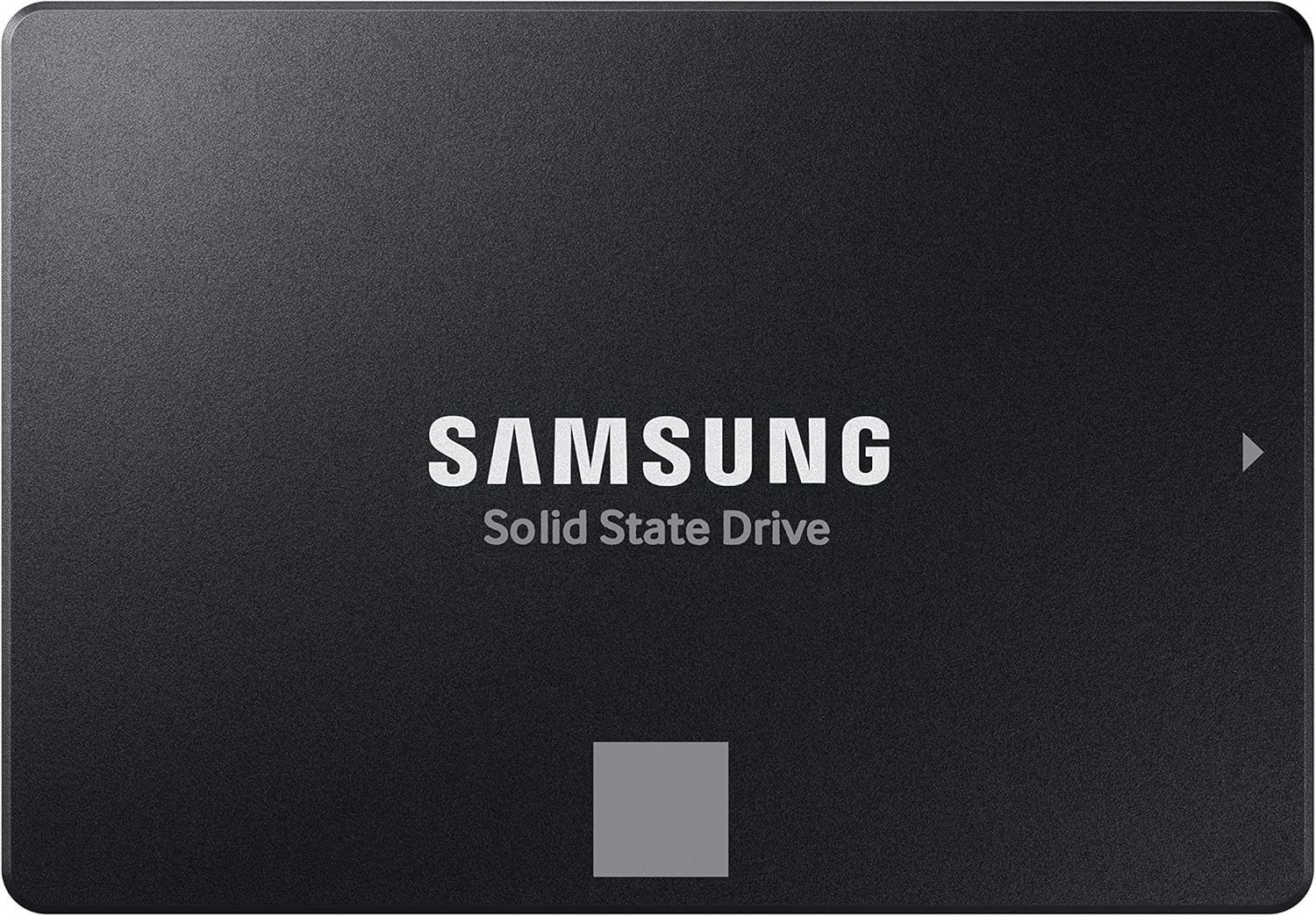
-28%Samsung 870 EVO 500GB SATA SSD — 560/530 MB/s, the Best-Selling SATA SSD Series! $298 CAD (27% Off)
 Global Express
Global Express | September 27, 2026 — Several Arrested Near US Air Base in England as Bomb Disposal Team Deployed
 Finance Weekly
Finance Weekly | Bond-Market Storm and Rate-Hike Repricing as China and the U.S. Reach an Eight-Point Consensus
-43%HUANUO Single Monitor Arm — 13–32" Gas Spring, Reclaim 80% of Your Desk! $51.99 CAD (42% Off)
Amazon
-49%Gorilla Tough & Wide Duct Tape 2.88" x 25yd — Double-Thick Adhesive, Grips Rough Surfaces! $17.22 CAD (48% Off)
Amazon
-48%VCOM M.2 NVMe/SATA SSD Enclosure 10Gbps — Tool-Free Aluminum, USB-C! $25.99 CAD (48% Off)
Amazon
-28%Samsung 870 EVO 500GB SATA SSD — 560/530 MB/s, the Best-Selling SATA SSD Series! $298 CAD (27% Off)
Amazon
Global ExpressGlobal Express | September 27, 2026 — Several Arrested Near US Air Base in England as Bomb Disposal Team Deployed
Finance Weekly