
Finance Evening | US Stocks Slip Again, Shell Greenlights LNG Canada Expansion, FICO Plunges
US stocks fell a second day as the 30-year Treasury yield topped 5.6%, the highest since 2002. Fair Isaac (FICO) plunged over 20% after mortgage pricing opened to rival VantageScore. A Shell-led group approved doubling LNG Canada capacity to about 28 mtpa, while Canada's July GDP was flat and a US ban hit about $967 million of Canadian goods. Australia hiked to a near 15-year high, and McKinsey sees about 11 million US workers needing new careers by 2035.
Finance Evening | US Stocks Slip Again, Shell Greenlights LNG Canada Expansion, FICO Plunges
📊 Today's North American Markets
| Index | Close | Change | % Change |
|---|---|---|---|
| S&P 500 | 7,670.84 | −12.85 | −0.17% |
| Nasdaq | 26,797.54 | −22.84 | −0.09% |
| Dow Jones | 51,349.92 | −131.59 | −0.26% |
| Toronto TSX | 35,460.27 | −29.59 | −0.08% |
| USD/CAD | 1.4189 | +0.00 | +0.13% |
| WTI Crude | 88.94 | −0.44 | −0.49% |
| Gold | 4,215.00 | +35.30 | +0.84% |
1. US stocks fall for a second day as 30-year Treasury yield hits highest since 2002
US stocks closed lower for a second straight session on Tuesday. The Dow Jones Industrial Average fell 131.59 points, or 0.26%, to 51,349.92. The S&P 500 slipped 0.17% to 7,670.84, and the Nasdaq Composite eased 0.09% to 26,797.54. All three indexes finished off their session lows but still posted back-to-back losing sessions.
The drag came from rising Treasury yields. The 30-year Treasury yield climbed above 5.6%, a level last seen in June 2002, while the 10-year note yield topped 5.29% at its session high. Bank stocks slid, with JPMorgan Chase, Morgan Stanley and Bank of America all lower. Jeff Klingelhofer, a managing director and portfolio manager at Aristotle Pacific Capital, told CNBC that the market believes inflation will come down but with demand destruction — "that's why equities are down and that's why rates are up" — and that markets are shifting to a belief that Fed Chairman Kevin Warsh has the resolution.
For the month, the S&P 500 has lost 0.2% and the Dow 3.5%, which would snap a five-month winning streak for the Dow, while the Nasdaq is up more than 1%. For the quarter, the S&P 500 and Nasdaq have each gained about 2%, while the Dow is down nearly 2%.
2. Fair Isaac stock plunges more than 20% as mortgage pricing gets a new rival
Shares of Fair Isaac (FICO) fell more than 20% shortly after Tuesday's open. The move followed an announcement by Federal Housing Finance Agency Director Bill Pulte changing mortgage pricing and introducing competition to FICO's long hold on mortgage lending.
Late Monday, Pulte posted on X that Fannie Mae and Freddie Mac would move to a single pricing grid that includes FICO rival VantageScore. The two mortgage giants support about 70% of the mortgage market, and for decades FICO was the only credit score they accepted. Pulte also shared an announcement from Rocket Mortgage CEO Jay Bray, who said the lender will begin accepting VantageScore as its preferred model, noting that "competition is healthy, especially when it can lower costs and expand responsible access to homeownership." VantageScore is a joint venture of the three credit bureaus Equifax, TransUnion and Experian; their shares also fell in early trading.

3. OpenAI unveils new products at DevDay as CFO talks IPO timing
OpenAI held its annual DevDay developer conference on Tuesday, rolling out a flurry of new products and features, including Dots agents. The event comes as the company faces mounting pressure over safety, after disclosing several incidents in which its models behaved in unintended ways and holding back its latest Astra model over safety concerns.
Chief Financial Officer Sarah Friar told CNBC that OpenAI wants to IPO "when the time is right for our business," describing a listing as "not a destination" but "a milestone on the journey" and "another type of fundraising." She said the company had an "incredible" third quarter, confirming 70% quarter-over-quarter growth, with its enterprise business doubling since July. She noted OpenAI raised $122 billion in March and is "very well capitalized," while declining to comment on early-stage fundraising talks.

4. Shell-led consortium greenlights LNG Canada expansion
A consortium led by British oil giant Shell said on Tuesday it had reached a final investment decision to expand the LNG Canada project, doubling production capacity at Kitimat, British Columbia, to roughly 28 million metric tons per annum from 14 mtpa. Shell leads the project with a 40% stake, alongside Malaysia's Petronas, China's PetroChina, Japan's Mitsubishi Corp and South Korea's Korea Gas Corp. Commercial operations are set to start in the early 2030s.
Canada's government has previously estimated the project will create thousands of jobs and attract C$33 billion (about US$23.2 billion) in private-sector capital. Prime Minister Mark Carney, who campaigned to make Canada a "global energy superpower," has sought to showcase Ottawa as a stable energy partner. Cederic Cremers, Shell's integrated gas president, said Phase 2 connects Canadian resources with Shell's global LNG portfolio, trading capability and customer reach. Shell's London-listed shares traded 1.4% lower on Tuesday.

5. Canada's July GDP flat as construction and utilities offset declines
Statistics Canada said Tuesday that real gross domestic product was essentially unchanged in July, as strength in construction and utilities was offset by declines elsewhere. The agency said growth cooled off ahead of the latest US tariff volley this summer.
Construction rose 1.3% in July, its fourth consecutive monthly gain, while a 1.7% surge in electricity generation, transmission and distribution — driven by a July heat wave — powered utilities to their strongest month of the year. Declines were spread across manufacturing, mining, quarrying and oil and gas extraction, as well as retail and wholesale trade. Statistics Canada revised June growth up to 0.4% from 0.3% and projected annualized growth of 3.3% in the second quarter, and expects the economy to gain 0.2% in August.
New 50% US tariffs on a range of Canadian goods took effect on Aug. 22, and on Tuesday new US bans on Canadian products such as alcohol, dairy and motorcycles began. TD Bank economist Marc Ercolao described Canada's growth as settling into a "sawtooth" pattern.
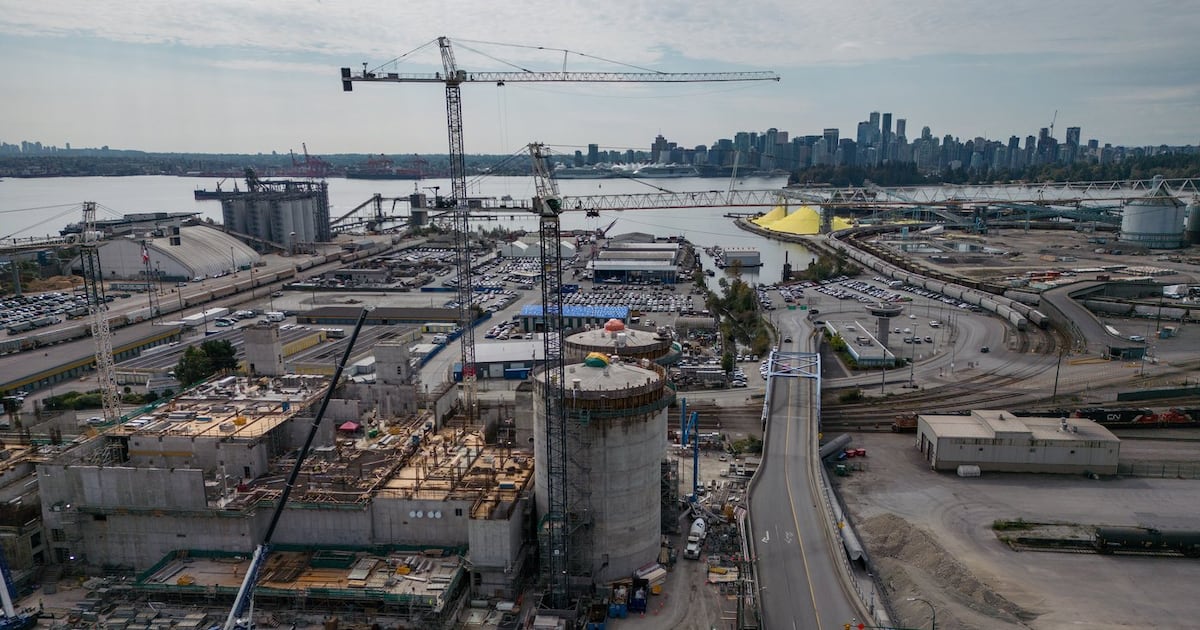
6. US ban on about $967 million of Canadian goods takes effect
From early Tuesday, Sept. 29, a US ban on some Canadian imports took effect, covering alcohol, dairy products and motorcycles, and affecting roughly $967 million worth of goods.
Annual US-Canada bilateral trade is about $880 billion, so the scale of the ban remains relatively limited.

7. Australia's central bank hikes again, lifting rates to a near 15-year high
The Reserve Bank of Australia raised its benchmark rate by 25 basis points on Tuesday, its fourth hike this year after moves in February, March and May. The rate now stands at 4.6%, the highest since November 2011.
In its statement, the RBA said global energy prices are far higher than forecast in August as the Middle East conflict widens, and that AI-related demand is pushing global tech prices up quickly while domestic capacity remains under pressure. Australia's headline consumer price index rose 3.5% year over year in July, down from 3.8% a month earlier, while the trimmed mean held at 3.6%, still above the central bank's 2%–3% target. Treasurer Jim Chalmers said Australians are "paying a high price" for the prolonged Middle East conflict, adding it is not a problem unique to Australia but one that confronts "every major advanced economy," he said.
8. McKinsey: about 11 million US workers may need new careers by 2035
Research released Tuesday by the McKinsey Global Institute estimates that about 11 million US workers — roughly 6.5% of the current labor force — may have to move into entirely different occupations by 2035 as a result of automation and AI adoption.
McKinsey's base estimate is that automation could reduce labor demand by 36 million jobs by 2035, while growth in AI-related fields and the broader economy could generate demand for 40 million jobs. About 25 million of those affected should be able to stay in their current occupations, leaving 11 million who may need to switch careers entirely. "The next decade's challenge is mobility, not scarcity," the report said.
A separate Bureau of Labor Statistics report released the same day showed job openings fell to a five-month low at the end of August, the rate of voluntary quits remained near a six-year low, and layoffs shrank for a second month. Employment gains this year have averaged 80,000 a month, up from sub-10,000 last year but still below historical averages.

9. Canadian dollar under pressure, USD/CAD hovers near early-July highs
Supported by broad-based US dollar strength and the latest Canadian growth data, USD/CAD held around 1.4187 on Tuesday, hovering near levels last seen in early July as the loonie stayed under pressure.
Canada's GDP was unchanged in July, matching expectations but slowing from 0.4% growth in June; Statistics Canada's preliminary estimate showed 0.2% growth in August, led by mining and retail trade. The Bank of Canada expects annualized growth of 1.5% in the third quarter. Money markets continue to price a possible 25-basis-point hike in December, while most economists expect the BoC to remain on hold.
Economists at the Royal Bank of Canada noted the July report leaves the central bank balancing downside growth risks and tightening financial conditions from higher bond yields against resilient backward-looking data and risks that elevated energy costs spread into broader inflation.

10. Being priced by an algorithm? How to hide your spending trail
Over the past decade, companies have changed the way they price products — and shoppers are being deliberately overcharged. Lindsay Owens, head of the consumer advocacy group Groundwork Collaborative, uncovers the pricing tactics companies try to hide in her new book, "Gouged: The End of a Fair Price — And What That Means for Your Wallet," published in September.
Owens said the most egregious practice is personalized pricing — retailers collecting data on you, from browsing history and demographics to purchase history, to gauge how much they can charge, and using algorithms to run pricing experiments on consumers. Hotels create prices based on a customer's location, airlines use browsing data to price airfare, and grocery stores use technology to test how much they can charge. She suggests shoppers cover their digital trail so it is harder for retailers to watch them and serve up personalized prices — a strategy especially worthwhile for big-ticket purchases like flights.

More News
- Maple Express | September 29, 2026 — One dead after cement truck rolls over on Hwy. 401 in Scarborough
- Maple Express | September 29, 2026 — U.S. Ban on US$1 Billion of Canadian Imports Takes Effect
- Global Express | September 29, 2026: US Secretary of State Says UK Air Base Incident "Clearly Involves" a Foreign Actor
- Finance Morning | September 29, 2026 — US Treasury Yield Hits ~19-Year High; GAC to Buy 50% of FAW Toyota
- Tech Express | September 29, 2026 — SpaceX's Starship Reaches Orbit for the First Time
Comments (0)
View More
 -42%
-42%Hoover PowerDash Pet Compact Carpet Cleaner FH50700 — Tough on Pet Stains! $99.99 CAD (41% Off)
 -38%
-38%Amazon Smart Air Quality Monitor — Tracks 5 Key Metrics! $55.99 CAD (38% Off)
 -24%
-24%TP-Link Deco BE65 BE11000 Wi-Fi 7 Mesh System (2-Pack) — Tri-Band 11Gbps, 200 Devices! $499.99 CAD (23% Off)
 -43%
-43%American Tourister Belle Voyage 21" Carry-On — Hard Shell, Spinner Wheels! $114.54 CAD (43% Off)
 Maple Express
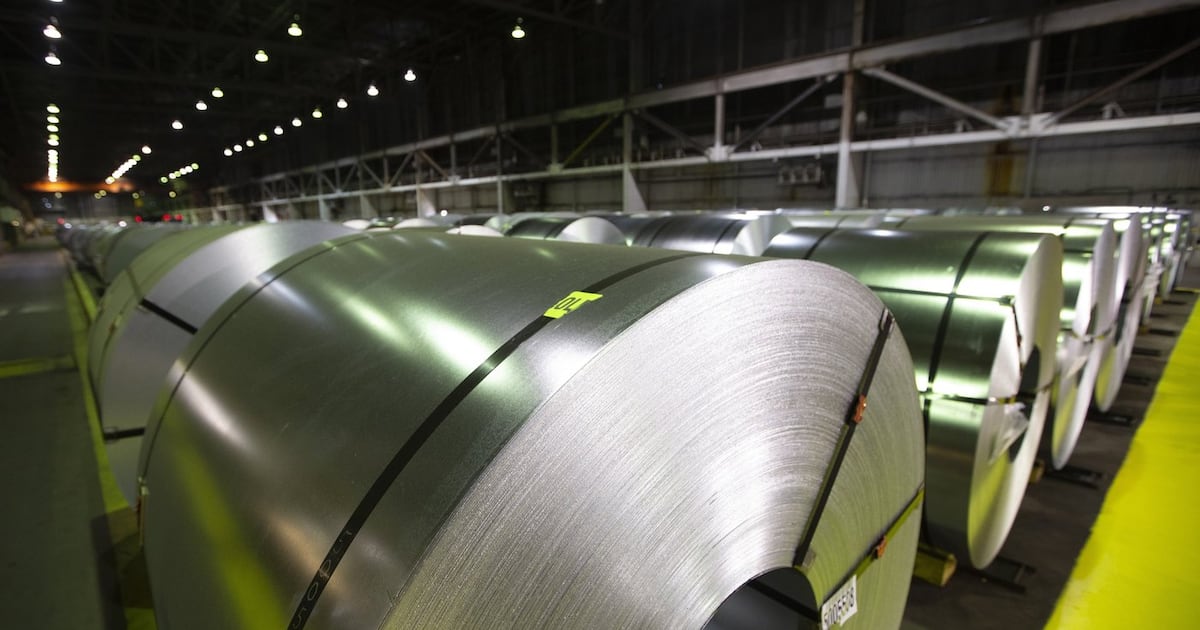
Maple Express | September 29, 2026 — Stelco to lay off 350 steelworkers at Hamilton plant
 Deal Collection
Home Appliances · Prime Big Deals Picks
-42%Hoover PowerDash Pet Compact Carpet Cleaner FH50700 — Tough on Pet Stains! $99.99 CAD (41% Off)
Amazon
-38%Amazon Smart Air Quality Monitor — Tracks 5 Key Metrics! $55.99 CAD (38% Off)
Amazon
-24%TP-Link Deco BE65 BE11000 Wi-Fi 7 Mesh System (2-Pack) — Tri-Band 11Gbps, 200 Devices! $499.99 CAD (23% Off)
Best Buy
-43%American Tourister Belle Voyage 21" Carry-On — Hard Shell, Spinner Wheels! $114.54 CAD (43% Off)
Amazon
Maple ExpressMaple Express | September 29, 2026 — Stelco to lay off 350 steelworkers at Hamilton plant
Deal Collection