
Finance Morning (Aug 26): Asian Markets Rally Across the Board as Canada's Counter-Tariffs Take Effect Sept 8
Asian benchmarks closed higher on Aug 26, led by Taiwan's 1.47% gain. China's MIIT said HarmonyOS became the world's third-largest mobile OS; Tencent denied IEG restructuring rumors; Alibaba's 80-billion-yuan placement was nearly 3x oversubscribed. Canada's counter-tariffs on U.S. goods take effect Sept 8; Australia's July inflation beat expectations.
📊 Asia Market Wrap
Asian benchmarks closed higher across the board on Aug 26, led by Taiwan's weighted index.
| Index | Close | Change | % |
|---|---|---|---|
| Shanghai Composite | 3,912.52 | +23.08 | +0.59% |
| Shenzhen Component | 13,841.33 | +95.46 | +0.69% |
| ChiNext | 3,414.88 | +17.37 | +0.51% |
| Hang Seng | 25,652.97 | +141.87 | +0.56% |
| Nikkei 225 | 66,262.16 | +405.73 | +0.62% |
| KOSPI | 6,808.21 | +65.47 | +0.97% |
| Taiwan Weighted | 45,832.62 | +663.16 | +1.47% |
1. MIIT: HarmonyOS becomes world's third-largest mobile OS
Source: Sina
On Aug 26, China's State Council Information Office held a press conference in its "Start of the 15th Five-Year Plan" series, where officials from the Ministry of Industry and Information Technology (MIIT) briefed on implementing the plan and accelerating new industrialization.
Liu Yulin, head of MIIT's Information and Communication Development Department, said that since the "14th Five-Year Plan" period, China's supply capacity and application level of basic and industrial software have improved substantially. HarmonyOS has become the world's third-largest mobile operating system, with cumulative OpenHarmony ecosystem devices exceeding 1.35 billion.
He added that operating systems such as "GongHong" and "YiHong" have been applied at scale in automobiles, home appliances, metallurgy and petrochemicals; a national AI open-source community has gathered more than 11 million users and hosts over 70,000 models.
2. Tencent denies IEG "AI gaming division" restructuring
Source: Sina
On Aug 25, a rumor circulated in the market that Tencent's (00700.HK) Interactive Entertainment Group (IEG) was restructuring its AI gaming division. Tencent responded that the report contained substantial inaccuracies, and the so-called "new division" was a misreading.
The rumor claimed Tencent IEG was integrating ARC Lab under its CROS technology platform with the game AI engine team, expanding to 400–500 people, led by Chen Dong, with the goal of exploring "AI-native games".
Tencent denied the "new division" claim, stressing that the game technology line has long had a game AI engine unit that recruits AI talent, focused on AI efficiency and gameplay innovation, and that the team structure was not the restructuring described in the rumor.
On the financial side, Tencent's Q2 quarterly revenue topped 200 billion yuan for the first time, at 204.785 billion yuan, up 11% YoY; game revenue was 65.9 billion yuan, up 11%.
3. Alibaba's 80-billion-yuan placement: financing and AI bet
Source: Sina
On Aug 23, Alibaba announced a plan for an 80-billion-yuan new share placement, which ended up nearly three times oversubscribed, with sovereign-type investors accounting for over 40%.
The placement was priced at HK$112.70 per share, about 3.6% below the benchmark price, within the common 3%–5% discount range in the Hong Kong market. It will issue 710 million new ordinary shares, diluting existing shareholders by about 3.8%.
The proceeds will be fully invested in AI, covering computing infrastructure upgrades, large-model optimization and AI commercialization. Chairman Joe Tsai led the financing, while CEO Eddie Wu anchored the technology side.
Alibaba's FY2027 Q1 (corresponding to Q2 2026) revenue was 268.953 billion yuan, up 9% YoY, while net profit was 10.444 billion yuan, down 75% YoY. Its AI-related business had annualized revenue exceeding 49.5 billion yuan, maintaining triple-digit growth for 12 consecutive quarters.
4. Leading city commercial banks enjoy their "best summer"
Source: 21st Century Business Herald
Data from the National Financial Regulatory Administration showed that in H1 2026, commercial banks' cumulative net profit was 1.2 trillion yuan, down 0.6% YoY. Behind this, city commercial banks were the only category with significant profit growth—net profit rose 13.1 billion yuan, up 7.4% YoY.
A group of leading city commercial banks have disclosed half-year results: Jiangsu Bank, Bank of Ningbo, Bank of Nanjing and Bank of Chongqing posted H1 profit growth of roughly 8%–12%, well above the industry average. In contrast, joint-stock banks' net profit fell 3.43% YoY, while rural, private and foreign banks saw double-digit declines.
After declining for nearly three years, the banking sector's net interest margin (NIM) rose 1 bp quarter-over-quarter in Q2 to 1.41%, with city commercial banks' NIM up 2 bp to 1.40%. Bank of Ningbo's average deposit funding cost fell to 1.32%, Jiangsu Bank's to 1.46%, and Bank of Nanjing's to 1.72% from 2.09%.
As of H1, Bank of Ningbo's NPL ratio was 0.76%, Jiangsu Bank 0.81%, and Bank of Nanjing 0.82%, with all three maintaining provision coverage above 300%. However, city commercial banks' overall NPL balance rose 14.8% YoY.
5. Nikkei rises 0.62% on Wall Street's boost
Source: Kyodo News
Tokyo stocks extended gains on Aug 26, with the Nikkei 225 up 405.73 points to close at 66,262.16, a 0.62% gain. The TOPIX rose 17.35 points to 4,111.02, up 0.42%, on turnover of 1.8535 billion shares.
Overnight gains across major U.S. indexes drew strong buying. Some market views held that the impact of expanded U.S. sanctions on Iran would be limited, so crude prices fell and provided support, while lower long-term interest rates also helped.
In early trading, some high-priced AI and semiconductor stocks fell, dragging the market lower at one point. With U.S. chip giant Nvidia set to report earnings on the morning of the 27th (Japan time), the market was cautious and trading was subdued.
6. Korean stocks swing sharply—has the AI thesis changed?
Source: Sina
Korea's stock market has been highly volatile recently, with the KOSPI pulling back sharply after rapid gains and semiconductor leaders Samsung Electronics and SK Hynix swinging notably. On Aug 25, Kelvin Tay, Asia CIO of Pictet Wealth Management, told 21st Century Business Herald reporters that the volatility largely reflects high leverage in the market.
Tay noted that the Korean market is highly concentrated—Samsung and SK Hynix account for about 60% of the market's weight—so investing in Korea is largely investing in Korean semiconductor leaders.
He said the market rose fast and sharply from January to May, partly driven by the proliferation of leveraged ETFs, some offering two or even three times leverage on individual stocks. Pictet observed deleveraging in the Korean market as early as July, with one day's drop exceeding 10%.
Over a five-year horizon, Tay believes Korea remains worth watching as long as AI continues to develop, given its strengths in semiconductors and chips—but investors need to reassess the risks and avoid over-concentrating assets in Korea.
7. Korea-Japan stocks close higher as AI-HBM squeezes DRAM supply
Source: Sohu
On Aug 26, the Nikkei 225 rose 0.62% to 66,262.16 and the KOSPI rose 0.97% to 6,808.21.
According to Korea's Chosun Ilbo, Korea's DRAM export prices have kept surging as AI-driven HBM production squeezes ordinary memory supply. From the 1st to the 20th of this month, Korea's DRAM export unit price reached $92,183 per kilogram, up 401% YoY and about 12.5 times the January 2023 low.
Goldman Sachs expects the DRAM supply gap to widen from 5.0% this year to 5.9% next year. Morgan Stanley data shows the five hyperscale cloud providers, plus Nvidia and Broadcom, have committed over $3.1 trillion to support third-party AI infrastructure, with the shortage possibly lasting until 2028.

8. How Canada's counter-tariffs "pressure" the U.S.
Source: Xinhua Finance
Canada's federal government announced on the 25th specific retaliatory tariffs on U.S. goods, effective Sept 8. Canadian officials said the affected U.S. goods total about US$20 billion in value, equivalent to the goods covered by the 50% tariffs the U.S. imposed on Canada.
According to the list released by Canada's Department of Finance, the retaliatory tariffs focus on steel and aluminum, dairy, home appliances, agricultural equipment, pulp and paper, plastics and electronics, with rates in three tiers of 15%, 25% and 50%. Most U.S. steel and aluminum imports will rise from 25% to 50%; dairy products such as cheese, fish, seafood and some steel/aluminum derivatives will face 25%.
Analysts say the tariffs are "equal and reciprocal" and "precise and strategic". U.S. Commerce Department data shows bilateral trade approached $900 billion last year. Canada's Industry Minister Mélanie Joly said the tariffs aim to apply political pressure on key U.S. midterm election districts.
Opposition to the U.S.-Canada trade war is growing in the U.S. Republican Senator Susan Collins warned that new tariffs on Canada would raise costs for people in Maine.
9. Australia's July inflation beats expectations, rate-hike risk rises
Source: Xinhua Finance
Australia's Bureau of Statistics reported on the 26th that the July CPI rose 1% month-over-month and 3.5% year-over-year, above market expectations of 0.8% and 3.3%.
The trimmed mean inflation rate—a gauge of underlying price pressure—came in at 0.5% MoM and 3.6% YoY, versus expectations of 0.3% and 3.5%. By category, housing prices rose 5% YoY, clothing and footwear 4.9%, and education 4.8%.
After the data, traders raised expectations for Reserve Bank of Australia rate hikes. Interest-rate market pricing shows traders see a roughly 29% chance of a September hike and about 70% by year-end.
10. A sudden global food crisis?
Source: 21st Century Business Herald
On Aug 15, JPMorgan senior global economist Nora Szentivanyi, based in London, released a report titled "Food security is national security: a compounding storm", forecasting global food inflation to rise from 2.8% in H1 this year to 5% in H1 next year.
The report noted French corn output is expected to fall 35% to 9 million tonnes, the lowest since 2003; Thailand's rice output could lose 5.4 million tonnes to El Niño, 15% of annual output; and Kansas, a major U.S. wheat state, has seen output fall by over 40%.
Bloomberg reported that rice paddies in Thailand's Nakhon Pathom province have cracked and hardened. The FAO's July report projected 2026 global grain output at 2.983 billion tonnes, down 1.9% from the 2025 record. Thai white rice rose 20% in May alone, and Chicago rice futures are up over 40% this year.
The FAO's "State of Food Security and Nutrition in the World 2026" report shows 645 million people are going hungry, or 7.8% of the global population.
More News
- Global Express | October 10, 2026 — Saudi-Led Coalition Strikes Houthi Targets as Yemen War Spills Over
- Tech Express | October 10, 2026: OpenAI Revenue Gap Rattles US AI Stocks
- Sports Express | October 10, 2026 — Valkyries Sweep Aces to Reach First WNBA Finals
- Maple Express | October 10, 2026 Toronto police seek to ID suspect in Moss Park break-in and sexual assault
- Finance Evening | Oct 9: Dow Jumps Over 400 Points, Apple Cuts iPhone Orders, Delta Trims Guidance
Comments (0)
View More
 -43%
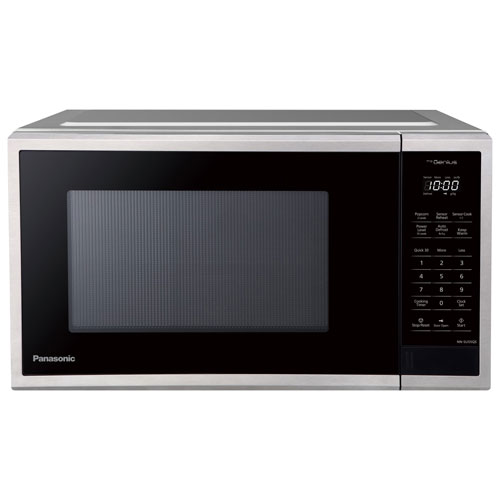
-43%Panasonic 1.1 cu. ft. Microwave with Genius Sensor (NN-SU56QSC) — Stainless Steel! $159.99 CAD (43% Off)
 -26%
-26%Zinus Aidan Sling Accent Chair — Shredded-Foam Comfort, 250 lb Frame! $120 CAD (26% Off)
 -37%
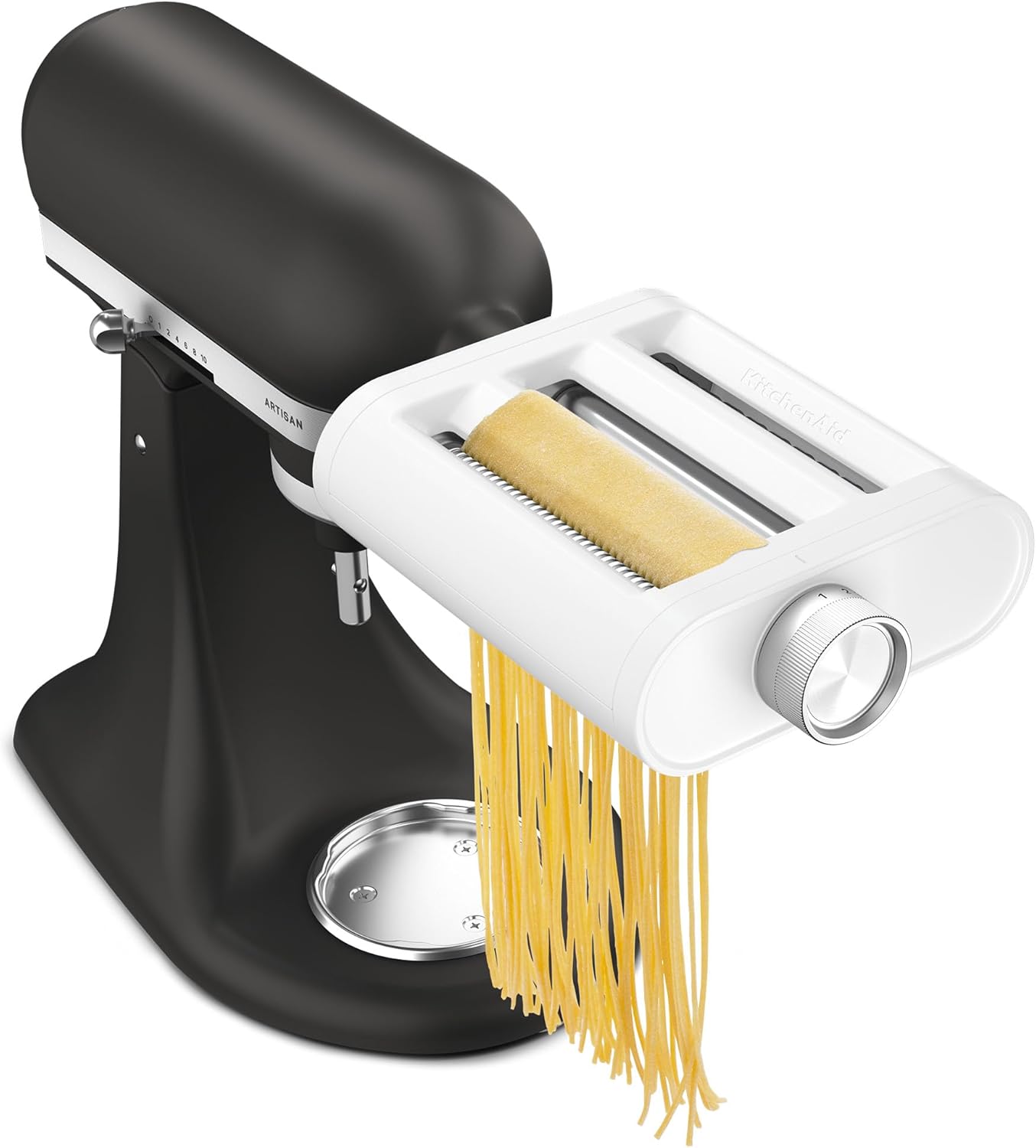
-37%KitchenAid 3-in-1 Pasta Attachment KSM3PPA — Turn Your Stand Mixer Into a Pasta Maker! $94.99 CAD (37% Off)
 -40%
-40%bella 3.5 Qt 2-in-1 Hand & Stand Mixer — Two Mixers in One, 200W! $79.01 CAD (39% Off)
 Maple Express
Maple Express Evening | October 9, 2026 — SIU clears officer in fatal North York shooting of Const. Marc Pinizzotto
 Maple Express
Maple Express | October 9, 2026 — Canada Shed 68,300 Jobs in September, Erasing This Year's Employment Gains
-43%Panasonic 1.1 cu. ft. Microwave with Genius Sensor (NN-SU56QSC) — Stainless Steel! $159.99 CAD (43% Off)
Best Buy
-26%Zinus Aidan Sling Accent Chair — Shredded-Foam Comfort, 250 lb Frame! $120 CAD (26% Off)
Amazon
-37%KitchenAid 3-in-1 Pasta Attachment KSM3PPA — Turn Your Stand Mixer Into a Pasta Maker! $94.99 CAD (37% Off)
Amazon
-40%bella 3.5 Qt 2-in-1 Hand & Stand Mixer — Two Mixers in One, 200W! $79.01 CAD (39% Off)
Amazon
Maple ExpressMaple Express Evening | October 9, 2026 — SIU clears officer in fatal North York shooting of Const. Marc Pinizzotto
Maple Express