
Tech Express | November 21, 2026 — GTA 6 Pulls In $3.79 Billion in 24 Hours, the Biggest Entertainment Launch Ever
GTA 6 sold $3.79 billion in 24 hours, an entertainment record. AI-investment fears pushed the Nasdaq 100 down 5.6%. An Anthropic researcher says he and Claude proved the Riemann hypothesis; amateurs using Claude Code found TESS exoplanet candidates. ASML's CEO says ending maintenance won't stop Chinese fabs; Architect Labs showed an AI-designed CPU; Google dropped its search button; BepiColombo reached Mercury; DeepSeek's investors surfaced; Xiaomi unveiled a new purifier at 5,799 yuan.
🛒 Amazon Black Friday 2026 Picks: our Black Friday hub is live — 100+ hand-picked deals across six categories, prices update in real time.
1. GTA 6 Pulls In $3.79 Billion in Its First Day, the Biggest Entertainment Launch on Record
Source: Fox Business
Rockstar Games released "Grand Theft Auto VI" on November 19. Company figures through the end of that day put worldwide sales at an estimated $3.79 billion in the first 24 hours — more than the combined box office of most major Hollywood releases. Fox Business reported on November 21 that it is the biggest entertainment launch in history.
Rockstar also said the game sold 32.5 million units before release, a record across all platforms, and that it holds a reported 99 score on Metacritic. For comparison, 2013's "Grand Theft Auto V" generated an estimated $800 million in its first 24 hours, according to Reuters — the new game is nearly five times that. The news lifted shares of parent company Take-Two by more than 6%.
2. AI Investment Fears Trigger a Selloff, and US Tech Stocks Enter a Bear Market
Source: Guancha
On November 20, worries that the artificial-intelligence investment boom is cooling set off a selloff on Wall Street. The tech-heavy Nasdaq 100 plunged 5.6% on the day and 10.4% for the week — its worst week in more than six years. The index is now 20% below its October 6 intraday high, the threshold commonly used to define a bear market.
The S&P 500 fell 3.7% and is more than 10% below its October peak. The Philadelphia Semiconductor Index dropped 10.7% on the day and is down 43% from its June high. The VIX, Wall Street's "fear gauge," rose to 40, its highest level since April 2025, while the 10-year Treasury yield fell 0.1 percentage point to 4.94%.
Haven assets offered little shelter: bitcoin fell below $60,000 for the first time since July, and spot gold dropped nearly 3% to about $3,522 an ounce, its lowest in more than a year. Anthropic, which jumped 17% on its first trading day on November 19, fell 13.5% intraday on November 20 to just above $84 a share, close to its $83 IPO price. "The AI bubble has been deflating for months," said Mike O'Rourke, chief market strategist at Jones Trading.
3. Anthropic Researcher Says He and Claude Proved the Riemann Hypothesis
Source: Mydrivers
On November 20, Anthropic researcher Levent Alpöge announced that he and the Claude model had completed a proof of the Riemann hypothesis and its generalized form. Rather than a readable paper, the 167-year-old Millennium Prize problem was addressed with 17 million lines of Lean formal-verification code — an estimated 250,000 pages if translated into human-readable mathematics.
Alpöge himself acknowledged that parts of the latter half of the proof go beyond his own understanding, and that many key summaries came directly from Claude's output. Mathematicians have responded cautiously: code that checks itself only proves internal logical consistency, not the original conjecture, and a derivation could quietly alter or weaken the problem's conditions. One Fields Medalist said he would not spend time verifying it without a condensed, readable version.
The timing also drew scrutiny — it came on the second day of Anthropic's life as a public company. On the same day, a 940-page draft proof completed independently by human mathematicians surfaced. For now the human-AI result is a personal claim: it has not been peer reviewed, and Anthropic has not publicly endorsed it.

4. Amateur Planet Hunters Are Using Claude, and Some Candidates Reach the Official List
Source: Nature
In September, Pavel Rabtsevich, an AI specialist working in Spain, sat down at his computer and asked an AI model to discover a planet. He pointed it at a batch of telescope data and gave it a high-level plan. About two weeks later the bot delivered: two possible planets orbiting a star 116 light years from Earth. Rabtsevich has no formal astronomy education.
He used Anthropic's Claude Code to sift data from more than 120,000 stars observed by NASA's TESS satellite in late 2025 and early 2026. The model zeroed in on a star called TIC 4206066, which showed two cycles of dimming, one roughly every 3 days and another every 11 days. Archival TESS data from 2018 and 2020 showed the same pattern. At his direction, the model then found a planet-detection algorithm published by Michelle Kunimoto, an exoplanet researcher at the University of British Columbia, and ran it to validate the signals. The findings were posted as a preprint on Zenodo on September 25; they have not been peer reviewed, but TESS astronomers completed an independent analysis and added the signals to their official list of planet candidates.
Not every amateur is working responsibly, Kunimoto warned: some do not fully understand the algorithms and cannot validate the results. "There's been a huge, overwhelming surge of AI-driven papers, which tend to have candidates that are not the best quality," they said, adding that "the systems we use to disseminate science are being overwhelmed."

5. ASML CEO: Cut Off Maintenance and China's Fabs Will Keep Running
Source: Guancha
At an event hosted by the US outlet Semafor, ASML chief executive Christophe Fouquet and Jacob Helberg, US undersecretary of state for economic affairs, discussed export controls. Fouquet said restricting technology exports can backfire: refusing to supply a technology outright disappoints many people and pushes them to stop depending on your technology and speed up their own development.
ASML's EUV lithography machines have not been exported to China since 2019, and other advanced equipment is tightly regulated. Washington is seeking to widen controls through the MATCH Act, which would restrict immersion DUV lithography tools and related maintenance services to China. Fouquet said only the original manufacturer's servicing lets a supplier accurately know a machine's operating state, and that if ASML withdrew from Chinese customers' fabs the tools would not necessarily stop running — ASML would simply lose "control" over them. "I can guarantee you that right after we stop servicing, somebody will immediately service those tools under another brand," he said.
Helberg acknowledged a trade-off between market share and innovation, saying the US cannot pursue technological leadership while ignoring market application, and that true technological sovereignty comes from innovation rather than imitation.
6. An AI Designed a General-Purpose CPU From Scratch, With 4.59x the Performance per Watt
Source: Mydrivers
On November 20, Architect Labs unveiled a general-purpose CPU called Frostbite. According to the company, the chip was completed end to end by its AI system — instruction set, microarchitecture, RTL and final layout — with an instruction set built from scratch and the design landing on a 7nm process.
Rather than a conventional instruction set architecture, the AI built a compute model around "interaction networks," a concept proposed in 1990 in which programs are represented as node graphs and all computation is local, removing the need for costly, power-hungry global cache-coherence protocols. The chip uses a tile grid layout, and the AI designed a "work stealing" scheme: an idle compute unit takes tasks directly from a busy neighbor instead of waiting for central dispatch.
The company's figures: 4.59x performance per watt (geometric mean) versus a comparison core across 25 workloads, 15 of which were held back for final evaluation; the share of power spent on fetch, decode and issue cut from 27% in conventional designs to 6%; and the full iteration from compiler to RTL finished in under five months, with 800MHz at synthesis and 500MHz in the final layout on 7nm.

7. Google's New Search Homepage Drops the Search Button and Puts AI Up Front
Source: Ars Technica
Google search vice president Robby Stein confirmed on X that, after several weeks of testing, a redesigned desktop search homepage is now official. The most visible change: the long-standing "Google Search" button next to the search bar is gone, while "I'm Feeling Lucky" remains.
In its place are several new buttons under the search bar, all tied to AI features — image generation, file analysis and brainstorming with Gemini. Signed-in users also get an expandable sidebar on the left listing recent AI Mode search threads, accessible on results pages too. Stein said the sidebar made a "big difference" and called it a "simpler way to pick up where you left off."
Ars Technica notes that the functional loss is minimal — most people already hit Enter or click an autocomplete suggestion. But the change says more about Google's priorities: AI features get prominent buttons while traditional search is increasingly de-emphasized.
8. BepiColombo Arrives at Mercury, Only the Second Mission Ever to Orbit It
Source: IFLScience
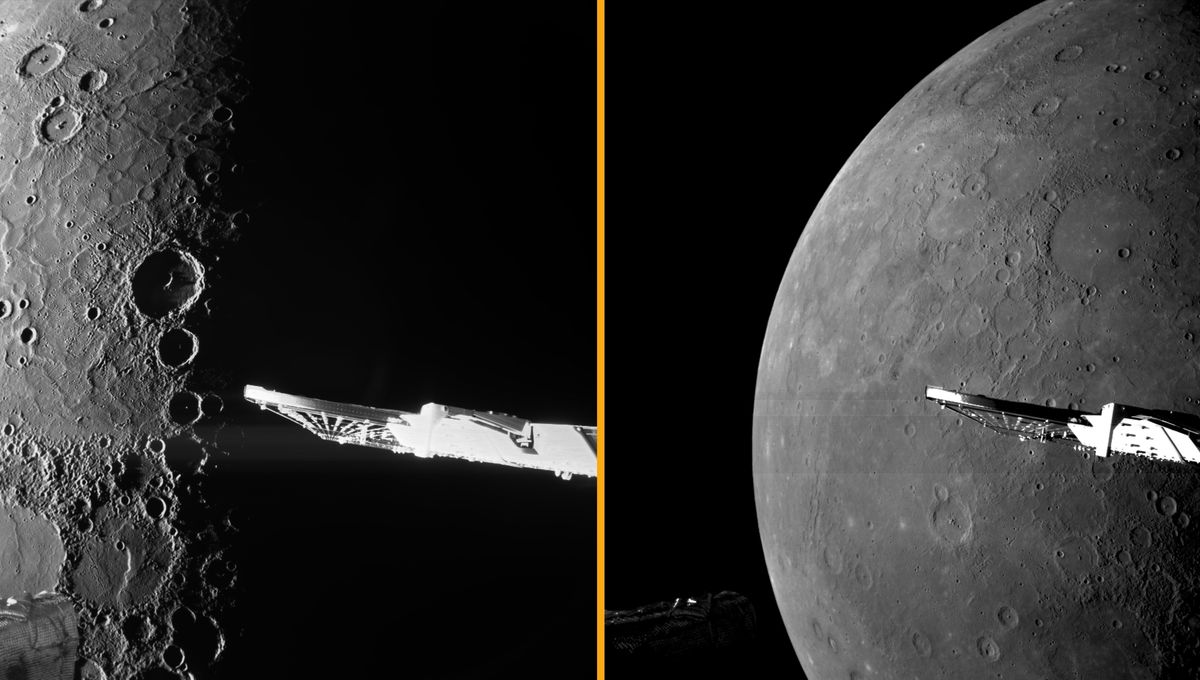
On November 21, the European Space Agency and Japan Aerospace Exploration Agency's BepiColombo completed its braking maneuver and entered orbit around Mercury. It is only the second time in history that Mercury has had an orbiter, after NASA's MESSENGER. In a couple of weeks, around December 9, the two spacecraft will separate, with the science mission due to begin in April.
Getting to Mercury is extremely difficult. To shed the orbital energy from launching off Earth, the probe performed nine planetary flybys — one of Earth, two of Venus and six of Mercury. The mission is named after Giuseppe "Bepi" Colombo, the Italian mathematician and engineer who first worked out how gravity assists could put a spacecraft into an orbit that repeatedly encounters Mercury.
A thruster glitch in 2024 nearly derailed the arrival. The team postponed orbit insertion by almost a year and flew the fourth Mercury flyby just 165 kilometers above the surface, below the planned safe distance of 200 kilometers. The paired orbiters will for the first time study the same planet with two spacecraft at once: ESA's Mercury Planetary Orbiter will map the surface and probe why Mercury is so dense, while JAXA's Mercury Magnetospheric Orbiter will study its interaction with the Sun and its tenuous atmosphere.
9. DeepSeek's Second Funding Round Closes, Revealing 31 Investors
Source: Sina News
Hangzhou DeepSeek Artificial Intelligence Basic Technology Research, the company behind DeepSeek, has completed a business registration change, adding Hangzhou Chengyan Enterprise Management Consulting Partnership as a shareholder with a 17.27% stake, making it the third-largest holder. The platform, set up in August, now has 31 partners, 18 of which contributed as limited partnerships, with registered capital contributions of about 3.439 billion yuan.
Affiliates of Tencent, CATL and China Mobile all took part in DeepSeek's second funding round through Hangzhou Chengyan. Tencent's Shanghai Hengxiu contributed 9.57%, the largest single share, equivalent to indirect ownership of about 1.65% of DeepSeek through this platform alone. China Mobile Investment Holdings and CITIC Securities Investment each hold 7.65%, while Moonshot-adjacent Lisigu Capital's Tianjin Lisixing Shen holds 7.17%. The list also includes IDG Capital, Boyu Capital, CICC Capital, Meituan Longzhu and SMIC Capital.
After the increase, DeepSeek's registered capital rose from 16.4475 million yuan to 19.9187 million yuan. Founder Liang Wenfeng's Ningbo Cheng'en stake fell from 60.19% to 49.70%, still the largest; his personal direct stake dropped from 31.01% to 25.60%. The National Artificial Intelligence Industry Investment Fund raised its direct holding from 0.28% to 0.39%.
10. Xiaomi's Mijia Air Purifier 2 Ultra Launches at a 5,799 Yuan Presale Price
Source: Mydrivers
Xiaomi has launched the Mijia Full-Effect Air Purifier 2 Ultra, with a suggested retail price of 7,499 yuan and a presale price of 5,799 yuan. The body is now a silver-gray floor-standing unit with a round color display on the front, and a top air outlet that rises when the machine powers on — a first for Mijia.
Xiaomi says it purifies 147 types of air pollutants and upgrades its "Aldehyde Solve 2.0" system, using an alloy catalytic layer to break down aldehydes and acid gases with no filter replacement claimed, alongside a seven-layer carbon matrix and five-stage filter. A dual-fan, three-direction airflow design is rated at 23,750L/min of clean air, with 10-meter, 180-degree coverage.
Dual millimeter-wave radar covers 6 meters at 180 degrees and enables three airflow modes, including one that directs air away from people; nighttime noise is 33.6dB(A). The unit carries eight CQC certifications covering maternal and infant use, medical, sleep-quiet, allergy, sterilization, odor and ozone-free use plus Swiss SGS formaldehyde removal, and comes with a 3-year machine warranty and 5-year fan warranty.

More News
- Maple Express | November 22, 2026: Two 16-year-olds killed in Scarborough triple shooting
- Maple Express | November 22, 2026 — Two dead, one seriously injured in Scarborough triple shooting
- Global Express | November 22, 2026 — Israel’s Eisenkot Invites Likud for Talks as Government Deadline Nears
- Finance Weekly | AI Faith Cracks as Rate Hikes Return, and Everything Reprices
- Tech Express | November 22, 2026 — Intel's 18A Yield Reaches 70% as the Chipmaking Comeback Takes Shape
Comments (0)
View More
 -26%
Samsung The Frame 32" QLED — Turns Into a Painting When It's Off, Mount Included! $598 CAD (25% Off)
 -34%
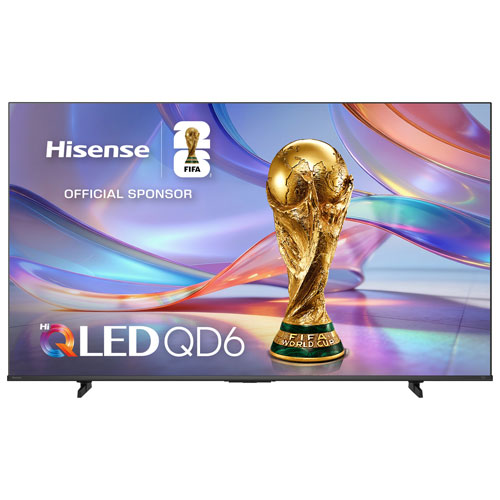
Hisense 85" QD6SF QLED Fire TV — An 85-Inch Screen Under $1,000! $999.99 CAD (33% Off)
 -47%
🎉 史新低!Logitech G502 HERO Wired Gaming Mouse — The Long-Running Benchmark at Half Price! $39.98 CAD (47% Off)
 -59%
Razer BlackShark V2 Pro PlayStation Wireless Headset — 70-Hour Battery, 50mm Titanium Drivers! $119.99 CAD (59% Off)
 Finance Weekly
 | AI Faith Cracks as Rate Hikes Return, and Everything Reprices
 Sports Express
 | November 22, 2026: Maple Leafs collapse again, fall 4-3 to Blue Jackets for ninth straight loss
-26%Samsung The Frame 32" QLED — Turns Into a Painting When It's Off, Mount Included! $598 CAD (25% Off)
Amazon
-34%Hisense 85" QD6SF QLED Fire TV — An 85-Inch Screen Under $1,000! $999.99 CAD (33% Off)
Best Buy
-47%🎉 史新低!Logitech G502 HERO Wired Gaming Mouse — The Long-Running Benchmark at Half Price! $39.98 CAD (47% Off)
Amazon
-59%Razer BlackShark V2 Pro PlayStation Wireless Headset — 70-Hour Battery, 50mm Titanium Drivers! $119.99 CAD (59% Off)
Best Buy
Finance WeeklyFinance Weekly | AI Faith Cracks as Rate Hikes Return, and Everything Reprices
Sports Express