
Finance Morning | October 13, 2026 — AI Trade Pullback Slams Asia-Pacific Stocks; KOSPI Falls 5.46% With Circuit Breaker
AI jitters slammed Asia-Pacific stocks on Oct 13: KOSPI fell 5.46% and triggered a circuit breaker, the Nikkei 225 slid 1.82%, and Taiwan's index dropped over 1,000 points intraday, while Shanghai held 3,800. Goldman says Chinese AI listings have created nearly $5 trillion in value, Huawei detailed its Kirin 9050 chips, the yuan's midpoint was guided 15 pips stronger, and a Fed official struck a hawkish tone.
Finance Morning | October 13, 2026 — AI Trade Pullback Slams Asia-Pacific Stocks; KOSPI Falls 5.46% With Circuit Breaker
📊 Asian Markets Today
| Index | Close | Change | Change % |
|---|---|---|---|
| Shanghai Composite | 3800.87 | -12.93 | -0.34% |
| Shenzhen Component | 12353.70 | -288.20 | -2.28% |
| ChiNext | 2958.34 | -5.48 | -0.18% |
| Hang Seng | 24345.22 | +133.92 | +0.55% |
| Nikkei 225 | 67777.52 | -1253.40 | -1.82% |
| KOSPI | 6035.35 | -348.89 | -5.46% |
| Taiwan Weighted | 48341.31 | -972.09 | -1.97% |
1. AI Trade Pullback Rocks Asia: KOSPI Falls 5.5%, Nikkei 225 Down 1.8%
Source: Yahoo Finance (AFP)
Asia's tech-heavy stock markets slumped on Tuesday as fresh worries about the outlook for the AI investment boom resurfaced, while European stocks edged higher on retreating oil prices. South Korea's KOSPI closed down 5.5%, led lower by chip giants SK hynix and Samsung Electronics. The core worry in the market is whether cracks are starting to show in the multi-year AI investment boom.
One trigger for the sell-off came from Broadcom CEO Hock Tan, who likened the AI buying frenzy to gambling at a conference in Singapore. He said many investors have no clue what they are investing in yet set extremely high expectations, only to find it is almost like being in a casino. The International Monetary Fund also weighed in at the start of its annual meeting in Bangkok, warning of a possible AI correction and saying growing evidence suggests AI capabilities can be delivered at lower investment levels.
Data showed the KOSPI closed down 5.5% at 6,035.35, with chip heavyweights SK hynix and Samsung Electronics taking a beating, after reports that China's CXMT had made progress on new technology to boost memory chip density and planned a server-memory product based on the structure by the end of the year. Japanese stocks also fell, with the Nikkei 225 down 1.8% at 67,777.52 and chipmaker Kioxia tumbling more than 13%. European stocks bucked the trend: London's FTSE 100 rose 0.8%, Paris's CAC 40 gained 0.3% and Frankfurt's DAX added 0.6%. Oil fell even as Yemen's Houthis stepped up attacks on Saudi Arabia, with Brent crude down 1.9% at $104.58 a barrel.
2. Japanese and Korean Stocks Hit by Black Tuesday as Korea Exchange Triggers SIDECAR
Source: 金融界
Asia-Pacific markets opened on October 13 with heavy selling, as regional markets led by Japan and South Korea dived together. South Korea's KOSPI fell more than 6% intraday, losing the 6,000-point mark, prompting the Korea Exchange to activate the SIDECAR mechanism and halt programmatic selling in KOSPI stocks. The Nikkei 225 quickly widened its losses to more than 2%, at one point dropping over 1,800 points.
At the time of writing, the KOSPI was down 6.7% at 5,956.51, its lowest since July 31, with SK hynix down nearly 9% and Samsung Electronics down 7%. The Nikkei 225 stood at 67,195.87, down 2.66%, with Kioxia tumbling nearly 10%, SoftBank Group falling more than 7%, and semiconductor equipment names such as Tokyo Electron and Advantest broadly weaker. The MSCI Asia-Pacific index fell 0.9%, heading for its weakest close since mid-August.
The sell-off was driven by multiple negative factors. The previous session on Wall Street had already flashed warnings: optical communications stocks gave back gains, with Ciena plunging nearly 10%, Lumentum down 9.78% and Corning down 6%; memory chip names also came under pressure, with SanDisk down nearly 6%, Micron down nearly 4% and the Philadelphia Semiconductor Index off 2.67%. Broadcom CEO Hock Tan and Intel CEO Lip-Bu Tan publicly voiced concerns about the sustainability of AI financing on the same day, while Cleveland Fed President Hammack said policy may need to be tightened. On fund flows, foreign investors have net sold more than 197 trillion won in the KOSPI market so far this year, versus only about 4 trillion won for all of last year.
3. Taiwan Weighted Index Plunges Over 1,000 Points Intraday, Losing 49,000 Mark
Source: BigGo Finance
Asia-Pacific technology stocks were broadly sold off on October 13. Taiwan's weighted index opened at 49,126.27, down 175.69 points, before losses widened rapidly, at one point falling more than 1,000 points to an intraday low of 48,401.13, losing the 49,000-point level and breaking below its 10-day moving average. October Taiwan index futures led the decline, tumbling 739 points to 48,606.
Heavyweight stocks all opened lower. TSMC (2330.TW) opened down NT$40 at NT$2,500, testing the NT$2,500 round-number level intraday and contributing roughly 350 points to the index decline; MediaTek, Delta Electronics, Hon Hai and ASE also weakened. Electronic components and semiconductor stocks suffered the steepest losses, with Taiwan Union Technology (6274.TW) down 4.6% and UMC (2303.TW) down 3.4%, while Nan Ya Plastics (1303.TW) rose 4.8% against the market and financial stocks held up relatively well.
Institutional investors noted that Taiwan stocks have entered high-level consolidation after recent gains, with KD and RSI indicators weakening. Foreign investors and investment trusts have been trimming into strength, and margin financing balances have reached this year's highs. In the previous session, the three major institutional categories sold a combined net NT$59.369 billion, with foreign investors accounting for net sales of NT$52.198 billion. Still, Taiwan's August export orders surpassed $100 billion for the first time and order momentum continues, which could support the market.
4. China's Three Major Indices Diverge as Shanghai Composite Rebounds to Hold 3,800
Source: 新浪财经
On October 13, China's three major A-share indices closed mixed, with the Shanghai Composite rebounding from intraday lows to end up 0.1% and hold the 3,800 mark; the Shenzhen Component fell 0.25%, ChiNext slipped 0.18%, the Beijing 50 fell 0.31% and the STAR 50 rose 0.03%. Turnover across the market reached 1.6889 trillion yuan, up 138.2 billion yuan from the previous day, with more than 2,900 stocks advancing.
By sector, components, dyes, internet e-commerce, ice and snow industries and retail led gains, while insurance, batteries, wind power equipment, biologics, energy metals and photovoltaic equipment lagged. Computing hardware stocks such as PCB and CPO names plunged in the morning before rebounding in the afternoon, with several hitting the daily limit; Zhongji Innolight briefly fell below 700 yuan in early trade before turning higher in the afternoon.
On the news front, Lianxun Instruments and Yuanjie Technology issued earnings forecasts on the evening of October 12: Lianxun Instruments expects net profit for the first three quarters of 2026 to grow 1,866%–2,072.95% year on year, while Yuanjie Technology expects third-quarter net profit to grow 578.85%–659.70%. The internet e-commerce sector rose 3.38%, with Liren Lizhuang and Kuajingtong hitting the daily limit; the military equipment sector rallied in the afternoon, with AECC Aero-Science hitting the limit and Guoke Ordnance surging 12.24%. The 16th China International Aviation and Aerospace Exhibition will be held in Zhuhai, Guangdong, from December 7 to 13, 2026.
5. Goldman Sachs: AI Has Rewritten China's Stock Market, Creating Nearly $5 Trillion in Value
Source: 搜狐 (Yicai)
Goldman Sachs chief China equity strategist Kinger Lau and his team said in a new report that since the DeepSeek moment in early 2025, China's AI-related listed companies have created nearly $5 trillion in market value through share price gains and IPOs. AI stocks now account for 42% of the combined market capitalization of A-shares and Hong Kong shares and 57% of total turnover.
The report said China has long been a key exporter in the global AI supply chain, holding about 50% of the global market share in some AI power and infrastructure segments. Goldman's China AI equity universe includes a full list of more than 3,000 stocks, of which more than 1,700 are worth over $100 million, and can be broadly divided into two groups: a first group of more than 360 listed companies with a combined market value of $1.7 trillion, which are export-oriented AI firms deriving more than 40% of revenue overseas; and a second group of more than 880 companies with a combined market value of $3.2 trillion that are mainly domestically focused.
The report showed that from early 2025 to June 2026, Chinese AI exporters delivered cumulative returns of 126%, outperforming domestic-oriented peers by 84 percentage points; however, during the global AI sell-off since late June, Chinese AI exporters have fallen 23% from recent highs, giving back about 10 percentage points of excess returns, while domestic AI companies have held up relatively well since the early-summer pullback. Goldman expects these companies' earnings to compound at 42% annually over the next two years, but said regulatory and sanctions uncertainty, trade tariffs and protectionist policies are the main risks to their overseas expansion ambitions.

6. Huawei Holds Kirin Chip Briefing, Disclosing Progress on Next-Generation Chip
Source: 新浪财经
On October 13, Huawei held a Kirin chip technology briefing at its Lianqiu Lake R&D center in Shanghai. It was the first time in six years that Huawei held a technology communication meeting specifically on Kirin chips, and the first time it systematically introduced the mass-production progress of its logic folding technology and the technical support behind it. Xu Songyu, head of Huawei's semiconductor business and wireless terminal chip product management department, said the 2027 Kirin chip has entered the testing stage, with results so far in line with expectations.
Xu said the Kirin 9050 series is an important step in the continued evolution of Kirin after its return, and the first to achieve mass production of logic folding technology, co-designing multiple dies as a single complete chip to shorten signal routing and increase transistor density. By the numbers, the Kirin 9050 series raises transistor density by 53.5%, the Kirin 9050 Pro improves CPU big-core energy efficiency by 41%, and NPU computing power by 140%. He noted that the Kirin 9050 Pro's current hybrid bonding pitch is 1.5 microns, and Huawei plans to shrink it to 1 micron in 2027.
Huawei disclosed that since 2023, cumulative shipments of terminal products based on Kirin chips have exceeded 100 million units. Xu said that if the hybrid bonding pitch continues to shrink, more high-speed channels and more logic folding can be achieved, which depends on the support of industry chain partners, adding that all progress so far is in line with expectations.
7. Yuan Midpoint Guided 15 Pips Stronger; Onshore Yuan Closes at 6.6945
Source: 21财经
On October 13, the People's Bank of China authorized the China Foreign Exchange Trade System to set the day's central parity rate for the yuan at 6.7298 per US dollar, 15 pips stronger than the previous day's 6.7313.
Wind data showed the onshore yuan opened at 6.6940 against the dollar, versus a previous close of 6.6935, strengthening to a high of 6.6932 and weakening to a low of 6.6973 during the day. The offshore yuan opened at 6.6946, strengthening to a high of 6.6916 and weakening to a low of 6.6987.
According to China Money data, as of 16:30 that day, the onshore yuan closed at 6.6945 against the dollar, 15 pips weaker than the previous close of 6.6930. Over the same period, the offshore yuan traded at 6.6939, up 0.01% on the day.
8. A Fed Official Strikes a Hawkish Tone as Gold Wavers
Source: 新浪财经
Overnight, spot gold turned lower after touching a more than one-week high of $4,217.17 an ounce, dipping to around $4,155 and finally closing at $4,171.68, down 0.56%. In European trading on Tuesday, gold edged higher and hovered around $4,186. Overnight, the three major US stock indices closed mixed, with the Dow up 0.38%, the Nasdaq down 0.44% and the S&P 500 down 0.06%.
At 00:50 Beijing time on Tuesday, Fed official Hammack said interest rates need to rise further, favoring smaller but more frequent hikes, and said policy is not yet restrictive enough, inflation is returning too slowly and upside inflation risks are still rising. Most Wall Street institutions now expect the Fed to pause once in October and then hike in December, ending this hiking cycle.
On the day, Japanese and Korean stocks both closed lower. The Nikkei 225 fell 1.82% to 67,777.52, while South Korea's KOSPI plunged 5.47% to 6,035.34, at one point falling more than 7% intraday, with SK hynix down 10.09% and Samsung Electronics down 7.39%; the Korea Exchange activated the SIDECAR mechanism in the morning to halt programmatic selling in KOSPI stocks. The CEOs of Intel and Broadcom warned that demand for computing infrastructure will continue to outstrip supply, but access to capital could become a major factor constraining the AI boom.
9. US Chip Rout Spreads; Micron, SoftBank and ASML Slide
Source: CNBC
Technology stocks fell on Tuesday, extending a sell-off sparked by worries over AI financing and intensifying competition. Memory chip giant Micron was down around 3% in US premarket trading, with Broadcom also under pressure, while memory-related names SanDisk, Seagate and Western Digital were all about 3% lower. Markets are assessing intensifying competition from China's CXMT.
Analysts noted that Chinese memory makers could threaten the global supply-demand balance over time, but in the short run they continue to face technology hurdles, especially for more advanced memory like HBM. UBP senior equity advisor Vey-Sern Ling said investors are jittery and looking for excuses to take profit on AI-related stocks that have outperformed this year, especially memory stocks.
European chip stocks also sank, with semiconductor equipment maker ASML down 3.3% and STMicroelectronics and Infineon both down 5%. South Korea's SK hynix plunged more than 10% and Samsung Electronics shed 7.4%, both hitting their lowest levels since August, while Japan's SoftBank Group fell 8.5% and Tokyo Electron dropped 7.2%. Analysts said the sharp sell-off reflects broader anxiety over the AI trade rather than a fundamental shift in the competitive landscape.

10. Global Stocks Dip as AI Worries Drive Funds Into Bonds
Source: Reuters
World stocks dipped on Tuesday as renewed AI concerns hit high-flying chipmakers, driving investors to the safety of government bonds as tech-heavy stock markets in Asia and the United States bore the brunt of the selloff. MSCI's main world stocks index dipped 0.14%, while its broadest index of Asia-Pacific shares outside Japan fell more than 2% to its lowest level since late July.
Reports of progress by Chinese memory chip maker CXMT fuelled concerns about increased competition from China's AI players, while Broadcom CEO Hock Tan likened some flows into the broader AI sector to casino gambling. South Korea's KOSPI sank more than 5%, its sharpest one-day drop since mid-August, with Samsung down 7.4%, SK hynix down 10% and TSMC down 1.8%.
European stocks bucked the trend, with the pan-European STOXX 600 up 0.5% to a one-week high. The benchmark 10-year US Treasury yield dipped to 5.193%, after hitting a 24-year high of 5.364% last week. Traders are awaiting US inflation data on Wednesday for clues on the Fed's policy path; the CME FedWatch tool showed an 80.6% chance the Fed holds rates steady this month, up from 51% a month earlier.

More News
- Global Express | October 13, 2026 — Drones Hit Two Cargo Ships in Black Sea, One Sinks With 11 Sailors Missing
- Tech Express | October 13, 2026 — DeepSeek Doubles Its Round to About RMB 100 Billion
- Sports Express | October 13, 2026 — Brewers Take 2-0 NLCS Lead Over Dodgers
- Maple Express | October 13, 2026 Record $85M Lotto Max Jackpot to Be Drawn Tuesday
- Finance Evening | October 12, 2026 — Carney Urges Unity as Alberta Prepares for Secession Vote
Comments (0)
View More
 -27%
-27%Levoit EverestAir-P Smart Air Purifier — Covers 2,655 Sq. Ft. with One Unit! $679.43 CAD (27% Off)
 -35%
-35%LEGO City Holiday Adventure Camper Van 60454 — 385 Pieces, 3 Minifigures, Ages 6+! $26.04 CAD (35% Off)
 -21%
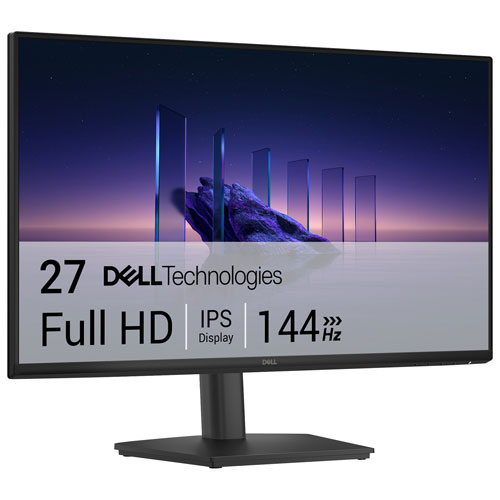
-21%Dell 27" 1080p IPS 144Hz Gaming Monitor (SE2726HS) — 1ms Response & Eye Comfort Certified! $159.99 CAD (20% Off)
 -28%
-28%LifeStraw Peak Series Personal Water Filter Straw — Drink Straight from Lakes and Rivers! $25.43 CAD (27% Off)
 Maple Express
Maple Express | October 12, 2026 — One dead, two injured in Scarborough crash
 Immigration
Immigration | October 12, 2026 Canada Expands Low-Wage Work Permit Freeze
-27%Levoit EverestAir-P Smart Air Purifier — Covers 2,655 Sq. Ft. with One Unit! $679.43 CAD (27% Off)
Amazon
-35%LEGO City Holiday Adventure Camper Van 60454 — 385 Pieces, 3 Minifigures, Ages 6+! $26.04 CAD (35% Off)
Amazon
-21%Dell 27" 1080p IPS 144Hz Gaming Monitor (SE2726HS) — 1ms Response & Eye Comfort Certified! $159.99 CAD (20% Off)
Best Buy
-28%LifeStraw Peak Series Personal Water Filter Straw — Drink Straight from Lakes and Rivers! $25.43 CAD (27% Off)
Amazon
Maple ExpressMaple Express | October 12, 2026 — One dead, two injured in Scarborough crash
Immigration