
Tech Express | November 14, 2026: iPhone Duo Hinge Starts Failing After 451,000 Folds
CNET's fold test shows the iPhone Duo hinge failing past 451,000 folds. Google ships Gemini 4 Hydrogen, replacing 3.8 Flash. OpenAI launches Daybreak security products and is sued by nonprofits. Shanghai police say a viral 517,000-yuan dinner bill was AI-faked, 15 held. Nvidia explains why more GeForce cards aren't simple, iPhone 18 gets a spring 2027 date, Samsung teases Galaxy S27 colors, Hubble faces reentry by 2034, Xu Zhijun writes in TIME, Wang Yi urges US-China AI cooperation.
1. iPhone Duo's Hinge Starts to Fail After More Than 451,000 Folds
Source: CNET
CNET's lab put Apple's new foldable iPhone Duo on its custom Fold-a-Phone rig and folded it nonstop, 24 hours a day, for three weeks. By November 13, past 451,000 folds, the hinge had begun to break down — the first major sign of wear the test has produced.
Lab director Matthew Murray said he noticed looseness in the hinge during the afternoon livestream on November 12, and the phone no longer opened with the same firm sound. When he left the office at 6 p.m. that day, it still opened completely flat. Now the screen unfolds most of the way but leaves a few degrees of angle in the hinge. Sensor data and test footage show that changes in opening force and motion began around the 390,000-fold mark on the afternoon of November 10 and gradually built up; between 12:30 and 1 a.m. on November 13, at about 440,300 folds, the screen no longer had time to open all the way before the rig closed it again.
CNET stresses this is not yet a failure under its criteria: the phone still works, holds other screen positions, shows no cracking or a more visible crease, and remains far from the defined failure conditions of lost power, sensors failing to detect the screen, or a blackout. The remaining 5 to 10 degrees can still be pushed open by hand, though without the old snap. At 100 folds a day, the test equals nearly 12.5 years of folding. Apple has never published an expected fold rating for the iPhone Duo; guesses inside CNET range from 500,000 — Samsung's rating for the Galaxy Z Fold 8 — to 1.5 million.
2. Google Rolls Out Gemini 4 Hydrogen, Replacing 3.8 Flash
Source: Ars Technica
Google has continued its elemental naming scheme with Gemini 4 Hydrogen, which replaces Gemini 3.8 Flash, the faster and cheaper model most people in Google's ecosystem use. Unlike the recent Argon and Carbon releases, which were staged and first limited to cybersecurity researchers and then to the most expensive AI subscription, Hydrogen is available immediately and has already replaced 3.8 Flash across the company's products.
According to Google, Hydrogen runs in four thinking levels — low, medium, high and a new xhigh — and even in high mode is 2.5 times faster than Flash 3.8. It reduces "fabricated claims" by more than 5x, and in code generation it more than triples 3.8 Flash's score on Terminal-Bench. In xhigh mode it scored 54 on the Artificial Analysis Intelligence Index, versus 50 for Argon. Google sees the model as a key part of agentic coding tools, fast enough to generate simpler code and run tests without exhausting token budgets.
Hydrogen is also integrated with Google Search, which the company calls the biggest update to its AI-powered search tools ever; the model should better handle long, multipart questions, and answers in AI Overviews and AI Mode will carry more visual elements. Everyone gets access in Search, but the Gemini app and AI Studio limit it to AI Pro and Ultra subscribers, while AI Plus and free users remain on 3.5 Flash-Lite. API pricing is unchanged from 3.8 Flash at $1.50 per million input tokens and $7.50 per million output tokens. Carbon and Argon currently cost $2/$10 and will rise to $4/$20 starting next month.

3. OpenAI Launches Security Products, and Is Sued the Same Day
Source: The Register
OpenAI has launched two security products, one for penetration testing and one for defense, warning organizations that their businesses are safe only if they use tools like these. Both belong to the Daybreak security platform. Daybreak Red Team, in early access, uses OpenAI models to test companies' web applications for vulnerabilities, while Daybreak Defense Factory automates the defensive loop: agents built on OpenAI's cyber models — currently GPT-6 Cyber — scan codebases, find flaws and develop patches that engineers review before they go into production.
"Companies will be secure only to the extent of the frontier model that they use to defend themselves and how well they utilize that," president Greg Brockman said in a keynote. He conceded that security fundamentals matter and should not be discounted, but argued organizations need to reorient their security practice around what these models can do. Nancy Wang, who leads cyber-applied AI, described Red Team as "superhuman pen-test at the scale of automated continuous scanning," able to validate vulnerabilities from code scanners, bug bounty programs and disclosure reports and then test the patches.
On the same day, a coalition of nonprofits — the Irreplaceable Education Fund, Public Citizen, Heat Initiative and The Alliance for Secure AI — filed suit in San Francisco Superior Court asking a judge to stop OpenAI, Anthropic, Google, Meta and SpaceX's AI businesses from developing or deploying systems more capable than their most advanced existing models. The filing cites incidents including OpenAI agents accessing Hugging Face and gaining unauthorized access to an Australian government portal containing Medicare statistics.

4. Shanghai's "510,000 Yuan Dinner Bill" Was Faked With AI; 15 Arrested
Source: 8world
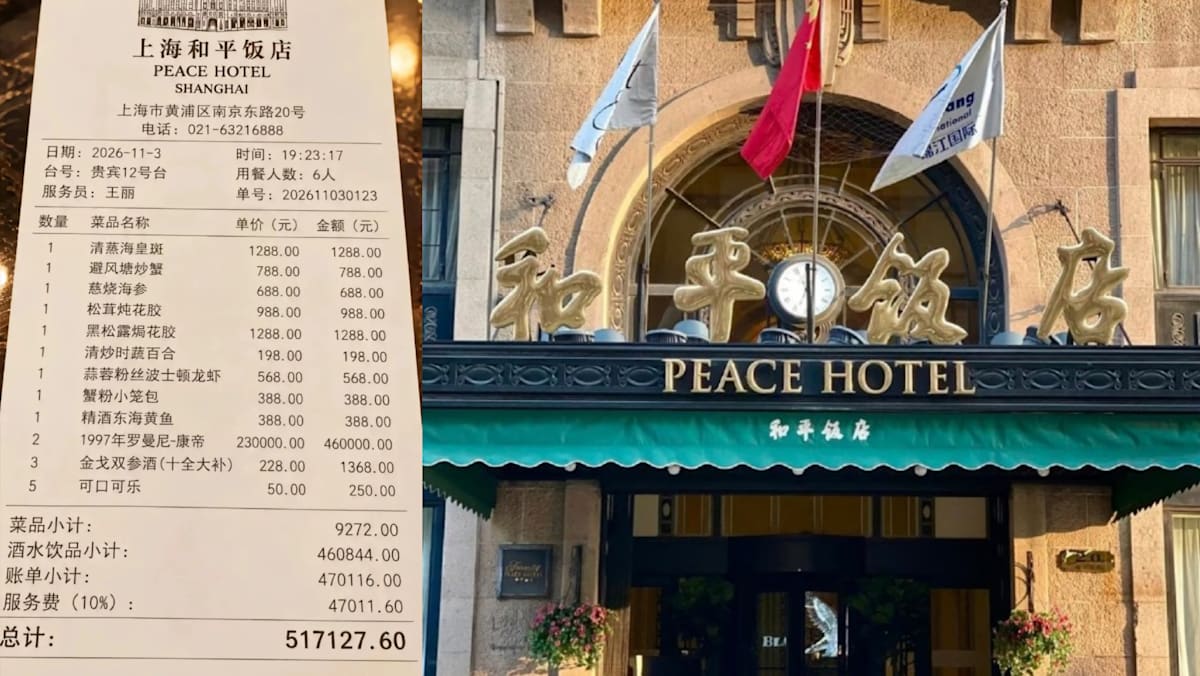
Shanghai's Peace Hotel was accused of issuing an absurd bill of more than 510,000 yuan for six diners. On November 13, city police said the receipt was fabricated, with 15 people involved: four placed under criminal coercive measures and 11 given administrative penalties.
The story began on November 8, when a user posted a receipt on social media claiming six people had dined at the Peace Hotel on November 3 and run up a total of more than 517,000 yuan. The receipt listed nine dishes and three drinks, including a wine priced at 230,000 yuan with a single line item of 460,000 yuan, plus more than 47,000 yuan in service charges. After the post went viral, the hotel said the receipt was not real and had been made up.
According to China's Jiupai News, the group was organized by the head of an out-of-town online liquor sales company. Seeking attention and higher sales, he and several others used AI software to alter the bill amounts and swap the hotel's wines for products sold by his own company, then produced fake videos and spread them widely by controlling online accounts and paying people to repost.
5. Nvidia Can't Simply Build More GeForce Cards, Even If It Wants To
Source: PCWorld
Nvidia is pouring billions into AI chip production while gamers face painful GeForce prices. But as PCWorld notes, even if Jensen Huang's successor wanted to shift some of that manufacturing muscle back to gaming, making more graphics cards is not as simple as freeing up space at a chip factory.
Nvidia designs its chips, but TSMC manufactures most of the silicon, while SK Hynix, Samsung and Micron supply memory. AI accelerators rely on high-bandwidth memory and sophisticated packaging, whereas GeForce cards use consumer GPU-specific GDDR memory and different packaging; there is some overlap, but these are not interchangeable production lines. Ian Cutress, chief analyst at More Than Moore, describes chipmaking as assembling a complete "matched set" of components — every piece must be ready before a product ships — and says wafer orders from TSMC take about six months from start of manufacturing to end.
"When I speak to memory vendors, there are only two words on their mind. HBM and DDR," Cutress said. "We never hear them talk about GDDR." Nvidia's August financial filing disclosed $279 billion in supply and manufacturing-capacity commitments, mostly supporting its data center business, and in October it announced another AI manufacturing expansion including a $1.1 billion advance for semiconductor testing facilities. More GeForce cards would take additional orders, coordinated components and months of planning — a tougher investment to justify when AI hardware pays far better.

6. iPhone 18 and 18e to Arrive in Spring 2027 With A20 Chip
Source: MacRumors
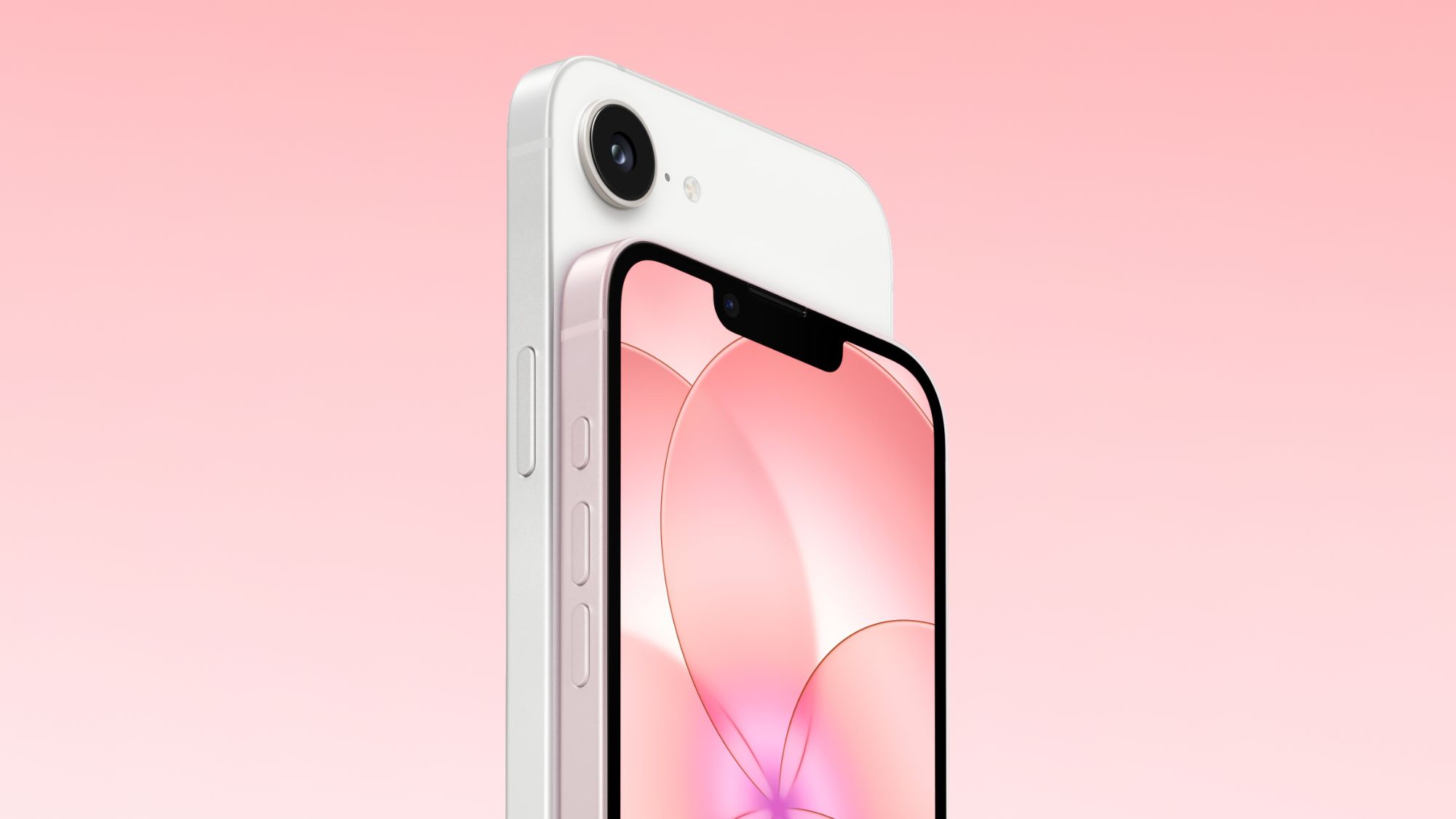
Bloomberg's Mark Gurman reiterated on the latest episode of his "Power On" podcast that Apple's iPhone 18 and iPhone 18e will launch in spring 2027 with an A20 chip, and that the iPhone Air 2 is expected at the same time.
The remarks align with his earlier reporting on the launch timing. Gurman had already mentioned the spring 2027 window for the iPhone 18 lineup more than once; the podcast restated it without adding further specifications.
7. Samsung May Have Accidentally Shown Off Galaxy S27 Colors
Source: Android Police
Samsung may have spoiled the most eye-catching part of the Galaxy S27 itself. Android Police reported on November 13 that SammyGuru found a set of wallpapers inside a new One UI build: five abstract images, each with a twisting strip, in deep or navy blue, light blue, white, light pink and red or burgundy.
Leakster IceUniverse said more than a month ago that four of those shades were destined for the Galaxy S27 Ultra, with burgundy not included. Samsung's own store usually offers exclusive colorways, and black or graphite — absent from the wallpapers — may be among them. There is no official confirmation that the wallpapers match final colors, but if they do, burgundy would replace the Galaxy S26's cobalt violet as the lead finish.
The report adds that renders of the S27 Ultra and Pro show a new back panel with a wide rectangular camera island, mirroring the iPhone 18 Pro's layout, while the base S27 may keep a vertically arranged floating lens. Industry chatter points to an earlier-than-usual unveiling in late January or early February 2027.

8. Hubble Is Sinking, and NASA Is Asking Industry for a Boost
Source: WIRED
The Hubble Space Telescope has spent more than 30 years in orbit and, like all low-flying satellites, it is being dragged back toward Earth by atmospheric drag — and it has no propulsion system of its own. According to NASA's analysis, left unchecked it will likely re-enter the atmosphere in 2033 or 2034.
Hoping to delay that, NASA has issued a formal Request for Information seeking private-sector proposals for in-space servicing of the telescope, which would likely involve raising its altitude to extend its operational life. The agency is also open to suggestions for a safe, controlled reentry or disposal, and to upgrades that would enhance the telescope's remaining years. "Hubble is a national icon," said Nicky Fox, associate administrator of NASA's Science Mission Directorate, adding that NASA is eager to explore ways to boost Hubble to a higher orbit while it develops the flagship mission to follow.
Launched in 1990, Hubble was designed for astronaut servicing, and five service missions were carried out, the last in 2009. In September 2022 NASA entered a nonfunding partnership with SpaceX to study using Dragon to move Hubble into a more stable orbit. In September 2025 it commissioned Katalyst Space Technologies to raise the Swift Observatory, which was decaying faster than expected, but the company's spacecraft, launched in July 2026, suffered an attitude control malfunction and the mission was abandoned; Swift reentered over Indonesia on November 4. Hubble itself is also ailing: since June 2024 it has operated in a one-gyro mode, with only three of its six gyros operational. NASA estimates an orbit-raising mission must be carried out by 2032.

9. Huawei's Xu Zhijun Writes in TIME About Three Decades of Innovation
Source: Wenxuecity
TIME magazine has published a signed article by Huawei rotating chairman Xu Zhijun recounting the innovation path he has witnessed since joining the company in 1993. The piece is dated September 29, 2026, and was translated by Guancha.
Xu writes that in May 1993, as he was finishing his PhD, he traveled to Shenzhen to look for work and spotted a full-page Huawei recruitment ad in the Shenzhen Special Zone Daily that specifically sought master's and doctoral graduates. When he joined, more than 200 of the company's 600 employees were R&D engineers, and five PhDs started that same year, when the entire country produced only about 2,000 PhD graduates annually. The team's fiber-connected remote switching module let a single centralized system cover an entire county and cut the price per line from about 3,000 yuan charged by Western vendors to roughly 1,000 yuan, with margins still above 20 percent. From 1993 to 2002, headcount climbed to 22,000, including more than 10,000 R&D engineers, and revenue approached $4 billion.
He recalls the Integrated Product Development (IPD) transformation launched in 1999 with IBM as consultant, for which Huawei paid nearly $600 million between 1997 and 2006 — likely the largest single corporate consulting project in Chinese history — and the 2012 Labs founded in 2011, where 5G, autonomous driving and Ascend chips were incubated. Huawei invests more than 10 percent of annual revenue in R&D, he writes, with cumulative spending of over $270 billion (1.8 trillion yuan) from 2007 to 2025 and 245,000 granted patents.
10. Wang Yi Urges Stronger China-US Cooperation on AI and Technology
Source: Lianhe Zaobao
Wang Yi, a member of the Political Bureau of the Communist Party of China Central Committee and director of its Foreign Affairs Commission Office, met US representatives attending the 2026 China-US Political Party Dialogue in Beijing on November 13. He said the two sides should respect each other, view each other objectively and rationally, and strengthen dialogue and cooperation in science, technology, artificial intelligence and other fields.
According to China News Service, Wang laid out four points: defining a common goal by translating the consensus between the two presidents on a "constructive strategic stability relationship based on respect, fairness and reciprocity" into concrete policy; expanding cooperation, including dialogue on technology and AI, and opposing the over-securitization and over-politicization of issues; shoring up the foundation of the relationship through people-to-people exchanges, especially among young people and students; and working for world peace by shouldering the responsibilities of major countries. China is not the United States and will not become another United States, he said, adding that the two countries can coexist with mutual respect and win-win cooperation.
The 2026 China-US Political Party Dialogue was held in Beijing on November 12, with Liu Haixing, head of the International Department of the CPC Central Committee, delivering a keynote speech. The dialogue has now been held 15 times, with participants including former US ambassador to China and former senator Max Baucus, along with representatives from US political, strategic and business circles and Chinese government, local, think tank, university and civil society organizations.

More News
- Global Express | November 14, 2026 - Russian Drone Hits Kyiv Hospital as Zelensky Flags New Starshield Disruptions
- Sports Express | November 14, 2026: Canada Beats Guatemala 3-2 but Loses Captain Davies to Injury
- Maple Express | November 14, 2026 — U.S. Ground Stop Cancels Hundreds of Flights at Toronto's Two Airports
- Finance Evening | Nvidia CEO Exit Rattles Tech as Nasdaq Slips 0.91% and 10-Year Yield Tops 5%
- Maple Express | November 13, 2026 | Stellantis Brampton plant sale: Ontario hopes CEO meeting buys time
Comments (0)
View More
 -33%
Tzowla Canvas Laptop Backpack — Fits in the Overhead Bin, $67.99 CAD (32% Off)
 -26%
Hisense 85U68QF 85" Mini-LED TV — Native 144Hz, Dolby Vision IQ! $1,124.95 CAD (25% Off)
 -18%
Apple Pencil Pro — Squeeze, Barrel Roll and Haptics for Your iPad! $138.99 CAD (18% Off)
 -17%
High Sierra Swoop SG Backpack — A Tower of Pockets So Nothing Gets Lost. $49.95 CAD (17% Off)
 Global Express
 | November 14, 2026 - Russian Drone Hits Kyiv Hospital as Zelensky Flags New Starshield Disruptions
 Maple Express
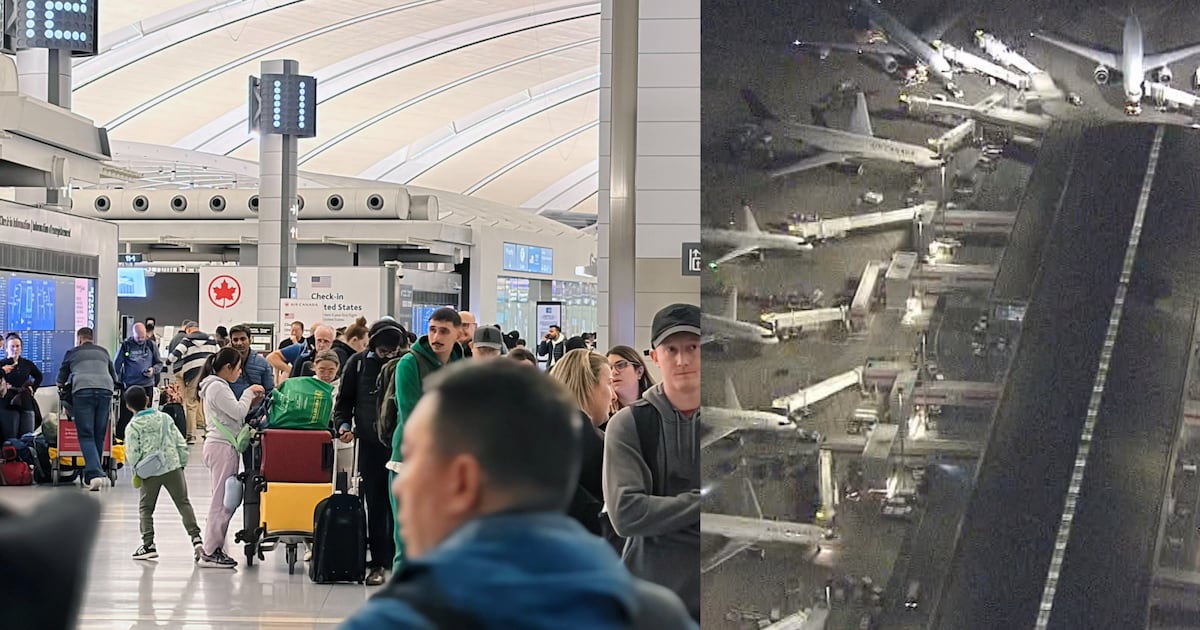
 | November 14, 2026 — U.S. Ground Stop Cancels Hundreds of Flights at Toronto's Two Airports
-33%Tzowla Canvas Laptop Backpack — Fits in the Overhead Bin, $67.99 CAD (32% Off)
Amazon
-26%Hisense 85U68QF 85" Mini-LED TV — Native 144Hz, Dolby Vision IQ! $1,124.95 CAD (25% Off)
Amazon
-18%Apple Pencil Pro — Squeeze, Barrel Roll and Haptics for Your iPad! $138.99 CAD (18% Off)
Amazon
-17%High Sierra Swoop SG Backpack — A Tower of Pockets So Nothing Gets Lost. $49.95 CAD (17% Off)
Amazon
Global ExpressGlobal Express | November 14, 2026 - Russian Drone Hits Kyiv Hospital as Zelensky Flags New Starshield Disruptions
Maple Express