
Finance Weekly | Bond-Market Storm and Rate-Hike Repricing as China and the U.S. Reach an Eight-Point Consensus
The week's main thread remained tightening and a bond-market storm: after September's hike the Fed stayed hawkish, the 30-year Treasury yield hit 5.53% (highest since 2004), oil above $100 lifted inflation expectations, and U.S. consumer sentiment fell to a record low. Manulife sees a Bank of Canada hike next month, the OECD cut Canada's 2026 growth to 0.9%, and German institutes raised theirs. Xi's U.S. visit produced an eight-point China-U.S. consensus.
The week's main thread in global finance was the resonance of two forces: rate-hike expectations and a bond-market storm. After delivering its first increase since 2023 in September, the Federal Reserve stayed hawkish this week, and combined with strong economic data and a weak bond auction, global yields surged in unison: the 30-year Treasury yield touched 5.53%, the highest since 2004; the 10-year hit its highest since 2007; Japan's 10-year yield rose to its highest since 1996. Oil above $100 a barrel lifted inflation expectations, and the U.S. 30-year mortgage rate topped 7%. In Canada, institutions began betting on a central-bank hike next month while the OECD cut its growth forecast, whereas German institutes raised theirs for 2026. Geopolitically, Xi Jinping's state visit to the U.S. produced an eight-point China-U.S. consensus.
1. Global Bond Turmoil: Yields Hit Multi-Decade Highs as Oil Pours Fuel on the Fire
Source: CNN
Bonds had a wild week, with yields around the globe spiking to their highest levels in decades and bond-market volatility rising at its fastest pace in months, leaving investors worried the turbulence could spill into stocks. Investors can adapt to a steady rise in yields, but rapid spikes are far harder to absorb.
The bond market's "fear gauge" tracking expected volatility surged 19% this week, the biggest weekly jump since March and the second-biggest since April 2025, when President Donald Trump's "Liberation Day" tariffs roiled global markets. Yields had been climbing steadily all year before soaring on Wednesday after strong economic data, hawkish comments from a key Federal Reserve official and a weak bond auction, then extended gains on Thursday. The 30-year Treasury yield rose as high as 5.53% on Friday, its highest since 2004; the 10-year hit its highest since 2007; and Japan's 10-year yield soared to its highest since 1996. On oil, seven months into the war with Iran, Brent was up 15% this month and global crude above $100 a barrel, more than 60% higher than at the start of the year, while the correlation between oil and the 10-year Treasury yield surged to a 35-year high, according to Cboe. The average 30-year fixed U.S. mortgage rate topped 7% on Thursday, the highest in almost two years.
Impact and trend: higher yields push up mortgages, auto loans and other borrowing costs, weighing on spending and investment. Gennadiy Goldberg of TD Securities said oil is "throwing gasoline on the inflationary environment," which is what worries the Fed; Mike O'Rourke of JonesTrading noted that the longer high oil prices persist, the more likely inflation spreads elsewhere, forcing the Fed to raise rates and pressuring bonds further. Ian Lyngen of BMO said the historically strong oil-yield correlation will keep the market focused on whether the latest diplomatic efforts in the Middle East hold. The S&P 500 sits less than 1% below its record high set five weeks ago, though the pain beneath the surface is uneven.
Outlook and risk: a drop in oil prices could ease pressure on bonds, but a prolonged surge severe enough to spark fears of an economic slowdown could also send investors rushing back into bonds for safety. For now, the combination of strong data, elevated oil and rising yields remains the market's key risk.
2. Xi's U.S. Visit Yields an Eight-Point China-U.S. Consensus
Source: Securities Times
From September 23 to 25 local time, Chinese President Xi Jinping paid a state visit to the United States. During the visit, the two heads of state held in-depth exchanges on a constructive China-U.S. strategic-stability relationship and major international and regional issues, reaching an eight-point consensus.
According to public reports, the eight points include: the two sides agreeing to build a "constructive China-U.S. strategic-stability relationship based on respect, fairness and reciprocity"; supporting each other in hosting the APEC Economic Leaders' Meeting and the G20 Leaders' Summit, with both leaders intending to attend the events hosted by the other; agreeing that Iran should honor its commitment not to develop nuclear weapons and that no country or institution should levy tolls on international waterways; and recalling that China and the U.S. were allies in World War II. On trade, the two leaders recognized the positive role of the China-U.S. economic and trade consultation mechanism and the results of their teams, including establishing and advancing mechanisms such as a trade council, reaching a "$30 billion" reciprocal tariff-reduction arrangement and extending the Kuala Lumpur consultation outcomes, and directed that these be implemented. In addition, China-U.S. counternarcotics law-enforcement cooperation produced visible results, with the two sides jointly cracking multiple cases involving new psychoactive substances and precursor chemicals and arresting dozens of suspects in both countries; both sides agreed to establish a China-U.S. artificial-intelligence dialogue to exchange views on AI risks and benefits, with the next dialogue to be held this November, and to set up a communication channel for AI incidents. The two militaries also agreed to sign a memorandum of understanding on crisis communication and prevention as soon as possible and to continue cooperating in the search for the remains of missing U.S. service members in China.
Impact and trend: this marks another institutionalized step in China-U.S. economic and trade relations after the Kuala Lumpur talks. The "trade council" and the "$30 billion reciprocal tariff-reduction arrangement" build a phase-by-phase framework for trade ties, while the AI dialogue and the military crisis-communication mechanism bring the competitive relationship onto a more manageable track, helping stabilize market expectations for global supply chains and geopolitical risk.
Outlook and risk: whether the consensus is delivered still depends on implementation. In the same period, the contest over Iran and the Strait of Hormuz is still simmering, so geopolitical friction could recur. Over the medium term, whether institutionalized dialogue translates into verifiable tariff cuts and investment arrangements is the key to judging the direction of China-U.S. economic ties.
3. Trump Rolls Back Biden-Era Fuel Economy Standards
Source: CNBC
President Donald Trump said on Saturday that he approved new fuel economy standards, reversing former President Joe Biden's stricter policies meant to fuel electric-vehicle adoption.
Since the Corporate Average Fuel Economy (CAFE) standards were established in 1975, they have been periodically updated, typically to make vehicles more efficient. Under Biden's standards, automakers would have had to raise the fuel efficiency of passenger cars and light trucks to roughly 50 miles per gallon by 2031, a move designed to incentivize EV production and sales. Trump presented the change as a boon for both automakers and consumers, though the final standards have not yet been publicly detailed. Writing on Truth Social, he said the new standards would "take the waste out of building cars in America," meaning "lower prices," and said every manufacturer from General Motors to Ford and Stellantis had called him wanting to build here. Transportation Secretary Sean Duffy had previously said the standards would be sharply lower than the Biden-era rules.
Impact and trend: weaker fuel economy standards let automakers produce more pickup trucks and SUVs, which are much more profitable but have worse gas mileage, making EVs less attractive to manufacturers, although some companies such as GM have said they will still make them. The move fulfills Trump's campaign promise to rescind policies that encouraged EVs, helping traditional automakers' model mix and profitability in the near term but pressuring U.S. emissions goals and the EV supply chain, including batteries and charging.
Outlook and risk: the final standards have not been detailed, so the pace of implementation, clashes with states such as California, and the interplay with automakers' capacity plans will determine the real impact. If oil prices stay high, the tension between looser standards and the high fuel prices consumers pay could grow into a fresh political risk.

4. AIIB President Zou Jiayi: Multilateralism First, Lending to Double by 2030
Source: CCTV Finance (Sina)
The Asian Infrastructure Investment Bank's 11th annual meeting of its Board of Governors is about to be held in Doha, Qatar. It is the first annual meeting since the AIIB entered its second decade and the first for President Zou Jiayi since she took office. In an interview, she said she hopes the meeting will convey "a voice of development and cooperation."
Zou said that since taking office she has visited about 30 member countries. Their development stages differ, but they share one thing: they all treat infrastructure as a pillar of their development agenda and hope the AIIB will provide more infrastructure financing, with particular attention to green and low-carbon transition, climate action and clean energy, transport corridors such as roads, railways, ports and civil aviation, and digital infrastructure. She set a goal of doubling the AIIB's annual lending by 2030, and said it will offer more currency options and develop local-currency infrastructure projects while working with other multilateral institutions, bilateral development agencies and the private sector to mobilize more capital. Launched on China's initiative and now with 111 members, the AIIB stresses multilateralism and cooperation.
Impact and trend: amid high global economic uncertainty, the AIIB frames infrastructure as the "material basis" that connects markets and links people with opportunity, and treats multilateral cooperation as the way to solve development problems. Doubling lending and diversifying financing arrangements, such as local-currency lending and currency options, can reduce members' exchange-rate and funding-cost risks and open more room for Chinese firms to take part in overseas infrastructure.
Outlook and risk: whether these goals are met depends on members' financing demand, the institution's capital base and credit rating, and the global interest-rate environment. Against rising competition among multilateral development banks and geopolitical fragmentation, how the AIIB balances efficiency and governance will be key to watching its "second decade."

5. Manulife: Bank of Canada May Hike Next Month as Inflation Pressures Build
Source: Bloomberg (Canadian Mortgage Trends)
The Bank of Canada is likely to raise interest rates at its next two meetings as the Middle East conflict creates the risk of broader price pressures, a senior macro strategist at Manulife said, a change from the firm's longstanding view that the central bank would remain on hold through the end of this year. Its base case had been for hikes to begin in mid-2027, but "inflation dynamics are changing," strategist Dominique Lapointe wrote in a report to investors.
Core measures of inflation "have grown close to 3% month-over-month annualized for two consecutive months," the report said. While that momentum cannot be tied to Iran-related supply chains, the prolonged conflict makes it increasingly likely that so-called "second-round" effects will eventually show up in core goods prices. Economists in a new Bloomberg survey are boosting their inflation forecasts, now saying inflation will not return to the central bank's 2% target until the third quarter of next year; analysts see CPI averaging 3% over the next six months, 0.6 percentage points higher than last month's survey. The bond market is already reflecting this: the yield on benchmark two-year Canada notes has jumped more than 30 basis points this month, closing at 3.426% on Thursday, the highest since July 2024. The Bank of Canada's benchmark overnight rate has stood at 2.25% since October 2025.
Impact and trend: Lapointe also pointed to the low likelihood of further escalation by Canada in the trade war with the U.S., which he said is "likely to be reassuring" to the central bank. Higher tariffs and trade barriers have created hardship for specific industries such as steel and autos but have not caused a recession or a broad rise in unemployment, and growth bounced back sharply in the second quarter. Because monetary policy cannot target specific industries, he concluded the Governing Council is likely to decide that trade tensions do not offset near-term inflation risks and that slightly higher rates are required.
Outlook and risk: if Middle East tensions and high oil prices persist, inflation expectations could de-anchor further and force the central bank to tighten faster; conversely, if oil prices fall or trade friction eases, the pace of hikes could slow. Canadian inflation data and central-bank messaging are therefore key gauges of the rate path.

6. U.S. Consumer Sentiment Falls to Second-Lowest on Record as Gas Prices Bite
Source: CNN
U.S. consumer sentiment fell to its second-lowest level on record in September as high gas prices further soured Americans' views of the economy.
The University of Michigan's consumer sentiment index dipped to 48.1, a 7% decline from August and a nearly 13% drop from a year ago, according to data released Friday. The survey dates back to 1952, meaning Americans feel worse now than during wars, the 1970s oil crisis, 9/11, the Great Recession, the Covid-19 pandemic and the inflation surge afterward; the four lowest-ever readings for the index all occurred within the past six months, with the record set in May. The final September reading did, however, mark a slight improvement from preliminary readings. Inflation expectations rose: year-ahead expectations jumped to 4.6% from 4% in August, the highest since June.
Impact and trend: survey director Joanne Hsu said interviews reveal broad agreement across the political spectrum that the outlook for the economy has weakened since the start of the year, with Republican sentiment now 20% lower than in January 2026 and Democrats down 13% over the same period. Gus Faucher, chief economist at PNC, said the biggest factor is higher gasoline and diesel prices that people see every day at the pump, adding that inflation has picked up because of tariffs and now the Iran conflict, and that the end of the conflict does not appear imminent.
Outlook and risk: the divergence between sentiment and actual spending continues, but if high oil prices keep eroding purchasing power, a slowdown in consumption could accelerate. The Michigan index's value as a barometer is being reassessed, and rising inflation expectations could in turn reinforce pressure on the Fed to stay tight.

7. World Gold Council: Why Central Banks Are Moving Their Gold Reserves
Source: World Gold Council (Sina Finance)
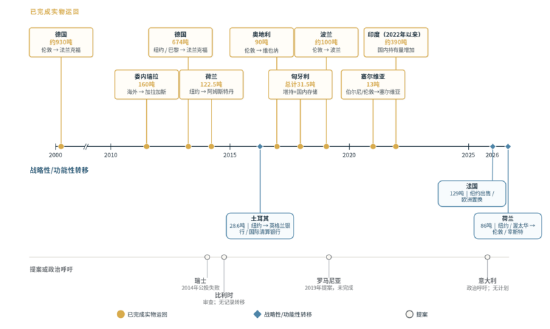
The World Gold Council published an analysis of central banks' recent "geographic reallocation" of gold reserves. On September 2, De Nederlandsche Bank (DNB) announced it had moved about 86 tonnes of gold from New York and Ottawa to London between March and August 2026, aiming to improve the liquidity and tradability of its reserves and strengthen its ability to respond to severe crises.
After the shift, the share of Dutch gold held in London rose from 18.1% to 32.1%, surpassing the 30.8% held domestically, making London the single largest storage location; the shares in New York and Ottawa fell from 31.3% and 19.7% to 18.5%. The mechanics were not a simple transfer: about 59 tonnes were sold in New York and replaced in London with gold meeting international trading standards, while more than 27 tonnes were physically moved from North America to DNB's facility in Zeist and a similar amount moved from Zeist to London. The article also traces the history: Germany moved about 930 tonnes from London to Frankfurt in 2000 and repatriated another 674 tonnes from New York and Paris between 2013 and 2017; Venezuela repatriated 160 tonnes in 2011-2012; the Netherlands brought back 122.5 tonnes from New York in 2014; and France sold 129 tonnes held in New York in 2025-2026 and bought an equivalent amount in Europe.
Impact and trend: the World Gold Council argues that central banks are increasingly balancing three considerations, namely custody risk, physical accessibility and market liquidity, rather than uniformly shifting gold onshore. The Bank of England remains the most frequently cited storage location (57% of respondents), and 49% of central banks say they hold at least some gold domestically. Over the past 12 months, 9% increased domestic storage and 10% diversified overseas locations; looking ahead, 7% plan to increase domestic storage and 9% expect to further diversify overseas locations, up from just 2% in the previous survey.
Outlook and risk: the transfers should not be read as central banks preparing to sell; the DNB explicitly said it does not expect to use the gold, with the goal being easier access when needed. The 2026 survey shows only 1% of central banks expect their gold reserves to decline over the next 12 months, while 45% expect them to increase, a record high. Singapore has announced plans to offer vaulting services for foreign central banks, and Hong Kong is expanding its gold clearing, settlement and storage infrastructure, so the trend toward diversified custody is likely to continue.
8. OECD Cuts Canada's Growth Outlook: AI Investment a Bright Spot, Tariffs a Drag
Source: To Do Canada
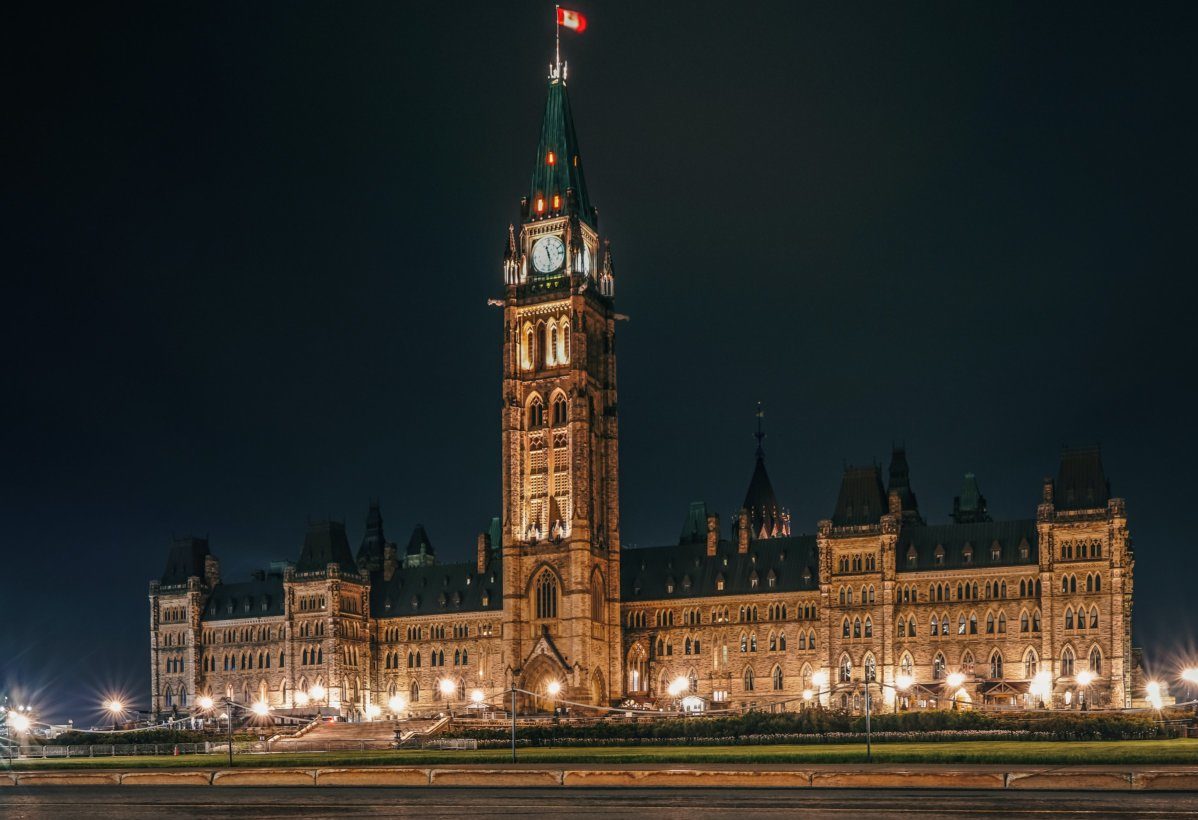
Canada's economy picked up noticeably this spring, but the OECD still expects 2026 to be a slow-growth year, especially compared with the United States. The OECD's September outlook forecasts Canadian real GDP growth of 0.9% in 2026, strengthening to 1.3% in 2027, while the U.S. is expected to grow 2.2% this year and 2.1% next year.
The September 2026 OECD Economic Outlook paints a picture of a Canadian economy pulled in different directions: investment tied to artificial intelligence and data centres has provided momentum, while new U.S. tariffs and broader uncertainty around North American trade are creating fresh pressure. The latest official data adds an interesting wrinkle: Statistics Canada says real GDP grew 0.8% in the second quarter of 2026, following a revised 0.1% increase in the first quarter, with exports, household spending and business capital investment driving the rebound. South of the border, the U.S. Bureau of Economic Analysis says real GDP rose at an annualized 2.1% in the first quarter and 1.5% in the second, which works out to roughly 0.5% and 0.4% on a comparable quarterly basis, meaning Canada actually grew faster than the U.S. in the second quarter. Global growth is forecast at 2.9% in 2026 and 3.0% in 2027.
Impact and trend: the OECD points to U.S. trade policy as one reason for caution, describing new tariffs on Canadian exports as a "headwind for certain industries" while saying the overall economic effect should be limited by their relatively narrow scope. Uncertainty over the future of the USMCA could also restrain regional trade. One bright spot is technology investment: the OECD says data-centre construction and technology-equipment investment helped Canadian growth in the second quarter, with similar effects in the U.S. and Australia.
Outlook and risk: for Canadians, 2026 remains a slow-growth year, and recovery depends on stronger household spending and investment taking hold while Canada navigates a more uncertain trading relationship with the U.S. If tariffs widen further or the USMCA shifts, Canada's growth forecast could be revised down again.
9. German Institutes Double 2026 Growth Forecast, but Recovery Rests on Shaky Ground
Source: DW
Several leading German economic think tanks announced on Thursday that they had raised their earlier GDP growth forecasts for the country, pointing to signs of a recovery in Europe's largest economy.
The new numbers predict 1.3% growth for 2026, more than double the spring forecast of 0.6%, and adjust the 2027 outlook to 1.1%; in 2028, growth is expected to slow to just 0.4%. The "Autumn 2026 Joint Economic Forecast," titled "Recovery Under Structural Stress — Fiscal Policy on Slippery Ground," was released by five institutes. Oliver Holtemöller of the Leibniz Institute Halle (IWH) said the economy "saw more robust development than expected," but that the upturn "rests on a rather wobbly foundation because high energy prices and structural problems continue to be a burden." The OECD also lifted its forecast for German GDP growth this year to 1.1% from 0.7% in June, and expects 1.1% growth in 2027.
Impact and trend: analysts said a strong global economy and the AI boom had in part fueled the trend, but corporate investment and private consumption remained weak. Looking ahead, economists expect more dynamism in 2027 as consumer spending recovers and housing construction gains pace. At the same time, the report warned that increased government spending on infrastructure and defense, largely financed through new debt, could weigh on the outlook.
Outlook and risk: all observers agree that the U.S.-Israel-Iran war in the Middle East, and the great uncertainty it brings to the global economy, is the biggest wildcard. If energy prices spike again, or fiscal sustainability comes into question, Germany's hard-won recovery could be interrupted.

10. Asia-Pacific Property Draws Fresh Capital: Hong Kong, Sydney and Korea in Focus
Source: South China Morning Post (SCMP)
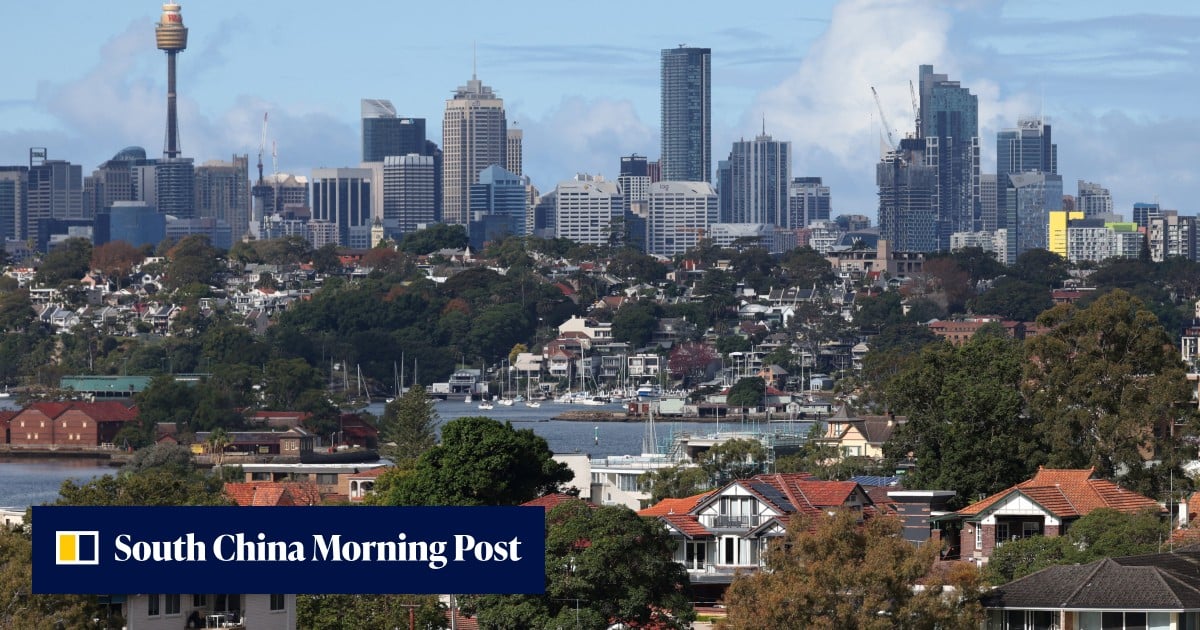
Analysts say property markets in the Asia-Pacific region are likely to remain attractive despite heightened uncertainty over monetary policy, after the U.S. Federal Reserve delivered its first interest-rate increase in more than three years this month.
Emily Fell, senior director for living sectors in Asia-Pacific capital markets at Savills, said cross-border volumes in the region have increased by around 30% to date. Rather than a general pullback, she described it as a change in strategy and a pivot in sector focus, as investors adjust their positioning to a higher-rate environment. Hong Kong, Sydney and South Korea have emerged as key target markets as a result.
Impact and trend: with borrowing costs higher, investor preference is shifting away from pure growth narratives toward assets that offer cash flow and valuation advantages. The original reporting suggests capital now favors markets with lower valuations and rental returns over chasing the hottest sectors, so some Asia-Pacific property segments are drawing fresh cross-border buying even during a period of rising rates. This "rebalancing" flow is the main thread behind the region's resilience.
Outlook and risk: if the Fed hikes further or global yields keep rising, financing costs and asset valuations in regional real estate will come under pressure; conversely, if rate-hike expectations peak and rebalancing continues, markets with stable rents and value advantages should keep attracting cross-border capital. For investors, judging the turning point in rates and the supply-demand rhythm of each market is key to capturing this opportunity.
More News
- Global Express | September 27, 2026 — Several Arrested Near US Air Base in England as Bomb Disposal Team Deployed
- Tech Express | September 27, 2026 — Tencent Quietly Built a Chinese Rival to Meta's Muse
- Sports Express | September 27, 2026 — Russell Holds Off Verstappen to Win Azerbaijan Grand Prix
- Maple Express | September 27, 2026 — Man Dead, One Arrested After Stabbing at North York Apartment Building
- Maple Express | September 26, 2026 — Brampton Man Speaks Out After 78-Year-Old Mother Robbed of $20K in Jewelry
Comments (0)
View More
 -64%
-64%Tineco Floor One S3 Extreme Wet/Dry Vacuum & Mop — iLoop Smart Sensor! $199.99 CAD (64% Off)
 -39%
-39%STAEDTLER My First Norica Triangular Learner's Pencils, 12-Count — Helps Kids Grip Right! $8.67 CAD (38% Off)
 -28%
-28%Samsung 870 EVO 500GB SATA SSD — 560/530 MB/s, the Best-Selling SATA SSD Series! $298 CAD (27% Off)
 0
0OxiClean All-Purpose Stain Remover Powder, 2.26 kg — Canada's #1 Stain Fighter, Always Worth Having
 Maple Express
Maple Express | September 26, 2026 - Brampton senior robbed of $20K in jewelry on evening walk
 Global Express
Global Express | September 27, 2026 — Several Arrested Near US Air Base in England as Bomb Disposal Team Deployed
-64%Tineco Floor One S3 Extreme Wet/Dry Vacuum & Mop — iLoop Smart Sensor! $199.99 CAD (64% Off)
Best Buy
-39%STAEDTLER My First Norica Triangular Learner's Pencils, 12-Count — Helps Kids Grip Right! $8.67 CAD (38% Off)
Amazon
-28%Samsung 870 EVO 500GB SATA SSD — 560/530 MB/s, the Best-Selling SATA SSD Series! $298 CAD (27% Off)
Amazon
0OxiClean All-Purpose Stain Remover Powder, 2.26 kg — Canada's #1 Stain Fighter, Always Worth Having
Amazon
Maple ExpressMaple Express | September 26, 2026 - Brampton senior robbed of $20K in jewelry on evening walk
Global Express