
Tech Express | October 10, 2026: OpenAI Revenue Gap Rattles US AI Stocks
Tech Express, Oct 10: OpenAI's true annualized revenue is about $50B, roughly $20B below rumors, jolting US chip and cloud stocks. Instinct holds its ground against Muse; Microsoft 365 Family will share AI benefits but OneDrive shrinks to 2TB. Nvidia may adopt Intel's Foveros packaging; a memory chip shortage sank August gaming hardware sales to a 13-year low. iPhone Duo shows your name on boot, Apple's 'Welcome home' event is Oct 13, NASA seeks private space stations.
1. OpenAI's annualized revenue near $50B, $20B below rumors, jolts US AI stocks
Source: 虎嗅网 (Huxiu)
A confidential financial document that had circulated only among a handful of top Silicon Valley venture firms leaked out unexpectedly, quickly triggering a sharp reaction among traders. As reported by the Financial Times and several financial outlets, OpenAI's real annualized revenue stood at close to $50 billion as of the end of September 2026, while the figure that had been circulating on Wall Street and in parts of the media in the preceding weeks was $70 billion — a gap of about $20 billion. After the news broke, US semiconductor and cloud services stocks broadly fell on October 8; Nvidia dropped more than 2 percent at one point during the session, and Oracle, seen as an OpenAI computing partner, fell over 6 percent, dragging the Nasdaq sharply lower.
Huxiu's analysis says the core cause of the gap was not a serious slump in OpenAI's business, but "differences in accounting recognition" in how companies handle revenue from external cloud partners. OpenAI uses a "net" approach: the $50 billion is based only on direct revenue such as ChatGPT subscriptions and API consumption fees billed directly to enterprise customers. Its rival Anthropic uses a "gross" approach, packaging indirect revenue generated through external cloud vendors into its figures, with an ARR of about $65 billion as of the end of July.
The market later confirmed the scare was largely overblown. Research firm TickerTrends said its model tracked OpenAI's true running ARR at $50.44 billion on September 28, within 1 percent of the figure in the document. Some analysts argue the turmoil stemmed largely from carelessness in OpenAI management's capital communications, giving short sellers a handle to amplify panic.

2. AI assistant Instinct holds its ground against Muse
Source: The Verge
In August, the startup brought its AI agent to market with an unusual playbook: invite-only, no marketing, and barely even a website. Yet thanks to a straightforward, text-message-based interface and its ability to handle chores like booking DMV appointments and sending follow-up emails, Instinct quickly became the buzziest thing in AI. Then OpenAI launched Muse and Meta launched Dots — roughly the same products from far more powerful companies — and it looked doubtful the startup could stay ahead.
In The Verge's own testing, Instinct has held its own against the other two agents, handling online tasks about as well as a robot can. Founder Noah Shinn, an early employee of another highly valued Silicon Valley startup, Sierra, before striking out on his own, is unfazed by the rising competition. "AI assistants are all we know," he said, arguing that Instinct's focus sets it apart — building a personal assistant for everyday life that just gets it.
The report says Instinct was valued at $10 billion in late September, even after Muse launched. There is no app and no monthly subscription fee (for now); users need an invitation from a current user or approval from a waitlist. Instinct can handle life-admin tasks such as swim lesson sign-ups and appointment confirmations — consumer-friendlier versions of agents like Codex and OpenClaw.

3. Microsoft 365 Family will finally let members share AI benefits, but OneDrive shrinks to a shared 2TB
Source: The Verge
Microsoft bundled its AI-powered Office features into Microsoft 365 Personal and Family subscriptions last year, but only allowed the primary account holder to access the AI benefits. According to an email to Microsoft 365 Family and Premium subscribers seen by The Verge, Microsoft is about to let Family and Premium subscribers share Copilot and AI usage features, along with access to Office apps and OneDrive storage, with up to five other people on a plan.
The storage change looks like the major downside. Instead of 1TB of OneDrive storage per account, Microsoft is now limiting this to just 2TB of shared storage across the entire plan. Microsoft argues this is more flexible if one member exceeds 1TB, but in reality it looks like an easy way to upsell more OneDrive storage. According to a support note, existing subscribers in eligible markets might also qualify for transitional bonus storage, and Microsoft plans to support families that use a lot of storage.
The changes are being announced a year after Microsoft 365 Premium launched, which offers all the benefits of a Copilot Pro and a Microsoft 365 Family subscription for $19.99 a month. The "more flexible AI usage" change could mean some subscribers end up paying more for AI usage, depending on how they use Copilot.

4. Intel's packaging tech draws attention as Nvidia may adopt Foveros
Source: 驱动之家 (MyDrivers)
Intel is pulling ahead in the back-end of chip manufacturing and may be poised to win orders from Nvidia, which would also mean the pressure of packaging business on TSMC may ease. A report from South Korean securities firm GF Securities says the AI chip giant Nvidia is once again rumored to adopt Intel's Foveros chip technology in some of its back-end applications. In January this year, some media reported that Nvidia would use Intel's next-generation 14A manufacturing process.
Analysts say Nvidia may rely on Intel's Foveros packaging to meet its back-end needs. Although Intel still needs to catch up with TSMC in advanced front-end chip manufacturing, its back-end technology has become increasingly mature, and its EMIB and EMIB-T packaging technologies have already attracted customers including Google. GF Securities analyst Jeff Pu predicts that as Intel's 14A technology is scheduled for mass production in the second half of 2028, Nvidia may adopt Intel's Foveros packaging around the same time.
Foveros is a major upgrade over EMIB-T — a true 3D stacking technology that not only reduces the overall horizontal size of the chip package but also improves power efficiency and data transfer speeds thanks to its horizontal stacking. For Intel's foundry division, a breakthrough in advanced packaging is hugely strategic; for TSMC, offloading some back-end processes to Intel could let it concentrate resources on improving front-end manufacturing.

5. Memory and storage chip shortage pushes console prices up, August gaming hardware sales hit 13-year low
Source: 新浪财经 (Sina Finance)
A global shortage of memory and storage chips is dealing a heavy blow to the gaming industry. Microsoft, Nintendo and Sony have all raised prices of their game consoles to offset rising component costs and the earlier impact of tariffs. The price hikes directly caused a sharp drop in sales. Market research firm Circana's data shows that August gaming hardware sales fell 15 percent year on year, the lowest August level in 13 years; gaming hardware spending fell 3 percent that month, and cumulative spending this year is down 11 percent year on year.
Take Sony's PlayStation 5: the disc-less digital edition launched in November 2020 at $399 and the disc version at $499; the more powerful PS5 Pro was priced at $699 when it debuted in 2024 and now costs even more. Microsoft's Xbox Series S and Series X adopted similar price increases, with the Series S originally priced at $299. Affected by US President Trump's "Liberation Day" tariff policy last year, Nintendo also raised the price of the Switch 2.
Circana's executive director for gaming, Mat Piscatella, said higher console unit prices directly shrink device shipments; the signs are still scattered, but some products have gone out of stock, most likely because of the memory and component supply crisis. He noted that the PS5 Pro is especially hard to find, and second-hand consoles at some retailers now sell for more than $1,000. For Sony and Microsoft, a key question looms: how will all this affect the launch of Take-Two's GTA 6.
6. iPhone Duo shows your name on first boot, pre-orders open October 16
Source: 驱动之家 (MyDrivers)
According to Kuai Technology on October 10, tech blogger Mark Gurman said on social media that users buying the foldable iPhone Duo in an Apple retail store will get a personalized service: the system will display the user's name on first boot. Where new iPhones previously showed "Hello" on first boot, the iPhone Duo is expected to show "Hello + name." The service will be offered to US users and supports both English and Spanish.
The news quickly sparked discussion and trended online. Some bloggers said Apple is now providing "emotional value" — after all, this is its most expensive iPhone, so a sense of ceremony matters. The iPhone Duo will open pre-orders at 8 p.m. on October 16, go on sale October 23, and start at 15,999 yuan.
In industrial design, the iPhone Duo uses a book-style fold: a 5.4-inch outer screen when closed and a 7.6-inch inner screen when open; it is just 5.2mm thick, 11.3mm when folded, weighs 254 grams, and comes in Night Sky and Starlight White. Because of space constraints, it drops Face ID in favor of a Touch ID integrated into the side button, and supports Apple Pencil. It carries the A20 Pro chip used in the iPhone 18 Pro and Apple's in-house C2 modem, with 256GB, 512GB, 1TB and 2TB storage options, a 48-megapixel dual rear camera, and iOS 27 preinstalled.

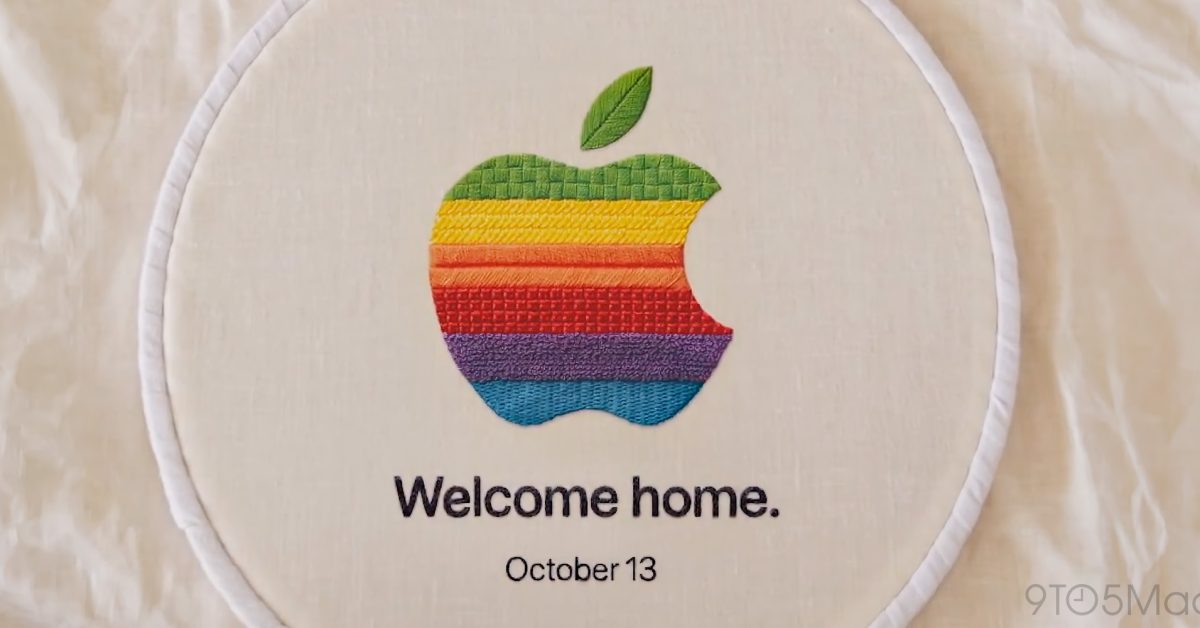
7. Apple's "Welcome home" event set for October 13, three new products expected
Source: 9to5Mac
Apple has officially confirmed it will hold a product launch event next week on October 13, with the tagline "Welcome home," expected to focus on new smart home products. 9to5Mac notes the event has two components: an in-person experience for press in New York City, and what Mark Gurman has called an "online video presentation," suggesting press releases and videos will drop around 9 a.m. ET on October 13.
The headlining product is Apple's long-rumored smart display, which has been called the "HomePad." Apple believes it can serve as a central hub for the home, powered by Siri AI and Apple Intelligence. According to Bloomberg, the device will have a 6-inch square display atop a half-dome base with a metal arm holding it up; it reportedly comes in two variations, one wall-mountable and one that sits on a countertop, with a design likened to Apple's iconic iMac G4. One flagship feature is its ability to recognize multiple people in a household — who is talking to it or approaching it — and dynamically adjust what is shown on screen.
On software, the HomePad reportedly mixes elements of the Apple Watch, Apple TV and iPad, including iPad-like app designs and Apple Watch-style icons, and borrows heavily from the iPhone for widgets and StandBy mode. Apple is also expected to announce a new Apple TV 4K, its first update to the set-top box since November 2022; it will look the same as its predecessor but reportedly include the A19 or A19 Pro chip, bringing Siri AI and Apple Intelligence to the Apple TV for the first time.
8. NASA issues long-awaited call to industry for private space stations
Source: Ars Technica
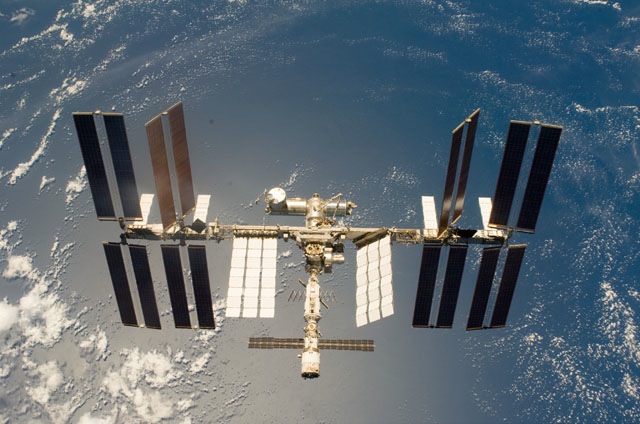
"We've made it clear that NASA will never give up its presence in low Earth orbit." On Friday, NASA released a much-anticipated "request" to the US commercial space industry to develop private space stations that, as early as 2030, will succeed the International Space Station as a place for astronauts to live in low-Earth orbit. In a cover letter accompanying the 360-page "request for proposals," NASA stated its plan: "This will ensure NASA has a sustained human presence in LEO for crew members to perform science and exploration."
Companies that have worked for years on designing and developing such stations have been keen to learn exactly what capabilities NASA is seeking, and the new documents finally provide some answers. Industry responses are due back to NASA on December 8. NASA said it plans to select "two or more" contractors in this phase and intends to make a final decision in April. Bidders for this funding phase will certainly include Axiom Space, Voyager Space and Vast Space. Blue Origin won an earlier round of funding, but questions remain about its commitment; SpaceX appears unlikely to bid, at least for now. Phase 1 winners will be guaranteed at least $100 million, and future phases will be worth billions.
One of the most closely watched elements was NASA's provisions for crewed transportation to the stations. In earlier discussions, NASA had indicated it may leave acquiring transportation to the contractors — basically saying it was their responsibility to sell an end-to-end service to the agency. This is problematic because SpaceX has said it plans to retire the Crew Dragon as soon as possible, and almost certainly when the ISS is deorbited in 2030 or 2032; SpaceX, which has the only operational US vehicle for such transportation, has not offered to sell seats to private space station operators. This led NASA, two weeks ago, to provide an additional $359 million to support Boeing's ongoing efforts to certify its Starliner for crewed missions.
9. Long March 12 successfully launches 27th batch of satellite internet low-orbit satellites
Source: 驱动之家 (MyDrivers)
Kuai Technology October 10: at 3:27 a.m. today, China successfully launched the 27th batch of satellite internet low-orbit satellites from the Hainan commercial spaceport using a Long March 12 carrier rocket; the satellites entered their planned orbits and the mission was a complete success. This was the 671st launch of the Long March series, with China Rocket Co., under the China Aerospace Science and Technology Corporation (CASC), serving as the general contractor for launch services.
The Long March 12 was developed under the leadership of the Eighth Academy of CASC. It is a new-generation cryogenic liquid-propellant rocket and China's first four-meter-diameter, single-core-stage rocket. The rocket is about 62 meters long, can carry at least 6 tonnes to a 700-kilometer sun-synchronous orbit, and can be fitted with 4.2-meter or 5.2-meter fairings depending on the mission, supporting single- and multi-satellite launches to different orbits. Previously, on September 17, a Long March 12 launched the 25th batch of satellite internet low-orbit satellites from the same site — a second low-orbit constellation launch in less than a month.
This series of low-orbit satellite launches belongs to the Guowang (GW) constellation of China SatNet, China's first giant low-orbit satellite internet plan, which calls for a total of 12,992 satellites to build a global high-speed communications network. During China's 16th Arctic expedition, the GW constellation completed its first successful trial, achieving real-time video calls spanning the North and South Poles and linking the Xuelong, Jidi and Tansuo-3 vessels with China's Qinling Station in Antarctica. Measured video transmission latency was as low as under one second, with peak uplink and downlink rates of about 30 Mbps, marking China's achievement of full-chain self-reliance in polar communications.

10. Only two brands join Paris Motor Show "smart driving lab" — Tesla and XPeng to offer real-road rides
Source: 驱动之家 (MyDrivers)
Kuai Technology October 10: as the 2026 Paris Motor Show approaches, official information says the show will host a "smart driving lab" public experience event where visitors and media can apply to take part and experience intelligent assisted driving on real public roads in Paris. Only two brands are taking part — XPeng and Tesla. The event runs October 12 to 18 at Hall 71, Gate H, with each session lasting 25 minutes, letting visitors ride in L2+ autonomous vehicles on public roads.
Specifically, Tesla is providing six Model 3 cars equipped with FSD (Supervised) for test rides; the system has accumulated more than 100 million kilometers across seven European countries including the UK, with an accident probability one-fourth that of human driving. XPeng is providing two L03 cars with NGP (VLA 2.0), marking the first large-scale public test rides for XPeng's NGP outside China. According to XPeng Group vice president "Thomas Electric Train" on social media, the Paris Motor Show initially invited all exhibiting automakers to join the smart driving lab, but after learning they would face smart-driving tests under real traffic conditions in Paris in front of hundreds to thousands of media, the others all withdrew — only these two accepted.
The absence of European automakers drew a strong reaction in European auto circles. The head of the German Tesla owners' club wrote on X: "In the official autonomous driving lab, only two automakers are available, America's Tesla and China's XPENG. No German manufacturers, no European manufacturers. The US and China are showing the future of next-generation driving technology in the heart of Europe, and this really should make us in Europe think." This is also the first time XPeng's NGP is open to the public at large in Europe; NGP had previously been field-tested in Germany, the Netherlands and elsewhere, and in July its second-generation VLA model completed localized testing in Munich. Under its plan, XPeng will gradually deliver NGP to global users from 2027, with Volkswagen to be the first customer of XPeng's second-generation VLA.
More News
- Global Express | October 10, 2026 — Saudi-Led Coalition Strikes Houthi Targets as Yemen War Spills Over
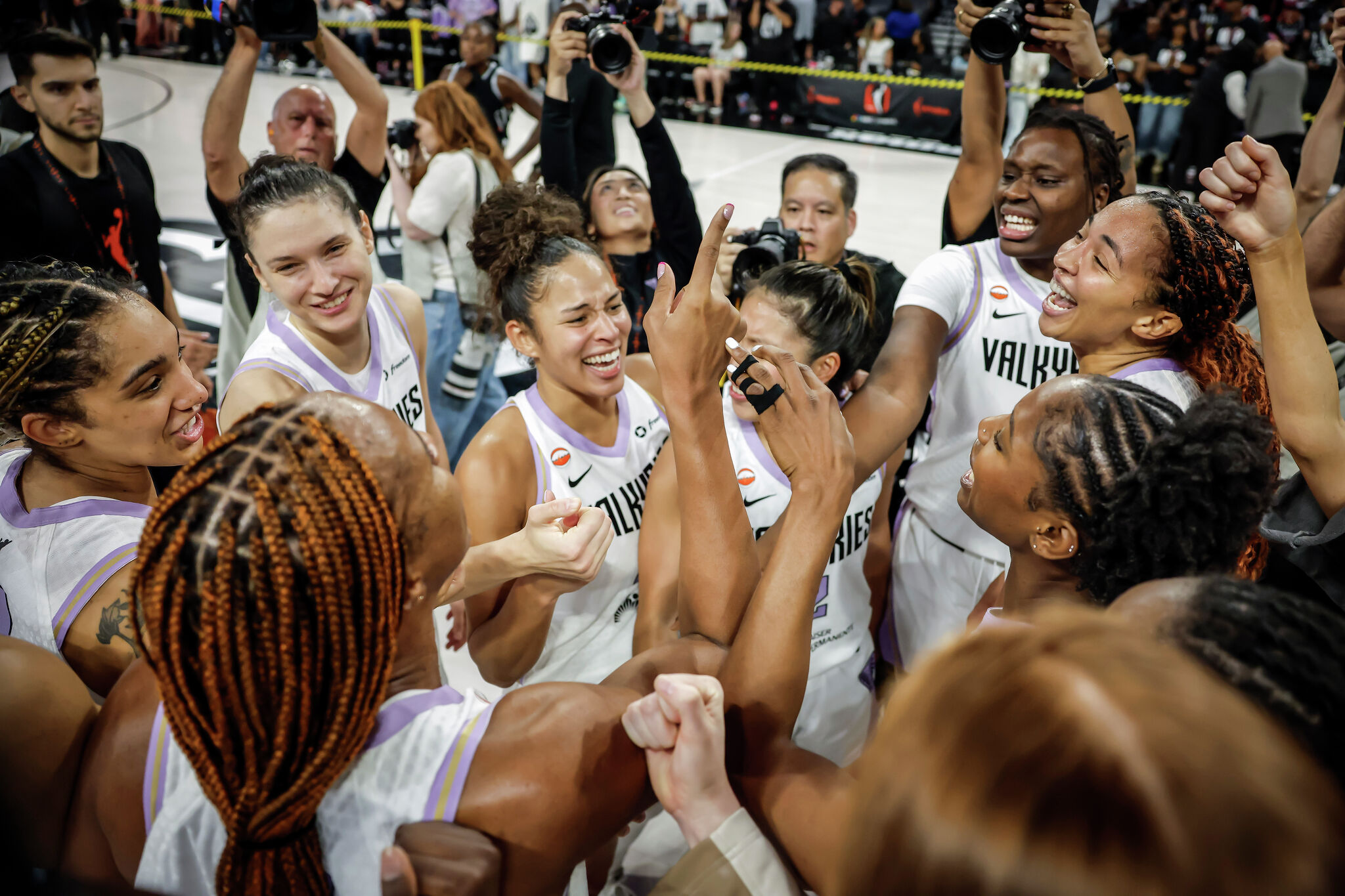
- Sports Express | October 10, 2026 — Valkyries Sweep Aces to Reach First WNBA Finals
- Maple Express | October 10, 2026 Toronto police seek to ID suspect in Moss Park break-in and sexual assault
- Finance Evening | Oct 9: Dow Jumps Over 400 Points, Apple Cuts iPhone Orders, Delta Trims Guidance
- Maple Express Evening | October 9, 2026 — SIU clears officer in fatal North York shooting of Const. Marc Pinizzotto
Comments (0)
View More
 -48%
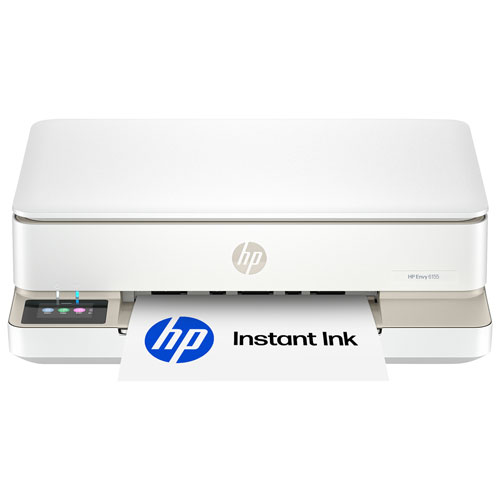
-48%HP Envy 6155 All-in-One Inkjet Printer (Print/Scan/Copy/Fax) — 3-Month HP Instant Ink Free Trial Included! $99.99 CAD (47% Off)
 -12%
-12%Stanley AeroLight Transit Bottle 20oz — 33% Lighter & Leak-Resistant! $62.43 CAD (11% Off)
 -53%
-53%MoKo Case for Kindle Paperwhite 12th Gen & Colorsoft — Magnetic Cover with Hand Strap! $18.99 CAD (53% Off)
 -37%
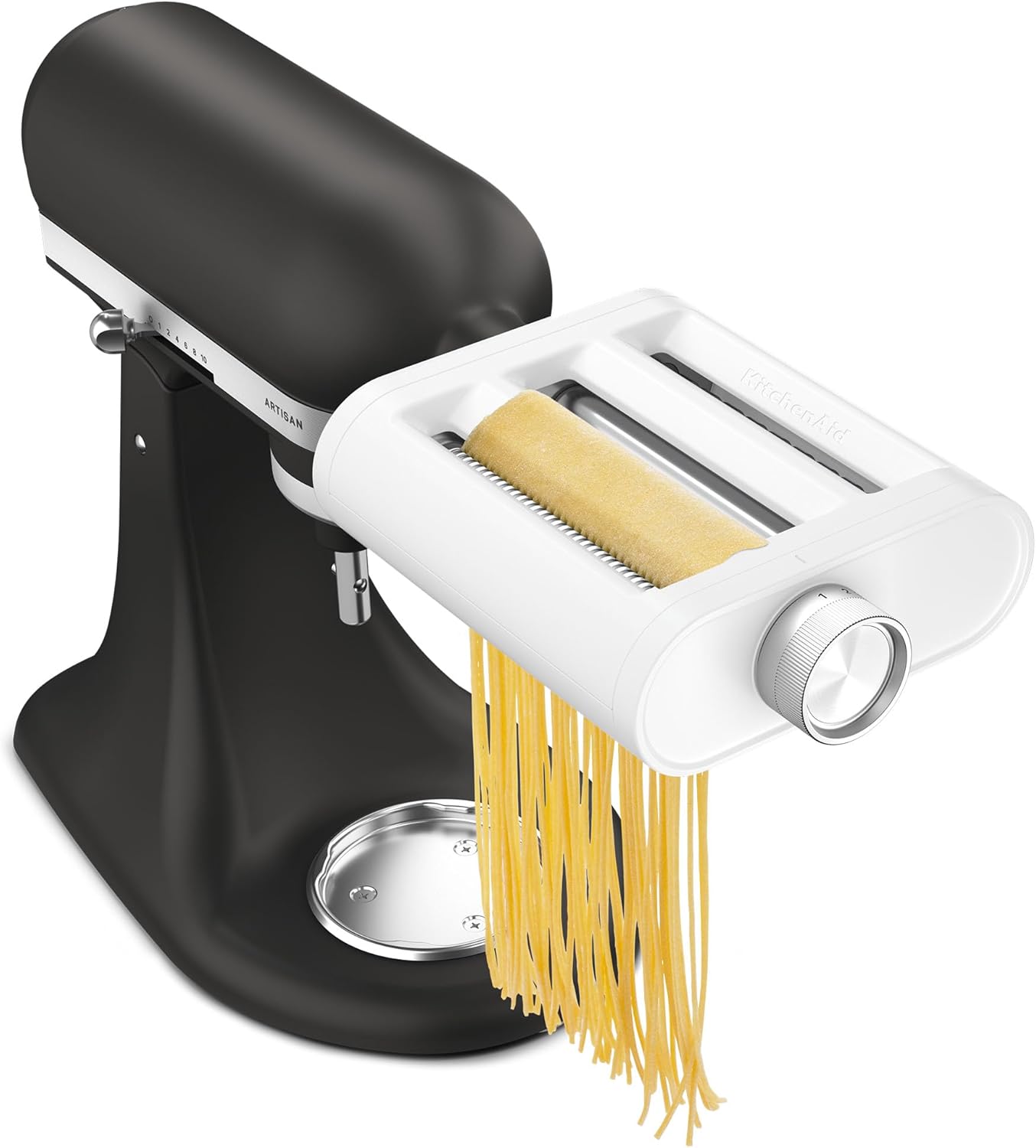
-37%KitchenAid 3-in-1 Pasta Attachment KSM3PPA — Turn Your Stand Mixer Into a Pasta Maker! $94.99 CAD (37% Off)
 Sports Express
Sports Express | October 10, 2026 — Valkyries Sweep Aces to Reach First WNBA Finals
 Finance Evening
Finance Evening | Oct 9: Dow Jumps Over 400 Points, Apple Cuts iPhone Orders, Delta Trims Guidance
-48%HP Envy 6155 All-in-One Inkjet Printer (Print/Scan/Copy/Fax) — 3-Month HP Instant Ink Free Trial Included! $99.99 CAD (47% Off)
Best Buy
-12%Stanley AeroLight Transit Bottle 20oz — 33% Lighter & Leak-Resistant! $62.43 CAD (11% Off)
Amazon
-53%MoKo Case for Kindle Paperwhite 12th Gen & Colorsoft — Magnetic Cover with Hand Strap! $18.99 CAD (53% Off)
Amazon
-37%KitchenAid 3-in-1 Pasta Attachment KSM3PPA — Turn Your Stand Mixer Into a Pasta Maker! $94.99 CAD (37% Off)
Amazon
Sports ExpressSports Express | October 10, 2026 — Valkyries Sweep Aces to Reach First WNBA Finals
Finance Evening