
Maple Express | July 22, 2026 Trump Signs 50% Tariffs on Canadian Goods, Canada-U.S. Trade Relations Deteriorate Sharply
On July 22, 2026, Canada-U.S. relations deteriorated sharply: Trump signed executive orders imposing 50% tariffs on Canadian goods, Canada immediately canceled the Gordie Howe Bridge joint ceremony, and PM Carney convened premiers to coordinate a response. Ontario wildfires burned over 7,250 sq km to set a new record, June inflation eased to 2.8%, and the Bank of Canada held its rate at 2.25% for the sixth consecutive time.
Maple Express | July 22, 2026 Trump Signs 50% Tariffs on Canadian Goods, Canada-U.S. Trade Relations Deteriorate Sharply
📰 Trump Signs Executive Orders: 50% Tariffs on Most Canadian Goods to Take Effect in 30 Days
U.S. President Donald Trump signed three executive orders on July 20, invoking Section 338 of the Tariff Act of 1930 to impose 50% tariffs on more than 400 categories of Canadian goods worth approximately $20 billion, targeting automobiles, alcohol, and dairy products. The White House stated the new tariffs will take effect in 30 days (August 19), leaving a final window for negotiations.
The Trump administration claims Canada has long engaged in "discriminatory treatment" of U.S. goods in the automotive, alcohol, and dairy sectors, and that the new tariffs are a direct response. However, Trump clarified when asked by reporters that the move is unrelated to the Canadian wildfires, saying: "No, that's separate. We're looking at that separately."
Prime Minister Mark Carney responded that Canada would "consider all response options" if the tariffs take effect. Leaders from both countries have agreed to intensify trade negotiations in the coming weeks. Economists warn that if the tariffs are fully implemented, they will severely impact Canada's automotive manufacturing, agriculture, and alcohol industries, potentially affecting hundreds of thousands of jobs.
📰 Canada Cancels Joint Gordie Howe International Bridge Opening Ceremony
Following Trump's tariff announcement, the Canadian government decided to cancel the joint U.S.-Canada ribbon-cutting ceremony for the Gordie Howe International Bridge originally scheduled for this Friday. The bridge connecting Windsor, Ontario, and Detroit, Michigan, was years in the making and was meant to symbolize Canada-U.S. cooperation — but has now become a casualty of trade tensions.
Canadian officials told Michigan counterparts that "in light of trade action threatened by the United States earlier this week, it would be inappropriate to proceed with a celebratory event." Canada will still hold its own ceremony, but without U.S. representatives. The bridge itself will open to traffic as scheduled.
Named after Canadian hockey legend Gordie Howe, the bridge serves one of North America's busiest cross-border trade corridors, carrying roughly one-quarter of all Canada-U.S. trade goods daily. The cancellation of the joint ceremony is seen as another symbolic milestone in the deteriorating bilateral relationship.
— AP News
📰 Ontario Suffers Worst Wildfire Season on Record, Over 7,250 Square Kilometres Burned
Ontario is in the midst of its worst wildfire season on record. According to the latest provincial data, wildfires have burned through more than 7,250 square kilometres of Ontario's forest, surpassing the previous record set in 2021. Premier Doug Ford said Monday the actual figure may have reached 7,350 square kilometres, with the vast majority of burning occurring in just the past ten days.
This unprecedented fire season has forced more than 1,800 people to flee their homes across over a dozen communities, nearly all of them First Nations. The largest single fire, located north of Thunder Bay, spans an enormous 3,188 square kilometres. Wildfire smoke has blanketed major cities across Ontario and the United States, causing severe air pollution with air quality indices reaching "hazardous" levels in multiple locations.
Although recent rainfall has helped temper fire activity, officials warn the danger is far from over. August forecasts suggest much of northern Ontario could remain hotter and drier than normal. Scientists point to climate change, driven by fossil fuel burning, as the key factor making Canada's wildfire seasons longer and more intense.

— CBC News
📰 Canada's CPI Inflation Drops to 2.8% in June, Gasoline Prices Fall 10.2% Month-Over-Month
Statistics Canada reported on July 20 that the Consumer Price Index rose 2.8% year-over-year in June, a notable decline from 3.2% in May. The slowdown was primarily driven by moderating gasoline price growth — gasoline was still up 20.5% year-over-year in June, but well below May's 33.2%, with a 10.2% month-over-month decline, the largest monthly drop since April 2025.
Diplomatic progress and an interim ceasefire in the Middle East contributed to easing global oil prices. Excluding gasoline, the CPI held steady at 2.2% in June, unchanged from May. On a seasonally adjusted basis, the CPI fell 0.1% month-over-month, the first monthly decline since April 2025.
World Cup-driven tourism boosted travel-related prices significantly. Accommodation prices rose 10.1% year-over-year (up 19.4% in Ontario alone), airfares increased 9.6%, and travel tour prices surged 6.8%, all reflecting the tourism surge in host cities Toronto and Vancouver.
📰 Bank of Canada Holds Policy Rate at 2.25% for Sixth Consecutive Meeting
The Bank of Canada held its overnight lending rate steady at 2.25% on July 15, marking the sixth consecutive hold, in line with market expectations. In its announcement, the Bank noted that the Canadian economy showed signs of improvement despite risks and uncertainties related to the war in the Middle East and U.S. trade policy.
The Bank acknowledged that Canada's economic performance has been uneven over the past year with soft labour market conditions, but pointed to clear signs of more broad-based growth — GDP is estimated to have grown by about 2.5% in the second quarter. However, the Bank revised its full-year 2026 GDP growth forecast down to 0.7% from April's 1.2%, with 1.8% growth expected in both 2027 and 2028.
On inflation, the Bank forecasts that price pressures will ease in the coming months and return to the 2% target by early 2027. Governor Tiff Macklem specifically highlighted that this forecast is highly dependent on future energy prices, with Middle East geopolitical risks remaining the single greatest uncertainty for the inflation outlook.
— CREA
📰 Carney Convenes Premiers: Provinces Pledge to Maintain U.S. Alcohol Bans, Trade Talks Intensify
Following a First Ministers' Meeting on July 21, Prime Minister Mark Carney announced that the federal government would intensify trade negotiations with the United States in the coming weeks. In response to the threatened 50% tariffs, most provinces pledged to maintain their bans on U.S. alcohol products as leverage in negotiations. Carney emphasized that "provinces should only lift their bans on U.S. alcohol as part of a broader U.S. trade deal."
Carney also revealed that Canada has submitted multiple detailed trade proposals to Washington aimed at resolving disputes and modernizing the Canada-United States-Mexico Agreement (CUSMA). "In the face of these measures and threats to Canadian sovereignty, provinces, territories, and citizens across the country are united in taking necessary action to support the economy and defend workers, farmers, businesses, and families."
Meanwhile, mayors across the Greater Toronto Area have voiced concerns about the new U.S. tariff policy, urging the federal government to take a firm stance in protecting local economic interests.
📰 Federal Government Invests Over $289 Million in Social Sciences and Humanities Research
The Government of Canada announced on July 21 in Edmonton more than $289 million in support for 1,788 social sciences and humanities research projects and partnerships across Canada, administered through the Social Sciences and Humanities Research Council (SSHRC). Funded projects span topics including climate change adaptation, economic recovery, social justice, and the impacts of emerging technologies on society.
The funding is awarded through four programs: Insight Grants totaling approximately $162.7 million for 808 projects by emerging and established scholars; Insight Development Grants of approximately $64.5 million for 859 early-stage research projects; Partnership Grants of approximately $42.4 million for 17 large-scale partnerships; and additional programs supporting knowledge mobilization.
Karim Bardeesy, Parliamentary Secretary to the Minister of Industry, stated that this investment reflects the federal government's commitment to fostering collaboration and excellence in social sciences and humanities research, which is vital for understanding complex societal challenges and developing solutions for a more resilient and equitable future.
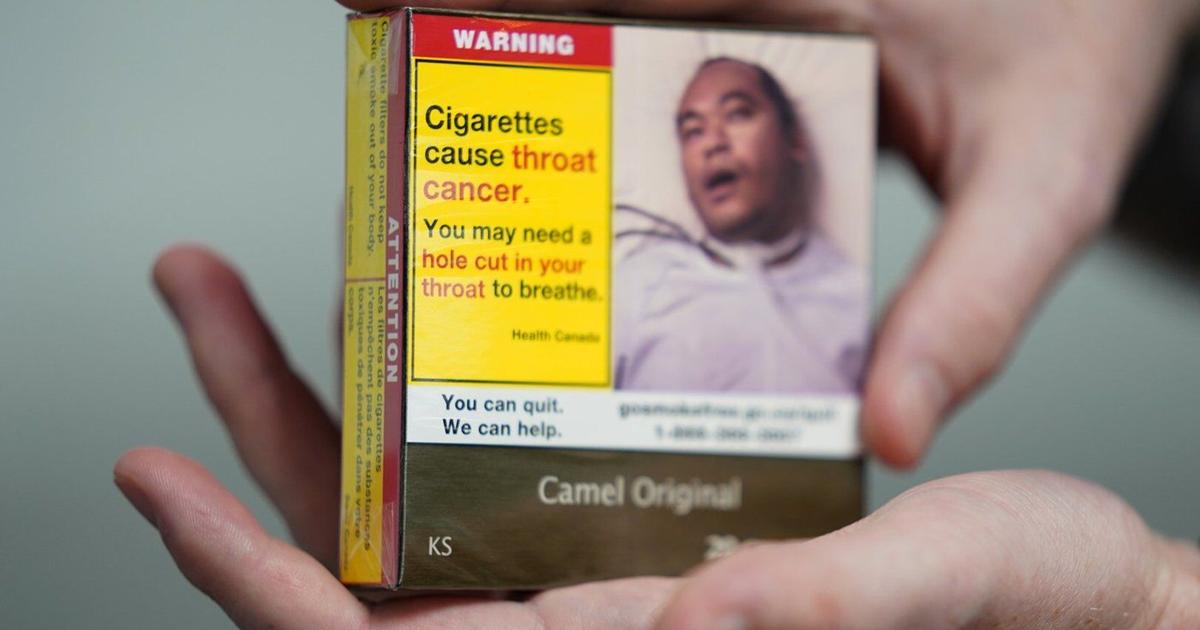
📰 New Graphic Warning Images Rolling Out on Cigarette Packages Across Canada
Health Canada is requiring that all cigarette packages sold across the country feature a new set of 13 graphic health warning images starting August 1. The new images cover themes including oral cancer, lung cancer, heart disease, stroke, and the impact of smoking on children's health. This marks the fifth round of updates since Canada became the first country globally to mandate graphic warnings in 2001.
Public health experts have welcomed the new images, arguing that updating warning content helps prevent smokers from developing "warning fatigue." However, some anti-smoking advocates point out that Canada's warning images have not been updated in over five years, during which time many countries have adopted even more impactful designs and introduced plain packaging requirements — leaving Canada somewhat behind the curve.
Canada remains one of the world's strictest countries on tobacco control. The national smoking rate has fallen from approximately 25% in 2000 to around 10% today, with graphic warnings considered one of the most successful tobacco control measures.
📰 Ontario Slashes Small Business Tax Rate to 2.2%
The Ontario government announced a reduction in the provincial small business corporate income tax rate from 3.2% to 2.2%, effective July 1, 2026 — a full percentage point cut. This represents one of the largest small business tax reductions in Ontario in recent years, aimed at stimulating the provincial economy and helping small and medium-sized enterprises remain competitive amid ongoing trade uncertainty.
Quebec has also introduced similar measures to support small business growth. At the federal level, the small business tax rate has remained frozen at 9% since 2019. Analysts note that as Canada-U.S. trade tensions escalate, governments at all levels are increasingly turning to tax cuts to boost business confidence and encourage investment.
According to industry data, real commercial foodservice sales in Canada are expected to grow by 1.5% in 2026 on an inflation-adjusted basis, slightly above earlier forecasts. Small and medium-sized businesses remain the backbone of the Canadian economy, accounting for roughly 90% of private-sector employment.
📰 Toronto Mayor Olivia Chow Officially Announces Re-Election Bid
Toronto Mayor Olivia Chow has formally confirmed she will seek a second term. After three years in office, Chow made the announcement at City Hall, pledging to continue advancing her priorities in affordable housing, public transit improvements, and social services launched during her first term.
Chow has been active on several fronts recently, including welcoming FIFA's decision to allow soft water bottles at World Cup matches and pushing to keep the FIFA Fan Fest free of charge. However, she faces significant challenges including Toronto's ongoing budget pressures, the persistent housing crisis, and TTC safety concerns.
Additionally, the Toronto District School Board recently announced it will cut $150 million from its budget while still facing a deficit, raising concerns about declining enrollment, program adjustments, and staffing reductions. The 2026 Toronto mayoral election is expected to be one of the most closely watched local races this fall.
📰 Canada Launches Cross-Provincial Health Data Sharing Platform
Canada has officially launched a nationwide health data platform initiative aimed at enabling cross-provincial sharing of patient data between hospitals. The platform will allow healthcare institutions across different provinces to securely exchange patient records, test results, and treatment histories, significantly improving continuity and efficiency of care.
According to Dr. Andrew Bond, the platform's Chief Health Officer, this capability will not only optimize hospital operations but also enable data-driven identification and response to individual patient risks such as mortality prediction and early sepsis warning. This marks an important step toward interoperability in Canada's fragmented healthcare system, where provincial silos have long been a major barrier for Canadians seeking care across borders.
In a separate health development, federal health officials confirmed approximately 2,500 new cases of Cyclospora infection nationwide, a parasitic illness transmitted through contaminated food that is drawing increased attention from health authorities.
— Medscape
More News
- Maple Express | October 26, 2026: Ford says trade war is hurting both countries
- Immigration | October 26, 2026 Express Entry's new scoring takes effect November 3: high-wage job offers worth up to 100 points
- Global Express | October 26, 2026 - Serbia's Vucic Concedes Defeat, Ending 14 Years in Power
- Finance Morning | October 26, 2026 — Shanghai Edges Up 0.19% as Banks and Oil Lead, Asia Mostly Lower
- Tech Express | October 26, 2026 - Huawei's Kirin Chips Return to Public View as Mate 90 Lights Up Landmarks
Comments (0)
View More
 -10%
-10%ASUS ZenScreen Duo MB14FCD — Two 14" Screens in One Portable Monitor! $449.99 CAD (10% Off)
 -51%
-51%Electrolux 27" Laundry Pedestal — 3.0 Cu.Ft. Storage Drawer! $149.99 CAD (50% Off)
 -58%
-58%VIVO Ultrawide Wall Mount — Fits Screens up to 49", Full Motion Steel Arm! $23.99 CAD (57% Off)
 -44%
-44%Samsonite Pro Vertical Spinner Mobile Office 15.6" — Built-In Laptop Sleeve! $239.99 CAD (44% Off)
 Sports Express
Sports Express | October 26, 2026: Seahawks Hand Chiefs First Loss of Season
 Maple Express
Maple Express | Oct. 25, 2026: Chow and Bradford make final pitch on eve of Toronto mayoral vote
-10%ASUS ZenScreen Duo MB14FCD — Two 14" Screens in One Portable Monitor! $449.99 CAD (10% Off)
Amazon
-51%Electrolux 27" Laundry Pedestal — 3.0 Cu.Ft. Storage Drawer! $149.99 CAD (50% Off)
Best Buy
-58%VIVO Ultrawide Wall Mount — Fits Screens up to 49", Full Motion Steel Arm! $23.99 CAD (57% Off)
Amazon
-44%Samsonite Pro Vertical Spinner Mobile Office 15.6" — Built-In Laptop Sleeve! $239.99 CAD (44% Off)
Amazon
Sports ExpressSports Express | October 26, 2026: Seahawks Hand Chiefs First Loss of Season
Maple Express