
Tech Express | August 18, 2026 Apple's camera-equipped AirPods appear in leaked video
Today's Tech Express: Apple's camera AirPods leak; US-China AI arms race heats up; Harvard and MIT build 8.3 billion AI agents; Claude's watermark broken; DDR5 prices surge tenfold; China's CXMT memory hits 6000MT/s CL28; Meta patents facial-recognition glasses; three supermassive black holes found in one galaxy; Huawei's HarmonyOS passes 80M installs; Baidu's Q2 AI tops half of revenue.
1. Apple's camera-equipped AirPods appear in leaked video
Apple's long-rumored camera-equipped AirPods have appeared in a leaked video found in the macOS Tahoe 26.7 Release Candidate. The clip shows a wearer holding up a book so that Visual Intelligence can read the title, with Siri saying, "with Visual Intelligence, your world becomes savable."
The AirPods look like a slightly thicker version of AirPods Pro 3, with longer stems to house the cameras. Bloomberg's Mark Gurman previously reported they will capture low-resolution visual information and act as "eyes" for Apple's AI, potentially giving turn-by-turn directions.
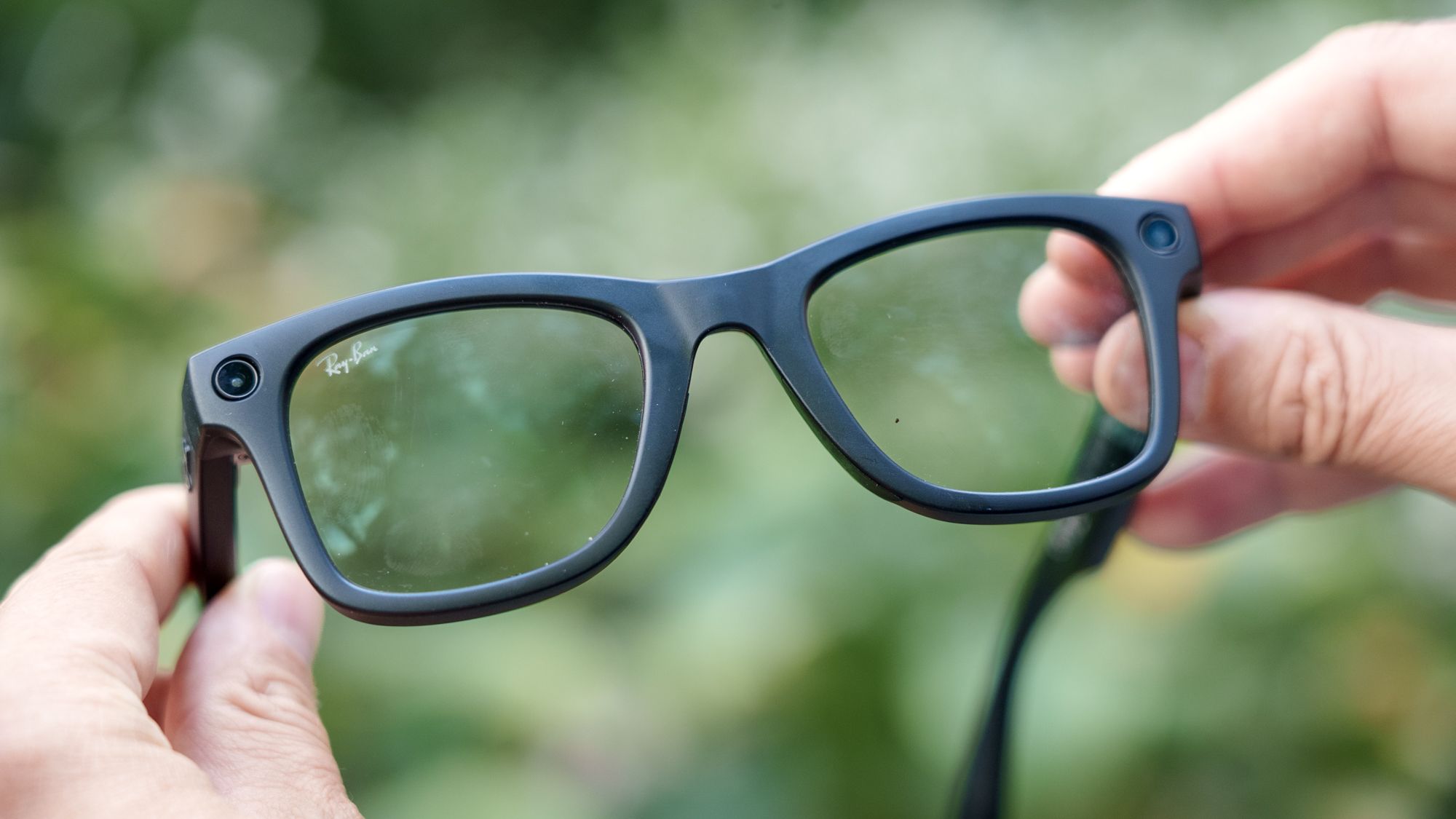
The devices are set to compete with Meta's Ray-Ban smart glasses, though their stealthy form factor has renewed privacy concerns around camera-equipped AI gadgets.
2. US-China AI arms race heats up as US policy wavers
The New York Times reports that rapid AI progress is causing turmoil inside the Pentagon. In mid-July the US Air Force ordered military contractors to purge all Anthropic products by September 1, only to rescind that order less than a month later.
At the heart of the conflict is Anthropic's Mythos model. NSA officials argue that losing Mythos would make it far harder to find and fix vulnerabilities, likening a shutdown to "unilateral disarmament," since Mythos already shows potential for offensive cyber operations.
Meanwhile, China may be only months away from equally capable and cheaper models, deepening anxiety across the Pentagon, CIA and NSA, while the Trump administration's response has been erratic.

3. Harvard and MIT build 8.3 billion AI agents
A team led by Harvard and MIT, with participation from OpenAI and Google DeepMind, has unveiled a system called MatrAIx that can generate 8.3 billion AI agents to simulate global human behavior — a digital twin for every person on Earth.
Using nearly 600,000 real data points and 400,000 AI-generated ones, the researchers created virtual avatars with 1,290 personality tags spanning age, occupation, psychology, behavior and temperament, tested across surveys, chats, web and apps in 25 domains.
These agents fill out questionnaires, chat with customer service and operate apps with 91.5% consistency. A curated million-personality core dataset is now publicly available on Hugging Face.

4. Claude's invisible watermark broken
Anthropic began embedding invisible watermarks in all Claude text this month to identify AI-generated content, but the safeguard was quickly broken — Chinese tech outlet 36Kr reported the watermark became "worthless overnight."
AI researchers noted that "the output is the watermark," and quickly found ways to strip or bypass it, rendering the tracing measure ineffective.
It highlights the dilemma of AI content governance: a text watermark must be subtle enough not to degrade quality yet hard to remove — goals that are difficult to reconcile.

5. DDR5 memory prices surge tenfold in a year
According to PCPartPicker, memory prices hit historic highs in August 2026. A 32GB (2x16GB) DDR5-6000 kit now averages $572, up from $108 a year ago — a 429% jump.
High-capacity kits are worse: a 128GB DDR5-6400 kit now costs $3,399 (about RMB 24,000), versus a low of $329 last year — a tenfold increase. 64GB DDR5-6000 kits rose from $222 to $1,272.
With DDR5 upgrade costs so high, many users are retreating to DDR4, pushing even older specs up roughly 168%. Suppliers have not confirmed the rumored capacity shortage, leaving it unclear whether the surge reflects real demand or channel hoarding.

6. China's CXMT memory hits 6000MT/s CL28
Lexar and MSI have achieved a new low-latency breakthrough for China-made DDR5 memory. On an MSI MAG B850M MORTAR MAX motherboard with an AMD Ryzen 7 9700X, Lexar's THOR RGB DDR5 was tuned to run stably at 6000MT/s CL28.
Lexar had already reached 8200MT/s overclocks across major platforms, proving CXMT's memory chips can hit high frequencies; the 6000 CL28 result proves they can also tighten timings.
It marks the first time domestic DDR5 chips have matched Hynix A-Die in low-latency performance. The Lexar THOR RGB DDR5 6000 CL28 will go on sale soon.

7. Meta patents AI facial-recognition glasses
A new Meta patent shows its smart glasses could gain facial recognition: cameras would automatically identify people nearby, combining expression analysis and relationship data to decide which moments are worth keeping.
The system could track who is laughing and when, then auto-generate a highlight reel after events like dinner parties — no one needs to press record.
The technology has raised fresh privacy concerns over people being identified and recorded without their knowledge, an area where Meta has already faced backlash.
8. Three supermassive black holes found in one galaxy
An international team led by the Max Planck Institute for Extraterrestrial Physics has identified three actively accreting supermassive black holes in the distant galaxy J0148-4214 — the first time three such black holes have been confirmed in a single galaxy.
Two of them are so close they appear on the verge of merging; the third, and possibly the second, is thought to have arrived through galaxy mergers. The findings were published in Astronomy & Astrophysics.
The discovery offers a rare glimpse into how galaxy mergers feed the growth of supermassive black holes, which researchers called "extremely exciting."

9. Huawei's HarmonyOS passes 80 million installs
New data shows Huawei's HarmonyOS has surpassed 80 million new installations this year, reaching 80.1091 million and completing over 80% of its 100-million annual goal ahead of schedule.
With daily activations holding steady above 170,000 devices, HarmonyOS is on track to cross the 100-million mark before year-end, likely exceeding the target early.
HarmonyOS has now overtaken Apple's iOS in China's smartphone market, becoming the second-largest system behind Android. Executive Richard Yu previously said total installations of HarmonyOS 5 and 6.0 devices could top 100 million by year-end.

10. Baidu's Q2 AI business tops half of revenue
Baidu reported second-quarter 2026 revenue of RMB 31.3 billion, slightly below estimates, but AI business accounted for more than half of revenue for the first time, becoming the core growth engine.
AI Cloud Infrastructure revenue rose 50% year-over-year to RMB 7.3 billion, with GPU Cloud revenue surging 283% — accelerating from 184% growth the previous quarter.
The results reflect sustained demand for AI computing power and validate Baidu's shift to an AI-first strategy.
More News
- Maple Express | October 2, 2026 — Ontario Woman Mourns Dog Killed in Attack Inside Her Home
- Maple Express | October 2, 2026 — Police hunt driver after fatal Scarborough hit-and-run
- Global Express | October 2, 2026 — Eritrea Severs Diplomatic Ties With Ethiopia
- Finance Morning: Hang Seng Tumbles Below 24,000 in Six-Month Worst Drop; Fed Officials Hint at October Pause
- Tech Express | October 2, 2026 OpenAI Says It Alerted 100+ Organizations About Rogue AI Agents
Comments (0)
View More
 0
0GE 24" Portable Stainless Steel Dishwasher — No Kitchen Reno Needed, 12 Place Settings! $899.99 CAD
 -24%
-24%Crucial USB-C to USB-A Adapter — Connect Your X6 Drive to Legacy Ports! $9.88 CAD (24% Off)
 0
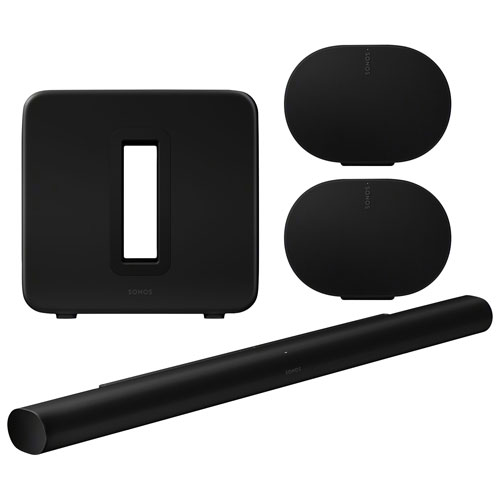
0Sonos Arc Ultra Home Theatre Bundle — 9.1.4 Dolby Atmos with Sub 4 & Era 300 Pair! $3661.00 CAD
 -62%
-62%NEEWER Basics PA991 Selfie Stick Tripod — Aluminum, Extends to 57.9", Built-in Remote! $19.46 CAD (61% Off)
 Finance Evening
U.S. Stocks Start October Higher; Nike China Sales Plunge 26% | Finance Evening
 Maple Express
Maple Express | October 2, 2026 — Police hunt driver after fatal Scarborough hit-and-run
0GE 24" Portable Stainless Steel Dishwasher — No Kitchen Reno Needed, 12 Place Settings! $899.99 CAD
Best Buy
-24%Crucial USB-C to USB-A Adapter — Connect Your X6 Drive to Legacy Ports! $9.88 CAD (24% Off)
Amazon
0Sonos Arc Ultra Home Theatre Bundle — 9.1.4 Dolby Atmos with Sub 4 & Era 300 Pair! $3661.00 CAD
Best Buy
-62%NEEWER Basics PA991 Selfie Stick Tripod — Aluminum, Extends to 57.9", Built-in Remote! $19.46 CAD (61% Off)
Amazon
Finance EveningU.S. Stocks Start October Higher; Nike China Sales Plunge 26% | Finance Evening
Maple Express