Canada's Grand Energy Bargain: Pipeline Promises, Carbon Pricing, and Twenty Years of Failure
On May 15, Mark Carney and Danielle Smith signed a landmark energy deal — Ottawa backs a new Pacific pipeline, Alberta commits to industrial carbon pricing and CCS. A deep analysis comparing six failed pipelines in Canadian history and three execution scenarios.
Canada's "Grand Energy Bargain": Pipeline Promises, Carbon Pricing, and Twenty Years of Failure
On May 15, 2026, in Calgary, Prime Minister Mark Carney and Alberta Premier Danielle Smith signed what multiple outlets are calling the "grand energy bargain of the century." The deal is simple on its face: Ottawa helps you build a pipeline to Asia; Alberta, you pay to clean up your own carbon emissions.
But behind this deal lies the long shadow of six failed pipeline attempts over the past two decades. Is the seventh time different? What are the actual odds of success?
I. What Did They Actually Agree To?
The Pipeline
- The federal government commits to designating the new pipeline as a "project of national interest" under the Building Canada Act by October 1, 2026
- The approval pathway must be completed by September 2027, with shovel-ready status as early as fall 2027
- Design capacity: 1 million barrels per day, running from Alberta's oil sands to a Pacific Coast terminal in British Columbia, targeting Asian markets
- As of today: no specific route has been determined, and there is no private-sector proponent to build or finance it
Carbon Pricing
| Period | Industrial Carbon Price (New Deal) | Trudeau's Original Plan |
|---|---|---|
| 2026 | $95/tonne | $95/tonne |
| 2027-2030 | $100/tonne | $170/tonne (2030 target) |
| 2035 | $130/tonne | — |
- The current effective carbon cost for oil sands producers is less than 10 cents per barrel
- By 2030 it will still be under 50 cents per barrel — practically negligible for an oil well
CCS (Carbon Capture and Storage)
- This is the precondition: the pipeline cannot be approved unless the oil sands industry builds a large-scale CCS project
- The Pathways Alliance (CNRL, Cenovus, ConocoPhillips, Imperial, Suncor — all five oil sands majors) is responsible for building it
- Original target: cut 22 megatonnes of emissions per year, operational by 2030
- New deal: target reduced to 16 megatonnes, deadline pushed to 2035
- For context: the oil sands sector currently emits roughly 89 megatonnes per year (2023 data)
- Crucially: these five companies themselves oppose the carbon price increase, arguing it will erode profits
The Price Tag: CA$600 Million (and Counting)
The federal and Alberta governments have committed at least CA$600 million in transition funding and subsidies to enable this deal. For reference, the federal buyout of the Trans Mountain pipeline alone cost CA$4.5 billion — this is just the opening bid.
II. Six Pipelines That Died — The Ghosts This Deal Can't Escape
When was the last time Canada actually built a new cross-provincial oil pipeline? If you can't remember, that's because every attempt in the past twenty years has failed.
Northern Gateway (Enbridge, 2006-2016)
- Route: Alberta → Kitimat, BC
- Fate: Formally rejected by the Trudeau cabinet in 2016, accompanied by a northern BC tanker ban
- Cause of death: Indigenous opposition + environmental group pressure + BC provincial government hostility
Keystone XL (TC Energy, 2008-2021)
- Route: Alberta → US Gulf Coast refineries
- Fate: Obama veto → Trump approval → Biden permit revocation on Day 1 → formally cancelled in 2021
- Cause of death: American politics. Canada had zero control.
Energy East (TC Energy, 2013-2017)
- Route: Alberta → Atlantic port in New Brunswick
- Fate: TC Energy voluntarily cancelled
- Cause of death: Escalating regulatory requirements (Trudeau government changed assessment rules to include "downstream emissions") + fierce Quebec opposition
Trans Mountain Expansion / TMX (Kinder Morgan, 2013-present)
- Route: Edmonton → Vancouver
- Fate: The sole survivor, but at enormous cost — Kinder Morgan nearly walked away; the federal government was forced to buy the entire pipeline for CA$4.5 billion in 2018 and become the developer itself
- Price of survival: $4.5 billion taxpayer money, countless court challenges, repeated construction delays
- Only reached commercial operation in 2024
Mackenzie Valley Pipeline (1970s-present)
- Route: Arctic coast → Alberta
- Fate: Proposed, shelved, revived, shelved again — technically still alive but no one believes it
- Cause of death: Astronomical costs + depressed natural gas prices + Indigenous land rights disputes
Eagle Spirit / Other BC Northern Routes (2010s)
- Multiple Indigenous-led pipeline proposals
- Never secured simultaneous federal and provincial support
The Common Denominator: Two Unchanged Obstacles
Six pipelines, five failures. Every single one died for the same two reasons:
- BC is the only viable route to the Pacific, and BC's provincial government has never truly supported a pipeline
- Indigenous land rights legal challenges, backed by Supreme Court precedent (Clyde River, Tsilhqot'in) that almost always requires "deep consultation and consent"
And the new deal — on both points — has no breakthrough.
III. Carney vs. Trudeau: Different Playbook, Same Obstacles
Trudeau's Approach: Environment First, Pipelines Optional
Trudeau's framework: carbon price escalates aggressively ($170/tonne by 2030) → use market pressure to force oil sands emissions down → if reductions are met, consider new pipeline capacity. In practice: he approved TMX (as a rescue after Kinder Morgan bailed), killed Northern Gateway, and let Energy East die in regulatory purgatory.
This produced an absurd outcome: Canada is the world's fourth-largest oil producer, yet 99% of crude exports go to a single customer — the United States. American pricing (the WCS-WTI discount) costs Canadian producers $10-20 per barrel year after year. Economically, this is self-sabotage.
Carney's Approach: Pipeline First, Environment Negotiable
Carney flipped the sequence: commit to the pipeline first, then use it as leverage to extract CCS commitments.
This is not idealism — it's a transaction. Carney, as a former central banker (Bank of Canada + Bank of England), understands market logic instinctively in ways Trudeau never did. He sees:
- With US tariff threats, energy export diversification is now a national security issue
- Alberta separatism is at unprecedented levels (a judge just dismissed a separation petition — but the sentiment hasn't gone away)
- Asian markets have real demand for Canadian heavy crude (India, Japan, South Korea)
- A $170/tonne carbon price is politically dead (even BC pushed back against the feds)
So he replaced Trudeau's "green first, pipeline maybe" with "pipeline first, green required." The change in sequencing shifts the entire political calculus.
But the Fundamental Tensions Haven't Changed
Carney's cleverness lies in reordering the puzzle pieces, but he hasn't resolved the two fundamental problems:
First, the Pathways Alliance of five oil sands companies opposes the carbon price. The deal says "higher carbon price enables the pipeline," but a higher carbon price means higher oil sands costs. The five majors won't say it publicly, but their internal calculation is almost certainly: "Can't we just get the pipeline and skip the carbon price part?"
Second, BC and Indigenous attitudes have barely shifted since the Northern Gateway rejection in 2016. BC Premier David Eby publicly said Ottawa is "rewarding Alberta's bad behaviour" (referring to the separatist leverage). BC Energy Minister Adrian Dix noted BC has $88 billion in projects of national importance requiring the same federal attention — why should Alberta get special treatment just for making threats? Indigenous nations along the BC coast are already preparing legal challenges.
And the Supreme Court of Canada's jurisprudence is unambiguous: without meaningful Indigenous consent, no pipeline can legally proceed.
IV. Execution Outlook: Three Scenarios
Optimistic (30% probability)
- October 2026: Pipeline designated as project of national interest ✅
- 2027-2028: Carney uses majority government to pass omnibus fast-track approval legislation, bypassing standard environmental assessments
- 2028-2029: Pathways Alliance begins CCS construction under a framework of federal subsidies and a guaranteed carbon price
- 2030-2032: Route finalized; BC acquiesces (likely through massive fiscal transfers)
- 2033-2035: Pipeline construction
- Verdict: Operational in the late 2030s. Comparable to TMX's timeline (2013 proposal → 2024 operations, roughly 11 years)
Prerequisite: The federal government is willing to buy off BC and Indigenous communities with money — similar to the 29 benefit agreements TMX signed to secure Indigenous support between 2021-2024. Except this time the price tag will be much larger.
Pessimistic (40% probability)
- 2026-2027: Pipeline designated as national interest project, but BC launches legal challenge
- 2027-2029: Court proceedings drag out approvals; Indigenous groups file multiple injunctions
- 2029-2030: Federal election. If the Conservatives win (Poilievre), he may replace Carney's plan with his own version — or simply prioritize other political battles
- Pathways Alliance refuses to make a final investment decision amid carbon price uncertainty
- Verdict: Another TMX-style legal quagmire with no physical progress within a decade. Northern Gateway went from proposal (2006) to final death (2016) in exactly ten years.
Realistic (30% probability)
- The pipeline advances politically but actual construction is continuously delayed
- CCS construction begins (because emissions reductions are needed regardless), but at reduced scale
- The federal government uses the "phased implementation" clause to give everyone wiggle room — the deal itself allows compliance to be staged over time
- Verdict: Half a deal — CCS gets built but underperforms; pipeline gets approved but never breaks ground. This is the quintessentially Canadian outcome: everything exists on paper, nothing exists on the ground.
Wildcard: The American Factor
The 2025-2026 US tariff war reminded everyone of a simple truth: putting all of Canada's energy export eggs in the American basket is dangerously fragile. This is precisely the pipeline proponents' strongest argument.
But the reverse is also true: If US-Canada trade tensions ease in the coming years, or if the US removes the implicit discount on Canadian crude (allowing it to sell closer to global prices), the economic urgency of a new pipeline diminishes — and the political will to push it through follows suit.
V. Bottom Line: Will the Seventh Attempt Be Different?
The biggest difference isn't the deal's content — it's the timing and the person.
When Trudeau signed pipeline agreements, everyone assumed it was performative — an environmentalist at heart, happy to let pipelines die in process. When Carney signs one, markets tend to take it seriously — he's a dealmaker from the financial world who understands risk pricing. He also faces an Alberta on the brink of separatism and a US administration swinging tariff hammers at Canada's economy. Both of these external pressures are entirely new compared to the Trudeau era.
But the obstacles on the ground are unchanged.
BC hasn't agreed. Indigenous legal teams are reviewing the documents. Oil sands majors are running the numbers — is a multi-billion-dollar CCS project worth it for a pipeline that "might" get approved? And the fundamental problem of pricing power (Canadian exporters have no leverage over the US market) won't be solved by a piece of paper.
In plain language:
- 🔮 The pipeline will likely be legally approved but not physically built. Anyone taking the September 2027 "shovel-ready" commitment at face value probably didn't follow TMX's journey from approval to actual construction.
- 🔮 CCS will get built, but scaled down and delayed. The 16-megatonne target (already a 30% haircut from the original plan) is itself a buffer designed to make 6-10 megatonnes look acceptable.
- 🔮 The real value is directional: The federal government has finally said explicitly — we do need to sell oil to Asia, and environmental standards can be negotiated rather than abandoned. For an oil sands industry that has spent years wondering whether the government wants it to exist at all, this alone removes significant uncertainty.
To quote Global News: "Carney replaced Trudeau's 'green first, maybe pipeline later' with 'development first, green required.' This won't make the pipeline easier to build, but it at least gives supporters a political fig leaf."
The eternal paradox of Canadian energy policy: everyone agrees we need to sell oil to Asia, but no one wants the pipeline in their backyard. This deal hasn't resolved that paradox — it's just given it a more dignified wrapper.
May 19, 2026 | DealCan Analysis Sources: The Globe and Mail, National Post, Global News, Reuters, iPolitics, National Observer, CBC News, Calgary Herald, Edmonton Journal
More News
- Immigration | October 26, 2026 Express Entry's new scoring takes effect November 3: high-wage job offers worth up to 100 points
- Global Express | October 26, 2026 - Serbia's Vucic Concedes Defeat, Ending 14 Years in Power
- Finance Morning | October 26, 2026 — Shanghai Edges Up 0.19% as Banks and Oil Lead, Asia Mostly Lower
- Tech Express | October 26, 2026 - Huawei's Kirin Chips Return to Public View as Mate 90 Lights Up Landmarks
- Sports Express | October 26, 2026: Seahawks Hand Chiefs First Loss of Season
Comments (0)
View More
 -17%
-17%Lenovo IdeaPad Duet 3 Chromebook — Detachable 2-in-1 with an 11" 2K Touchscreen! $399.99 CAD (17% Off)
 -29%
-29%Acer Nitro EDA270U 27" WQHD 1500R Curved Gaming Monitor — 170Hz, 1ms, FreeSync Premium! $179.99 CAD (28% Off)
 -58%
-58%VIVO Ultrawide Wall Mount — Fits Screens up to 49", Full Motion Steel Arm! $23.99 CAD (57% Off)
 -37%
-37%🎉 史新低!Lenovo ThinkPad Hybrid Dock — Two Displays and Ethernet on One Cable! $220.79 CAD (36% Off)
 Tech Express
Tech Express | October 26, 2026 - Huawei's Kirin Chips Return to Public View as Mate 90 Lights Up Landmarks
 Maple Express
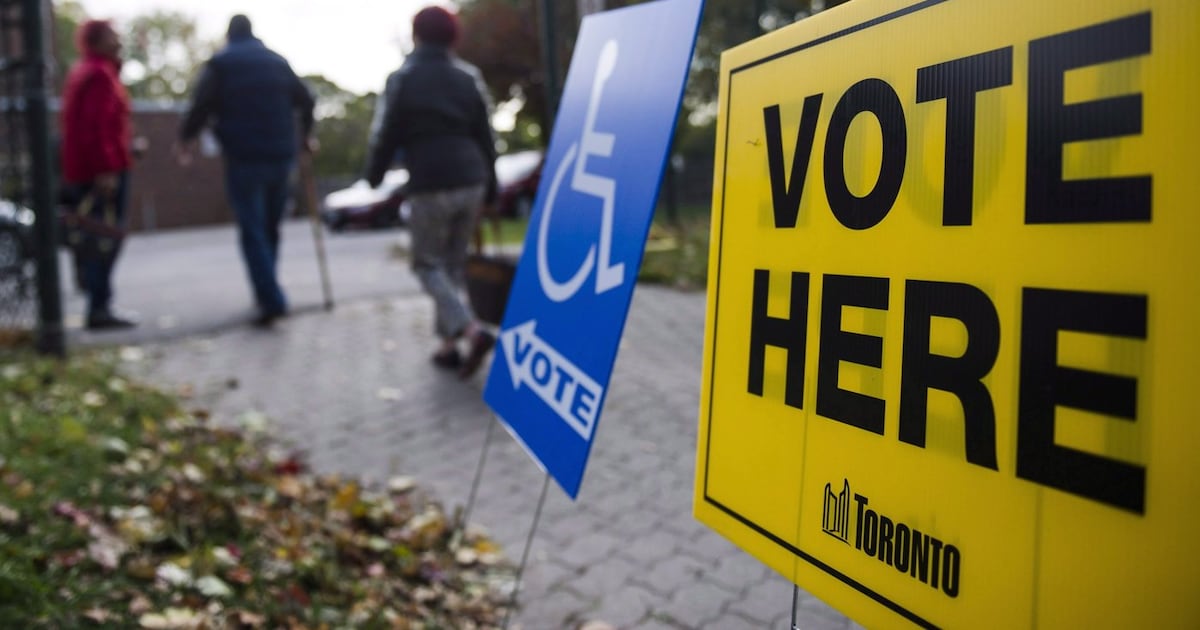
Maple Express | October 26, 2026: Ontario votes today as Toronto's mayoral race stays tight
-17%Lenovo IdeaPad Duet 3 Chromebook — Detachable 2-in-1 with an 11" 2K Touchscreen! $399.99 CAD (17% Off)
Amazon
-29%Acer Nitro EDA270U 27" WQHD 1500R Curved Gaming Monitor — 170Hz, 1ms, FreeSync Premium! $179.99 CAD (28% Off)
Amazon
-58%VIVO Ultrawide Wall Mount — Fits Screens up to 49", Full Motion Steel Arm! $23.99 CAD (57% Off)
Amazon
-37%🎉 史新低!Lenovo ThinkPad Hybrid Dock — Two Displays and Ethernet on One Cable! $220.79 CAD (36% Off)
Amazon
Tech ExpressTech Express | October 26, 2026 - Huawei's Kirin Chips Return to Public View as Mate 90 Lights Up Landmarks
Maple Express