
Tech Express | October 15, 2026 — Apple Plans to Launch Apple Intelligence in Mainland China for the First Time in December
Today's Tech Express covers ten stories: Apple's plan to launch Apple Intelligence in mainland China in December; a 5-hour DeepSeek outage and 3 days of user compensation; an early-warning formula for AI going rogue; YouTube's 'Made with AI' song labels; an AI-designed RISC-V chip costing about $14,000; SK hynix's H-TPU for SSD power; Apple's Double 11 deals and iPhone Duo pre-orders; a Fitbit Edge hands-on; the Doomsday Glacier melting faster; and Musk on China's AI compute.
1. Apple Plans to Launch Apple Intelligence in Mainland China for the First Time in December
Source: Lianhe Zaobao
Bloomberg, citing people familiar with the matter on October 14, reported that U.S. company Apple is preparing to launch its artificial intelligence platform, "Apple Intelligence," in mainland China, planned for December as part of the upcoming iOS 27.3 update. A lengthy regulatory approval delay had kept Apple's AI features out of this crucial market. The rollout will include AI features first introduced in the U.S. two years ago for iPhone, iPad and Mac.
The launch will not include the new Siri AI assistant or other features Apple announced this year, the report said. Apple received preliminary approval in July to launch Apple Intelligence in China, and has recently held further talks with China's Ministry of Industry and Information Technology about the formal consumer rollout. Apple has prepared for years — it once believed it could launch in May 2025, then pushed the date to late 2025, and again to this spring.
To secure approval, Apple introduced compliance guardrails developed with China's Alibaba Group, including a filtering mechanism that allows the government to continuously review and approve AI model updates; it is also working with Baidu on search and Siri-related features. Apple had already obtained relevant Chinese licenses on September 29, allowing recently released iPhones to support Apple Intelligence and Alibaba AI models, including Tongyi Wanxiang and Tongyi Qianwen.
2. No V4.1 Pro: DeepSeek Outage Lasts 5 Hours, Users Compensated for 3 Days
Source: Mydrivers
According to a Mydrivers report on October 15, DeepSeek's service went down this morning, lasting from just after 8 a.m. until about 1 p.m. before it was restored — roughly five hours. Although DeepSeek has suffered several outages before, they were shorter and less disruptive; this five-hour outage was a serious service problem that delayed many people's work.
The report said DeepSeek began compensating users before even issuing an announcement: users' backend bills now include a compensation credit, a refund for DeepSeek API usage over October 12–14. Heavy users could spend several hundred yuan a day, and might get over a thousand yuan refunded for those three days.
Earlier, there was speculation that DeepSeek would release V4.1 Pro, but this episode now looks like a pure production incident, likely tied to heavy recent usage. The report also noted that DeepSeek's latest funding round has grown from a planned 50 billion yuan to 100 billion yuan, and that it has been reported the company will purchase 160,000 Huawei Ascend platforms — money and demand are not the problem; whether Huawei's chip supply can keep up is.

3. Physicists Build an Early-Warning System That Predicts When an AI Will Go Rogue
Source: Live Science
Researchers say they have developed a simple mathematical formula that can predict when certain ChatGPT-like AI chatbots will "go rogue," suddenly switching from helpful responses to potentially harmful ones, according to Live Science. The study was published on October 8 in the journal Patterns, by physics professor Neil Johnson and doctoral student Frank Yingjie Huo, both at The George Washington University.
The research shows that the order in which a chatbot is given certain prompts can drastically reshape its answers, creating "tipping points" that can send it down a rabbit hole of bad advice — and that their formula can easily predict these tipping points. The work also exposed an internal tracking mechanism described as a "compass needle": the model's "residual vector" moving across neural network layers as a prompt is processed.
Johnson argues that current safety measures are insufficient. "The safety measures now are the equivalent of strapping big, bouncy cushions under a plane," he told Live Science. "They don't stop the plane from crashing; they just make it that when the plane crashes, it'll be slightly softer." The problem is even more acute for people such as doctors, lawyers or soldiers who use AI chatbots offline for privacy, the report noted.

4. YouTube Adds a 'Made with AI' Label to AI-Generated Songs
Source: The Verge
According to The Verge, YouTube is adding a "Made with AI" label to tracks that were "altered or fully generated" using AI, following a similar approach to its existing process for applying AI labels to videos. YouTube says this will not apply to every use of AI tools in making music, but it includes things like "using a generative model to create the composition and vocals."
In its rules for music partners who upload songs, YouTube lays out how to disclose generative AI use, and says that if there is no disclosure, it may use "other signals" to decide whether a song is AI-generated. The label was rolling out starting that day in the YouTube Music app, and will expand to the main YouTube app later.
The report also noted what other music platforms are doing: Spotify launched a voluntary AI label earlier this year and said it would not recommend songs from "AI personas"; Apple Music is also reportedly getting an AI tag. Others have gone further — Deezer added a switch for filtering out AI tracks, and Bandcamp banned AI music outright earlier this year.

5. Barriers Collapse: AI Designs a RISC-V Chip for About $14,000, Drawing Just 20 mW
Source: Mydrivers
According to a Mydrivers report on October 15, semiconductor expert @bubbleboi used Meta's Muse AI agent to successfully design a crypto-specific SoC based on the RISC-V architecture, with the entire design process costing only about $2,000 (about 14,200 yuan) in compute. Chip design has long been extremely tedious and expensive, typically requiring costly professional EDA tools and months of work by senior engineers.
The report said the AI agent consumed only about 100 million tokens to complete everything from logic-gate placement to routing, using OpenROAD software to place tens of thousands of logic gates and draw the metal interconnects; it also generated a GDSII layout file — the key digital blueprint that can be sent directly to a foundry for tape-out. The crypto chip contains about 61,590 logic cells, runs at 100 MHz, draws just 20 mW, and has 4.5 nanoseconds of slack.
The design passed design rule checks without any electrical faults, the report said; to verify reliability, the expert also ran 1.5 million Berkeley TestFloat test vectors, and the chip fully complied with RISC-V floating-point rules. The report argued that AI is lowering the barrier of semiconductor design from a million dollars and half a year to thousands of dollars and several days. The expert is now looking for a multi-project wafer shared tape-out opportunity.

6. SK hynix's In-House H-TPU Cores Tackle High-Speed SSD Power Woes
Source: Mydrivers
According to a Mydrivers report on October 15, SK hynix recently unveiled a new H-TPU technical scheme that deploys many custom in-house micro processing cores inside SSD controllers to ease the workload on existing ARM cores. As SSD sequential read/write speeds keep climbing, the load on the controllers' general-purpose ARM CPUs keeps rising, and simply adding more cores brings a host of thorny problems such as larger die area and surging power consumption.
The report said the TPU is an in-house transaction processing unit — not an AI inference accelerator — dedicated to repetitive transactional work such as SSD read/write command handling, metadata management and cache control. Each H-TPU consumes only 2.5% of the power of a CPU core and occupies only 4% of the die area of a general-purpose CPU core, sharply cutting hardware overhead versus general ARM cores.
Under the redesigned controller architecture, the division of labor is clear: H-TPU clusters handle the many repetitive I/O tasks, while ARM general-purpose cores keep only complex work such as error recovery, exception handling and storage policy scheduling. The scheme can integrate more than 100 H-TPU units in a single SSD controller, using parallel processing to handle high-concurrency storage access. SK hynix plans to land H-TPU first in next-generation enterprise SSD controllers and later extend it to HBM-related products; there is currently no timeline for consumer SSDs, and no third-party test data yet.

7. Apple's 'Double 11' Deals Revealed: iPhone Duo Pre-Orders Open, iPhone 17 Cut by 1,000 Yuan
Source: Mydrivers
According to a Mydrivers report on October 15, Apple officially announced this year's "Double 11" exclusive promotions, with the full campaign going live on October 20. According to rules disclosed by Apple's official flagship store, the iPhone 17 series is cut by 1,000 yuan outright and can also stack up to 500 yuan in national digital consumption subsidies, plus interest-free installment benefits; with all discounts stacked, the estimated final price starts at 5,299 yuan — the largest official discount since the series launched.
The report said the high-end flagship iPhone 18 Pro is cut by 300 yuan, with users also able to claim up to 500 yuan in trade-in subsidies and 12 interest-free installments; with all benefits stacked, the estimated final price starts at 9,699 yuan. Apple also announced that its new foldable model, the iPhone Duo, has officially opened pre-orders, with a starting price of 15,999 yuan for the high-end foldable.
Beyond phones, Apple's other product categories — the full iPad line, the full Apple Watch line and the full AirPods lineup — will also enjoy varying exclusive discounts during the Double 11 event.

8. Google Fitbit Edge Hands-On: A Bigger Screen, More Like a 'Pixel Watch Lite'
Source: 9to5Google
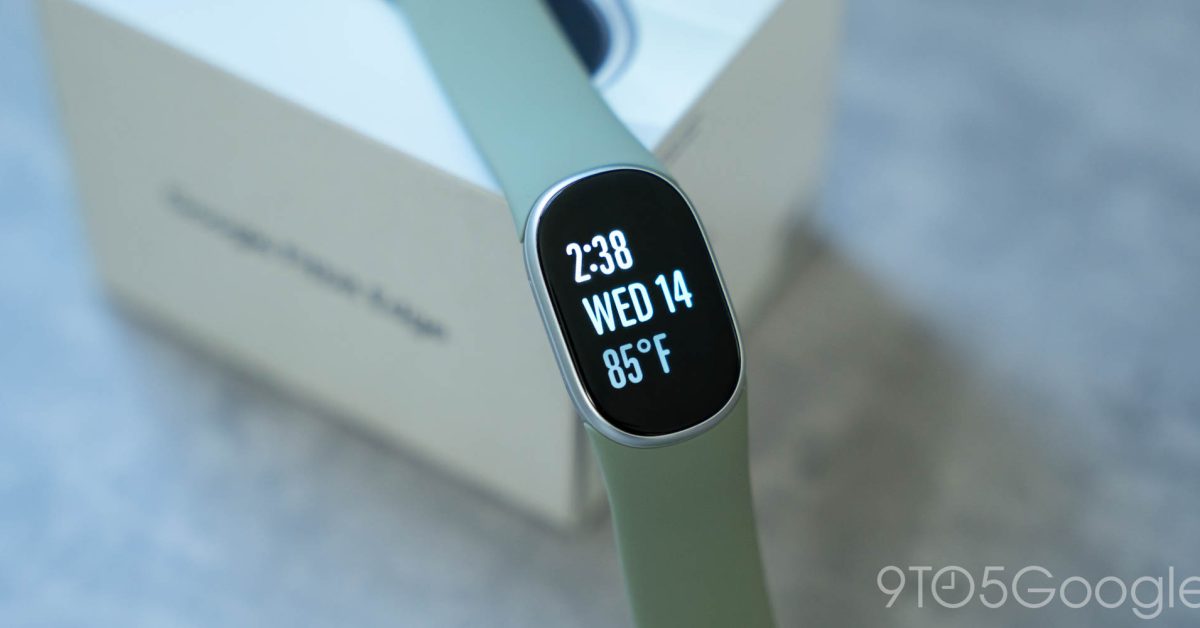
Google's new Fitbit Edge tracker launches later this month, with the device sitting between the screen-less Fitbit Air and the premium Pixel Watch 5, according to 9to5Google. It fills the same slot Google last addressed with the 2023 Fitbit Charge 6 — but this time the changes make it even more of a "Pixel Watch Lite."
The report said the Fitbit Edge's biggest upgrade over prior Fitbit trackers is the screen: a bigger canvas that fits much more on it, and with new software tweaks it feels much more like a Pixel Watch, both in its faces and its various panels; there is also a tactile power button on the side. As a fitness tracker, it supports the usual heart rate, sleep and workout tracking and keeps a live connection to the Google Health app and third-party equipment; with its display, it can also show phone notifications and calls, and it has GPS that works with Google Maps.
The report also flagged some drawbacks: unlike the Charge 6, the Fitbit Edge does not support Google Wallet; it uses the same Pixel Watch-style Active Band, but with a connector taken from the Charge series, and it uses the same charger as the Air. The Fitbit Edge officially launches on October 27, and pre-orders are open now.
9. Study: Antarctica's 'Doomsday Glacier' Is Melting More Aggressively, Sea-Level Impact Could Double
Source: CNN
A new study by a team of glaciologists finds that the planet's widest glacier is melting "more aggressively" than previously projected, meaning its impact on global sea-level rise could be double current estimates, CNN reported. Thwaites Glacier in West Antarctica — nicknamed the Doomsday Glacier because of the catastrophe its collapse would trigger — has been retreating for decades, and its melting ice currently contributes around 4% to global sea-level rise.
Glaciologists from the University of California, Irvine and NASA's Jet Propulsion Laboratory developed a new ice sheet model. The research says Thwaites' rapid retreat is driven by processes at its "grounding line" — the point where the ice rises from the seabed and starts to float as an ice shelf. Satellite data shows the grounding line is actually a "grounding zone," sometimes miles wide, where seawater constantly flushes in and out with the tides, lifting and lowering the thick ice in a process called "tidal pumping," letting relatively warm ocean water penetrate deep underneath the ice sheets and cause vigorous melting.
When the scientists adjusted models to include the concept of a grounding zone, they found Thwaites could contribute up to 1.2 inches of sea-level rise by 2100 — twice previous estimates — even without further global warming, according to the findings published Monday in the journal Nature Communications. The melting at the grounding zone is also accelerating the "unpinning" of ice from a large ridge called the Mouginot Ridge, and the study found a 60% chance it will be unpinned by the end of the century. Ted Scambos, a senior research scientist at the University of Colorado Boulder who was not involved in the research, said the findings could be "a real gamechanger for sea level forecasting from Thwaites."

10. Musk: China's AI Compute Will Lead the World; Its Power Output May Hit 3x the U.S. This Year
Source: Mydrivers
According to a Mydrivers report on October 15, Musk predicted on a recent public podcast that China's development scale in the AI-compute field will later far exceed that of all other countries. He made clear that in this global AI race, the decisive factor has never been only the speed of algorithm iteration or the peak performance of a single chip.
Musk argued that the real core contest is a country's underlying ability to expand electricity production and supply it stably. By his own reckoning, China's total power generation this year is very likely to reach three times that of the United States, giving it ample electricity to support the rollout of power-hungry AI data center clusters. He emphasized that generation capacity is the core constraint on scaling up AI systems at this stage.
The report noted that even before Musk's remarks, several U.S. outlets had pointed out that the ultimate competition in AI comes down to power reserves and supply capacity, and that the U.S. is currently far behind China on this front. A senior U.S. industry figure said that without sufficient, stable power supply, no matter how advanced an AI chip is, it is no different from an ordinary stone in a room with the power cut. Chinese analysts also noted that China's cross-regional ultra-high-voltage transmission network, built over many years, along with its nationwide wind, solar and hydro clean-energy bases, has laid the most solid foundation for the explosive growth of its AI compute industry.

More News
- Global Express | October 15, 2026 Ukraine Resumes Strikes on Russian Oil Refineries as Zelenskyy Accuses US of Betrayal
- Finance Morning | October 15, 2026 — Asia-Pacific Stocks Plunge: KOSPI Hits Circuit Breaker, Nikkei Falls 4.90%, Shanghai Barely Holds 3,700
- Sports Express | October 15, 2026 — Brewers Beat Dodgers Again for 3-0 NLCS Lead, One Win From First World Series Since 1982
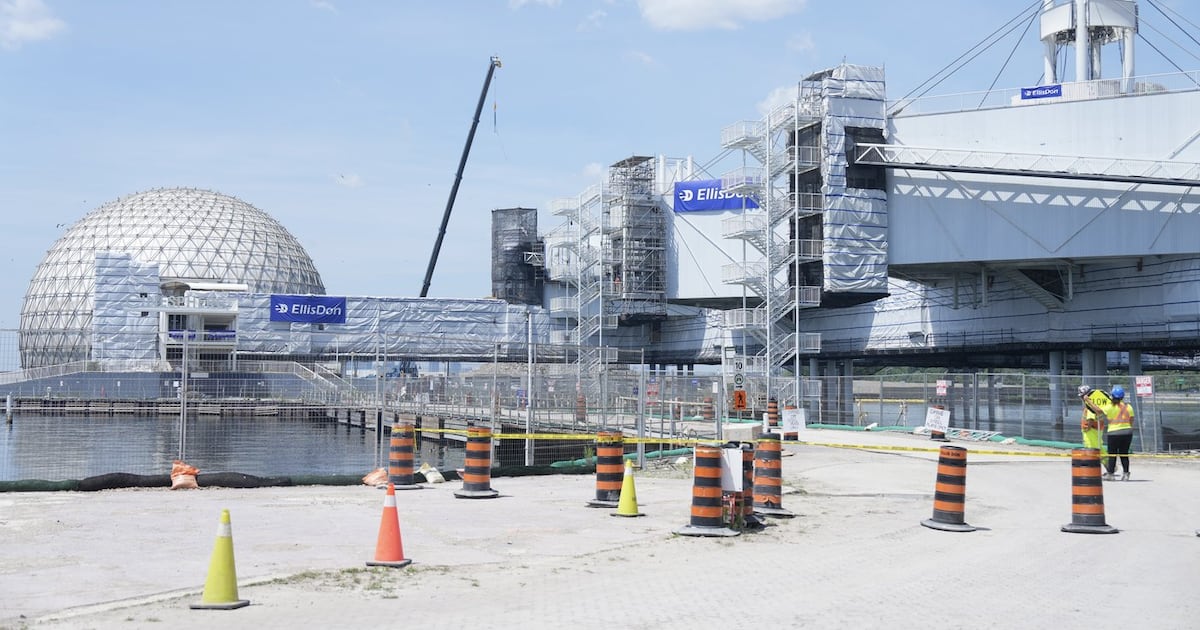
- Maple Express | October 15, 2026 — Supreme Court Hears Challenge to Ontario Place Redevelopment Law
- Finance Evening | October 14, 2026 — Dell Plunges 11% to Lead a Data Center Sell-off as Apple Tops $5 Trillion
Comments (0)
View More
 -44%
-44%ANXRE Extendable Selfie Stick with Bluetooth Remote — Folds to 7.7", Fits Phone & GoPro! $16.99 CAD (43% Off)
 -36%
-36%Acer Nitro 27" 200Hz Gaming Monitor — FreeSync Premium & 0.5ms GTG! $179.99 CAD (36% Off)
 -34%
-34%Owala FreeSip Sway 30 oz Insulated Bottle — Straw or Swig From One Spout! $52.83 CAD (34% Off)
 -36%
-36%HP X3000 G3 Wireless Mouse — Up to 15 Months on One AA Battery! $24.99 CAD (35% Off)
 Maple Express
Maple Express | October 15, 2026 — Supreme Court Hears Challenge to Ontario Place Redevelopment Law
 Global Express
Global Express | October 15, 2026 Ukraine Resumes Strikes on Russian Oil Refineries as Zelenskyy Accuses US of Betrayal
-44%ANXRE Extendable Selfie Stick with Bluetooth Remote — Folds to 7.7", Fits Phone & GoPro! $16.99 CAD (43% Off)
Amazon
-36%Acer Nitro 27" 200Hz Gaming Monitor — FreeSync Premium & 0.5ms GTG! $179.99 CAD (36% Off)
Best Buy
-34%Owala FreeSip Sway 30 oz Insulated Bottle — Straw or Swig From One Spout! $52.83 CAD (34% Off)
Amazon
-36%HP X3000 G3 Wireless Mouse — Up to 15 Months on One AA Battery! $24.99 CAD (35% Off)
Amazon
Maple ExpressMaple Express | October 15, 2026 — Supreme Court Hears Challenge to Ontario Place Redevelopment Law
Global Express