
Tech Express | October 4, 2026 — Apple Offers Free Replacements for Affected iPhone 18 Pro Max Units
Today's tech news: Apple offers free replacements for affected iPhone 18 Pro Max (U.S. AT&T models); Google narrows Gemini access for free users as AI Pro gains Deep Think; Capcom readies a future of making games with AI; an award-winning microscope video is accused of AI fabrication; a U.S. think tank says China stockpiled 343 ASML lithography machines; Arm submits TLBID patches; RTX 5070 tops September's Steam survey; NASA's Roman telescope passes key tests; and Biren lights up its BR20X GPU.
1. Apple Offers Free Replacements for Affected iPhone 18 Pro Max Units
Source: Mydrivers
Apple issued a formal statement to global tech media today, saying it will offer free device replacements for iPhone 18 Pro Max units affected by a specific network fault. In its notice, Apple said it detected that a very small number of iPhone 18 Pro Max users on AT&T's network in the United States ran into an intermittent system issue that can cause the device to lose cellular service entirely — unable to place calls or send texts, with mobile data also cut off, leaving the phone usable only over Wi-Fi.
Apple has confirmed the fault affects only a specific version of the iPhone 18 Pro Max, and does not affect the smaller iPhone 18 Pro or any iPhone from other generations. The company has not yet said whether the built-in modem hardware is the cause.
Notably, the standard iPhone 18 Pro and iPhone 18 Pro Max units sold outside the United States all use Apple's in-house Apple C2 modem; only iPhone 18 Pro Max models made specifically for the U.S. market use a Qualcomm-supplied modem. The iPhone Duo, which goes on sale October 23, will also use the Apple C2. Models sold in mainland China all use the in-house C2 baseband and are not affected.
2. Google Narrows Gemini Model Access for Free Users, AI Pro Gets Deep Think
Source: 9to5Google
According to an updated support document this week, Google will soon limit which Gemini models free users and AI Plus subscribers can access. Users without a Google AI subscription will be restricted to the (3.5) Flash-Lite model; starting October 9, those who do not pay will no longer be able to access (3.6) Flash or (3.1) Pro.
AI Plus subscribers, who pay $4.99 a month, will be limited to Flash-Lite and Flash, with Pro no longer available; Google says it will email these users to explain when the changes take effect. There are no regressions for AI Pro and AI Ultra.
Rather, the $19.99/month AI Pro tier will gain access to the Deep Think option for "maximum parallel reasoning," which is currently only on the $99.99 and $199.99 monthly plans. In October, the Gemini app also plans to add new "low," "medium," and "high" effort levels for each available model.

3. Capcom Is Preparing for a 'Future Where We Create Games Together With AI'
Source: The Verge
At the Capcom Open Conference RE: 2026, programmer Satoshi Ishida gave a presentation titled "The Outlook and Future of the REX Project," laying out Capcom's plans to embrace AI in its "development workflows." He described the challenges of producing games at the scale of Resident Evil, where even simple tasks can be extremely time-consuming, and said the solution is "successfully integrating AI technology into development workflows."
Capcom has previously said it will not use AI-generated assets in its games, focusing instead on using the technology to make development more efficient. Ishida's remarks appear to line up with that stance, while leaving the door open to more extensive use. He outlined a plan to turn the RE Engine slowly and incrementally into an "AI-generation game engine," building toward "a future where we create games together with AI."

4. Award-Winning Microscope Video Is 'Full of AI Confabulations,' Scientists Say
Source: Gizmodo
Japanese optics company Nikon says it is "carefully re-reviewing" information submitted by Ning Xu, an optical engineer at the National University of Singapore, after commenters accused him of using AI in his winning entry to the 16th annual Small World in Motion contest. The contest celebrates the beauty of light microscopy; Xu's video showed the movement of cilia in lung tissue samples from a child with a chronic condition called primary ciliary dyskinesia, with red, blue and purple structures visible beneath the cilia.
Nikon Instruments, which sponsors the contest, announced Xu's winning entry in mid-September and reposted it on LinkedIn last week, quickly drawing heavy criticism. Edward Phelps, a bioengineering researcher at the University of Florida, said the purple structures resemble mitochondria, but such a sub-epithelial structure composed of extracellular mitochondria the same size as cell nuclei does not occur in biology. Another LinkedIn user, UT Southwestern PhD student Ian Donovan, pointed out that the video carried a SynthID watermark.
In LinkedIn updates, Nikon said Xu is cooperating and has provided detailed technical documentation outlining the microscopy equipment, imaging methods and processing techniques used. The contest's rules clearly state that generative AI could not be used and that entries had to be captured under a microscope.

5. U.S. Think Tank: China Has Stockpiled 343 ASML Lithography Machines
Source: Mydrivers
A report from the U.S. think tank Center for Technology and Governance Strategy (CTS) says that, as of early 2026, Chinese fabs had accumulated about 343 immersion deep-ultraviolet (DUV) lithography systems. The report estimates that roughly 270 of them are ASML Twinscan NXT:1980i machines, with another 28 more advanced NXT:2050i and NXT:2100i units and about 45 older models.
On spending, China's chipmakers imported about 90 and 89 NXT:1980i systems in 2024 and 2025 respectively, with two-year outlays exceeding $13 billion (about 87.2 billion yuan). Though not the most advanced model, the NXT:1980i can produce 7-nanometer logic chips and HBM2e high-bandwidth memory, a key component for Huawei's Ascend AI accelerators.
The report's authors estimate that, at a Chinese fab with sufficient supporting equipment, one NXT:1980i could support production of more than 100,000 Ascend 910C-equivalent chips per year — well beyond current demand, and enough to sustain 7nm production for years. Public data shows China's share of ASML's immersion DUV shipments rose from 26% in 2022 to 60%-70% between Q1 2024 and Q1 2026, though China's share of ASML's net system sales fell from 41% in 2024 to 33% in 2025, and further to 19% and 14% in the first and second quarters of 2026.

6. Arm Submits TLBID Patches, Aiming to Boost High-Core-Count CPUs
Source: Mydrivers
Arm this week submitted an initial set of patches to the Linux kernel to begin supporting its upcoming TLBI Domains (TLBID) feature, which aims to improve the performance of high-core-count Arm processors. The TLB is a key structure that caches virtual-to-physical address translations; in multi-core systems, when an OS needs to invalidate some address mappings, it typically has to send TLB invalidation instructions to every CPU core, which creates noticeable synchronization and communication overhead as core counts grow.
The core improvement of TLBID is that it lets the OS invalidate TLBs for only some CPU cores rather than the whole system every time. Arm is refining the kernel support so that TLBI instructions are sent only to the cores a process has actually run on, avoiding the cost of system-wide TLB flushes. The technology is mainly aimed at high-core-count Arm server processors.
Arm has not yet published actual performance test data, so the real gains await hardware validation. Beyond the Linux kernel, TLBID support on the ARM64 architecture also requires compiler toolchain instruction support, currently relying on LLVM 23 or newer or GNU Binutils 2.46 or newer, and the feature has not yet been added to the Arm architecture reference manual — meaning real silicon may still be some time away.

7. September Steam Hardware Survey: RTX 5070 Tops the List, 32GB RAM Now the Favorite
Source: Mydrivers
Valve has released its September 2026 Steam Hardware Survey, in which the GeForce RTX 5070 took the top spot, with the GeForce RTX 5060 and RTX 5060 Ti in second and third. Nvidia's Blackwell products scored a sweeping win, with no AMD or Intel entries in the top ten. The RTX 5070 held a 5.86% share, up 2.30 points; the RTX 5060 rose from sixth to second at 4.20%; the RTX 5060 Ti climbed from eighth to third at 3.87%; the RTX 4060 stayed fourth, while the RTX 3060 fell from first last month to fifth.
On the CPU side, Intel and AMD held 51.63% and 48.37% shares respectively, with AMD continuing to close the gap. By core count, 8-core CPUs remained first at 30.06%, while 6-core chips stood at 27.23%.
In memory, 32GB overtook 16GB to become the most common choice among Steam players at 42.22%, with 16GB at 37.82%. As for operating systems, Windows 11 held a 71.34% share and Windows 10 stood at 23.61%.

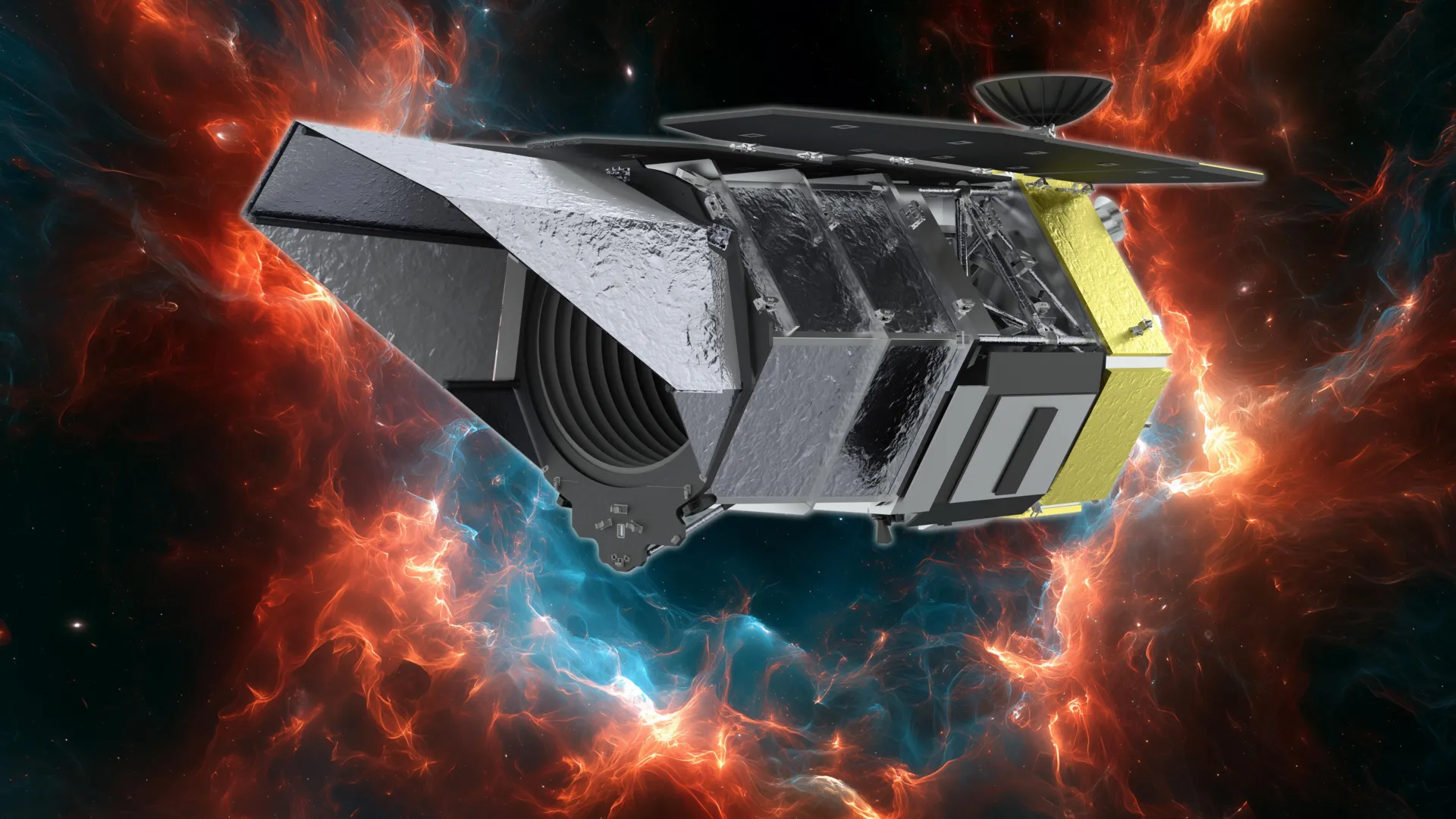
8. NASA's Roman Telescope Passes Key Tests, Receives Cosmic Light for the First Time
Source: ScienceDaily
NASA's Nancy Grace Roman Space Telescope has completed an important series of tests showing it can keep its gaze extremely steady during observations. From September 15 to 21, engineers tested Roman's fine-guidance system, which helps the observatory stay precisely locked onto its targets; then, on September 22, the telescope's Coronagraph Instrument received cosmic light for the first time.
Roman's primary science instrument, the Wide Field Instrument, contains 18 detectors. Engineers designated a small section of each detector to rapidly monitor a different guide star. The attitude control system first points the spacecraft toward the correct area of the sky, and the fine-guidance system then continuously tracks those reference stars and supplies information that helps the observatory correct tiny movements during an exposure.
Begona Vila, Roman's guiding instrument systems lead at NASA's Goddard Space Flight Center, said the fine-guidance system reports the positions of the guide stars about four times each second. Tests confirmed the observatory can stay stable for science operations: better than 1/100,000 of a degree for half an hour at a time for Wide Field Instrument observations, or for eight hours at a time for Coronagraph Instrument observations. That is roughly comparable to keeping a laser focused on a U.S. dime from about 150 miles (about 240 kilometers) away; if engineers reach their goal, the same comparison would stretch to about 230 miles (about 370 kilometers). Roman also has no separate guider instrument, and will instead guide on detailed wavelength patterns called spectra — a mode that has never been used this way before.
9. 'China Makes More in a Week Than the U.S. Makes in a Year'
Source: Guancha
According to a CNN report on October 3, seven years after founding a robotics startup in San Francisco, Rajat Bhageria faces a difficult new task: building robots entirely without China. Like most American robotics companies, his firm, Chef Robotics, is already heavily dependent on Chinese components to make the robotic arms it sells to food producers.
The report says that as China comes to dominate advanced industries from electric vehicles to automated factories, the Trump administration has been tightening restrictions on the use of Chinese technology at home. Bhageria said investors and customers now ask him: why are you still using foreign-made parts? U.S. officials say the restrictions are meant to protect sensitive data and encourage domestic manufacturing, but experts warn they may hinder American firms trying to keep up with Chinese competitors.
Michael Murray, CEO of Kopin, which makes optical components for U.S. military drones, said his company spent more than two years moving some microdisplay production from China to the United States, and he estimates making those parts in America can cost up to 25% more. "China makes more microdisplays in a week than the United States makes in a year," he said. Gavin Kenneally, whose company builds industrial and military robot dogs, said replacing rare-earth supplies is extremely difficult in the short term.
10. China's Biren Lights Up BR20X GPU, Claiming Performance Beyond H200
Source: Mydrivers
Chinese general-purpose GPU maker Biren Technology has successfully powered on its next-generation GPU, which is about to enter mass production, according to reports. People familiar with the matter say the new product is built on a domestic process and will outperform Nvidia's H200. Biren had already made clear early this year that it was advancing a BR20X series based on a new-generation architecture, natively supporting broader data formats such as FP8 and FP4, with larger memory and higher interconnect bandwidth for cloud training and inference.
Under the plan, BR20X is expected to enter post-tape-out verification and sampling in the fourth quarter of 2026, with large-scale deployment in 2027. After that, Biren has also planned the BR30X for cloud training and inference and the BR31X for the edge, both expected to reach commercialization around 2028.
On the business side, Biren reported revenue of 1.236 billion yuan in the first half of 2026, up 1,997.6% year over year and already more than its full-year figure for last year; gross profit was 527 million yuan, up 2,708.5%, with gross margin rising to 42.7%; its loss for the period narrowed sharply by 76.4% to 377 million yuan. As of June 30, 2026, the company's inventory stood at 1.215 billion yuan.

More News
- Global Express | October 4, 2026 — Houthis Claim Strike on Saudi Aramco Site as Yemen Fighting Escalates
- Finance Weekly | Weak U.S. Jobs Cool October Rate Bets as Eurozone Inflation Hits a Three-Year High
- Sports Express | October 4, 2026 — Rasmussen's Near No-Hitter Lifts Rays Past Yankees 1-0
- Maple Express | October 4, 2026 — Debris From Missing Ontario Air Ambulance Found Off U.S. Coast; Six Still Missing
- Maple Express | October 3, 2026 — Ontario Air Ambulance Jet With Six Aboard Missing Off U.S. Coast
Comments (0)
View More
 -57%
-57%JBL Live 770NC Over-Ear ANC Headphones — 65-Hour Battery, Adaptive Noise Cancelling! $129.98 CAD (57% Off)
 -23%
-23%Apple AirPods 4 with Active Noise Cancellation — H2 Chip & USB-C Case! $194 CAD (22% Off)
 -38%
-38%Crayola Twistable Colored Pencils 50ct — Twist to Colour, No Sharpening Needed! $24.19 CAD (38% Off)
 0
0Dell 34 S3425DW Curved Monitor — 120Hz & USB-C Single-Cable | $547.02 CAD
 Finance Weekly
Finance Weekly | Weak U.S. Jobs Cool October Rate Bets as Eurozone Inflation Hits a Three-Year High
 Maple Express
Maple Express | October 4, 2026 — Debris From Missing Ontario Air Ambulance Found Off U.S. Coast; Six Still Missing
-57%JBL Live 770NC Over-Ear ANC Headphones — 65-Hour Battery, Adaptive Noise Cancelling! $129.98 CAD (57% Off)
Amazon
-23%Apple AirPods 4 with Active Noise Cancellation — H2 Chip & USB-C Case! $194 CAD (22% Off)
Amazon
-38%Crayola Twistable Colored Pencils 50ct — Twist to Colour, No Sharpening Needed! $24.19 CAD (38% Off)
Amazon
0Dell 34 S3425DW Curved Monitor — 120Hz & USB-C Single-Cable | $547.02 CAD
Amazon
Finance WeeklyFinance Weekly | Weak U.S. Jobs Cool October Rate Bets as Eurozone Inflation Hits a Three-Year High
Maple Express