Global Express | August 9, 2026 Yemen's Houthis Attack Saudi Aramco Refinery
Today's Global Express: Yemen's Houthis attack Saudi Aramco refinery; Iran says Strait of Hormuz deal close but lists six conditions; Ukraine drone strikes hit two Russian refineries; U.S. intelligence warns Putin may test NATO; Europe's drying rivers trigger economic crisis; EU unveils $18 billion satellite constellation; BC wildfire forces 20,000 to evacuate; Thailand school shooting kills five teachers; U.S.-China space race nears tipping point.
1. Yemen's Houthis Claim Attack on Saudi Aramco's Jazan Refinery
Yemen's Iran-aligned Houthis announced on August 9 that their drones struck Saudi Aramco's Jazan refinery, a facility that processes 400,000 barrels of crude oil per day in southwestern Saudi Arabia. The Saudi energy ministry confirmed a fire had broken out at the refinery but said it was later extinguished, with no injuries reported.
The attack came just two days after Saudi Arabia signed a mutual defense pact with Turkey and Pakistan, which stipulates that an armed attack against any of the three would be regarded as an attack on all. Turkish Foreign Minister Hakan Fidan said the new alliance was not directed against Iran or any other country but rather served as a collective security pledge.
Notably, the Jazan refinery was already shut down on July 27 following a prior Houthi attack that damaged its Integrated Gasification Combined Cycle complex and tank farm area. This latest strike underscores the escalating tensions in the Red Sea region and the growing threat to global energy supply chains.
2. Iran Says Strait of Hormuz Deal Close, But Not Enough to Reopen Waterway
Iranian Foreign Minister Abbas Araqchi said on August 8 that Iran and Oman are "very close" to an agreement on control of the Strait of Hormuz, but emphasized the deal alone would not be sufficient to reopen the crucial energy transit route. Iran's top national security official listed six conditions, including ending U.S. threats, halting aggression, and compensating Iran for violations of prior agreements.
U.S. Vice President JD Vance said Washington anticipates an agreement soon so normal oil traffic can resume. Meanwhile, the UAE reported that Iran had struck another vessel in the strait, highlighting the fragility of the situation. Vance described the conflict as being in the "middle game," with the U.S. employing diplomatic, economic, and military tools.
Since the U.S. and Israel launched attacks on Iran on February 28, Tehran's blockade of the Strait of Hormuz has strangled global energy exports. Despite ongoing diplomatic efforts, deep divisions among the parties suggest a full reopening of the waterway remains distant.
3. Ukraine Strikes Two Major Russian Oil Refineries in Drone Attack
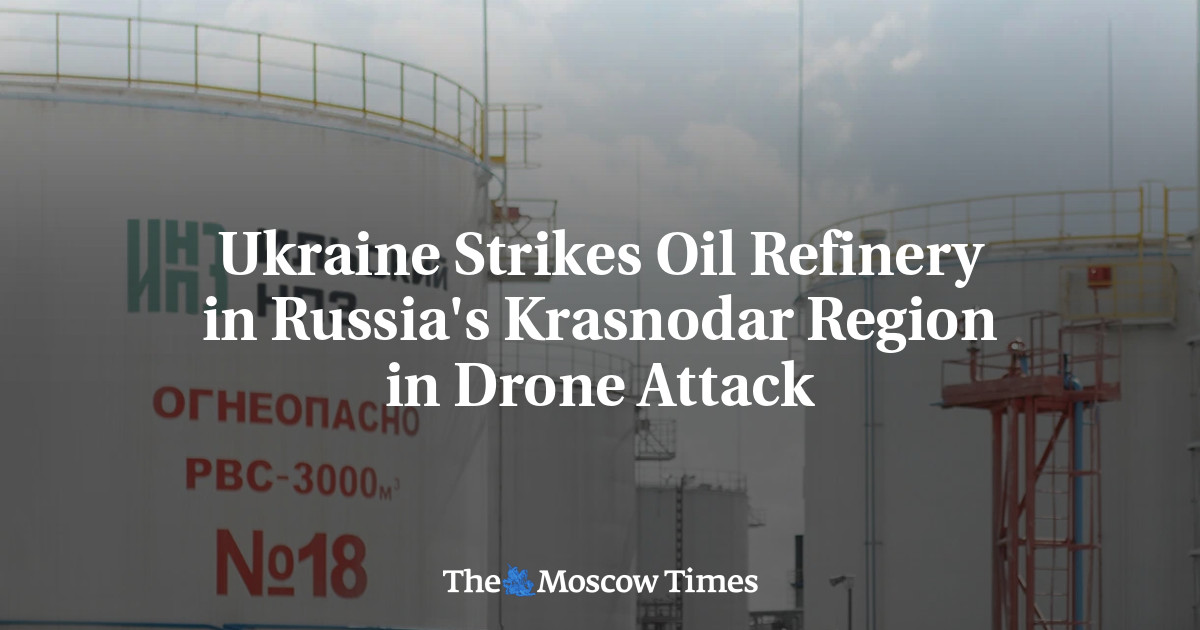
Ukraine's military said on August 8 that its forces hit both the Ilsky oil refinery in Russia's Krasnodar region and the Syzran refinery in the Samara region overnight, causing fires at both facilities. Local authorities in Krasnodar said the fire at Ilsky was caused by debris from a Ukrainian drone and had been extinguished.
The Ilsky refinery has a design capacity of over 6 million metric tons of oil per year, while Syzran can process 8.5 million tons annually. Russia's Defense Ministry claimed its air defenses destroyed 397 Ukrainian drones across multiple regions overnight, though Reuters could not independently verify reports from either side.
Ukraine says targeting Russian energy infrastructure is aimed at depriving Moscow of resources to fund its military. The long-range strike campaign against energy facilities has become a key front in the Russia-Ukraine conflict, with both sides seeking to erode the other's war-making capacity.
4. U.S. Intelligence Warns Putin Could Test NATO with Provocative Actions
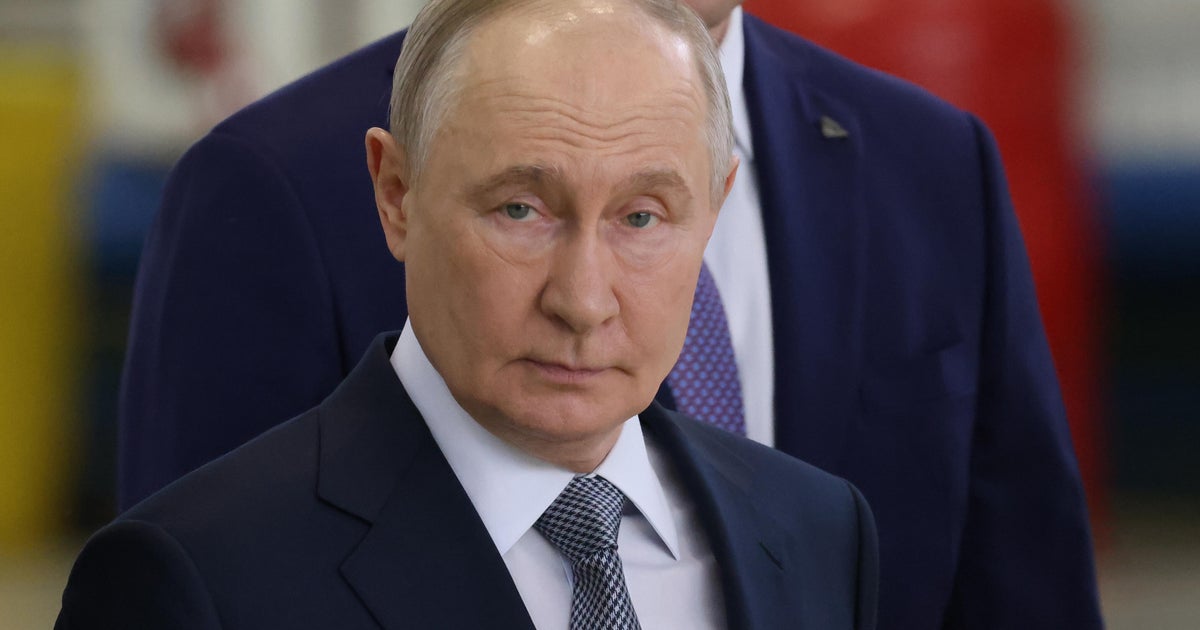
U.S. intelligence assessments indicate Russian President Vladimir Putin could be increasingly willing to authorize provocative actions on NATO territory, with the likely goal of testing the alliance's unity and the Trump administration's willingness to respond. According to CBS News, these actions could include hybrid operations, cyberattacks, and other deniable measures short of a full-scale conventional military campaign.
U.S. officials pointed to the discovery earlier this week of an explosive-laden drone at an airport in Leipzig, Germany, assessed to be of Russian origin. Russian drone incursions into Romanian airspace and other incidents have also heightened concerns among Western allies.
The assessments reflect a shift in Putin's risk calculus compared with just a few months ago. The objective would not necessarily be to trigger a broader conflict but to probe NATO's vulnerabilities at a time when the Russia-Ukraine war continues and U.S.-Iran tensions remain high, creating new uncertainties for European security.
5. Europe Takes Drastic Measures as Drying Rivers Bring Energy and Economic Pain
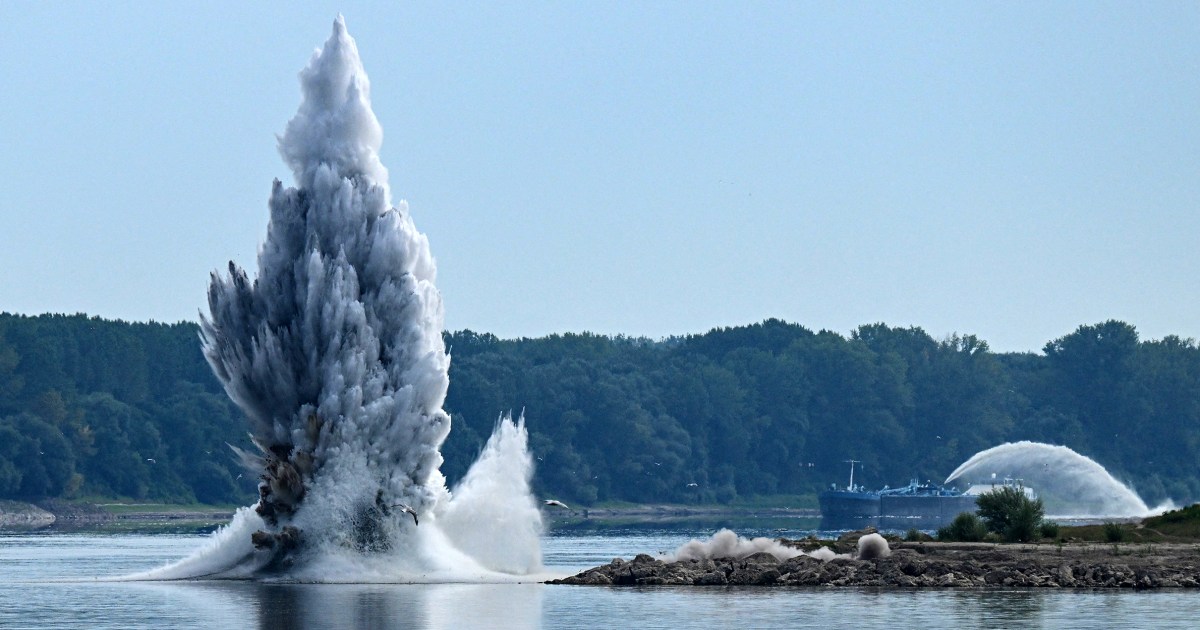
Europe is facing a severe drought that has pushed critical rivers like the Rhine and Danube to record lows, forcing countries to resort to extreme measures such as underwater explosions to keep shipping lanes open. As the world's fastest-warming continent, Europe cannot escape the consequences of rolling crises and record-breaking heat.
The drying rivers directly threaten energy production, freight transport, and tourism. Nuclear power plants that rely on river water for cooling and supply chains dependent on waterway transport are facing severe disruptions. Scientists note that climate change is intensifying the frequency and severity of wildfires and droughts, making European summers increasingly perilous.
From controlled underwater blasts in the Danube to shipping restrictions on the Rhine, European nations are taking unprecedented steps to manage the water crisis. Every sector of the economy is feeling the strain, and weather forecasts show no sign of relief in the near term.
6. EU Launches $18 Billion Satellite Constellation, Spanish Firm Wins Key Role
European officials have agreed to a rollout plan for the continent's flagship satellite constellation, adding 66 low Earth orbit satellites to the hundreds already envisioned. The program, called IRIS2, is valued at more than €15.6 billion ($18 billion) and is seen as Europe's answer to SpaceX's Starlink broadband network.
Spain's HispaSat, part of the Indra Group, has been selected as prime contractor for the ground communications and networking portion of the effort. The first satellite launches are slated for 2029. The European Commission said acquiring more satellites will help strengthen defense, security, and emergency service capabilities.
The initiative marks a key step toward European space autonomy. Against a backdrop of global geopolitical tensions, having an independent secure communications network is viewed as a strategic necessity, and Europe is moving to close the gap with the U.S. and China in the space domain.
7. British Columbia Wildfire Forces Over 20,000 to Flee, Destroys Homes
A fast-moving wildfire in British Columbia has forced more than 20,000 people to evacuate as the blaze destroyed homes and raced toward communities along Okanagan Lake. The Bald Range wildfire, first reported on Friday evening, has burned approximately 9,500 hectares and prompted evacuation orders in Summerland, Peachland, and surrounding areas.
BC Premier David Eby declared a state of emergency early Saturday as over 100 wildfires burned across the western Canadian province, nearly half of them out of control amid hot, windy conditions and prolonged drought. Some residents became trapped and had to be rescued by firefighting helicopters.
"People have lost their homes. And many people have been displaced. Others are waiting for news about loved ones," Eby said. Canada has faced a summer of large-scale wildfires across multiple provinces, with scientists pointing to climate change as a key factor worsening the frequency and intensity of extreme fire events.

8. Thailand School Shooting: Teen Gunman Kills Teachers and Grandparents
A teenage gunman went on a rampage at his high school in Thailand on August 7, killing five teachers and multiple students in one of the country's deadliest school shootings in recent years. Police said the shooter had also killed his grandparents at home before carrying out the school attack.
Thailand's prime minister confirmed the deaths of five teachers, calling it the deadliest school shooting the country has seen in years. The gunman died following the attack, and authorities are investigating the motive and the source of the firearm.
The tragedy has reignited debate in Thailand about gun control and youth mental health. While the country's firearm laws are relatively strict, the circulation of illegal guns and the lack of adequate mental health support remain serious social challenges.

9. U.S.-China Space Race Approaches Tipping Point
Both the United States and China plan to send robotic explorers to the lunar south pole later this year, paving the way for human explorers to follow. CNN reports that China's rapidly advancing space program is positioning it to achieve what the Soviet Union could not: landing taikonauts on the moon, while the U.S. relies on the private sector to develop low-cost exploratory landers.
NASA Administrator Jared Isaacman acknowledged China as "absolutely a great competitor" and expressed confidence the U.S. will meet its 2028 deadline for returning astronauts to the lunar surface. Pittsburgh-based Astrobotic Technology's Griffin lander is set for delivery to the lunar south pole in late 2026.
With much of China's aerospace development shrouded in secrecy, it is difficult to determine with certainty which country is ahead. But analysts believe 2026 could mark a tipping point in the space race, with whoever reaches the south pole first and establishes a sustainable presence gaining significant strategic advantage.

10. Vance: U.S.-Iran Conflict in 'Middle Game,' Iran Lists Six Conditions
According to Xinhua News Agency, U.S. Vice President JD Vance said on August 8 that the U.S.-Iran conflict is not over but has "clearly moved beyond the opening phase into the middle game." Vance said Washington is employing a combination of diplomatic, economic, and military tools, with the core objective of maximizing the volume of oil and natural gas passing through the Strait of Hormuz.
Iran has listed six conditions for reopening the strait, including ending U.S. threats, halting aggressive actions, and compensating Iran for violations of prior agreements. While Iran has consistently denied holding direct talks with the U.S., Secretary of State Marco Rubio confirmed that Washington is participating in discussions between Oman and Iran.
Vance said the U.S. is seeking to establish a navigation mechanism to ensure safe passage for commercial vessels, including minesweeping operations, but added that "Iran also needs to commit not to fire on merchant ships." This stance reflects ongoing diplomatic efforts to de-escalate tensions and safeguard global energy shipping security.
More News
- AI Weekly | OpenAI and Anthropic Launch a Price War as Trump Rebrands AI 'Super Intelligence'
- Global Express | September 23, 2026 Trump Meets Venezuela's Interim President in First Face-to-Face Since Maduro Seized
- Finance Morning: Musk Calls Shanghai Gigafactory a 'Gem'; Chinese Property Stocks Rally
- Tech Express | September 23, 2026 — Anthropic Releases Claude Opus 5.5, Cutting Typical Task Costs by 40%
- Sports Express | September 23, 2026 -- Raptors, Kawhi Leonard Complete Two-Year, $115M Extension
Comments (0)
View More
 -21%
-21%Xbox Wireless Controller Heart Breaker Special Edition — Stunning Pink & Purple Finish with Seamless Device Switching! $79.99 CAD (20% Off)
 -56%
-56%WAVLINK 12-in-1 Triple Display USB-C Docking Station — 4K Output, 100W Charging & Gigabit Ethernet! $39.99 CAD (56% Off)
 -16%
-16%Insignia 4.3 cu ft Top Load Washer + 6.7 cu ft Electric Dryer — White, Only at Best Buy! $849.98 CAD (15% Off)
 -34%
-34%Blink Video Doorbell + Outdoor 4 (2-Cam Kit) — 2-Year Battery Life, Sync Module Included! $179.99 CAD (33% Off)
 Finance Evening
Finance Evening | September 22, 2026 AMD Tops $1 Trillion; Toronto Stocks Hit Two-Week High
 Tech Express
Tech Express | September 23, 2026 — Anthropic Releases Claude Opus 5.5, Cutting Typical Task Costs by 40%
-21%Xbox Wireless Controller Heart Breaker Special Edition — Stunning Pink & Purple Finish with Seamless Device Switching! $79.99 CAD (20% Off)
Best Buy
-56%WAVLINK 12-in-1 Triple Display USB-C Docking Station — 4K Output, 100W Charging & Gigabit Ethernet! $39.99 CAD (56% Off)
Best Buy
-16%Insignia 4.3 cu ft Top Load Washer + 6.7 cu ft Electric Dryer — White, Only at Best Buy! $849.98 CAD (15% Off)
Best Buy
-34%Blink Video Doorbell + Outdoor 4 (2-Cam Kit) — 2-Year Battery Life, Sync Module Included! $179.99 CAD (33% Off)
Amazon
Finance EveningFinance Evening | September 22, 2026 AMD Tops $1 Trillion; Toronto Stocks Hit Two-Week High
Tech Express