
Finance Morning: ChiNext Jumps 3% as Tokyo and Seoul Slide
Nov 23 Finance Morning: Beijing rolls out a market support package, cutting the margin requirement floor to 80%; A-shares reverse early losses with ChiNext up 3.08% and turnover at 1.56 trillion yuan. Tokyo and Seoul tumble, Korea readies a stabilization fund, Taiwan margin balances drop $1.5 billion, and Bessent warns the Fed against overtightening.
🛒 Amazon Black Friday 2026 Picks: our Black Friday hub is live — 100+ hand-picked deals across six categories, prices update in real time.
📊 Asia Markets Today
| Index | Close | Change | % Change |
|---|---|---|---|
| Shanghai Composite | 3,538.95 | +5.16 | +0.15% |
| Shenzhen Component | 10,454.37 | +197.98 | +1.93% |
| ChiNext | 2,280.20 | +68.08 | +3.08% |
| Hang Seng | 22,383.74 | -27.06 | -0.12% |
| Nikkei 225 | 56,436.65 | -3,007.56 | -5.06% |
| KOSPI | 4,708.54 | -161.42 | -3.31% |
| TAIEX | 36,811.89 | +778.60 | +2.16% |
1. Beijing's market support package: margin requirement cut to 80%
Source: Yicai
On the evening of Nov 22, the Shanghai, Shenzhen and Beijing stock exchanges and China Securities Depository and Clearing issued a series of measures together: lowering the margin requirement to release incremental funds, introducing market makers on ChiNext, and rolling out a fee-cutting package. Approved by the CSRC, the floor for the margin financing ratio at the three exchanges will drop from 100% to 80% starting Nov 30.
The leverage effect is direct. Yicai's example: with a 100% ratio, 1 million yuan of collateral supports at most 1 million yuan of margin buying; at 80%, the same collateral supports up to 1.25 million yuan, lifting leverage from 1x to 1.25x. Total margin financing balances are about 2.2 trillion yuan, so the new rule could theoretically bring nearly 400 billion yuan of fresh money into the market.
Tian Lihui, a finance professor at Nankai University, said the ratio had been raised to 100% earlier this year when the market was overheated and the cooling effect was clear; now the market needs confidence and financing activity has already eased, so the cut is a clear signal of real money support. Brokers are also required to tighten trade-behavior management and apply stricter margin ratios to abnormal trading. The Shenzhen exchange opened a public consultation on ChiNext market-making rules, allowing qualified brokers to register as market makers. On fees, the Shanghai exchange expects to give up 1.368 billion yuan this round and over 2.4 billion yuan for the full year, while Shenzhen adds 1.39 billion yuan and over 2.2 billion yuan for the year — more than 4.6 billion yuan combined.
2. A-shares reverse early losses; ChiNext jumps 3.08%, turnover hits 1.56 trillion yuan
Source: Sina Finance
Chinese stocks opened lower on Nov 23 and began a clear rebound from 11 a.m. Led by optical-module names, ChiNext — where the market-maker reform is being pushed — closed up 3.08% at 2,280 points with 404.6 billion yuan of turnover. The Shanghai Composite rose 0.15% to 3,539 points. Combined turnover across Shanghai, Shenzhen and Beijing reached 1.564 trillion yuan, 132.8 billion yuan more than Friday.
Among individual stocks, Unitree Robotics (688836.SH) hit the daily limit in the afternoon, while Zhongji Innolight (300308.SZ) climbed 6.1% after opening lower. Market participants said the measures announced on Nov 22 provided liquidity and a stabilizing signal; capital had clustered in semiconductors in November while speculative trades elsewhere were cleared out, a structure that suggests sector rotation can continue once the market steadies.
Qiu Xiang, an analyst at CITIC Securities, said the package — margin adjustment, ChiNext market making and fee cuts — targets the market's pain points by freeing margin capacity and adding a "buffer" for ChiNext. Deng Lijun, a strategist at Huajin Securities, expects structural opportunities by year-end, with financials and growth styles relatively favored.
3. China's richest woman Zhou Qunfei puts 40 million yuan into chips
Source: 21st Century Business Herald
On Nov 18, an equity investment fund named Weike Juyuan completed business registration in Xishan district, Wuxi, with 120 million yuan in committed capital. That is small next to semiconductor funds often running into billions, but the name of its largest shareholder drew attention: Changsha Qunxin Investment Consulting, the personal investment vehicle of Lens Technology (300433.SZ) founder Zhou Qunfei, which subscribed 40 million yuan for a 33.33% stake.
The 2026 Hurun Rich List, released days ago, showed Zhou as China's newest richest woman with 127 billion yuan, while her wealth with Zheng Junlong totals 128 billion yuan, ranking 33rd. It is the second time she has taken the top spot, 11 years after the first. The title has added attention to the 40 million yuan chip fund investment.
4. Hang Seng trims loss to 0.12% as Asian markets swing
Source: 8world
A broad sell-off in global AI stocks sent Asian markets swinging today. Hong Kong's Hang Seng Index opened down 1.1% and closed with its loss narrowed to 0.12%, while mainland benchmarks that had been lower also recovered by the close.
Korean and Taiwanese stocks plunged at one point, with local authorities readying market stabilization funds to step in. The KOSPI fell as much as 5% to a 10-month low and still closed down 3.31%. After Taiwan's worst week, the Financial Supervisory Commission said it was prepared to use funds to support the market and tightened short-selling rules; the TAIEX rebounded from an early drop to close up more than 2%. The report attributed the rout mainly to last week's slump in US tech stocks and further US restrictions on advanced chip exports.

5. BOJ speeds up ETF sales; Guan Tao says impact on stocks should not be overstated
Source: Dahe Financial Cube
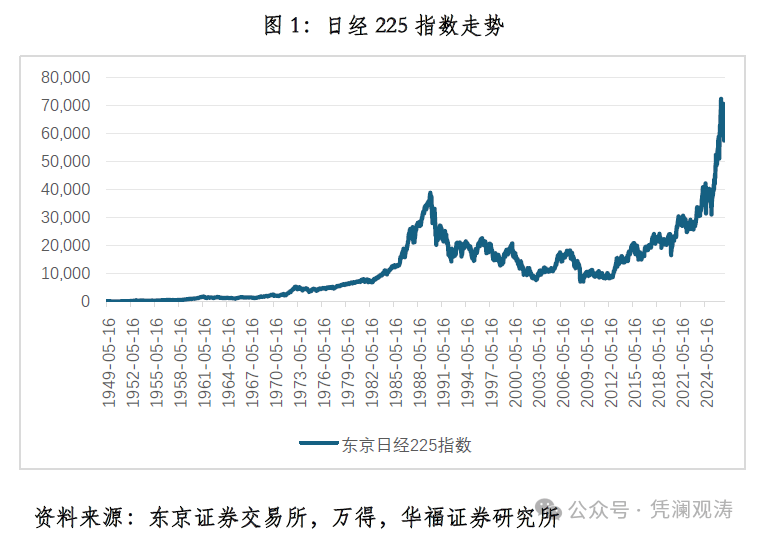
The Nikkei 225 closed down 5.06% today. Over the longer term, the pace of the Bank of Japan's ETF buying and selling remains a variable for the market. Guan Tao traced the history: in October 2010 the BOJ launched comprehensive easing and set up an asset purchase program including government bonds, corporate bonds and equity ETFs, starting ETF purchases in December that year; the initial step included buying 45 billion yen of ETFs tracking the TOPIX and Nikkei 225 through the end of 2011.
The BOJ raised its purchase ceiling several times — four increases in March and August 2011 and April and October 2012 took it to 2.1 trillion yen. In 2013, under quantitative and qualitative easing, holdings were set to grow by about 1 trillion yen a year; by July 2018 the annual guideline was about 6 trillion yen, and during the pandemic in 2020 the annual cap rose to about 12 trillion yen. In March 2024 the BOJ raised rates, exited negative rates and yield curve control, and stopped buying ETFs. In September 2025 it said it would sell 350 billion yen of ETFs a year, and in October 2026 it announced an acceleration to 860 billion yen.
Guan argues the BOJ's ETF operations are mainly a monetary policy tool, not a stock-market stabilization tool. Japan's recovery from its lows came from post-crisis policy expansion, earnings repair, corporate globalization, governance reform and shifts in asset allocation; liquidity support can ease downward pressure but cannot by itself produce durable shareholder returns. The article also noted that Prime Minister Sanae Takaichi plans to channel the BOJ's unrealized gains from ETF sales into economic security and strategic industries and to use the money to repay government bonds; Bloomberg Economics estimates the faster sales could add about 80 billion yen a year to remittances to the government.
6. South Korea's finance minister: stabilization fund preparations underway
Source: Jin10 Data
South Korea's government is stepping up efforts to steady financial markets. With global AI-related shares under sustained selling pressure, the KOSPI fell sharply again on Monday. Finance Minister Lee Hyung-il said Monday that the latest market stabilization measures should improve investor confidence and that authorities have clearly shown their resolve. The market's response was limited, however: the KOSPI fell as much as 5.5% during the session, extending Friday's losses.
Amid the volatility, the government held an emergency financial markets meeting over the weekend, attended by the finance minister, the Bank of Korea governor and heads of major financial regulators, to assess the potential impact of the US sell-off. Under the plan, the government will immediately begin preparations to deploy the stock market stabilization fund so it can be used quickly if needed. Lee stressed that whether the fund is actually deployed will depend on market conditions.
The stabilization fund is mainly financed by banks and other financial institutions and was used during the 2008 global financial crisis; in 2020, Seoul also planned to reactivate a fund of about 10.76 trillion won ($7.2 billion), but the money was never actually deployed. Besides the fund, the government will temporarily relax listed companies' daily share buyback limits for three months, and the Financial Supervisory Service and the Korea Exchange will run a three-month special crackdown on illegal short selling.
7. Taiwan margin balances drop $1.5 billion in a day, biggest fall in 30 years
Source: Asia Business Daily
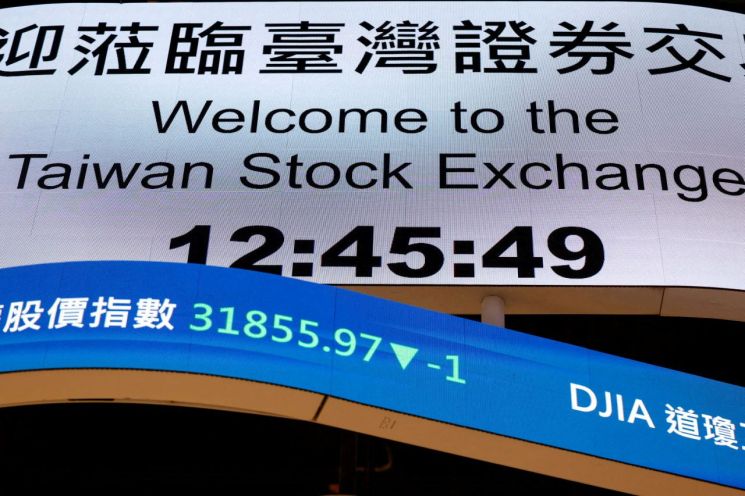
Margin balances in Taiwan's stock market are shrinking fast. Bloomberg reported on Nov 23, citing data compiled since 1996, that margin loan balances on the listed market fell by NT$49 billion (about $1.5 billion) on Nov 20, the largest one-day decline on record. Local media said combined listed and OTC margin balances fell about NT$63.7 billion that day, with 632 accounts forcibly liquidated for NT$1.495 billion.
The TAIEX plunged 17.5% last week, its biggest weekly decline since 1991. Taiwanese stocks had risen this year on the AI investment boom but have fallen sharply on concerns about the huge costs of building AI infrastructure. On Nov 23 the index swung between gains and losses and rose more than 2% at one point.
Analysts say that as investors rapidly cut back on borrowed positions, financial authorities' stabilization measures are having only a limited effect. Taiwan's regulators have tightened short-selling restrictions several times this month. Goldman Sachs warned in a Nov 21 report that although retail margin balances have fallen sharply, the risk of further margin calls and forced liquidations remains high; the market's overall collateral maintenance ratio has fallen to 132%, near the 130% margin-call threshold, and 53% of stocks are already below it.
8. Nvidia falls 14% in a day as the AI trade is repriced
Source: Sina Finance
US stocks suffered a "Black Friday" on Nov 20, with all three major indexes sharply lower: the Dow fell 1.93%, the S&P 500 3.7% and the Nasdaq 5.28%, leaving the Dow and S&P 500 10% below their highs and in correction territory. Nvidia closed down 14.01% at $125.53, its seventh straight daily decline.
Nvidia lost nearly 23% for the week, its biggest weekly drop since October 2008, and fell for a seventh consecutive week, the longest losing streak since 2012; its market value slipped to about $3.03 trillion. Two people familiar with the matter said SEC enforcement staff are reviewing potential accounting issues at Nvidia. The Justice Department is also reviewing its $12.9 billion acquisition of open-source platform Hugging Face and broader antitrust issues.
Richard Saperstein, chief investment officer at Treasury Partners, said expectations of slower data-center construction, fewer financing channels for AI projects and slower earnings growth at tech companies are driving a repricing of the AI sector. Dan Ives, a partner and tech analyst at Wedbush, attributed the sell-off to multiple factors: Anthropic's listing drained capital, a stronger dollar tightened financial conditions, and persistent inflation and the prospect of Fed rate hikes weighed on sentiment. Jonathan Krinsky, chief market technician at BTIG, said technical indicators suggest the selling is not over.

9. Oil slides, gold jumps nearly $100 in a day
Source: 21st Century Business Herald
As of 15:05 on Nov 23, international oil prices slid: Brent crude was at $92.03 a barrel, down 0.58%, and New York crude fell below $83 a barrel, down 0.56%, according to 21 Finance's radar.
At the same time, gold surged. London spot gold reclaimed $3,600 an ounce and touched a high of $3,640.44, up 2.71% and nearly $100 on the day; COMEX gold rose to $3,630 an ounce, up as much as 3.26% and nearly $115 intraday.
Most cryptocurrencies climbed, with bitcoin back above $61,000, up nearly 4%; nearly 70,000 traders were liquidated in 24 hours.
10. Bessent warns the Fed against overtightening as a December hike stops being a sure thing
Source: Jin10 Data
US Treasury Secretary Scott Bessent is publicly warning the Federal Reserve that overly tight policy could be a mistake. In an interview with CBS's "Face the Nation" on Sunday, he said financial conditions have tightened noticeably in recent months while several Fed officials have sounded hawkish.
Bessent said on CNBC on Nov 13 that if the energy supply shock is easing, an aggressive Fed hike would be a mistake; on Nov 20 he again urged policymakers not to back a larger increase, noting that one Fed governor now advocating a 50-basis-point hike had supported an easing of the same size in the past year. The remarks target officials such as Governor Christopher Waller who favor considering a 50-basis-point hike in December. Bessent speaks for the Treasury, not the rate-setting Fed.
The Fed raised its target range by 25 basis points to 3.75%-4.00% in September and held steady last month. The next decision is 17 days away. Markets had almost fully priced a 25-basis-point December hike, but traders have been scaling back bets on further tightening as US stocks fell last week. Rates markets now expect fewer than three hikes, with the next fully priced in January 2027 and cuts pushed out to 2028.
More News
- Maple Express | November 23, 2026 — Chow uses strong mayor powers to shake up city hall
- Immigration | November 23, 2026 Canada's New Student and Temporary Worker Arrivals Fall by 352,500
- Global Express | November 23, 2026 — Ukraine Says Sea Drones Sank Russian Corvette in Libya
- Tech Express | November 23, 2026 — DeepSeek Hits 65 Trillion Tokens a Week, Leading Global AI Usage for a Fifth Straight Week
- Sports Express | November 23, 2026 — Larkin Traded to Montreal as Red Wings Rebuild
Comments (0)
View More
 -40%
Cuisinart Compact 2 lb Programmable Bread Maker — 40% Off, $107.97
 -11%
🎉 史新低!Dawn Non-Scratch Kitchen Sponges 6-Pack — Safe on Non-Stick, Dishwasher Safe! $17.99 CAD (10% Off)
 -40%
🎉 史新低!GREENIES TEENIE Dental Treats, 130 Count — Cleaner Teeth, Fresher Breath! $31.39 CAD (40% Off)
 -43%
Ninja CREAMi XL Deluxe 11-in-1 Ice Cream Maker NC501C — 43% Off, $199.98
 Maple Express
 | November 22, 2026: Two 16-year-olds killed in Scarborough triple shooting
 Maple Express
 | November 23, 2026 — One seriously injured in North York park brawl
-40%Cuisinart Compact 2 lb Programmable Bread Maker — 40% Off, $107.97
Amazon
-11%🎉 史新低!Dawn Non-Scratch Kitchen Sponges 6-Pack — Safe on Non-Stick, Dishwasher Safe! $17.99 CAD (10% Off)
Amazon
-40%🎉 史新低!GREENIES TEENIE Dental Treats, 130 Count — Cleaner Teeth, Fresher Breath! $31.39 CAD (40% Off)
Amazon
-43%Ninja CREAMi XL Deluxe 11-in-1 Ice Cream Maker NC501C — 43% Off, $199.98
Amazon
Maple ExpressMaple Express | November 22, 2026: Two 16-year-olds killed in Scarborough triple shooting
Maple Express