
Finance Morning: Asia-Pacific Slides on Black Monday, Taiwan Tumbles 6%; Goldman Bullish on China for 2027
Asia-Pacific stocks suffered a Black Monday on Nov 16: Taiwan's Taiex fell 6.03%, KOSPI lost 3.59% to slip below 5,100, the Nikkei dropped 2.42% below 60,000, and all four major A-share benchmarks closed lower while Hong Kong rose 0.49%. Investors await Nvidia's earnings and Anthropic's IPO. Goldman Sachs upgraded Hong Kong stocks to overweight, seeing about 23% upside for MSCI China in 2027. Gold fell 4.63% last week.
Asian markets opened the week with a sharp selloff on Monday. Taiwan's Taiex tumbled more than 6%, South Korea's KOSPI lost its 5,100 level, Japan's Nikkei 225 fell back below 60,000 for the first time in a week, and all four major mainland China benchmarks closed lower. Hong Kong was the lone gainer. Investors are waiting for Nvidia's earnings report on Tuesday and Anthropic's IPO later this week, while the fallout from Jensen Huang's resignation continues to spread.
📊 Asia Market Close
| Index | Close | Change | % Change |
|---|---|---|---|
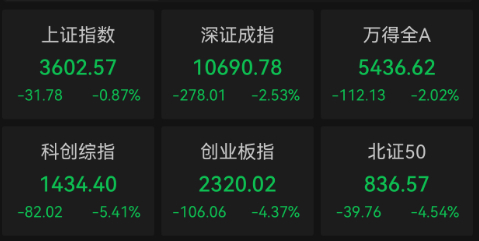
| Shanghai Composite | 3,602.57 | -31.78 | -0.87% |
| Shenzhen Component | 10,690.78 | -278.01 | -2.53% |
| ChiNext | 2,320.02 | -106.06 | -4.37% |
| Hang Seng | 23,753.84 | +116.24 | +0.49% |
| Nikkei 225 | 59,662.02 | -1,480.33 | -2.42% |
| KOSPI | 5,100.50 | -190.03 | -3.59% |
| Taiwan Weighted | 41,040.08 | -2,635.04 | -6.03% |
World shares mixed as investors await Nvidia earnings and Anthropic IPO
Source: Associated Press (AP)
World shares were mixed and Asian shares mostly declined Monday on another tech selloff, as investors' worries over the future of the artificial intelligence trade extended into another week following Nvidia's fallout.
Investors and traders are closely monitoring any signals on what is next for the AI industry ahead of Nvidia's earnings report due Tuesday and Anthropic's massive stock market debut set for later this week.
Jensen Huang's resignation as Nvidia CEO last week after his extramarital affair sparked U.S. national security concerns shook global markets. Huang has been one of the biggest advocates for AI, and his downfall triggered questions over how the global AI boom could be impacted. Those worries have spread to Asia, where AI hardware stocks are prominent on markets including in South Korea and Japan.
In early European trading, Britain's FTSE 100 added 0.3% to 10,935.36. Germany's DAX was up less than 0.1% to 26,756.19, while France's CAC 40 rose 0.3% to 8,390.11. On Friday, Wall Street's benchmark S&P 500 dropped 0.4%. The Dow Jones Industrial Average edged 0.1% higher, while the technology-heavy Nasdaq composite fell 0.9%. Nvidia lost 2% Friday, after falling 4.3% Thursday as the company announced Huang's resignation. Broadcom declined 4.8% Friday and AMD gave up 8.8%.
"The market was already worried about this risk before what happened at Nvidia," Zhiwei Zhang, president and chief economist at Pinpoint Asset Management, said in a commentary Monday. "Now the risk has become even more serious." Investors are also looking for updates this week as U.S. President Donald Trump, Chinese leader Xi Jinping and Russian President Vladimir Putin are expected to meet Thursday on the sidelines of the Asia-Pacific Economic Cooperation summit in Shenzhen, China. The minutes from the Federal Reserve's latest policy meeting are set to be released Wednesday.
China's NDRC lays out four major policy signals, targets 10 trillion yuan in emerging pillar industries
Source: CCTV
This year is the opening year of the 15th Five-Year Plan. The National Development and Reform Commission recently held a series of press conferences under the theme "Forging Ahead in the 15th Five-Year Plan," presenting key tasks, policy arrangements and the latest progress on cultivating new growth drivers, shoring up development foundations, securing the safety base, improving livelihoods and jointly building the Belt and Road.
Ren Zhongbao, deputy director of the NDRC's Department of Innovation and High-Tech Development, said the 15th Five-Year Plan period will focus on six emerging pillar industries: integrated circuits, aerospace, biomedicine, the low-altitude economy, new energy storage and intelligent robots. These industries have largely formed complete industrial and supply chains, with output value of nearly 6 trillion yuan last year. By the end of the 15th Five-Year Plan period, that figure is expected to double to more than 10 trillion yuan.
On infrastructure, Xia Xin, director of the NDRC's Department of Infrastructure Development, said the transport sector will upgrade and strengthen networks. During the period, China will build about 15,000 kilometers of new railway, including about 10,000 kilometers of high-speed rail, along with about 2,500 kilometers of national high-grade waterways and more than 100 automated berths of 10,000-ton class or above. On water conservancy, Guan Xifan, deputy director of the NDRC's Department of Rural Economy, said more than 400 major projects are planned across flood control, water supply and irrigation, and water ecological restoration, including the second phase of the South-to-North Water Diversion's eastern route and the Yin-Da-Ji-Min project in Sichuan.
On energy, Tang Tian, deputy director of the NDRC's Bureau of Economic Operation Adjustment, said comprehensive energy production capacity will reach 5.8 billion tons of standard coal by 2030, with non-fossil energy accounting for 25% of consumption. On livelihoods, Huang Weiru, deputy director of the NDRC's Department of Social Development, said double first-class universities will expand undergraduate enrollment by 24,000 this year, and 14 billion yuan of central budget investment has been allocated to support elderly care and childcare facilities.
Goldman Sachs upgrades Hong Kong stocks to overweight, sees about 23% upside for MSCI China by 2027
Source: Phoenix News
Goldman Sachs has published its 2027 China market strategy outlook, upgrading H-shares to overweight within the region and setting a end-2027 MSCI China target that implies roughly 23% upside, with a CSI 300 target of 4,500 points, implying 10% upside. The bank's Asia strategy team also expects the MSCI Asia ex-Japan index to return 19% in dollar terms.
Goldman had downgraded H-shares to neutral on June 3, 2026. Its reasons for turning positive again include faster earnings-per-share growth, valuations at a cyclical low, light overall investor positioning, and the underappreciated diversification value of assets outside the AI trade.
On valuation, Goldman said MSCI China's forward price-to-earnings ratio is 9.8 times, about one standard deviation below its 10-year average, meaning significant bad news is already priced in. It noted that when the forward P/E has been below 10 times historically, the index has produced positive returns over the next 12 months more than 85% of the time. The bank forecasts 15% earnings growth for MSCI China in 2027, with Hong Kong profit recovery led by internet and software technology.
On liquidity, Goldman expects the overall funding backdrop for Chinese equities to be constructive in 2027, with southbound flows a certain increment for Hong Kong and estimated at $100 billion for the full year. On allocation, it advises A-share investors to replace beta with alpha, focusing on three types of targets: structural AI growth opportunities exposed after the market pullback, growth stocks offering stable cash returns and diversification, and cyclical and consumer names with earnings recovery potential.

All four major A-share benchmarks fall, Shanghai Composite down 0.87% as CPO names lead losses
Source: Sina Finance
On November 16, all four major A-share benchmarks closed lower. The Shanghai Composite fell 0.87%, the Shenzhen Component 2.53%, the ChiNext 4.37% and the STAR Composite 5.41%. Combined turnover on the Shanghai and Shenzhen bourses was 1.48 trillion yuan, down 171.2 billion yuan from the previous session, with more than 4,300 stocks declining.
Bank shares hit batch new highs, with Agricultural Bank of China, Bank of Shanghai and Bank of Nanjing up more than 2%. Coal, transport, home appliance and telecom dividend sectors also rose together.
On the downside, CPO concept and optical communication module stocks led losses. The so-called "Yi Zhong Tian" group and Shenghong Technology fell more than 10%, while Shennan Circuits and Dongshan Precision hit the daily limit down. JPT fell 15.05%, and Chuangchuang Data and Zhongji Innolight dropped more than 12%.
Hong Kong stocks buck the trend as Morgan Stanley recommends overweight global equities
Source: Sina Finance
In early trading Monday, Asia-Pacific markets fell across the board, with Hong Kong the sole market to gain. The Hang Seng Index and the China Enterprises Index both rose more than 1% intraday, while South Korean shares dropped more than 2% and the Nikkei fell more than 1%.
Notably, Morgan Stanley, often called the market's whistleblower, issued a clearly bullish signal and recommended overweighting global equities. The bank argues the AI capital expenditure cycle has not been interrupted and will keep growth and earnings resilient into next year. Strategists including Tang Shiyun said in a November 15 report that they maintain an overweight on U.S. stocks, have upgraded Japanese and European equities to overweight, keep emerging markets at benchmark, and have raised their S&P 500 target, implying 15% upside.
Within Monday's Hong Kong rally, consumer-facing sectors stood out, including restaurants, travel and tourism, consumer leaders, cosmetics and pork. According to a Guojin Securities research note, U.S. cloud providers increasingly use lease commitments to data center developers to move debt off balance sheets. As of the third quarter of 2026, unstarted lease commitments by major cloud providers totaled nearly $1.3 trillion, about twice the size of their outstanding corporate bonds.
Nikkei plunges 2.42%, falls below 60,000 for the first time in a week
Source: Kyodo News
Tokyo stocks began a new week on November 16 with the Nikkei index closing down 1,480.33 points from Friday at 59,662.02, losing the 60,000 mark for the first time in a week, a drop of 2.42%. The broader TOPIX fell 40.20 points to 3,901.37, down 1.02%, with volume of 2.52285 billion shares.
A sharp selloff in U.S. technology stocks on Friday weighed on Tokyo, with sellers in control. Concerns over the business outlook for artificial intelligence persisted, and AI and semiconductor names such as chip-testing equipment maker Advantest were sold off.
Japan's real gross domestic product for the July-September quarter contracted for the first time in four quarters, also weighing on the market. On the other hand, shares of companies with strong earnings results and forecasts were bought, supporting the broader market, and the Nikkei had risen in morning trade.

KOSPI closes down 3.6% as SK Hynix falls nearly 8%
Source: JRJ
On November 16, the fallout from Jensen Huang's departure sent global markets into a "Black Monday," with Japan, South Korea, mainland China and Taiwan — markets crowded with Nvidia supply chain names — all tumbling. South Korea's KOSPI dived in early trade, and its decline widened to as much as 4% in the afternoon.
SK Hynix fell nearly 8% and Samsung Electronics dropped more than 5%. At the close, the KOSPI was down 3.60% at 5,100.25, once again approaching the 5,000 mark.
Taiwan Weighted index sinks 6%, TSMC down 5.7%
Source: Associated Press (AP)
Taiwan's Taiex sank 6% on Monday to close at 41,040.08, one of the sharpest declines among major Asia-Pacific markets.
Chipmaking giant TSMC fell 5.7%. Taiwan's market is heavily concentrated in AI hardware stocks and is seen as a major beneficiary of the global AI boom, making it a prime casualty of this tech selloff.
Gold falls 4.63% last week; Goldman sees $4,650 by end-2027
Source: Sina Finance
New York gold futures briefly hit their lowest level in more than a year last week, posting a cumulative weekly decline of 4.63%. The primary driver was rising expectations that the Federal Reserve will raise interest rates further.
After October inflation data was released last week, several Fed officials including New York Fed President John Williams made hawkish remarks. Markets now price the probability of a December rate hike at close to 90%, and have even begun to factor in a 50-basis-point move. Against that backdrop, the dollar index touched a 19-month high intraday on Friday, and the 10-year Treasury yield hovered near its highest levels since 2007.
Thomas Rupf, head of Raiffeisen Bank's Singapore branch, said real interest rates are indeed having a significant impact on gold, and when investors need to raise cash, highly liquid gold also becomes a selling target. The market broadly believes gold lacks fresh catalysts in the near term and faces resistance in reclaiming the $4,000 per ounce level. But Goldman Sachs forecast in its latest report that gold could climb to $4,650 per ounce by the end of next year, nearly 20% above current levels.

Silicon Valley allies push Nvidia's board as Jensen Huang weighs a return as CEO
Source: Sina Finance
Jensen Huang is considering returning to Nvidia as CEO, the Financial Times reported on November 16 Beijing time. Days earlier he resigned over an extramarital affair scandal, and allies in Silicon Valley are now pressuring the company's board to reinstate him.
Multiple people familiar with the matter said Huang has discussed the possibility of returning with close confidants. Meanwhile, Nvidia's board is conducting an independent investigation into the misconduct that triggered last week's severe leadership crisis at the $4 trillion chip company.
One of Huang's allies said they are forming a "war room" of Silicon Valley executives to lobby for the former chief's return and will seek support from the White House. The ally said that in the tech world, everyone of consequence outside the frontier labs supports Huang, and that these efforts have Huang's backing.
More News
- Finance Evening: Dow Sinks 561 Points as Nvidia Erases Gains and Anthropic Prices IPO at $83
- Maple Express | November 18, 2026 — Toronto police foil murder plot in towing probe; Chow begins second term
- Maple Express | November 18, 2026: Toronto police disrupt murder plot tied to tow-truck industry
- AI Weekly | Compute Moves Behind Licenses, and AI Starts Paying Interest on Its Capex
- Global Express | November 18, 2026: Xi Greets Trump at Shenzhen Airport Ahead of Trilateral Talks
Comments (0)
View More
 -24%
SanDisk Extreme Fit 256GB USB-C Drive — Barely Sticks Out, 400MB/s Reads! $82.99 CAD (23% Off)
 -23%
Taylor Glass-Top Food Scale — 11 lb Capacity, Batteries Last Years! $34.87 CAD (23% Off)
 -31%
ErGear Dual Monitor Mount — 13–32", 17.6 lb per Arm, 10-Year Warranty! $41.99 CAD (30% Off)
 -34%
HP Chromebook 14 — A $229 School Laptop That Half-Charges in 45 Minutes! $229 CAD (33% Off)
 Finance Evening
: Dow Sinks 561 Points as Nvidia Erases Gains and Anthropic Prices IPO at $83
 Maple Express
 | November 18, 2026 — Toronto police foil murder plot in towing probe; Chow begins second term
-24%SanDisk Extreme Fit 256GB USB-C Drive — Barely Sticks Out, 400MB/s Reads! $82.99 CAD (23% Off)
Amazon
-23%Taylor Glass-Top Food Scale — 11 lb Capacity, Batteries Last Years! $34.87 CAD (23% Off)
Amazon
-31%ErGear Dual Monitor Mount — 13–32", 17.6 lb per Arm, 10-Year Warranty! $41.99 CAD (30% Off)
Amazon
-34%HP Chromebook 14 — A $229 School Laptop That Half-Charges in 45 Minutes! $229 CAD (33% Off)
Amazon
Finance EveningFinance Evening: Dow Sinks 561 Points as Nvidia Erases Gains and Anthropic Prices IPO at $83
Maple Express