
Finance Evening | October 12, 2026 — Carney Urges Unity as Alberta Prepares for Secession Vote
Tonight's Finance Evening: Carney urges unity as Alberta nears a secession vote; Canada's Competition Bureau says a healthy home market is key to investment; airport privatization needs proof of benefits; the bull market turns four; Nvidia, AMD, Google and Meta set a data center blueprint; Getty Images to file for bankruptcy; Fed's Hammack warns higher rates may be needed; Nobel economics prize goes to Hall and Woodford; rubber hits a nine-year high; and the American dream costs $5.3 million.
📊 North American Markets Today
| Index | Close | Change | % Change |
|---|---|---|---|
| S&P 500 | 7,807.24 | -4.30 | -0.06% |
| Nasdaq | 27,245.90 | -120.27 | -0.44% |
| Dow Jones | 51,850.55 | +195.60 | +0.38% |
| Toronto TSX | 35,664.62 | +519.22 | +1.48% |
| USD/CAD | 1.4278 | +0.0024 | +0.17% |
| WTI Crude | 93.16 | -0.58 | -0.62% |
| Gold | 4,195.90 | +5.30 | +0.13% |
🌎 Canada / North American Economy
Carney urges unity as Alberta prepares for secession vote
Source: Al Jazeera
Prime Minister Mark Carney used his Thanksgiving message on Monday to call for national unity, a week before the oil-rich province of Alberta votes on a proposal to secede from Canada. "We can't build big things on fault lines," Carney said in his video message, warning that Canada faces threats to its economy, security and way of life. "We have to be strong, and we are stronger together."
Albertans head to the polls on October 19 to decide whether to begin the process of seeking independence. The initial referendum is non-binding, but it proposes a future binding vote on whether Alberta should separate. Voters will be asked whether Alberta should remain a province of Canada, or whether the Government of Alberta should commence the legal process required under the Canadian Constitution to hold a binding provincial referendum on separation.
The vote follows a growing push by a vocal group of separatists, fuelled by longstanding grievances over federal energy and environmental policies; the movement accuses Ottawa of unfairly targeting Alberta's oil and gas industry. An investigation by The Globe and Mail earlier this month revealed that US Republican operatives met secession organisers in Alberta to discuss campaign strategies. Carney, who grew up in Alberta, filmed the message from a classroom at his former school, St Francis Xavier High School in Edmonton. Despite the movement's growing visibility, polls suggest most Albertans oppose independence.
Canada's competition watchdog says a healthy home market is key to attracting investment
Source: CityNews Toronto
Canada's competition watchdog says a healthy market at home is key to strengthening the economy as trade tensions with the United States worsen. "That is one of the key drivers to make our domestic economy as productive as possible and to make us as competitive as an international participant in trading markets as possible," Jeanne Pratt, the Competition Bureau's acting commissioner, said in an interview. She called competition a crucial lever "in the current context where we need to lock in as much productivity in our domestic economy as possible."
Canada-U.S. relations were upended with Donald Trump's return to the White House and the introduction of ever-changing tariff policies; the situation escalated again after trade talks faltered in August and new levies and countermeasures were launched. To shore up the domestic economy, Prime Minister Mark Carney has been trying to diversify the country's trading partners and pitch Canada as a safe haven for global investors. Pratt said fair competition is central to making Canada a better trading partner, because "competition stimulates businesses to make investments and innovate" and to "offer the lowest possible prices."
Robin Shaban, chair of the Canadian Anti-Monopoly Project, agrees there is an obvious link between competition and foreign investment. She pointed to a decade ago, when former prime minister Stephen Harper's government pushed to attract a fourth player in the telecom industry and break the oligopoly held by three giants, but a large enough fourth player never emerged. The bureau has doubled down on blocking mergers that could lead to industry concentration, with a keen eye on the food and grocery sector. Earlier this month, food giants Nortera and B&G Foods called off a deal that would have seen Nortera buy the Green Giant and Le Sieur canned and frozen vegetable brands in Canada from New Jersey-based B&G Foods.

Report: Canada's airport privatization needs proof of benefits for travellers
Source: Daily Hive
Canada's existing non-profit airport model can already fully self-finance major expansion projects and deliver competitive operating and maintenance costs, according to a new analysis this month by University of Calgary economics professor Aidan Hollis. The report urges the Government of Canada to strengthen safeguards before handing the country's four largest and busiest airports to for-profit private operators. It examines Prime Minister Mark Carney's proposed privatization of Vancouver International Airport (YVR), Calgary International Airport (YYC), Toronto Pearson International Airport (YYZ) and Montreal-Trudeau International Airport (YUL).
The federal government first indicated in its Spring 2026 economic update that it would explore opening Canada's largest airports to private investment; then in September 2026, during the Canada Investment Summit, Carney named the four airports and suggested the scheme could generate tens of billions of dollars in new revenue. A Globe and Mail report last week cited sources saying Vancouver International Airport, Canada's second busiest, is first in line, with First Nations potentially offered a minority stake of up to 20 per cent and institutional investors with airport experience acquiring the remainder for majority control. Ottawa would retain ownership of the underlying land and assets while granting investors the right to operate the airports.
Using Canadian dollar figures, Vancouver generated about $16.07 in aviation-related revenue per passenger in 2025, versus $26.50 at Sydney, $19.70 at Brisbane and $49.20 at London Heathrow — putting it roughly 39 per cent below Sydney, 18 per cent below Brisbane and 67 per cent below Heathrow. Calgary, at $16.92, also came in below all five overseas for-profit airports, while Toronto ($30.09) and Montreal ($31.12) exceeded every overseas airport except Heathrow. "The gap in the Canadian model is not capital. It is scrutiny," the report reads. Hollis argues stronger oversight is necessary regardless of whether the airports change operators.

📈 US Stocks & Markets
The bull market turned four on Monday, and a fifth birthday could be challenging
Source: CNBC
Monday marked the fourth anniversary of the current bull market, with the S&P 500 having climbed nearly 120% since its closing low on October 12, 2022 — an extraordinary run that reflects Wall Street's faith in the transformative power of artificial intelligence. Since the release of ChatGPT in late 2022, investors have hungered for all things related to the AI trade, with the most tied to the build-out — the so-called "picks and shovels" — flying to new heights.
Nvidia, once best known for the graphics cards it built for high-end video games, is now a roughly $5.5 trillion company and passed the $1 trillion market cap for the first time in 2023; Micron Technology passed that mark for the first time this May. Those moves have helped the stock market climb a wall of worry. The S&P 500 just last week topped 7,800 for the first time and remains near records, thanks in large part to its heavy allocation toward tech — about 40% of the index.
After such a run, investors wonder how much longer the rally can continue, especially amid fears over higher inflation, surging bond yields and a more hawkish Federal Reserve. Technically, the path forward appears less ideal. Oppenheimer's Ari Wald noted the current bull market is the sixth longest of 24 going back to 1932, and wrote that the median time remaining before a cycle reached its peak was 13 months, suggesting 2027 could be the final leg. He added, however, that the median fifth-year return was still 21%.

Nvidia, AMD, Google and Meta team up on a global blueprint for data center design
Source: Yahoo Finance
Nvidia is joining rival AMD, along with partners Google and Meta, to establish a new open specification for data center design. Called the Open Data Center Specification v0.7, the standard serves as a blueprint for building data centers, covering everything from the physical layout of the buildings to cooling and power architecture.
The chip giant also said it is teaming with Google, Meta and Microsoft to create the OCP Grid Resilience Specification, a standard for how data centers respond to power disruptions so they can rapidly return to full operation. According to Nvidia, the two specifications give everyone from system makers to colocation providers and data center operators a set of predefined templates, sparing them a slew of different customer designs.
Data centers are incredibly complex facilities that require large amounts of power and cooling to keep the chips inside from overheating and failing, and custom designs can slow construction timelines. Open standards could change that, letting new data centers come online faster — and the faster they go up, the more chips, systems and networking components Nvidia can sell. At the same time, data centers face increasing pushback from communities across the US, with some towns and counties imposing moratoriums or outright bans. New York has enacted a statewide, one-year moratorium on data center construction, and Texas has halted new projects until it can determine the impact on its electrical grid. President Trump has pushed back against resistance to data centers, saying they will be moneymakers for states.

Getty Images to file for bankruptcy and go private, with Koch pledging up to $533 million
Source: The Hollywood Reporter
After abandoning a $3.7 billion merger with rival Shutterstock in late June over a regulatory roadblock, Getty Images now plans to file for Chapter 11 bankruptcy and go private in partnership with Charles Koch's investment firm. Affiliates of Koch Equity Development and the Getty family have pledged up to $533 million of new equity. The company says there will be no impact on operations, employees, partners and vendors, and it plans to undergo a prepackaged Chapter 11 process shortly and emerge from restructuring by the end of the year.
Getty provides wire service photography and video to news outlets and businesses globally, including most red carpets and film festival premieres. In June, Getty CEO Craig Peters said its board scrapped the Shutterstock merger after the UK's Competition and Markets Authority required the sale of Shutterstock's editorial business, which Getty viewed as a non-starter. During its August earnings call, Peters said the company had spent "more than $100 million" across professional fees and financing costs in pursuit of the deal.
The company disclosed in an investor presentation on Monday that its iStock eCommerce business has seen "declining agency demand and disruption," presumably due to the rapid adoption of AI tools. Yet Getty projects growth in its core editorial image unit, forecasting that division will grow from $369 million to $400 million by 2029. CFO Jennifer Leyden said in August that annual subscribers fell from 321,000 to 241,000 due to a "deliberate strategy to deemphasize lower-value acquisition channels," including the discontinuation of its iStock free trial program.

🏦 Macro & Central Banks
Fed's Hammack: higher rates could be needed to keep an "inflationary mindset" from taking hold
Source: CNBC
Cleveland Federal Reserve President Beth Hammack said Monday that tighter monetary policy might be needed to bring down inflation and that the central bank should make fast, incremental adjustments. "When feasible, I generally think it's preferable to make smaller adjustments, and to do so relatively quickly, rather than to wait and risk needing a larger course correction," Hammack, a voting member of the Fed's policymaking committee, said in prepared remarks at the National Association of Business Economics annual gathering. "Considering all the inputs that factor into my reaction function, a restrictive monetary policy stance is appropriate to ensure a timely return to 2 percent inflation," she added.
Hammack's comments signal more rate hikes could be on the horizon. Fed officials signaled in September meeting minutes that they could vote to raise rates again, but gave no clear indication of when. The Fed last month voted to increase interest rates for the first time in three years. Traders priced in a more than 78% likelihood that the central bank keeps rates unchanged at its policy meeting later this month, according to CME's FedWatch tool, but see a nearly 88% chance of a hike at the Fed's final meeting of the year in December.
Sticky inflation poses challenges for consumers, businesses and policymakers alike, Hammack said. She said that, with the "breadth" of current inflationary pressures, she expects it will take "some time" to get annual price growth down to 2%. The personal consumption expenditures price index came in at 3.4% year over year in August, while the core reading, favored by the Fed, registered at 3%. "Long-run inflation expectations have stayed remarkably well anchored despite actual inflation being above target for more than five years," Hammack said. "But I'm not taking that for granted."

Nobel Prize in economics awarded to two U.S. academics
Source: Yahoo News Canada
American economists Robert E. Hall and Michael Woodford were awarded the Nobel Prize in Economics on Monday for their macroeconomic models for developing fiscal and monetary responses that can flatten out the peaks and troughs of the economic cycle. The Royal Swedish Academy of Sciences said California-born Stanford professor Hall and Massachusetts-born Columbia professor Woodford will share the $1.2 million Sveriges Riksbank Prize in Economic Sciences in Memory of Alfred Nobel, established by Sweden's central bank in 1968.
The committee said the pair were selected for demonstrating that policy aimed at stabilizing the economy could be revitalized by refashioning models through the lens of the economic impacts of households and businesses whose actions are based on what they think the future holds, rather than the traditional indicators of inflation, production and consumption. When governments and central banks incorporate that forward-looking perspective and communicate the direction of policy, the committee said, "they can influence this view of the future and move the economy in the right direction."
"The laureates' work has provided us with a stable theoretical foundation for the models that are now used by central banks and governments around the world," said John Hassler, chair of the Committee for the Prize in Economic Sciences. The economics prize was the last of the 2026 awards, following the prizes for medicine, physics, chemistry and literature. Canadian poet and writer Anne Carson won the literature prize on Thursday, while South African human rights lawyer Navanethem "Navi" Pillay was named the Nobel Peace Prize recipient on Friday.

🛢️ Commodities
Extreme weather "adds fuel to the fire" as natural rubber prices hit a nine-year high
Source: Eastmoney (东方财富)
The natural rubber market has kept strengthening recently, with expected output cuts from a super El Nino event pushing prices higher. Since late September, the front-month contract on the Shanghai Futures Exchange has broken above the 20,000 yuan per tonne mark, hitting a high not seen since 2017. On October 12, the contract settled at 20,640 yuan per tonne, up 2.08% on the day and briefly topping 21,000 yuan. Spot prices were also firm: as of October 9, the average domestic natural rubber price had risen to 19,700 yuan per tonne, up 28.27% year to date and 31.45% year over year.
China's National Climate Center says a super El Nino event formally formed in September 2026, and sea surface temperatures in the equatorial central and eastern Pacific are expected to stay elevated in coming months. The World Meteorological Organization has also said the event could become one of the strongest since 1950 and may last into early 2027. The Association of Natural Rubber Producing Countries forecasts 2026 global output of about 15.039 million tonnes, up 0.6% year over year and below an earlier 2.1% estimate, against demand of about 15.356 million tonnes, up 0.4% — a full-year supply gap of roughly 317,000 tonnes. Indonesia's output is expected to fall 8%, while Malaysia and Vietnam are seen down 10.9% and 4.2% respectively; Thailand is still forecast to grow 1.9%.
Meanwhile, cost pressure is rippling downstream to tire makers. By one industry tally, more than 60 tire companies have issued over 70 price-increase notices since September, covering all-steel, semi-steel and engineering tires, mostly in the 2% to 5% range. Industry institutions say natural rubber prices still have fundamental support in the fourth quarter, but the market is shifting from trading output-cut expectations to verifying actual supply and demand, and prices at high levels warrant caution about a pullback.
💰 Personal Finance & Consumer
Report: The American dream now costs $5.3 million
Source: Fox Business
The cost of the American dream is rising faster than household earnings, driven by notable increases in the cost of homeownership, raising children and paying for college, according to a new report. An analysis by Investopedia finds the lifetime cost of the American dream rose 4.1% from 2025 to 2026, increasing by more than $208,000 from $5.11 million a year ago to $5.32 million this year. That is faster than wage growth: Bureau of Labor Statistics data show private-sector wages and salaries rose 3.1% in the 12 months through June.
Investopedia's analysis of Census Bureau data found a full-time worker with a bachelor's degree earns about $3.6 million from age 25 to 64 without accounting for income taxes, and 20 years of the average Social Security benefit lifts that total to about $4.1 million — about $1.2 million short of the American dream's cost. In dollar terms, homeownership rose the most, with the lifetime cost climbing by more than $91,000 from $1.184 million in 2025 to $1.275 million in 2026, a 7.7% year-over-year increase.
The cost of raising children and paying for college saw the fastest increase, rising 8.9% from $876,092 in 2025 to $953,763. Other components rose more modestly: a yearly vacation and owning pets each rose 3.5%, to $186,999 and $40,772; retirement rose 2.2% to $1,205,119; a wedding rose 1.6% to $38,800; and buying two new cars plus insurance, maintenance, registration and fuel rose 0.5% to $1,205,627 in lifetime costs. Healthcare was the only category to decrease, edging down 0.2% to $413,271.

More News
- Maple Express | October 12, 2026 — Man Dies in OPP Custody in Orillia; SIU Launches Investigation
- Maple Express | October 12, 2026 — One dead, two injured in Scarborough crash
- Immigration | October 12, 2026 Canada Expands Low-Wage Work Permit Freeze
- Global Express | October 12, 2026 — Saudi Arabia's Riyadh Airport Shut After Days of Attacks; Trump Weighs Strikes on Yemen's Houthis
- Finance Morning | October 12, 2026 — China Issues Plan on New Quality Productive Forces as KOSPI Slumps 3.65%
Comments (0)
View More
 -35%
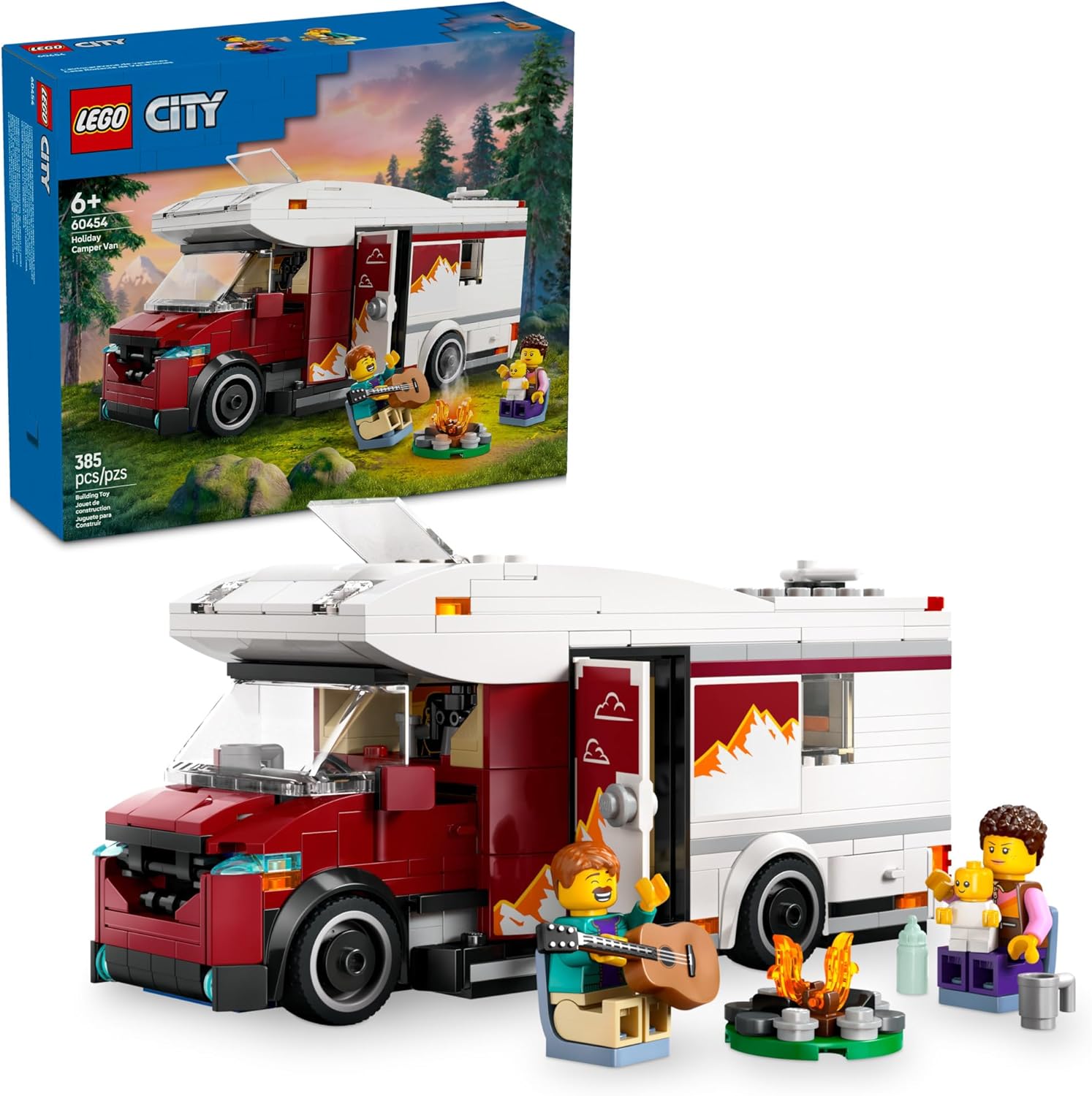
-35%LEGO City Holiday Adventure Camper Van 60454 — 385 Pieces, 3 Minifigures, Ages 6+! $26.04 CAD (35% Off)
 -28%
-28%LifeStraw Peak Series Personal Water Filter Straw — Drink Straight from Lakes and Rivers! $25.43 CAD (27% Off)
 -40%
-40%Acer Nitro ED270R 27" 1500R Curved Gaming Monitor — 165Hz, 1ms, FreeSync Premium! $169.99 CAD (39% Off)
 -40%
-40%JanSport Big Break Insulated Lunch Bag — 8L, Keeps Food Hot or Cold! $19.97 CAD (39% Off)
 Finance Morning
Finance Morning | October 12, 2026 — China Issues Plan on New Quality Productive Forces as KOSPI Slumps 3.65%
 Maple Express
Maple Express | October 12, 2026 — One dead, two injured in Scarborough crash
-35%LEGO City Holiday Adventure Camper Van 60454 — 385 Pieces, 3 Minifigures, Ages 6+! $26.04 CAD (35% Off)
Amazon
-28%LifeStraw Peak Series Personal Water Filter Straw — Drink Straight from Lakes and Rivers! $25.43 CAD (27% Off)
Amazon
-40%Acer Nitro ED270R 27" 1500R Curved Gaming Monitor — 165Hz, 1ms, FreeSync Premium! $169.99 CAD (39% Off)
Amazon
-40%JanSport Big Break Insulated Lunch Bag — 8L, Keeps Food Hot or Cold! $19.97 CAD (39% Off)
Amazon
Finance MorningFinance Morning | October 12, 2026 — China Issues Plan on New Quality Productive Forces as KOSPI Slumps 3.65%
Maple Express