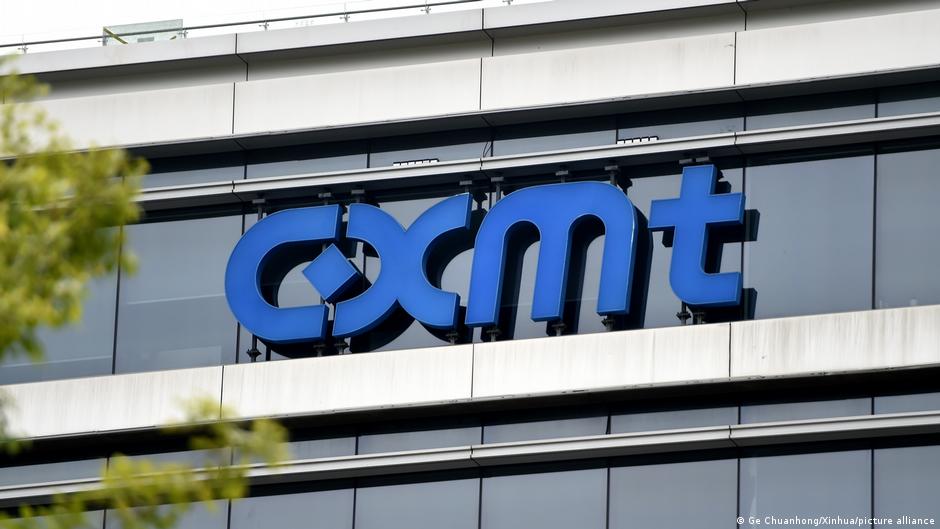
Tech Express | August 24, 2026 CXMT Tops ¥4 Trillion Market Value, Becoming China's Most Valuable Company
Today's Tech Express: CXMT's market value tops 4 trillion yuan to become China's most valuable company; Hugging Face explores a $13 billion sale; China's Kimi K3 ranks 6th in an AI survey; Alibaba Cloud launches Wan3.0; Huawei's Kirin chip debuts logic-folding tech; foldable iPhone leaks; Xiaomi hikes prices amid RAM costs; China postpones Chang'e-7; Xiaomi unveils three in-house chips; Qiyuan T1 robot opens preorders.
1. CXMT's Market Value Tops ¥4 Trillion, Becoming China's Most Valuable Company
Source: Deutsche Welle (DW)
Chinese memory chip maker ChangXin Memory Technologies (CXMT) has become China's most valuable company after its market value surged past 4 trillion yuan within a month of its Shanghai listing. According to DW's report on August 24, CXMT closed above 3 trillion yuan on its first trading day on the STAR Market in late July, and has since surpassed Tencent to rank first nationwide.
Founded in 2016, CXMT specializes in DRAM memory. Riding the memory shortage triggered by the AI boom, the company has been thrust onto the global semiconductor stage. The global DRAM market is dominated by Samsung, SK Hynix, and Micron, which together hold about 90% market share; CXMT ranks fourth with about 7%, but its revenue grew 716% year over year, making it the world's fastest-growing DRAM maker.
According to its IPO prospectus, CXMT had accumulated losses of about 36.6 billion yuan by the end of 2025, yet posted a net profit of 33 billion yuan in the first quarter of this year alone.
2. Hugging Face Explores Sale, Valuation Could Reach $13 Billion
Source: Guancha
The world's largest AI open-source community, Hugging Face, is exploring an outright sale. According to a Business Insider report on August 24, Hugging Face is considering a full sale with a potential valuation of $13 billion or higher. The platform is working with a bank to gauge bidder interest, and no deal has been reached.
Founded in 2016 by French entrepreneurs Clément Delangue, Julien Chaumond, and Thomas Wolf, and headquartered in New York, Hugging Face is often called "the GitHub of AI." Its platform hosts close to 3 million public models and over 1 million datasets, making it a key channel for developers to access and deploy open-source models.
If sold for more than $13 billion, its valuation would have nearly tripled in three years — its last funding round in 2023 valued it at $4.5 billion, with investors including Google, Amazon, and Nvidia.
3. AI Capability Survey: China's Kimi K3 Jumps to No. 6
Source: Nikkei Chinese
An AI capability survey called "AI Model Score," jointly conducted by Nikkei's "NIKKEI Digital Governance" and Weights & Biases, shows that Kimi K3, developed by Chinese startup Moonshot AI, jumped to 6th place overall — surpassing Google and SpaceXAI (formerly xAI) models.
In individual categories, K3 ranked 9th in "software development capability" and 8th in "reliability," but its weakness is safety — it ranked only 33rd in "ethics" and 70th in "inappropriate content suppression." K3 also uses an open-source model, with usage costs far lower than US closed-source models.
Yuta Shimono, CEO of Tokyo-based Emuni, said Kimi K3's per-unit usage fee is about half that of OpenAI's "GPT-5.6 Sol," offering clear value for performance. However, with 2.8 trillion parameters, K3 cannot run on ordinary PCs and requires infrastructure investment of millions to tens of millions of yen to self-deploy.
4. Alibaba Cloud Wan3.0 Officially Launches: Generate 30-Second Videos
Source: Mydrivers
Alibaba Cloud announced on August 24 the official launch of its AI video generation model Wan3.0, which entered public beta on August 6. The model emphasizes stability, realism, and quality, with major upgrades in video duration, input formats, and frame consistency. Wan3.0 can natively generate videos up to 30 seconds long with complete narratives and complex camera movements.
Wan3.0 is the industry's first to accept documents such as doc, xls, ppt, pdf, and md as direct input for video generation, while supporting up to 20 reference materials at once for cross-shot consistency.
During its beta phase, Wan3.0 has been deployed across industries including short drama, advertising, tourism, and music. API pricing is pay-as-you-go at 0.3 yuan/second for 480P, 0.6 yuan/second for 720P, and 1.2 yuan/second for 1080P, with a limited-time 30% discount from August 24 to September 23.

5. Huawei's New Kirin Chip Debuts Logic-Folding Tech, Matching TSMC 3nm Density
Source: Mydrivers
According to tech blogger "Dingjiao Shuma," Huawei's Kirin chip previously had transistor density on par with TSMC's 5nm process; with logic-folding technology, it now reaches at least TSMC's first-generation 3nm level, possibly stronger. The Huawei Mate 90 series will be the first to carry this chip.
At the circuit level, logic folding breaks through the physical limits of traditional planar layouts, shortening critical path wiring and reducing resistance and capacitance, boosting transistor density and performance. At the chip level, it uses full-stack "software, architecture, chip" co-design to improve system-level parallelism and efficiency.
Under Huawei's roadmap, chips based on its "Tao Law" are expected to reach transistor density equivalent to a 1.4nm process by 2031. The Mate 90 series, the first to feature this Kirin chip, will officially debut in September.

6. Foldable iPhone Leak Roundup: Over $2,000, No Telephoto or Face ID
Source: ifanr
According to Bloomberg's Mark Gurman, Apple's first foldable iPhone has basically taken shape. People who have used prototypes say it feels good in the pocket, the new hinge feels durable, and the inner screen uses an iPad-like app layout when unfolded. Camera performance is also solid.
Multiple sources point to a book-style foldable with a roughly 5.5-inch outer screen and 7.8-inch inner screen in a near 4:3 ratio. The body is about 4.5mm unfolded and 9-9.5mm folded, already in the same league as the Galaxy Z Fold 7.
But it has two notable compromises: a price estimated above $2,000, and a rear camera system with only main and ultra-wide 48MP lenses — no telephoto. To save space, Apple is also dropping Face ID in favor of a side-button Touch ID.

7. RAM Costs Hit Phones: Xiaomi Raises Prices by Up to ~$137
Source: Android Authority
Soaring memory costs are hitting smartphone prices hard, and Xiaomi is the latest major Android maker to cave. Xiaomi has announced price increases on several phones and tablets, with some devices jumping by up to 20,000 yen (~$137). The company says soaring memory and component costs have become too difficult to absorb.
The hikes affect the Xiaomi 17T Pro and several POCO X8 Pro models. The 17T Pro 12GB/256GB rises from 119,800 yen to 139,800 yen, while the POCO X8 Pro Max 12GB/256GB goes from 79,980 yen to 99,980 yen — about a 25% increase.
New prices take effect September 1 for Xiaomi and Redmi products, and September 4 for POCO models. Xiaomi says it had previously absorbed higher costs to stay affordable, but the latest increase is no longer sustainable — another sign the memory shortage is pushing costs onto consumers.
8. China Abruptly Postpones Chang'e-7 Lunar Mission
Source: NBC News
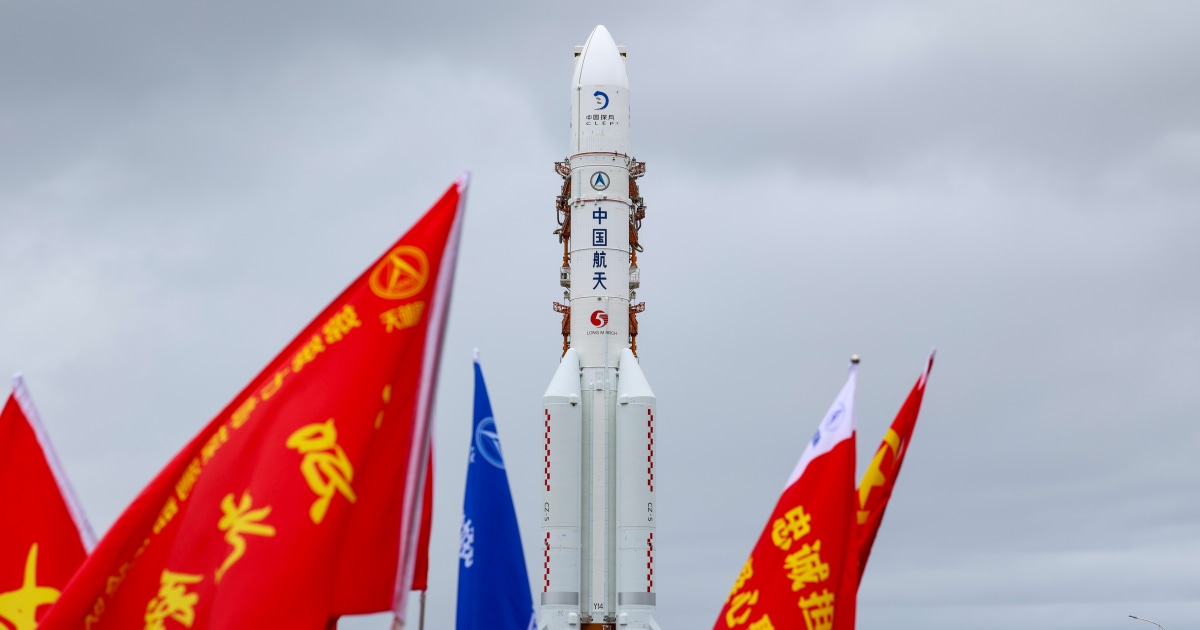
China has postponed its ambitious Chang'e-7 lunar mission, which was set to lift off in the coming days from the Wenchang Space Launch Site on Hainan island to search for water ice on the moon. The Manned Space Agency said in a brief statement that the mission "cannot take place during the planned window this year."
The decision followed a "comprehensive assessment" based on principles of "prudence, reliability and absolute mission success," though no detailed reasons were given. Preparations at Wenchang have been underway in recent weeks.
Chang'e-7, the seventh mission in China's lunar exploration program, was set to explore permanently shadowed craters and survey the lunar south pole. Its predecessor, Chang'e-6, returned samples from the moon's far side in 2024 in a world first.
9. Xiaomi Unveils Three In-House Chips, Lei Jun Cites Deep Tech Commitment
Source: Mydrivers
At a tech conference on August 24, Xiaomi unveiled three in-house chips: the flagship smartphone SoC Xuanjie O3, the high-performance computing Xuanjie O100, and the automotive Xuanjie D100. Lei Jun said Xiaomi's multi-category, full-scenario chip lineup has officially debuted.
Lei Jun said Xiaomi has spent more than five years on its chip R&D, investing over 21 billion yuan and building a team of nearly 3,000 senior engineers. On May 22, 2025, Xiaomi released its first flagship chip, the Xuanjie O1 — mainland China's first flagship SoC built on a 3nm process, debuting in the Xiaomi 15S Pro.
Lei Jun stressed that the core support behind these results is the company's unwavering commitment to deep technology, with no shortcuts.

10. World's First Transformable Personal Robot Qiyuan T1 Opens Preorders
Source: Mydrivers
Shangwei New Materials, controlled by Zhiyuan Robotics, has opened preorders for two consumer robots — Qiyuan Q1 and Qiyuan T1 — through its official mini-program, Tmall, Douyin, and Bilibili stores, with first shipments expected in September. Pricing has not been announced; the preorder benefit is a 1,000-yuan deposit offsetting 2,000 yuan of the balance.
Qiyuan T1 is the world's first transformable personal robot, standing about 100cm tall and weighing about 16kg, able to switch between a wheeled humanoid form and a quadruped form. Indoors it moves quietly on wheeled legs; outdoors on grass, gravel, or stairs it automatically switches to robot-dog mode.
The transformation relies on an industry-first Transformer cross-form architecture running both forms on the same hardware and system. It supports flexible force control, natural hand-holding, active interaction, and long-term memory, and can pair with action cameras for automatic tracking shots.

More News
- Maple Express | October 08, 2026 — Two house explosions in Hamilton send three to hospital, one critically injured
- Global Express | October 8, 2026 — Houthis Claim Missile Strike on Riyadh Airport as Explosions Heard in Saudi Capital
- Finance Morning Brief: US Stocks Fall on Rate-Hike Bets; A-Shares Slip After Holiday as Bank Shares Hit Records
- Tech Express | October 8, 2026 - Microsoft Unveils Surface Laptop Ultra, the First Laptop With Nvidia's RTX Spark Chip
- Sports Express | October 8, 2026 — Rays Sweep Yankees to Reach First ALCS Since 2020
Comments (0)
View More
 -35%
-35%Naturally KIDS Toddler Backpack (with Plush Toy) — A Gift Kids Actually Use, #6 in Kids' Backpacks! $39.40 CAD (34% Off)
 -44%
-44%MEATER Plus Wireless Smart Meat Thermometer — Cook Without Camping the Grill! $84.99 CAD (43% Off)
 -23%
-23%GOLOZA Projection Alarm Clock — See the Time on Your Ceiling Without Rolling Over! $26.99 CAD (23% Off)
 -24%
-24%Royale Velour 3-Ply Facial Tissue, 6 Boxes (492 Sheets) — Made in Canada! $8.00 CAD (24% Off)
 Sports Express
Sports Express | October 8, 2026 — Rays Sweep Yankees to Reach First ALCS Since 2020
 Maple Express
Maple Express | October 7, 2026 -- Man injured in Markham shooting; suspect outstanding
-35%Naturally KIDS Toddler Backpack (with Plush Toy) — A Gift Kids Actually Use, #6 in Kids' Backpacks! $39.40 CAD (34% Off)
Amazon
-44%MEATER Plus Wireless Smart Meat Thermometer — Cook Without Camping the Grill! $84.99 CAD (43% Off)
Amazon
-23%GOLOZA Projection Alarm Clock — See the Time on Your Ceiling Without Rolling Over! $26.99 CAD (23% Off)
Amazon
-24%Royale Velour 3-Ply Facial Tissue, 6 Boxes (492 Sheets) — Made in Canada! $8.00 CAD (24% Off)
Amazon
Sports ExpressSports Express | October 8, 2026 — Rays Sweep Yankees to Reach First ALCS Since 2020
Maple Express