
Finance Evening | August CPI Runs Hot, Fed Hike Odds Rise to 85%
U.S. August CPI ran hot, with core inflation at 0.3% m/m, lifting the odds of a Fed hike next week to about 85% and pushing the 10-year Treasury yield toward 5% as global bonds sold off. The ECB hiked to 2.5%, with the U.S. and UK deciding next week. The federal deficit hit $2T in the first 11 months of FY2026. Oil posted sharp weekly gains as Brent settled at $104.61. Ford invests $1B in Kentucky; O'Charley's closed all corporate locations.
📊 North American Markets Today
| Index | Close | Change | % Change |
|---|---|---|---|
| S&P 500 | 7,656.98 | +65.28 | +0.86% |
| Nasdaq | 26,333.04 | +251.31 | +0.96% |
| Dow Jones | 52,573.29 | +509.19 | +0.98% |
| Toronto TSX | 35,697.49 | +191.21 | +0.54% |
| USD/CAD | 1.3869 | +0.0041 | +0.30% |
| WTI Crude | 99.99 | -2.49 | -2.43% |
| Gold | 4,390.00 | -17.30 | -0.39% |
1. The Fed's hiking cycle is "alive again" as Warsh stays vague and Waller fills the gap
Source: Fortune
The Federal Reserve's hiking cycle suddenly looks alive again. Oil has pushed back above $100 a barrel, bond yields are surging, the AI capital-expenditure boom keeps adding pressure to credit markets, and Thursday's producer-price report came in surprisingly hot. Against that backdrop, Chair Kevin Warsh's ambiguity over the Fed's next move made Friday's final inflation reading before next week's meeting unusually important.
Fed Governor Christopher Waller filled in the gap for traders, signaling that "it may not take much acceleration in inflation" to nudge him into supporting a hike. The CPI then stepped over that low hurdle: core consumer prices rose 0.3% in August, above the 0.2% expected, while headline CPI climbed 0.4%, with gasoline prices jumping 3.9%.
Traders now price the probability of a quarter-point hike next week at roughly 85%, up from 70% before the report, and the 10-year Treasury yield climbed toward the psychologically important 5% threshold. Stocks did not sulk — all three indices shot higher. For Main Street, it was another confirmation of pressure: wage growth decelerated for a fifth straight month and consumer sentiment sat at a near-record low. Wireless telephone services prices, notably, surged 5.9% in August — the largest increase the BLS has ever recorded for the category.
2. US consumer inflation picks up in August, cementing rate-hike bets
Source: Yahoo Finance
U.S. consumer prices accelerated in August, while a key measure of underlying inflation posted its largest increase in four months, reinforcing expectations that the Federal Reserve will raise interest rates next week. Friday's CPI report followed strong readings in several components of Thursday's Producer Price Index that feed into the PCE indexes the Fed watches.
The CPI increased 0.4% last month after edging up 0.1% in July, and rose 3.4% over the 12 months through August, unchanged from July and in line with expectations. Gasoline prices jumped 3.9%, accounting for more than a third of the monthly increase, while other motor fuels including diesel surged 9.6% and were up 44% year-on-year. Food prices edged up just 0.1% for a second straight month, with grocery prices unchanged.
Financial markets initially priced in a 91% chance of a quarter-point hike at next week's meeting, before settling back to 87%, up from 72% on Thursday. The Fed's benchmark rate is currently in a 3.50%-3.75% range. Most economists said the firmer readings, combined with signs of the labor market regaining its footing, would compel officials to raise borrowing costs next Wednesday and possibly again in October or December. The U.S. national average diesel price surpassed $6 a gallon for the first time, and crude oil climbed back above $100 a barrel this week.

3. Treasury yields soar to almost 5% on inflation fears
Source: Semafor
A global bond sell-off pushed 10-year Treasury yields close to the significant 5% mark, approaching their highest level in almost two decades as the Iran war and U.S. trade policies combined to stoke inflationary fears. The increase triggered a sell-off of Asian and Australian bonds, appearing to confirm that U.S. Treasury Secretary Scott Bessent's attempt to steady the government debt market had backfired.
Bessent's moves have stirred fears that Washington is acting "in a way more commonly associated with weaker borrowers," the Financial Times argued. Traders are betting inflation will remain higher for longer, roiling global politics. "These are worrying times for bond markets," an ING economist told Bloomberg.

4. Interest rates could rise again across the world – here's why
Source: BBC
There's nothing like talk of energy prices and potential higher borrowing costs to remind us the summer holidays are over. Surging oil prices have been pushing up fuel costs and eating into household budgets for months, and concerns remain over whether the economic impact of the US-Iran war will drive the cost of living higher. The European Central Bank raised rates this week to 2.5%, citing the Middle East conflict and warning inflation was "set to remain well above" its 2% target.
Other central banks are responding, with the U.S. and the UK poised to decide next week. The Fed has held rates at 3.5%-3.75% for five meetings in a row, its last change being a cut in December. But above-target inflation at 3.4%, a strong jobs market, and President Donald Trump's comments that oil prices will not come down until the Iran war ends after November's elections have led many on Wall Street to bet on a hike this month. Newly-appointed Fed Chair Kevin Warsh has stayed tight-lipped, but his repeated emphasis on slowing price rises has further fuelled expectations.
Deutsche Bank said a rate hike is "the most likely policy outcome." Grace Zwemmer of Oxford Economics expects rates to stay unchanged, though almost universally a cut is seen as off the table. Trump pressed again on social media for lower rates. In the UK, the Bank of England is expected to leave rates at 3.75%, with UK inflation at 2.9%.

5. Federal budget deficit reaches $2T in first 11 months of fiscal year 2026
Source: Fox Business
The federal government's budget deficit reached $2 trillion after the first 11 months of fiscal year 2026, the nonpartisan Congressional Budget Office reported. The CBO's monthly update noted the 11-month total was $6 billion lower than a year earlier, but explained that the difference came from shifts in the timing of payments around Labor Day 2025 — without those shifts, the deficit would have been $82 billion more than last year's.
Federal spending rose $147 billion, or 2%, versus last year (a $235 billion, or 4%, increase after timing adjustments). The increase was driven mainly by mandatory programs — Social Security, Medicare and Medicaid — as well as interest on the national debt. Social Security benefits rose $78 billion (5%), Medicare $73 billion (8%), Medicaid $47 billion (8%), and interest expenses $111 billion (12%).
Tax receipts rose 3%, up $154 billion, with individual income taxes up $189 billion (8%) and payroll taxes up $50 billion (3%). Corporate income taxes fell $96 billion, or 25%, due to 2025 tax reforms under the One Big Beautiful Bill Act. Maya MacGuineas of the Committee for a Responsible Federal Budget warned that borrowing this year has already surpassed all of last year, with gross national debt recently topping $40 trillion: "We have delayed the hard choices for far too long," she said.
6. Oil prices fall Friday, but post sharp weekly gains as Middle East tensions rise
Source: CNBC
Oil prices retreated on Friday but notched sharp weekly gains after soaring above $100 a barrel for the first time in months. Brent crude, the global benchmark, settled down 2.8% at $104.61 a barrel, while U.S. West Texas Intermediate fell 2.75% to settle at $99.66. On Thursday, Brent peaked at around $108 and WTI hit more than $104.
The decline came after Iranian state media said Tehran will meet Gulf states in Oman to discuss the Strait of Hormuz, indicating some diplomacy is taking place despite a week of sharp escalation. Brent posted a weekly gain of 8.7%, ending above the critical $100 mark, while WTI's week-to-date gain was 9.4%. Friday's decline snapped five consecutive days of gains for Brent and an eight-day winning streak for WTI.
Markets are bracing for a protracted Iran war. A report said top White House advisors had discussed with Trump the possibility the hostilities could drag on beyond his term, while Trump has said the conflict will end after the U.S. midterm elections and that oil and gas prices will fall after the November vote. "Once again, it is geopolitical fears driving everything," Deutsche Bank's Jim Reid wrote. Houthi rebels captured Yemen's port city of Mokha, near the Bab el-Mandeb Strait, and Saudi Arabia's oil output has fallen to its lowest since 1990. PVM Oil Associates analyst Tamas Varga said it remains to be seen whether the current supply deficit is structural or transitory.

7. US home sales slowest in more than a year as mortgage rates and prices climb
Source: The Guardian
Sales of previously occupied U.S. homes declined in August to their slowest annual pace in more than a year, as home shoppers grappled with rising mortgage rates and home prices. Existing home sales fell 2% from July to a seasonally adjusted annual rate of 3.98 million units, the National Association of Realtors said Thursday — the third straight monthly decline and down 1.2% from a year earlier, just shy of the roughly 4 million economists expected.
"It's not a surprise home sales and mortgage rates move in the opposite direction, and we have seen mortgage rates rising, rising, rising from February," said Lawrence Yun, NAR's chief economist. Sales have hovered close to a 4 million annual pace since 2023, far short of the historic norm near 5.2 million; the last time the pace was below 4 million was June 2025.
Rising borrowing costs are the main drag. The average rate on the benchmark 30-year mortgage hit 6.76% this week, its highest in more than 14 months, after briefly dipping below 6% before the war began. Yun noted the rate could soon reach 7%, given that mortgage rates follow the 10-year Treasury yield, which sits at levels not seen since late 2023. Even as sales slowed, the U.S. median sales price rose 1.6% year-on-year in August to $429,100 — an all-time high for August based on data back to 1999 — marking 38 straight months of annual gains. "It's not a good time to sell your home. Americans are hitting the pause button on homebuying," said Heather Long, chief economist at Navy Federal Credit Union.

8. Ford to invest $1B in Kentucky truck plant
Source: Fox Business
Ford announced plans to expand its manufacturing presence in Kentucky with a $1 billion investment in a new state-of-the-art paint shop at its Kentucky Truck Plant. The new paint shop will replace its existing one and further modernize the Louisville facility. Ford said the upgraded technology will provide cleaner and more efficient paint quality, boosting efficiency and environmental sustainability.
The Kentucky Truck Plant is Ford's largest and highest-revenue manufacturing plant, with a vehicle rolling off the line every 45 seconds; it produces the F-Series Super Duty pickups, the Ford Expedition and the Lincoln Navigator SUVs. "For more than a century, Ford and Kentucky have grown together, and we're investing to ensure that relationship remains strong for generations to come," said CEO Jim Farley. Groundbreaking is expected by late this year.
Ford is also overhauling its nearby Louisville Assembly Plant ahead of Fathom electric truck production in 2027, installing its new Universal EV Production System. Ford's presence in Kentucky dates back to 1913, when the first Model T rolled off the line in Louisville, and the state is home to over 6,000 Ford retirees. Ford previously announced a $2 billion investment in Ford Energy to convert a former battery site in Glendale, Kentucky, into a producer of battery energy storage systems.

9. O'Charley's closes all corporate restaurants after strategic review
Source: Restaurant Dive
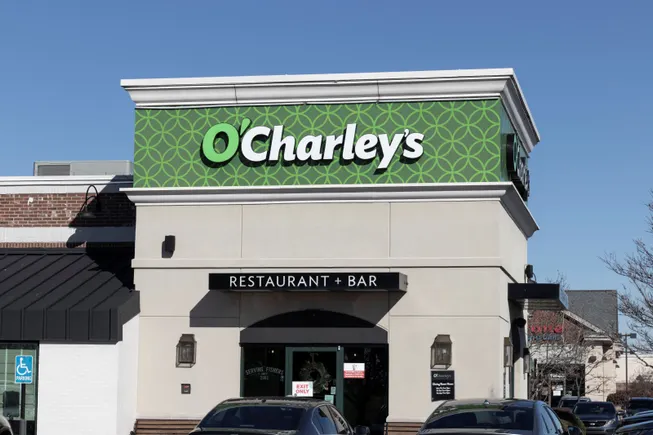
The 55-year-old casual dining chain O'Charley's, which once had 250 units, has reportedly closed its remaining 49 company-owned locations. During the second quarter, O'Charley's experienced traffic challenges and reported a 13.1% decline in same-store sales, according to an earnings report from Cannae, which also holds a majority stake in Ninety Nine Restaurant & Pub. Cannae took an ownership stake in the two restaurants in 2018.
Cannae said it hoped to turn the same-store sales declines around through menu engineering, guest-service improvements and closing underperforming locations. As of the end of the second quarter, the chain had closed four restaurants in 2026, and Cannae had invested $170 million in its restaurant group. That division posted a net loss of $40 million during the quarter and an operating loss of over $81 million for the 12 months ending June 30, 2026. Ongoing losses prompted a review of the restaurant division starting as far back as February.
As of the end of the second quarter, O'Charley's had 49 company-owned locations and three franchised locations across 13 states in the Midwest and South. In 2023, the chain closed over 50 units. Many casual dining chains have closed locations recently, including Red Lobster and On the Border, which filed for Chapter 7 this year. O'Charley's franchisee Covelli Enterprises, which owns three O'Charley's restaurants, received an extension to keep at least one location open through the end of the month.
10. Miami cargo plane crash revives pilot complaint against 21 Air
Source: The Seattle Times
The fatal cargo plane crash in Miami on Sunday is bringing to light a complaint filed four years ago against 21 Air, the operator of the Amazon-branded aircraft. It's too soon to know what caused the plane to overrun the runway, killing five people and injuring five others, and it will be some time before the National Transportation Safety Board releases a probable cause. Since the crash, a legal complaint from a former 21 Air pilot alleging retaliation for raising safety concerns has resurfaced.
Karl Seuring, 62, a former Delta Air Lines and 21 Air pilot who lives in Redmond, filed the complaint with the Department of Labor against 21 Air in 2022, alleging wrongful termination. In legal documents, Seuring and other former pilots voiced concern about 21 Air's safety culture and practices, including not giving pilots enough rest between flights, improperly managing flight crew resources in-flight and discouraging employees from speaking up about safety.
21 Air, based in Greensboro, N.C., with a hub in Miami, was founded in 2014 and had a majority stake acquired by Houston Astros owner Jim Crane in 2021; it began operating flights for Amazon in 2024. The carrier said in a statement Thursday that "safety has been core to our culture." Amazon spokesperson Kelly Nantel said Thursday the company is aware of reports regarding former 21 Air employees' concerns, believes the allegations predate its relationship with the company, but takes "any allegation related to safety with the utmost seriousness." NTSB Chair Jennifer Homendy said the investigation will look at Amazon's contractual relationship with 21 Air.

More News
- Finance Evening | Oct 27: Nasdaq Jumps 1%, Fed Meeting Opens, Anthropic Launches One of the Largest IPOs Ever
- Maple Express Evening | October 27, 2026 — Chow speaks out after winning a second term
- Maple Express | October 27, 2026 — Chow re-elected in Toronto as Mississauga and Hamilton mayors fall
- Global Express | October 27, 2026 — Israelis Vote as Iran War Shadows Election
- A-shares fall as over 4,900 stocks decline; Anthropic IPO filing lifts Japan and Korea chip stocks
Comments (0)
View More
 -37%
-37%Brita Faucet Water Filter, Chrome — Filter Indicator Built In, Clips On in Minutes! $62.24 CAD (36% Off)
 -40%
-40%KitchenAid KCO124BM Digital Air Fryer Countertop Oven — No-Flip Air Frying, Fits Two Whole Chickens! $199.99 CAD (39% Off)
 -37%
-37%LEGO Christmas Table Decoration 40743 — Build It, Then Use It as the Centerpiece, 433 Pieces! $34.97 CAD (36% Off)
 -51%
-51%Samsung Odyssey 27" QHD OLED Gaming Monitor — 360Hz, 0.03ms, Half Price! $599.99 CAD (50% Off)
 Maple Express
Maple Express | October 27, 2026 — Chow re-elected in Toronto as Mississauga and Hamilton mayors fall
 Sports Express
Sports Express | October 27, 2026: Kane Ends 25-Year Wait for Ballon d'Or
-37%Brita Faucet Water Filter, Chrome — Filter Indicator Built In, Clips On in Minutes! $62.24 CAD (36% Off)
Amazon
-40%KitchenAid KCO124BM Digital Air Fryer Countertop Oven — No-Flip Air Frying, Fits Two Whole Chickens! $199.99 CAD (39% Off)
Amazon
-37%LEGO Christmas Table Decoration 40743 — Build It, Then Use It as the Centerpiece, 433 Pieces! $34.97 CAD (36% Off)
Amazon
-51%Samsung Odyssey 27" QHD OLED Gaming Monitor — 360Hz, 0.03ms, Half Price! $599.99 CAD (50% Off)
Best Buy
Maple ExpressMaple Express | October 27, 2026 — Chow re-elected in Toronto as Mississauga and Hamilton mayors fall
Sports Express