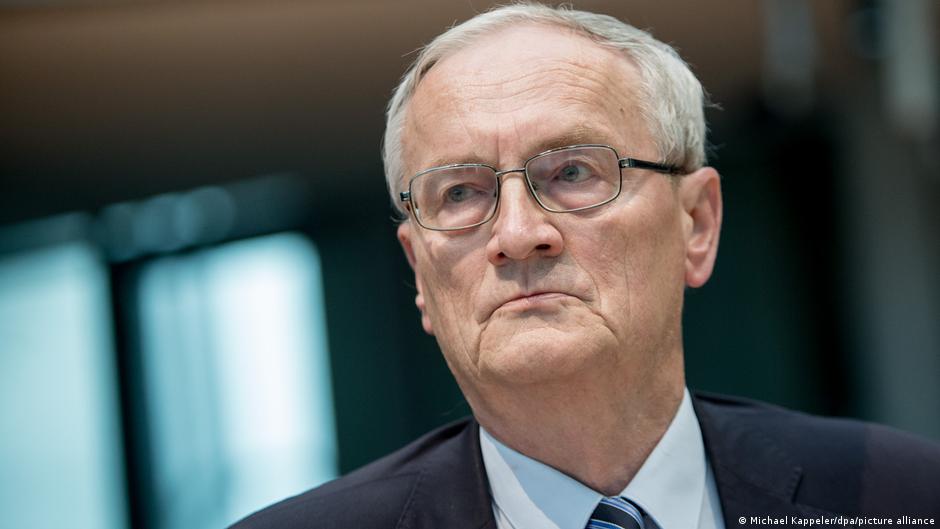
Global Express | October 06, 2026: Germany's Former Spy Chief Arrested on Espionage Charges
[Global Express] Germany's ex-spy chief arrested on espionage charges; Trump: threats led the US to pull bombers from RAF Fairford; Ukraine blames a Russian drone strike in Romanian waters; Turkiye and Pakistan to deploy troops to Saudi Arabia; euro hits a 17-month low; China shuts a record 670 banks; Australia's migrant policy offers lessons; Ethiopia's PM renews his Red Sea demand; female-looking AI agents paid less, study finds; China rejects criticism from six nations.
1. Germany's Former Spy Chief Arrested on Espionage Charges
Source: DW
Germany's federal prosecutor's office announced on Tuesday, October 6, that police have arrested August Hanning, the former head of Germany's BND foreign intelligence agency, on suspicion of espionage. Hanning led the BND from December 1998 to November 2005, before moving to the Federal Interior Ministry, where he served as state secretary until November 2009.
According to a statement from the prosecutor's office, Hanning faces allegations including espionage, disclosure of state secrets, attempted treason and working as a secret service agent. The office did not say which foreign intelligence service he is suspected of working for. Another former high-ranking BND employee was also arrested on suspicion of providing Hanning with hundreds of classified documents in exchange for payment. Hanning was arrested early Tuesday at his home in Nordwalde near Münster, while his alleged accomplice — identified only as Manfred D. under German privacy laws — was taken into custody in Bavaria.
The prosecutor said Manfred D. served as chief of staff to Hanning's successors at the BND from 2012 to March 2026, giving him access to a wealth of classified documents. Investigators believe he provided Hanning with roughly 2,000 documents over the years, many containing classified information, under an arrangement thought to have begun in 2010. The chair of the German parliament's intelligence oversight committee said Germany "will not tolerate the betrayal of secrets," while DW's chief political editor described the case as Germany's biggest espionage scandal of the century.
2. Trump Says 'Threat' Led US to Pull Bombers From UK Base
Source: BBC
US President Donald Trump said on Monday that the United States moved its bombers out of RAF Fairford in Britain because of "some threats" to the base. The Pentagon confirmed on Sunday it had removed the bombers — thought to be about a dozen B-1s — from the base back to their home stations in America.
Speaking to reporters as he departed for Nebraska, Trump said the US had known of a "threat" that led them to move the aircraft. "They didn't fly out by accident," he said. "There were some threats... rather than tempting the enemy, we'll capture the enemy and beat the enemy." US media reports suggested the decision followed intelligence indicating Iran was plotting a drone attack; the BBC has not confirmed this, and Trump declined to be drawn on the question, later saying the threat "would be linked to Iran."
The move followed a September 27 incident in which police were alerted to three "suspicious vehicles" near the airbase. Five men were initially arrested on suspicion of terror offences and later released on bail, and a sixth man, a UK-Iranian national, was also arrested and released on bail. Downing Street insisted the base was safe, while US Secretary of State Marco Rubio was more guarded, noting it was "not unusual" for military assets to be moved around the world.

3. Ukraine Says Russian Drone Attack Sinks Ship in Romanian Waters
Source: Al Jazeera
Ukraine's President Volodymyr Zelenskyy has blamed a Russian drone attack for the sinking of a ship in Romania's section of the Black Sea. Romania reported that two people were killed and 11 rescued when a grain ship caught fire and sank in its waters on Monday, October 5.
In a social media post, Zelenskyy called it "a horrific strike by two Russian drones on a civilian vessel in neutral waters carrying corn and owned by Turkiye." Romania's Ministry of Internal Affairs said the coastguard was alerted at about 11am local time that a fire had broken out on the ship, which was in the country's "exclusive economic zone." Azerbaijani and Indian citizens were reported to be on board at the time.
Romania is among several NATO members to have reported such incursions this year, as Russia and Ukraine increasingly turn to launching hundreds of drones and missiles. In May, a Russian drone hit an apartment building; in June, a stray Ukrainian maritime drone exploded in the Black Sea port of Constanta; and in July, Bucharest summoned Russia's ambassador after air defences intercepted three drones within a week.

4. Turkiye and Pakistan to Deploy Forces to Saudi Arabia
Source: Al Jazeera
Turkiye, Pakistan and Saudi Arabia have agreed to activate "deterrence measures" under a mutual defence pact and to rapidly deploy forces to the Gulf kingdom to counter attacks by Yemen's Houthis. The decision was announced on Monday, October 5, after the three countries' defence and foreign ministers held an emergency meeting in Riyadh — the first time the alliance, known as the Mecca Alliance for Defence, has been invoked since it was signed on August 7.
Saudi Arabia's defence minister, Khalid bin Salman, said the committee agreed to activate collective deterrence measures "in response to the attacks and all those responsible for them." A joint statement published by Pakistan's Foreign Ministry said the three countries would "provide the agreed military forces and capabilities and ensure their rapid deployment." The pact declares that an attack on any of the three nations will be treated as an attack on all, mirroring a central provision of NATO's founding treaty.
The announcements came hours after forces aligned with Yemen's internationally recognised government launched a counteroffensive to retake territory captured by the Iran-aligned Houthis last month. The Yemeni forces said they had retaken the Red Sea port city of Mocha and now control the strategic Bab al-Mandeb strait. The Saudi-led coalition confirmed its participation, saying 100 of its fighter jets were providing air support. The Houthis claimed attacks on Riyadh's King Khalid International Airport and the Aramco refinery in Rabigh. Combined, the three alliance members have nearly 1.4 million active troops.

5. Euro Hits 17-Month Low as French Debt Fears Mount
Source: DW
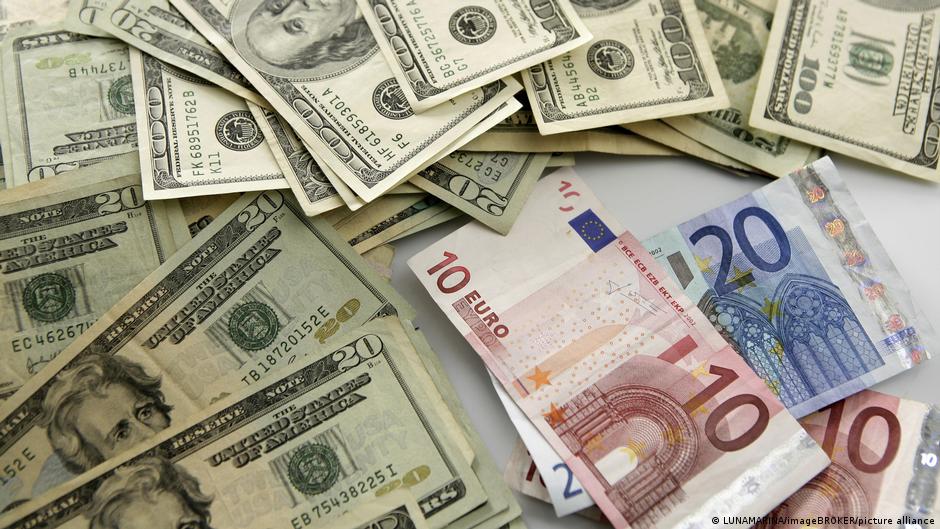
The euro hit a 17-month low against the dollar in early trading on Monday, October 5, as concerns about eurozone debt — particularly in France — compounded existing investor worries over global government bond yields and rising oil prices. The euro reached $1.12 (0.99 euros) on Monday, its lowest level since early 2025, and is down about 5% since the start of the year.
Ricardo Amaro, lead eurozone economist at Oxford Economics, told DW the general slide reflects a repricing of investor expectations about US Federal Reserve policy, but that the latest sell-off was prompted in particular by concerns over France, where "investors positioned for higher fiscal risk." The sell-off in French debt gathered pace last week, with French 10-year government bond yields rising to 5%.
Since President Emmanuel Macron took office in May 2017, French public spending has climbed while deep tax cuts were introduced, and the country's national debt has risen by well over 1 trillion euros. France's debt-to-GDP ratio now stands at almost 118%, and its annual budget deficit is regularly more than 5%. The spread between German and French 10-year bond yields reached its highest level since the eurozone debt crisis. Deutsche Bank's Jim Reid said the gap became so wide last week that a "mini-panic" was at hand, and observers are beginning to wonder whether a new eurozone crisis may be brewing.
6. China Shuts Down a Record 670 Banks
Source: CNBC
China has moved to close a record 670 of its banks — about a quarter of the total — as Beijing accelerates the consolidation of smaller lenders to shore up its financial system. The move is part of an effort to create fewer, larger and better-capitalised institutions, according to analysis by Fitch Ratings.
Fitch said small and rural commercial banks "remain the weakest part of the system" in China, flagging their "poor asset quality, low capitalisation and governance shortcomings," especially in less developed regions. Meanwhile, Saudi Aramco chief executive Amin Nasser warned on Monday that global oil stockpiles could take two years to rebuild, cautioning that the squeeze on supplies could yet get worse as the Iran-US conflict drags on.
Investors shrugged off rising US Treasury yields and focused on tech shares, driving the Nasdaq Composite to a fresh all-time high. Separately, former Google DeepMind researcher Alex Turner warned at a New York City Council meeting on Monday that "misaligned" AI could prove more dangerous than China's aggressive development push. According to an analysis by hiring data firm Draup provided exclusively to CNBC, AI-related job posts at banks including JPMorgan Chase have risen 49% so far this year compared with 2025.

7. Australia's Offshore Migrant Policy Offers a Warning to the EU and US
Source: DW
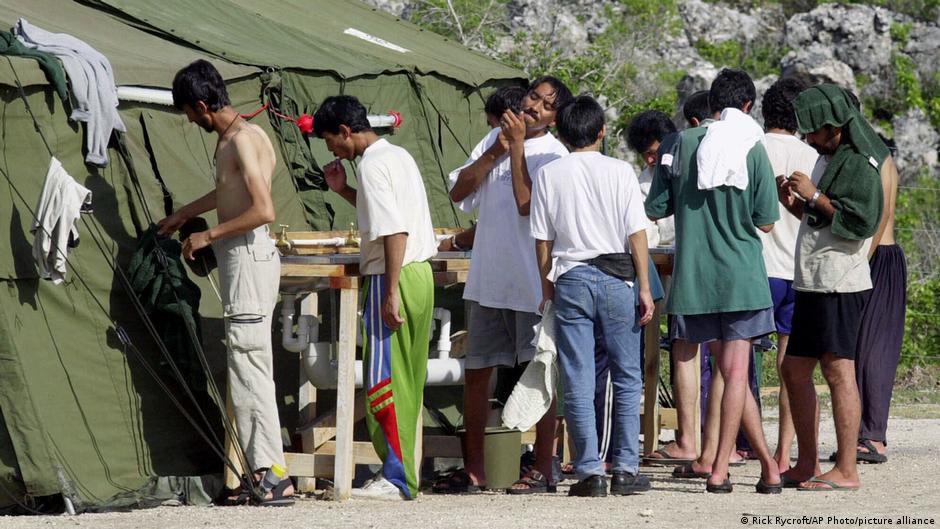
Australia has used offshore processing centres to deter asylum seekers for more than two decades. As the EU and US pursue similar third-country arrangements, Australia's experience highlights potential problems: nations may spend billions only to face accusations of human rights abuses and financial mismanagement.
Former Australian Prime Minister John Howard introduced the so-called Pacific Solution in 2001, targeting immigrants who arrived by boat and establishing processing centres with the help of Papua New Guinea and Nauru. A Labor government phased out the practice in 2008, but in 2012, under Prime Minister Julia Gillard, maritime arrivals were again sent to Nauru and Manus Island. Between 2013 and 2014, the number of people transferred offshore peaked at more than 3,000. Journalists have been mostly barred from the centres, and advocates say the lack of oversight led many Australians to accept that the policy was working.
The EU has been considering the idea, and the US has already made third-country deals with at least 30 countries in Africa and Latin America. In 2017, a group of asylum seekers formerly detained on Manus Island reached a AU$70 million settlement over abuse and unlawful detention. Australia has spent more than AU$13 billion on offshore detention since 2012, and Nauru recently agreed to accept convicted foreign nationals from Australia for AU$2.5 billion over the next 30 years.
8. Ethiopia's PM Renews Demand for Red Sea Access
Source: Al Jazeera
Ethiopia's Prime Minister Abiy Ahmed was sworn in for another five-year term on Monday, October 5, and insisted that his landlocked country must have access to the Red Sea. In a speech in Parliament, he said Ethiopia would work to secure a port, describing access to the sea as critical to the country's "civilisation." "Based on the principle of give and take, we will work diligently to ensure that Ethiopia has an outlet to the sea," he said.
Ethiopia lost direct access to the Red Sea in 1993 after Eritrea, formerly a region of Ethiopia, became independent. Abiy's demand comes as Ethiopia's relations with its neighbours have worsened in recent months, with Addis Ababa accusing Eritrea, Egypt and Sudan of supporting opposition forces in Tigray. A separate dispute over Ethiopia's Grand Ethiopian Renaissance Dam on the Nile has strained relations with Egypt and Sudan, which rely on the river for water.
Four of the five countries bordering the Red Sea — Egypt, Eritrea, Sudan and Somalia — met on Sunday, October 4, in Egypt's New Alamein and called for cooperation on regional issues, saying governance of the Red Sea was the exclusive responsibility of its coastal states. Somalia's President Hassan Sheikh Mohamud, who attended the summit, congratulated Abiy on his re-election and said he looked forward to strengthening ties.

9. Study: Female-Looking AI Agents Are Paid Less Than Male Ones
Source: The Irish Times
Gender bias in the workplace can be replicated in interactions with artificial intelligence, new research from the University of Limerick has found. The study examined whether the way AI assistants are presented influences how people treat them in a workplace setting, and was co-authored by Dr Mary Hausfeld of the university's Kemmy Business School.
Researchers placed 189 workers in a virtual reality office and asked them to complete work-related tasks with different AI assistants, including human-like agents presented with either a male or female appearance. Participants were then given real money to divide between themselves and the AI assistant, allowing the researchers to recreate a real-world transaction. AI agents with a female appearance were paid less than their male-presenting counterparts despite using the same underlying technology: the male-presenting "Johan" earned higher rewards than the female-presenting "Johanna," who was paid 10.25% less for the same work.
Participants also trusted the human-like assistants more and gave them more credit than a robot, even though the systems were powered by the same underlying AI. Hausfeld said the findings raise important questions as AI agents become more common in the workplace. "We often think of AI as being neutral, but the way we design and present these systems can activate those same assumptions and biases that exist in our interactions with other people," she said. The study will be presented at the 14th Nordic Conference on Human-Computer Interaction in Vaasa, Finland, from October 5 to 7.

10. China Rejects Six Nations' Criticism of Its Human Rights Record
Source: Lianhe Zaobao
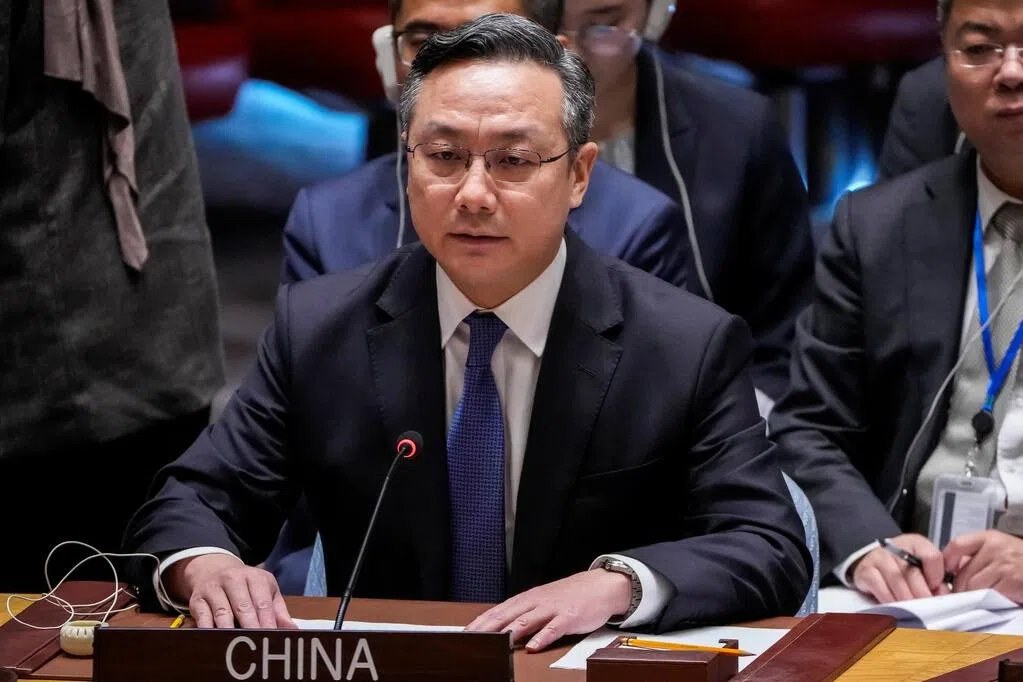
Sun Lei, deputy representative of China's Permanent Mission to the United Nations, told the UN General Assembly's Third Committee that six countries — the UK, Australia, Japan, Ireland, Czechia and Lithuania — have no standing to criticise China's human rights record. According to the mission's website, Sun made the remarks on Monday, October 5, during a right of reply in the Third Committee's general debate, saying China expressed strong dissatisfaction and firm opposition to what he called the smearing of its human rights situation.
Sun said these countries "think themselves superior" and act as a "human rights schoolmaster," yet have prominent human rights problems of their own and "have no right to lecture China." He said China has continued to safeguard and improve people's livelihoods through development, eliminating absolute poverty and lifting nearly 100 million people out of poverty, forming a middle-income group of more than 400 million, with public support and satisfaction rates exceeding 90% for years. He added that the Hong Kong National Security Law had set the city on a path from chaos to order, and that the rights of all ethnic groups in Xinjiang and Tibet are effectively protected.
Sun also criticised Japan for failing to honour its commitment to eliminate racial discrimination and for not treating the Ainu and Ryukyu peoples as equal groups, and said the colonialism of the UK, Australia and Ireland still causes harm today. He concluded by warning Japan to abide by its international obligations and address its own human rights problems, saying any attempt to use human rights issues to suppress and contain China would "surely backfire" and prove self-defeating.
More News
- Finance Morning | October 6, 2026 — Global Stocks Mostly Higher; Nikkei Tops 70,000; Oil Falls
- Tech Express | October 6, 2026 — US Pentagon formally stops using Anthropic's AI tools
- Sports Express | October 6, 2026 — Ovechkin Announces This Will Be His Final NHL Season
- Maple Express | October 6, 2026 — Toronto Advance Voting Begins Today
- Finance Evening | October 5, 2026 — Report: Over Half of Canada's Non-Homeowners Have Given Up on Buying; SpaceX Hits Highest Close Since June
Comments (0)
View More
 -37%
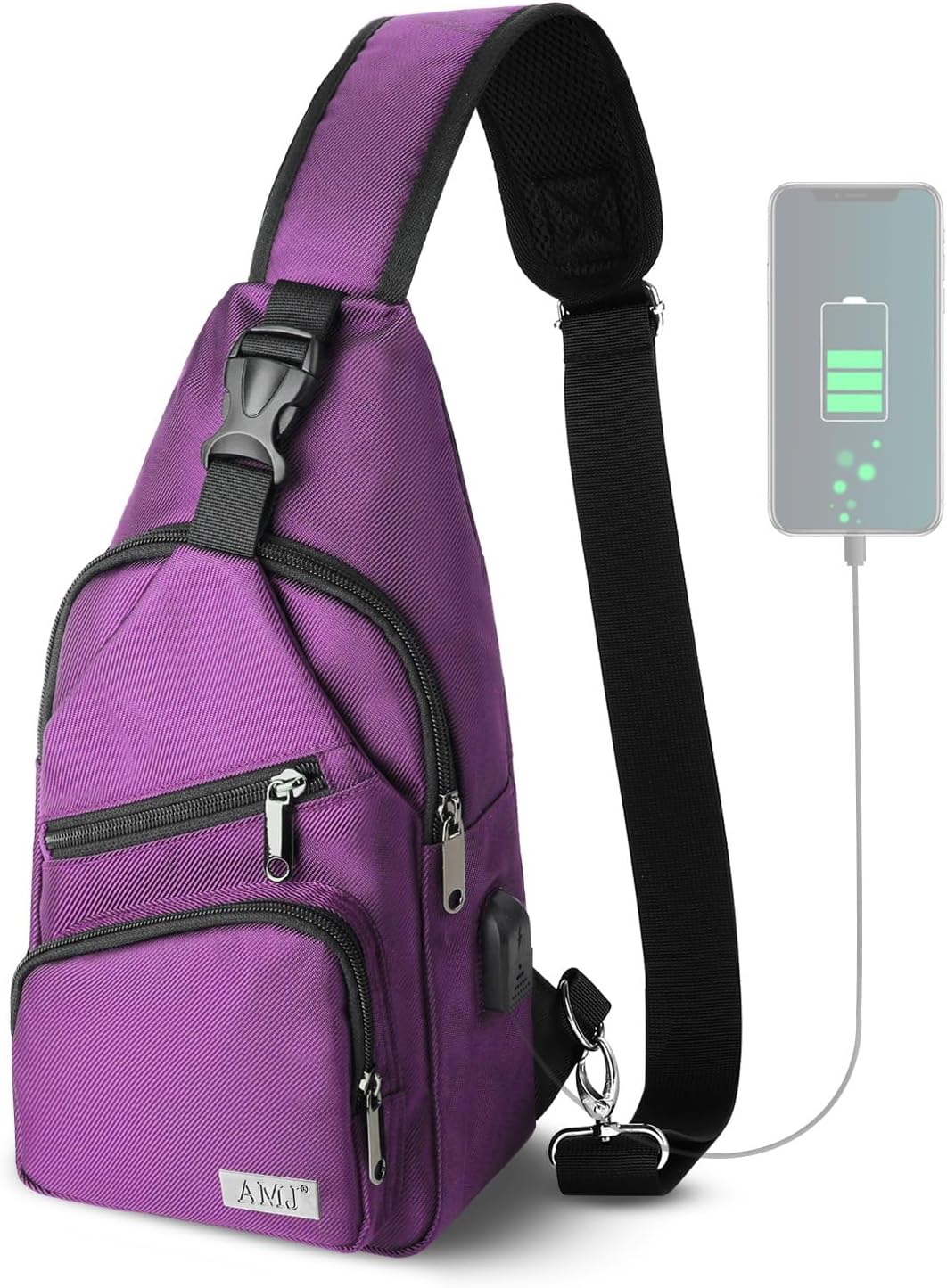
-37%AMJ Sling Bag — Multi-Pocket Crossbody for Hiking & Commute, 37% Off! $37.99 CAD
 -43%
-43%DEWALT 20V MAX Jobsite Bluetooth Speaker DCR010 (Tool Only) — Runs on Your 20V Batteries! $98 CAD (42% Off)
 -41%
-41%Samsung Odyssey OLED G9 49" Gaming Monitor — 5K OLED 240Hz UltraWide! $1199.99 CAD (40% Off)
 -45%
-45%Toshiba 50" C350NC 4K UHD Fire TV — Dolby Vision, Dolby Atmos & Full Array Local Dimming! $349.99 CAD (44% Off)
 Maple Express
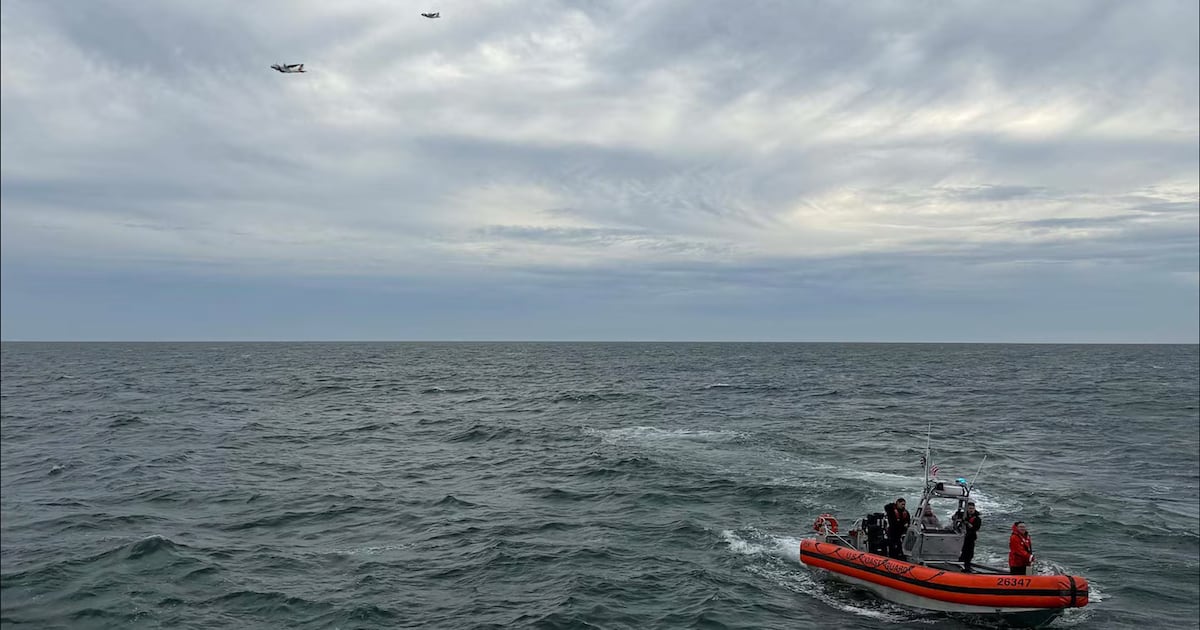
Maple Express | October 5, 2026 — Six presumed dead after Hamilton air ambulance crash
Global ExpressGlobal Express | October 06, 2026: Germany's Former Spy Chief Arrested on Espionage Charges
-37%AMJ Sling Bag — Multi-Pocket Crossbody for Hiking & Commute, 37% Off! $37.99 CAD
Amazon
-43%DEWALT 20V MAX Jobsite Bluetooth Speaker DCR010 (Tool Only) — Runs on Your 20V Batteries! $98 CAD (42% Off)
Amazon
-41%Samsung Odyssey OLED G9 49" Gaming Monitor — 5K OLED 240Hz UltraWide! $1199.99 CAD (40% Off)
Amazon
-45%Toshiba 50" C350NC 4K UHD Fire TV — Dolby Vision, Dolby Atmos & Full Array Local Dimming! $349.99 CAD (44% Off)
Best Buy
Maple ExpressMaple Express | October 5, 2026 — Six presumed dead after Hamilton air ambulance crash
Global Express