
Finance Evening | Nvidia CEO Exit Rattles Tech as Nasdaq Slips 0.91% and 10-Year Yield Tops 5%
Nov 13 finance evening: the Dow added 0.10% while the S&P 500 fell 0.40% and the Nasdaq 0.91% as the fallout from Jensen Huang's exit dragged on Nvidia. The 10-year Treasury yield climbed above 5.14% with markets pricing a December hike. Canada served Stellantis a default notice and threatened to sue, Alberta unveiled an oilsands royalty program, and economists expect October inflation at 3.2%. The IEA sees an oil surplus this quarter, and Family Dollar will pay $63m to settle overcharging claim
Source: Yahoo Finance, The New York Times, CNBC, CBC, BNN Bloomberg, The Guardian (each item lists its own source)
📊 North American Markets Today
| Index | Close | Change | % Change |
|---|---|---|---|
| S&P 500 | 7,561.67 | −30.73 | −0.40% |
| Nasdaq | 25,136.27 | −229.82 | −0.91% |
| Dow Jones | 52,347.55 | +50.46 | +0.10% |
| Toronto TSX | 36,105.90 | −31.29 | −0.09% |
| USD/CAD | 1.4267 | +0.00 | +0.09% |
| WTI Crude | 88.92 | +0.18 | +0.20% |
| Gold | 3,887.60 | +2.30 | +0.06% |
1. Wall Street closes mixed: Dow edges up, Nasdaq falls 0.91% as Nvidia shock lingers
Source: Yahoo Finance
US stocks finished mixed on Friday. The Dow Jones Industrial Average rose 50.46 points to 52,347.55, a gain of 0.10%, while the S&P 500 fell 30.73 points to 7,561.67, down 0.40%, and the Nasdaq Composite dropped 229.82 points to 25,136.27, a loss of 0.91%. Tech stocks remained the main drag on the indexes.
Nvidia sat at the centre of the turbulence. The stock fell 4.3% on Thursday after Jensen Huang resigned as chief executive, pulling all three major averages lower. It rebounded about 2.3% in premarket trading on Friday but still closed down roughly 2.5%. Microsoft was also under pressure, falling 3% premarket as an Outlook outage dragged on.
The bond market kept squeezing equities. The 10-year Treasury yield finished Thursday at 5.1%, up from 4.98% on Tuesday. Small-cap stocks, which are more sensitive to borrowing costs, took the worst of it: the Russell 2000's Thursday decline was more than four times the S&P 500's loss. Whether the yield can fall back below 5% is seen as key to any relief for growth and small-cap shares.
2. Wall Street loses its most powerful dealmaker as Jensen Huang is ousted
Source: The New York Times
With Jensen Huang's abrupt ouster from Nvidia, Wall Street has lost its most powerful and profitable dealmaker. He built Nvidia from a regional chipmaker into the world's largest company, dispensing with the usual careful corporate hand-wringing and personally directing splashy deals and complicated financing structures.
Those structures pumped hundreds of billions of dollars into would-be competitors, suppliers and customers. To the public he was a face of the global AI build-out; to Wall Street he meant money, with his deals producing billions of dollars in fees for banks, asset managers and advisers.
Bankers, traders and even some Nvidia competitors are now wondering whether his departure will slow the company's breakneck pace of investment. Some argue Nvidia's foundations remain intact: its extreme control of the global supply of chips, its deep cash coffers and the Trump administration's support for the industry's regulatory agenda. "Nvidia is the central bank of A.I.," said Michael Edwards, director of Forum Markets. "Imagine the Fed without a chairman."

3. Lutnick pressed over Nvidia spy scandal as his sons' firm's holdings draw scrutiny
Source: CNBC
In late September, Cantor Fitzgerald hosted Jensen Huang and other top Nvidia executives for investor meetings in New York, according to a Cantor research report reviewed by CNBC. The Wall Street firm kept an overweight rating and a $350 price target on the stock in an Oct. 3 report, calling Nvidia the best risk/reward in its coverage.
Yet securities filings show the number of Nvidia shares Cantor reported holding fell nearly 50% between September 2025 and March 2026, when Nvidia had been one of its largest reported positions. The decline coincided with White House and US intelligence officials pressing Commerce Secretary Howard Lutnick to crack down on Megaspeed, a Singapore-based company suspected of funneling advanced AI chips to China; according to Axios, Lutnick repeatedly resisted.
Those ties are drawing fresh scrutiny after Huang's resignation on Thursday. Richard Painter, former chief White House ethics lawyer under George W. Bush, said there is "no proof of" Lutnick sharing nonpublic information with Cantor Fitzgerald, but "the appearance doesn't look great." The White House says Trump maintains "complete confidence" in Lutnick, while Treasury Secretary Scott Bessent told CNBC on Friday that Treasury, Defense, State and the US Trade Representative's office had all favoured putting Megaspeed on the entity list "for months."

4. Canada threatens to sue Stellantis over Brampton plant sale
Source: CNBC
Canada has threatened to sue Stellantis over the planned sale of its idled Brampton, Ontario assembly plant, alleging breaches of a federal funding agreement. Industry Minister Mélanie Joly said at a news conference on Thursday that the government had served a formal notice of default giving the company 30 days to address its concerns. "We sent a notice of default and, basically, they have 30 days — or else, of course, we will sue them."
The dispute centres on Stellantis's announcement earlier in the week that it would sell the plant to armoured vehicle maker Roshel. The automaker had already scrapped plans to build the Jeep Compass in Brampton and shifted future production to a factory in Illinois. Prime Minister Mark Carney has called the situation "unacceptable" and a "betrayal" of the plant's workers.
Stellantis Canada CEO Trevor Longley said the company would return C$24 million in government support it received for the plant's original retooling plan, an amount far short of the government's own estimate of what is owed. He said the Roshel agreement offers a path to return the facility to productive industrial use, and that the company is prepared to work with Unifor, Canada's largest private-sector union, on a settlement for employees. Stellantis shares listed in Milan are down more than 60% so far this year.

5. Alberta unveils oilsands royalty program aimed at doubling output
Source: CBC
The Alberta government introduced a royalty incentive program on Friday that it says will help double the province's oilsands production by 2035 by easing the capital investment needed to kickstart new developments. The Oil Sands Growth Program offers a steady 10-year royalty framework for new and expanding projects.
Approved projects get a reduced 2% royalty rate during their first five years of production, with the rate rising one percentage point a year to 6% in the ninth and tenth years. The province says the program does not replace the existing royalty regime: existing oilsands projects are not eligible, and companies return to the regular regime after 10 years or if they fail to meet production, environmental or regulatory requirements.
"Oilsands projects require significant upfront capital and long-term certainty," Energy and Minerals Minister Brian Jean said in a statement, adding that a predictable early-years framework will help turn investment decisions into "a new windfall for Albertans." Premier Danielle Smith said the program makes the province more attractive for investment. The province predicts doubling output could generate roughly C$205 billion in cumulative additional revenue by 2040 and more than C$1.3 trillion by 2060. The program is set to launch next spring, projects announced after Nov. 15 will still be eligible, and the province will review its effectiveness in December 2029.

6. Canadian inflation expected to stay high ahead of Monday's CPI report
Source: BNN Bloomberg
Statistics Canada will release its October consumer price index report on Monday. As of Friday morning, a Reuters poll of economists predicted annual inflation rose to 3.2% in October from 3.1% in September, according to LSEG Data & Analytics.
The debate among economists is no longer just how high inflation has climbed, but whether rising energy costs will spread across the economy. Desjardins economist LJ Valencia expects October inflation to be "similar or perhaps slightly higher" than September, saying businesses have largely shielded consumers so far but their ability to absorb increases is limited. "At some point, they're going to start passing on these higher costs to consumers."
CIBC Capital Markets disagrees. Economists Avery Shenfeld and Helen Lao said in a client note that manufacturers, wholesalers and retailers face sharply higher input costs, but passing them on could cause enough "sticker shock" to hurt demand and force prices back down. They argue weak demand and healthy margins mean "those margins, rather than consumers, will bear a significant share of the burden," implying inflation will not escalate as much as the Bank of Canada expects and leaving less urgency for further rate hikes. The central bank raised its key rate a quarter point to 2.5% on Oct. 28, its first increase in more than three years, and expects inflation above 3% through much of 2027. RBC economist Salim Zanzana noted the energy shock varies widely by region, hitting Atlantic Canada harder because home heating oil is more widely used there.
7. 10-year Treasury yield holds above 5.14% as traders price a December hike
Source: CNBC
The 10-year Treasury yield stayed above 5% on Friday after October's producer price index, a measure of wholesale prices, came in slightly less than expected. The yield — the benchmark for mortgages, auto loans and credit card debt — rose 4 basis points to 5.143% and reached a high of 5.174% earlier in the day. The 2-year yield, more sensitive to Fed decisions, was lower by less than 1 basis point at 4.859%, while the 30-year bond yield was more than 4 basis points higher at 5.472%.
October's PPI rose 0.3% on the month, below the 0.4% expected by economists polled by Dow Jones, but was up 6.5% over the past 12 months, the biggest annual increase since November 2022. Core PPI, which excludes food, energy and trade services, rose 0.5%. There was "no silver lining" in the report, said Chris Rupkey, chief economist at FWDBONDS. "It is economics 101 that producer prices lead consumer prices and right now it looks like consumers will be on the hook for a fresh burst of factory inflation."
Traders now treat a December hike as a certainty. According to CME Group's FedWatch tool, they price in 100% odds of a move at the Dec. 9 meeting, with an 89% chance of a quarter-point increase and about a 14% chance of a half-point hike. In energy, oil posted a second weekly decline: US West Texas Intermediate futures for December delivery fell 0.2% to $88.56 a barrel, while Brent rose 0.02% to $95.84.

8. Chicago Fed's Goolsbee: the central bank has 'definitely got work to do'
Source: CNBC
Chicago Fed President Austan Goolsbee expressed concern about the latest inflation data, telling CNBC on Friday that the central bank likely will need to take action. "I believe that the central bank has definitely got work to do to continue to reestablish its credibility," he said on "Squawk Box."
His remarks came shortly after the Bureau of Labor Statistics reported that PPI rose 0.3% in October, slightly less than expected, but was up 6.5% annually, the highest since November 2022. With data earlier in the week showing consumer prices rose a bit more than expected, Goolsbee said the Fed is slipping further from its 2% target. "We've been above 2% for almost six years, and while sometimes we were making progress, lately we're not making any progress, and if anything, it's going the wrong way."
He added that inflation has proved far more persistent than predicted after the initial supply shocks, and is now compounded by "this old-fashioned demand overheating coming from the AI data center buildout, that looks like it's starting to spread out of its lane." Markets fully price a quarter-point increase at the Dec. 8-9 meeting, with a better than 10% probability of a half-point move. Goolsbee is not currently an FOMC voter but will be in 2027. Earlier this week, Fed Governor Christopher Waller indicated he would entertain a 50 basis point move depending on the data.

9. IEA says global oil market is returning to surplus this quarter
Source: BNN Bloomberg
The world oil market will return to a surplus in the fourth quarter of this year, the International Energy Agency said on Friday, as Middle East exports recover faster than global demand despite continued attacks on shipping. The Paris-based agency said fourth-quarter supply will average 105 million barrels per day, 1.7 million bpd higher than forecast demand; it had previously forecast a fourth-quarter deficit.
The IEA also gave details of remaining volumes from the record release of emergency reserves pledged by its members in March, saying 71 million barrels would be made available by the end of February, including 15 million barrels of diesel to ease market tightness. Oil prices reversed earlier gains after the report was released at 0900 GMT, with Brent last down 0.1% at $95.71 a barrel.
Gulf producers are recovering exports disrupted since the war began in late February by using workarounds such as so-called dark crossings through the Strait of Hormuz, where tankers switch off tracking signals to evade attack. OPEC+ pumped 41.23 million bpd of crude in October, up about 2.04 million bpd from September and 97% of the pre-war February volume. The IEA forecasts world oil demand falling 2.7 million bpd in 2026 to 102.3 million bpd before rebounding 2 million bpd in 2027, with supply from the US, Canada, Brazil, Argentina and Guyana rising 1.6 million bpd this year.

10. Family Dollar to pay $63m to settle overcharging allegations
Source: The Guardian
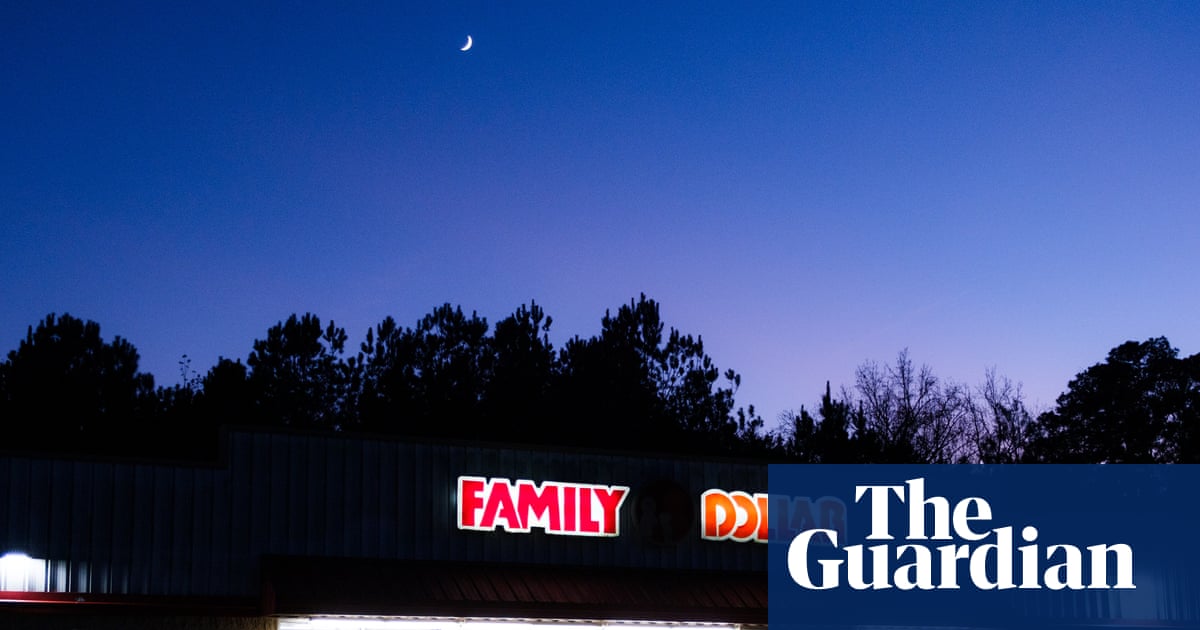
Discount chain Family Dollar will pay $63 million to settle claims by state and federal authorities that it frequently overcharged customers for milk, diapers, batteries, toilet paper and other household goods. The enforcement action, announced on Thursday by the Federal Trade Commission and 17 states, followed a Guardian investigation that found Family Dollar and larger rival Dollar General often charged more at checkout than the prices listed on their shelves.
Under the settlement, Family Dollar must set up a $40 million consumer redress fund, provide $20 million in discounts to customers and pay more than $3 million to state authorities. It must also create a program to regularly monitor and verify prices, train employees to identify pricing problems and promptly correct overcharges. The company neither admitted nor denied the allegations and said it is working cooperatively with authorities.
The investigation found that Family Dollar failed at least 2,100 price inspections in 20 states from 2022 to late 2025. After the Guardian's story was published, the FTC made undercover visits; in January, an investigator was overcharged on 15 of the 50 items she purchased at a Family Dollar in Euclid, Ohio. The chain, which says it offers "affordable products and trusted values to families across America," has roughly 7,000 stores.
More News
- Maple Express | November 13, 2026 | Stellantis Brampton plant sale: Ontario hopes CEO meeting buys time
- Maple Express | November 13, 2026 — Multiple deaths reported in B.C.'s Squamish Valley
- Global Express | November 13, 2026: Finland Reports Strike on Russian Warship in Baltic as US Envoys Meet Zelenskyy
- Finance Morning | November 13, 2026: Huang's Exit Hits Korean Stocks as KOSPI Slips Below 5,300
- Tech Express | November 13, 2026: Microsoft's Teams, Outlook and Copilot Hit by Global Outage Across 74 Countries
Comments (0)
View More
 -39%
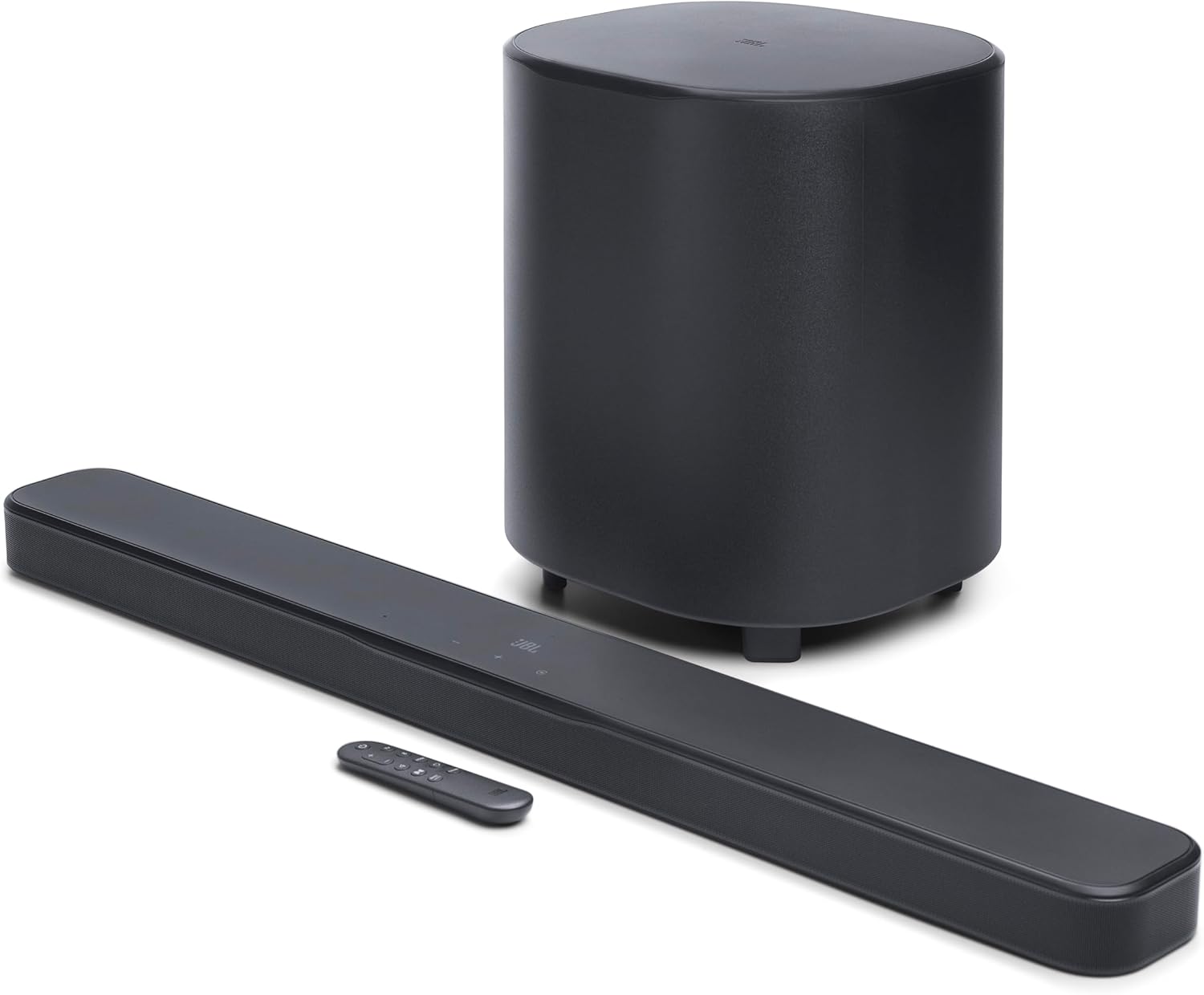
JBL Bar 500MK2 5.1 Soundbar (Renewed) — Dolby Atmos, 750W, 10" Sub! $549.99 CAD (39% Off)
 -41%
Samsung HW-B53CF 2.1ch Soundbar — 300W, Wireless Sub, Clear Dialogue! $149.99 CAD (40% Off)
 -54%
BIC 0.7mm Pencil Lead Refills, 30-Pack — A Semester in One Tube! $5.99 CAD (54% Off)
 -44%
Amazon Basics 7" Bypass Pruning Shears — stainless blade, forged aluminum body! $11.17 CAD (44% Off)
 Finance Morning
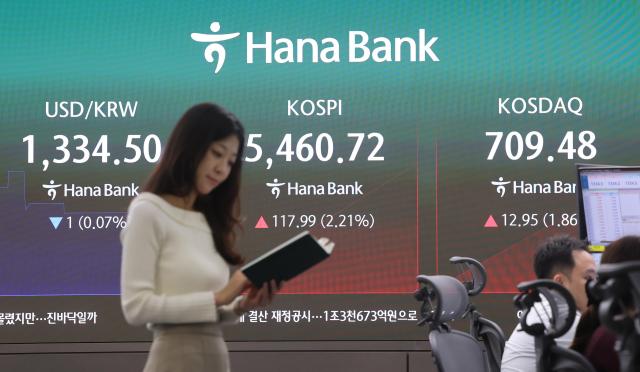
 | November 13, 2026: Huang's Exit Hits Korean Stocks as KOSPI Slips Below 5,300
 Sports Express
 | November 13, 2026: Blue Jays Apologize for Santander's Anti-Muslim Posts
-39%JBL Bar 500MK2 5.1 Soundbar (Renewed) — Dolby Atmos, 750W, 10" Sub! $549.99 CAD (39% Off)
Amazon
-41%Samsung HW-B53CF 2.1ch Soundbar — 300W, Wireless Sub, Clear Dialogue! $149.99 CAD (40% Off)
Amazon
-54%BIC 0.7mm Pencil Lead Refills, 30-Pack — A Semester in One Tube! $5.99 CAD (54% Off)
Amazon
-44%Amazon Basics 7" Bypass Pruning Shears — stainless blade, forged aluminum body! $11.17 CAD (44% Off)
Amazon
Finance MorningFinance Morning | November 13, 2026: Huang's Exit Hits Korean Stocks as KOSPI Slips Below 5,300
Sports Express