Finance Morning: Asia Tech Stocks Fall on AI Slowdown Fears; South Korea Launches Night Trading
Asian markets fell Monday, led by South Korea's KOSPI down 3.26%; the Nikkei 225 lost 0.81% and Taiwan's TAIEX slipped 0.70%, while the Hang Seng rose 0.45%. Calls from AI leaders to slow frontier-model development triggered a tech selloff. South Korea launched night trading, and markets brace for a super central bank week with the Fed ~86.5% likely to hike 25bp. In China, the State Council outlined computing plans and GAC halted trading.
📊 Today's Asian Markets
| Index | Close | Change | Change % |
|---|---|---|---|
| Shanghai Composite | 3885.33 | -2.78 | -0.07% |
| Shenzhen Component | 13384.57 | -86.69 | -0.64% |
| ChiNext | 3285.58 | -36.46 | -1.10% |
| Hang Seng | 24917.60 | +111.97 | +0.45% |
| Nikkei 225 | 63492.99 | -518.35 | -0.81% |
| KOSPI | 6684.37 | -225.54 | -3.26% |
| TAIEX | 45862.52 | -322.33 | -0.70% |
1. South Korea Enters the "8 p.m. Close" Era, Launching Night Trading Today
Source: Cailian Press
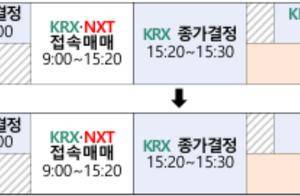
South Korea's stock market officially entered the "8 p.m. close" era on Monday (Sept. 14). Under a Korea Exchange (KRX) announcement, after the regular session closes at 3:30 p.m. local time, investors can keep trading in a newly created after-hours market until 8 p.m.
Specifically, after regular trading hours (9 a.m. to 3:30 p.m.) end, there is a 30-minute after-hours fixed-price session, followed by after-hours trading from 4 p.m. to 8 p.m.; the previous after-hours fixed-price session that ran from 4 p.m. to 6 p.m. will be scrapped. As of press time, the KRX's first night session had already opened.
The KRX after-hours market covers roughly 2,400 stocks across the Kospi main board and the Kosdaq "Korean NASDAQ," and allows short selling; ETF and ETN products are temporarily excluded. Only limit orders are permitted, not market orders, to reduce the risk of sharp price swings. Market participants broadly support the longer trading hours, saying they let investors react faster to breaking news or earnings.
2. AI "Brakes" Hammer Stocks, Triggering a Tech Selloff
Source: Guancha.cn
Over the weekend, Anthropic CEO Dario Amodei wrote that the industry "must put the brakes on frontier artificial intelligence," a call that unusually drew support from OpenAI CEO Sam Altman and xAI founder Elon Musk. In a personal blog post on the 12th, Amodei urged slowing development of the most advanced AI models, arguing that as capabilities rise quickly, so do the risks, and time is needed for safety measures and regulation to catch up.
As a result, tech stocks broadly came under pressure on Sept. 14. South Korea's KOSPI fell more than 3%, SK Hynix dropped over 6%, and Samsung Electronics briefly slid over 4%; OpenAI investor SoftBank plunged as much as 13%, its biggest drop since late June. Hong Kong large-model names Zhipu and MiniMax also tumbled, with Zhipu at one point down over 10% and MiniMax down over 7%.
Still, some analysts say there is not yet enough evidence that the AI investment cycle has peaked. U.S. President Donald Trump publicly dismissed calls to slow AI research as "a lot of negative forces hyping things up." U.S. media such as Bloomberg noted that Chinese firms like DeepSeek, Zhipu and MiniMax continue advancing model iterations and fundraising, narrowing the technology gap with their U.S. peers.
3. Bank of Korea Reviews the "Epic" Stock Market Volatility
Source: Sina Finance
In its recently released September 2026 monetary and credit policy report, the Bank of Korea reviewed the drivers of this year's KOSPI swings. The report shows that Samsung Electronics and SK Hynix accounted for a rapidly rising share of the index's gains: in the climb from 8,000 to 9,000 points, the two stocks contributed as much as 99%.
The report also notes that during the drop from 9,100 to 5,500 points, Samsung and SK Hynix contributed 69.3% of the decline. The central bank believes that, driven by expectations of a global AI and semiconductor upcycle, gains became highly concentrated in a few chip leaders, making the Korean market more sensitive to shifts in memory-chip industry sentiment.
In addition, individual investors' margin borrowing once hit a record high before forced liquidations during the pullback; Korean regulators subsequently raised the bar for such leveraged buying. The report also named Situational Awareness, a U.S.-based AI-focused hedge fund, saying it reportedly used leverage of up to 4x in building and unwinding positions in global memory-chip companies, and listed it as a factor that amplified the July selloff.
4. "Super Central Bank Week" Arrives as Fed Rate-Hike Bets Rise
Source: Sina Finance
This week is a "super central bank week" for global markets, with the Federal Reserve, the Bank of Japan and the Bank of England all holding policy meetings. The Fed meets on Sept. 15-16 and announces its decision in the early hours of Sept. 17 Beijing time, followed by a press conference by Chair Kevin Warsh — the week's most critical risk event for global markets.
Markets currently price in an 86.5% probability of a 25-basis-point hike (to 3.75%-4.00%) and a 13.5% chance of no change, an overwhelmingly one-sided bet. Analysts note that a Fed hike is an external disturbance rather than a decisive factor for A-shares, whose medium- and long-term direction depends on the domestic economy, earnings and policy; any hike would only bring a short-term shock.
On Sept. 14, combined turnover across the Shanghai, Shenzhen and Beijing exchanges reached 1.64 trillion yuan, down 344 billion yuan from last Friday and the second-lowest single-day figure of the year. With thin volumes, the market is largely waiting for the policy meeting to "drop the other shoe."
5. Goldman Sachs: Rate Hikes Won't End the US Bull Market
Source: Cailian Press
Stocks usually come under pressure when the Fed starts hiking, but Goldman Sachs expects the bull market to continue. Strategists led by Ben Snider said rising rates are a headwind for valuations, but corporate earnings remain the most important driver of equities.
Goldman noted that the S&P 500's forward price-to-earnings ratio has fallen from 22x at the start of the year to 19x today, yet the index remains within 2% of its record high. The report said the market is already pricing in more than three hikes next year, with earnings and balance sheets both strong. Over past decades, the S&P 500 fell an average of 2% in the first three months of seven hiking cycles, but gained 9% in the 12 months after the first hike.
6. State Council Lays Out Plans for Computing Network
Source: Caixin
A State Council executive meeting issued its latest plans for building out China's computing network. The meeting said the country should pursue rational, orderly deployment, further improve computing infrastructure, actively advance R&D and application of key technologies and equipment, and build a multi-tier, networked computing system.
It also stressed better use of market mechanisms, supporting enterprises in technological innovation, resource integration and application promotion, and better matching supply with demand. Separately, Xi Jinping put forward five initiatives including open-source and inclusive AI for advancing "Greater BRICS" cooperation, under which China will take the lead in building a BRICS AI open-source zone and support large-language-model development and cooperation.

7. Property Finance System Undergoes a Systemic Overhaul
Source: People's Daily
On Aug. 28, 2026, the People's Bank of China and the National Financial Regulatory Administration (NFRA) jointly issued opinions on reforming property credit management to accelerate a new development model for real estate. The same day, the Ministry of Housing and Urban-Rural Development, the Ministry of Natural Resources and the NFRA issued a notice on improving commercial housing sales rules, while the CSRC issued opinions on capital-market support for the new property model; the NFRA also issued five supporting measures alone or jointly.
This package opens up four fronts: rental supply, urban renewal, existing-asset revitalization and corporate consolidation. On rentals, affordable-housing development loans carry rates set on a break-even, low-margin basis, and group purchase loans for rental housing can be used to buy idle existing homes in bulk with terms of up to 30 years; operating loans for self-owned rental housing projects can run up to 20 years.
On urban renewal and asset revitalization, the NFRA and the housing ministry drew up trial rules creating a dedicated "urban renewal project loan" category. The CSRC's opinions support issuing REITs backed by rental housing and urban-renewal projects, and allow listed developers to refinance via private placements and acquire property assets through M&A, promoting survival of the fittest.
8. GAC Group A-Shares Halt Trading Abruptly
Source: Sina Finance
On Sept. 14, Shanghai Stock Exchange suspension information showed that Guangzhou Automobile Group (GAC Group, 601238.SH) A-shares were suspended all day due to undisclosed material matters. A GAC staff member said the halt happened suddenly that morning because the company would publish an important announcement after the close, with the timing and content not yet disclosable.
On the news front, the MIIT held a press conference on Sept. 11, where Shao Ji, deputy director of the NDRC's industry development department, said the government would actively support reform of large enterprise groups and promote mergers and restructuring among industrial companies in a market-based, rule-of-law manner. Around the same time, talk of a shareholding tie-up or strategic restructuring between FAW Group and GAC Group resurfaced.
Market rumor has it that FAW Group could inject assets into GAC to become its second-largest shareholder; GAC said details should come from the post-close announcement. From an industrial logic standpoint, the two companies are complementary: FAW has strengths in premium passenger vehicles, commercial vehicles and JVs but is slower on new-energy transition, while GAC, with its Aion brand and magazine battery, is stronger in pure-EV platforms and intelligent driving.
9. Japan's Factory-Automation Stocks Worry About Being Caught by China
Source: Nikkei Chinese
Factory-automation (FA) stocks are lagging on Japan's stock market. Fanuc and Yaskawa Electric, seen as "physical AI" bellwethers, have both been in decline so far this year; even after Tokyo's strong rally on Sept. 7, they are still down roughly 1% to 2% from end-2025, well behind the Nikkei's roughly 30% gain.
The market is on high alert over a specific risk: while Japanese firms face parts-procurement difficulties that delay product supply, Chinese rivals could seize market share. Competition is indeed intensifying — Inovance Technology, China's largest FA company, reached a 35% share of the Chinese market for servo products used in semiconductor equipment and robotics in January-June, up about 3 percentage points year on year.
Inovance, founded in 2003, makes servo motors, inverters and other machine-control products, with Japanese rivals including Yaskawa Electric. Its market value has reached about 160 billion yuan (roughly 3.7 trillion yen), surpassing Yaskawa's roughly 1.2 trillion yen.
10. CXO Leads the Way — Why Are Hong Kong Innovative Drug Stocks Lagging?
Source: Sina Finance
Since August, the pharmaceutical sector has shown a clear structural divergence, with CXO (contract research, development and manufacturing outsourcing) leading the gains. By Shenwan's tier-3 pharma industry classification, the medical R&D outsourcing sub-sector has risen 48.6% year to date; by contrast, the Hang Seng HK Connect Innovative Drug Index is still hovering around flat, a striking gap.
This CXO rally has been driven by both an order recovery and expanding AI drug discovery demand. Global biopharma financing reached US$20.177 billion in the first half of 2026, up 58.5% year on year. Interim results confirm the order rebound: WuXi XDC's backlog was about US$2.2 billion (up 62.2%), Asymchem's backlog US$1.673 billion (up 53.77%), and WuXi Biologics' adjusted net profit 3.3 billion yuan (up 38.4%).
A key reason for the divergence is index composition: the Hang Seng HK Connect Innovative Drug Index focuses on innovative drug developers and commercializers and excludes CXO companies, while this rally's incremental gains came precisely from CXO. That said, the innovative drug industry trend has not weakened — interim results show BeiGene's first-half net profit of 3.271 billion yuan (up 627%) and Innovent's product revenue of 8.201 billion yuan (up 56.7%).
More News
- Global Express | September 14, 2026 Iran War Escalates as Oil Prices Near Four-Month High
- Tech Express | September 14, 2026 Apple Rolls Out iOS 27 Tonight
- Sports Express | September 14, 2026 Vikings Beat Packers 39-22 in Historic NFL Scorigami
- Maple Express | September 14, 2026 Markham reservist killed on Ukraine's front lines
- Maple Express | September 13, 2026 — Carney's Investment Summit Opens in Toronto as Protests Loom
Comments (0)
View More
 -33%
-33%Kindle Paperwhite Fabric Cover (11th Gen) — Water-Safe & Slim! $28.99 CAD (33% Off)
 -24%
-24%Royale Velour Facial Tissue, 6 Boxes — Velvety Soft 3-Ply! $7.98 CAD (24% Off)
 -27%
-27%TP-Link UE306 USB 3.0 to Gigabit Ethernet Adapter — Foldable & Plug-and-Play! $13.99 CAD (26% Off)
 -25%
-25%Anker 5-in-1 USB-C Hub — 4K HDMI + 85W Passthrough Charging! $21.99 CAD (24% Off)
 Maple Express
Maple Express | September 14, 2026 Markham reservist killed on Ukraine's front lines
 Sports Express
Sports Express | September 14, 2026 Vikings Beat Packers 39-22 in Historic NFL Scorigami
-33%Kindle Paperwhite Fabric Cover (11th Gen) — Water-Safe & Slim! $28.99 CAD (33% Off)
Amazon
-24%Royale Velour Facial Tissue, 6 Boxes — Velvety Soft 3-Ply! $7.98 CAD (24% Off)
Amazon
-27%TP-Link UE306 USB 3.0 to Gigabit Ethernet Adapter — Foldable & Plug-and-Play! $13.99 CAD (26% Off)
Amazon
-25%Anker 5-in-1 USB-C Hub — 4K HDMI + 85W Passthrough Charging! $21.99 CAD (24% Off)
Amazon
Maple ExpressMaple Express | September 14, 2026 Markham reservist killed on Ukraine's front lines
Sports Express