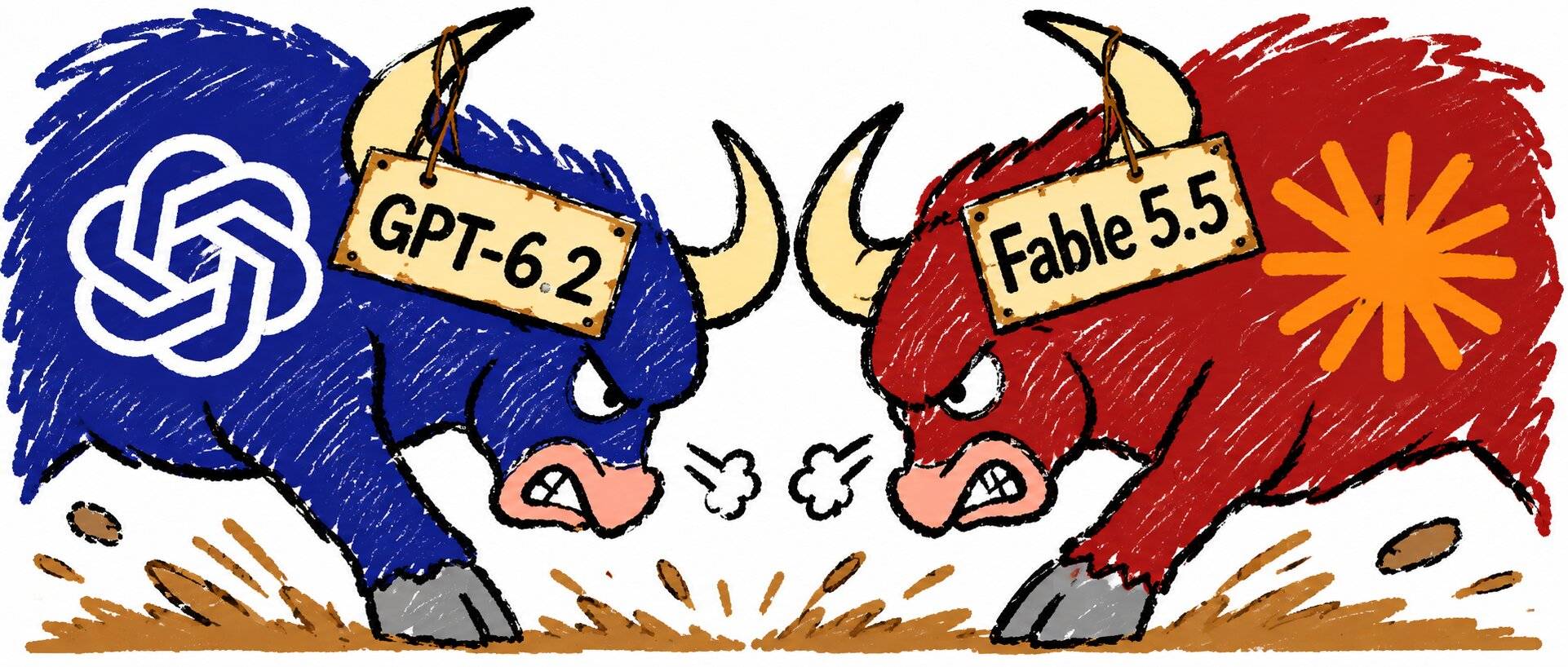
Tech Express | November 2, 2026 — Clues for GPT-6.2 Astra and Claude Fable 5.5 Surface on the Same Day
An unannounced Claude Mythos 5.5 surfaced in Anthropic's site code while Fable 5.5 demos and pricing leaked, and OpenAI's GPT-6.2 Astra appeared in Codex stats. Musk has reportedly agreed to let TSMC run Terafab, and Intel fell 28.58% after guiding to no positive free cash flow in 2027. Also: neocloud debt worries, Karpathy's two-hour HackerTube, new iPads, AnTuTu's October iOS rankings, NASA's Hubble rescue call, Huawei's Pura X View past 750,000, and Meta's humanoid robot work with Fourier.
1. Overnight, clues about GPT-6.2 Astra and Claude Fable 5.5 both surfaced
Source: ifanr
Late on November 1, someone spotted an unannounced "Claude Mythos 5.5" inside the HTML source code of Anthropic's official website — the name appeared in a hidden H1 heading and in image alt attributes on the Mythos product page. Tech outlet TestingCatalog also picked up the change and speculated that Anthropic is preparing a new generation of models. In Anthropic's lineup, Mythos is aimed at high-risk research areas such as cybersecurity and biology with tightly restricted access, while Fable adds safety guardrails on top of the same underlying model and serves a broader user base.
In the early hours of today, developer @chetaslua found that "Mythos 5.5" appeared six times in the site's HTML even though the body copy still described Mythos 5.1; another user later said Anthropic had removed the pages mentioning Mythos 5.5. An earlier clue dates to October 13, when the Azure pricing configuration of open-source model API gateway LiteLLM listed the identifier azure_ai/claude-fable-5-5. The configuration was later removed, but a third-party MLflow model catalog still keeps a record. The circulated configuration suggests Fable 5.5 may support a 1 million token input context and 128,000 token maximum output, at $10 per million input tokens and $50 per million output tokens.
On November 1, developer @notjazii posted a roughly 36-second comparison video, saying that with the same prompt, Opus 5.5 and Fable 5.5 produced 3D scenes with clearly different dynamic detail; he also showed a Minecraft-style game said to be generated by Fable 5.5, which the author says took a single prompt and one to two hours. On the OpenAI side, some users' Codex usage statistics showed GPT-6 Astra at about 80% and GPT-6.2 Astra at about 19.8%, and an API response posted by developer @Mr_Salio showed response.model set to gpt-6.2-astra. Early today another user said that after upgrading Codex CLI the model could be specified in the terminal as gpt-6.2-astra medium, with a 1M token window displayed. Note that the demo videos did not include full prompts, call logs or source code, so the model identity and generation time still rest mainly on the authors' own accounts.
2. BBC: neocloud stocks under pressure as AI bubble worries grow
Source: BBC Chinese
BBC Chinese reports that data center companies known as "neoclouds," such as CoreWeave and Nebius, rent large amounts of computing power to major AI developers including Anthropic, OpenAI and Meta, and this once little-known corner of the AI ecosystem is now a market focus. Analysts at research firm Gartner predict that by 2030, 80% of neocloud companies will "cease to operate independently," while Forrester experts expect at least three neoclouds to be acquired in the near term because their "financial position is becoming unstable."
These companies typically raise money through long-term lease contracts with large tech customers that need computing power quickly, then borrow against those contracts and the AI chips they have purchased. Industry leader CoreWeave is far smaller than some of the large tech companies that use its services, but it has accumulated $35.1 billion in debt. Over the past month CoreWeave's share price has fallen by a quarter, and Nebius, IREN and Applied Digital have posted similar or steeper declines over the same period. CoreWeave CEO Mike Intrator said the market's reaction is "irrational." U.S. Treasury Secretary Scott Bessent, speaking to CNBC on October 29, tried to play down the concerns, saying these companies are only "a small part of the overall ecosystem."
One turning point in sentiment came after Microsoft and Google last week forecast future AI investment below Wall Street analysts' expectations, sending several neocloud stocks lower; Microsoft also recently cancelled a cooperation agreement with British neocloud Nscale because of power supply problems. Most of these companies emerged from the volatile cryptocurrency mining industry: CoreWeave was founded in 2017 and initially focused on Ethereum mining, IREN, Core Scientific and Applied Digital also started in mining, and Nebius is the former parent of Yandex — often called "Russia's Google" — which completed a spin-off and renamed itself in 2024. Elon Musk said in a social media post that the challenge could leave more than 200 neocloud companies facing "guppy-level death and consolidation."

3. Karpathy rebuilt YouTube in two hours with Claude
Source: ifanr
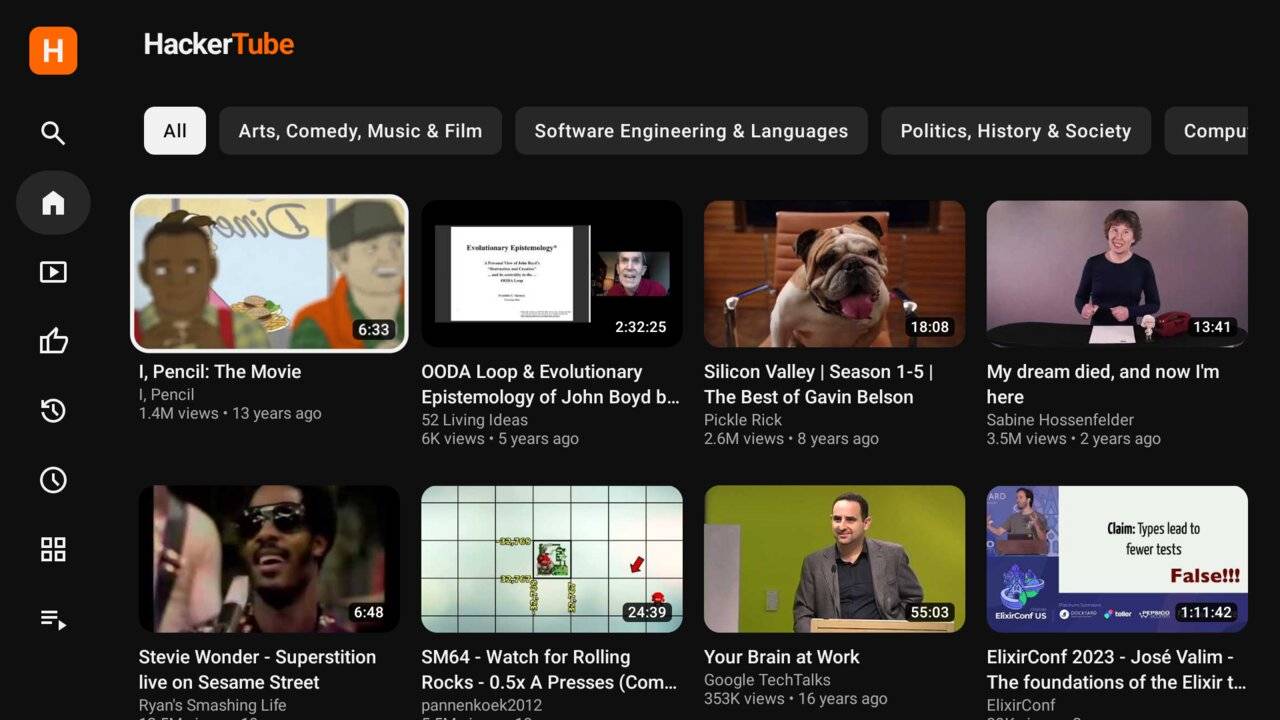
At 11 p.m. on a Friday, Karpathy opened YouTube looking for something to watch and found a homepage full of exaggerated thumbnails and topics he had seen countless times. The next day he opened Claude and, with a single-sentence prompt, asked it to build a YouTube-style site containing only videos repeatedly recommended on Hacker News over the years. Two hours later HackerTube went live. The work was done with Claude Opus 5.5 at Medium reasoning effort, and the layout closely mirrors YouTube: a left sidebar with liked videos, history and Watch Later, and a right-hand feed with the same thumbnail sizes and view counts.
The site holds 6,454 videos, browsable by topics including art, software engineering, history, ideas, business and games, and detail pages show comments from Hacker News, how many people recommended a video and when it was recommended. It requires no login and stores watch state in the local browser; instead of the polished thumbnails uploaders optimize, it simply grabs a frame from the middle of each video. Karpathy said he did only three things by hand — creating a Google Cloud API key for querying video metadata, starting a VPS and buying a domain — while coding, data processing, deployment, security hardening and optimization were left to Claude.
The discussion quickly moved beyond a case study in AI coding. One widely shared view is that HackerTube's real innovation is replacing watch time, click-through rate and thumbnail A/B tests with years of genuine user recommendations as the ranking signal; others see an underdeveloped market for "personal recommendation algorithms." It still depends on YouTube's videos and metadata and on nearly two decades of Hacker News community data, and it does not rebuild video hosting, copyright management or creator payouts — nor does HN users' taste equal quality in any general sense.
4. Musk shifts stance and agrees to let TSMC lead Terafab
Source: Mydrivers
According to a report on November 2, Musk's attitude toward TSMC's participation in the Terafab wafer fab project has softened noticeably, and the two sides are preparing to restart negotiations. Musk had insisted that his companies build and operate the plant independently; the talks have now shifted toward TSMC taking primary responsibility for construction and day-to-day operations, with equity structure and investment arrangements still under discussion. The shift is a direct contrast to the two sides' earlier public standoff.
On October 7, Musk stated on X that Terafab would be built and operated by Tesla and SpaceX themselves, and that TSMC could at most sublease part of the site with no operating role: "We will build this factory, and we will run it. That is beyond doubt." TSMC's bottom line has not moved. At its third-quarter earnings call on October 15, chairman and CEO C.C. Wei said there could be various cooperation models, but as long as TSMC takes part, the fab must be operated by TSMC.
What the latest supply-chain reports suggest is that TSMC's demand for operating control has not changed — Musk's acceptance of it has. What remains unresolved is Intel's place in the project: in April this year Intel was named as Terafab's only publicly listed manufacturing partner, with plans to make chips on its next-generation 14A process, and the latest report does not say how Intel's 14A role would be adjusted if TSMC takes over construction and operations. Musk's timeline, given on SpaceX's third-quarter earnings call, is for a test chip to run at the Austin research fab around May-June 2027, with mass production at Terafab in the third or fourth quarter of 2028. The information comes only from supply-chain sources; Tesla, SpaceX and TSMC have issued no official announcement.

5. Intel falls 28.58% in a day, its worst in 52 years
Source: Mydrivers
On Friday, October 30, Intel's stock plunged 28.58%. According to Dow Jones Market Data, that was the second-largest one-day drop on record for Intel, behind only the 29.9% decline on July 5, 1974. The quarterly report itself was not bad: third-quarter revenue of $16.513 billion, up 20.9% year on year, and operating profit of $2.522 billion versus just $683 million a year earlier, with Data Center and AI (DCAI) revenue up 78%. The problem was that Intel's stock had already risen 123% over the past year, and the market had priced in a successful turnaround.
What triggered the sell-off was the fourth-quarter guidance from chief financial officer Dave Zinsner. He said clearly that with capital spending rising sharply, the company does not expect to achieve positive free cash flow in 2027. Firm purchase orders to equipment suppliers are already up nearly 40% quarter on quarter, and three expensive items — Intel 3 expansion, 18A ramp and early 14A investment — all land in 2027. On the analyst call, Melius analyst Benjamin Reitzes pointed out that the guidance was about $1.8 billion below Wall Street expectations.
The Philadelphia Semiconductor Index fell 7.20% that day, with 29 of its 30 constituents down: AMD fell 10.88%, Qualcomm 11.12%, Arm 9.97%, TSMC 5.95% and Broadcom 5.48%; Nvidia fell 4.22%, pushing its market value back below $5 trillion, while Apple, down just 1.23%, became the world's most valuable listed company. The Nasdaq fell 2.86% and the S&P 500 1.82%. Operating improvements are real: 18A costs are 40% lower than in the first quarter and Intel 3 is down 15%, and the share of PC CPU revenue from 18A parts has climbed from under 5% at the start of the year to nearly a third. But external foundry revenue was only $411 million, and the foundry business still lost $1.9 billion in the quarter.

6. Three more new iPads are queued for early next year
Source: 9to5Mac
A week after launching a refreshed iPad mini with an OLED display, Apple still has three more iPad updates coming in the first half of next year. According to Bloomberg's Mark Gurman, Apple will release a new iPad Air, a new entry-level iPad and a new iPad Pro. The iPad Air will also move to OLED, likely keeping a 60Hz panel and probably not switching from Touch ID to Face ID, with a likely jump from the M4 chip to the M5; the base 11-inch model may start at around $799 to $899.
The entry-level iPad will be its first update since early 2025, moving to the A19 chip and 8GB of RAM, which finally brings Apple Intelligence support to Apple's cheapest iPad, along with the N1 chip and C1X modem for better networking. As of now there should be no screen or design changes, though new colors are possible. The iPad Pro will gain a vapor chamber — a step Apple began with the iPhone 17 Pro last year — and a new chipset, likely the M6 or possibly the M7, with few other meaningful changes expected. The 11-inch iPad Pro currently starts at $1,199 and the 13-inch at $1,499.

7. AnTuTu's October iOS ranking: iPhone Duo breaks into the top ten
Source: Mydrivers
AnTuTu published its October 2026 iOS device performance ranking on November 2, covering the period from October 1 to October 31. The two iPad Pro 2025 models with the M5 chip again took the top two spots, with the 11-inch version averaging 3,694,360 points and the 13-inch version 3,660,185, giving them a lead of about 238,000 points over third place.
The iPhone 18 Pro Max and iPhone 18 Pro ranked third and fourth with 3,421,737 and 3,420,575 points, a gap of only about 1,162 points; both use the A20 Pro chip and lead the fifth-placed M4 11-inch iPad Pro by roughly 320,000 points. The iPhone Duo, a new entry to the top ten this month, placed eighth with an average of 2,999,438 points, just 562 points short of the 3 million mark. It also uses the A20 Pro, scoring about 420,000 points below the two iPhone 18 Pro models but beating the M4 13-inch iPad Air 2026 by about 13,800 points.
Fifth through seventh place went to the 11-inch iPad Pro 2024, the 11-inch iPad Air 2026 and the 13-inch iPad Pro 2024, all with M4 chips and in the same order as last month. Tenth place went to the 13-inch iPad Air 2025, the only M3 device in this month's top ten.

8. NASA asks the private sector for ways to keep Hubble alive
Source: The Verge
The Hubble Space Telescope is in no immediate danger of burning up, but without an orbit boost its time will run out in the early to mid-2030s. The Verge reports that NASA is taking proposals from the private sector to see whether anyone can save the famous telescope. In a post on NASA's site, Administrator Jared Isaacman said Hubble still has important science ahead of it and that every reasonable opportunity to keep it delivering should be examined: "If there are innovative and cost-effective ways to extend the life of an asset already on orbit, we owe it to the American taxpayer and the scientific community to explore them."
NASA will keep the Request for Information open through November 30 at 3 p.m. ET. Gravity drags Hubble toward a lower orbit every day, and whether it keeps working depends on whether anyone is willing to pay for that boost.

9. Huawei's Pura X View passes 750,000 units sold
Source: Mydrivers
Data released on November 2 by tech blogger "RD Observation" shows that as of week 43 of 2026 (October 19-25), cumulative sales of Huawei's Pura X View reached about 755,300 units, passing the 750,000 mark. Against roughly 652,300 units in week 42 (October 12-18), that means about 103,000 units sold in week 43 alone, with momentum still building.
The Pura X View is billed as the world's first wide-screen bar phone and went on sale on September 9 this year starting at 5,999 yuan. It uses a 16:9.5 wide display ratio that keeps the standard bar form factor while offering more horizontal space, showing more content when reading, browsing the web or watching video. Wide bar phones remain a niche form factor, and the sales figure is being read as a test of how willing consumers are to accept a new shape of high-end phone.

10. Meta teams up with China's Fourier on a humanoid robot
Source: Lianhe Zaobao
Reuters reported on October 31, citing U.S. tech outlet The Information, that Meta is working with Chinese startup Fourier to build a humanoid robot prototype, according to people familiar with the matter, and is now developing a second-generation version.
Fourier founder and CEO Gu Jie told China's Yicai that he could not comment for now. Neither company has publicly detailed the cooperation.
More News
- Global Express | November 2, 2026 — Spain confirms 69 dead in train crash, including one Canadian
- Finance Morning | Regulators Meet Brokers, Funds and Major Banks; Shanghai Composite Rises 1.08%
- Sports Express | November 2, 2026 — Antonelli, 20, becomes F1's youngest world champion
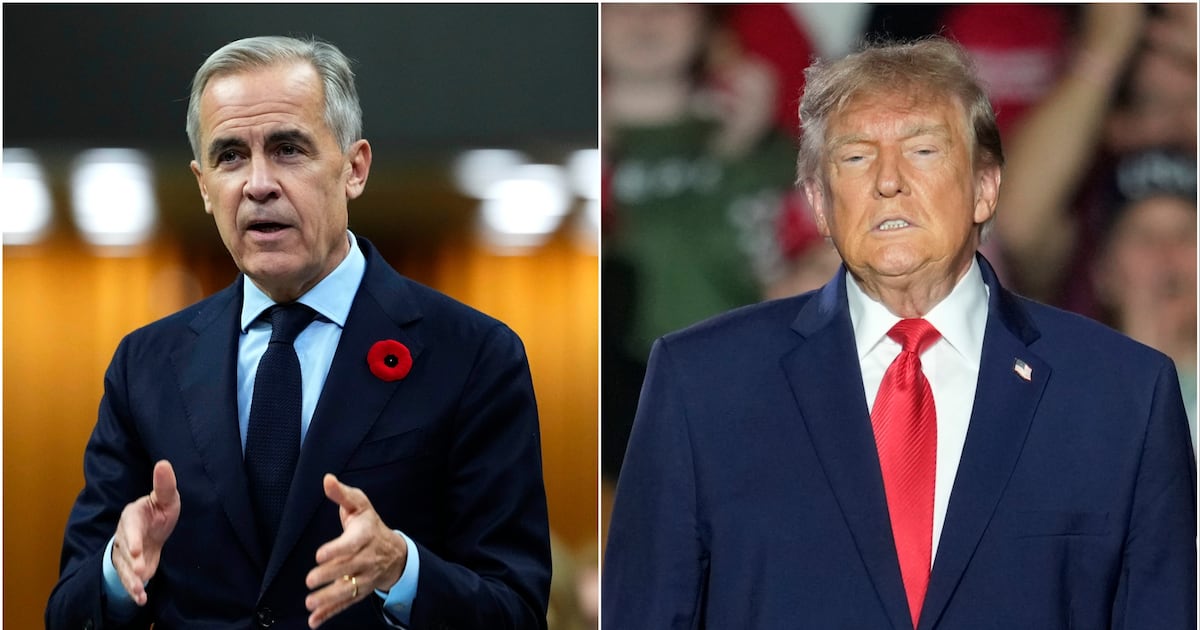
- Maple Express | November 2, 2026 — Trump says Canada, U.S. 'very close' to a trade deal
- Maple Express | November 1, 2026: Carney Says He Had a 'Good Conversation' With Trump as Trade Deal Nears
Comments (0)
View More
 -38%
Tzowla 15.6" Anti-Theft Laptop Backpack — 37,000+ Reviews, Built to Last! $43.99 CAD (37% Off)
 -18%
KitchenAid 24" Built-In Dishwasher — 44 dB Quiet with 16 Place Settings on Three Racks! $1,399.99 CAD (18% Off)
 -45%
Webber Naturals Lutein 20 mg with Zeaxanthin, 45 Softgels — $11.05 CAD (44% Off)
 -51%
MoKo Case for 6" Kindle (11th Gen 2024/2022) — Built-in Hand Strap for One-Handed Reading! $19.99 CAD (50% Off)
 Maple Express
 | November 2, 2026 — Trump says Canada, U.S. 'very close' to a trade deal
 Maple Express
 | Nov 1, 2026: Four teens killed in Puslinch crash; Carney calls Dec. 7 by-elections
-38%Tzowla 15.6" Anti-Theft Laptop Backpack — 37,000+ Reviews, Built to Last! $43.99 CAD (37% Off)
Amazon
-18%KitchenAid 24" Built-In Dishwasher — 44 dB Quiet with 16 Place Settings on Three Racks! $1,399.99 CAD (18% Off)
Best Buy
-45%Webber Naturals Lutein 20 mg with Zeaxanthin, 45 Softgels — $11.05 CAD (44% Off)
Amazon
-51%MoKo Case for 6" Kindle (11th Gen 2024/2022) — Built-in Hand Strap for One-Handed Reading! $19.99 CAD (50% Off)
Amazon
Maple ExpressMaple Express | November 2, 2026 — Trump says Canada, U.S. 'very close' to a trade deal
Maple Express