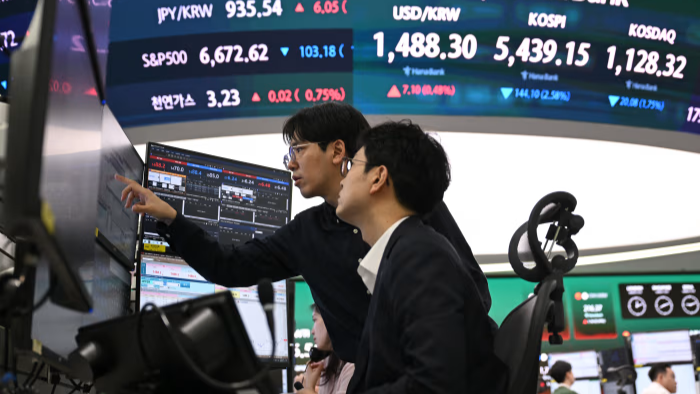
Finance Morning: Alibaba's HK$80B Placement Sinks Shares as Asia Retreats
Alibaba unveiled a nearly HK$80 billion share placement, sending its stock down more than 10% and dragging Hong Kong and Asian markets lower; Samsung Electronics fell nearly 9% with the KOSPI closing down 3.12%. This week's Nvidia earnings and the Fed's Jackson Hole meeting are in focus. In China, securities stamp duty surged 99.2% year on year in the first seven months, while a new housing provident fund policy lifts the first-home loan cap to 3.4 million yuan.
📊 Today's Asia Market
| Index | Close | Change | Change % |
|---|---|---|---|
| Shanghai Composite | 3882.01 | -23.19 | -0.59 |
| Shenzhen Component | 13794.29 | -299.88 | -2.13 |
| ChiNext | 3431.89 | -113.69 | -3.21 |
| Hang Seng | 25517.33 | -492.13 | -1.89 |
| Nikkei 225 | 65528.09 | -488.27 | -0.74 |
| KOSPI | 6696.96 | -215.99 | -3.12 |
| TAIEX | 44762.32 | -461.97 | -1.02 |
1. Alibaba's HK$80B Placement Sinks Shares
Source: Sina Finance
On August 24, Alibaba (09988.HK) unveiled a financing plan of nearly HK$80 billion, sending its shares down more than 10% at the open and quickly below the placement price. The company will place 710 million new shares at HK$112.70 apiece, with completion expected on August 26. This is Alibaba's first new-share placement since its 2019 Hong Kong listing, with net proceeds earmarked for AI infrastructure.
The massive fundraising spooked investors. On the morning of August 24, Alibaba fell 9.76% to HK$111 at midday, below the placement price, on turnover of HK$27.76 billion. The Hang Seng Tech Index slid 3.84% to 4,583 points, while the Hang Seng Index fell 2.09% to 25,465 points.
Analysts noted the Hang Seng Index had rebounded more than 3,500 points since July, largely exhausting valuation-repair momentum. Everbright Securities International strategist Wu Lixian called the placement a short-term factor and expects support around 25,000 points. Analysts also flagged high U.S. bond yields and potential yen carry-trade unwinding if the Bank of Japan hikes in September as near-term risks.
2. Hang Seng Tech Index Falls Nearly 4%, Alibaba Down Almost 9%
Source: Sina Finance
On August 24, Hong Kong stocks came under pressure, with the Hang Seng Index falling more than 2%. The tech sector followed the broader market lower, with the index tracked by the Hang Seng Tech ETF ChinaAMC (513180) down nearly 4% in the afternoon as Alibaba, Zhipu and SMIC fell sharply.
Despite short-term volatility, the Hang Seng Tech Index's long-term story is improving. According to a Hang Seng Indexes announcement, the index's methodology will be revised to cover more high-growth small- and mid-cap tech companies, boosting its growth profile and representativeness.
With the launch of high-performance open-source models such as Kimi 3, AI industry profits are shifting from hardware and large models to cloud providers, benefiting Hong Kong-listed cloud companies that carry heavy weight in the index.
3. NetEase Youdao Turns Profitable in Q2 as Ding Lei Steps Down
Source: 21jingji
On August 21, NetEase Youdao released its Q2 2026 results alongside a board change: Ding Lei resigned as a Youdao director on August 18 for personal reasons, with Chen Jinhai filling the vacancy the same day.
The company also posted a turnaround: quarterly net revenue of 1.47 billion yuan, up 3.5% year on year, and net profit attributable to shareholders of 73.79 million yuan, versus a net loss of 17.76 million yuan a year earlier. On a non-GAAP basis, net profit rose more than sevenfold.
Chen Jinhai, a NetEase veteran and current vice president of NetEase Cloud Music, takes the seat. Ding Lei remains chairman and CEO of NetEase Group, and his exit from the subsidiary board is seen as delegating day-to-day governance to promote more independent, standardized governance at the listed unit.
4. Pharma Earnings Rise as Innovation Goes Global and AI-Driven
Source: China Financial Information Network
Chinese biopharma companies have been releasing their 2026 interim results, with many posting strong numbers. Among the largest, WuXi AppTec reported first-half revenue of 28.897 billion yuan (up 38.93%) and net profit of 11.08 billion yuan (up 29.43%). BeiGene posted revenue of 22.22 billion yuan (up 26.8%) and net profit of 3.271 billion yuan (up 627.1%). Hengrui Medicine reported revenue of 15.456 billion yuan (down 1.94%) and net profit of 4.465 billion yuan (up 0.34%).
As of August 23, among the 146 listed pharmaceutical companies that had released interim reports, 120 (82%) were profitable and 81 (55.5%) grew revenue year on year.
Internationalization and AI are the new directions. Hengrui reached a global strategic collaboration with Bristol Myers Squibb to advance 13 early-stage innovation programs, while Insilico Medicine's Rentosertib entered Phase III trials as the world's first AI-discovered target and molecule to reach pre-approval validation.
5. Japan, Korea Open Lower as Geopolitics Weigh
Source: ifeng Finance
On August 24, Japanese and South Korean markets opened lower. The Nikkei 225 opened down 0.06% at 65,978.95 points, while the KOSPI opened down 0.46% at 6,881.07 points.
Geopolitically, Iran's Supreme National Security Council secretary Rezaei said that if the U.S. continues its economic war against Iran, no oil would pass through the Strait of Hormuz or the Persian Gulf, according to CCTV. Earlier, President Trump announced on August 19 the "most severe economic actions ever imposed on any country" against Iran.
In the prior session, all three major U.S. indexes closed higher, but memory-chip stocks mostly fell, with Western Digital down more than 2% and Micron down 0.77%.

6. Samsung Falls Nearly 9% as Japan, Korea Close Lower
Source: Cailian
The Nikkei 225 closed down 0.74% at 65,528.09 points on August 24, according to Cailian. Kioxia fell 6.24%, SoftBank Group dropped 5.33%, and Advantest slid 3.9%, while Nintendo rose 2.26%.
South Korea's KOSPI closed down 3.12% at 6,696.96 points. Samsung Electronics fell 8.7% and SK Hynix dropped 3.4%.
7. Asia Under Pressure as Nvidia Earnings and Jackson Hole Loom
Source: ifeng Finance
Asian markets diverged on August 24. As of press time, the MSCI Asia Pacific index rose 0.79%, but South Korea's Kospi — seen as an AI bellwether — tumbled 1.88%. Nasdaq 100 futures slipped 0.06%. Attention turned to two major events this week: Nvidia's earnings and the Federal Reserve's Jackson Hole symposium.
Nvidia signaled a price hike before its results: servers equipped with its flagship Vera Rubin and Grace Blackwell chips will cost more than 15% more from early next year. Meanwhile, Alibaba announced a roughly US$10 billion placement to double down on full-stack AI.
On the macro front, Federal Reserve Chair Kevin Warsh will speak at Jackson Hole, with markets seeking clues on the rate path. Brent crude fell 1.34% to US$91.37 a barrel, while gold surged to US$4,627 an ounce. The 10-year Treasury yield held near a multi-year high of 4.72%.
8. JPMorgan: Global Stocks to Grind Higher Into Year-End
Source: Sina
JPMorgan strategists said global stocks will likely edge modestly higher through year-end rather than staging a major rally.
The team led by Fabio Bassi said the semiconductor rebound represents a tactical "repair" in risk appetite, writing that the Fed's patience has dampened market volatility and that positioning and sector divergence will drive the next phase.
Despite recent bond-market turbulence, strategists expect term premiums to rise only modestly and do not foresee a broad risk-off selloff.
9. Housing Provident Fund Policy Lifts First-Home Loan Cap to 3.4M Yuan
Source: Eastmoney
China's central state organs housing fund management center recently issued a notice optimizing the housing provident fund policy. Matching the earlier Beijing property-policy adjustment, the maximum first-home loan amount can now reach 3.4 million yuan.
On monetary policy, the People's Bank of China announced it will conduct overnight reverse repos from August 27 to September 1 at a fixed rate via quantity bidding, with daily operations capped at 600 billion yuan.
Separately, several banks' gold-accumulation prices topped 1,000 yuan per gram on August 24, with ICBC at 1,005.69 yuan and Bank of China at 1,022.29 yuan per gram.
10. Fiscal Data Released, Stamp Duty Surges
Source: Sina Finance
Finance ministry data showed China's general public budget revenue reached 14.3696 trillion yuan in the first seven months, up 5.8% year on year, with tax revenue of 11.8381 trillion yuan, up 6.7%. Stamp duty hit 353 billion yuan, up 38%, with securities transaction stamp duty of 186.4 billion yuan surging 99.2%.
On policy, a State Council executive meeting called for firmly seizing the opportunity in next-generation communications network construction, advancing basic, space, international and converged network development to strengthen China's information and communications industry.
Internationally, U.S. Customs and Border Protection announced additional tariffs on certain Canadian imports under Section 338, with a 50% tariff on some Canadian goods taking effect at 00:01 ET on August 22. Canadian Prime Minister Carney said Canada will impose retaliatory tariffs on U.S. imports from September 8.
More News
- Maple Express | October 08, 2026 — Two house explosions in Hamilton send three to hospital, one critically injured
- Global Express | October 8, 2026 — Houthis Claim Missile Strike on Riyadh Airport as Explosions Heard in Saudi Capital
- Finance Morning Brief: US Stocks Fall on Rate-Hike Bets; A-Shares Slip After Holiday as Bank Shares Hit Records
- Tech Express | October 8, 2026 - Microsoft Unveils Surface Laptop Ultra, the First Laptop With Nvidia's RTX Spark Chip
- Sports Express | October 8, 2026 — Rays Sweep Yankees to Reach First ALCS Since 2020
Comments (0)
View More
 -54%
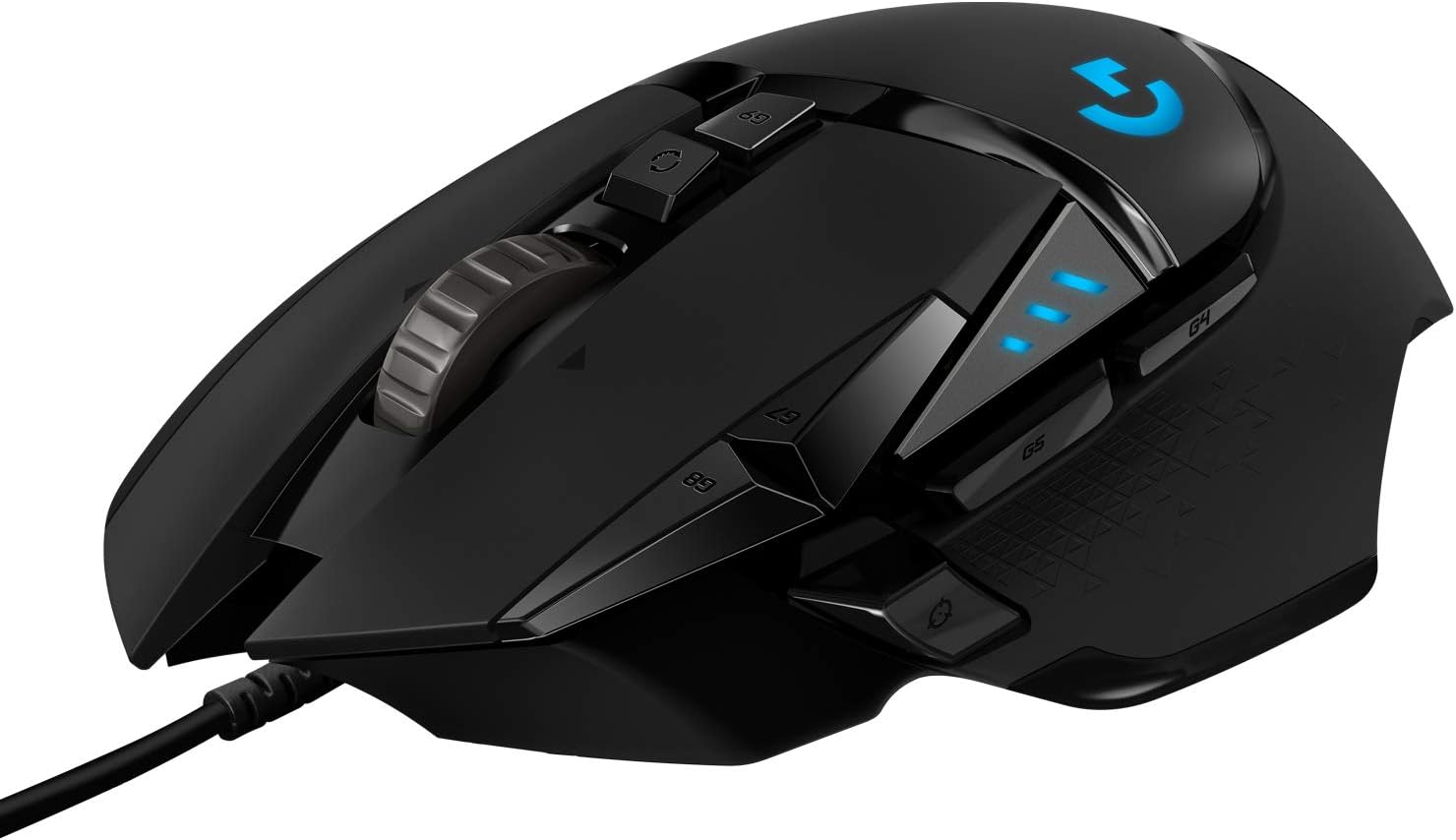
-54%Logitech G502 Hero Wired Gaming Mouse — 25,600 DPI HERO Sensor, Tunable Weights! $34.98 CAD (53% Off)
 -33%
-33%BISSELL PET Spotlifter Formula with Brush Head — Lift Pet Stains & Odours from Carpet and Upholstery! $9.99 CAD (32% Off)
 -45%
-45%HyperX Coiled Cable — Tidy Desk Setup, No More Cable Mess! $24.99 CAD (44% Off)
 -26%
-26%SteelSeries Arctis Nova 3P Wireless Gaming Headset (Lavender) — 200+ Game Audio Presets, Multi-Platform! $104.89 CAD (25% Off)
 Maple Express
Maple Express | October 08, 2026 — Two house explosions in Hamilton send three to hospital, one critically injured
 Finance Morning
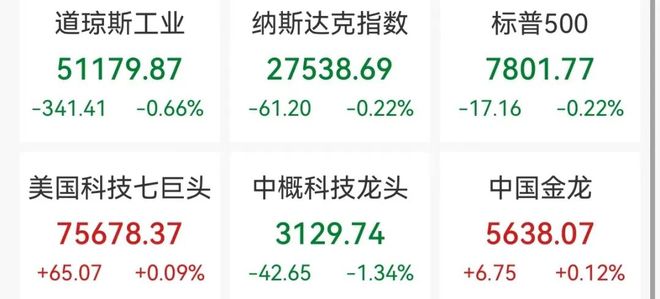
Finance Morning Brief: US Stocks Fall on Rate-Hike Bets; A-Shares Slip After Holiday as Bank Shares Hit Records
-54%Logitech G502 Hero Wired Gaming Mouse — 25,600 DPI HERO Sensor, Tunable Weights! $34.98 CAD (53% Off)
Amazon
-33%BISSELL PET Spotlifter Formula with Brush Head — Lift Pet Stains & Odours from Carpet and Upholstery! $9.99 CAD (32% Off)
Amazon
-45%HyperX Coiled Cable — Tidy Desk Setup, No More Cable Mess! $24.99 CAD (44% Off)
Amazon
-26%SteelSeries Arctis Nova 3P Wireless Gaming Headset (Lavender) — 200+ Game Audio Presets, Multi-Platform! $104.89 CAD (25% Off)
Amazon
Maple ExpressMaple Express | October 08, 2026 — Two house explosions in Hamilton send three to hospital, one critically injured
Finance Morning