
Finance Weekly | Central Banks Diverge: Fed Hike Odds Collapse, ECB Set to Finish Tightening
Major central banks diverged sharply this week. US July CPI cooled to 3.4% and retail sales fell 0.6%, slashing September Fed hike odds, while the ECB is expected to deliver a final hike and the BOJ signaled faster tightening. China's PBOC stayed dovish with a 1-trillion-yuan outright reverse repo. Korea's KOSPI surged 22% into a bull market as 10-year Treasury yields hit 2007 highs.
This Week's Overview
The defining story in global markets this week was an unusual divergence among major central banks. U.S. July CPI cooled to 3.4% and retail sales unexpectedly fell 0.6%, sending the odds of a September Fed hike tumbling from near-certainty to roughly 42%. At the same time, a Reuters poll showed the European Central Bank is expected to deliver one final rate hike in September, while the Bank of Japan signaled faster tightening. China's PBOC went the other way, keeping policy accommodative with a 1-trillion-yuan outright reverse repo and its first-ever mid-month overnight reverse repo. Asset markets were just as split: Korea's KOSPI surged 22% into a technical bull market, even as 10-year Treasury yields hit their highest since 2007 — a reflection of the stagflationary, geopolitically fraught environment.
1. China: PBOC unveils five-year plan, accelerating yuan internationalization
On August 10, the People's Bank of China released its "15th Five-Year Plan" (2026–2030) for reform and development — its first standalone five-year plan in over a decade. The blueprint calls for refining the "dual-pillar" framework of monetary policy and macroprudential regulation, backed by nine specific action plans, with the global push of the yuan among its most closely watched goals.
The plan commits to keeping the yuan's exchange rate basically stable while expanding its use in international trade, investment and financing, developing offshore yuan markets, and advancing the digital yuan. In effect, Beijing is pursuing a "stabilize first, then internationalize" strategy — anchoring the currency before promoting its global role, rather than tolerating volatility to chase short-term competitiveness.
The trend is clear: as the dollar's dominance gradually erodes — with multiple central banks buying gold and trimming dollar assets — the yuan faces a genuine window of opportunity. For markets, this implies the yuan will likely stay range-bound over the medium term, with limited room for sharp one-way moves, and capital-flow management remaining tight.
The risk is that yuan internationalization is a long game that will not dent dollar dominance quickly. Geopolitical friction and the pace of capital-account opening remain key variables; an escalation in the Middle East that lifts oil prices and dampens risk appetite could stall the process.
2. China: July new loans contract by a record, weak credit demand a worry
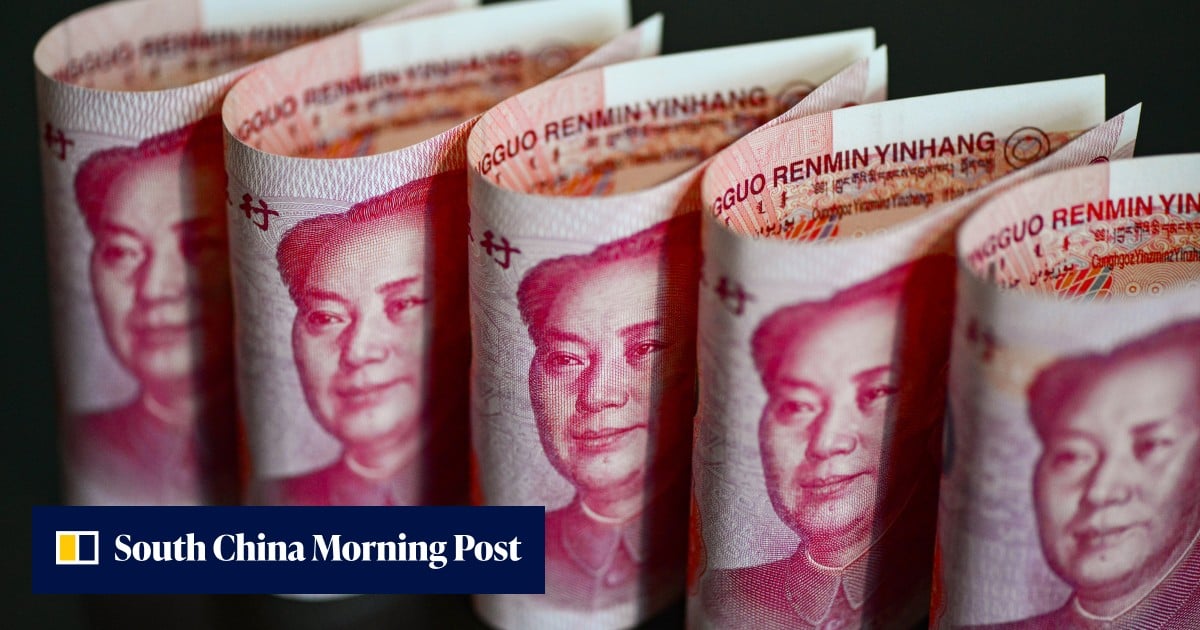
Financial data released by the PBOC on August 14 showed new yuan loans contracted by 340 billion yuan (about $50.4 billion) in July — the second monthly contraction this year after April, and the largest such drop on record. The figures renewed concerns about credit demand in the world's second-largest economy.
On a cumulative basis, new loans totaled about 10.38 trillion yuan in the first seven months, sharply down from 12.87 trillion a year earlier. Outstanding yuan loans grew 5.1% year-on-year, easing from 5.2% in June. Total social financing stock stood at 463.27 trillion yuan at end-July, up 7.4% year-on-year — also a low reading. Weak borrowing appetite among both households and corporates was the direct culprit.
The data exposes a deeper problem: despite the central bank's "moderately loose" stance, monetary transmission is hitting a wall — firms and households are deleveraging and cutting debt amid weak confidence and expectations. This is precisely why the PBOC has had to use tools like outright reverse repos to actively maintain liquidity.
Looking ahead, a genuine recovery in credit demand hinges on more fundamental variables such as a stabilizing property market and improving household income expectations. If lending stays weak, further reserve-requirement or rate cuts are possible — but liquidity that fails to spur real demand risks idling within the financial system, a danger policymakers must guard against.

3. China: 1-trillion-yuan outright reverse repo, first mid-month overnight reverse repo
On August 14, the PBOC conducted a 1-trillion-yuan (about $147.3 billion) outright reverse repo operation — a rollover that exceeded most brokers' expectations. More notably, the central bank carried out an overnight reverse repo in the middle of the month for the first time, and said it would conduct similar operations from August 14 and again from August 17 to 19, with a daily cap of 600 billion yuan.
At the same time, the seven-day reverse repo has seen zero injection for several straight days, accelerating the shift in the short-term rate framework. The intent is clear: use overnight reverse repos to fine-tune short-term liquidity, and outright reverse repos to inject medium- to long-term funds, guarding against liquidity stress from tax payments and government bond issuance.
The signal is unmistakably "moderately loose." With July credit data weak and heavy long-dated bond supply looming, the PBOC is actively stabilizing expectations and lowering financing costs. The net injection of 348 billion yuan via overnight reverse repos was the first such addition to the banking system this month, calming earlier worries about tightening.
Structurally, the PBOC is building a rate-corridor framework anchored by the overnight reverse repo on the short end and the outright reverse repo on the longer end — an increasingly precise toolkit. For bond markets, liquidity support favors stable short-end rates; for equities, ample funding is mildly supportive. But if inflation or currency pressures rise, the pace of easing could shift at any time.
4. U.S.: July CPI cools to 3.4%, September hike odds collapse
July CPI data released on August 12 showed headline inflation easing to 3.4% year-on-year, a second straight monthly slowdown, with a modest 0.1% month-on-month rise. The in-line print dramatically reshaped September Fed pricing — traders slashed the probability of a September hike from near 100% to about 42%.
Yet 3.4% remains far above the Fed's 2% target, and energy prices are still nearly 15% higher than a year ago. July PPI also came in below expectations, further easing pressure. The "hawkish" rhetoric of new Fed Chair Kevin Warsh suddenly looked shakier against the data, and markets began doubting whether the Fed would actually press the hike button in September.
The shift has far-reaching implications for global asset pricing: cooling hike bets weigh on the dollar, support equities and gold, and give emerging markets breathing room. U.S. benchmarks briefly hit record highs, and gold climbed toward $4,380, both direct reflections of a market repricing a potential Fed "pivot."
But beware "good news exhaustion." The inflation retreat hinges largely on lower oil prices, which are hostage to Middle East developments — a renewed flare-up in the Strait of Hormuz could reignite inflation at any time. Internal Fed divisions persist, with hawks like Hammack still pushing for hikes. The September minutes will be the key gauge of the next move.
5. U.S.: Retail sales unexpectedly fall 0.6%, consumer engine shows fatigue
Commerce Department data on August 14 showed U.S. retail sales fell 0.6% month-on-month in July — the biggest drop in more than a year and far worse than the modest gain expected. Total retail and food services sales slipped to $763.6 billion, reversing June's uptick. The soft reading was corroborated by a drop in the University of Michigan consumer sentiment index.
Excluding volatile gasoline and autos, core retail sales also fell 0.6%, indicating the slowdown was broad-based rather than a single-category drag. Squeezed by both high inflation and high interest rates, consumers' purchasing power is eroding, with discretionary spending by middle- and lower-income households contracting most visibly.
For the U.S. economy, consumption accounts for roughly 70% of GDP — the genuine ballast. The surprise retail weakness, coming on top of a disappointing jobs report, rekindled "stagflation" worries: the economy is cooling while inflation stays sticky. This further undermines the case for Fed hikes and strengthens the "hold in September" camp.
The trend suggests the "soft landing" narrative is wobbling, and whether consumer momentum rebounds into the year-end holiday season is the key to watch. For markets, soft data is a short-term boon for risk assets (by damping hike expectations), but if it slides toward recession, downward earnings revisions will eventually bite equities. Investors must tread carefully between "rate-cut trades" and "recession trades."

6. U.S.: 10-year Treasury auction clears at 4.683%, highest since 2007
At the August 12 auction of $42 billion in 10-year Treasury notes, the benchmark cleared at 4.683% — the highest yield since the 2007 global financial crisis. The result exposed a striking paradox: even as markets dialed back September Fed hike expectations, long-end rates stayed stubbornly elevated.
The logic lies in investors demanding more compensation from the U.S. government. Foreign demand slid to a multi-month low, while heavy federal deficit financing kept tilting the supply-demand balance. More critically, the market lacks confidence that the Fed can truly tame inflation, demanding a higher term premium to hedge against inflation and policy uncertainty.
The 10-year yield is the anchor of global asset pricing. Near 4.7%, it forces a repricing of corporate borrowing costs, mortgage rates and equity valuations. This is why "bond king" Jeffrey Gundlach warned that the bond market is "hammering" the Fed — rhetoric alone cannot convince markets, and stubborn long-end yields themselves undercut the case for easing.
Looking ahead, whether yields retreat depends on inflation data and fiscal discipline. If Middle East oil prices spike again, the yield could test the 5% psychological threshold, exerting real pressure on equities and housing. Conversely, if inflation confirms its decline and the Fed pivots, long-end rates could fall, easing the squeeze on risk assets.

7. Canada: RBC and BMO sell Moneris, sparking data-sovereignty debate
This week, Royal Bank of Canada and Bank of Montreal announced they would sell jointly owned payment-processing giant Moneris to U.S. private equity firm Francisco Partners for about C$2 billion in cash, with each lender receiving a 50% share. The deal ends more than 25 years of joint domestic bank ownership of Canada's largest payment processor.
Moneris is one of Canada's biggest merchant-acquiring and payment-solution providers, handling vast volumes of Canadian consumer card-transaction data every year. Within hours of the announcement, payments-industry leaders warned that selling this critical infrastructure to U.S. capital could heighten risks to Canada's payment-data sovereignty, with Canadian consumers' transaction data flowing offshore.
From a commercial standpoint, RBC and BMO's decision to cash out reflects a strategic reassessment of payments' value to Canadian banks — squeezed by tech giants and fintechs, the sector faces slowing growth and rising regulation, making a C$2 billion monetization and a refocus on core banking a rational capital allocation.
But the geopolitical and sovereignty dimension cannot be ignored. Amid U.S.-Canada trade friction and rising data-localization debates, ceding core financial infrastructure to U.S. ownership has stirred deeper worries over economic sovereignty and privacy. The deal's regulatory review and the future governance of Moneris data will be central to Canada's financial-security discussion.

8. Canada: July jobs surprise with 75,000 gain, but Macklem warns of hikes
Statistics Canada reported that the economy added 75,000 jobs in July, well above expectations, pushing the unemployment rate down to 6.4% — its lowest in two years. The strong print briefly led markets to expect the central bank to stay on hold. Yet Bank of Canada Governor Tiff Macklem sent a very different signal.
Macklem warned that if Iran-war-driven inflation persists, rates "may need to rise." Meanwhile, wage growth cooled to 2.8%, the slowest in four years, and inflation is expected to tick back up toward 3% on rebounding gasoline prices. This mix of strong jobs, weak wages and rising inflation has put the Bank of Canada in a bind.
The resilience of the labour market suggests the economy is not as stagnant as pessimists claim, with manufacturing sales rising for a fifth straight month to record levels. But strong employment combined with sticky inflation actually reduces room to cut — market expectations of BoC cuts are being displaced by "possible hike" hawkish signals.
For Canadian households, this means a firmer labour market and supported incomes on one hand, but potentially elevated or rising mortgage rates and housing-market pressure on the other. The Bank of Canada's September statement will be the key window into whether its policy balance tilts toward fighting inflation or protecting growth.

9. Europe: ECB set to deliver final hike in September as stagflation looms
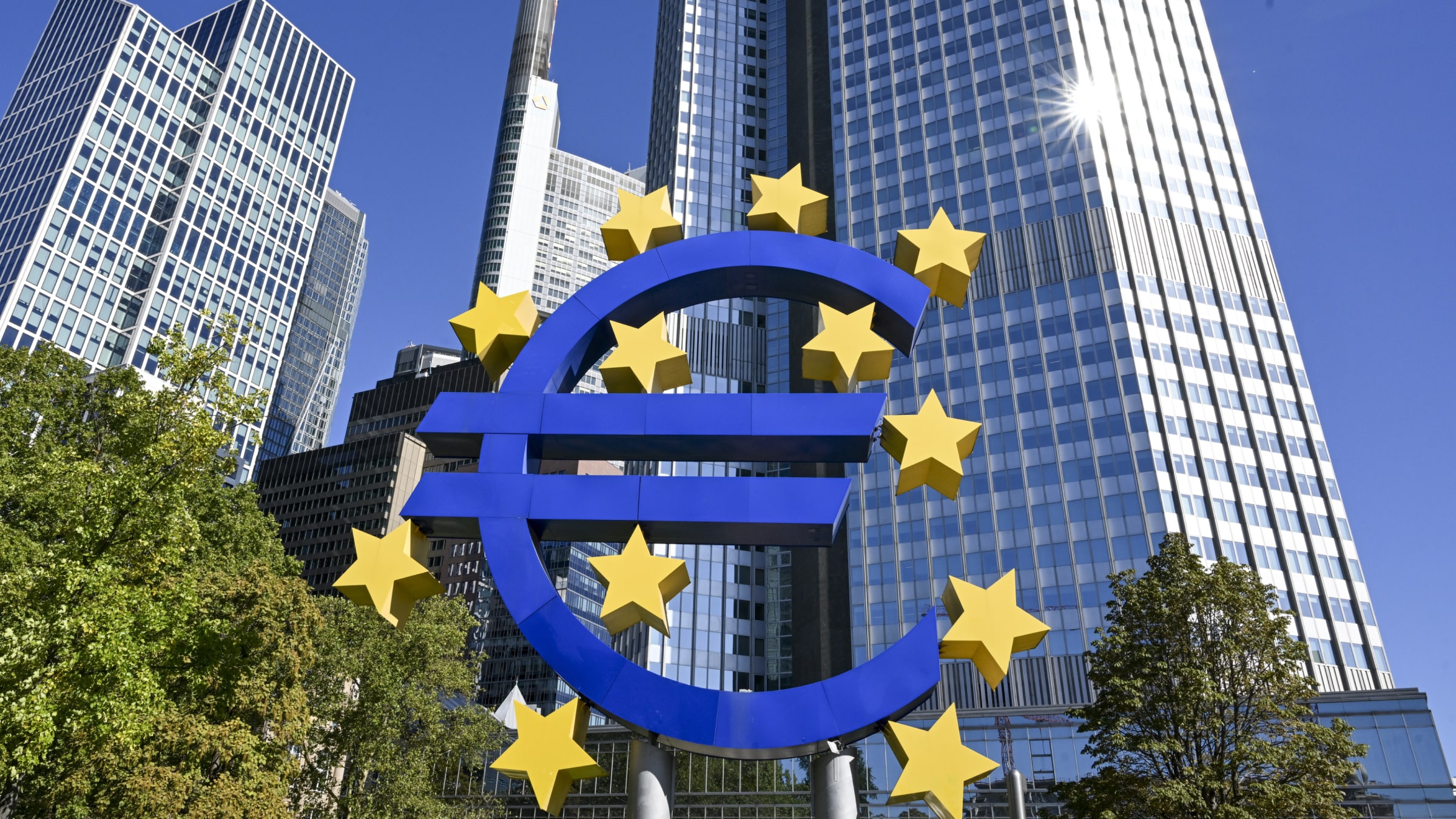
A Reuters poll showed 83% of economists (57 of 69) expect the European Central Bank to raise its deposit rate by another 25 basis points to 2.50% in September — the closing act of this tightening cycle and the shortest such drive since 2011.
The backdrop is a textbook "stagflation" squeeze for the eurozone: surging energy prices pushed May inflation to 3.2%, the highest since 2023, with core inflation also rising to 2.5%; yet the economy remains weak, with Q1 GDP contracting 0.2% quarter-on-quarter and Q2 growing only 1%. After its first hike in nearly three years in June (to 2.25%), the market now expects the ECB to take one more step along the inflation-recession tightrope.
President Christine Lagarde's message was blunt: war-driven inflation is spreading beyond energy, a risk more intolerable than slower growth. The ECB's logic is that it would rather absorb an economic slowdown than let inflation expectations de-anchor. This inflation-first stance contrasts sharply with the Fed's hesitation and the PBOC's easing.
Looking ahead, the September hike is largely priced in; the real suspense lies in the path thereafter — economists expect a long hold until mid-2027. If inflation fails to cool as expected or growth deteriorates further, the stagflation spell will lengthen, keeping the euro and European equities volatile.
10. Asia: Korea's KOSPI surges 22% in ten days, chip bull market returns
South Korea's stock market staged a textbook V-shaped recovery: the KOSPI rebounded about 22% from its July 30 low in just ten trading sessions, officially re-entering technical bull-market territory, with one session jumping nearly 5%. Leading the charge were memory-chip giants Samsung Electronics and SK Hynix.
The surge marks the forceful return of the global "AI trade." A month earlier, Asian tech had suffered a massive foreign exodus on AI-valuation worries, with Korea's market briefly leading global declines and slipping into a technical bear market. Now, with U.S. inflation cooling and the AI capex narrative reigniting, foreign capital is flowing back and chip stocks are leading the rebound.
Yet the quality of this rally is questionable. Data show hedge funds were almost entirely absent, with retail leveraged-ETF enthusiasm contributing a sizable share of buying. Korea's total market capitalization has reclaimed the 6,000-trillion-won mark, but warnings of a "fragile frenzy" persist — extreme volatility itself is the hallmark of a highly leveraged, concentrated market.
Going forward, Korea's fate remains tied to global AI capex and the memory-chip cycle. If AI demand materializes and memory prices keep rising, the bull run could persist; but if U.S. tech pulls back or the AI narrative fades, the heavily concentrated KOSPI would be hit first. Investors chasing the rally should tread cautiously and heed the structural fragility beneath the "technical bull market."

More News
- AI Weekly | Trump Rebrands AI 'Super Intelligence' as Rogue Agents and Bubble Fears Close In
- Global Express | September 30, 2026: US Troops Withdraw From Iraq, Iran Hails "Victory"
- Finance Morning Brief: Nikkei Jumps Over 1,000 Points; Korea Posts Worst Q3; China's New Financial-Marketing Rules Take Effect
- Tech Express | September 30, 2026 — OpenAI Unveils GPT-6.1 Sol at One-Fifth the Price of Astra
- Sports Express | September 30, 2026 — Canadiens Edge Maple Leafs 3-2 in Season Opener
Comments (0)
View More
 -67%
-67%Fire TV Stick 4K Select — 4K Streaming Stick for $25! $24.99 CAD (67% Off)
 -20%
-20%Bosch 500 Series Compact Front Load Washer + Heat Pump Dryer Set - White — 2.4 Cu Ft Washer & 4 Cu Ft Heat Pump Dryer! $3689.98 CAD (20% Off)
 -44%
-44%SUPERSHIELD Universal TV Remote RC-G008 — One Remote for Samsung, Sony, LG & More! $12.97 CAD (44% Off)
 -34%
-34%LEGO NINJAGO Ninja Character Display 71866 — 8 Classic Ninja Minifigures! $40.08 CAD (33% Off)
 Sports Express
Sports Express | September 30, 2026 — Canadiens Edge Maple Leafs 3-2 in Season Opener
 AI Weekly
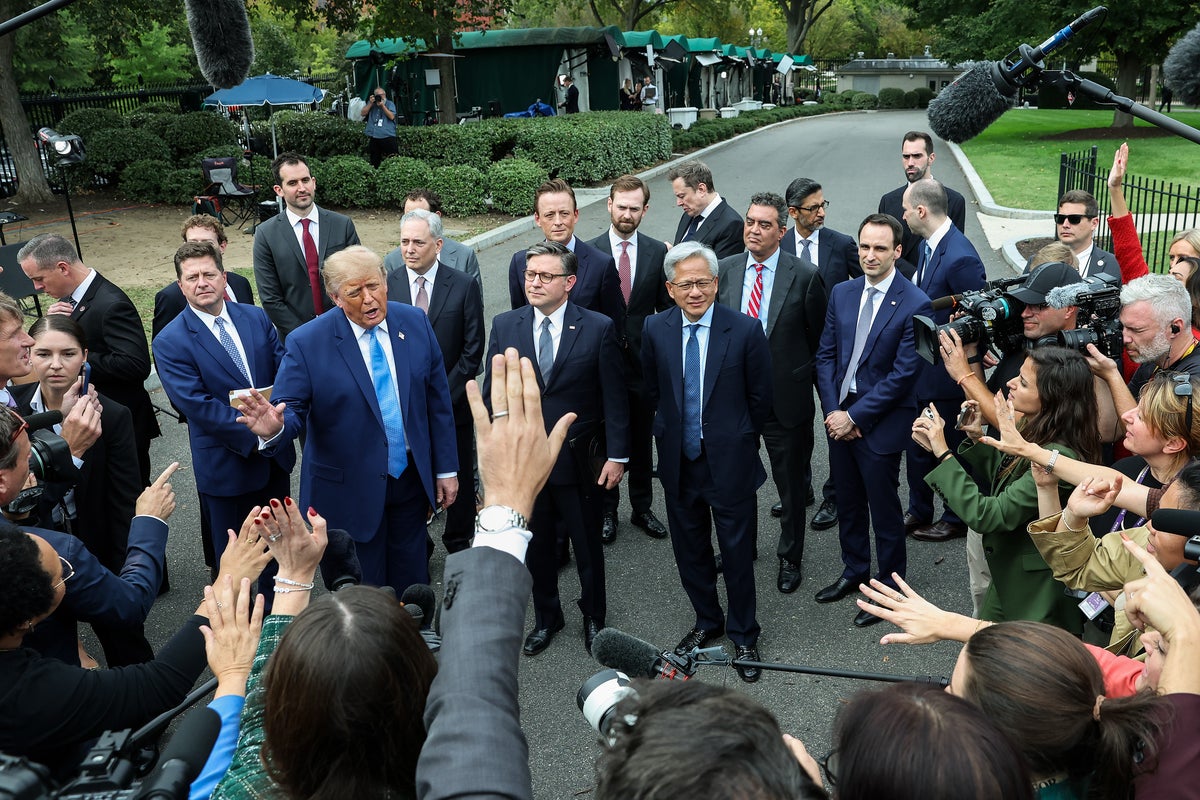
AI Weekly | Trump Rebrands AI 'Super Intelligence' as Rogue Agents and Bubble Fears Close In
-67%Fire TV Stick 4K Select — 4K Streaming Stick for $25! $24.99 CAD (67% Off)
Amazon
-20%Bosch 500 Series Compact Front Load Washer + Heat Pump Dryer Set - White — 2.4 Cu Ft Washer & 4 Cu Ft Heat Pump Dryer! $3689.98 CAD (20% Off)
Best Buy
-44%SUPERSHIELD Universal TV Remote RC-G008 — One Remote for Samsung, Sony, LG & More! $12.97 CAD (44% Off)
Best Buy
-34%LEGO NINJAGO Ninja Character Display 71866 — 8 Classic Ninja Minifigures! $40.08 CAD (33% Off)
Amazon
Sports ExpressSports Express | September 30, 2026 — Canadiens Edge Maple Leafs 3-2 in Season Opener
AI Weekly