
Canada News | June 13, 2026 Canada Draws 1-1 with Bosnia as Cyle Larin's 78th-Minute Equalizer Saves the Day in Toronto World Cup Opener
Canada News for June 13, 2026: FIFA World Cup opener ends 1-1 against Bosnia; PM Carney unveils multi-billion food security strategy; Alberta commissions $1.5M separation cost study; Bill C-34 proposes social media ban for under-16s; Household net worth rises 1.3%; Bank of Canada holds rate at 2.25%; Ontario heat wave breaks into severe storms; Nationwide temperature flip; Calgary's only supervised consumption site to close; AI data centre backlash grows.
Canada News | June 13, 2026 Canada Draws 1-1 with Bosnia as Cyle Larin's 78th-Minute Equalizer Saves the Day in Toronto World Cup Opener
📰 Canada's World Cup Debut: 1-1 Draw with Bosnia in Toronto as Larin Strikes Late
Canada kicked off its FIFA World Cup 2026 campaign with a hard-fought 1-1 draw against Bosnia and Herzegovina at Toronto Stadium on Friday. The match marked the first-ever World Cup game held in Toronto, and the electric atmosphere lasted throughout the full 90 minutes.
Bosnia struck first in the opening half, putting significant pressure on the co-hosts. But Canadian striker Cyle Larin rose to the occasion in the 78th minute, delivering a crucial equalizer that sent the home crowd into a frenzy. The goal not only earned Canada a valuable point in the Group B standings but also reignited hopes of advancing to the knockout stage.
Canada will travel to Vancouver to face Qatar at BC Place on June 18, while Bosnia and Herzegovina heads to Los Angeles for a matchup against Switzerland on the same day. Head coach Jesse Marsch said the team will focus on tightening defensive organization in the coming days as they seek their first win of the tournament.
— CBC News
📰 PM Carney Unveils Multi-Billion Dollar National Food Security Strategy
Prime Minister Mark Carney announced a multibillion-dollar National Food Security Strategy on June 11, aiming to lower food prices for Canadian consumers and build a more resilient food supply system. The strategy represents one of the Carney government's largest consumer-focused investments to date.
The plan includes several key measures: increased subsidies for domestic agricultural production, a national food supply chain monitoring system, and enhanced competition regulations to curb pricing power among major grocery chains. The government said the strategy will prioritize support for small and medium-sized farms and producers, reducing Canada's reliance on imported food from the United States and other countries.
Economists have offered mixed reactions. Supporters argue the plan could help alleviate Canada's persistently high food inflation, but critics warn that large-scale government spending may further inflate the fiscal deficit. The strategy is expected to be implemented gradually over the next five years.

— CTV News
📰 Alberta Government Commissions $1.5M Study on the Economic Cost of Separation
Alberta's government announced Friday that it has selected the University of Calgary to conduct a $1.5 million study analyzing the potential economic consequences if the province were to separate from Canada. The move marks a significant milestone in Alberta's ongoing sovereignty debate.
The study will examine the economic feasibility of independence across multiple dimensions including currency, trade, taxation, national defense, and pensions. The premier stated that Albertans have a right to understand the true cost of separation. Meanwhile, the opposition leader has called on Canada's spy agency to disclose more information about foreign interference threats related to the provincial referendum.
The expert panel includes Adam Legge, president of the Business Council of Alberta, and Cenovus board chair Alex Pourbaix, among others. Legge has consistently stated that separatism would harm Alberta's business interests. A court had previously dismissed a separatist group's referendum petition — a decision the government has appealed but will not seek to expedite.

— CBC News
📰 Federal Government Tables Bill C-34: Banning Social Media for Canadians Under 16
The federal government officially tabled the Safe Social Media Act (Bill C-34) on June 10, proposing to prohibit Canadians under the age of 16 from holding social media accounts unless platforms can demonstrate sufficient safeguards. The legislation was introduced by Heritage Minister Marc Miller.
The bill has two key components: the first bars minors under 16 from maintaining social media accounts, with exemptions for platforms that can prove they meet safety standards; the second imposes new safety requirements on AI chatbot services, restricting their ability to push harmful content to minors. Non-compliant platforms could face fines of up to 6% of global revenue.
Canadian teens and parents have offered mixed reactions. Many parents welcome the establishment of safety guidelines, but students say they will "always find a way" around the restrictions. Legal experts note the bill could face challenges from Big Tech companies as well as trade pressure from the U.S. administration, which has opposed other countries' internet regulations targeting American firms.

— CBC News
📰 Canadian Household Net Worth Rises 1.3% in Q1, Surpassing $448,000 Per Capita
According to Statistics Canada's latest data, Canadian household net worth rose 1.3% in the first quarter of 2026, reaching $18.6 trillion in total. On a per capita basis, net worth increased from $442,896 to $448,433, with gains seen across both financial and non-financial assets.
The growth was largely driven by a stock market rebound. The S&P/TSX Composite Index posted strong gains in the first quarter, boosting Canadians' investment portfolios. Additionally, while the housing market has cooled overall, stabilizing home prices in certain cities also provided support for household balance sheets.
However, economists caution that household debt levels remain elevated, with Canada's debt-to-disposable-income ratio still among the highest in the G7. With approximately 100,000 fixed-rate mortgages set to renew over the next two years at higher rates, household financial stress could intensify. The Bank of Canada is currently holding its benchmark interest rate at 2.25%.

📰 Bank of Canada Holds Interest Rate at 2.25%, Mortgage Renewal Pressures Loom
The Bank of Canada announced this week that it is holding its benchmark interest rate steady at 2.25%, a widely expected decision after several consecutive rate pauses. Major commercial banks' prime rate remains at 4.45%, directly affecting borrowers with variable-rate mortgages and lines of credit.
While inflation has retreated from its peak, the central bank remains cautious about the economic outlook. Scotiabank economists project rates could rise to 3% by year-end, while other major banks forecast rates to remain on hold throughout 2026. This uncertainty adds additional pressure to tens of thousands of mortgages coming up for renewal.
Real estate industry observers warn that roughly 100,000 mortgages are set to renew this year, with borrowers facing significant "payment shock" in the current elevated rate environment. Fixed mortgage rates have edged slightly higher recently but remain influenced by bond market volatility and geopolitical uncertainty.

📰 Extreme Heat Breaks Across Ontario, Severe Thunderstorms Move In
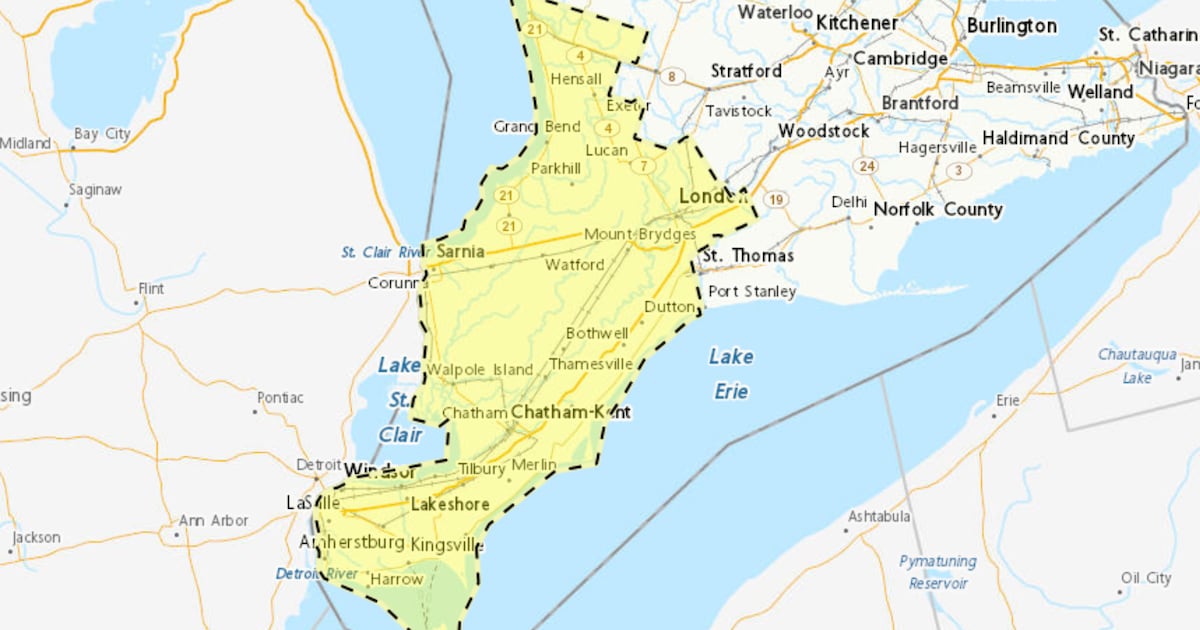
After days of sweltering heat across southern Ontario, a cold front is bringing a dramatic weather shift to the province. Environment Canada has issued severe thunderstorm watches for southwestern Ontario, warning of potential strong winds, large hail, and heavy downpours.
Earlier this week, temperatures soared above 30°C across much of Ontario, with humidex values approaching 40. A World Cup fan zone in Toronto was even temporarily suspended due to weather conditions. But as the cold front sweeps through, temperatures are expected to drop by about 10 degrees, bringing noticeably more comfortable conditions for the weekend.
Meteorologists caution that the transition could bring dangerous conditions including flash flooding and pooling on roadways. Outdoor World Cup gatherings should prepare indoor backup plans. Ontario's power utilities have deployed additional crews in anticipation of possible outages.
— CTV News
📰 Nationwide Temperature Flip: B.C. Sees Brief Heat Spike as Eastern Canada Cools Dramatically
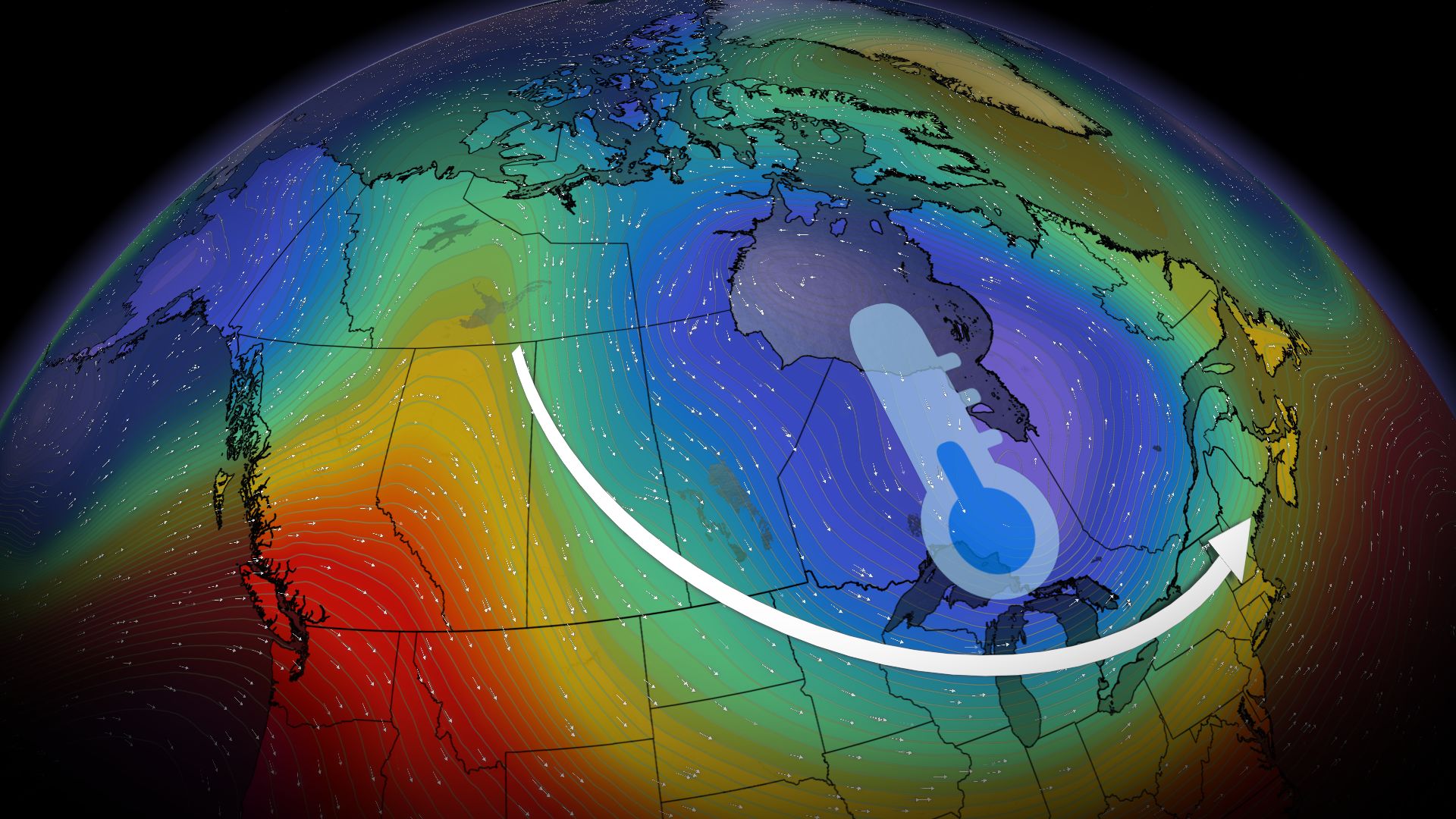
According to The Weather Network's latest forecast, Canada is in the midst of a dramatic nationwide temperature reversal. British Columbia is set to experience a brief but notable heat event this weekend, with temperatures potentially climbing above 30°C, while eastern provinces will rapidly transition from extreme heat to much cooler conditions.
Meteorologists explain that this "temperature roller coaster" is driven by sharp swings in the jet stream. A warm ridge from the Pacific will push B.C. temperatures upward through the weekend, but a strong Arctic cold front is expected to sweep southward early next week, bringing most of the country back to near or below seasonal norms.
Environment Canada is advising the public to monitor local forecasts, especially those spending extended time outdoors. Parts of Ontario and Quebec could also see renewed heavy rainfall and thunderstorm activity accompanying the cooldown. Weather experts have described the spring-to-summer transition this year as one of the most volatile in recent memory.
📰 Calgary's Only Supervised Drug Consumption Site to Close June 30
Alberta's Minister of Mental Health and Addiction has confirmed that Calgary's only supervised drug consumption site will close permanently on June 30. The decision has drawn sharply divided reactions from public health advocates and community members.
The facility has provided a safe environment and medical supervision for drug users since its opening, aiming to reduce overdose deaths and public drug use. The provincial government says it will reallocate resources toward recovery-oriented treatment services rather than maintaining the current harm reduction model. Critics, however, warn that closing the site could lead to an increase in fatal overdoses.
The City of Calgary and community organizations are developing transition plans that include expanded mobile health services and outreach programs. Some frontline healthcare workers have expressed concern about gaps during the transition period and have called on the province to provide additional details and transitional funding.

📰 Canada's AI Strategy Sparks Jobs and Safety Debate as Hundreds Protest Data Centre Construction in Vancouver
As the federal government and Telus announce plans to scale AI computing capacity in British Columbia, Canada's AI strategy is facing growing public scrutiny. Hundreds of people rallied in Vancouver last month to protest data centre construction, citing concerns over environmental impact and pressure on local electricity grids.
Opposition centres on data centres' enormous energy and water consumption. Globally, data centre projects worth nearly $130 billion were delayed or canceled due to community opposition in the first quarter of 2026 alone — approaching the $152 billion recorded for all of 2025. Meanwhile, Alberta's AI lead has indicated the province could see shovels in the ground for gigawatt-scale AI data centres by the end of this year.
Industry experts are urging the federal government to establish clear environmental standards and community compensation mechanisms alongside AI infrastructure expansion. A recent RBC report noted encouraging domestic developments including projects from Cohere, Bell AI Fabric, and Telus, but stressed the need to balance development speed with sustainability.

More News
- Finance Evening | Oct 27: Nasdaq Jumps 1%, Fed Meeting Opens, Anthropic Launches One of the Largest IPOs Ever
- Maple Express Evening | October 27, 2026 — Chow speaks out after winning a second term
- Maple Express | October 27, 2026 — Chow re-elected in Toronto as Mississauga and Hamilton mayors fall
- Global Express | October 27, 2026 — Israelis Vote as Iran War Shadows Election
- A-shares fall as over 4,900 stocks decline; Anthropic IPO filing lifts Japan and Korea chip stocks
Comments (0)
View More
 -67%
-67%Avery TrueBlock 2" x 4" Shipping Labels, 1000 Count — Four Cents a Label, Jam-Free on Laser! $39.98 CAD
 -27%
-27%Purina Pro Plan Weight Management Wet Cat Food, 85g × 24 — About $1.50 a Can, Less Fat Not Less Protein! $36.74 CAD (27% Off)
 -40%
-40%IRON °FLASK 40 oz Insulated Water Bottle — Ice Stays Put All Day! $22.99 CAD (39% Off)
 -26%
-26%Breville Handy Mix Scraper BHM800SIL — 240W DC Motor, Quiet Enough to Talk Over, $134.98 CAD (25% Off)
 Maple Express
Maple Express Evening | October 27, 2026 — Chow speaks out after winning a second term
 Finance Evening
Finance Evening | Oct 27: Nasdaq Jumps 1%, Fed Meeting Opens, Anthropic Launches One of the Largest IPOs Ever
-67%Avery TrueBlock 2" x 4" Shipping Labels, 1000 Count — Four Cents a Label, Jam-Free on Laser! $39.98 CAD
Amazon
-27%Purina Pro Plan Weight Management Wet Cat Food, 85g × 24 — About $1.50 a Can, Less Fat Not Less Protein! $36.74 CAD (27% Off)
Amazon
-40%IRON °FLASK 40 oz Insulated Water Bottle — Ice Stays Put All Day! $22.99 CAD (39% Off)
Amazon
-26%Breville Handy Mix Scraper BHM800SIL — 240W DC Motor, Quiet Enough to Talk Over, $134.98 CAD (25% Off)
Amazon
Maple ExpressMaple Express Evening | October 27, 2026 — Chow speaks out after winning a second term
Finance Evening