
Tech Express | November 22, 2026 — Intel's 18A Yield Reaches 70% as the Chipmaking Comeback Takes Shape
Tech roundup for November 22: Intel CEO Lip-Bu Tan says 18A yield hit 70%. Samsung's memory capacity is booked out to 2029. Musk warns of an AI funding crunch next year. Tesla rolls out FSD v15. South Korea's education minister resigns over AI exam cheating. Huawei's 6.9mm WATCH Air launches November 24; CSOT shows a 27-inch 1250Hz panel; SpaceX's Cargo Dragon returns with research samples; Unitree wins the first humanoid robot boxing belt; Huawei spin-off OSTA sells out its 16GB O1 Pro.
🛒 Amazon Black Friday 2026 Picks: our Black Friday hub is live — 100+ hand-picked deals across six categories, prices update in real time.
1. Intel's 18A Yield Reaches 70%, CEO Says Ramp Is on Track
Source: MyDrivers
Intel CEO Lip-Bu Tan has confirmed that the yield of the company's Intel 18A process has climbed to 70%, in line with expectations for a new node in its ramp phase, Tom's Hardware reported on November 22. He recalled that yields were rather poor when he first took over as chief executive, and have improved substantially since.
Tan did not specify whether the 70% figure refers to functional yield, parametric yield or the share of saleable chips. In common industry usage it usually means functional yield, the percentage of dies that pass basic electrical and functional tests. A 70% figure is a decent result during ramping, but the economics still depend on parametric yield and on how many high-margin products can ultimately be supplied.
Intel began mass production of its Panther Lake Core Ultra 300 series in the second half of 2025, with the compute tile built on 18A. The data-center Clearwater Forest Xeon 6+ line also uses 18A, with up to 288 cores and Foveros Direct 3D packaging. Intel has also released the Intel 14A PDK 0.9, letting customers start development in a design environment close to mass production.
2. Samsung's Memory Output Is Booked Out to 2029, With Some Buyers Seeking 2031 Deals
Source: MyDrivers
Samsung's memory manufacturing capacity is now almost fully booked through 2029, and some customers are pushing to extend long-term supply agreements to 2031 to lock in five years of supply as demand for AI infrastructure keeps surging, industry sources said on November 22.
The report echoes Samsung's third-quarter 2026 results, when the company confirmed long-term supply agreements with 10 major customers and said it was negotiating with 10 more, several of which were said to be close to completion. Samsung plans to allocate roughly 60% to 70% of its medium- and long-term memory capacity to multi-year contracts by 2030.
The shortage is not limited to HBM. As manufacturers prioritise higher-margin products for AI accelerators and data centers, conventional DRAM supply is tightening, and demand for enterprise NAND and SSDs is also strong. TrendForce, however, expects NAND contract prices to start falling in the first quarter of 2027 as Chinese cloud providers cut enterprise SSD orders and manufacturing capacity keeps expanding.

3. Musk Warns the AI Industry Could Face a Serious Funding Shortage Next Year
Source: Sina Finance
Francois Chollet, creator of the open-source deep learning project Keras, laid out two possible outcomes for AI infrastructure in a social media post on November 22: either compute demand has peaked and AI is a fleeting bubble, or this is a rare buying opportunity. His evidence included still-rising GPU spot prices, compute that is hard to lock in, and HBM and DRAM capacity essentially booked through 2029.
Chollet added that chip and memory supply is expected to stay tight into the 2030s, that frontier-model training compute roughly doubles every five months, and that model capabilities are improving more than twice as fast as before reasoning models appeared. AI inference margins can reach 70% to 85%, demand is still growing quickly, and each new model generation brings new use cases.
Musk replied from a different angle: powering, cooling and reliably running compute equipment at that scale is extremely difficult, and the AI industry may face a serious funding shortage next year. If the time between paying for compute and equipment generating stable revenue slips by several months across the industry, working capital alone could require hundreds of billions of extra dollars, he said, asking where that money would come from.
4. Tesla Starts Rolling Out FSD v15 With a Full End-to-End Network Upgrade
Source: MyDrivers
Tesla announced on X that FSD v15 is now rolling out. The release upgrades every part of its end-to-end driving network, improving handling of safety-critical scenarios by 25 times, and adds a Tesla Reality View feature that visualises the drive in real time so owners can see and control what FSD plans to do.
On perception, the new version improves detection of traffic signs, animals, road debris, potholes and standing water, and handles speed more naturally in school zones and bad weather. FSD can now also slow down proactively for speed cameras and adds a Bike Rack Mode so the system works with a bike rack or similar hitch-mounted accessory attached.
Tesla AI chief Ashok Elluswamy has said the v15 neural network scaled from roughly 1 billion to about 10 billion parameters, with tighter links between prediction and control, and runs the same software as the Robotaxi fleet. Note that v15 only supports vehicles with HW4/AI4 hardware; older HW3 cars built in 2023 or earlier cannot upgrade and will stay on v14 Lite.

5. South Korea's Education Minister Resigns as AI Cheating Scandal Widens
Source: The Paper
South Korean Education Minister Choi Kyo-jin announced his resignation on November 22 local time, taking responsibility for the chaos caused by inadequate measures against high-tech cheating during the country's 2027 college scholastic ability test. President Lee Jae-myung accepted his resignation the same day.
The exam was held on November 19. Because the government changed its anti-cheating rules several times in the days before the test, students, parents and schools could not keep up, and Choi faced sharp criticism from the public and the education sector. The ministry had initially focused on devices such as smart glasses, but moved urgently to draft additional measures after a candidate who ranked first in a tax accountant exam admitted on November 15 to cheating with a miniature camera and artificial intelligence.
Two days before the exam, on November 17, the government said it would deploy about 8,400 extra staff, including more than 1,800 specialists checking smart devices and over 6,600 corridor invigilators, and required stickers on every button of candidates' clothing. On November 18 it changed the rules on exam supplies, banning correction tape, erasers and mechanical pencil lead that had been allowed and permitting only black pencils; extra invigilators received emergency video training only the day before the test.
6. Huawei's WATCH Air Lands November 24 With a 6.9mm Case
Source: MyDrivers
Huawei's WATCH Air will be officially launched on November 24 at 14:30, with a 6.9mm ultra-thin design the company calls its thinnest smartwatch ever. In a teaser, Huawei terminal BG CTO Li Xiaolong said the watch is light and thin with excellent wearing comfort, particularly friendly to men in suits and shirts because it does not interfere with shirt cuffs.
Li added that the lightweight design keeps the watch stable during exercise and that heart-rate accuracy is good, making it an all-round performer. The WATCH Air uses a 1.4mm ultra-narrow uniform bezel, a sapphire crystal cover and a bright titanium alloy unibody, and comes in three colourways.
According to earlier leaks from the blogger Digital Chat Station, the Huawei WATCH Air has a 1.92-inch AMOLED square display with an 86% screen-to-body ratio, 3,500 nits of peak brightness and LTPO 2.0 support. Despite the 6.9mm case it packs a high-silicon stacked special-shaped battery good for a week per charge, with health features matching the Huawei WATCH 6 and sports features matching the WATCH GT 7 Pro.

7. CSOT Shows a 27-Inch 2K Panel Running at 1250Hz
Source: MyDrivers
China Star Optoelectronics Technology (CSOT) showed a new panel at the DTC2026 event that pairs mainstream specifications, including a 27-inch size, QHD resolution and 1ms response time, with a native 1250Hz refresh rate, the highest ever seen on a gaming monitor, according to Wccftech.
CSOT did not disclose further details or specifications. Rumours suggest the company is working with partners on new products and wants to bring them to market quickly. Attendees said monitors using the panel felt extremely responsive with no obvious motion blur, and that colour output was impressive as well.
CSOT appears to have picked up the pace of panel development. It recently showed what it calls the world's first 2K 300Hz OLED screen for laptops on a prototype with Lenovo, and confirmed it will supply LG with a 24.5-inch FHD 1000Hz LCD panel, also a first of its kind. At this rate, plenty of 1000Hz+ gaming monitors could reach the market next year.

8. SpaceX's Cargo Dragon Returns to Earth With Science Samples
Source: Space.com
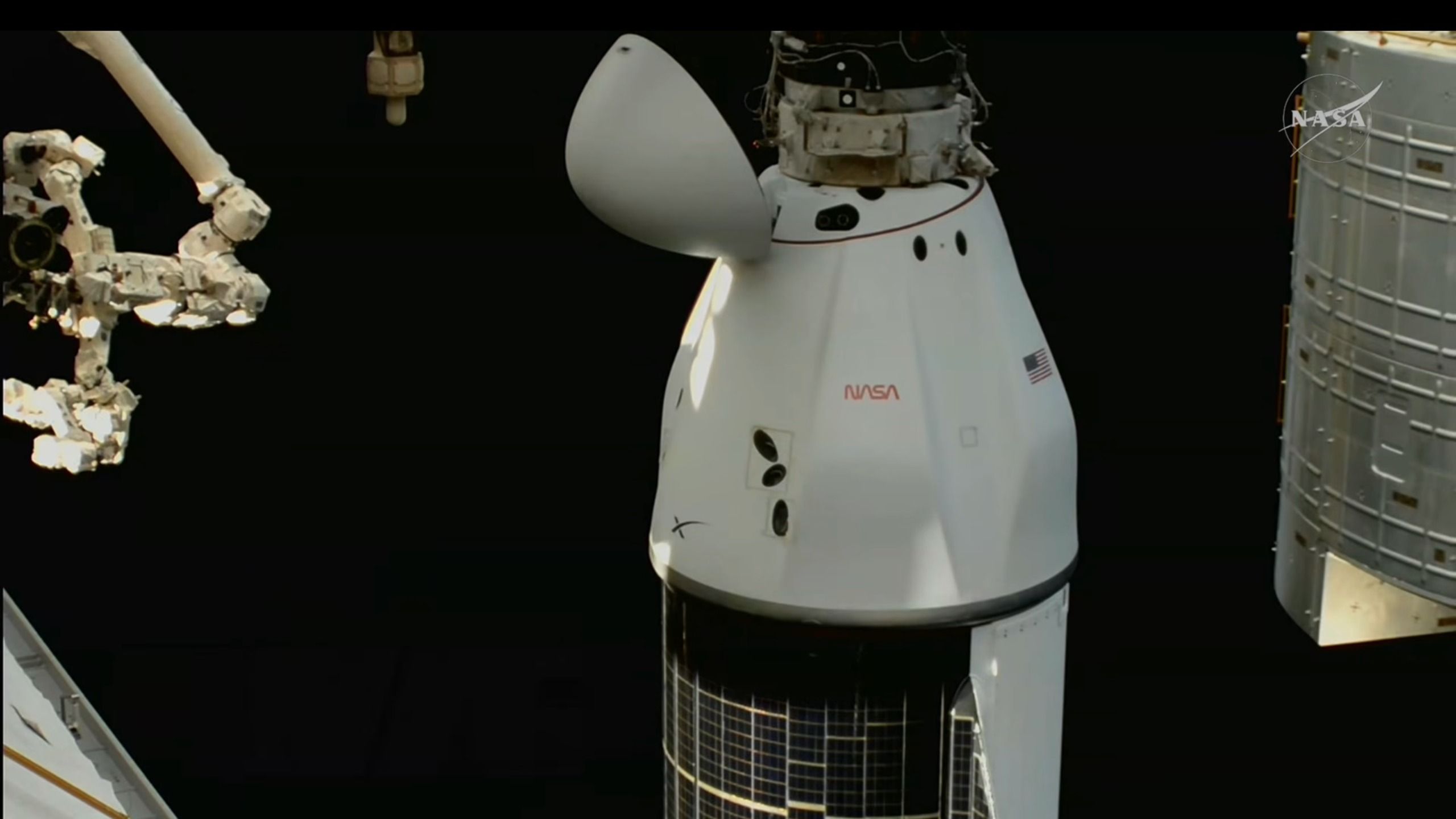
SpaceX's 35th Dragon cargo mission for NASA has come home. The robotic capsule undocked from the International Space Station on November 20 at 12:05 p.m. EST, while the pair flew about 260 miles (418 kilometres) above western China, and splashed down in the Pacific off the California coast on November 21 at 5:03 p.m. EST after a roughly 29-hour trip.
The Dragon launched on October 13 and arrived at the station on October 15, delivering more than 6,300 pounds (2,860 kilograms) of food, scientific gear and supplies. It also brought thousands of pounds of cargo back down, including research samples that could advance future space exploration and improve life on Earth.
In a November 17 update, NASA said the returning research included a 3D-bioprinted blood vessel construct used by scientists to study vascular ageing and cardiovascular disease in space and on Earth. Dragon is the only cargo craft flying today capable of such downward deliveries; Northrop Grumman's Cygnus, Russia's Progress and Japan's HTV-X are all expendable and burn up in the atmosphere.
9. Unitree Wins the World's First Humanoid Robot Boxing Title Belt
Source: MyDrivers
The 2026 China Xiong'an Asian Boxing Championship has wrapped up at the Xiong'an Sports Center arena. In the world's first humanoid robot boxing title bout held alongside it, two Chinese humanoids from Unitree and Zhongqing faced off, and after several rounds Unitree's robot won, taking home the first humanoid robot boxing championship belt.
Video posted by spectators showed Unitree's robot fighting for six minutes before claiming the belt. Unlike earlier exhibition matches, the belt comes from a WBC-sanctioned professional boxing framework, meaning a third-party sanctioning body awarded a humanoid combat title for the first time, rather than manufacturers staging their own events and declaring their own winners.
The event had four segments, including the WBC heavyweight Asian title fight, where Wuzhati Nurliang beat Wu Pengyang over a hard-fought bout. The same evening, the URKL city tour stop in Nanjing opened with two 1.73-metre full-size Zhongqing T800 humanoids fighting autonomously with AI in an octagon. The URKL belt is made of 10 kilograms of solid gold worth 10 million yuan and will go to the league's eventual champion, with the global final set for December 2026 to January 2027.

10. Huawei Spin-off Brand OSTA's First Phone Sells Out Its 16GB Variant
Source: MyDrivers
OSTA, a new Huawei sub-brand, has officially launched its first phone, the OSTA O1 Pro, starting at 5,699 yuan with a launch price from 5,499 yuan. Brand general manager Liu He later reported that the 16GB version had sold out across all channels, far exceeding expectations.
The 5,499 yuan launch price was above what some buyers had expected, especially since it is only 500 yuan apart from a similarly configured Huawei Pura X View, sparking plenty of discussion online; Liu responded to questions in the comments. The OSTA O1 Pro and the Huawei Pura X View are built on the same chip platform, both using the Kirin 9030S.
Some users argued that if OSTA is aimed at younger buyers and a more futuristic, tech-forward image, it should do what Honor's Magic series once did and offer something exclusive or enthusiast-grade, such as a bolder flagship chip to differentiate it from the Pura X View. Liu said OSTA's product thinking does echo that of the old Honor Magic line and explained three reasons for choosing the Kirin 9030S; among them, he said pricing considerations had the brand pushing to bring the post-subsidy price toward 4,999 yuan, which also led the team to be overly cautious in stocking the higher-spec variants.

More News
- Maple Express | November 22, 2026: Two 16-year-olds killed in Scarborough triple shooting
- Maple Express | November 22, 2026 — Two dead, one seriously injured in Scarborough triple shooting
- Global Express | November 22, 2026 — Israel’s Eisenkot Invites Likud for Talks as Government Deadline Nears
- Finance Weekly | AI Faith Cracks as Rate Hikes Return, and Everything Reprices
- Sports Express | November 22, 2026: Maple Leafs collapse again, fall 4-3 to Blue Jackets for ninth straight loss
Comments (0)
View More
 -23%
Fjällräven Skule Sling 6 — A 6L Sling That Fits a Tablet and a Small Camera! $79.02 CAD (23% Off)
 -59%
Razer BlackShark V2 Pro PlayStation Wireless Headset — 70-Hour Battery, 50mm Titanium Drivers! $119.99 CAD (59% Off)
 -44%
SteelSeries Arctis Nova Pro — Hi-Res 96kHz and One-Button System Switching, 43% Off! $197.99 CAD
 -51%
Travelpro Versapack+ Underseat Tote — Fits Under the Seat, Half Price! $114.94 CAD (50% Off)
 Maple Express
 | November 22, 2026 — Two dead, one seriously injured in Scarborough triple shooting
 Finance Weekly
 | AI Faith Cracks as Rate Hikes Return, and Everything Reprices
-23%Fjällräven Skule Sling 6 — A 6L Sling That Fits a Tablet and a Small Camera! $79.02 CAD (23% Off)
Amazon
-59%Razer BlackShark V2 Pro PlayStation Wireless Headset — 70-Hour Battery, 50mm Titanium Drivers! $119.99 CAD (59% Off)
Best Buy
-44%SteelSeries Arctis Nova Pro — Hi-Res 96kHz and One-Button System Switching, 43% Off! $197.99 CAD
Amazon
-51%Travelpro Versapack+ Underseat Tote — Fits Under the Seat, Half Price! $114.94 CAD (50% Off)
Amazon
Maple ExpressMaple Express | November 22, 2026 — Two dead, one seriously injured in Scarborough triple shooting
Finance Weekly