
Canada News | June 9, 2026 Canadian Economy Enters Technical Recession as Federal Government Plans Social Media Ban for Under-16s
Canada News | June 9, 2026 Canadian Economy Enters Technical Recession as Federal Government Plans Social Media Ban for Under-16s
cover_image_url: https://vancouver.citynews.ca/wp-content/blogs.dir/sites/9/2026/06/07/Screenshot-2026-06-07-115900.png
📰 Canadian Economy Contracts for Second Consecutive Quarter, Officially Enters Technical Recession
Statistics Canada's latest data shows real GDP contracted at an annualized rate of 0.1% in the first quarter of 2026, following a 0.25% decline in the fourth quarter of 2025. By the widely accepted economic definition, two consecutive quarters of negative GDP growth constitute a "technical recession," which Canada has now entered.
However, many economists point out that the magnitude of this decline is minimal compared to the 12% GDP collapse during the pandemic. A Laurentian University economics professor characterized the current situation more accurately as "slow growth" rather than a typical recession. RBC Economics also argues that Canada's per-capita economy is in the early stages of recovery from a soft patch that began in early 2023.
Nevertheless, two consecutive quarters of contraction have raised alarm bells in financial markets. The Bank of Canada faces mounting pressure after holding interest rates steady amid heightened trade uncertainty. Analysts warn that if external shocks persist, the Canadian economy could face greater challenges in the second half of the year.
— CityNews
📰 Federal Government to Introduce Online Safety Bill This Week, Banning Social Media for Children Under 16
According to multiple media reports citing government sources, Prime Minister Mark Carney's government is expected to table its long-awaited online safety legislation this Wednesday, including a ban on social media platforms for children and teenagers under the age of 16. The bill will also establish a new online regulator targeting various types of harmful digital content.
Sources confirmed that the legislation will include provisions allowing social media platforms to seek exemptions if they can demonstrate their ability to keep minors safe while using their products. However, the bill is not expected to impose the same ban on AI chatbots, though it will establish a set of responsibilities platforms must meet. With the House of Commons set to rise for its summer recess next week, the legislative timeline is notably tight.
Kaitlynn Mendes, a professor at Western University, welcomed the exemption provisions, noting that they create room for platforms to change their design rather than simply pushing young people off platforms. She pointed to evidence from Australia suggesting many children have found ways to circumvent its social media ban, raising "larger questions" about whether such prohibitions are truly effective.

📰 Canada Launches "AI for All" National Artificial Intelligence Strategy with $200 Billion Growth Target
On June 4, the federal government formally released its National Artificial Intelligence Strategy titled "AI for All," outlining Canada's AI development roadmap for the next decade. The strategy encompasses six pillars: protecting Canadians and safeguarding democracy, ensuring AI empowers Canadians, powering AI adoption for shared prosperity, building Canadian sovereign AI foundation, scaling Canadian champions, and building trusted global partnerships.
The strategy sets ambitious targets, including creating 250,000 new AI-related jobs by 2031, scaling AI adoption among Canadian businesses from the current 12% to 60% by 2034, and generating $200 billion in additional economic growth. The government plans to invest $2.3 billion, build a world-leading supercomputer, and launch an AI Missions Program starting with $200 million toward improving health outcomes for Canadians.
Speaking at the Vector Institute in Toronto, Prime Minister Carney highlighted how AI is already transforming Canadian healthcare and agriculture. For example, a pediatric cardiologist in Halifax developed an AI application to diagnose heart murmurs in newborns, potentially cutting wait times by months and saving the healthcare system tens of millions of dollars.

📰 Canadian Dollar Hits Fresh 2026 Low Amid Multiple Headwinds
A new report from National Bank of Canada reveals that the Canadian dollar slumped to a closing low of 71.67 cents US on Monday, marking its weakest level of 2026. Chief economist Stefane Marion noted in the report that "the loonie has been the weakest reserve currency in recent weeks," singling out gold as a "key factor" behind the loonie's weakness.
The report identifies several headwinds weighing on the currency, including recession fears following two consecutive quarters of economic contraction, trade uncertainty stemming from US tariff policies, and shifting global investor risk appetite. The Canadian dollar's weakness is particularly pronounced when compared to other major reserve currencies such as the US dollar, euro, and Japanese yen.
For Canadian consumers, a weaker loonie means higher prices for imported goods and more expensive international travel. However, for export-oriented businesses, it offers greater international competitiveness. Markets are now closely watching the Bank of Canada's next policy move and the upcoming CUSMA renewal negotiations.

📰 Rainfall Helps Lower Wildfire Risk in Parts of B.C., but Interior Remains on Alert
The BC Wildfire Service (BCWS) reported on June 8 that weekend rainfall and cooler temperatures significantly reduced wildfire danger ratings in the Fraser Canyon, Chilcotin, Peace region, and South Thompson areas, bringing ratings down from "high" or "extreme" to "moderate." BCWS information officer Taylor Colman said, "Much of the province benefited from the cooler temperatures and rainfall."
Colman cautioned, however, that weather remains unpredictable and prolonged periods of hot, dry conditions could rapidly dry out vegetation and increase fire risk heading into summer. "The severity of wildfires in July and August will largely depend on the amount and frequency of precipitation we see throughout June," Colman said, noting that in the short term, the rain is helping keep vegetation and fuels hydrated, reducing how easily wildfires can ignite and spread.
Since April 1, B.C. has recorded 281 wildfires, slightly above the 10-year average of 255. However, only 42 square kilometres have burned so far this year, compared to the 10-year average of over 1,300 square kilometres over the same period, suggesting prevention and response measures have been relatively effective.

— CBC News
📰 Calgary Breaks Ground on First Project Through Indigenous Housing Program
On June 8, the City of Calgary officially launched the first construction project under its Indigenous Housing Program, committing tens of millions of dollars to support a 60-unit housing development. The project, led by the Calgary Indigenous Housing Program, aims to provide affordable and culturally appropriate safe housing for the city's Indigenous community.
Calgary has faced mounting housing affordability challenges in recent years, with Indigenous populations disproportionately affected. This project represents a milestone in the city's collaboration with Indigenous community organizations, featuring culturally sensitive design that incorporates traditional Indigenous architectural elements, along with cultural support services in its operations.
The project launch is also part of a broader national push for Indigenous housing solutions. The federal government has previously committed dedicated funding for Indigenous housing through the National Housing Strategy, though community leaders argue that resources remain severely insufficient and require greater investment at all levels of government.

— CTV News
📰 Team Ontario Wins 38 Medals at Skills Canada National Competition 2026
At the recently concluded 2026 Skills Canada National Competition, Team Ontario delivered an outstanding performance, taking home 38 medals — 16 gold, 15 silver, and 7 bronze. Held in Toronto from May 28 to 29, the event brought together young competitors from across the country to compete in a wide range of skilled trade and technology disciplines.
Ontario competitors excelled in aerospace technology, autobody repair, 3D character animation, IT network systems administration, photography, cloud computing, mechanical engineering CAD, and many other categories. Skills Ontario emphasized that these young competitors represent the future of Canada's skilled workforce, and their achievements will inspire more youth to pursue careers in the trades.
Canada currently faces significant skilled labour shortages, particularly in manufacturing, construction, and information technology. The national competition aims to raise public awareness of vocational education and encourage young people to view skilled trades as promising career paths. During the event, the RVDA of Canada also introduced over 1,000 students to career opportunities in the RV industry.

— Electrical Industry News Week
📰 Quebec Aluminum Smelters Prove More Resilient Than Expected Despite U.S. Tariffs
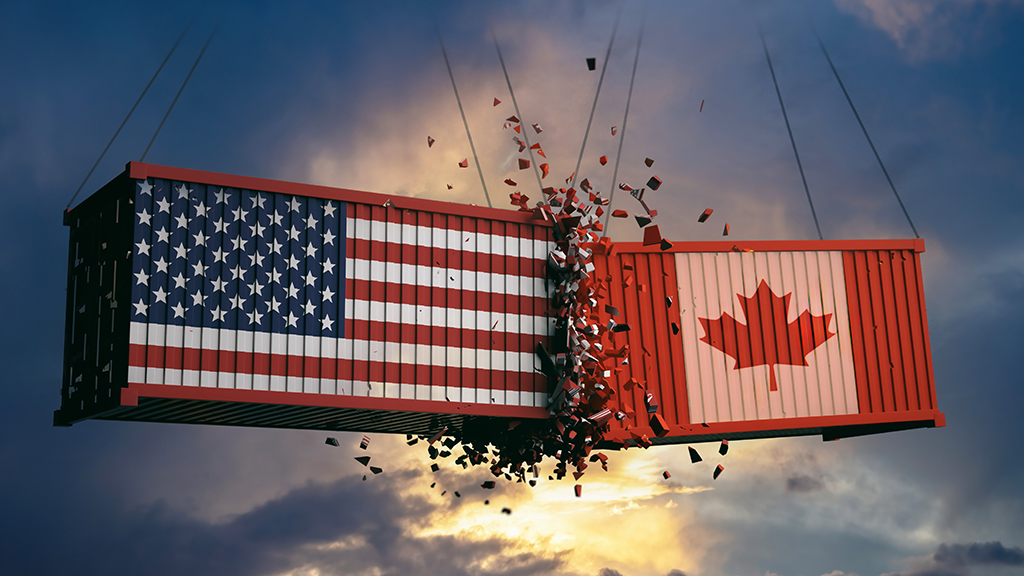
Jean Simard, president and CEO of the Aluminum Association of Canada, told The Canadian Press on June 9 that the aluminum smelting industry is operating at 95% capacity despite 50% U.S. tariffs on aluminum. "No slowdown, no layoffs," Simard said. "It's less painful than we anticipated. The problem, fundamentally, is the lack of visibility into the future. We're in a world of total uncertainty."
On June 4, 2025, the Trump administration raised tariffs on aluminum and steel imports from 25% to 50%, sparking widespread concern across the Canadian industry. Yet Quebec, the heartland of Canadian aluminum production, has demonstrated remarkable resilience. Simard noted that the biggest worry now is not the tariffs themselves but the uncertain outcome of negotiations to renew the continent's free trade agreement.
Canada is the world's fourth-largest aluminum producer, with the industry directly employing over 10,000 workers, the vast majority in Quebec. Industry data shows that despite the tariff barriers, Canadian aluminum products remain competitive in the U.S. market, partly because American domestic capacity cannot fully replace Canadian imports.
— Daily Commercial News / The Canadian Press
📰 Alberta Faces $9.4 Billion Deficit as Independence Referendum Economic Costs Come Under Scrutiny
According to the Smith government's 2026 budget released earlier this year, Alberta will run a massive $9.4 billion deficit this fiscal year, with successive deficits projected through 2028-29. Declining resource revenue due to lower oil prices is the primary driver of the fiscal shortfall. Critics argue the Smith government has failed to rein in spending, leaving the province's finances in worsening condition.
Meanwhile, a new study estimates that if Alberta were to separate from Canada, the upfront cost would exceed $300 billion, with an additional $67 billion annual financial burden thereafter. The report comes as Alberta prepares for its provincial independence referendum scheduled for October 19, 2026, providing crucial economic data for the referendum debate.
Alberta's fiscal struggles and the independence referendum are deeply intertwined, drawing national attention. Independence supporters argue Alberta contributes far more to federal coffers than it receives in return. Opponents warn that separation would have devastating consequences for the province's economy and residents' standard of living.

📰 Parks Canada Begins First Period of Job Cuts, Targeting $140 Million in Spending Reductions
Parks Canada has officially entered its "first period of workforce adjustments" as part of the federal government's three-year plan to reduce the size of the public service. Under the Carney government's expenditure review, Parks Canada is committed to cutting spending by more than $140 million over the next three years, a move expected to result in job losses across the country.
Parks Canada manages 48 national parks, 5 national marine conservation areas, and 171 national historic sites, welcoming millions of visitors annually. The planned job cuts have raised concerns among environmental groups and the tourism industry, who warn that reduced staffing could affect park maintenance, visitor services, and ecological conservation efforts.
The federal government has stated it will rely on attrition and voluntary departure programs to minimize mandatory layoffs where possible. However, unions representing Parks Canada workers argue that any level of staffing reduction will negatively impact public service delivery, especially with the busy summer tourism season approaching.

— CTV News
More News
- Finance Evening | Anthropic Files for Nasdaq IPO as AI Capital Frenzy Meets Bubble Worries
- Maple Express Evening | October 26, 2026: Vehicle found in Scarborough child abduction case, three children still missing
- Maple Express | October 26, 2026: Ford says trade war is hurting both countries
- Immigration | October 26, 2026 Express Entry's new scoring takes effect November 3: high-wage job offers worth up to 100 points
- Global Express | October 26, 2026 - Serbia's Vucic Concedes Defeat, Ending 14 Years in Power
Comments (0)
View More
 -34%
-34%HUANUO Monitor & Laptop Mount — 16" Long Arm, Full Motion! $54.99 CAD (34% Off)
 -42%
-42%🎉 史新低!Utopia Bedding Down Alternative Comforter (Twin XL) — Box-Stitched, Machine Washable! $34.51 CAD (42% Off)
 0
0Apple Magic Mouse (USB-C, White) — Gestures and Scrolling on One Seamless Surface | $94.98 CAD
 -20%
-20%Smeg 24" 48 dB Dishwasher (LSPU8643X, Stainless Steel) — Italian Design with Auto Door-Open Drying, $250 Off! $1,049.99 CAD (19% Off)
 Maple Express
Maple Express Evening | October 26, 2026: Vehicle found in Scarborough child abduction case, three children still missing
 Sports Express
Sports Express | October 26, 2026: Seahawks Hand Chiefs First Loss of Season
-34%HUANUO Monitor & Laptop Mount — 16" Long Arm, Full Motion! $54.99 CAD (34% Off)
Amazon
-42%🎉 史新低!Utopia Bedding Down Alternative Comforter (Twin XL) — Box-Stitched, Machine Washable! $34.51 CAD (42% Off)
Amazon
0Apple Magic Mouse (USB-C, White) — Gestures and Scrolling on One Seamless Surface | $94.98 CAD
Amazon
-20%Smeg 24" 48 dB Dishwasher (LSPU8643X, Stainless Steel) — Italian Design with Auto Door-Open Drying, $250 Off! $1,049.99 CAD (19% Off)
Best Buy
Maple ExpressMaple Express Evening | October 26, 2026: Vehicle found in Scarborough child abduction case, three children still missing
Sports Express