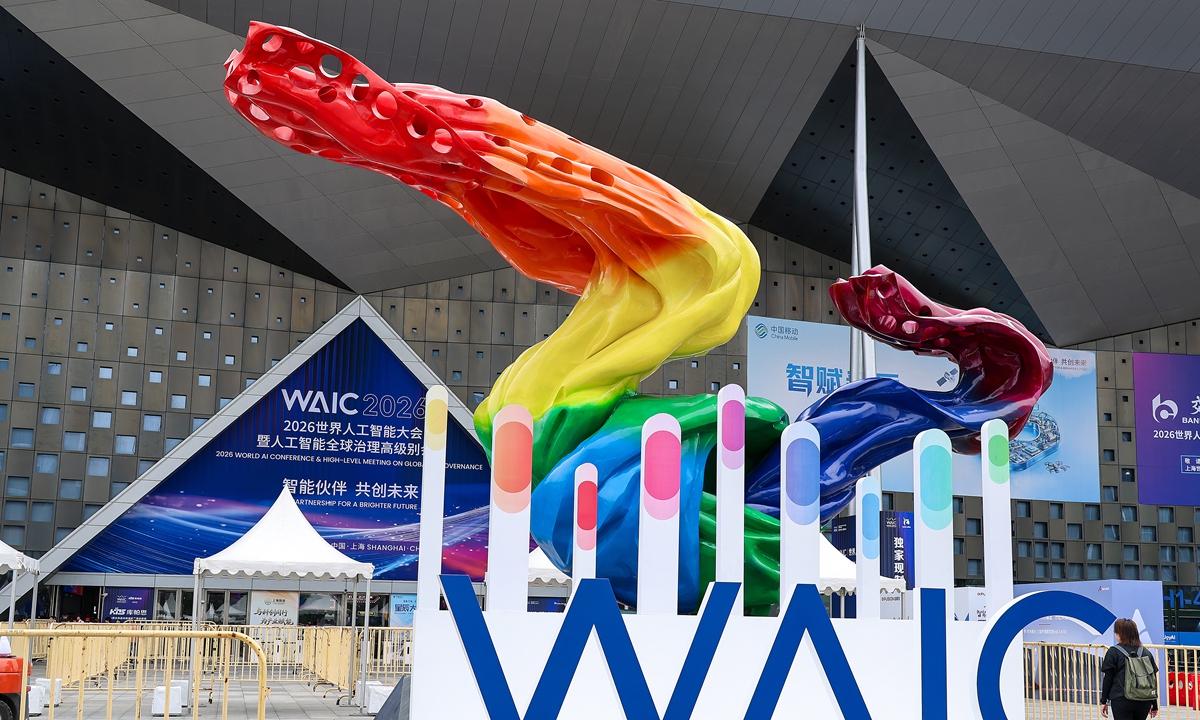
Tech Express | July 21, 2026 WAIC 2026 Concludes in Shanghai with $3.01B in Deals as Global AI Governance Takes Shape
WAIC 2026 concluded in Shanghai with $3.01 billion in deals and major progress on the WAICO global AI governance body. Trump imposed 50% tariffs on Canadian goods; Jeff Bezos backed chip-materials startup CuspAI; DeepSeek V4 launched commercially with peak-valley pricing; and chip stocks rallied as AI bubble fears faded.
Tech Express | July 21, 2026 WAIC 2026 Concludes in Shanghai with $3.01B in Deals as Global AI Governance Takes Shape
📰 WAIC 2026 Wraps Up in Shanghai: $3.01 Billion in Deals, Major Progress on WAICO
The 2026 World AI Conference (WAIC) and High-Level Meeting on Global AI Governance concluded in Shanghai on July 20. The three-day event attracted more than 1,100 companies showcasing over 3,000 exhibits, with intended procurement deals reaching approximately 20.36 billion yuan ($3.01 billion), up about 25% year-on-year. The conference spanned computing infrastructure, foundation models, and embodied intelligence, demonstrating China's full-stack AI capabilities from chips to applications.
Chinese Foreign Ministry spokesperson Lin Jian highlighted five major achievements, including setting a clear direction for global AI governance and making significant progress toward establishing the World Artificial Intelligence Cooperation Organization (WAICO). Representatives from Singapore, the UK, and other nations voiced strong support for enhanced international coordination on AI safety and governance.
A highlight of this year's WAIC was the shift from "technology catch-up" to "ecosystem building." Domestic GPU makers Moore Threads and Iluvatar CoreX showcased self-developed silicon, while Moonshot AI's Kimi model opened globally. Humanoid robots dressed in traditional Chinese opera costumes drew crowds, symbolizing the deepening integration of AI into culture and daily life.
📰 Trump Imposes 50% Tariffs on Most Canadian Goods, Effective in 30 Days
President Donald Trump signed an executive order on July 20 imposing 50% tariffs on most Canadian goods, set to take effect in 30 days. The White House framed the move as a response to Canada's "discriminatory trade policies," accusing Ottawa of unfairly targeting American automobiles, alcohol, and dairy products. The escalation marks the latest chapter in months of intensifying trade friction between the two neighbors.
The tariffs are authorized under Section 338 of the Tariff Act of 1930 — a rarely invoked Depression-era law that allows the president to levy tariffs of up to 50% on imports from countries deemed to discriminate against U.S. products. Canada has not yet issued a formal response, but analysts widely expect retaliatory measures from Ottawa.
Trade experts warn that the tariff escalation could severely disrupt deeply integrated North American supply chains, particularly in the automotive and agricultural sectors. The announcement comes amid already strained U.S.-Canada relations, with Canada having previously imposed counter-tariffs on American goods in earlier rounds of the dispute.

📰 Jeff Bezos Backs CuspAI as UK Startup Teams Up with Nvidia to Discover Next-Gen Chip Materials
Jeff Bezos' investment vehicle Bezos Expeditions has invested in British AI startup CuspAI, now valued at $2.6 billion. The Cambridge-based company uses artificial intelligence to accelerate the discovery of novel materials, with a particular focus on finding alternatives to silicon for next-generation semiconductors — a critical need as Moore's Law approaches its physical limits.
CuspAI simultaneously launched the AI Materials Foundry, a coalition of more than 48 technology giants, industrial firms, and research institutions including Nvidia, Meta, and Hyundai. The consortium aims to build AI-powered software platforms that dramatically shorten the timeline for discovering and commercializing new materials.
The investment signals growing recognition that AI's next frontier lies not just in software but in transforming the physical sciences. With traditional silicon-based chips nearing their performance ceiling, the race to discover new semiconductor materials has become a strategic priority for the global tech industry. CuspAI's approach could compress years of laboratory research into months or even weeks.
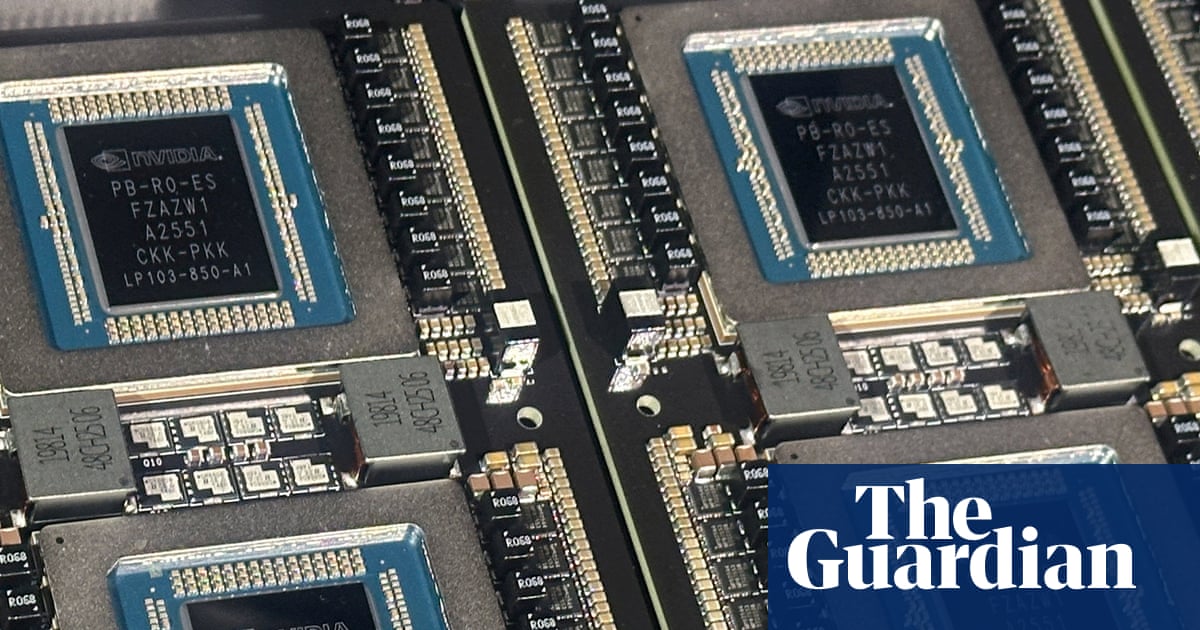
— CNBC
📰 DeepSeek V4 Goes Fully Commercial: 1.6 Trillion Parameters with First-of-its-Kind Peak-Valley Pricing
DeepSeek officially launched the full commercial version of its V4 model family in mid-July, including the flagship Pro edition with 1.6 trillion parameters and the Flash lightweight version with 284 billion parameters. Both support a 1-million-token context window. The standout innovation is China's first "peak-valley time-of-use pricing" model — developers calling the API during nighttime off-peak hours enjoy a roughly 60% discount on compute costs.
Benchmarks indicate that DeepSeek V4 Pro matches or approaches GPT-5-level performance across reasoning, coding, and agent tasks, while costing a fraction of the price. The release positions DeepSeek as China's strongest competitor in the foundation model race against OpenAI and Anthropic, with notably aggressive pricing that could reshape the global AI API market.
The peak-valley pricing strategy reflects DeepSeek's deep optimization of compute resource utilization. By routing non-urgent inference workloads to nighttime hours, DeepSeek not only lowers its own operational costs but also offers startups and independent developers a far more accessible entry point to cutting-edge AI capabilities — a move some are calling the "democratization of AI infrastructure."
— 36Kr
📰 Chip Stocks Rally as AI Bubble Fears Fade, Nasdaq Climbs Nearly 1%
On July 20, chip stocks staged a powerful recovery as concerns over an AI investment bubble subsided, propelling the Nasdaq Composite nearly 1% higher. Semiconductor shares that had been battered in the previous week's selloff — driven by skepticism over AI return on investment — rebounded broadly as investor attention shifted to the upcoming mega-cap tech earnings season.
Micron Technology surged more than 6% in premarket trading on Tuesday, with SanDisk up nearly 9%. Intel and Western Digital also posted solid gains. Analysts point to the unrelenting demand for high-performance memory chips driven by AI data center buildouts and large-scale model training as the fundamental underpinning of chip sector strength.
Wall Street is closely watching this week's earnings reports from Tesla, Microsoft, and Meta, whose AI capital expenditure plans will serve as key signals for the sustainability of the AI investment cycle. Consensus estimates suggest Big Tech's combined AI-related capex could exceed $300 billion in 2026.
— Reuters
📰 Canadian Shipbuilder Davie Launches Autonomous Vessel Subsidiary in Ontario
Canadian shipbuilding giant Davie has announced the creation of Davie Autonomous Inc., an Ontario-based subsidiary dedicated to manufacturing autonomous maritime vessels. The new company will initially fulfill an agreement with British autonomous vessel developer Kraken Technology Group to bring production of Kraken's K3 Scout unmanned surface vessel to Canada.
The K3 Scout is an 8.4-meter unmanned surface vessel capable of reaching 55 knots (approximately 100 km/h) and carrying a 600-kilogram payload. It supports a wide range of missions including counter-drone operations, casualty evacuation, strike, and resupply. Davie is in advanced negotiations with multiple sites across Ontario and plans to leverage the province's expertise in advanced manufacturing, composites, and robotics.
The move aligns with the Canadian federal government's designation of uncrewed and autonomous systems as one of ten sovereign industrial capabilities requiring strengthened domestic supply chains. Davie expects to announce specific production facilities and its manufacturing timeline by the end of the year.

📰 Micron Stock Soars on AI Memory Boom: HBM Capacity Sold Out Through 2027
Micron Technology shares surged 6.4% in premarket trading on July 21, with SanDisk spiking nearly 9%, leading a broad rally in memory chip stocks. Behind the renewed investor enthusiasm is the insatiable demand for High Bandwidth Memory (HBM) — the critical component powering AI model training and inference. Micron has confirmed that its HBM production capacity for both 2026 and 2027 is already fully sold out.
HBM remains in severe short supply as next-generation models like DeepSeek V4 and GPT-5 demand ever-higher memory bandwidth. Samsung, SK Hynix, and Micron — the three dominant HBM suppliers — are all racing to expand production, but industry analysts expect the supply-demand gap to persist through at least 2027.
Memory chips are evolving from cyclical commodities into strategic AI infrastructure assets. Micron has secured long-term supply agreements with multiple cloud and AI companies, locking in revenue visibility for years to come. Despite geopolitical headwinds and trade tensions, the AI-driven memory demand trajectory is widely viewed as one of the most reliable growth stories in the semiconductor industry.

— Benzinga
📰 Yuanfudao Unveils AI-Powered Reading Tutor at WAIC, Embracing Socratic Dialogue
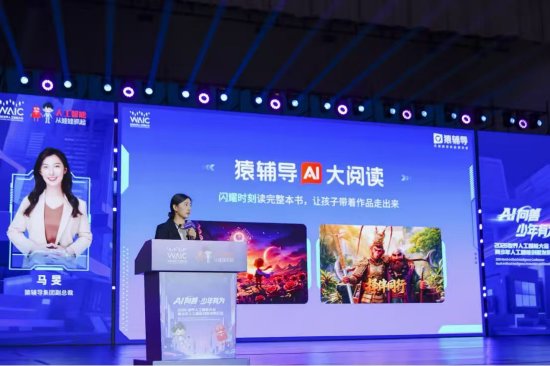
At WAIC 2026, Chinese edtech leader Yuanfudao Group unveiled its self-developed "AI Big Reading" product. Unlike conventional e-book platforms that simply digitize text or output standardized answers, the product employs a Socratic dialogue approach — using AI to guide students through questioning, reflection, and critical thinking during the reading process.
Ma Min, head of AI at Yuanfudao, emphasized that AI's role in education should be "to inspire thinking, not replace it." The AI Big Reading system engages students in natural language conversations, posing thoughtful questions at key moments in a text and responding to student answers with tailored feedback. The product comes pre-loaded with interactive reading programs for thousands of classic works.
Education technology observers see Yuanfudao's approach as representing a paradigm shift in AI education — from "drill-and-practice tools" to "thinking trainers." In live demonstrations at WAIC, the system adjusted question difficulty based on student age and reading level while providing nuanced, personalized feedback, showcasing the vast potential of AI for individualized learning.
📰 SpaceX Suffers Rare Last-Second Falcon 9 Launch Abort from Vandenberg
SpaceX experienced a rare launch abort on July 20 when its Falcon 9 rocket failed to lift off from Vandenberg Space Force Base in California. On-screen telemetry showed all nine Merlin engines briefly igniting before rapidly shutting down at the last second. SpaceX posted a brief statement on X: "Standing down from today's Starlink launch; vehicle and payload remain safe."
The Starlink 17-39 mission was set to carry 24 Starlink V2 Mini satellites to low Earth orbit. The Falcon 9 first-stage booster B1082 was poised for its 23rd flight — making it one of SpaceX's highest-reuse rockets — having previously launched NROL-145, USSF-62, and 19 Starlink missions. The next launch attempt is scheduled for July 21.
This marks SpaceX's second launch scrub in under a week, a notable development given the company's relentless launch cadence of 85 Falcon 9 missions in 2026 to date. While such aborts are extremely rare, the incident has renewed discussion about reliability management at scale as SpaceX pushes toward ever-higher launch frequencies.
📰 How China's EV Industry Went from 'Embarrassment' to Global Leader
The Australian Broadcasting Corporation (ABC) published an in-depth analysis on July 21 tracing China's electric vehicle industry from an object of Western derision to its current position of global dominance. A standout advantage highlighted in the report is China's battery-swapping technology: drivers pull into a dedicated station, and in under five minutes — without ever leaving the car — receive a fully charged battery.
Chinese EV sales continue to surge, with BYD, Nio, and XPeng steadily expanding their global market share. The report notes that despite tariff barriers erected by the U.S. and Europe to shield domestic automakers, China's lead in battery technology, swapping infrastructure, and manufacturing costs will be difficult to erode in the near term. China now operates the world's largest EV charging and battery-swapping network.
In European markets, the combination of competitive pricing and rapid iteration cycles from Chinese automakers is exerting intense pressure on legacy car manufacturers. Analysts quoted in the report argue that China's EV rise reflects not just manufacturing prowess but a vertically integrated ecosystem spanning lithium mining, battery production, and recycling. With Chinese automakers accelerating overseas factory construction, the global EV industry landscape is being fundamentally reshaped.
More News
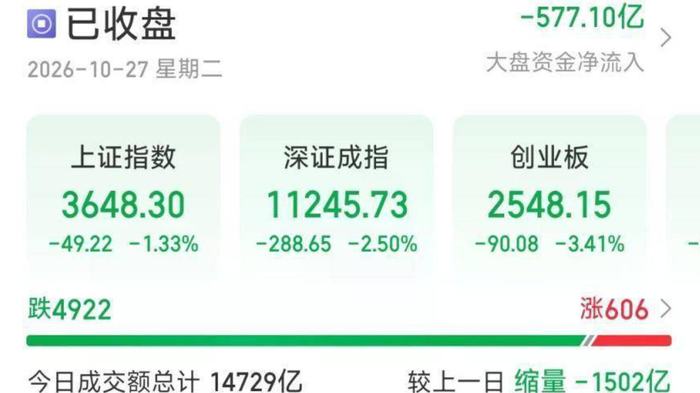
- A-shares fall as over 4,900 stocks decline; Anthropic IPO filing lifts Japan and Korea chip stocks
- Tech Express | October 27, 2026: Apple Acknowledges iPhone Duo Inner-Display Issue, Offers Replacements
- Sports Express | October 27, 2026: Kane Ends 25-Year Wait for Ballon d'Or
- Maple Express | October 27, 2026: Olivia Chow wins a second term as Toronto mayor
- Finance Evening | Anthropic Files for Nasdaq IPO as AI Capital Frenzy Meets Bubble Worries
Comments (0)
View More
 -41%
-41%🎉 史新低!Pipishell Full Motion TV Wall Mount (13–43") — Single-Stud Install, 44 lb Capacity! $22.76 CAD (40% Off)
 -45%
-45%Meguiar's Gold Class Leather Cleaner & Conditioner 3-in-1 Spray 15.2oz — Clean, Condition, Protect in One Step! $9.50 CAD (44% Off)
 -20%
-20%Smeg 24" 48 dB Dishwasher (LSPU8643X, Stainless Steel) — Italian Design with Auto Door-Open Drying, $250 Off! $1,049.99 CAD (19% Off)
 -10%
-10%ASUS ZenScreen Duo MB14FCD — Two 14" Screens in One Portable Monitor! $449.99 CAD (10% Off)
 Maple Express
Maple Express | October 26, 2026: Ford says trade war is hurting both countries
 Finance Morning
A-shares fall as over 4,900 stocks decline; Anthropic IPO filing lifts Japan and Korea chip stocks
-41%🎉 史新低!Pipishell Full Motion TV Wall Mount (13–43") — Single-Stud Install, 44 lb Capacity! $22.76 CAD (40% Off)
Amazon
-45%Meguiar's Gold Class Leather Cleaner & Conditioner 3-in-1 Spray 15.2oz — Clean, Condition, Protect in One Step! $9.50 CAD (44% Off)
Amazon
-20%Smeg 24" 48 dB Dishwasher (LSPU8643X, Stainless Steel) — Italian Design with Auto Door-Open Drying, $250 Off! $1,049.99 CAD (19% Off)
Best Buy
-10%ASUS ZenScreen Duo MB14FCD — Two 14" Screens in One Portable Monitor! $449.99 CAD (10% Off)
Amazon
Maple ExpressMaple Express | October 26, 2026: Ford says trade war is hurting both countries
Finance Morning