
Tech Express | August 4, 2026 DeepSeek V4 Flash Draws AI "Kill Line"
DeepSeek V4 Flash draws AI's new 'kill line' at /bin/zsh.28/M tokens; Hugging Face CEO says China AI overtaking US by year end; Alibaba, Tencent, ByteDance battle for AI office dominance; NVIDIA Rubin Ultra down-spec'd on memory, optical interconnect rises; HP, ASUS, Acer adopt Chinese CXMT chips; Google Pixel 11 pre-orders open before launch; TCL launches NXTPAPER tablet; SpaceX rocket to crash into Moon; Doubao Keyboard challenges iFlytek; WeChat tops at 1.15B MAU.
1. DeepSeek V4 Flash Draws the AI "Kill Line" — Price War Reshapes the Competitive Landscape
DeepSeek V4 Flash's official release has shattered records: a single day's consumption on the AI coding tool OpenCode surpassed 8 trillion tokens — exceeding the daily average of OpenRouter's entire platform of 400+ models. With 284 billion total parameters but only 13 billion activated per token, the model charges just ¥2 (about $0.28) per million output tokens, fundamentally redefining AI industry competition.
In Artificial Analysis evaluations, V4 Flash Max scored 50 points versus Claude Opus 4.8 Max's 56 — but Opus cost $3,752 to run the same benchmark suite, a staggering 52 times more expensive. DeepSeek completes most coding and agent tasks at less than one-tenth the cost, forcing pricier models to prove that their marginal intelligence gains are worth an exponentially larger bill.
This "kill line" effect is reshaping the entire industry. Anthropic and OpenAI's premium pricing faces renewed pressure, while DeepSeek's low-cost strategy may paradoxically yield higher total revenue — per-unit prices fall, but total token volume surges under agent-driven workloads. Even Sam Altman recently acknowledged that OpenAI expects massive usage volumes, reducing the need for extreme per-call margins.
2. Hugging Face CEO: China's AI Will Surpass the U.S. by Year's End
Hugging Face CEO Clément Delangue told CNBC that China has already taken the lead in open-weight AI models and could overtake U.S. AI developers entirely by late 2026 or early 2027. He noted that Chinese open-source models — including DeepSeek, Qwen, and Kimi — are gaining rapid global adoption, and the pace of Chinese AI innovation and cost efficiency is putting pressure on Silicon Valley.
Delangue emphasized that open-weight models are becoming the core driver of AI development, with Chinese companies showing particularly strong momentum. Hugging Face platform data shows surging downloads and community engagement for Chinese open-source models, with some surpassing their American counterparts in popularity.
The assessment has sparked widespread debate in Silicon Valley. While the U.S. still holds advantages in high-end compute and fundamental research, analysts acknowledge that China's progress in model efficiency, deployment cost reduction, and open-source ecosystem development is remarkable — the global AI competitive landscape is undergoing profound change.

3. Alibaba, ByteDance, Tencent Battle for AI-Powered Office Productivity
AI-powered office productivity has become the fiercest battleground among China's internet giants. Alibaba launched "Qwen Office," integrating three Agent products under new DingTalk CEO Chen Yusen. Tencent elevated WorkBuddy to a "super project" with founder Pony Ma personally attending nearly every product meeting. ByteDance is pushing three parallel tracks — Feishu, TRAE, and Doubao — with internal discussions underway about consolidation.
According to Analysys' China Office AI Agent Platform Market Report 2026, 17 desktop AI office agents surpassed 60 million monthly visits in June. Tencent's ecosystem (WorkBuddy and three other products) accounted for 32.62 million visits — over half the total. ByteDance's offerings (TRAE and Kouzi) reached 14.41 million, while Alibaba's (QoderWork and Wukong) hit 9.19 million. WorkBuddy alone logged 20.97 million visits, exceeding the next two competitors combined.
The competition's essence is about seizing the AI-era productivity portal. Where AI was once a "copilot" for writing documents and making slides, agents now autonomously understand goals, decompose tasks, invoke tools, and deliver results. ByteDance's Feishu saw Q2 revenue grow over 100% year-over-year, with over 90% of new customers purchasing AI features — proving enterprises are willing to pay for efficiency gains.

4. NVIDIA Rubin Ultra Reportedly "Down-Spec'd" on Memory, Optical Interconnect Takes Center Stage
Research firm SemiAnalysis released a report revealing that NVIDIA's next-generation Rubin Ultra GPU, previewed to key clients, features specifications below earlier market expectations. The mainstream Rubin Ultra SKU will reportedly use HBM4 memory at 192GB per GPU (down from Rubin's 288GB) with an 8-Hi stacking configuration and 1,800W Max-Q power profile.
This "down-spec" strategy isn't a downgrade but a redistribution of AI server value composition. While per-GPU memory decreases, optical interconnect's share in the system architecture will rise substantially — meaning data center interconnect bandwidth and communication efficiency are becoming the new competitive frontier. The 576-GPU interconnection scale demands cutting-edge networking architecture.
Market analysts believe this shift will profoundly impact the HBM supply chain and DRAM pricing. The key variables will be 2027 HBM4E product mix and memory inventory valuations, rather than 2026 spot DRAM prices. Related optical module and interconnect stocks have already shown notable movement in Chinese markets.

5. AI-Driven Memory Shortage Pushes HP, ASUS, Acer to Adopt Chinese CXMT Chips
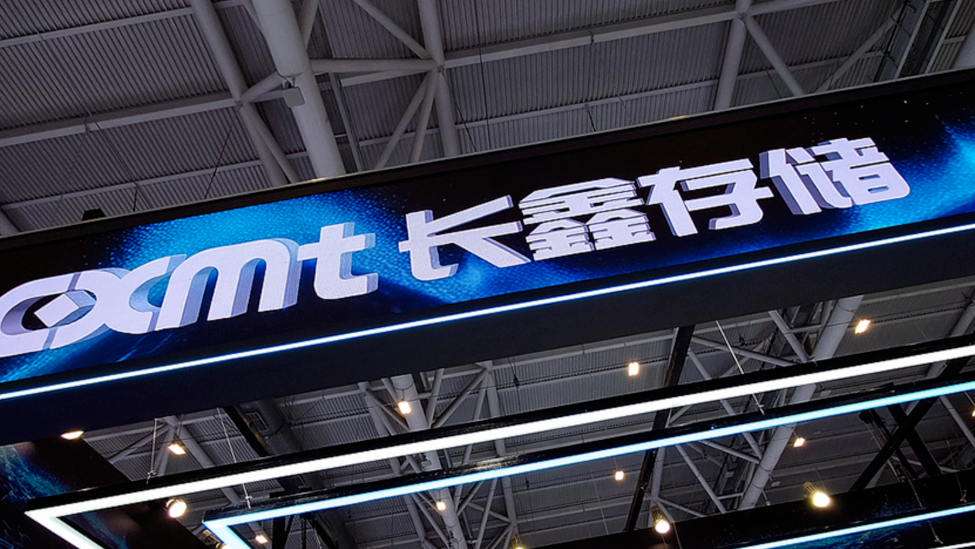
Amid an unprecedented memory chip shortage driven by AI infrastructure demand, HP, ASUS, and Acer have begun deploying small quantities of China's CXMT (ChangXin Memory Technologies) DRAM chips in laptops, Nikkei Asia reports. The three PC giants completed chip certification around mid-2026, with deployment currently limited to entry-level models sold outside the U.S. market.
Sources say PC makers are proceeding cautiously, fearing backlash from the dominant trio of Micron, Samsung, and SK Hynix — which together control over 90% of the global market. One senior PC executive noted: "It's a seller's market right now. We can't yet purchase too much from CXMT." Nevertheless, the validation represents a significant win for the Chinese chipmaker, which recently listed on Shanghai's STAR Market at a valuation exceeding Intel's.
Acer Chairman Jason Chen publicly stated openness to new Chinese supply capacity. With AI servers consuming massive DRAM wafer output, PC manufacturers are actively diversifying their supply chains to mitigate both shortages and price inflation.
6. Google Pixel 11 Pre-Orders Open Hours Before Official Launch Event
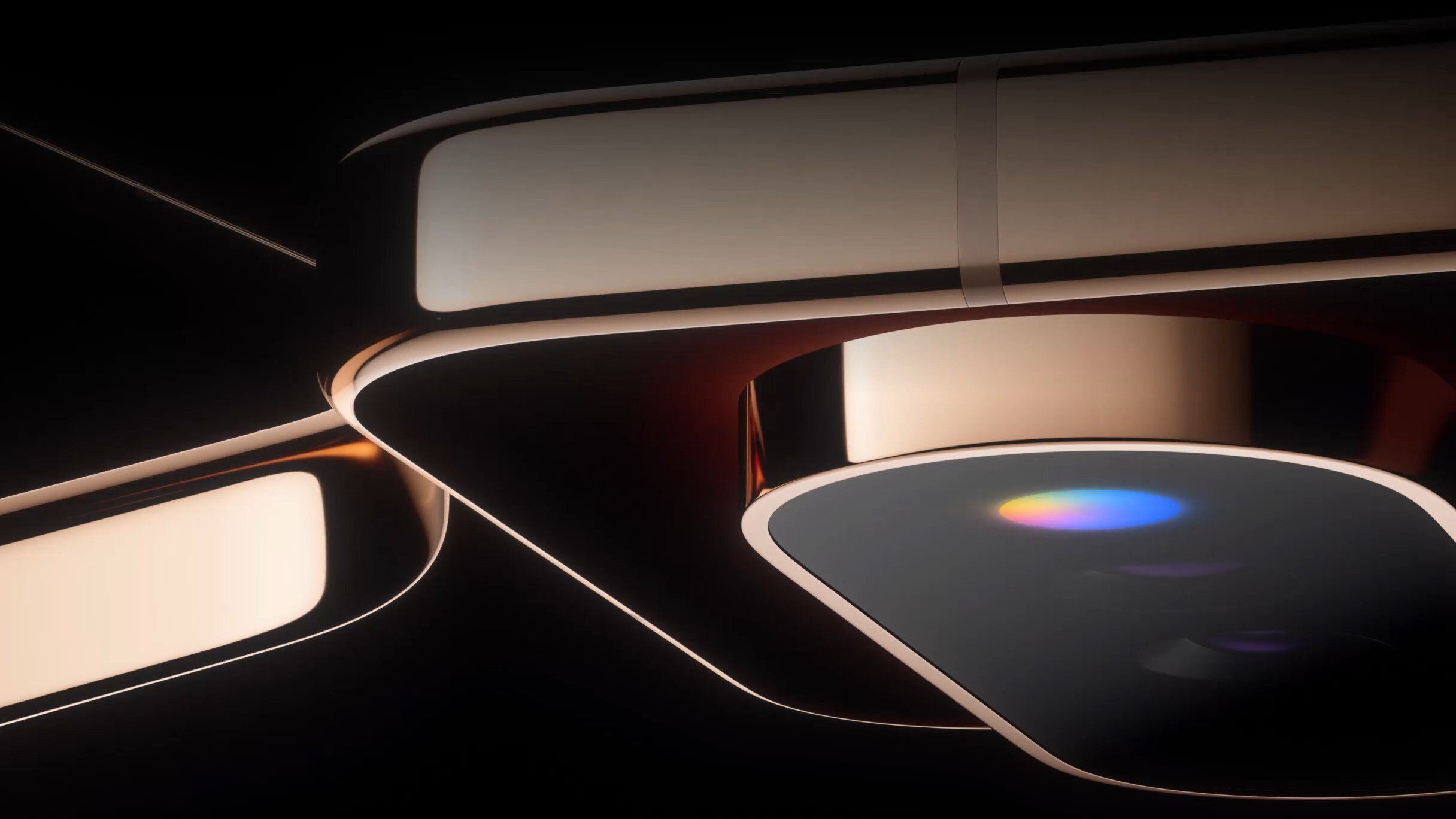
Google is breaking with smartphone launch tradition. Countdown clocks on both the Google Store and Best Buy indicate that Pixel 11 pre-orders will open at 10:00 AM ET on August 12 — a full eight hours before the Made by Google event at 6:00 PM ET the same day.
The strategy echoes last year's early Pixel 10 reveal but takes it further with a much wider pre-order-to-event gap. According to leaks, the Pixel 11 and Pixel 11 Pro Fold will hit retail shelves on August 20, powered by the new Tensor G6 chip and featuring a fresh "Glow" color option. The Pro Fold design has already appeared in official teaser videos.
Analysts view the early pre-order window as both a confidence signal and an aggressive market-grab strategy. With Samsung recently scaling back its Chinese smartphone operations, Google appears focused on solidifying its premium Android position in North America.
7. TCL Launches TAB A1 Plus NXTPAPER in the U.S., Targeting the Back-to-School Market
TCL officially launched the TAB A1 Plus NXTPAPER tablet in the U.S. market on August 3. Featuring a 12.2-inch 2.4K NXTPAPER paper-like display, T-Pen 2 stylus support, quad speakers, and AI-powered productivity tools, the device squarely targets the back-to-school season.
The NXTPAPER display technology is TCL's key differentiator — using specialized optical processing to simulate a paper reading experience while dramatically reducing blue light and glare, ideal for extended reading and note-taking. AI-assisted features include smart note organization, real-time translation, and document scanning.
In a U.S. tablet market dominated by Apple's iPad and Samsung's Galaxy Tab lineup, TCL is carving a niche with affordable pricing and eye-care display technology. PhoneArena called it "a solid back-to-school value proposition," citing the included stylus, quad speakers, and AI toolkit at its price point.
8. SpaceX Falcon 9 Upper Stage Set to Crash Into the Moon This Week
A spent SpaceX Falcon 9 upper stage, cataloged as 2025-010D, is on a collision course with the Moon, with impact expected around 06:35 UTC on August 5. The rocket debris will become the first known uncontrolled human-made object to strike the lunar surface, carrying the equivalent energy of approximately three tons of TNT.
Astronomers say the impact poses no threat to Earth or the Moon but could offer a unique scientific opportunity. The collision will eject lunar dust and potentially expose subsurface material, helping scientists better understand the Moon's surface structure and composition. NASA and SpaceX have already begun studying how to prevent similar upper-stage lunar collisions in the future.
The event has also reignited discussions about space debris management. As lunar exploration missions multiply, orbital debris around the Moon is becoming a concern. The Falcon 9 upper stage entered a chaotic orbit after completing a lunar mission and, after months of drift, was ultimately captured by the Moon's gravity.

9. ByteDance's Doubao Keyboard Sparks AI Voice War, Pressuring iFlytek
ByteDance's Doubao Keyboard has seen explosive growth since its November 2025 launch, with MobTech data showing 50 million downloads in its first week and 12 million daily active users. Its Seed-ASR model understands semantic context before outputting text with auto-correction capability, elevating the voice input experience to a new level.
Doubao's aggressive entry directly challenges traditional keyboard incumbents led by iFlytek. Third-party data shows Sogou, iFlytek, Baidu, and WeChat keyboards held a combined 84.4% market share as of Q3 2025. But LLM-powered players are breaking through with AI voice capabilities — Tencent's WeChat Keyboard is aggressively promoting voice features, and Qwen Keyboard recently joined the fray.
For iFlytek, voice technology is its foundational asset, and keyboard market share erosion reflects deeper challenges in the AI era. As LLM makers attack with "free + AI" strategies, traditional voice tech companies are being forced to rethink their competitive moats. Analysts note iFlytek faces not just a product challenge, but a fundamental reshaping of the entire track's logic.
10. QuestMobile Releases H1 2026 App Rankings: WeChat Tops at 1.15 Billion MAU, Doubao Leads AI Category
QuestMobile published its H1 2026 China Mobile Internet Power Rankings on August 4. In the overall TOP 30, WeChat dominated with 1.154 billion June MAU, followed by Douyin (TikTok China) at 1.029 billion, and Taobao at 983 million. Alipay (952 million), AutoNavi (913 million), and Pinduoduo (703 million) rounded out the top six.
The AI-native app rankings drew particular attention. Doubao led the AI category with over 380 million monthly active users, followed by Qwen and DeepSeek. In the keyboard segment, Sogou Keyboard and Baidu Keyboard ranked seventh and ninth overall, demonstrating the staying power of this high-frequency, essential tool category.
Notably, short-drama apps like Hongguo Free Short Dramas and Kwai Speed Edition are growing rapidly, reflecting evolving content consumption trends in China's mobile internet. News feed and browser categories, represented by Qutoutiao and UC Browser, both fell below 300 million MAU, signaling a slowdown in these legacy segments.

More News
- Maple Express | September 18, 2026 Ontario elementary teachers' union to hold strike vote in November
- Global Express | September 18, 2026 — Pakistan Mosque Attack Kills at Least 16
- Finance Morning: Asian Shares Mostly Higher as BOJ Hikes to 31-Year High, Yuan Tops 6.7
- Tech Express | September 18, 2026 — Claude Now Leads About a Quarter of Anthropic's AI Research Work
- Sports Express | September 18, 2026 Allen's five TDs power Bills past Lions in new stadium debut
Comments (0)
View More
 -33%
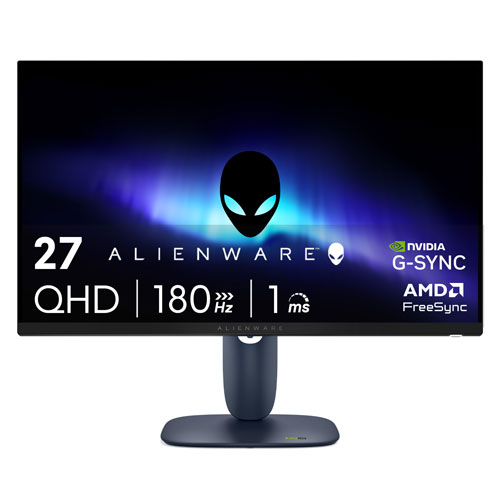
-33%Alienware 27" QHD 180Hz Gaming Monitor (AW2725DM) — 1ms IPS, DisplayHDR 400! $269.99 CAD (33% Off)
 -17%
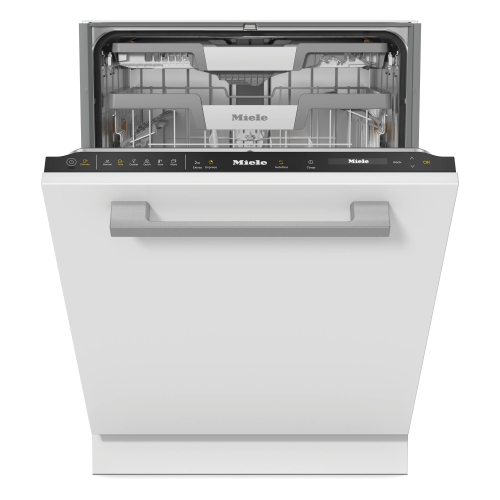
-17%Miele G7656 SCVi Fully Integrated Dishwasher — QuickIntenseWash in Under an Hour! $3149 CAD (16% Off)
 -38%
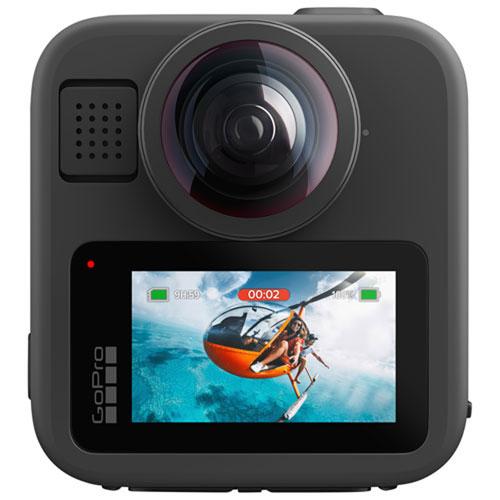
-38%GoPro MAX2 Waterproof 8K Spherical Camera — 360° 8K Video & Swappable Lenses! $429.99 CAD (38% Off)
 -29%
-29%LEGO Creator 3 in 1 Playful Cat — One Box, Three Animals: Cat, Dog, Pigeon! $21.36 CAD (29% Off)
 Finance Evening
Finance Evening | Fed Hikes for First Time in Three Years; Stocks and Bonds Rally as Nvidia Eyes Doubled Chip Sales
 Global Express
Global Express | September 18, 2026 — Pakistan Mosque Attack Kills at Least 16
-33%Alienware 27" QHD 180Hz Gaming Monitor (AW2725DM) — 1ms IPS, DisplayHDR 400! $269.99 CAD (33% Off)
Best Buy
-17%Miele G7656 SCVi Fully Integrated Dishwasher — QuickIntenseWash in Under an Hour! $3149 CAD (16% Off)
Best Buy
-38%GoPro MAX2 Waterproof 8K Spherical Camera — 360° 8K Video & Swappable Lenses! $429.99 CAD (38% Off)
Best Buy
-29%LEGO Creator 3 in 1 Playful Cat — One Box, Three Animals: Cat, Dog, Pigeon! $21.36 CAD (29% Off)
Amazon
Finance EveningFinance Evening | Fed Hikes for First Time in Three Years; Stocks and Bonds Rally as Nvidia Eyes Doubled Chip Sales
Global Express