
Finance Morning | October 15, 2026 — Asia-Pacific Stocks Plunge: KOSPI Hits Circuit Breaker, Nikkei Falls 4.90%, Shanghai Barely Holds 3,700
Asia-Pacific stocks slumped on October 15 as a tech-led sell-off hit chip shares. South Korea's KOSPI fell 7.57% after a circuit breaker, Japan's Nikkei 225 dropped 4.90% and Shanghai's Composite lost 1.59%. Hot US September CPI fuelled Fed rate-hike bets, driving haven money into Treasuries and the 10-year yield to a three-week low. China's Q3 social financing grew 7.1%; Shenzhen unveiled new property rules; central banks kept buying gold. CK Asset denied rumours of Li Ka-shing's death.
📊 Today's Asian Markets
| Index | Close | Change | Change % |
|---|---|---|---|
| Shanghai Composite | 3707.48 | -59.75 | -1.59% |
| Shenzhen Component | 11816.79 | -536.91 | -4.35% |
| ChiNext | 2783.18 | -83.59 | -2.92% |
| Hang Seng | 24062.72 | -251.45 | -1.03% |
| Nikkei 225 | 64425.95 | -3318.34 | -4.90% |
| KOSPI | 5554.22 | -454.59 | -7.57% |
| Taiwan Weighted | 46969.87 | -1371.43 | -2.84% |
1. Korean Stocks Erase 1,170 Trillion Won in Seven Days as Retail Investors Panic
Source: JoongAng Ilbo
South Korea's benchmark KOSPI tumbled more than 8% intraday on October 15, only two days after a 5% plunge on the 13th, triggering circuit breakers in both the KOSPI and the tech-heavy KOSDAQ and briefly halting trading.
As of 1:20 pm local time, the KOSPI was down 484.3 points, or 8.06%, at 5,524.51. Samsung Electronics fell 9.91% to 209,000 won and SK Hynix dropped 11.28% to 1.259 million won. The index has now fallen for seven straight sessions, wiping out about 1,170 trillion won in market value over that period.
Retail investors are panicking. A Seoul investor in his 30s said losses had reached 10%, more than 10 million won in just days, while a salaried worker in his 40s who borrowed to buy semiconductor stocks said his losses were too large to repay. Analysts pointed to a hotter-than-expected US September CPI, which deepened fears of further Fed tightening; the Nasdaq fell 1.88% and AI-infrastructure names such as Oracle and CoreWeave plunged, while the 3x leveraged SOXL ETF slumped 13.35% to $110.54, its biggest one-day drop in a month.
2. Nikkei 225 Plunges 4.90%, Third-Largest Point Drop in History
Source: Kyodo News
Tokyo's Nikkei stock index plunged on October 15, closing at 64,425.95, down 3,318.34 points, or 4.90% — the third-largest point drop in its history — and falling below the 65,000 mark for the first time in a month.
Selling spread mainly among semiconductor shares as worries grew over the outlook for AI demand, while high US crude futures also weighed on sentiment. The index fell more than 3,600 points at one point. The broader TOPIX shed 97.44 points, or 2.38%, to 3,999.34, and trading volume reached 3.02794 billion shares.
Overnight in the US, the corporate bonds of CoreWeave, a start-up providing high-performance data centers for AI developers, slumped, fuelling fears over its finances as it makes huge investments; its shares fell sharply, strengthening doubts about the growth of the AI business. Chip-testing giant Advantest dropped 14.95%, fiber-optic maker Fujikura 12.69% and chipmaker Kioxia Holdings 12.32%.

3. Asian Markets Slide as IMF Warns on Asia's AI Reliance
Source: The National
Asian markets fell sharply on Thursday, with South Korea's Kospi slumping more than 7% and Tokyo's Nikkei 225 down 5.12% in midday trade. The declines followed a sell-off on Wall Street driven by US inflation rising to 3.7% year-on-year in September — above forecasts of 3.6% — and were compounded by losses in AI-related and chip stocks amid fears over rising competition and peak profit growth.
"Asian markets are dealing not just with the deeper sell-off in AI-related stocks but also the tightening of financial conditions that comes from higher yields and a higher US dollar," said Kyle Rodda, senior financial market analyst at Capital.com. Hong Kong's Hang Seng index fell about 1%, while China's Shanghai Composite Index dropped 1.75%.
The International Monetary Fund warned on Thursday about Asia's heavy reliance on the AI boom, saying a correction in AI-related investment or asset valuations "could weigh disproportionately on Asia given its central role in global technology supply chains", and adding that the evolution of AI investment and its long-term economic effects remain uncertain. The hotter inflation data raised the likelihood of a Federal Reserve rate hike.
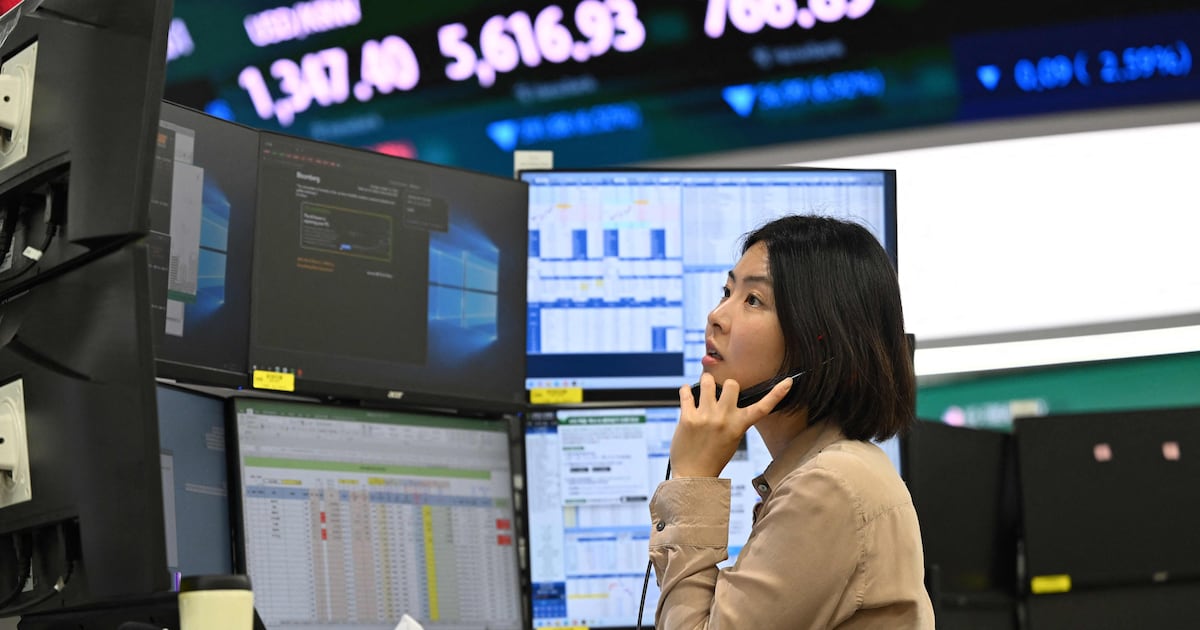
4. Asia-Pacific Stocks Hit Hard, Shanghai Barely Holds 3,700
Source: Guangzhou Daily (Huacheng)
US September inflation came in above expectations, strengthening bets on further Fed rate hikes and sending global stocks lower. On October 15 Asia-Pacific markets fell sharply: South Korea's KOSPI triggered a circuit breaker intraday, the Nikkei 225 slid and the Shanghai Composite just held the 3,700 level.
The KOSPI's intraday loss widened to as much as 9% before the circuit breaker was triggered; it closed down 7.57% at 5,554.22 after seven consecutive losing sessions, with memory-chip giant SK Hynix falling more than 11%. The Nikkei 225 dived more than 3,300 points to close down 4.9%, with Kioxia down over 12% and SoftBank Group down over 9%. In China, the Shanghai Composite briefly broke below 3,700 and closed down 1.59%.
Data released by the US Labor Department on October 14 showed September CPI rose 0.6% month-on-month and 3.7% year-on-year, above expectations. Wall Street fell first: the S&P 500 posted its worst day since late July, dropping more than 1%, and the Nasdaq 100 fell 2%, its biggest one-day drop in over two months. Long-dated US Treasury yields pushed above 5.3%. Analysts said the external turmoil would not change the A-share market's medium- and long-term direction, with CICC expecting resilient earnings and pro-growth signals to support a gradual stabilisation.
5. China's Q3 Financing Data: Outstanding Social Financing Up 7.1%
Source: CCTV
Data released by the People's Bank of China on October 14 showed that M2 and social financing growth stayed at reasonable levels at the end of September, creating a suitable monetary and financial environment for the economy. At end-September, outstanding social financing stood at 468.17 trillion yuan, up 7.1% year-on-year, while yuan loans to the real economy reached 279.9 trillion yuan, up 4.8%.
In the first three quarters, social financing increased by 27.46 trillion yuan, 2.63 trillion yuan less than a year earlier. Bonds and equities remained the main drivers: combined bond and equity financing accounted for 49.48% of the increment in January-September, about 7 percentage points more than loans, with corporate bonds up 2.75 trillion yuan — 1.75 times the year-earlier increase.
New yuan loans rose 11.52 trillion yuan in the first three quarters, with corporate loans up 12.55 trillion yuan — including 6.53 trillion yuan in medium- and long-term loans and 4.64 trillion yuan in short-term loans — while household loans fell 1.03 trillion yuan, extending the divergence of steady corporate borrowing and weaker household demand. In September, the weighted average rate on new corporate loans was slightly below 3%, about 0.2 percentage points lower than a year earlier, while the rate on new personal housing loans was about 3.1%. Inclusive micro and small business loans reached 38.50 trillion yuan, up 6.7%.
6. Shenzhen Unveils New Property Rules, Raising Pre-sale Threshold
Source: Sina Finance
On October 15, Shenzhen's housing and construction bureau, planning and natural resources bureau and the Shenzhen office of the national financial regulator jointly issued implementation guidelines for the new commercial housing sales system, effective immediately, to regulate the whole development-and-sale process and protect buyers' rights.
Under the rules, commercial housing projects whose land-use rights were announced for sale after August 28, 2026 must have completed the main structure — the roof-level concrete pour — and submit quality acceptance records when applying for pre-sale permits, raising the pre-sale threshold so buyers receive homes closer to completion. Daily supervision of pre-sale funds will fall to the municipal housing provident fund centre, with district housing authorities responsible for local oversight.
Projects granted pre-sale permits after August 28, 2026 may only have personal housing loans, including provident fund loans, issued after completion records are filed. The new rules also promote completed-home sales, with a deposit system capping deposits at 3% of the purchase price. On land payments, the first instalment — at least 50% of the total — is due within 30 days of signing, with the balance payable within one year, or two years for special projects, with no interest during instalments.
7. Domestic Chip Hardware and Software Break Through at Wafer Expo
Source: Yicai
Demand for computing power keeps rising in the AI era, with momentum spreading up the semiconductor supply chain. Visiting the 2026 Wafer Expo, Yicai found that chip-design software from Qiyunfang — a subsidiary of SiCarrier — has won more than 100 customers since its release at last year's show, with the number of engineers using it rising from 20,000 to 50,000.
With AI agents, the software can link schematic design, PCB, simulation and CAM review to connect the whole chain. The AI boom has left equipment makers with bulging order books: precision-component vendors saw orders rise more than 140% year-on-year in the first half, and fast-growing high-speed chip testing has boosted testing-equipment firms' revenue and orders. Domestic breakthroughs are concentrated in semiconductor components, PCB EDA software and chip-testing equipment.
At the 26th China International Industry Fair, the Guoxin exhibition debuted with more than 300 semiconductor companies spanning design, manufacturing, packaging and testing, equipment and materials. From AMEC's extreme aspect-ratio CCP capacitor etcher — with etching precision just one millionth the width of a human hair — to a high-density single-cabinet GPU supernode solution that cuts cost by 40% at equal performance and can support models with hundreds of billions to tens of trillions of parameters, domestic chip hardware and software are breaking through together.
8. Global Stocks Tumble, Money Returns to Treasuries as 10-Year Yield Hits Three-Week Low
Source: Jin10 Data
A global equity sell-off is pushing money back into US Treasuries. During Thursday's Asian session, Treasuries led global government bond markets as investors again sought traditional havens amid pressure on risk assets.
The benchmark 10-year Treasury yield fell more than 10 basis points intraday, slipping below 5.10% to a three-week low, while other maturities fell at least 6 basis points and the dollar index weakened. Japanese, Australian and New Zealand government bonds also rose. "The market has finally returned to the familiar risk-off playbook — buying sovereign bonds when stocks sell off," said Kit Lowe, a senior analyst at ITC Markets.
Treasuries are up nearly 0.7% so far this month, reversing a 2.2% September drop, and could post their best October since 2014. PIMCO and Morgan Stanley Investment Management have turned positive on bonds. Risks remain: renewed inflation acceleration and heavy government bond supply. The MSCI Asia-Pacific equity index fell nearly 3%, with South Korea leading losses. San Francisco Fed President Mary Daly said the Fed may still need to raise rates but is in no rush to act.

9. Central Banks Keep Buying Gold as September Purchases Hit Near Two-Year High
Source: 21st Century Business Herald
Investors expect gold prices to hit record highs within 24 months, even as data showed central banks' gold purchases in September reached their highest level in nearly two years.
On the 14th, gold briefly fell about 2% to $4,075/oz on expectations the Fed may raise rates again, but some fund managers expect a rebound; spot gold had recovered to around $4,140/oz. World Gold Council preliminary data showed central bank buying rose in September to its highest monthly level since November 2024, with about 63 tonnes recorded so far.
Spot gold hit a record above $5,500/oz in January before falling below $4,000 in late June. Despite a roughly 7% decline this year, gold has remained among the best-performing assets over the past 12 months. Fund managers at Troy Asset Management forecast a new high within 12 to 18 months, while Aon Investments expects one within two years. LSEG's Debajit Saha said the fundamentals driving gold have not materially changed and that liquidity — as global capital flows toward AI — is a key constraint.
10. CK Asset Denies Rumours of Li Ka-shing's Death
Source: Sina Finance
On October 15, rumours circulated that 98-year-old Li Ka-shing had died. An insider at CK Asset Holdings told The Paper in response: "There is absolutely no such thing."
According to Southern Daily, the claim first spread on social platforms, with some accounts reposting it without any source. Southern+ reporters found that Ta Kung Pao carried no news of Li's death and that screenshots of the alleged report had no official origin. Public records show Li has continued to make business investments in recent years, and similar rumours about his health have appeared repeatedly before.
More News
- Finance Evening: Brent Crude Briefly Tops $110 as Tech Rout Drags Nasdaq Down 2.14%
- Maple Express | October 16, 2026 — Toronto 18 Terror Plot Ringleader Granted Full Parole
- Maple Express | October 16, 2026 Waymo to test robotaxis in Toronto, eyes 2028 launch
- Global Express | October 16, 2026 — Houthi Missile Strike on Yemen's Presidential Palace Kills Five
- Finance Morning | China Steps Up Market Support; Indonesia Stocks Plunge 11% on MSCI Downgrade Warning
Comments (0)
View More
 -26%
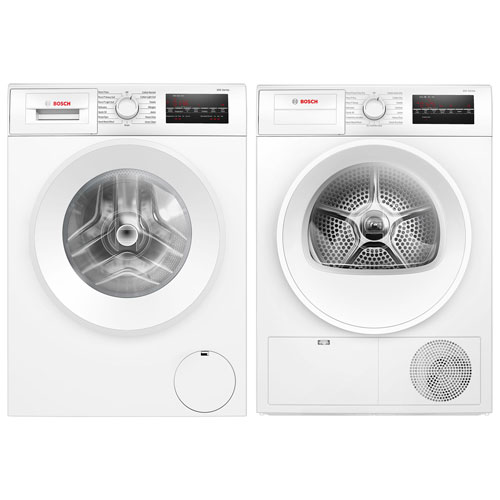
-26%Bosch 300 Series Washer & Dryer Set — 2.2 Cu. Ft. Compact Front Load Washer + 4.0 Cu. Ft. Electric Dryer! $2399.98 CAD (25% Off)
 -31%
-31%Travelpro Maxlite 5 Softside Underseat Tote 18" — Slides Under the Seat! $90.99 CAD (30% Off)
 -15%
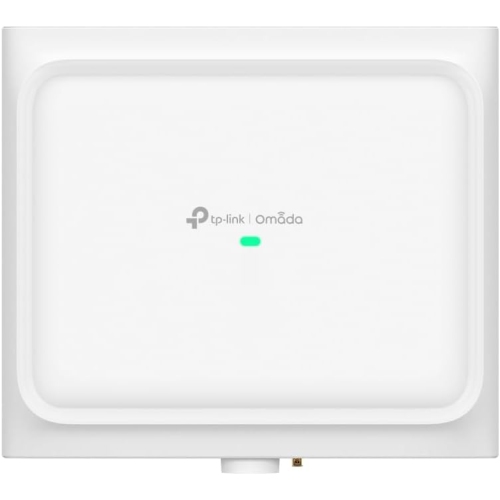
-15%TP-Link Omada WiFi 7 Outdoor Access Point — BE11000 Tri-Band Six-Stream, IP68, 300m² Coverage! $372.99 CAD (15% Off)
 -45%
-45%Blueair Blue Pure 511i Max Air Purifier — HEPASilent Dual Filtration, Cleans 926 sq ft in 1 Hour! $279.99 CAD (44% Off)
 Sports Express
Sports Express | October 16, 2026 — Brewers Sweep Dodgers to Reach World Series for First Time Since 1982
 Maple Express
Maple Express | October 16, 2026 — Pedestrian Struck in Oshawa Suffers Life-Threatening Injuries
-26%Bosch 300 Series Washer & Dryer Set — 2.2 Cu. Ft. Compact Front Load Washer + 4.0 Cu. Ft. Electric Dryer! $2399.98 CAD (25% Off)
Best Buy
-31%Travelpro Maxlite 5 Softside Underseat Tote 18" — Slides Under the Seat! $90.99 CAD (30% Off)
Amazon
-15%TP-Link Omada WiFi 7 Outdoor Access Point — BE11000 Tri-Band Six-Stream, IP68, 300m² Coverage! $372.99 CAD (15% Off)
Best Buy
-45%Blueair Blue Pure 511i Max Air Purifier — HEPASilent Dual Filtration, Cleans 926 sq ft in 1 Hour! $279.99 CAD (44% Off)
Best Buy
Sports ExpressSports Express | October 16, 2026 — Brewers Sweep Dodgers to Reach World Series for First Time Since 1982
Maple Express