
Finance Evening | October 13, 2026 — IMF Warns of AI Bubble Risk as US Stocks Edge Lower
North American markets, Oct 13: The IMF warned the AI boom could burst and drag down the global economy, as U.S. stocks edged lower. JPMorgan profit rose 6% but missed estimates; BlackRock cut U.S. equities to Neutral. Fed's Williams said no more hikes may be needed in 2027. The IMF cut Canada's 2026 growth forecast to 1.1%; Bank of Canada October hike odds fell to 25%. TC Energy closed a Coastal GasLink First Nations deal; oil prices were mixed.
📊 Today's North American Markets
| Index | Close | Change | Change % |
|---|---|---|---|
| S&P 500 | 7,805.45 | -1.79 | -0.02% |
| Nasdaq | 27,204.38 | -41.52 | -0.15% |
| Dow Jones | 51,670.10 | -180.45 | -0.35% |
| Toronto TSX | 35,983.98 | +319.36 | +0.90% |
| USD/CAD | 1.4218 | -0.01 | -0.41% |
| WTI Crude | 94.79 | +0.65 | +0.69% |
| Gold | 4,184.20 | +6.90 | +0.17% |
(Source: Yahoo Finance)
1. IMF Warns AI Bubble Could Burst and Drag Down the Global Economy
Source: The Register
The International Monetary Fund on Tuesday published its latest Global Financial Stability Report, warning that the AI spending frenzy could end in tears, with consequences reaching far beyond the tech sector. The fund warned that financial markets are increasingly exposed to an AI-driven correction, especially if the billions poured into the technology fail to deliver the profits investors expect.
The IMF is particularly concerned about "circular financing" arrangements, in which AI firms act as one another's investors, financiers and customers. Such deals may keep the AI money machine running, but they also mean trouble at one company can quickly become someone else's problem. The Bank for International Settlements warned in June that the AI boom shares uncomfortable similarities with past financial bubbles, and Jefferies strategist Chris Wood has cautioned that America's AI spending could cause "massive capital destruction."
Beyond AI, the IMF flagged two other threats to financial stability: rising government bond yields and cyberattacks. It said more than 70 percent of the vulnerabilities exploited so far in 2026 were already being abused by attackers on or before the day they were publicly disclosed. Despite the gloomy outlook, the IMF is not predicting an imminent collapse; its stress testing suggests the banking system could withstand a severe downturn, though weaker institutions would be more exposed. It urged regulators to watch excessive borrowing, concentrated investments and cyber resilience.
2. S&P 500 Closes Near Flat as Big Banks Report and Memory Chip Stocks Fall
Source: CNBC
U.S. stocks ended near the flatline on Tuesday as traders digested a slew of earnings from major banks, while an overnight plunge in South Korea pressured memory chip names. The S&P 500 slipped 0.02% to 7,805.45, the Nasdaq Composite fell 0.15% to 27,204.38, and the Dow Jones Industrial Average dropped 180.45 points, or 0.35%, to 51,670.10. At its high, the Dow was up more than 460 points.
Among banks, JPMorgan Chase reported third-quarter earnings and revenue that missed analyst expectations but raised its 2026 net interest income guidance, with shares ending 0.9% lower. Wells Fargo shed 3% on mixed results, while Goldman Sachs edged down 0.2% even after revenue beat expectations. UnitedHealth slipped 0.2% despite beating estimates. Analysts on average expect S&P 500 profits grew nearly 30% from a year earlier, according to FactSet.
Memory stocks were under pressure after South Korea's Kospi dropped 5.5% overnight — its lowest since July 31 — on valuation concerns and growing competition from China. China's CXMT said this week it plans to release a more powerful chip by year-end. The Roundhill Memory ETF slid more than 3%, SK hynix slipped 3%, Micron Technology fell more than 3%, and Western Digital lost 1.6%.

3. JPMorgan Profit Rises 6% as Jamie Dimon Warns Forces Are "Shifting Under the Surface"
Source: Yahoo Finance
JPMorgan Chase reported Tuesday that third-quarter profit rose 6% from a year earlier to $15.3 billion, or $5.57 per share, falling short of the $5.90 per share analysts forecast. Net revenue rose 8% to $50.2 billion, up from $46.4 billion a year earlier. The bank said it took $658 million in securities losses amid the quarter's worsening bond rout; excluding those losses, it earned $5.75 per share.
CEO Jamie Dimon warned that although the U.S. economy remains strong, powered by "strong business investment and a consumer that keeps spending," forces are "shifting under the surface." He cited "large fiscal deficits, sticky inflation, elevated asset prices, rising interest rates and geopolitical conditions." He added: "These forces may be manageable, but we remain prepared for a wide range of outcomes."
Trading revenue rose 15% to $10.3 billion, slightly short of expectations, while dealmaking fees climbed 14%. Core lending revenue and net interest income rose 13% to $27 billion. The bank raised its full-year net interest income guidance by $1 billion to $97.5 billion and lifted its 2027 forecast for the same figure to $107 billion. Average credit card loans rose 7% from a year earlier, and card charge-offs fell to 2.91% from 3.15%.

4. BlackRock Turns More Bearish on Stocks, Upgrades Treasurys
Source: Yahoo Finance
BlackRock, the world's largest asset manager, on Tuesday upgraded its view on U.S. Treasurys, favoring short-term bonds as higher yields improve potential returns, and downgraded U.S. equities to Neutral. The research was conducted by BlackRock's Jean Boivin, Rick Rieder and Wei Li.
"Higher yields and potentially excessive Fed tightening expectations create room to unwind our U.S. Treasury underweight," the team said. "We upgrade Treasuries, favoring short-term bonds. In turn, we take profits: downgrading U.S. equities to neutral to manage potential volatility around the AI buildout." The strategists said they nevertheless retain conviction in AI fundamentals and their preference for AI within U.S. equities.
The downgrade comes at a precarious time for the market's non-AI areas. Sell-offs have gained steam as higher U.S. Treasury yields raise the cost of capital for companies that may not be growing as fast as AI names. According to new analysis from the Kobeissi Letter, about 84% of S&P 500 stocks are now trading at least 10% below their all-time highs, 59% are down at least 20%, 41% are down more than 30%, and 17% are off by more than 50%. Rieder called the move in yields "not a crisis but an eye-opener."

5. Fed's Williams Says No More Rate Hikes May Be Needed in 2027, at Odds With Traders
Source: CNBC
New York Federal Reserve President John Williams said Tuesday that he doesn't see additional rate hikes in 2027 after one more increase this year. "I haven't changed my view that it may be appropriate to have one more rate hike," Williams told Bloomberg News. "I don't think at this time I have any reason to believe that we would need to do more."
Williams' comments place him at odds with the market and some other central bank members. Fed funds futures traders are largely betting the Fed will raise rates at least once in 2027, according to CME's FedWatch data, with about 90% odds that the overnight rate would end 2027 at least a half percentage point higher than today. Of the 18 officials who gave a rate forecast for 2027, eight see one more increase after an additional hike this year.
The Fed issued its first rate increase since 2023 in September and signaled in meeting minutes that another hike is likely, without clarifying timing. Williams said the Fed should look at "underlying trends" in inflation. He said energy prices continue to push overall inflation higher but could provide relief on an annual basis in the future, and that the effects of tariffs on prices have mostly been seen. He expects overall inflation for 2027 to be "near" the Fed's 2% target. The Fed's preferred PCE gauge rose 3.4% year over year in August, or 3% excluding food and energy.

6. IMF Cuts Canada's 2026 Growth Forecast to 1.1%
Source: Canadian HR Reporter
Canada's economy will grow by 1.1% in 2026, according to the International Monetary Fund's latest World Economic Outlook, as an energy shock from the war in the Middle East and trade uncertainty weigh on activity. The forecast is down from 1.9% growth in 2025 and 0.4 percentage points below the IMF's April 2026 projection. Growth is expected to recover to 1.7% in 2027.
The IMF projects global growth of 3.1% in 2026 and 3.4% in 2027, saying supportive policies and better prices for Canada's exports are partly offsetting weaker momentum. Inflation is the bigger concern: the IMF projects Canadian consumer prices will rise 2.8% in 2026, up from 2.1% in 2025, before easing to 2.4% in 2027. Its baseline assumes oil averages US$95.74 a barrel in 2026, up from US$67.74 in 2025, and shows unemployment edging down from 6.9% in 2025 to 6.5% in 2026.
A WEO chapter studying 85 economies from 2005 to 2025 found that real wages stayed about 3% below their pre-crisis path three years after a cost-of-living crisis began. About 18 months in, the bottom fifth of earners faced nearly two percentage points more cumulative inflation than the top fifth. The IMF found targeted, temporary support for vulnerable households far more cost-effective than broad price relief.

7. Job Losses Push October Bank of Canada Hike Odds Down to 25%
Source: Wealth Professional
Within hours of Friday's labour force data, odds of a quarter-point Bank of Canada increase on October 28 fell to about 25% from roughly 40%. Statistics Canada reported the economy shed 68,000 positions in September, and the unemployment rate rose to 6.5% from 6.4%, against a Reuters consensus forecast of a gain of 9,200 jobs. The key interest rate stands at 2.25%.
Andrew Hencic, senior economist at TD Economics, wrote that the report will "pour some more cold water on near-term rate hike expectations." He noted markets now price 27% odds of a hike in October and 88% for December, and said TD expects the Bank of Canada to "remain data-dependent and stay on hold in October." BMO Capital Markets chief economist Douglas Porter told Reuters that "a second consecutive month of sizable job losses washes away the surprising strength reported in Canada's job market through the early summer."
Public sector employment fell by 70,000 in a fourth consecutive monthly decline, led by educational services at 35,000, while manufacturing lost 13,000 positions in the first full month after a new round of U.S. tariffs took effect. CIBC senior economist Andrew Grantham said the weak data likely reflects "data volatility" more than new tariffs, supporting CIBC's call that the Bank will hold rates at its two remaining meetings this year. The Canadian dollar traded 0.4% lower at 1.4275 per U.S. dollar.

8. TC Energy Closes Deal Giving Five First Nations Economic Interest in Coastal GasLink
Source: CBC
Calgary-based TC Energy said it has closed a deal that gives five First Nations an economic interest in the Coastal GasLink pipeline, which brings natural gas from northeastern B.C. to the LNG Canada plant and export terminal in Kitimat, B.C. Financial terms were not immediately available.
Under the agreement with the FN CGL Pipeline Ltd. Partnership, the First Nations obtained an economic interest in the entity that holds TC Energy's limited partner interest in Coastal GasLink. Its members include the Haisla Nation, Halfway River First Nation, McLeod Lake Indian Band, Saulteau First Nations and West Moberly First Nations. Chief Roland Willson of West Moberly First Nations said the framework "recognizes the importance of partnership, financial certainty and shared prosperity, while supporting our communities' ability to make decisions about our own economic future."
TC Energy operates Coastal GasLink and holds a 35% interest in the pipeline, with KKR & Co. and Alberta Investment Management Corp. holding the rest on behalf of certain clients. Tuesday's deal is the first of two planned Indigenous investment transactions related to Coastal GasLink, with a second expected to close in the fourth quarter. The company recently announced plans to double the capacity of the 670-kilometre pipeline by adding compressor stations and upgrading facilities.

9. Oil Prices Mixed as Traders Weigh Russian Diesel Supply and Saudi-Houthi Conflict
Source: CNBC
Crude oil prices were mixed Tuesday as investors weighed prospects of more Russian energy entering global markets, while concerns over the Saudi-Houthi conflict limited losses. Brent crude futures declined 96 cents to close at $105.69 a barrel, while U.S. West Texas Intermediate futures gained 40 cents to settle at $94.14.
President Donald Trump on Monday defended his administration's decision to temporarily ease restrictions on Russian diesel supplies, despite bipartisan criticism from U.S. lawmakers who warned the move could undermine sanctions imposed over Moscow's war in Ukraine. In a Truth Social post, Trump said the European Union had spent billions on Russian energy imports and insisted he made the right decision for Americans. The agreement would allow Russia to supply diesel to U.S. and global markets for six months.
Goldman Sachs said additional Russian diesel supplies were unlikely to significantly ease pressure on global fuel prices, estimating that an increase of 800,000 metric tons would lower wholesale diesel prices in the U.S. Gulf Coast and Europe by just $1 to $2 a barrel. The bank said Russian refinery outages jumped by 3 million barrels per day from a year earlier, limiting Moscow's ability to ramp up production. U.S. inventories are down 14% from a year earlier and visible stocks in China are down 11%. On Saturday, Iran-backed Houthi militants attacked King Khalid International Airport in Riyadh, leaving 12 people dead and more than 300 injured.

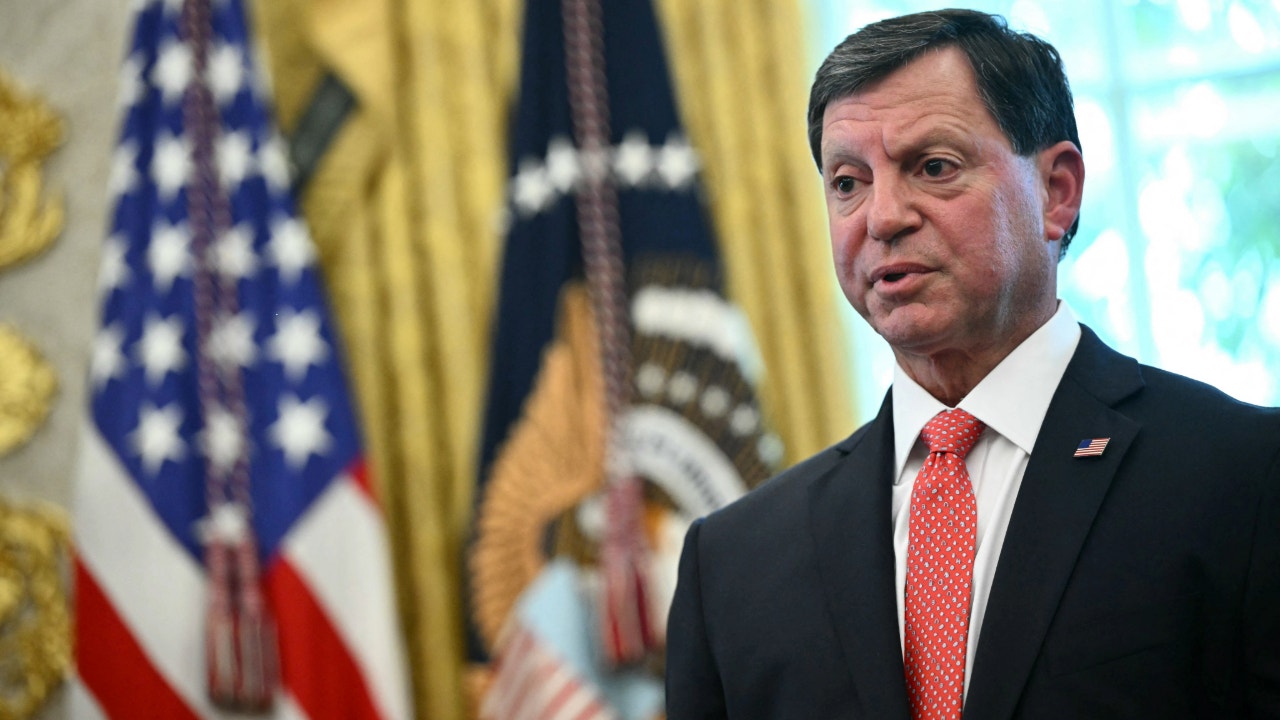
10. Social Security Chief Says Program Will "Be Around for Another 90 Years"
Source: Fox Business
Social Security Administration Commissioner Frank Bisignano said in an interview Monday that the program will be around for another 90 years, as a key trust fund approaches insolvency. Bisignano, who is also the IRS CEO, spoke ahead of this week's announcement of the 2027 cost-of-living adjustment (COLA) for Social Security benefits.
As one of the trustees of Social Security's trust funds, Bisignano was asked about potential reforms to ensure the program's future solvency. "This is a long journey. It's 90 years old, and it'll be around for another 90 years," he said, adding that the president has made "protect and preserve" a mandate for him. He also said the SSA had 30 million records that were wrong and has cleaned up about 10% of them.
Social Security was created in 1935 and began operations in 1937, but has come under financial pressure amid changing U.S. demographics. The most recent trustees' report projected the main trust fund will be depleted in 2032, triggering automatic benefit cuts. Based on the trustees' estimate, Social Security would be able to pay only 78% of scheduled benefits in late 2032, an estimated 22% cut. The nonpartisan Congressional Budget Office projects benefits would be cut by an average of 28% per year from 2033 to 2036.
More News
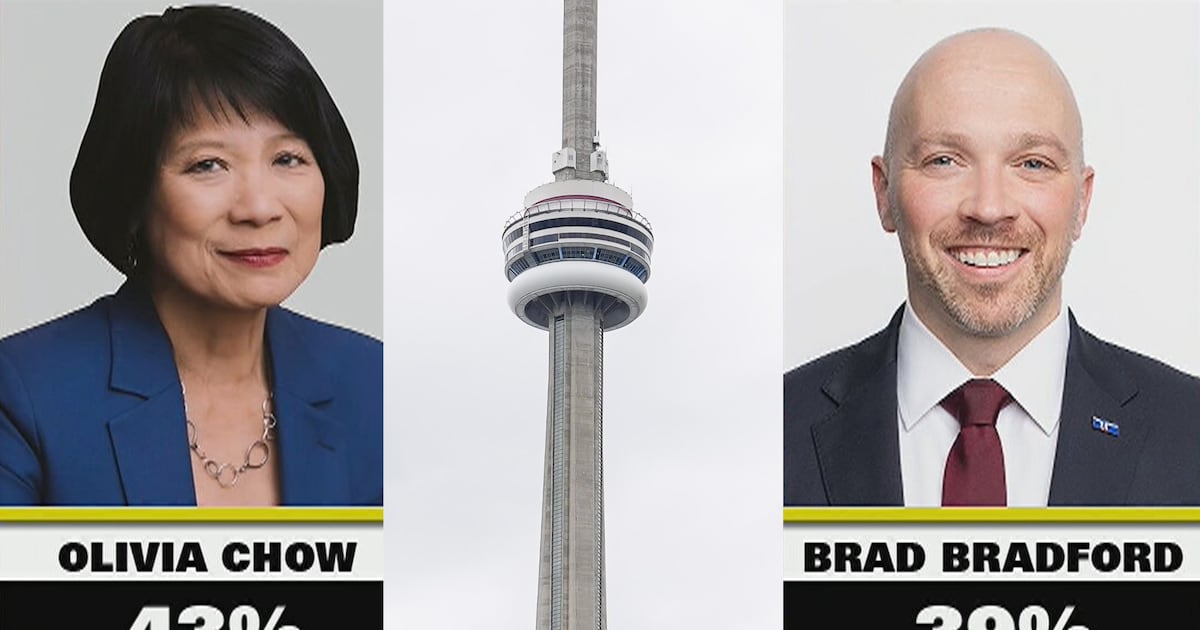
- Maple Express | October 13, 2026 Toronto mayoral race tightens as Bradford cuts Chow's lead to about 3.5 points
- Maple Express | October 13, 2026: Toronto Advance Voting Hits Record High
- Global Express | October 13, 2026 — Drones Hit Two Cargo Ships in Black Sea, One Sinks With 11 Sailors Missing
- Finance Morning | October 13, 2026 — AI Trade Pullback Slams Asia-Pacific Stocks; KOSPI Falls 5.46% With Circuit Breaker
- Tech Express | October 13, 2026 — DeepSeek Doubles Its Round to About RMB 100 Billion
Comments (0)
View More
 -31%
-31%Travelpro Maxlite Air V2 Hardside Expandable 25" — Stack the $28.35 Coupon! $188.99 CAD (30% Off)
 -64%
-64%Tineco Floor One S3 Extreme Cordless Wet/Dry Vacuum & Mop — Vacuum and Mop in One Pass with iLoop Smart Sensor! $199.99 CAD (64% Off)
 -52%
-52%🎉 史新低!MORENTO HY4866 Air Purifier — Dual Intake, 1076 Sq Ft Refreshed Hourly! $115.98 CAD (52% Off)
 0
0Crucial P310 1TB PCIe Gen4 NVMe M.2 SSD — 7,100 MB/s Gen4 Speed!
 Maple Express
Maple Express | October 13, 2026 Toronto mayoral race tightens as Bradford cuts Chow's lead to about 3.5 points
 Maple Express
Maple Express | October 13, 2026 Record $85M Lotto Max Jackpot to Be Drawn Tuesday
-31%Travelpro Maxlite Air V2 Hardside Expandable 25" — Stack the $28.35 Coupon! $188.99 CAD (30% Off)
Amazon
-64%Tineco Floor One S3 Extreme Cordless Wet/Dry Vacuum & Mop — Vacuum and Mop in One Pass with iLoop Smart Sensor! $199.99 CAD (64% Off)
Best Buy
-52%🎉 史新低!MORENTO HY4866 Air Purifier — Dual Intake, 1076 Sq Ft Refreshed Hourly! $115.98 CAD (52% Off)
Amazon
0Crucial P310 1TB PCIe Gen4 NVMe M.2 SSD — 7,100 MB/s Gen4 Speed!
Amazon
Maple ExpressMaple Express | October 13, 2026 Toronto mayoral race tightens as Bradford cuts Chow's lead to about 3.5 points
Maple Express