
Tech Express | August 21, 2026 RayNeo iO Unveiled: First Human-Augmented AI Glasses
Today's Tech Express: RayNeo unveils iO human-augmented AI glasses; OpenAI open-sources Codex Harness; DeepSeek launches first vision model; Google adds Preferred Sources for publishers; Moore Threads sees 100K-card clusters inevitable; Snapdragon 8 Super Gen 6 named; iPhone 18 Pro colors revealed; Zhuque-3 first land recovery; CXMT and Unitree list in Shanghai; Xiaomi 18 Pro bezels under 1mm.
1. RayNeo iO Officially Unveiled: First "Human-Augmented" AI Glasses, Starting at 1,996 Yuan
Source: Kuai Tech
On August 21, consumer AR brand RayNeo held its 2026 AI glasses launch event, officially unveiling the new RayNeo iO product line, positioned as the industry's first "human-augmented AI glasses." The name iO draws from I/O in computer science, representing RayNeo's vision of human-computer interaction in the AI era. The RayNeo iO is priced at 2,499 yuan, with an early-bird price starting at 1,996 yuan, and offers prescription lens options from 0 to 1000 degrees.
The iO weighs just 34 grams, featuring a magnesium-aluminum front frame and dual-layer titanium temples, with the front frame edge averaging just 2.25mm wide. Optically, it debuts the Blue Lake optical waveguide and "Firefly Light Engine Nano," delivering an equivalent 33-inch display with 1,800 nits of luminance, certified flicker-free and low blue light by TUV Rheinland, with up to two days of battery life.
On the AI side, the iO is built on open-source foundation models, initially supporting DeepSeek V4 Pro and Qwen 3.7 Max, with Kimi K3 and RayNeo's own AI model to follow. It packs 4 array microphones and 1 bone-conduction microphone, running Timekettle's BabelOS 3.0 translation engine covering 55 languages and 109 accents. For privacy, the iO has no camera, and the privacy indicator light on the temples is hardware-linked to recording functions.
2. OpenAI Fully Open-Sources Codex Harness: Developers Get the Agent Framework for Free
Source: Phoenix Net Tech
On August 21, Phoenix Net Tech reported that OpenAI officially announced the full open-sourcing of the Codex agent harness — the underlying execution framework powering the Codex app, CLI, and IDE extension — released under the Apache-2.0 license in the openai/codex repository on GitHub. Developers can now seamlessly embed AI agents into their own products, engineering tools, operational dashboards, and even financial software. OpenAI president Greg Brockman reposted on X, saying Codex can drive far more than just coding tools.
The release includes three major components: the codex exec CLI for running automated pipelines, the official Codex SDK with TypeScript and Python interfaces, and the Codex app-server supporting persistent conversation state, streaming events, mid-task interruption of AI, and handling of human approval requests.
OpenAI cited data proving the harness's importance: on the ARC-AGI-3 benchmark, with just two adjustments — retained reasoning and context compression — GPT-5.6 Sol's score jumped from 13.3% to 38.3%, with output tokens reduced sixfold. Partners Thrive Holdings and Crete processed 7,000 tax returns using the framework, cutting tax preparation time by about a third.

3. DeepSeek Launches Its First Vision Model: V4-Flash-Vision-Exp Nears Opus-4.8 in Multimodal Ability
Source: Kuai Tech
On August 21, DeepSeek officially launched the experimental multimodal model DeepSeek-V4-Flash-Vision-Exp on its API platform; developers can call it by setting the model parameter to deepseek-v4-flash-vision-Exp. The version retains all of V4-Flash's text capabilities while adding vision understanding, with multimodal agent performance approaching the flagship level of Claude Opus-4.8.
On vision-related agent benchmarks, the model shows a clear jump over the original V4-Flash, with significant score improvements on ApexBench, Agents' Last Exam, Chartography and other specialized evaluations. It can handle screenshot parsing, interface recognition, chart reading, and mixed image-text tasks, suited for GUI agents, screen operation, and image-text data analysis.
Pricing follows V4-Flash's existing rates: up to 384 tokens per image, 1 yuan per million input tokens on cache miss and 2 yuan for output, with cache hits as low as 0.02 yuan. The model keeps a 1-million-token context window and supports thinking mode. DeepSeek notes it is an experimental preview and not recommended for production use.

4. Google Gives Publishers a New Tool: Readers Can Set Sites as "Preferred Sources" to Counter AI Traffic Loss
Source: TechCrunch
On August 20, Google announced a new interactive "Preferred Sources" button for publishers, letting readers click on a publisher's site to mark it as a source they want to see more often in Google Search, Discover, and Google News. Google says this makes it easier for readers to find content from sites they trust.
Becoming a preferred source can drive more traffic to publishers. Google's earlier research found users are twice as likely to click when they see a preferred source. The feature launched in Google's AI experience (AI Mode and AI Overviews) in May and was previously available in Top Stories; according to Google, people have selected over 345,000 unique sources this way.
Beyond the new button, Google also announced readers will soon be able to customize their Discover feed using natural language, and Android users can customize audio daily briefings in the Google News app.

5. Moore Threads: GPU Cluster Networking and the Inevitable March Toward 100,000-Card AI Clusters
Source: Kuai Tech
On August 21, Moore Threads founder Zhang Jianzhong said in a speech at the 2026 World Robot Conference that the embodied AI industry is approaching its own "ChatGPT moment," and that a solid computing foundation is the core prerequisite for the industry to take off. Mainstream language models have crossed the trillion-parameter threshold, embodied AI models are moving from hundreds of millions to billions and trillions of parameters, and AI clusters are scaling from thousands of cards to tens of thousands — with 100,000-card clusters an inevitable next step.
Zhang said domestic players including Huawei, Alibaba, and Moore Threads are all pushing hard to deploy domestic GPU AI clusters, using cluster-based networking to leverage China's infrastructure advantages and sidestep short-term single-chip process node gaps, quickly closing the computing gap for embodied AI and large models.
Nvidia founder Jensen Huang previously said in an interview that AI is essentially a parallel computing problem, and China can fully compensate for single-chip process node gaps by stacking more compute chips. He also said China already dominates mainstream mature chip manufacturing, calling claims that "China can't make usable AI chips" nonsense.

6. Qualcomm's New Flagship Naming Confirmed: Snapdragon 8 Super Gen 6, Netizens Say It's Hard to Remember
Source: Kuai Tech
News from August 21: Qualcomm's next-generation flagship platform, to be unveiled at the Snapdragon Summit, has its final naming confirmed as the Snapdragon 8 Gen 6 and Snapdragon 8 Super Gen 6. The naming has sparked widespread discussion in the tech community, with many bloggers saying the chip names are too long and hard to remember.
On specs, the Snapdragon 8 Super Gen 6 uses a third-generation Oryon 2+3+3 octa-core architecture with an Adreno 850 GPU and 18MB graphics cache, supporting LPDDR6 memory and UFS 5.0 storage. The prime core clocks at an industry-leading 5GHz, and the GPU has exclusive hardware-level AI frame generation that can boost native 60fps games to 120fps or higher.
In benchmarks, engineering samples have scored close to 4.84 million, with production versions expected to set new records. Following convention, the Xiaomi 18 Pro Max will debut with the chip, with devices arriving in late September.

7. iPhone 18 Pro Colors Revealed: Cherry Red and Dark Gray Added, Space Orange Retired
Source: Kuai Tech
News from August 21: Apple is expected to unveil the iPhone 18 Pro series and its first foldable iPhone Ultra on September 9. According to current leaks, the iPhone 18 Pro series will come in four colors — cherry red, dark gray, silver, and light blue — compared with the iPhone 17 Pro series' three options of silver, space orange, and dark blue.
The new lineup adds cherry red and dark gray, replaces the previous dark blue with light blue, and retires space orange. Cherry red is this generation's signature color, a deep red close to wine red: in low light it leans toward a dark red-black, while in bright light it shows a translucent wine-red gloss.
On hardware, supply chain leaks say the iPhone 18 Pro series' Dynamic Island gets a major slimming, and it will be powered by a 2nm A20 Pro chip with improved power efficiency and stronger AI compute. The main camera adds a physical variable aperture that automatically adjusts light intake based on ambient conditions.

8. China's First Land-Based Rocket Recovery: Zhuque-3 Lands Successfully, Musk Weighs In
Source: Phoenix Net (Guancha)
On August 19, the Zhuque-3 Y2 launch vehicle developed by LandSpace lifted off and successfully completed a land-based recovery. Following the sea-based net recovery of the Long March 10B first stage on July 10, this is China's first successful controlled land recovery of a reusable launch vehicle first stage using landing legs, marking a major breakthrough in China's reusable rocket technology.
The same day, netizens on X dug up SpaceX CEO Elon Musk's 2011 "prediction" about national rocket technology development — Musk had written that SpaceX had nearly cornered Boeing, Lockheed, Europe's Ariane, and Russia's Proton/Soyuz, and that "the endgame of this race is China." Musk later reposted the thread and replied: "China is also currently the strongest competitor in AI."
Reuters reported that rocket recovery is critical to cutting costs, making LandSpace the world's third private company to successfully recover an orbital-class booster, after SpaceX and Blue Origin. Space.com noted the Zhuque-3 landed directly on land, staying upright on its landing legs.

9. Capital Flows "Look East"? CXMT and Unitree List as China Encourages Tech Newcomers to Go Public at Home
Source: NYT Chinese
On August 21, the New York Times Chinese edition reported that two blockbuster IPOs on the Shanghai stock market in recent weeks highlight two intertwined ambitions in China: tapping investor enthusiasm for homegrown companies in the AI boom, and reducing dependence on American technology and finance. Leading memory chip maker CXMT and humanoid robot maker Unitree both chose to list in Shanghai.
Late last month, CXMT shares surged 470% on debut and have risen further since, reaching a market value of about $545 billion, surpassing Tencent to become China's most valuable listed company. Unitree began trading in Shanghai on Wednesday, surging 460% on day one with intraday gains exceeding 629%.
The Global Times said in an editorial last week that "the flow of global tech capital is almost a one-way street looking west," but "the world is now shifting from looking west to looking east." The report also noted that Beijing set up a National Venture Capital Guidance Fund last year that can eventually deploy up to $145 billion into high-tech companies in AI, quantum computing, and other fields.

10. Xiaomi 18 Pro Series Display Upgrade: Bezels Under 1mm, Debuts 2nm Snapdragon 8 Elite Gen 6 Pro
Source: Kuai Tech
News from August 21: The Xiaomi 18 Pro series has been registered and will launch in September. According to leaker Digital Chat Station, the Xiaomi 18 Pro series features a new ultra-narrow four-sided equal bezel display with bezels under 1mm, paired with a large R-angle design for an improved look.
The display uses Pol-less custom substrate, supports 1-nit ultra-low brightness, covers the BT.2020 wide color gamut, and offers a 1-165Hz LTPO adaptive refresh rate. The new-generation super pixel technology uses full-RGB lossless pixel layout with 9.389 million subpixels for over-2K clarity.
On performance, the Xiaomi 18 Pro series debuts the Snapdragon 8 Elite Gen 6 Pro built on TSMC's 2nm process, with 30% higher transistor density than the previous 3nm generation. The Pro packs a 7,000mAh-class battery and the Pro Max reaches 8,000mAh-class, both supporting 100W fast charging plus wireless charging.

More News
- Global Express | October 5, 2026: Japan Summons US Ambassador Over Okinawa Killing Case
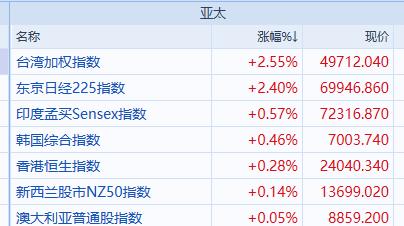
- Finance Morning | Asia Stocks Rally Broadly as Hang Seng Reclaims 24,000; Nikkei Tops 70,000
- Tech Express | October 5, 2026 — Google Pauses Open Source Bug Bounty Program After Surge in AI Submissions
- Sports Express | October 5, 2026 - Braves rally past Dodgers 3-2 to even NLDS
- Maple Express | October 5, 2026 — Quebec Votes as Sovereignty Referendum Looms
Comments (0)
View More
 -63%
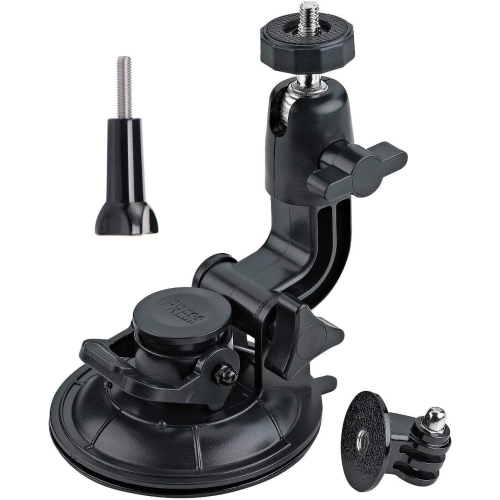
-63%DOLAER 360° Rotating Suction Cup Mount — Universal Car & Windshield Mount with Tripod Adapter + Screw for GoPro & Action Cams! $18.99 CAD (63% Off)
 -50%
-50%Sharpie Extreme Permanent Markers (Fine Point, Black, 2-Pack) — $2.90 CAD (49% Off)
 -35%
-35%ARM & HAMMER Forever Fresh Lavender Clumping Cat Litter 18 lb — Baking Soda Odor Control, 99.9% Dust-Free! $24.64 CAD (35% Off)
 -21%
-21%Airthings Wave Plus Indoor Air Quality Monitor with Radon Detection — $239.99 CAD (20% Off)
 Maple Express
Maple Express | October 5, 2026 — Quebec Votes as Sovereignty Referendum Looms
 Finance Morning
Finance Morning | Asia Stocks Rally Broadly as Hang Seng Reclaims 24,000; Nikkei Tops 70,000
-63%DOLAER 360° Rotating Suction Cup Mount — Universal Car & Windshield Mount with Tripod Adapter + Screw for GoPro & Action Cams! $18.99 CAD (63% Off)
Best Buy
-50%Sharpie Extreme Permanent Markers (Fine Point, Black, 2-Pack) — $2.90 CAD (49% Off)
Amazon
-35%ARM & HAMMER Forever Fresh Lavender Clumping Cat Litter 18 lb — Baking Soda Odor Control, 99.9% Dust-Free! $24.64 CAD (35% Off)
Amazon
-21%Airthings Wave Plus Indoor Air Quality Monitor with Radon Detection — $239.99 CAD (20% Off)
Amazon
Maple ExpressMaple Express | October 5, 2026 — Quebec Votes as Sovereignty Referendum Looms
Finance Morning