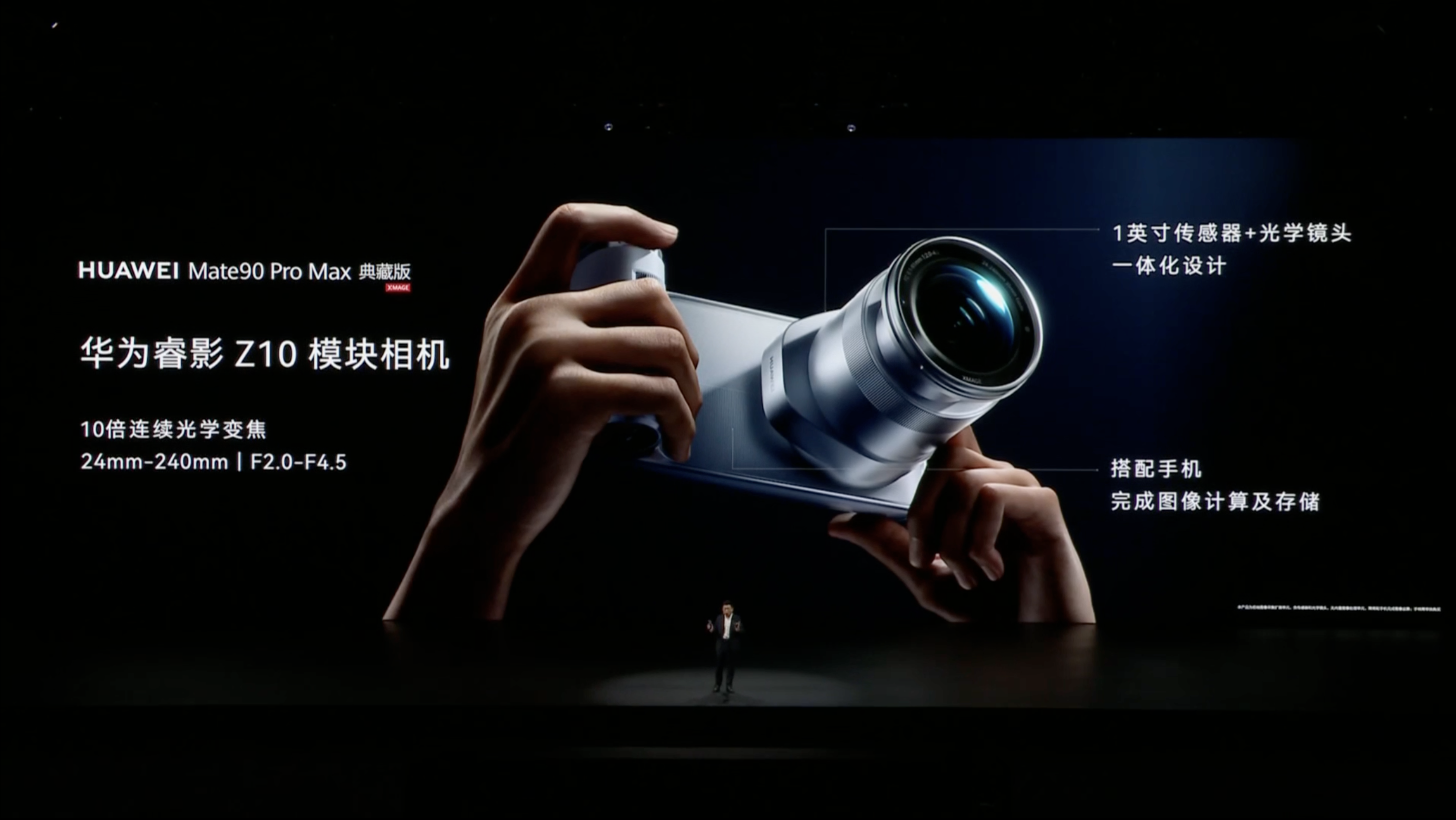
Tech Express | October 1, 2026 — Huawei Mate 90 Series Debuts: The Most Powerful Mate Yet, On Sale Today From 5,999 Yuan
Oct 1 tech: Huawei unveiled four Mate 90 flagships with the Kirin 9050 Pro from 5,999 yuan; the BBC said Moonshot is reviewing after its Kimi models were jailbroken; Kimi K3 entered OpenAI enterprise billing; Nuvacore detailed its WarpCore CPU; Micron said memory prices won't fall even if the AI bubble bursts; the iPhone 18 Pro shrank the Dynamic Island; Tesla updated the Model 3; SpaceX is cleared to launch NASA's Crew-13; McDonald's AI pricing drew scrutiny; BMW cut 20% of management.
1. Huawei Mate 90 Series Debuts: The Most Powerful Mate Yet, On Sale Today from 5,999 Yuan
Source: ifanr
On October 1, Huawei unveiled four flagship phones at its Mate 90 series launch — the Mate 90, Mate 90 Pro, Mate 90 Pro Max and Mate 90 RS Ultimate Design — along with a range of new earbuds and watches. According to ifanr, the number of HarmonyOS 6 and HarmonyOS 7 devices has now surpassed 90 million, with the 100-million mark within reach as recognition of the HarmonyOS ecosystem keeps growing.
On pricing, the Mate 90 starts at 5,999 yuan for the 12+256GB model; the Mate 90 Pro and Pro Max start at 6,999 and 9,499 yuan respectively; and the Mate 90 RS Ultimate Design starts at 12,999 yuan, with a polished titanium frame and lower body in three two-tone finishes. The good news is that the entire Mate 90 lineup goes on sale today with no complicated process.
The hardware highlight is the Kirin 9050 Pro chip in the Mate 90 Pro Max: its 9-core/16-thread Lingxi CPU delivers 23% higher multi-core performance than the previous generation, its Mali GPU renders 40% faster and its NPU is 140% more powerful, with the first 120fps extreme ray tracing. The chip appears only in the 16GB Mate 90 Pro Max, the Collector's Edition and the RS; the Pro uses the updated Kirin 9035 and the standard model the Kirin 9030.
2. Moonshot Reviews After Chinese AI Tools Told Researchers How to Make Bioweapons
Source: BBC
According to the BBC, Chinese artificial intelligence developer Moonshot is conducting an internal review after researchers at other companies persuaded two of its popular Kimi models to explain how to make biological weapons and carry out assassinations. Mindgard, a firm that tests AI system security, told the BBC it found in July that Kimi K2.6 and K3 Swarm could bypass the safety limits set by the developer.
Mindgard founder Peter Garraghan told the BBC that once a jailbreak succeeds, the AI tool can discuss any topic and even freely recommend other equally harmful subjects — "and it will be very creative." Mindgard said it notified Moonshot of the jailbreak by email on July 27 and followed up about a week later, but that Moonshot only contacted it recently, after the BBC had sought comment.
Moonshot told the BBC it welcomes third-party input, calling it "a key pillar for building better and safer AI," and said it is discussing the findings with Mindgard. Professor Alan Woodward of the University of Surrey stressed that open-weight models risk falling into the wrong hands, but also that more attention should be paid to identifying and prosecuting the humans who misuse AI.

3. A First for Chinese Models: Kimi K3 Enters OpenAI's Enterprise Billing System
Source: Mydrivers
According to Mydrivers' Kuai Technology on October 1, US AI infrastructure company Baseten recently announced that enterprise users can now use Kimi K3 in OpenAI's Codex coding tool, with usage fees charged directly against a company's existing OpenAI procurement commitment, without adding a new supplier process. This means Kimi K3 has entered OpenAI's mainstream enterprise billing channel.
It is the first time a Chinese open-source model has entered this enterprise procurement system. Before this, Amazon Bedrock, the large-model platform under Amazon Web Services, announced it would host Kimi K3 — the first time a Chinese large-model company has exported model capabilities to a top global cloud vendor under a revenue-sharing model. In July, Moonshot released Kimi K3, with 2.8 trillion parameters, then the world's largest open-source model.
Citing CCTV Finance, Mydrivers reported that within hours of release Kimi K3 topped the Arena AI coding tool leaderboard, becoming the first Chinese large model to take the top spot. It also completed a proof of concept for using AI to design AI chips: in a 48-hour continuous agent test, it completed the full design flow of a 4-square-millimeter chip containing 1.46 million standard cells. Even Tesla CEO Elon Musk commented: "Impressive."

4. A Veteran Apple Chip Designer's New Startup Rethinks CPU Design
Source: Mydrivers
According to Mydrivers' Kuai Technology on October 1, CPU startup Nuvacore recently disclosed the design philosophy behind its first general-purpose processor core, WarpCore. Nuvacore was co-founded by Gerard Williams III, John Bruno and Ram Srinivasan, all with Apple and Nuvia backgrounds.
Nuvacore proposes a so-called "core-first" development model: rather than fixing the instruction set architecture (ISA) at the start of a project as traditional CPU design does, it first builds the core's base IP and then chooses the ISA according to the final system requirements. The company says decoupling microarchitecture from the instruction set lets engineers focus more freely on performance, power efficiency and die area.
WarpCore's recruiting materials mention three architectures — RISC-V, Arm64 and x86 — meaning the underlying design has considerable flexibility. The final ISA choice also involves legal considerations. No process node, cache hierarchy, pipeline configuration, vector capability or tape-out timeline has been disclosed, but the deliberate decision to keep the ISA open makes it one of the most unusual CPU projects underway.

5. No Way Out for Consumers: Even If the AI Bubble Bursts, Memory Won't Get Cheaper
Source: Mydrivers
According to Mydrivers' Kuai Technology on October 1, even if the AI bubble bursts tomorrow, memory chip prices will not return to where they were: humanoid robots and advanced autonomous driving are becoming the next demand explosion after AI data centers. Micron's CEO said on an earnings call that each humanoid robot will need more than 200GB of DRAM and several terabytes of NAND flash, comparable to Level 4 and above autonomous vehicles.
Morgan Stanley forecasts that humanoid robot shipments will be between 250,000 and 1.2 million units in 2030, reaching 930 million units a year around 2050. At 1.2 million units, humanoid robots alone would need 240 million GB of DRAM, not counting terabyte-scale NAND demand. Micron's CFO also said the first quarter of fiscal 2027 will mark the bottom of full-year gross margin, with margins rising every quarter afterwards.
Micron has accelerated the adoption of 1-gamma products in its mobile and client business, which in the fourth quarter accounted for nearly half of that segment's revenue. For consumers, the only thing to do may be to accept that memory and storage prices will stay high for a long time.

6. iPhone 18 Pro Shrinks the Dynamic Island, One Step Closer to a Full-Screen iPhone
Source: Mydrivers
According to Mydrivers' Kuai Technology on October 1, the iPhone 18 Pro lineup is the first to shrink the Dynamic Island, because Apple embedded part of the Face ID components under the display. The change brings the iPhone one step closer to a true full-screen design.
Face ID must emit and receive infrared light. To let infrared light pass through the screen, Apple engineers redesigned the pixel arrangement so the gaps between pixels are wide enough for infrared to pass. Apple confirmed that the pixel density directly above the under-display Face ID module is halved, while the brightness of those pixels is raised to reduce the visible difference. At certain angles users can see the under-display Face ID components with the naked eye, but the overall impact is small — and the direct benefit is a narrower Dynamic Island.
It is foreseeable that the front camera will also move under the display in future iPhones. Notably, 2027 marks the 20th anniversary of the iPhone, and Apple plans to skip the iPhone 19 and go straight to the iPhone 20 series; the industry speculates the anniversary model could achieve a true full-screen design.

7. Tesla Updates the Model 3: 16-Inch Display and New AC Power Output
Source: Mydrivers
According to Mydrivers' Kuai Technology on October 1, Tesla officially announced this morning a series of configuration upgrades for the current Model 3, while the Model 3 and Model Y lineups gain a practical external power output function.
Tesla said the current Model 3 lineup is upgraded to a 16-inch high-definition touchscreen and can be optioned with a light-grey premium interior paired with a black fabric headliner. In addition, all current Model 3 and Model Y models now offer AC external power output up to 2,200W, enough to run a roughly 600W portable rice cooker, a roughly 1kW electric hot pot and a roughly 600W portable kettle at once. The feature requires a separately purchased Tesla AC power adapter, except on the Model Y L.
Tesla had already launched a limited-time promotion: on September 25, Tesla China announced that for orders placed on or before October 31, 2026, the Model 3 lineup gets a 5,000 yuan cut on the final payment and some Model Y trims 7,000 yuan. Combined with a five-year zero-interest policy, the Model 3 starts at 222,500 yuan and the Model Y at 256,500 yuan.

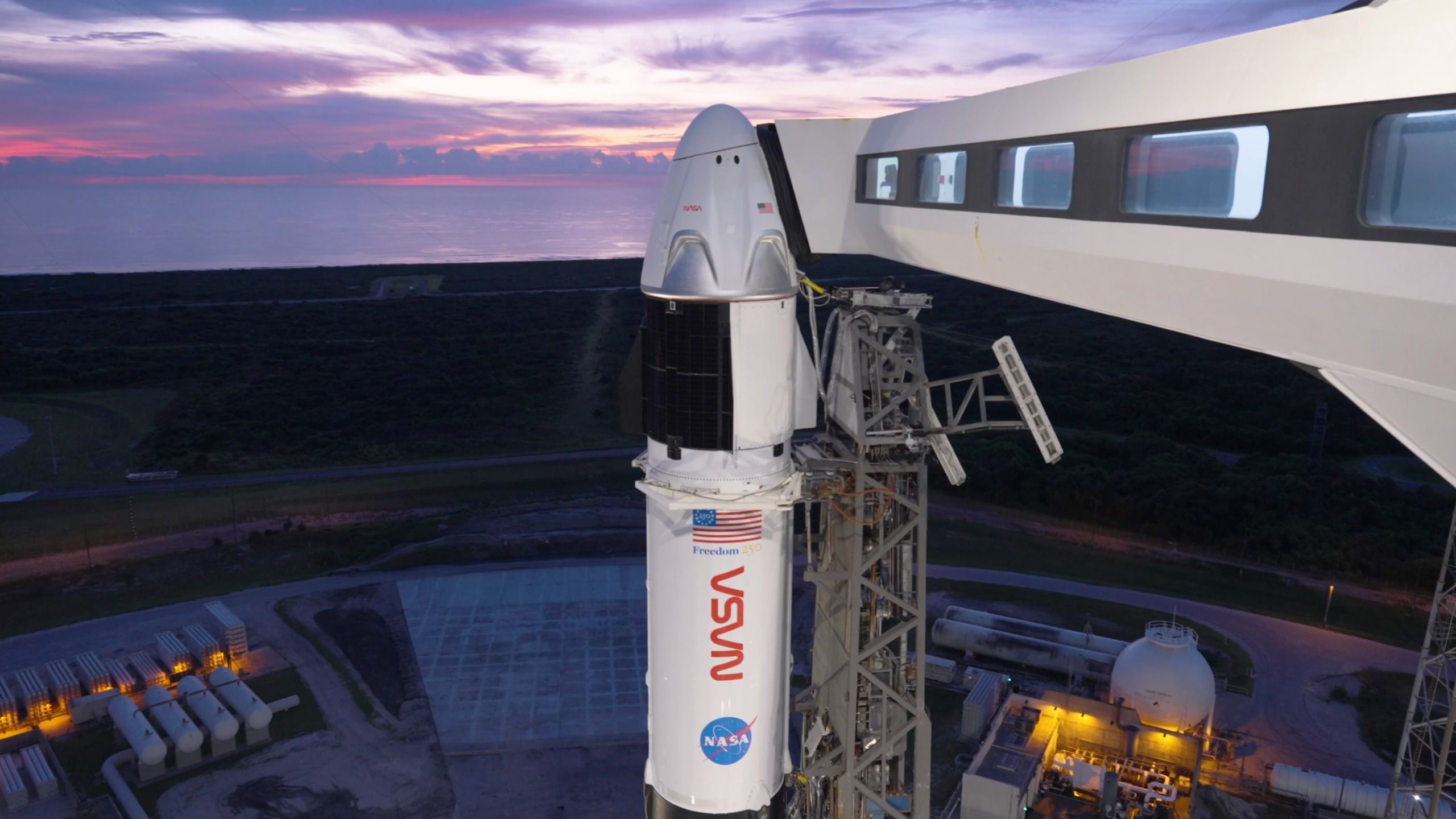
8. SpaceX Cleared to Launch NASA's Crew-13 on Oct. 1, With a Canadian Astronaut Aboard
Source: Space
According to Space, SpaceX and NASA officials feel good about launching four astronauts to the International Space Station on the morning of October 1, provided the weather cooperates. Crew-13 is scheduled to lift off on Thursday, October 1, at 11:10 a.m. EDT (1510 GMT) on a SpaceX Falcon 9 from Launch Complex-40 at Cape Canaveral Space Force Station in Florida, targeting an instantaneous window and docking just under eight hours later.
"Right now, everything is 'go,'" Lori Glaze, associate administrator for NASA's Human Spaceflight Mission Directorate, said at a prelaunch briefing on the evening of September 30. But she added that the weather must also be good: current forecasts predict a 45% chance of a weather violation, meaning a 55% chance of getting the green light.
The mission is led by commander Jessica Watkins, who is poised to become the first NASA astronaut to launch aboard a Crew Dragon for a second time. The other three crewmates are all rookies: NASA's Luke Delaney (pilot), Canadian Space Agency astronaut Joshua Kutryk and cosmonaut Sergey Teteryatnikov. They will live and work aboard the station for roughly six months as part of ISS Expedition 75. If Thursday's launch is scrubbed, a backup opportunity exists on October 2 at 10:47 a.m. EDT.
9. More Absurd Than Imagined: AI Charges You More If It Decides You Can Afford It
Source: Mydrivers
According to Mydrivers' Kuai Technology on October 1, McDonald's is using AI to set differentiated prices for identical food at more than 13,000 US restaurants. The system analyzes millions of transactions along with competitor prices from Wendy's and Burger King to calculate a so-called "optimal price" for each store, so the same item can be priced very differently even at two locations in the same area.
A consumer in Fresno, California, found on the app that a Big Mac was listed at $5.69 at one restaurant while the same burger cost $6.89 at a company-owned store two miles away — a 21% gap. In New York City, a burger priced at $7.17 at one location was listed at $8.05 at another run by the same franchisee, an 11% difference.
Several franchisees said McDonald's keeps pressing them to accept the AI-recommended prices, and that every pricing decision that deviates from the AI's suggestion is recorded in detail by the system. Meanwhile, Walmart is rolling out electronic shelf labels at all 4,600 US stores, aiming to finish by the end of 2026, and has applied for a patent on an AI system that can dynamically adjust prices based on a shopper's purchase history and online browsing behavior.

10. BMW Cuts 20% of Management Jobs in AI-Driven Restructuring
Source: Mydrivers
According to Mydrivers' Kuai Technology on October 1, BMW announced at its Capital Markets Day on Wednesday that it will push a large-scale organizational restructuring centered on artificial intelligence, planning to slim its management structure by 20% by mid-2027. New CEO Milan Nedeljkovic laid out the plan: cut costs, speed up decisions, streamline the organization and rebuild margins.
Earlier this year BMW reached an agreement with its unions to cut thousands of white-collar positions through voluntary departures, mainly in administrative and R&D functions and not affecting production workers. Multiple media reports put the overall job cuts at about 8,000. BMW stressed that AI is not directly replacing all 8,000 employees, but serves a broader flatter-organization strategy: fewer management layers, automated workflows and higher operating efficiency.
Profit pressure is the core driver of the restructuring. BMW expects its 2026 automotive operating margin to land in a range of just 1% to 3%, with the latest disclosed actual figure at 2.3%; it targets a recovery to 3% to 5% by 2028 and a long-term return to 8% to 10% in the early 2030s. The restructuring is expected to deliver annual savings in the "high triple-digit millions of euros" from 2028.

More News
- Global Express | October 1, 2026 — Pakistan Strikes Two Sites in Afghanistan; Kabul Says 9 Women and Children Killed
- Finance Morning | Tech Stocks Lift Japan, Korea and Taiwan Markets as Global Bonds Come Under Pressure
- Maple Express | October 1, 2026 — Trump says Canada is being 'taught a little lesson' as U.S. trade war continues
- Finance Evening | Eli Lilly obesity combo cuts up to 23.3% of weight; Paramount's $111B Warner Bros. deal clears final hurdle
- Maple Express | September 30, 2026 Toronto mayoral candidate Alexander unveils plan to house the unhoused
Comments (0)
View More
 0
0Charmin Ultra Strong Toilet Paper — 12 Family Mega XL Rolls (= 84 Regular Rolls)! $30.61 CAD
 -34%
-34%Ninja Blast Portable Blender — Cordless, 33% Off! $59.99 CAD
 -20%
-20%ACEMAGIC Kron Mini K1 Mini PC (Ryzen 7 7730U / 16GB / 1TB) — Triple 4K Displays! $619.99 CAD (19% Off)
 -41%
-41%SHOKZ OpenDots ONE Open-Ear Clip Earbuds — Just 6.5g a Bud, Dolby Audio! $149.95 CAD (40% Off)
 Maple Express
Maple Express | September 30, 2026 Canadians mark sixth National Day for Truth and Reconciliation
 Maple Express
Maple Express | October 1, 2026 — Trump says Canada is being 'taught a little lesson' as U.S. trade war continues
0Charmin Ultra Strong Toilet Paper — 12 Family Mega XL Rolls (= 84 Regular Rolls)! $30.61 CAD
Amazon
-34%Ninja Blast Portable Blender — Cordless, 33% Off! $59.99 CAD
Amazon
-20%ACEMAGIC Kron Mini K1 Mini PC (Ryzen 7 7730U / 16GB / 1TB) — Triple 4K Displays! $619.99 CAD (19% Off)
Amazon
-41%SHOKZ OpenDots ONE Open-Ear Clip Earbuds — Just 6.5g a Bud, Dolby Audio! $149.95 CAD (40% Off)
Amazon
Maple ExpressMaple Express | September 30, 2026 Canadians mark sixth National Day for Truth and Reconciliation
Maple Express