
Fed Hikes Rates for the First Time in Over Three Years; World Shares Mostly Gain, Turkey Triggers Circuit Breaker
Fed hikes 25bp to 3.75%-4.00%, its first rise in over three years; world shares gain while Wall Street slips and the dollar hits a seven-week high. Turkey's BIST 100 triggers a market-wide circuit breaker after a fund default. China's token demand surges as firms enter 'token selling'; full-cash homebuying rises in Guangzhou and Shenzhen; A-share SOEs disclose 1,239 M&A plans; platform 'monthly pay' traps hit 18% annualized. Foreigners dump Samsung and SK Hynix, risking a Korea AI re-rating.
📊 Today's Asian Markets
| Index | Close | Change | % Change |
|---|---|---|---|
| Shanghai Composite | 3,875.60 | +11.32 | +0.29% |
| Shenzhen Component | 13,409.91 | +121.91 | +0.92% |
| ChiNext | 3,298.31 | -13.16 | -0.40% |
| Hang Seng | 24,604.29 | -62.91 | -0.26% |
| Nikkei 225 | 64,136.25 | +213.25 | +0.33% |
| KOSPI | 6,715.41 | -2.56 | -0.04% |
| Taiwan Weighted | 46,288.00 | +776.50 | +1.71% |
1. Fed hikes rates for the first time in over three years; world shares mostly advance
Source: Yahoo Finance
World shares mostly advanced on Thursday even as Wall Street closed lower after the Federal Reserve's first interest rate hike in three years. The quarter-point increase lifted the Fed's benchmark rate to a target range of 3.75%–4.00%, part of its effort to control U.S. inflation that has remained stubbornly above target.
In Asia, Japan's Nikkei 225 added 0.3% to 64,136.25. South Korea's Kospi edged down less than 0.1% to 6,715.41. Hong Kong's Hang Seng fell 0.4% to 24,604.29, while the Shanghai Composite lost 0.4% to 3,875.60. Australia's S&P/ASX 200 climbed 0.4%, Taiwan's Taiex jumped 1% and India's Sensex edged up 0.1%. On Wednesday, the benchmark S&P 500 fell 0.5%, the Dow Jones Industrial Average dropped 1.2% and the tech-heavy Nasdaq was little changed.
Lorraine Tan, Morningstar's director of equity research for Asia, said the reaction was "pretty much expected since the rate rise was also in line with market expectation," adding that the ongoing Iran war is likely to keep pressure on inflation. After the decision, the two-year U.S. Treasury yield rose to 4.71%, versus about 4.67% late Tuesday, while the 10-year yield stayed near 5.00%. The dollar fell to 155.62 Japanese yen from 156.26 yen, and the euro traded at $1.1474. Brent crude traded 1.2% lower at $104.60 a barrel.
2. Turkey's asset-manager default sparks redemption rush; stock market triggers market-wide circuit breaker
Source: Cailian Press
On Wednesday local time, Turkey's BIST 100 index fell 6%, triggering a market-wide circuit breaker; after the brief halt, its decline widened to more than 7%. The turmoil was set off by a top-ten asset manager facing a payment default, which prompted investors to redeem funds en masse, with selling pressure erupting in the secondary market.
Turkey's official disclosure platform KAP showed that asset manager Pusula Portföy said in a Tuesday notice that some of its investment funds had defaulted on returning share payments, and that it was negotiating with the brokerage handling those fund accounts to resolve liquidity problems. Financial data platform Fintables showed investors withdrew 55 billion lira from investment funds on Wednesday, including 9.6 billion lira from Pusula Portföy funds and 32 billion lira from funds of another manager, Tera Portföy Yönetimi AŞ. Tera Group had been moving to acquire Pusula's related business and said it bears no liability for the defaulted funds because the deal is not yet complete.
Analysts said the turmoil was the result of some funds clustering into illiquid stocks. Turkey's Capital Markets Board said in late August that it would cap funds' single-stock holdings, related-party investment and fund-to-fund investment, and required excess positions to be unwound by year-end. Banu Kivci Tokali, founder of BVeri Consulting, said mounting concerns over fund collateral soundness and liquidity—and deteriorating investor confidence in the fund industry—were key reasons for the intensified selling.
3. Asian currencies weaken as hawkish Fed lifts dollar to a seven-week high
Source: The Edge Malaysia
Emerging Asian currencies declined on Thursday after the Federal Reserve's first rate hike in more than three years and a hawkish tone pushed the U.S. dollar to a seven-week high, while regional stocks pared gains. MSCI's gauge of emerging market currencies fell 0.2%, touching its lowest since Aug. 21 and extending declines to a sixth straight session.
Currencies in Indonesia, South Korea and Malaysia fell the most: the ringgit weakened as much as 0.4% to 4.098 a dollar, its lowest since June 26; the rupiah slid 0.5% to 17,765, a two-week low; and the won dropped to a three-week low of 1,384.40. Inki Cho, a senior financial market strategist at online trading platform Exness, said traders were repricing the rate differential and that "the path of least resistance for EM Asia foreign exchange right now is weaker," describing the moves as "orderly but cautious" rather than panic selling.
Regional stocks were muted, with the MSCI EM Asia equities index still up 0.1% after paring gains as South Korea's Kospi—a major index constituent—erased gains of nearly 1.2% to end flat. Taiwan's main index ended nearly 1% higher, while Malaysian stocks fell 0.3%. Southeast Asia's largest budget carrier, AirAsia Group, tumbled as much as 21.1% to its lowest since Dec. 28, 2022. Attention is now on the Bank of Japan, which is expected to raise rates to a 31-year high on Friday.
4. Token demand surges as many players rush into the "token-selling" business
Source: Sina Finance
Behind AI's rapid integration into every industry lies soaring consumption of tokens. A report released by the China Telecom Research Institute on Sept. 12 showed explosive growth in China's token demand. Data from the National Data Administration show that daily token calls nationwide were just 100 billion in early 2024 but exceeded 500 trillion by June 2026. As a standardized, sellable commodity, tokens have drawn in model vendors, data companies, the three major telecom operators and even urban-investment firms that once focused on city construction, making "token selling" one of the hottest new businesses in the AI supply chain.
The industry generally bills per million tokens. DeepSeek, for example, uses peak/off-peak pricing: its V4-Flash model charges 4.5 yuan per million tokens for output in idle periods, rising to 9 yuan at peak times. Five types of sellers have emerged—model vendors holding pricing power, token factories producing at scale, telecom operators distributing through their channels, urban-investment firms seeking transformation, and aggregation platforms earning a light-asset margin. On Sept. 2, Beijing model maker Zhipu opened a flagship store on the e-commerce platform Tmall, listing paid subscriptions based on its GLM-5.3 model, with personal plans priced at 118, 538, 1,078 and 598 yuan per month.
Token factories are becoming a new way to monetize computing power. The Jingsuan token factory, run by Jingsuan under Beijing Data Group, produces more than 10 billion tokens a day. Beijing No. 1 Token Factory, built by SoftStone Power, has completed testing of more than 600 billion tokens and now runs at about 500 billion tokens a day, with daily output expected to reach 1.4 trillion in the fourth quarter. China Mobile has launched token computing packages; China Telecom's plans start at 9.9 yuan a month for 10 million tokens; and China Unicom has rolled out a "computing subscription package."
5. More homebuyers in Guangzhou and Shenzhen are paying in full
Source: Southern Finance
According to the Guangzhou Real Estate Intermediary Association, the share of second-hand home purchases paid by mortgage in Guangzhou has been declining since June: 45.08% in June, 38.85% in July and 35.6% in August. Shenzhen shows a similar trend: data from the Shenzhen Beike Research Institute show full-cash buyers accounted for 25.3% of second-hand home deals in the first half of 2026, up 6.3 percentage points from a year earlier. Buyers increasingly prefer full payment partly because transactions are concentrated in low-price segments they can fully afford, and partly because they are more rational and, mostly buying for their own use, use less leverage.
Rising low-price transactions are an important backdrop. CRIC statistics show that in the first half of 2026, homes priced below 2 million yuan accounted for about 62% of deals in Guangzhou, up 3.22 percentage points year on year, while units under 90 square meters made up about 51%, with the 70–90 sq m range most active. Leyoujia Research Center data show that in Shenzhen in August, the below-3-million-yuan bracket accounted for 31.1% of deals, up 2.3 percentage points month on month and a new high for the year, with the under-5-million-yuan bracket totaling 64.6%.
Li Yujia, chief researcher at the Guangdong Housing Policy Research Center, said that as prices return to rationality, buyers who have worked in first-tier cities for years can now cover the total price of such homes; once housing returns to its residential attribute and becomes a big-ticket consumer good, paying in full is essentially about repairing household balance sheets. A higher share of full-cash purchases also means lower leverage in the property market.
6. State-controlled listed firms disclose 1,239 M&A plans so far this year
Source: Sina Finance
Central and local state-owned enterprises are stepping up the optimization and structural adjustment of the state-owned economy. On the evening of Sept. 14, GAC Group said it had signed a letter of intent with FAW Co., planning to buy, via share issuance, part of FAW's stake in a vehicle joint venture and to raise matching funds. Preliminary estimates indicate FAW would become GAC's second-largest and strategically influential shareholder. Xu Chi, chief strategist at Zhongtai Securities, said the deal is closer to a horizontal integration within the automaking business and carries clear central-local coordination features.
Tonghuashun iFinD data show that, counting by first-announcement date and excluding failed deals, A-share state-controlled listed companies had disclosed 1,239 M&A plans as of Sept. 16 this year, of which 18 involved major asset acquisitions, disposals or swaps. Xu said a clear change this year is that the industrial logic is stronger, with the capital market playing a more prominent role.
Among examples, Guangxi Energy plans to acquire stakes in Guangxi Guangtou Qiaogong Energy Development Co.; Ningxia Building Materials plans to buy 100% of China National Building Material Graphite, expanding into new materials; and EFORT Intelligent Robot plans to buy 100% of Shanghai Shengpu Fluid Equipment. Zhang Chunxiao, a researcher at the Party School of the CPC Central Committee (National Academy of Governance), said that whereas past restructuring was oriented toward enlarging asset scale, this round is turning toward "function-oriented value reconstruction" with a two-way "advance-and-retreat" approach.
7. Platforms' "monthly pay" traps: users induced into consumer loans, with annualized rates up to 18%
Source: Yicai
Yicai reporters found that many payment platforms offering "monthly pay" features include loan-related wording in their contracts. One food-delivery platform's monthly pay carries an annualized rate of up to 18% and is checked by default on the payment page; a short-video platform's product uses small credits to induce users to authorize credit checks with one click; and an online travel platform's "stay now, pay later" product is likewise run by a small-loan company. On the Black Cat complaint platform, complaints related to these platforms exceed 100,000, the reporters found.
Ordering food, shopping and booking tickets with coupons have become hotspots for users unknowingly opening consumer credit. Reporters found that platforms front-load credit options such as "pay first," "Baitiao" and "monthly pay," using discounts to lure clicks; many consumers mistake them for ordinary checkout payments and, clicking quickly and ignoring the fine print, open consumer loans without realizing it. With "buy now, pay later" now spanning shopping, hotels and flights, any overdue payment directly affects personal credit records, and many users report unknowingly opened loans, default-checked boxes on flight bookings, refund fees, duplicate charges and collection-interest disputes.
8. Hawkish Fed hike lands; Hong Kong stocks may stay sluggish
Source: 21st Century Business Herald
The Fed's rate hike landed in the early hours of Sept. 17, and Hong Kong stocks kept falling that morning, with the Hang Seng Index down 0.73% at midday to 24,533 points on turnover of HK$99.1 billion. Analysts said that although the hike was "priced in," the Fed's post-meeting tone focused on "fighting inflation" and leaned hawkish, the main reason risk assets such as Hong Kong stocks remained under pressure, with the negatives still needing time to be digested.
The Fed's September decision showed the FOMC voted 12-0 to raise rates by 25 basis points, lifting the target range to 3.75%–4.00%—its first hike since 2023 and the first under Chairman Kevin Warsh. CICC said the Fed's overall tone was more hawkish than expected, with the dot plot suggesting one more hike this year.
Li Qian, an investment adviser at Guangzhou Yuesheng Wealth Management, said that as an offshore market, Hong Kong is highly sensitive to the U.S. risk-free rate; rising Treasury yields lift the discount rate and pressure high-valuation growth stocks such as tech, while the Hong Kong Monetary Authority's rate-following pushes up Hong Kong dollar funding costs and gives international funds an incentive to return to the U.S. Yu Fenghui, an adviser at the Hong Kong 100 Research Center, said digesting the negatives requires a stable expectation for the future rate path, and until that path is clear, Hong Kong's index is unlikely to see a trend-level opportunity.
9. Tokyo stocks rebound on Sept. 16 as the Nikkei 225 snaps a three-day slide
Source: Xinhua Finance
Xinhua Finance, Tokyo, Sept. 16 — Tokyo's two main stock indices rebounded on the 16th. The Nikkei 225 Stock Average rose 0.69% and the TOPIX gained 0.61%. After falling more than 1,700 points over three straight sessions, the market began to see value in lower valuations and buying emerged; some high-priced semiconductor-related shares drew bids, lifting the broad market, while a pause in long-term rate gains was also read as positive.
Still, pressure from a U.S. stock decline on the 15th kept the index oscillating near the previous close during the session, and caution remained ahead of the Fed's decision. At the close, the Nikkei gained 438.90 points to 63,923.00, and the TOPIX rose 24.56 points to 4,061.72. By sector, most of the Tokyo Stock Exchange's 33 industry groups rose, with oil & coal products, mining and textiles leading gains, while pharmaceuticals, information & communications and air transport lagged.
10. Foreign investors dump Samsung and SK Hynix; Korea's AI shares face a re-rating
Source: 21st Century Business Herald
Korea Exchange data show that from Sept. 4 to 11, foreign investors sold about 4 trillion won (roughly US$3 billion) of Samsung Electronics and SK Hynix shares and shifted some funds into finance, energy and autos. Net selling of just these two stocks reached 3.9199 trillion won, while foreigners net-bought about 680 billion won of other KOSPI companies over the same period. Foreigners have been large net sellers of Korean stocks since May, concentrating on tech.
The sustained selling has weighed on the KOSPI, which fell 2.78% in the week to Sept. 16; the index is now down 26% from its high, and Korean turnover has fallen to its lowest this year as investor enthusiasm fades. Ying Xiwen, head of research at Minsheng Bank International, attributed the selling to two factors: strong gains in semiconductors this year that built up profits, with rising worries about slowing AI capital spending by global tech firms; and foreign institutions' need to rebalance portfolios by cutting concentrated tech exposure.
Tan Ya, deputy director of the BRICS Research Center at the University of International Business and Economics, said Middle East tensions, higher oil prices and shifting U.S. rate and currency expectations are prompting foreigners to more cautiously assess chipmakers' future profits and turn to financial firms' shareholder returns, energy firms' improving earnings and autos' relative value. Li Huihui, a professor of management practice at emlyon business school, said the bigger worry is the Fed's signal of continued tightening, as higher dollar funding costs compress valuations and a weaker won erodes foreign returns.
More News
- Global Express | September 17, 2026: Yemen Fighting Escalates as U.S. Backs Government
- Tech Express | September 17, 2026 — ByteDance Posts $120B First-Half Revenue, Up 30%
- Sports Express | Sep 17, 2026 Hellebuyck Suspended by Jets After Failing to Report to Camp
- Maple Express | September 17, 2026 — Trump says Canada becoming an EU ‘associate member’ could be a ‘hostile act’
- Finance Evening: Fed Hikes Rates for the First Time Since 2023, Trump Demands 1% or Lower
Comments (0)
View More
 -35%
-35%Hot Wheels RC Ford Mustang GTD — 1:64 Scale with Turbo Booster! $19.52 CAD (35% Off)
 -32%
-32%HP 15.6" FHD Laptop (Intel N100, 128GB) — Everyday Browsing, Study & Work, 1-Year Microsoft 365 Included! $299 CAD (32% Off)
 -33%
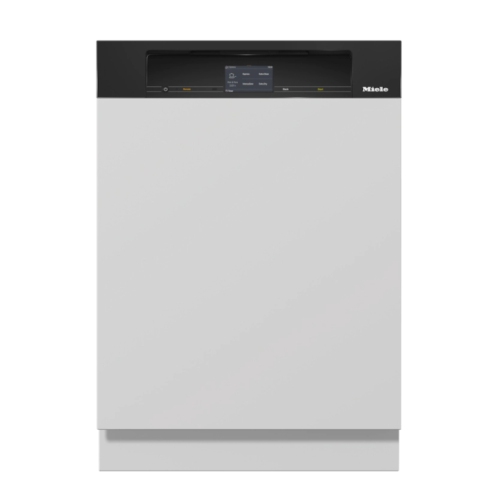
-33%Miele G 7916 SCi Semi-Built-In Dishwasher with AutoDos — Automatic Dispensing & M Touch Display! $3,300 CAD (33% Off)
 -44%
-44%Pzloz Dual-Head LED Desk Lamp — 25 Light Modes & Wireless Remote! $66.48 CAD (43% Off)
Finance MorningFed Hikes Rates for the First Time in Over Three Years; World Shares Mostly Gain, Turkey Triggers Circuit Breaker
 Maple Express
Maple Express Evening | September 16, 2026 - Worker Killed in Brampton Road Work Collision
-35%Hot Wheels RC Ford Mustang GTD — 1:64 Scale with Turbo Booster! $19.52 CAD (35% Off)
Amazon
-32%HP 15.6" FHD Laptop (Intel N100, 128GB) — Everyday Browsing, Study & Work, 1-Year Microsoft 365 Included! $299 CAD (32% Off)
Amazon
-33%Miele G 7916 SCi Semi-Built-In Dishwasher with AutoDos — Automatic Dispensing & M Touch Display! $3,300 CAD (33% Off)
Best Buy
-44%Pzloz Dual-Head LED Desk Lamp — 25 Light Modes & Wireless Remote! $66.48 CAD (43% Off)
Amazon
Finance MorningFed Hikes Rates for the First Time in Over Three Years; World Shares Mostly Gain, Turkey Triggers Circuit Breaker
Maple Express