
Finance Evening (Oct 8): AI Stocks Slide, Canada-U.S. Trade Uncertainty Draws Business Warning
Oct 8 Finance Evening: OpenAI's ~$50B revenue came in below reports, dragging Nvidia, Oracle and CoreWeave lower; Starbucks explored a Chipotle takeover. In Canada, business groups warned trade uncertainty could be irreversible; investor and philanthropist Stephen Jarislowsky died at 101; the Bank of Canada flagged demographic shifts. Treasury yields retreated from multiyear highs, and the NY Fed said tariffs fully drove price gains on many goods. Oil jumped over 5% on Middle East tensions.
Finance Evening (October 8)
📊 Today's North American Markets
| Index | Close | Change | % Change |
|---|---|---|---|
| S&P 500 | 7765.36 | -36.41 | -0.47% |
| Nasdaq | 27193.34 | -345.35 | -1.25% |
| Dow Jones | 51231.64 | +51.77 | +0.10% |
| Toronto TSX | 35145.38 | +103.52 | +0.30% |
| CAD/USD | 1.4224 | -0.0031 | -0.22% |
| WTI Crude | 91.18 | -0.31 | -0.34% |
| Gold | 4158.3 | +1.3 | +0.03% |
1. AI Stocks Sink as OpenAI Revenue Figure Comes In Below Estimates
Source: CNBC
Shares of Nvidia, Oracle, CoreWeave and other artificial intelligence names fell on Thursday after the market learned more details about OpenAI's revenue. OpenAI told investors it hit roughly $50 billion in annualized revenue at the end of September, lower than the $68 billion figure that was widely reported late last month.
A person familiar with the matter said the $68 billion figure included gross revenue from OpenAI's partners. Alongside the $50 billion figure, OpenAI touted 77% total run-rate growth in its third quarter and 107% run-rate growth for its enterprise business.
Nvidia fell 3%, Oracle fell nearly 6% and CoreWeave slipped nearly 8%. AMD and Broadcom each fell 4%, Intel dropped 5% and Super Micro Computer fell nearly 5%.
2. Starbucks Reportedly Exploring a Chipotle Takeover
Source: The Guardian
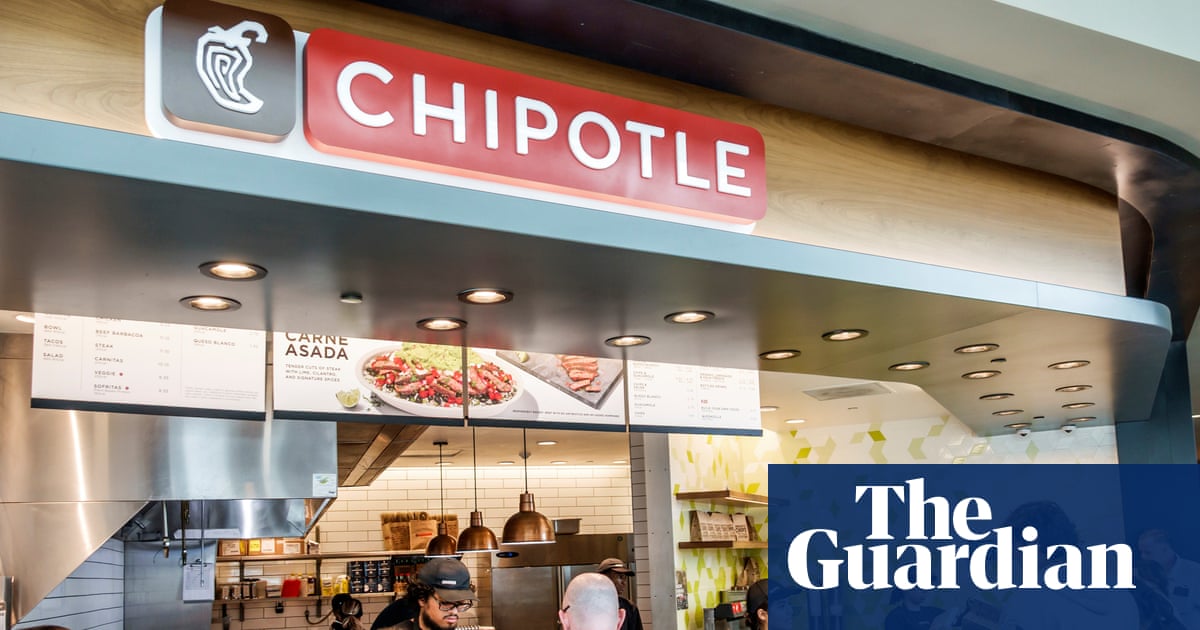
Starbucks has explored a takeover of Chipotle Mexican Grill, the Financial Times reported on Thursday, in a move that would reunite chief executive Brian Niccol with the burrito chain he led before joining the coffee giant two years ago.
Starbucks has worked with advisers in recent months on a takeover proposal for Chipotle, the FT reported. Shares of Chipotle, which has a market capitalization of nearly $39bn, rose about 6% on Thursday, while Starbucks fell about 3%; Starbucks is worth about $107bn.
Analysts said any acquisition would probably be a costly undertaking for Starbucks, which is still investing heavily in its turnaround efforts and may need heavy borrowing or share issuance.
3. Chrysler Building Sold, Its Crown to Be Restored
Source: BBC
The Chrysler Building, one of the most distinctive high-rises in Manhattan's skyline, will undergo a major renovation as part of a multi-million-dollar sale deal. The skyscraper will see its Art Deco crown polished and restored, along with the restoration of its 77-storey facade.
Developer Tishman Speyer has taken over the lease from Cooper Union, a private college, and will invest $235m with its partners, including an upgrade of the 61st floor, home to huge eagle gargoyles, and an "upscale" lounge. The building sits close to Grand Central and most of it will be used for office space.
Cooper Union has owned the land since 1902. Tishman Speyer will make ground lease payments to the college, which wants to use them to finance a plan to restore full-tuition scholarships for all undergraduates.

4. Business Groups Warn of Irreversible Consequences if Trade Deal Stays in Limbo
Source: Financial Post
Industry groups urged Canadian and U.S. officials to return to the negotiating table on trade, warning a House of Commons committee that prolonged uncertainty may have irreversible consequences for economic growth.
Flavio Volpe, president of the Automotive Parts Manufacturers' Association, said the Canada-U.S. economic relationship "is not simply trade across a border" — in many sectors "it's a production system built across that border." Goldy Hyder, president and CEO of the Business Council of Canada, said business leaders have hesitated to deploy capital and move forward with large projects because of the lack of certainty.
The Wednesday meeting was the first committee-level discussion on Canada-U.S. bilateral trade relations after talks fell apart at the eleventh hour in late August, which led to the implementation of Section 338 tariffs by the United States. Prime Minister Mark Carney said at the time that U.S. demands "revealed the limits of their commitment to a true economic partnership."
5. Canadian Investor and Philanthropist Stephen Jarislowsky Dies at 101
Source: CBC
Canadian investment manager, corporate-governance advocate and philanthropist Stephen Jarislowsky has died at 101. Born in Germany in 1925, he founded Jarislowsky Fraser & Co. from scratch in 1955 with $100 of his own money and $50 from a partner, building the Montreal firm into what was at one point Canada's largest pension fund manager.
He led the firm for more than six decades, stepping down in 2012 when it managed about $40 billion in assets. Scotiabank bought the firm in 2018 for $950 million. Forbes put his personal wealth at some $3.9 billion US, a pool he used to donate millions to Canadian universities and establish dozens of research chairs; he received honorary degrees from 20 universities and the Order of Canada.
In recent years he gave $10 million to establish chairs at five Canadian universities focused on training future government leaders. He said Russia's invasion of Ukraine and other shifts toward totalitarianism raised parallels to the political threats he saw in childhood: "People need to understand historical experiences in order to prevent repeating them."

6. Bank of Canada: Demographic Change Is Reshaping the Canadian Economy
Source: Bank of Canada
Demographic change is reshaping the Canadian economy, the Bank of Canada wrote this week: an older population and fewer immigrants are shrinking the workforce and shifting what people consume.
For more than 150 years Canada's population grew every year, but in 2025 growth slowed to just 0.5% — the slowest in more than a century. The birth rate has been below replacement level for more than 50 years, with immigration sustaining growth; in 2024 the federal government began reducing immigration levels, and many temporary residents are leaving.
The Bank said less immigration will reduce housing demand and could ease housing costs, but will also mean fewer workers and weaker demand for other goods and services, so the economy won't grow as fast. An aging population means a smaller workforce, and labour shortages could push up wages and feed into prices. The Bank said it cannot change demographic trends, but must understand how such structural changes affect the economy and inflation to keep inflation at its 2% target.
7. Treasury Yields Retreat From Multiyear Highs After Solid 30-Year Auction
Source: CNBC
The 10-year Treasury yield fell on Thursday as traders digested comments from a top Federal Reserve official and another long-dated bond auction. The benchmark yield was down more than 4 basis points at 5.229% after reaching its highest since 2002 this week; the 30-year yield dropped more than 5 basis points to 5.602% after trading around a 24-year high recently.
Fed Governor Christopher Waller said on Thursday that more hikes are needed to bring inflation down after roughly five-and-a-half years above the central bank's 2% target, but suggested rates did not need to rise immediately. His comments initially sent yields higher; rates then gave back those advances after President Donald Trump said the U.S. won't attack Iran until after the November midterm election, and after a solid auction.
The Treasury sold $22 billion in 30-year paper, with indirect bidders — which include central banks — taking 72.3%, above a 10-auction average of 68%. It was the final auction of the week.

8. Inflation on Many Everyday Items Was Entirely Due to Tariffs, NY Fed Says
Source: CNBC
The cost of many everyday items would have declined last year and early this year without President Donald Trump's tariffs, according to the New York Federal Reserve. The cost of 67 categories of goods was 2.9 percentage points higher as of February thanks to tariffs; without the levies, prices for the products studied would have pulled back by almost 1%.
For each percentage point increase in the average tariff, the team said consumer goods prices were higher by roughly a quarter of a percent a year later. Annual price growth in the tracked goods peaked at the start of 2026, but consumers are still expected to pay elevated prices into 2027. Roughly two-thirds of the tariff-related price impact came directly from the levies themselves, with the rest driven by knock-on effects.
White House spokeswoman Taylor Rogers said the administration has consistently maintained that the cost of tariffs will ultimately be borne by foreign exporters who rely on access to the American economy. The study said around 26% of last year's tariff increases ended up trickling into higher prices.

9. Middle East Tensions Send Oil Up More Than 5% in Early Trading
Source: Sina Finance
Spurred by heightened geopolitical tensions in the Middle East, international crude futures rose sharply in the morning of October 8, with both New York light crude and London Brent climbing more than 5% at one point.
Data showed November-delivery NYMEX light crude peaked at $92.84 a barrel, up $4.56, or 5.17%, from the prior close, while December-delivery Brent peaked at $105.48 a barrel, up 5.27%.
Britain's UK Maritime Trade Operations reported on the 7th that a tanker had been hit by multiple projectiles near Qatar, with casualties. Data from research firm KPLER showed only seven tankers passed through the Strait of Hormuz on the 6th — less than half the previous seven-day average and the lowest since July 23. A hurricane in the U.S. Gulf of Mexico also prompted some oil companies to cut output, supporting prices.
10. AI Boom Sends San Francisco Rents Through the Roof: 'Nowhere Left for People to Go'
Source: The Guardian
The AI industry's high salaries and wealth effects are pushing San Francisco rents even higher. The average one-bedroom in the city now costs $4,400 a month, up more than 25% from last year and nearly three times the national average; a two-bedroom runs about $6,000, and a centrally located four-bedroom for a family easily tops $10,000.
Roughly two-thirds of residents rent, and rent control covers more than 160,000 of the city's more than 250,000 units, but some landlords are exploiting loopholes to raise rents. According to the city's rent board, eviction notices are up 44%, and a rental assistance hotline averages 200 calls a week.
Maria Zamudio, executive director of a tenants' rights group, said her clinic is "completely at capacity." The steep prices mean even people with six-figure salaries struggle to find housing, and for the most vulnerable it is increasingly hard just to survive.

More News
- Maple Express | October 8, 2026 — Chow Pledges 10,000 Rental Homes Would Break Ground in 2027 if Re-elected
- Maple Express | October 08, 2026 — Two house explosions in Hamilton send three to hospital, one critically injured
- Global Express | October 8, 2026 — Houthis Claim Missile Strike on Riyadh Airport as Explosions Heard in Saudi Capital
- Finance Morning Brief: US Stocks Fall on Rate-Hike Bets; A-Shares Slip After Holiday as Bank Shares Hit Records
- Tech Express | October 8, 2026 - Microsoft Unveils Surface Laptop Ultra, the First Laptop With Nvidia's RTX Spark Chip
Comments (0)
View More
 -63%
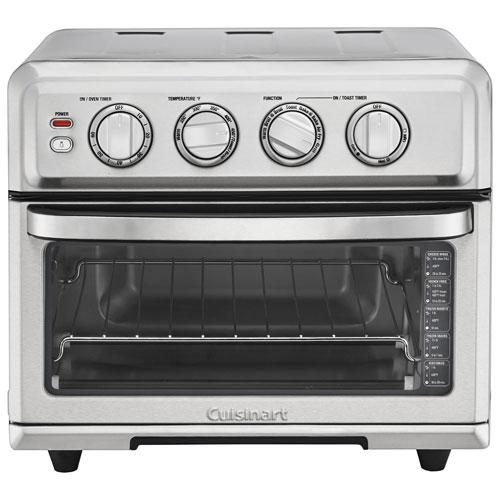
-63%Cuisinart AirFryer Toaster Oven 17L — 8-in-1 Cooking, Air-Fries Up to 3 lb! $189.99 CAD (62% Off)
 -48%
-48%Samsung 9100 PRO 2TB PCIe 5.0 NVMe SSD — 14,700MB/s Gen5 Flagship at Half Price! $489.99 CAD (47% Off)
 -15%
-15%Rust-Oleum High Heat Spray Paint (Matte Black, 340g) — Refresh Your BBQ & Wood Stove! $15.30 CAD (15% Off)
 -37%
-37%2000 Flushes Chlorine Automatic Toilet Bowl Cleaner — Cleans With Every Flush, ~4 Months! $5.91 CAD (36% Off)
 Sports Express
Sports Express | October 8, 2026 — Rays Sweep Yankees to Reach First ALCS Since 2020
 Global Express
Global Express | October 8, 2026 — Houthis Claim Missile Strike on Riyadh Airport as Explosions Heard in Saudi Capital
-63%Cuisinart AirFryer Toaster Oven 17L — 8-in-1 Cooking, Air-Fries Up to 3 lb! $189.99 CAD (62% Off)
Best Buy
-48%Samsung 9100 PRO 2TB PCIe 5.0 NVMe SSD — 14,700MB/s Gen5 Flagship at Half Price! $489.99 CAD (47% Off)
Amazon
-15%Rust-Oleum High Heat Spray Paint (Matte Black, 340g) — Refresh Your BBQ & Wood Stove! $15.30 CAD (15% Off)
Amazon
-37%2000 Flushes Chlorine Automatic Toilet Bowl Cleaner — Cleans With Every Flush, ~4 Months! $5.91 CAD (36% Off)
Amazon
Sports ExpressSports Express | October 8, 2026 — Rays Sweep Yankees to Reach First ALCS Since 2020
Global Express