Global Express | October 12, 2026 — Saudi Arabia's Riyadh Airport Shut After Days of Attacks; Trump Weighs Strikes on Yemen's Houthis
Top global news for October 12: Riyadh airport stays shut after days of Houthi attacks as Trump weighs strikes on Yemen; fighting escalates in Taiz and Brent tops $105. North Korea fires ballistic missiles. Poland arrests a man over a plot to kill PM Tusk. China's central bank buys gold for a 23rd month. At least 139 migrants die off Djibouti; floods hit Nepal. Microsoft says AI is less regulated than milk. China's Foreign Ministry holds its briefing.
1. Riyadh Airport Shut After Days of Attacks; Trump Weighs Strikes on Yemen's Houthis
Source: CBS News
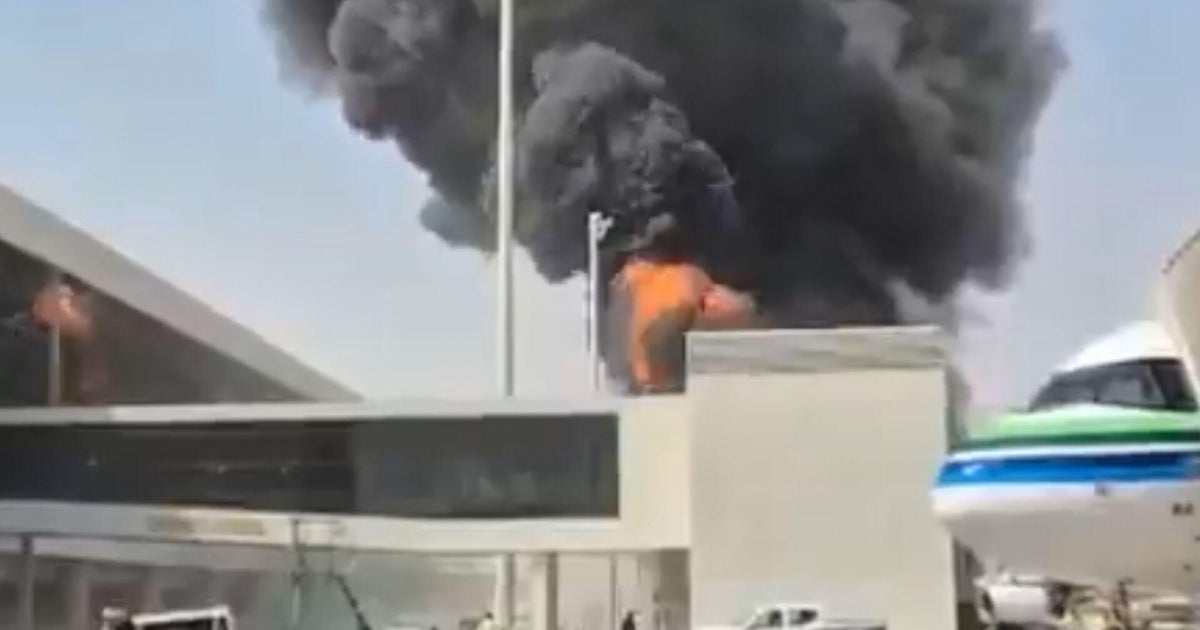
Saudi Arabia's main airports remained closed on Monday, October 12, after a week in which Houthi fighters repeatedly targeted Saudi aviation facilities with missiles and drones, killing at least 20 people at the kingdom's airports. According to the Saudi-led coalition, a projectile struck the terminal at Riyadh's King Khalid International Airport on Sunday, killing a Pakistani national and wounding 11 others. The airport, hit four times in five days, has been closed since Saturday's missile attack, which also wounded more than 300 people; US officials confirmed that one of Saturday's victims was an American. The US embassy in Saudi Arabia on Monday urged American citizens to exercise "extreme caution" when using all major airports in the country.
Meanwhile, fighting escalated in the southwestern Yemeni city of Taiz. Citing military sources from both sides, AFP reported that the Houthis have blocked all exits from the city, and that more than 60 people were killed in the past 24 hours, including at least 22 pro-government forces and 40 Houthi fighters, with Houthi sources saying reinforcements were being sent to the area. On Sunday, health officials warned of a "humanitarian catastrophe" in Taiz, with medicine, medical equipment and fuel "on the verge of running out." Early Monday, airstrikes targeted two districts in Houthi-held Sanaa; the rebels accused Saudi Arabia of launching the attacks, and the Houthi-run health ministry said one person was killed and 12 wounded.
The conflict is also pushing oil prices higher. Early Monday, Brent crude, the international benchmark, topped $105 a barrel, a two-week high. US President Donald Trump said Friday that he had struck a deal to buy diesel during a phone call with Russian President Vladimir Putin, aiming to tamp down fuel prices ahead of the November 3 midterm elections, but six US senators on Sunday called on the administration to "immediately reverse course." Asked on Saturday whether the US might join Saudi Arabia's battle against the Houthis, Trump said, "We may. We're gonna look at it." Asked whether that would change his decision not to strike Iran before the midterms, he replied, "We're gonna take a look." Iranian Foreign Minister Abbas Araghchi said Monday that Tehran was still reviewing the US response to a ceasefire proposal Iran put forward last month, and that message exchanges via mediators were continuing.
2. North Korea Fires Multiple Ballistic Missiles Towards the Sea
Source: Al Jazeera
North Korea fired multiple ballistic missiles towards the sea off its east coast on Monday, October 12, South Korea's military said, heightening tensions on the Korean Peninsula. South Korea's Joint Chiefs of Staff (JCS) said one missile launched from the Pyongyang area flew more than 900km, though it did not specify how many missiles were detected. Japan's deputy defence minister said at least two missiles were launched 17 minutes apart and landed in waters outside Japan's exclusive economic zone; the first flew about 220km and the second more than 910km, following an "irregular" flight path that suggested it may have been a hypersonic weapon. South Korea's presidential office said Pyongyang's repeated launches violate UN Security Council resolutions and urged an immediate stop.
A JCS spokesperson said the launch appeared to be a show of force, days after South Korea tested its own hypersonic weapon. On Thursday, South Korean President Lee Jae Myung oversaw the country's first test-firing of a hypersonic missile. On October 3, North Korea also tested a hypersonic intermediate-range missile designed to evade missile defences in South Korea and Japan. Last week, Seoul demanded an apology after a landmine blast wounded three soldiers in the Demilitarized Zone; a joint South Korean-UN investigation concluded that two landmines were planted by North Korean forces about a year ago, which Pyongyang dismissed while accusing Seoul of provocation.

3. Spain's King to Make First Visit to Ceuta and Melilla, Reviving Morocco Sovereignty Dispute
Source: Al Jazeera
Spain's King Felipe VI and Queen Letizia are due to visit Ceuta on October 13 and Melilla the following day, Felipe's first visit to either city as king since he ascended the throne in 2014. The trip brings Spain's long-running territorial dispute with Morocco back into focus, coming after a major migration crisis at the Ceuta border in July. Spain considers Ceuta and Melilla part of its territory, while Morocco regards both cities and several smaller Spanish-held territories in North Africa as its own.
Why does the same city have two names? In Spain it is Ceuta; in Arabic it is Sabta, commonly written as Sebta in Latin script. The city's history is far older than either modern Spain or Morocco. On August 21, 1415, Portuguese forces led by King John I captured Ceuta, ending more than seven centuries of Muslim rule there. Ceuta then remained Portuguese for more than two centuries; from 1580 to 1640 Portugal and Spain shared a monarchy, and when Portugal restored its independence in 1640, Ceuta stayed under the Spanish monarchy. The 1668 Treaty of Lisbon, which formally recognised Portuguese independence, left Ceuta in Spanish hands — the origin of Spanish sovereignty over the city.
Morocco's argument is rooted in history and geography: Ceuta lies on the North African coast, surrounded by Morocco on its landward side, and Morocco has claimed both cities since gaining independence in 1956, regarding them as occupied Moroccan territories. Under Spanish law, Ceuta is an autonomous city whose Statute of Autonomy describes it as an integral part of the Spanish nation. Although part of Spain, Ceuta is not included in the European Union customs territory, and its border with Morocco is an external border of the Schengen area, making it a focal point for migration and border policy. Reuters reported that more than 72,000 migrants entered Ceuta from Morocco on July 30 this year.

4. Poland Arrests Man Over Plot to Kill PM Donald Tusk
Source: DW
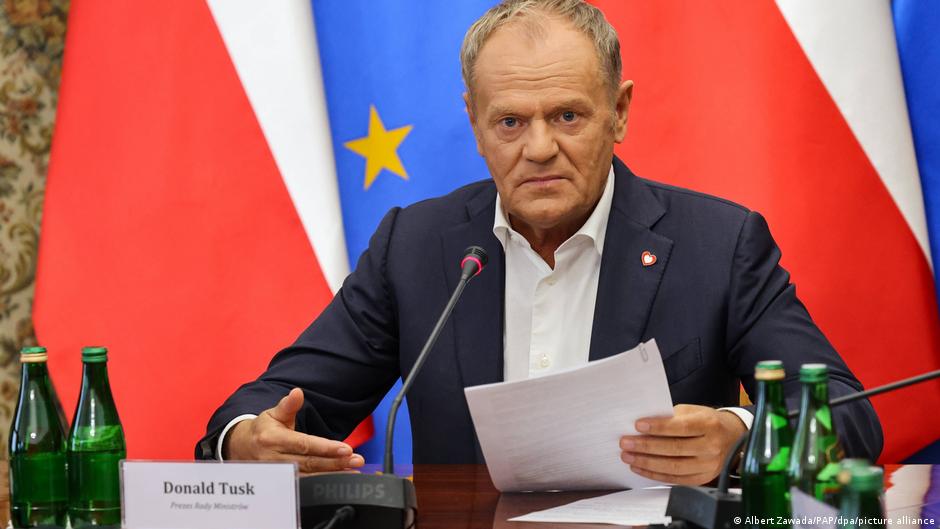
Poland on Sunday, October 11, detained a man accused of plotting to assassinate Prime Minister Donald Tusk and the country's defence minister, the PM wrote on X. Tusk confirmed the arrest, praising the police for their "swift and decisive action." The interior minister also confirmed the arrest; no details about the man's identity were made public. Tusk's post followed an emergency meeting by Poland's security services over what officials said was a potential attack against both the prime minister and Defence Minister Wladyslaw Kosiniak-Kamysz. An interior ministry spokesperson said on X that the meeting was convened at short notice after police received a tip-off about a possible assassination attempt.
Poland is reeling from a wave of school violence this week. Three knife attacks in four days: on Wednesday a 19-year-old student at a vocational school in the central Mazovian province injured nine people; the next day a 15-year-old killed a school caretaker and injured two others at his former school in Leszczydol-Nowiny, with Tusk saying the suspect had worn a helmet-mounted camera to film the attack; and on Saturday a 21-year-old woman attacked an adult education school in Warsaw, wounding three other women. Polish police have detained 117 people across the country for carrying knives or dangerous weapons, or for threatening to attack schools or students, and checked 64,000 schools.
Police said Friday that cybercrime investigators had found no evidence that a social media challenge was fueling the wave of youth violence, or that the attacks were coordinated. On Sunday, Tusk said the attacks were "spontaneous actions" fueled by a rising "glorification of violence" online. He blamed "nihilistic violence" rather than a specific political ideology, but acknowledged that "some of the people detained are active in the ultraright environment," noting a rise in online searches for Nazi or far-right content and for "mass killers who have become idols online." He said police checks would continue at schools across the country next week.
5. China Imports a Record Amount of Gold as the PBOC Buys for a 23rd Straight Month
Source: CNBC
China's central bank has bought gold for 23 straight months, and the country is importing more of the precious metal than ever. According to State Administration of Foreign Exchange data, the People's Bank of China added about 23 tonnes in September, its biggest monthly purchase in almost three years, extending the longest purchasing streak since at least 2015. Customs data show the country spent a record $158.8 billion importing more than 1,000 tonnes in the first eight months of 2026, exceeding the $96.5 billion and 886 tonnes imported in all of 2025. Aakash Doshi, head of gold strategy at State Street Investment Management, said Chinese consumer gold imports hit a record in the first eight months of the year.
The buying spree reflects Beijing's push to cut its dependence on the dollar, and Chinese households' lack of safe alternatives in a struggling economy. According to Carsten Menke of Julius Baer, the PBOC's main motive is political, pointing to "the weaponization of the U.S. dollar and the related desire to be less dependent on U.S. Treasuries as a reserve asset." Western governments froze Russia's central bank assets after its 2022 invasion of Ukraine, underscoring how foreign-held reserves can be restricted at times of geopolitical friction, while gold in a country's own vaults remains insulated. US Treasury data show China's Treasury holdings fell to an 18-year low of $618 billion in July.
Chinese demand is also fueled by gold's reputation as a safe haven, with consumers nervous about the shaky economy loading up on jewellery, bars and coins. Domestic investors have few alternatives: the property market, once the main store of household wealth, is in a multiyear slump; the CSI 300 index is down around 8% this year (versus a 13% gain for the S&P 500); and bank deposit and bond returns have declined, with China's one-year government bond yield falling to about 1.2% against about 4.46% in the US. Gold prices fell more than 8% in September to about $4,176 an ounce, after hitting a record above $5,500 in January. Ole Hansen of Saxo Bank said the opportunity cost of holding gold is much lower in China than in many Western markets, while Ewa Manthey of ING Bank said Chinese buying has become an important source of structural support for gold prices.

6. Trump's Push to Lower Gas Prices Ahead of the Midterms Is Not Going Great
Source: Business Insider
President Donald Trump is running into the limits of his influence as he seeks to bring down sky-high gas prices ahead of the midterm elections. In social media posts and stump speeches, Trump has sought to assure voters that gas prices — a major sticking point in an affordability crisis — will soon go down. At the White House on Friday, he recalled seeing gas prices below $2 a gallon in Iowa before the US and Israel launched surprise strikes on Iran in February, saying, "We'll be down to those levels soon." Yet as of Sunday, AAA reported the average price of regular gas in the US was $4.36 per gallon, versus $3.09 at this time last year; diesel prices also skyrocketed, reaching $6.28 per gallon earlier this month.
Early Monday, Brent crude was trading about 2% lower at around $103 a barrel, still more than 40% above its level at the start of the Iran war. The bigger concern is diesel, where prices have remained elevated despite crude's recent pullback. Refinery bottlenecks and attacks on energy infrastructure in the Middle East and Russia have squeezed supplies of the fuel, which powers trucks, trains, ships and farm equipment, raising transportation costs economy-wide and keeping inflation under pressure even if crude prices stabilize.
Persistently high diesel prices also pose a political challenge ahead of the midterms. Trump suspended fuel export sanctions on Russia this week to bring more diesel to the market and lower prices, prompting a wrinkled eyebrow from allies and enemies alike; hours later, Ukraine struck a Russian oil depot. On Sunday morning, Trump tried again to calm oil markets, announcing an "ENERGY CEASEFIRE" between Russia and Ukraine on Truth Social, but Ukrainian President Volodymyr Zelenskyy said on X that while he supports such a ceasefire, the deal was news to him, adding that a Russian drone struck a power plant in Kyiv on Sunday. Meanwhile, on Saturday in the Strait of Hormuz, an oil tanker struck a mine and caught fire as shipping through the key waterway slowed to a trickle.
7. At Least 139 Migrants Die After Boat Capsizes Off Djibouti
Source: KSL News
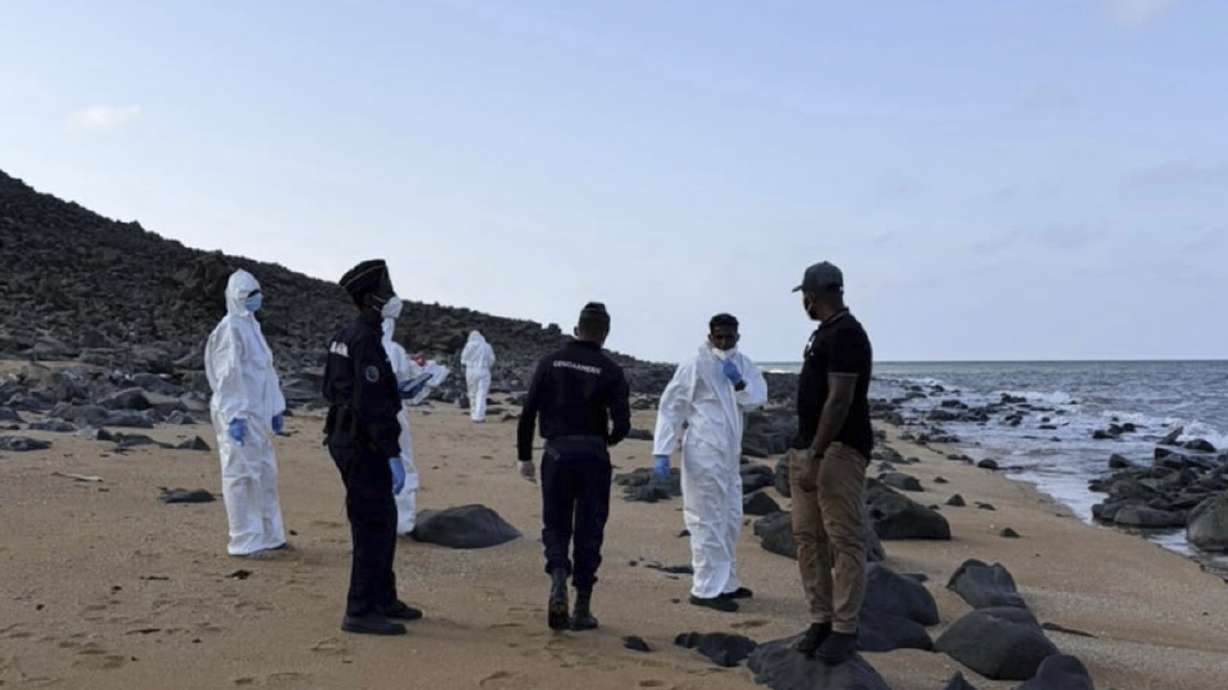
At least 139 people, including children, died after a boat carrying more than 300 migrants capsized off the coast of Djibouti in East Africa, the International Organization for Migration (IOM) said Sunday. The IOM said the vessel had 305 people on board and warned the death toll could still rise. Alexandre Coissac, IOM Chief of Mission in Djibouti, told the AP that the figure of 139 covers only those buried by authorities in Djibouti; others were buried by the migrants themselves and won't be added to the official count until authorities can verify the bodies. "What is terrible is that they were buried with no names, in a common grave, like in a war situation," Coissac said. "They all have a mother, a father, and we may never learn what happened."
Coissac said the migrants boarded the ship on the evening of October 8 and that it sank very soon after, close to shore, "mainly because it was overcrowded." He said authorities were bringing the surviving migrants to the IOM rescue center in Obock, where they receive medical assistance after swallowing sea water and psychological support. "They're all in a state of shock," he said. The boat was travelling from Djibouti to Yemen when it capsized on Thursday night or Friday morning, according to the IOM. More than 80 people survived, all of them Ethiopian nationals, it said. Eighty-four people remain missing.
Tens of thousands of migrants from the Horn of Africa travel every year through Djibouti and across the Bab el-Mandeb Strait towards Gulf countries in search of safety and economic opportunities, the IOM said, a movement that has continued despite newly escalating fighting in Yemen. Over 900 migrants died or went missing along the route last year, according to the IOM's Missing Migrants Project. "No one gets into a boat like that unless they believe there is no other safe way," IOM Director-General Amy Pope said. "We cannot keep treating these deaths as normal. Safe and legal pathways save lives."
8. Homes and Bridges Swept Away as Fresh Floods Hit Nepal
Source: BBC
A major river in Nepal has flooded, sweeping away houses and bridges and damaging part of a hydropower station, authorities said. Officials said they had rescued 95 people, including nine foreigners, along the bank of the Budhi Gandaki River in the central Gorkha district, the army confirmed. No casualties have been reported yet, but five people are missing. Nepal's Disaster Risk Reduction and Management Authority said Sunday's flood damaged more than 200 homes and affected more than 650 people. The Kathmandu Post reported that some settlements have been completely cut off and are now accessible only by air, and the army mobilised four helicopters for search and rescue operations.
The Sunday flood tore through the Gorkha district as children and communities prepared to mark the first day of the Dashain festival. Ganesh Karki, a resident of Jagatbagar, told The Kathmandu Post that after receiving a warning call early in the morning, he and others took shelter about 500m uphill in a nearby forest. "We never imagined a flood of this size," he said. "The water surged for about 15 minutes and then stopped repeatedly throughout the morning. We are afraid to return home at night." Within a couple of hours, the river's water levels at one location had risen from two metres to nearly 8.5m, officials said. "Our hydrological station was swept away and we are not getting any data from that location," said Binod Parajuli, a meteorologist who works with the Nepalese government.
What caused the latest flood is still unclear. Some say a landslide may have blocked the river or a tributary for some time, causing dammed water to burst out, while others say locals upstream saw an ice-avalanche. Nepal remains on high alert and is still recovering from catastrophic floods two months ago that hit its border towns with Tibet, killing more than 1,400 people and leaving thousands missing. Save the Children is mobilising an emergency team, and its director in Nepal, Tara Chettry, said: "Children's lives have been ripped apart in an instant yet again."

9. AI Is Less Regulated Than Milk, Says Microsoft President
Source: BBC
Milk and washing machines are currently more regulated than AI, the president of Microsoft has said. Brad Smith said there needed to be global safety rules in place, including a legal obligation to tell a "victim" if their system is breached by a rogue AI agent, as well as deciding when outside evaluators should sign off on an AI product before it is released. His comments put him at odds with President Donald Trump, who said the sector should regulate itself so US firms don't lose out to Chinese rivals. Smith told the BBC's Big Boss Interview podcast: "Right now, your washing machine is subject to more safety rules than AI. Every carton of milk that you see in the grocery store is subject to safety rules and inspection."
Demands for laws and rules to control AI have grown after experts in the sector said they believed the technology is a threat to humanity. The bosses of US-based AI giants such as Anthropic, OpenAI and Google DeepMind have all backed the idea of an AI development slowdown, but Trump has pushed against this. Smith called AI both a "tool and a weapon" that urgently needed to be regulated. "Let's get started today," he said. He said firms need "emergency brakes" — often known in the industry as "kill switches" — to pause or slow down AI if it got out of control, and added there should be a legal requirement for firms to write "incident reports" and tell victims if the technology goes rogue.
Smith also suggested that independent government evaluators should vet new AI technology, and said the UK was best placed to drive forward these global rules because of its AI Security Institute. He does not believe the US government would be as opposed to UK-led AI regulations as Trump's comments make it seem: "In Washington DC, people don't look at the UK and they don't look at London the way they look at Brussels — that's a strength." At the end of last month, Trump hosted the leaders of OpenAI, Anthropic, Nvidia, SpaceX, Meta and Google, who signed a "morally binding" document agreeing to work with "independent auditors." Smith applauded the statement and said Microsoft is "happy to sign it," adding: "It's a good step, it's a necessary step... But I don't think it's sufficient any longer."

10. China's Foreign Ministry Holds Regular Press Briefing, Addressing Global Hotspots
Source: China's Foreign Ministry
Chinese Foreign Ministry spokesperson Mao Ning hosted the regular press briefing on October 12, responding to a range of international hotspots. She announced that Wang Yi, member of the Political Bureau of the CPC Central Committee and Foreign Minister, will attend the seventh summit of the Conference on Interaction and Confidence-Building Measures in Asia (CICA) in Baku, Azerbaijan, on October 15 as President Xi Jinping's special representative, and will visit Azerbaijan, Croatia, Montenegro and Bulgaria from October 14 to 20. On China's decision, announced the same day, to take countermeasures against Paraguay's communications and technology minister and Belize's foreign minister, Mao said the Taiwan issue is at the core of China's core interests, and that the politicians in question had acted as pawns for the Taiwan authorities' "relying on foreign forces to seek independence," seriously interfering in China's internal affairs; China imposed the countermeasures under its Anti-Foreign Sanctions Law.
On the Ukraine crisis, Mao said China's position is consistent and clear, that it believes dialogue and negotiation are the only viable way out, and that it supports all efforts conducive to peace. Responding to the US claim that China's activities in waters east of Taiwan are "not conducive to regional stability," she said China has an exclusive economic zone and continental shelf in those waters, and that its activities fall squarely within its sovereign rights and jurisdiction and are legitimate. On the "Double Ten" speech by Taiwan's leader Lai Ching-te, Mao stressed there is only one China in the world and Taiwan is an inalienable part of China's territory, and that no words or deeds can change the historical and legal fact that Taiwan belongs to China.
On the Houthi attack on Riyadh's international airport on Sunday, which killed one person and wounded 11, Mao said China condemns the attack and its heavy casualties, is seriously concerned about the escalation, consistently opposes attacks on civilians and civilian facilities, and calls on relevant parties to avoid actions that escalate tensions and resolve differences through dialogue. On the floods in Nepal's Gorkha district, she said China has no information at present of Chinese casualties, expressed condolences to Nepal, and said China is ready to provide assistance as its capacity allows. Mao also responded to questions on North Korea's ballistic missile launches, youth protests in India, and US sanctions on the International Criminal Court, and noted that the day marked the 50th anniversary of the establishment of diplomatic relations between China and Papua New Guinea.
More News
- Finance Morning | October 12, 2026 — China Issues Plan on New Quality Productive Forces as KOSPI Slumps 3.65%
- Tech Express | October 12, 2026 — Moonshot AI Faces Pre-IPO Shareholder Claim as Founder Accused of Diverting Technology
- Sports Express | October 12, 2026 — Brewers Edge Dodgers 2-1 to Draw First Blood in NLCS
- Maple Express | October 12, 2026 | Scarborough Voters Want More Than Promises as Toronto Mayoral Race Heats Up
- Maple Express | October 11, 2026 — 7 Second Harvest Trucks Out of Service After Catalytic Converters Stolen in Etobicoke
Comments (0)
View More
 -51%
-51%Sony ULT WEAR Over-Ear Noise Canceling Headphones — Punch the ULT Button for Massive Bass! $173 CAD (51% Off)
 -18%
-18%DJI Neo Drone Motion Fly More Combo (with Goggles N3 & RC Motion 3) — Palm Takeoff & 4K Stabilized Video! $495.99 CAD (17% Off)
 -31%
-31%Nutrience Grain Free Cat Food 5 kg (Turkey, Chicken & Herring) — Made in Canada! $38.84 CAD (31% Off)
 -23%
-23%Tide Liquid Laundry Detergent Original — 100 Loads, 3.9L! $19.42 CAD (22% Off)
 Maple Express
Maple Express | October 11, 2026 — 7 Second Harvest Trucks Out of Service After Catalytic Converters Stolen in Etobicoke
 Tech Express
Tech Express | October 12, 2026 — Moonshot AI Faces Pre-IPO Shareholder Claim as Founder Accused of Diverting Technology
-51%Sony ULT WEAR Over-Ear Noise Canceling Headphones — Punch the ULT Button for Massive Bass! $173 CAD (51% Off)
Amazon
-18%DJI Neo Drone Motion Fly More Combo (with Goggles N3 & RC Motion 3) — Palm Takeoff & 4K Stabilized Video! $495.99 CAD (17% Off)
Best Buy
-31%Nutrience Grain Free Cat Food 5 kg (Turkey, Chicken & Herring) — Made in Canada! $38.84 CAD (31% Off)
Amazon
-23%Tide Liquid Laundry Detergent Original — 100 Loads, 3.9L! $19.42 CAD (22% Off)
Amazon
Maple ExpressMaple Express | October 11, 2026 — 7 Second Harvest Trucks Out of Service After Catalytic Converters Stolen in Etobicoke
Tech Express