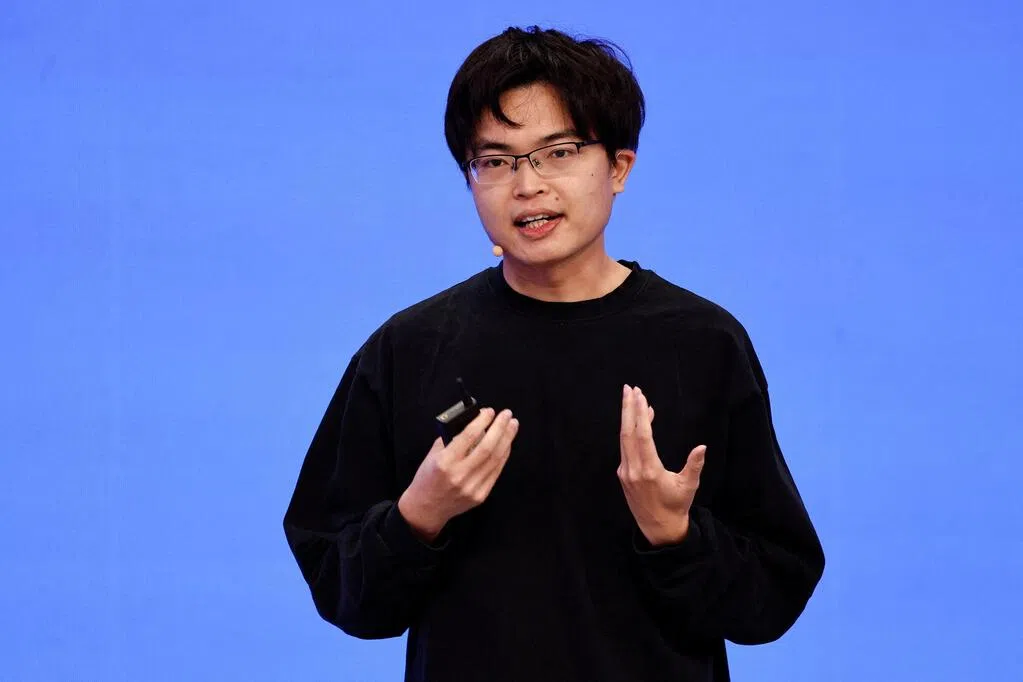
Tech Express | October 12, 2026 — Moonshot AI Faces Pre-IPO Shareholder Claim as Founder Accused of Diverting Technology
Today's Tech Express: Reuters reports Moonshot AI's pre-IPO shareholder claim, with founder Yang Zhilin accused over Recurrent.ai tech; Karpathy maps a global AI "funnel" where only ~5,000 reach frontier systems; Zhipu's GLM-5.3-Highspeed hits 490 tokens/s; voice AI lacks its "ChatGPT moment"; Qualcomm and Arm clash over royalties; AMD's Ryzen AI Max+ PRO 495 tested ~12% faster; a new iPad mini may cost ~$799; SpaceX explains why it catches Starship; Huawei foldables pass 20 million units.
1. Moonshot AI Faces Pre-IPO Shareholder Claim as Founder Accused of Diverting Technology
Source: Lianhe Zaobao
Senior figures at Chinese AI startup Moonshot AI are negotiating a shareholder claim in the hope of resolving the dispute before the company's planned Hong Kong listing, Reuters reported on Monday, October 12, citing people familiar with the matter. The sources said the dispute is not expected to derail the listing, but if left unresolved it could raise potential investors' concerns about corporate governance, equity ownership and disclosure, and complicate the listing process.
The claim was brought by Recurrent.ai, another AI company that Yang Zhilin founded earlier, together with some of its investors. They allege that Yang and other Moonshot AI executives moved Recurrent.ai's technology and business resources to Moonshot AI without authorization and sought personal gain at Recurrent.ai's expense. The dispute has run since 2024 and is currently in arbitration in Hong Kong. Recurrent.ai and its investors are seeking compensation equal to 10.5% of Moonshot AI's initial shares; based on Moonshot AI's $30 billion valuation at its June fundraising, the claim could exceed $700 million.
Yang Zhilin co-founded Recurrent.ai with Moonshot AI chief technology officer Zhang Yutao in 2016 and set up Moonshot AI in 2023, and both still serve as directors of Recurrent.ai's holding company; Recurrent.ai received a 9.5% initial stake when Moonshot AI was founded. A lawyer's letter dated March 11 this year that Reuters reviewed shows Recurrent.ai alleging that the two set up Moonshot AI without board authorization and made false statements to investors. Yang has previously denied the allegations, saying the creation of Moonshot AI was agreed with members of Recurrent.ai's board. MinterEllison, the law firm representing Yang, Zhang and Moonshot AI, said in November 2024 that the case lacked both legal and factual basis.
2. Karpathy Maps a Global AI "Funnel": Only About 5,000 People Can Reach Frontier Systems
Source: Huxiu
Former OpenAI co-founder Karpathy has drawn a "funnel" chart of how AI is actually used around the world: of the roughly 8 billion people on Earth, only about 5,000 may be able to access the strongest AI systems inside frontier labs. He estimates that about 6 billion have barely touched large models, over a billion occasionally use free-tier chat and search, and only around 20 million truly use frontier models for complex projects. Karpathy stressed that these are his own rough estimates, but recent reports from Microsoft, a16z and OpenAI point to a similar divide.
Microsoft's global AI adoption report, released in September, offers a reference: in the second quarter of 2026, only 18.8% of the world's population aged 15 to 64 used generative AI. The figure reached 73.3% in the UAE and 64.3% in Singapore, while the Global North averaged 28.8% and the Global South just 16.2%. a16z's seventh "Top 100 Gen AI Consumer Apps" report showed that, in a sample of US consumer e-receipts, only 4.5% of eligible consumers subscribed to at least one personal paid plan from ChatGPT, Gemini or Claude, up from 2.1% a year earlier. The article added that 1% of users account for 19.5% of all AI consumption, while the bottom half of paying users together account for only 16.6%.
Huxiu also noted that Karpathy formally joined Anthropic's pretraining team in May this year. On the No Priors podcast he revealed that he has largely stopped writing code by hand, handing most of his work to agents. He described the gap between frontier capability and the public experience as a "sense of vertigo when the capability curve goes vertical." The article also noted that on October 6, OpenAI published a batch of mathematics research produced by an unreleased internal model: the model attempted about 4,000 research problems, with a first release of 722 manuscripts grouped into 372 result series.

3. Zhipu's New GLM-5.3-Highspeed Model Surfaces With 490 Tokens per Second
Source: QbitAI
Zhipu recently launched a new model called GLM-5.3-Highspeed inside the coding tool Zcode. According to a user's tip, the model is available for trial in Zcode 3.15.1 and is given randomly to subscribers. Test data posted by a user showed a generation speed of 490 TPS, or tokens per second, close to 500 TPS; at that pace, generating 10,000 tokens would take about 20 seconds in the generation stage alone.
For comparison, GLM-5.3-FlashX, released by Zhipu just last month, tops out at 200 tokens per second, while according to Artificial Analysis, GLM-5.3-Flash runs at about 60 tokens per second on the Z.ai API. QbitAI noted that the name GLM-5.3-Highspeed had appeared before, and that Pi's model directory already lists it: a 1-million-token context window, a maximum output of about 128k tokens, and low, high and max thinking levels.
Some users on Reddit have also discussed the model, wondering whether it is related to the anonymous model Omen Alpha on OpenCode. Omen Alpha arrived on OpenCode in September and is widely believed to be GLM-related. The report noted that GLM-5.1-highspeed, released by Zhipu in May this year, output 400 tokens per second and at the time set a speed record among global large-model vendors' APIs. GLM-5.3-Highspeed is currently still in a random gray release in Zcode.
4. Execs Say Voice AI Hasn't Had Its "ChatGPT Moment" Yet
Source: TechCrunch
The theory that voice is the next big interface has picked up strong momentum, with investors pouring billions of dollars into voice AI startups spanning model makers, enterprise customer service, meeting note-takers and AI-powered dictation. Nearly every week brings a new model or tool that claims to sound human and converse like one. But for Shawn Wen, chief technology officer of enterprise voice AI platform PolyAI, voice AI has not yet had its "ChatGPT moment," even though full-duplex models that can speak while listening now exist.
Speaking on stage at the HumanX conference last month, Wen said: "We have reached the milestone of developing full-duplex models. The next challenge is to make reasoning very fast, so that the models can fetch answers quickly and the conversation feels natural." He added that AI agents in customer service should not sound robotic and should give callers enough confidence that they can solve problems. He said once the voice is good enough and customers are willing to engage for the first two or three turns, they begin to build confidence.
Alex Gay, chief marketing officer for the meeting note-taker Otter, argued that speaker identification, intent capture and typing that up with organizational knowledge is a key step toward automation. The company is also working on digital twins that might represent people in meetings, and he said it is paramount that the output voice conveys the same emotive expressions as talking to a human. TechCrunch, however, noted that although voice AI models have improved, AI assistants often fail to understand users, and meeting note-takers sometimes show the wrong transcript or summary; Wen believes ASR (automatic speech recognition) models often miss important keywords, which undermines the capture of full context.

5. Qualcomm and Arm Face Off in Court Over 5 Years of Royalty-Free Licensing and V10 Access
Source: 3DM
The licensing dispute between chip giant Qualcomm and Arm is at a critical stage. In the US federal court in Delaware, a jury failed to reach a verdict on October 9 after a five-day trial and will resume deliberations next Tuesday. The lawsuit is the two companies' second head-to-head courtroom clash in two years.
Qualcomm's demands are highly unusual: it is seeking to stop paying licensing royalties to Arm for up to five years, involving potentially billions of dollars, and it also wants to force Arm to license the V10 instruction set architecture, Arm's next-generation core architecture version that has never before been opened to third parties. The dispute was triggered by a leaked letter; Qualcomm alleges that Arm withheld software patches and tools needed for chip design and violated a price protection agreement. More critically, Qualcomm says Arm leaked a 2024 letter to Bloomberg, one accusing Qualcomm of breaching a key licensing agreement. Qualcomm says the leak directly damaged its chip cooperation talks with Meta and shrank the contract value by about $170 million.
Arm denies the claims entirely. Arm's lawyer said Qualcomm suffered no harm from the alleged conduct and that the suit was filed to gain leverage in licensing talks, adding that Qualcomm's referenced Meta deal was merely "speculative" and caused no substantive harm. The report noted that since SoftBank acquired Arm in 2016, Arm has shifted from purely licensing chip technology to selling its own chips, and its relationship with Qualcomm has worsened. Qualcomm currently holds an Arm architecture license valid until 2033, but whether it can reach agreement on newer architectures such as V10 is central to the dispute. According to Arm's annual report, Qualcomm accounts for 9% of Arm's total revenue.
6. AMD Ryzen AI Max+ PRO 495 Tested: Around 12% Faster
Source: Mydrivers
The first test results for AMD's new Ryzen AI Max+ PRO 495 (code-named Gorgon Halo) are out, and its lead over the previous-generation Ryzen AI Max+ 395 (Strix Halo) exceeds expectations, according to a report on October 12. In 3DMark Time Spy, the new platform's overall score rose 11.8%, with the Radeon 8065S integrated GPU, running at higher frequencies and with greater memory bandwidth, the main driver of the gain.
The data comes from well-known hardware blogger ETA Prime, who compared two mini PCs, GMKtec's EVO-X5 Pro and EVO-X2, both long locked to 120W power and differing only in cooling. The results showed that under the same power limit, both CPU and GPU scores improved by more than 10%: the Time Spy total rose from 10,499 to 11,743 (up 11.8%), with the graphics score up from 10,809 to 12,033 (up 11.3%) and the CPU score up from 9,034 to 10,336 (up 14.4%); Geekbench 7 multi-core rose 12.1% and single-core 9.3%.
On specifications, the Radeon 8065S is based on the same RDNA 3.5 architecture as the previous Radeon 8060S, with 40 compute units, and only raises the frequency by 100MHz to 3.0GHz; the CPU still has 16 Zen 5 cores, with the maximum frequency nudged from 5.1GHz to 5.2GHz, and the NPU rising from 50 TOPS to 55 TOPS. In real AI inference tasks, running large language models such as Llama 4 or Qwen 3.5 locally improves by 4.7% to 6.7%. The platform can support up to 192GB of memory, with up to 160GB allocatable as VRAM.

7. New iPad mini Due This Month: OLED and A20 Pro, Price May Rise to About $799
Source: Mydrivers
Tech blogger Mark Gurman has claimed that, because memory prices have risen sharply, the new iPad mini will become more expensive and could cost around $799, according to a report on October 12. If true, the new iPad mini will be $200 pricier, making it the most expensive iPad mini ever. The report noted that the iPhone 18 Pro and iPhone 18 Pro Max launched in September already saw their starting prices rise by 1,000 yuan, and the price pressure now appears to be spreading to tablets.
The new iPad mini is expected to adopt an OLED screen for the first time, with narrower bezels, though it is not yet clear whether it will support a 120Hz refresh rate. It will also carry the A20 Pro chip and an upgraded speaker system. The A20 Pro is Apple's newest flagship chip, debuting on the iPhone 18 Pro series and built on TSMC's most advanced 2nm process.
On core specifications, the A20 Pro has a six-core CPU with two performance cores and four efficiency cores; a seven-core GPU with graphics performance up to 40% higher; and a dual 16-core neural engine, 32 cores in total, with AI compute twice that of the A19 Pro and 50% more memory bandwidth. For thermals, Apple has abandoned the traditional InFO_PoP packaging for a new process that places the A20 Pro die alongside the memory rather than stacking them, letting the chip sit directly on the vapor chamber.

8. Entry-Level MacBook Pro May Get the Redesign Sooner, With an M7 Chip
Source: 9to5Mac
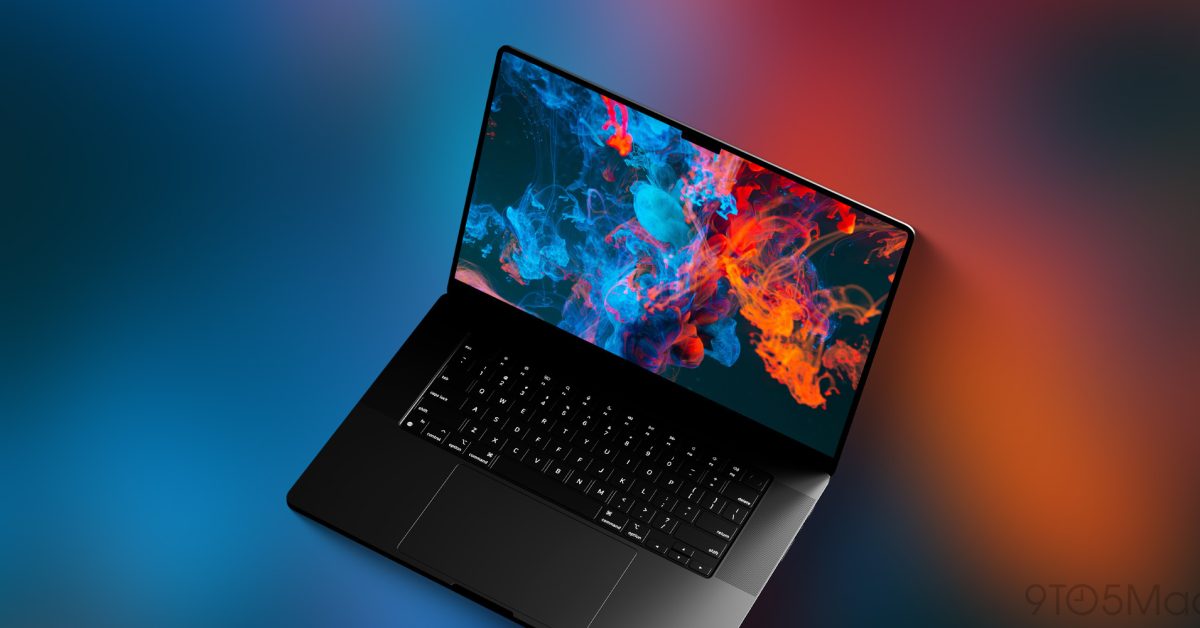
Apple is preparing an entry-level MacBook Pro with an M7 chip, planned for spring 2027, according to Bloomberg journalist Mark Gurman. 9to5Mac noted that, unlike in the past, this model will bring the redesign down to the entry level, something that previously wasn't expected.
The report recalled that Apple usually takes a while to bring a new MacBook Pro design down to the entry level: the 14-inch MacBook Pro with M1 Pro and M1 Max arrived in 2021, but the base MacBook Pro kept the 13-inch design until 2023, when it gained the 14-inch chassis with the M3 chip; after the 2016 redesign, the entry-level model did not get the Touch Bar until 2019. This time, the gap before the redesign reaches the entry level is expected to be only about six months. Gurman said Apple plans to bring the new design to the entry-level MacBook Pro, code-named K104, in early 2027, shortly after debuting it in high-end models, which are rumored to be called MacBook Ultra.
The report also noted that this fall there will be another entry-level MacBook Pro with the current design and an M6 chip, arriving alongside redesigned high-end MacBook Pros; the redesigned high-end models are expected to debut with M5 Pro and M5 Max chips rather than M6-generation chips, as Apple recently decided to abandon plans for high-end M6 chips and instead accelerate M7. The new design is expected to include a slightly thinner chassis, an OLED display with touch support, and possibly even a Dynamic Island.
9. Why SpaceX Wants to Catch Starship Instead of Giving It Landing Legs
Source: BGR
Anyone with even a passing interest in rocketry has probably marveled at SpaceX's upright landing of its Falcon 9 first-stage rocket minutes after delivering a payload to orbit. The American spaceflight company first performed the feat in 2015 and has done it more than 600 times since, enabling it to reuse the same boosters over and over. SpaceX engineers have applied what they learned from those autonomous landings to its next-generation, much larger Starship rocket, but the process involves some important differences.
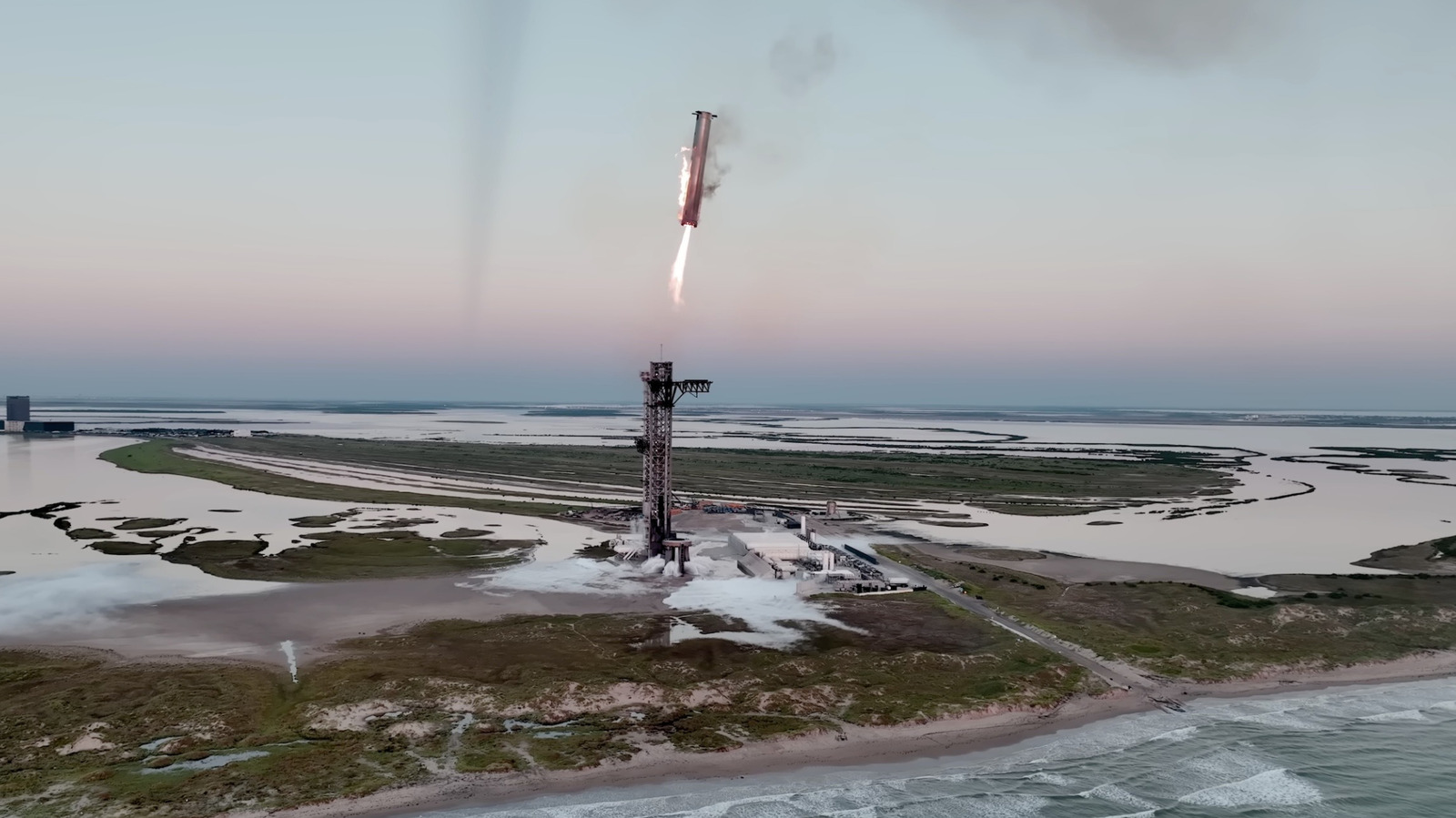
Instead of following the Falcon 9 approach of using landing legs to touch down on the ground or on a droneship at sea, Starship uses a new design that relies on giant mechanical arms on the launch tower to catch the returning first-stage booster, called Super Heavy, before it touches the ground. The report's reasoning: building Starship without landing legs reduces the vehicle's overall weight, allowing for bigger crews, heavier cargo or more fuel; for a rocket designed to lift more than 100 tons of cargo, even small savings in mass can pave the way for more payload and greater launch efficiency. At the same time, SpaceX wants Starship to be a quickly reusable rocket that can be caught at the tower and prepared for another flight on site, rather than being transported to a separate facility as the Falcon 9 is.
The report also noted that SpaceX's ultimate goal is to enable airline-like operations, launching the same first-stage booster multiple times a day. That ties into CEO Elon Musk's long-stated vision of building a city on Mars: Starship is the rocket he wants to use to send people, building materials and other cargo to the red planet. Because launch windows to Mars open roughly every 26 months and last several weeks, SpaceX wants to launch multiple Starship rockets during those opportunities.
10. Huawei Foldable Shipments Pass 20 Million Units, Market Share Tops 70%
Source: Mydrivers
At Huawei's terminal innovation technology briefing held at Lianqiu Lake in Shanghai on October 12, the company announced the latest market performance of its foldable phones. According to official figures, Huawei's cumulative foldable phone shipments have passed 20 million units, and in the first half of 2026 its foldable market share exceeded 70%, continuing to lead the foldable phone market.
Li Xiaolong, CTO of Huawei's terminal BG, also revealed that Huawei will launch new-form foldable products in the future, further expanding the product forms of foldable phones. Huawei launched its first foldable phone back in 2019 and has since kept innovating in hinge structures, flexible screens and lightweight designs. On product forms, Huawei created the "wide fold" category in early 2025, forming a multi-form lineup covering dual-fold, tri-fold and wide-fold devices.
In September this year, Huawei's new tri-fold flagship, the Mate XT 2 Ultimate Design, went on sale starting at 19,999 yuan. It debuts the Kirin 9050 Pro chip, built with logic-folding technology based on the "Tao principle," and adopts a new dual inward-folding wing tri-fold structure. Unlike the previous-generation Z-shaped fold, the new structure lets both side screens fold inward so the main screen is fully stored inside the body, keeping the flexible screen's bent areas on the inner side when closed and further improving screen protection.

More News
- Global Express | October 12, 2026 — Saudi Arabia's Riyadh Airport Shut After Days of Attacks; Trump Weighs Strikes on Yemen's Houthis
- Finance Morning | October 12, 2026 — China Issues Plan on New Quality Productive Forces as KOSPI Slumps 3.65%
- Sports Express | October 12, 2026 — Brewers Edge Dodgers 2-1 to Draw First Blood in NLCS
- Maple Express | October 12, 2026 | Scarborough Voters Want More Than Promises as Toronto Mayoral Race Heats Up
- Maple Express | October 11, 2026 — 7 Second Harvest Trucks Out of Service After Catalytic Converters Stolen in Etobicoke
Comments (0)
View More
 -48%
-48%AstroAI Portable Tire Inflator — TrueGauge Display, <1 Min Inflation! $33.99 CAD (48% Off)
 -26%
-26%Homvana 3.6L Bedroom Humidifier — 3-in-1 Humidifier, Diffuser & Night Light, Under 23dB! $44.98 CAD (25% Off)
 -15%
-15%KitchenAid 36" 20 Cu. Ft. French Door Refrigerator — Built-In Filtered Water + PrintShield Stainless! $2899.99 CAD (15% Off)
 -28%
-28%Dell 27 Plus 27" 1440p QHD IPS Gaming Monitor (S2725DSM) — 144Hz & 99% sRGB! $219.99 CAD (28% Off)
 Maple Express
Maple Express Noon | October 11, 2026: Kenney Warns Low Turnout Could Hand Alberta Referendum to Separatists
 Global Express
Global Express | October 12, 2026 — Saudi Arabia's Riyadh Airport Shut After Days of Attacks; Trump Weighs Strikes on Yemen's Houthis
-48%AstroAI Portable Tire Inflator — TrueGauge Display, <1 Min Inflation! $33.99 CAD (48% Off)
Amazon
-26%Homvana 3.6L Bedroom Humidifier — 3-in-1 Humidifier, Diffuser & Night Light, Under 23dB! $44.98 CAD (25% Off)
Amazon
-15%KitchenAid 36" 20 Cu. Ft. French Door Refrigerator — Built-In Filtered Water + PrintShield Stainless! $2899.99 CAD (15% Off)
Best Buy
-28%Dell 27 Plus 27" 1440p QHD IPS Gaming Monitor (S2725DSM) — 144Hz & 99% sRGB! $219.99 CAD (28% Off)
Best Buy
Maple ExpressMaple Express Noon | October 11, 2026: Kenney Warns Low Turnout Could Hand Alberta Referendum to Separatists
Global Express