Finance Evening: Wall Street Bets on Fed Hike as Oil Hits Six-Week High
This Finance Evening: strong August jobs data pushes Wall Street to bet on a Fed hike while the White House pressures for cuts; oil hits a six-week high; Japan's reserves post a record drop; gasoline sets a Labor Day record; Tesla pitches Cybercab fleet sales; Novo Nordisk halts two trials; JLR opens voluntary redundancies; Trump threatens Bombardier's US sales; Lululemon founder's divorce; rideshare AI pricing probe.
📊 North American Markets Today
Note: Today is Labor Day in the U.S., so stock and crude futures markets were closed. The table below shows the latest closing data.
| Index | Close | Change | % Change |
|---|---|---|---|
| S&P 500 | 7718.60 | -29.11 | -0.38% |
| Nasdaq | 26506.99 | -77.11 | -0.29% |
| Dow Jones | 53414.25 | -271.85 | -0.51% |
| Toronto TSX | 36513.80 | -119.30 | -0.33% |
| USD/CAD | 1.3813 | -0.0024 | -0.17% |
| WTI Crude | 91.48 | 0.00 | 0.00% |
| Gold | 4476.60 | 0.00 | 0.00% |
1. Wall Street bets on a Fed hike as the White House pushes for cuts
Source: Fortune
A surprisingly strong August jobs report has pushed up bets that the Federal Reserve will raise interest rates this week. The U.S. economy added 162,000 jobs in August while the unemployment rate held at 4.1%, according to the Bureau of Labor Statistics. Interest rate traders now put the odds of a 25-basis-point hike at 58.4%, with nearly 60% expecting the rate to move into a 3.75% to 4% range.
Several banks have shifted their forecasts. Macquarie's David Doyle moved his baseline call for the first 25 bps hike to September, previously December. Bank of America also expects a hike next week, while UBS anticipates increases in September and December. Analysts warn that if the Fed holds off despite strong inflation data, it could raise questions about its credibility.
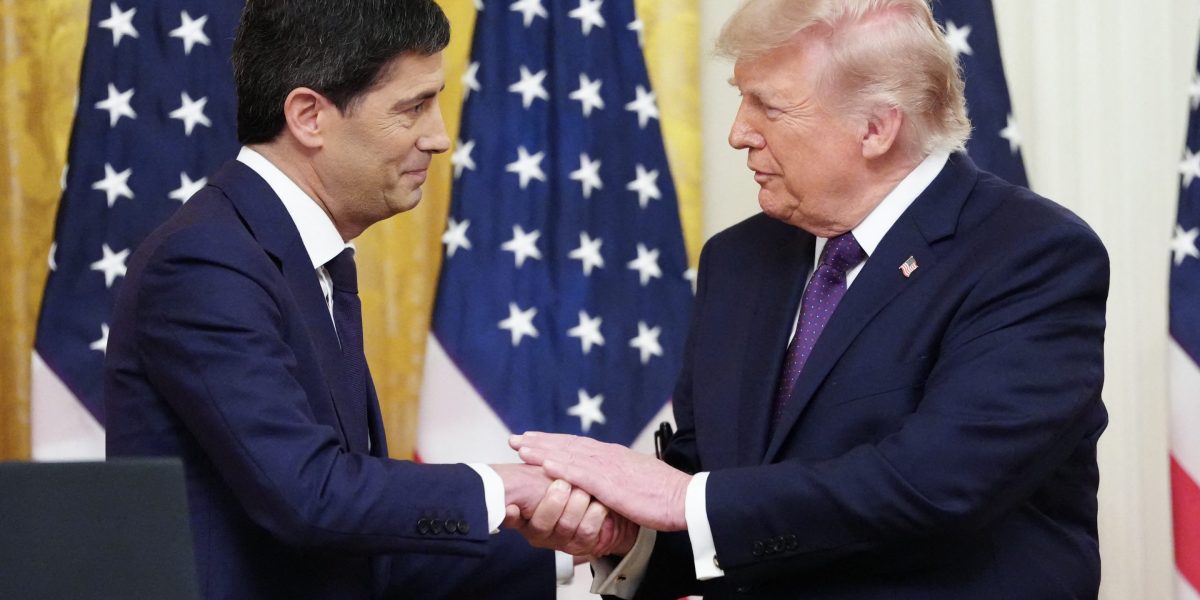
Meanwhile, the White House kept pressing for cuts. President Donald Trump wrote on Truth Social on Friday that rates should be lowered, threatening to halt trade with deficit countries if they don't come down. The rate battle is shaping up as this week's central market focus.
2. Oil hits six-week high as Middle East conflict escalates
Source: Yahoo Finance
Oil prices rose to a six-week high on Monday after Iran vowed to strike energy infrastructure across the Middle East in response to further U.S. attacks. Brent crude futures rose $1.03, or 1.1%, to settle at $97.31 a barrel, after touching $98.06, its highest since July 24. U.S. West Texas Intermediate crude rose $1.17, or 1.3%, to $92.65 a barrel, with an intraday high of $93.29, also the highest since July 24.
The U.S. and Iran exchanged strikes on oil tankers and warships over the weekend, sharply escalating the conflict. Brent rose around 8% last week and WTI gained nearly 10%. Goldman Sachs said oil could rally as high as $120 a barrel if attacks on shipping rise. Saudi Aramco's Jazan refinery was reportedly attacked on Monday, with damage being assessed.
OPEC+ kept its output policy unchanged for October at a Sunday meeting. Iran's Supreme National Security Council secretary said a restricted zone outside the Strait of Hormuz would be announced in the coming days.

3. Japan's foreign reserves post record $80 billion drop
Source: CNBC
Japan's foreign reserves fell to $1.207 trillion in August, down 6.18% from July's $1.287 trillion, marking the biggest monthly decline since ministry records began in 2000, according to finance ministry data. It was the fourth straight month of decline, surpassing the previous record of 5.58% set in May.
The ministry did not explain the drop, but Kyodo News cited an unnamed official saying it stemmed from interventions to prop up the yen and a decline in the value of government bonds amid rising yields. State Street's Masahiko Loo said the decline was "primarily the result of Japan's recent dollar-selling, yen-buying FX interventions."
Tokyo has conducted multiple rounds of intervention, buying about 11.73 trillion yen in April and May, then a larger 15.4 trillion yen intervention at the end of July. The combined 27.1 trillion yen spent so far is the largest yearly total ever, surpassing the 20.4 trillion yen record from 2003. It was also the first coordinated U.S.-Japan intervention to support the yen since 1998.

4. Gasoline prices set a record high for Labor Day
Source: CNBC
The national average for a gallon of regular unleaded gas was $4.15 on Monday, a record high for the Labor Day holiday, according to AAA. The previous Labor Day record was $3.82, reached on Sept. 3, 2012 — prices had never before topped $4 per gallon on the holiday.
While the per-gallon price is down from the 2026 high of $4.56 in May, it is still about 30% higher than the $3.20 average drivers paid a year ago. Diesel also hit a record heading into the long weekend at $5.90 per gallon, compared with $3.71 a year ago.
Crude oil is the main input for gasoline. WTI crude was trading around $92 a barrel on Monday, versus about $67 before the Iran War started on Feb. 28, while Brent traded around $97, up from roughly $72 pre-war. U.S. gasoline inventories were 6% below average for the week ending Aug. 28. The good news for consumers is that the industry shifts to cheaper winter-grade gasoline in September.

5. Tesla opens Cybercab fleet sales, drawing skepticism
Source: Electrek
Tesla is now asking businesses whether they'd like to buy and operate their own fleets of Cybercab robotaxis on its network — the same pitch Elon Musk has made since 2019: buy the cars, put them to work, and earn money while you sleep.
But critics note the promise never materialized. At Autonomy Day in 2019, Musk said owners could add cars to the "Tesla Network" and earn up to $30,000 a year in gross profit per vehicle, calling Teslas "appreciating assets." Years later, no owner can run their car as a robotaxi — Tesla runs the service itself.
Dutch leasing firm MisterGreen bet on that promise, buying more than 4,000 Teslas, only to go bankrupt in December 2025 after used Teslas depreciated sharply and robotaxi income never arrived, wiping out about $40 million. Critics argue that if a Cybercab fleet were truly profitable, Tesla would keep the profits rather than offload the capital costs and depreciation risk onto fleet buyers.

6. Novo Nordisk halts two cardiovascular trials
Source: STAT News
Novo Nordisk has stopped two trials of a drug aimed at taming inflammation to improve cardiovascular health, another blow for that approach.
The company said it halted the HERMES and ATHENA trials of its drug ziltivekimab after a data monitoring committee found they were unlikely to succeed. Novo informed trial investigators on Friday.
The move follows the earlier failure of the drug in the ZEUS trial, which showed that although the medicine lowered markers of inflammation, it did not reduce the risk of major clinical complications including deaths and heart attacks.

7. Jaguar Land Rover opens voluntary redundancies in $2.3B cost-cutting drive
Source: Fox Business
British carmaker Jaguar Land Rover (JLR) has opened a voluntary redundancy program for salaried and management staff as part of a sweeping multibillion-dollar cost-cutting campaign. The Tata Motors-owned automaker confirmed the voluntary exit scheme over the weekend, aiming to lower its global operational break-even threshold to 300,000 vehicles annually.
British media reports indicate the two-year overhaul could affect up to 4,000 non-assembly positions across its 30,000-strong U.K. workforce, though JLR said hourly assembly line workers at primary plants would remain outside the program.
The restructuring follows mounting pressures: a 10% tariff on U.S. vehicle imports is narrowing margins, and JLR faces intensifying competition from lower-cost Chinese EV imports. It also comes after a major cyberattack late last year forced temporary production halts, contributing to a 27% drop in output and an estimated $2.5 billion (£1.9 billion) drag on the U.K. economy.

8. Trump threatens to block Bombardier's U.S. sales
Source: CNBC
President Donald Trump said Monday that Canadian airplane manufacturer Bombardier must build its products in the U.S. to keep selling in the American market. "NO MORE SELLING BOMBARDIER IN THE UNITED STATES!" Trump wrote on Truth Social.
"If they want our Market, they must build here, and stop treating America like a 'piggybank,'" he wrote. Bombardier did not immediately respond to a request for comment.
The move comes amid a bitter U.S.-Canada trade war. Ottawa announced about $20 billion of retaliatory tariffs on more than 700 U.S. goods on Aug. 25, mirroring Trump's recent 50% tariffs on Canadian wine, cement, hockey sticks and other products. U.S. Commerce Secretary Howard Lutnick said the Canadians "blew up" a nearly complete trade deal "for political reasons," while Canadian Prime Minister Mark Carney said his nation would resume talks "when the Americans are ready."

9. Lululemon founder's divorce could mean a 50-50 split
Source: New York Post
Lululemon founder Chip Wilson's $6.1 billion fortune could take a big hit in his no-prenup divorce, with marital gains potentially subject to a 50-50 split, top Canadian divorce lawyers told The Post.
Wilson, 71, and Shannon "Summer" Wilson, 52, married in 2002 and are now in divorce proceedings in British Columbia. Lorne MacLean of Vancouver's MacLean Law said that in British Columbia, the value of assets brought into a marriage is not shareable, but the gain is considered family property and presumptively divided 50-50.
Wilson founded Lululemon in 1998, four years before the marriage. Forbes puts his fortune at $4.9 billion, while the Bloomberg Billionaires Index puts it at $6.1 billion. His holdings include a nearly $3 billion position in Amer Sports and roughly 8.7% of Lululemon, recently valued at just under $1 billion, along with extensive real-estate investments.

10. Rideshare apps' AI pricing under scrutiny
Source: KCRA
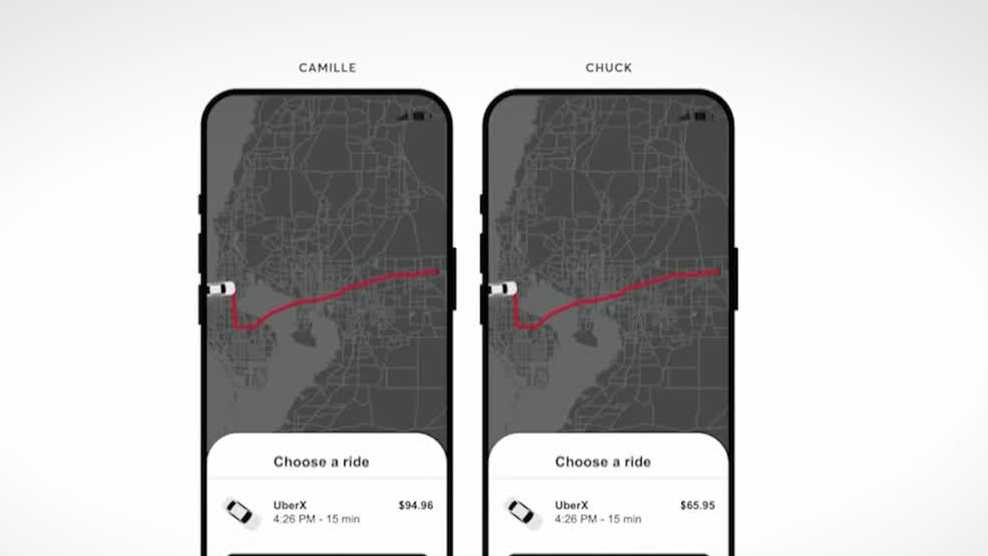
A Consumer Reports investigation found that two people standing next to each other, requesting the same ride at the same time, could be shown very different prices — and most riders would never know.
Uber said some of the crossed-out prices displayed in the app are "historical" comparisons, not deals. Both Uber and Lyft insist their share of the fare is far lower than what Consumer Reports found.
Some states are beginning to act. Maryland and Connecticut have enacted the first substantive restrictions on surveillance pricing, while California, Pennsylvania and New York are considering banning the practice altogether.
More News
- Finance Evening | October 22, 2026: Nasdaq drops 2.6% in its worst session since June, Brent tops $113
- Maple Express | October 22, 2026 — Final Toronto mayoral debate tonight on CP24
- Maple Express | October 22, 2026: Ottawa Gives Stelco 15 Days to Reverse Layoffs or Face Legal Action
- Global Express | October 22, 2026: Two Killed at Saudi Arabia's Dammam Airport as U.S. Orders Diplomats Out
- Asia Stocks Slump: ChiNext Falls 4.37%, Hang Seng Tech Below 3,800, Oil Tops $100
Comments (0)
View More
 -41%
-41%Lenovo Flex 3i 12.2" Touchscreen 2-in-1 Chromebook — 1920x1200 IPS Convertible! $299.95 CAD (40% Off)
 -65%
-65%JBL Tune 670NC On-Ear Noise Cancelling Headphones — 70 Hours of Playtime with Adaptive ANC! $49.99 CAD (64% Off)
 -21%
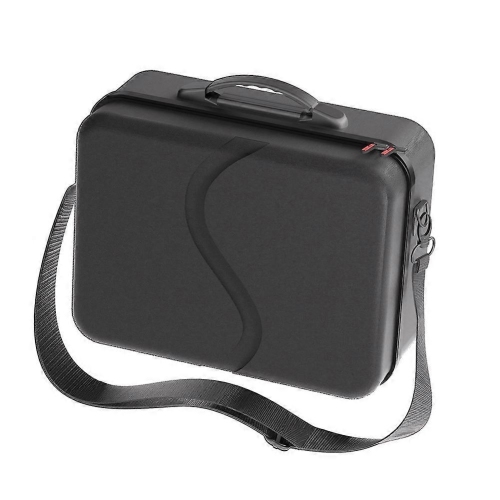
-21%SLOWMOOSE Carrying Case for Nintendo Switch 2 — 18 Game Card Slots & Dock Pocket! $64.99 CAD (21% Off)
 -36%
-36%YVMOVE 18K T800 Carbon Fiber Pickleball Paddle — Thermoformed 16mm Core, USAPA Approved! $89.99 CAD (36% Off)
 Tech Express
Tech Express | October 22, 2026 — Japan Launches MMX Probe in First Attempt to Land on Phobos
 Global Express
Global Express | October 22, 2026: Two Killed at Saudi Arabia's Dammam Airport as U.S. Orders Diplomats Out
-41%Lenovo Flex 3i 12.2" Touchscreen 2-in-1 Chromebook — 1920x1200 IPS Convertible! $299.95 CAD (40% Off)
Best Buy
-65%JBL Tune 670NC On-Ear Noise Cancelling Headphones — 70 Hours of Playtime with Adaptive ANC! $49.99 CAD (64% Off)
Best Buy
-21%SLOWMOOSE Carrying Case for Nintendo Switch 2 — 18 Game Card Slots & Dock Pocket! $64.99 CAD (21% Off)
Best Buy
-36%YVMOVE 18K T800 Carbon Fiber Pickleball Paddle — Thermoformed 16mm Core, USAPA Approved! $89.99 CAD (36% Off)
Amazon
Tech ExpressTech Express | October 22, 2026 — Japan Launches MMX Probe in First Attempt to Land on Phobos
Global Express